How to Get More Than One Cannabis Harvest in Northern Climates Growing Outdoors

A cannabis harvest in northern climates is a clock with a hard stop. Last frost opens the yard. First frost, or a wet September that never dries, closes it. Two outdoor cuts in that window are possible when you steal weeks indoors, plant a seed that finishes on age, and free a hole the day you chop. A bigger pot does not buy a second harvest. A later chop does not either. The second jar comes from overlap: the next plant is already alive while the first one hangs.
Canada adds arithmetic. Recreational cultivation is four live plants per household, Cannabis Act s.12. A seedling counts. You cycle four holes. Quebec still prohibits recreational cultivation. Manitoba has been indoor-only since 1 May 2025, so this outdoor calendar is not a rec yard plan there. Age is 19 in most provinces, 18 in Alberta, 21 in Quebec. A lease and a city bylaw still sit on top. The household year lives on cannabis cultivation in Canada.
Frost dates and paper-towel technique live on growing cannabis seeds in the True North. Mulch and a single outdoor finish live on growing cannabis outdoors. The seed-type checkout lives on photoperiod vs autoflower. Fast flower windows as a shopping filter live on 60–70 day cannabis strains. You are here for two outdoor harvests: auto stagger, indoor head start, light dep for photoperiods, and four holes you actually recycle.
Two outdoor harvests in the north are a calendar
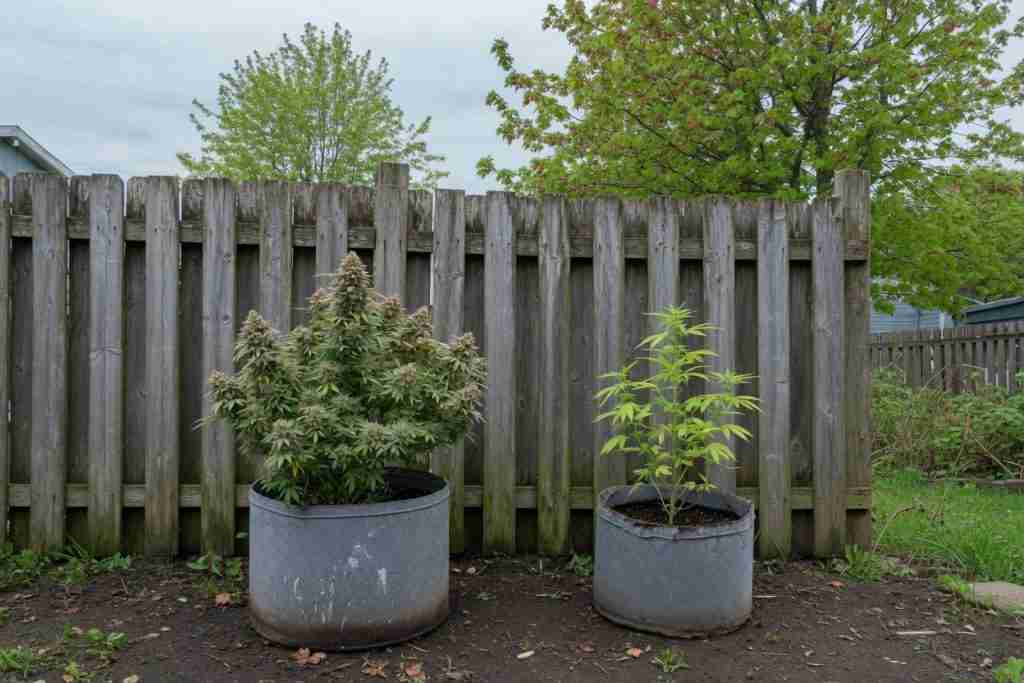
Autoflowering cannabis finishes on age, often about 8 to 12 weeks from sprout to a jar if you dry like you mean it. Plant the first batch after last frost, or two to four weeks earlier under a cheap LED. Cut in mid-summer. Drop the second seed into the hole you just freed. Mediterranean yards can stack two or three autos. Northern Canada often gets one honest auto. Two cuts show up in long southern windows: coastal British Columbia, the south coast of Ontario, and a greenhouse that holds night heat. A third outdoor harvest is a long, dry-latitude year. Halifax, the Prairies, and the North do not get that year as normal.
Photoperiod marijuana waits for long nights. In a northern yard that flip lands in late summer. Flower then needs seven to ten weeks. First frost often arrives while the cola is still stacking. That is one harvest, and it is a good harvest if you picked a fast outdoor line and you cut before rot. Two photoperiod harvests outdoors need light deprivation: a light-proof cover for twelve hours of dark, every day, until the plant finishes. Miss a day of cover and the plant reads the leak. That path is real. It is also a job. Autos are the honest double-harvest tool for a four-plant household that still has a job in town.
The two-cut math
Write two dates on a card. Average last spring frost. Average first fall frost. Count the days between them. Southern Ontario and coastal B.C. often give you something in the 120–140 day band if you transplant late May and you are willing to cut in late September or the first days of October. The Prairies compress that. Last frost there clusters late May into early June. First frost clusters mid-September. Atlantic Canada is similar on frost and worse on rain. If your first cut lands on 1 September, the second outdoor plant has a few weeks, not a season. Start the second seed while the first plant still has two or three weeks of flower left. The overlap is the whole trick. A cannabis harvest in northern climates rewards the grower who germinates on a calendar, then chops on the forecast.
What two harvests actually weigh
Two modest autos in fabric pots will usually beat one photoperiod that dies wet in October. The first auto is the bigger plant. June light in the north is long. The second auto is smaller. August days are already shortening. You still get a jar. You get it dry. You get it before botrytis writes the ending. People chase a Christmas-tree photoperiod because a photo of a two-metre plant is fun. The jar cares about finished, dry flower. Weed you hang in July and weed you hang in September are two inventories. One giant plant you lose to frost is zero.
Count frost backward, then count plants
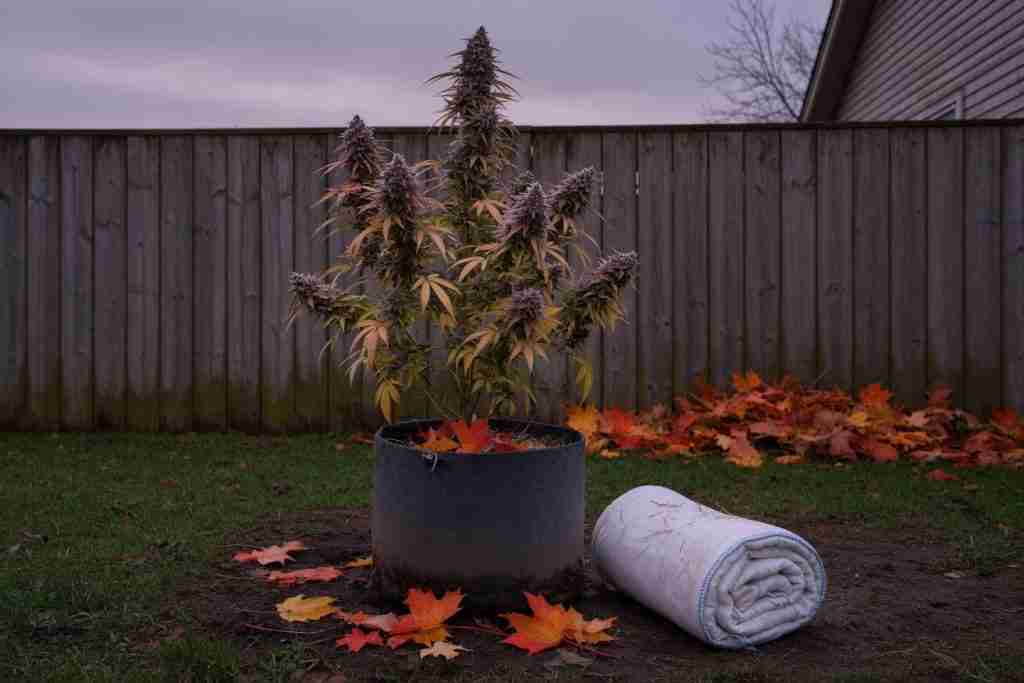
Hardiness zones tell you winter lows. They do not tell you the May night that still hits minus two. Look up your town. Last frost is the earliest night a seedling belongs outside. First frost is the night that ends the argument. Nights around 10 °C are the transplant gate even when the forecast says no frost. Seedlings stall colder than that. The long frost table, town by town, lives on True North and on the North America growing zone guide. This page only needs those dates so you can fit two runs inside them.
Then count plants. Four live cannabis plants in a Canadian dwelling. Rooted seedlings count. A clone in a dome counts. The plant hanging in the basement is harvest. The four still in the yard still count. A 5-pack is spare seed, about four dollars CAD a named seed, about a dollar a mix seed. The pack is why a 5-pack is the default order. Spare seed is not a spare legal hole. Germinate what you can keep.
Southern Ontario and the Great Lakes
Last frost often late April to mid-May in the south, later toward Ottawa and the Shield. First frost often early to mid-October. Victoria Day is a marker. Nights still need to hold near 10 °C. Start auto one indoors in mid-April, plant out after those nights, cut in July. Start auto two indoors in mid-June so it is ready the week you chop. Second cut aims at late September. A photoperiod here is usually one fall crop unless you light-dep. Indoor versus outdoor seed choice: indoor vs outdoor cannabis seeds in Canada.
Coastal British Columbia
Last frost on the south coast can sit late March to mid-April. First frost can sit late October into November. Mold is the wall more than ice. Two autos fit the frost dates. They still have to finish in a wet fall if you delay the second sowing. Light dep in a hoop house is how some coastal growers take a photoperiod in July and a natural-flip photoperiod in fall. Open the structure. Cut on the forecast while the cola is ripe enough.
Prairies
Last frost late May into early June. First frost mid-September, sometimes earlier. One auto started indoors two weeks before transplant is the honest outdoor crop. A second auto is a tight bet: start it indoors in early July, plant the day the first hole frees, pick a line on the short end of the 8 to 12 week band, and cut when the forecast turns. A photoperiod that flowers 9–10 weeks belongs in a tent here.
Atlantic Canada
Last frost mid-to-late May. First frost late September into October. Rain sits on colas. Two harvests here mean the first plant is done in July so the second can finish in a September you still treat as wet. Open structure. Fast flower. Cut early. A greenhouse helps if you can vent it. Colder-climate seed choice: growing cannabis in colder climates.
The territories
Yukon, NWT, and Nunavut summers are often too short for two outdoor cuts. Last frost can sit late May into June. Fall cold can arrive in late August. One auto, started indoors, moved out when nights hold, cut the week the forecast turns: that is the outdoor year. A tent is how you get a second harvest at all. True North already covers that room.
Autos are the honest double-harvest tool
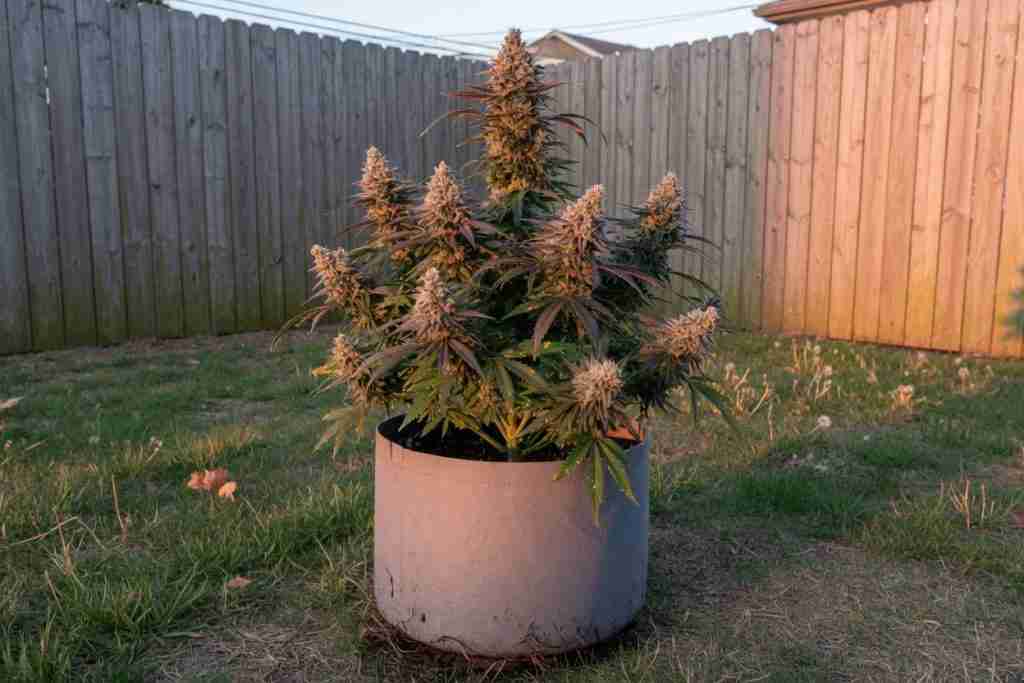
Autoflowering plants inherited a day-neutral clock from ruderalis. They flower because they are old enough, not because September arrived. Most finish about 70–100 days from sprout. Some land in the 8 to 12 week band if you keep them in a finish pot from early on and you stop training late. The biology sits on what is ruderalis cannabis and how autoflower seeds work. Hands-on auto growing sits on grow autoflowering cannabis plants and starting autoflowering cannabis seeds for summer harvesting.
This shop’s catalog is named feminized photoperiods. Cherry Bomb lists 7–8 weeks of flower. CBD Cheese Cake lists 7–8. Chocolate Wedding Cake lists 7–9. Tropico FireStorm lists 8–9. Strawberry Candy lists 8–10. OrangeTheory lists 9–10. Canadian Sunshine is the house outdoor photoperiod line, 7–8 weeks of flower, selected for a wet fall. Those numbers are flower time after the photoperiod flip, not seed-to-jar. A northern outdoor photoperiod still waits for the flip unless you cover it. If you want two outdoor harvests with those packs, you light-dep a fast photo, or you run one photo as the fall crop and an auto as the summer crop. Autos are the calendar tool. The checkout decision is still photoperiod vs autoflower. Named packs for a real room: feminized packs for real rooms.
First auto: steal two to four weeks indoors
Autos hate sitting in a cup for two months. Start them about one to three weeks before the outdoor move, two to four if your spring is late and you have a real light. Paper-towel named packs at about 21–26 °C. This shop’s named packs are sold as a 70 percent paper-towel rate. Plant the taproot 5–10 mm down. Move to the finish pot early. Autos often finish in an 11–19 litre fabric pot outdoors. Light indoors: 18/6. Germ walk: boosting cannabis seed germination. Seedling week: growing cannabis seedling stage of growth. The plant should be young when it hits sun.
Second auto: the hole has to exist
Start the second seed indoors while the first plant still has two or three weeks of flower. That second plant is a live plant the day it roots. If you already have four in the yard, you wait. If you ran two outdoor plants, two indoor starts can fill the holes you are about to free. When you chop plant one, that hole is free the same day. Fill it the same week. A week of empty soil in July is a week you will want in September.
How big the second plant will be
Smaller. August and September days are shorter. Nights are cooler. The second auto still finishes on age. Skip late topping and late supercrop. Late stress steals days frost will not give back. Huge-auto technique is a different page: how to grow large autoflowers. On the second outdoor run, a plant that finishes is the yield. Fast flower as a shopping idea: fast flowering cannabis strains.
Photoperiods need light dep or they wait for fall
A photoperiod cannabis plant in a northern yard reads June as veg. It starts making flower when nights get long enough, which at these latitudes is late summer. Then it still needs those 7–10 weeks of flower. First frost does not wait for OrangeTheory. A single outdoor photoperiod harvest is the default, and it is a good default if you picked Cherry Bomb, CBD Cheese Cake, Canadian Sunshine, or another 7–8 week flower and you cut on the rain. Outdoor seed shortlist: best cannabis seeds for outdoor growing. Flower-stage habits: growing cannabis flowering stage of growth.
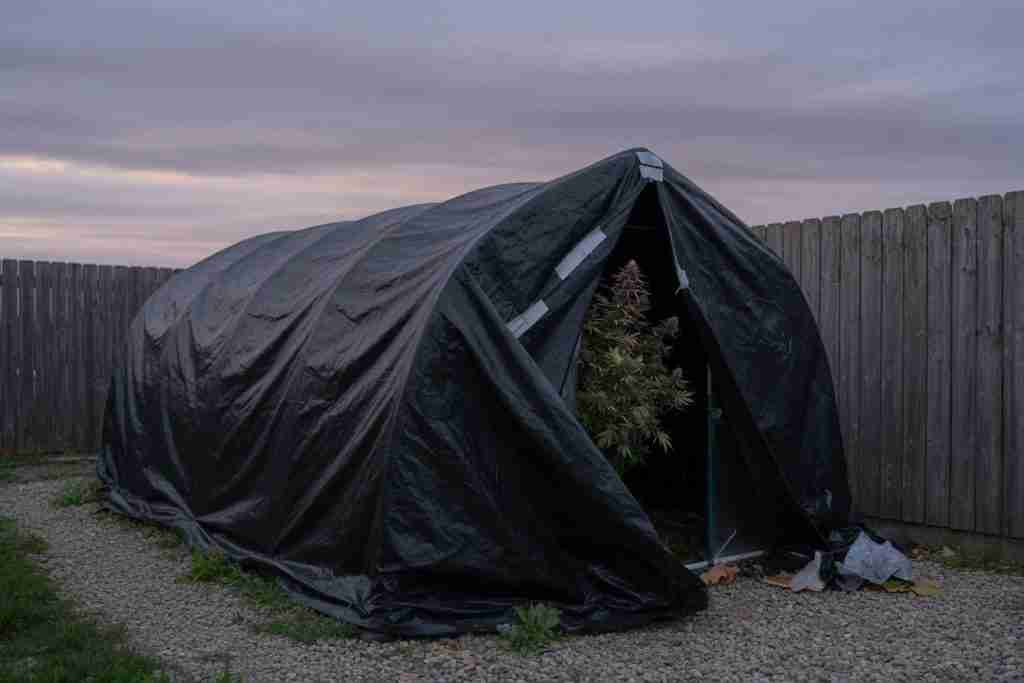
Two photoperiod harvests outdoors are a light-dep job. You veg under natural long days in spring. You pull a light-proof cover for twelve hours of dark, every day, until the plant is done. Commercial hoop houses do this to hit a May-to-July first harvest, then let a second crop flip on natural fall nights. A home grower can copy the clock in a small hoop, a pop-up greenhouse, or a frame you can actually seal. Structure talk: cannabis greenhouse growing. You still only have four live plants. Light dep does not mint extra holes.
How light dep actually works
Dark means dark. Blackout tarp, overlapping flaps, no pinholes toward a porch light, no dawn leak. Cover on, twelve hours. Cover off, twelve hours of sun. Same clock every day. A common home rhythm is cover at 19:00, uncover at 07:00. One missed night of cover is a re-veg risk, a stall, or nanners if the plant was already stressed. Heat under black plastic in July will cook a cola. Vent while the cover is off. A sealed hoop at 22:00 in a wet Atlantic week is a botrytis box. Frost cloth leaks light. If you can read a book under the tarp at noon, it is not dark.
A photoperiod two-cut that still fits four plants
One workable four-hole plan: two photoperiods under light dep from late May, chop in late July, then two more photoperiods or two autos for a natural fall finish. Four, then four. Another plan: two autos for the July cut, two photoperiods that veg all summer and flip naturally for October in a long southern window. Mix the clocks on purpose. A photoperiod you cut in July will try to re-veg if you leave it. Chop it. Hang it. Fill the hole. Feminized seed keeps the holes female: feminized packs for real rooms.
Start the second crop before you cut the first
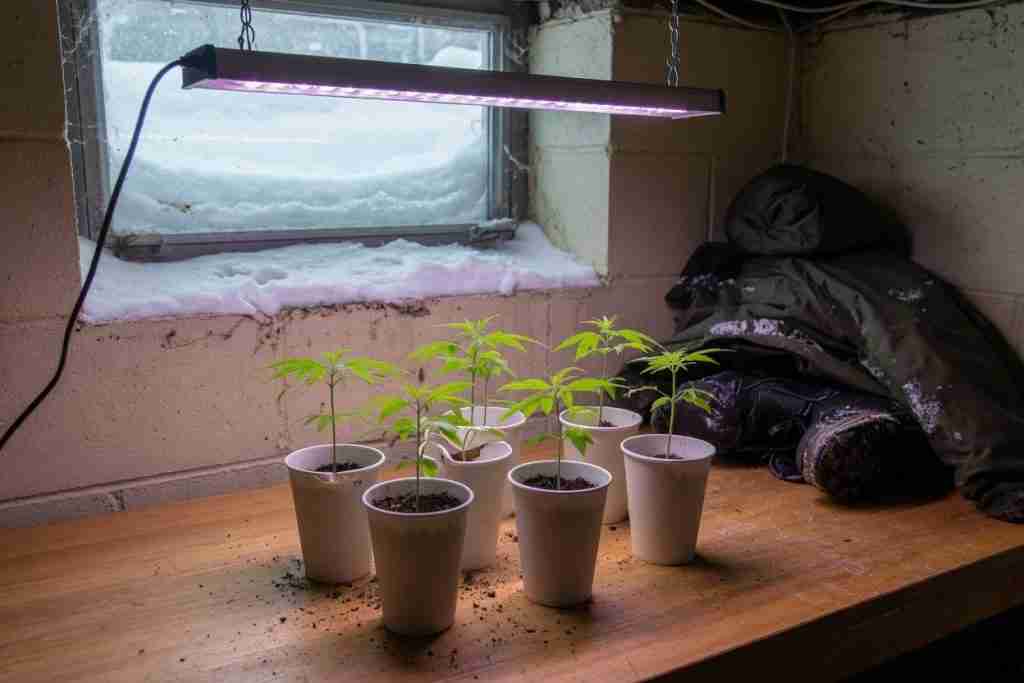
Overlap is the method. If you wait until the first plant is in jars to soak the next seed, you donated two weeks. Those two weeks are September. Start the next round indoors on a cheap bar light. Snow in the window is fine. A basement shelf and 18/6 is enough for a two-week head start. Full tent build lives on the indoor cannabis growers guide. Veg habits live on cannabis vegetative stage. Once seedlings root, they count. Keep four. Named packs around four dollars CAD a seed make spare seed cheap compared with a dead hole in May.
Harden, then move
Indoor leaves cook in the first full sun day. Three days of an hour outside, then longer, then overnight when nights hold near 10 °C. Wind dries a small cup fast. Check twice a day the first week in the yard. Black fabric on a south wall picks up heat. A low corner by a fence collects frost. Drag the pot. Site, sun, and a single-season finish: growing cannabis outdoors. Indoor versus outdoor as a debate: the indoor vs outdoor cannabis cultivation debate.
What you put in the empty pot
Fresh mix. The first plant spent the easy nitrogen. A tired root ball and a second seed is how the second run stalls. Dump, refresh, plant. A little compost and a known outdoor feed beat a mystery handful of bloom powder on a seedling. Outdoor bloom as a job decoder: organic marijuana fertilizer. Cover crops belong after the season, or in paths, not as a hemp field beside flower. Soil between years: cover crops for outdoor cannabis.
Covers, cold frames, and a wet September
Frost cloth buys a night at 0 °C. A cardboard box over a small pot buys the same night. A cold frame warms seedlings in April so the first auto hits the yard with a head start. A greenhouse that vents can hold a second auto through a Prairie September that would have killed it in the open. A sheet of plastic on the north side of a garage is a warm shed with no September light. Placement is the same sun test as an open garden.
Wet September is the Atlantic and coastal B.C. wall. Cold nights are the Prairie and territorial wall. You can meet both in southern Ontario in the same week. Open the plant so air moves through the cola. Cut when trichomes are ready enough and the week ahead is rain. The second harvest is allowed to be early. Early and dry beats late and grey.
When a cover is worth the work
Worth it: a forecast frost on a nearly finished second auto in September. A hoop you can black out for light dep on two photoperiods. A cold frame in April for the first sowing. Pick the night that matters. Drag the pot into a garage if that is faster than wrestling a tarp in wind. Several provinces care whether people can see the plants from outside. Put the hoop where a fence already is.
Four holes, two cuts, and what you hang
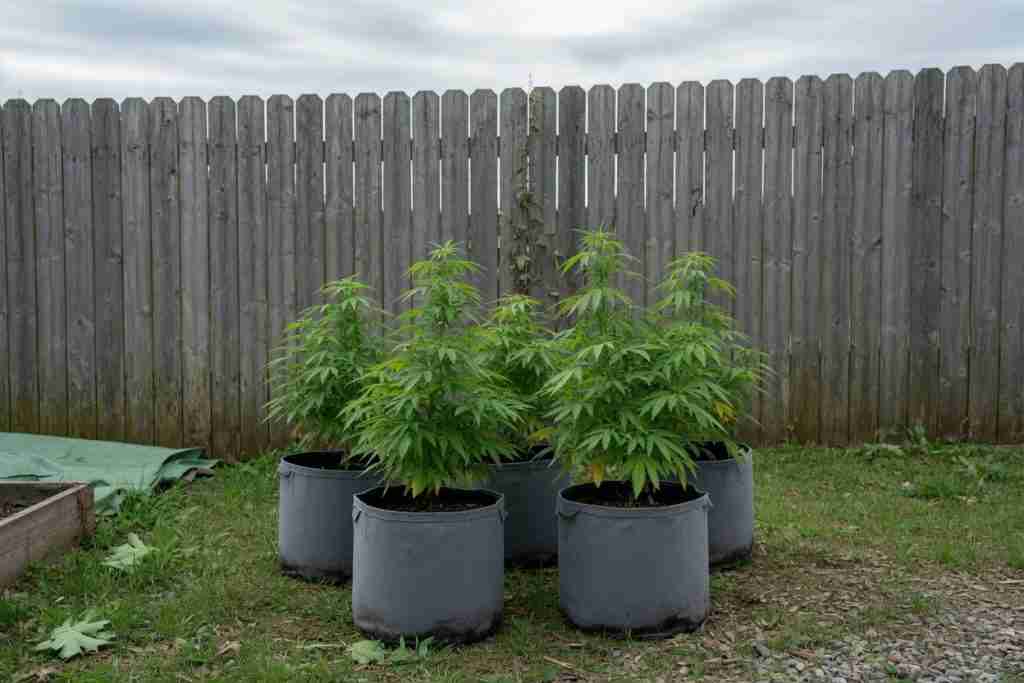
Two outdoor harvests in a Canadian rec yard are four plants, twice. Chop, hang, fill. If you want two plants in July and two in October, you still have four live. If you want all four in July and all four again in September, the second round starts the week the first round comes down. A mother plant for clones is one of the four. Outdoor two-cut households usually skip the mother and buy seed. Seeds in a cupboard do not count. Plants count. Possession of seed: cannabis seeds from Canada. Ordering and the mailbox: buy cannabis seeds in Canada.
Hang the first crop like you mean it
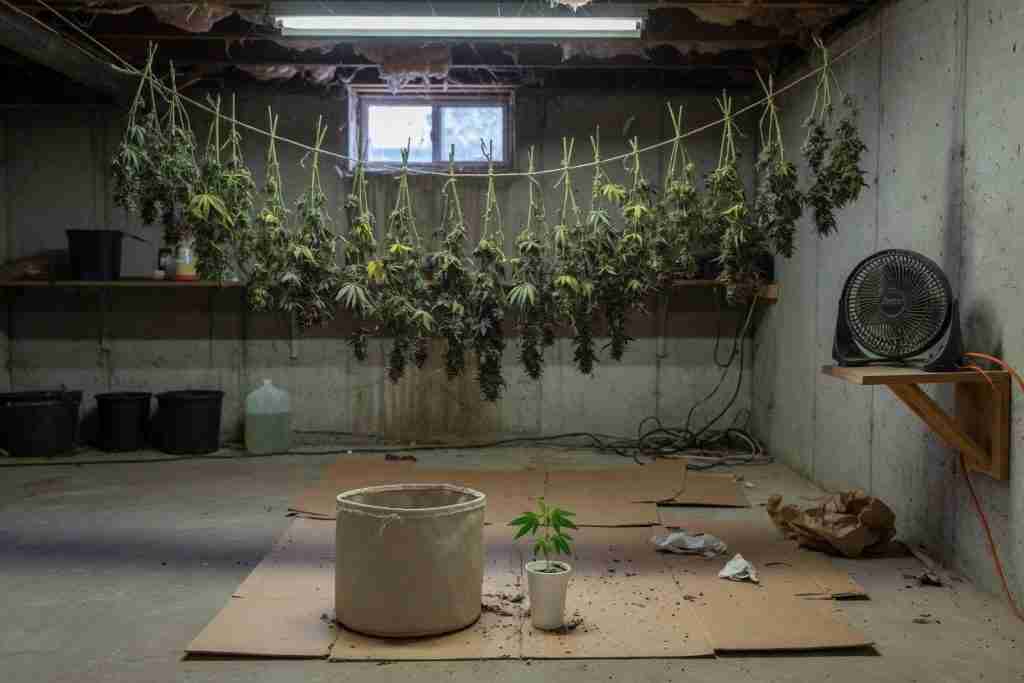
July flower still has to dry. A garage that hits 28 °C with no fan will hay the terpenes and invite mold on thick colas. Dark, air moving, stems snapping in about 7–14 days depending on the room. Then jars. The dry and cure walk is dry, cure, and store cannabis buds. Do the dry while the second plant is in the yard. The hanging branches are not a fifth live plant. They are inventory. If the dry room is also the only indoor start shelf, move the seedlings. Ethylene and humidity from a wet harvest do not help a two-week auto.
What you actually take to jars
Two outdoor harvests in the north are two modest inventories, staggered and dry. A first-crop auto in a 19-litre pot under June sun can be a real jar. The second is smaller and still worth doing. A photoperiod you light-depped into July can be the heavier plant of the year, with a fall photo or a fall auto behind it. The work is the calendar and the count. A first grow walk: growing weed. Things that actually move yield: most important things growing cannabis.
Cannabis harvest in northern climates questions that keep coming up

Can I get two outdoor cannabis harvests in northern climates?
Yes, in a long enough window, with autos staggered, or with photoperiods under honest light dep. Coastal B.C. and southern Ontario are the Canadian yards where two cuts show up most often. Prairies and Atlantic Canada can squeeze a tight second auto if the first plant is down in July. Yukon, NWT, and Nunavut summers are often too short for two outdoor cuts.
Do photoperiods give two outdoor harvests on their own?
They wait for long nights, then they still need weeks of flower. That is one fall crop in most northern yards. Two photoperiod harvests need twelve hours of light-proof dark, every day, on the first run, then a second plant for the natural flip. A leaky tarp is still one harvest, delayed.
Is a third outdoor harvest normal?
In a Mediterranean auto garden, sometimes. In Halifax, on the Prairies, and in the North, treat a third outdoor cut as a curiosity, not a plan. Two is the ambitious year. One good auto is the honest year when spring is late and September is wet.
What about Quebec and Manitoba?
Quebec prohibits recreational home cultivation. Age there is 21. Manitoba allows up to four plants per household indoors only, since 1 May 2025, in a space people under 19 cannot reach. This outdoor two-harvest page is not a rec yard plan in either place. Indoor cycling of four holes is the Canada-cultivation page.
When do I plant out?
After last frost, when nights hold near 10 °C. Southern Ontario often clusters around mid-to-late May. Prairies and much of Atlantic Canada, late May to early June. Territories, June. Start autos one to three weeks before that move, photoperiods earlier if they will live outside as a single fall crop. Seedlings stall in cold soil even when the app says no frost.
Does this shop sell autoflower seeds?
The live catalog is named feminized photoperiods. Autos are the calendar tool this page teaches. Buy the clock that matches your frost dates. Fast photoperiods under light dep, or one photoperiod as the fall crop, still come from those named packs. The store: cannabis seeds store. Seeds packed in Eastern Canada: cannabis seeds from Canada.
Can I run four in flower and four in veg?
Not as a Canadian rec household. Four live plants. Cycle the holes. Stagger inside that four. A seedling you started for the second run counts as soon as it is a plant.
What if September is all rain?
Cut. Dry. Take the second harvest early. Open structure and a fast flower beat a week of faith. The jar you actually cure is the cannabis harvest in northern climates. The cola you leave out for a perfect fade in a nor’easter is a science project.