How to Create a New Cannabis Strain Step by Step


A new cannabis strain is not a cute name on a jar. It is a line of plants you can grow again and get the same kind of plant back. You pick two parents on purpose, move pollen on purpose, grow the kids, throw most of them out, and keep the ones that match the list you wrote down before you started. Ranking growers still mix up a lucky F1 cross with a finished cultivar. They are not the same job. This page walks the real order: goal, parents, isolation, pollen, a controlled pollination, seed harvest, an F1 hunt, then the slow work of locking a new marijuana line. Shop starter packs in the cannabis seeds store if you still need regular seed. The rest of the grow library is on the cannabis cultivation blog.
Canada’s recreational cap is four plants per household, so a home new weed strain project is usually one male, one female, clones of the keepers, and a lot of patience. You are not running a thousand-plant hunt. You are running a tight, labeled, honest hunt. Photoperiods give you the clock. Regular seed gives you true males. Feminized pollen is a different tool, and it lives on its own guide. Work in that order and you will not pollinate the whole tent by accident. However, if you skip the notebook, you will forget which plant threw the gas smell, and then you have a story, not a strain.
What a New Cannabis Strain Actually Is

Two sisters from one pack can look like cousins. Same parents. Different shuffle. That shuffle is a phenotype. A strain, in the way breeders mean it, is a population that keeps throwing a similar plant when you grow the seed. One pretty plant you clone is a keeper cut. It is a new pot strain only in the clone-only sense. Seed that does not repeat the look is a cross, not a finished line. The long walk on faces versus genes is already written: cannabis phenotypes in breeding.
People also look this up as “how are new weed strains created” and “can I just cross two plants once.” You can. The first kids are F1s. They often grow hard. They also split when you seed them again. F2 is where the family fights in public: short, tall, loud, quiet, eight weeks, twelve weeks. If you name the F1 and sell it as “stable,” you are selling a lottery ticket. A clone of the best F1 is honest. A seed line needs more generations. Indica and sativa labels are groups, not a breeding plan: indica vs sativa vs hybrid.
Write a Goal You Can Score

“Better weed” is not a goal. “A nine-week plant with Parent A’s fuel nose, Parent B’s tight internodes, and no nanners when the tent runs a little dry” is a goal. Write three to five traits. Rank them. You will throw plants that fail the first two. If you chase ten traits at once, you will keep everything and lock nothing. Tag every plant. Date the flip. Smell the jar after a real cure, not the stem in week six. Resin notes sit on increase resin production. Flower timing sits on growing cannabis flowering stage of growth.
Look, the notebook is the strain. Next year you will not remember which male was the stretchy one. Write vigor, internodes, days to first pistils, days to cloudy trichomes, calyx-to-leaf, mold after a wet week, and whether the plant herms when you forget a watering. A pretty cola that nanners is not a parent. Herm risk on reversed lines is hermaphroditism risk in feminized seeds. Sexing itself is cannabis plant male female.
Gear, Space, and the Four-Plant Cap
You need two rooms, or two tents, or one tent and a brutal habit of bagging branches. Pollen is dust. Fans move it. A male in the same airflow as your sinsemilla crop will seed everything you trained. Ranking how-tos still list parchment, a small brush, coin envelopes, silica, a freezer, labels, and a paper bag. That list is right. Add a cheap headlamp and a spray bottle of water for after you pollinate, so stray grains on your shirt do not walk into the flower tent. First-crop planning if you are still learning the room: planning your first cannabis crop. Soil is easier than a fancy hydro stack when you are learning to breed. You are watching plants, not chasing a gram-per-watt record. Keep the feed boring so a deficiency does not look like a phenotype.
Regular photoperiod seed is the breeding pack. You need males. Feminized packs hide them on purpose. Pack types: feminized and regular cannabis seeds. Why gardens buy fems when they are not breeding: why choose feminized cannabis seeds. Photoperiods let you veg a mother while a clone flowers for pollen: photoperiod cannabis seeds explained. Autos flip on age. You can pollinate an auto, sure. You cannot hold the parent in veg. That makes a new marijuana strain from autos a one-shot unless you bank pollen and seed fast.
Clone the Parents Before You Gamble

A parent you chop is gone. Take cuts of every candidate before 12/12. Root them. Hold the mothers in veg. Flower the copies. If the flower copy wins, the mother is still sitting there. If the flower copy herms, you still have the veg plant to dump. How to take the cut: how to clone cannabis. Water-cup method: how to clone cannabis in a cup of water. Holding the donor: mother cannabis plants. Seed versus clone when you are not breeding: cannabis seeds vs cannabis clones.
How you pick the female
Grow the females in the same light, same pots, same feed. Score structure in veg. Score stretch in the first two weeks of flower. Score smell and resin after a cure, not on the wet plant. Keep the one that hits your written list. A huge yielder that smells like hay is a hay plant. A small plant that smells like the goal and finishes on time is the mother. Veg notes: cannabis vegetative stage. Seedling cups: growing cannabis seedling stage of growth.
Pick a Male That Carries the Trait

Most new growers pick the female with their heart and grab any male that shows sacs. That is how you smear a good girl with a floppy boy. Males pass internodes, stretch, finish window, and a lot of the nose. You cannot smoke the male. You can still smell the stem rub. You can still watch how tight the plant stacks. You can still toss a male that herms, stretches into the light, or mildews first. Flip males with the same clock as the females, in their own tent. Sacs swell around week two to three of flower. Open sacs dump yellow dust. That dust is the whole project.
Keep a father as a veg plant too. Flower a clone when you need pollen. Frozen pollen dies if it gets damp. A living father is the backup. The pollen explainer on this site is cannabis pollen. If you only have females and you want fem seed, that is silver and a reversed plant, not a true male. Do that job from make feminized cannabis seeds. Do not mix STS spray in the same tent as a plant you still want as sinsemilla. When two males look close, keep the one that stacks tighter and finishes with the female’s window. A male that wants twelve weeks will drag an eight-week girl every generation.
Collect Pollen, Then Pollinate on Purpose

Turn the fans off. Wear a shirt you will wash. Put parchment under a ripe male branch, or slip a clean bag over it, and tap. You want a pinch of dry yellow powder, not green crumbs and not wet sludge. Label the envelope with the male’s tag and the date. Dry it a day with silica if your room is humid. Use it soon, or freeze it bone-dry in a sealed vial. Warm pollen on a wet cola is a paste. Paste does not travel down a pistil.
The female is ready when pistils are thick and white, usually week two to four of flower. Earlier and there is not much surface. Later and the cola is already stacking calyxes and you get fewer seeds for the mess. Isolate her. Brush a little pollen onto the hairs of the sites you chose. You do not frost the whole plant unless you want a seed crop and no smoke. A little pollen goes a long way. Then mist the air, change your shirt, and keep that plant away from the rest of the garden for a day. Water on stray grains knocks them down. It does not make you safe if a male is still shedding in the same tent.
One branch for seed, the rest for the jar
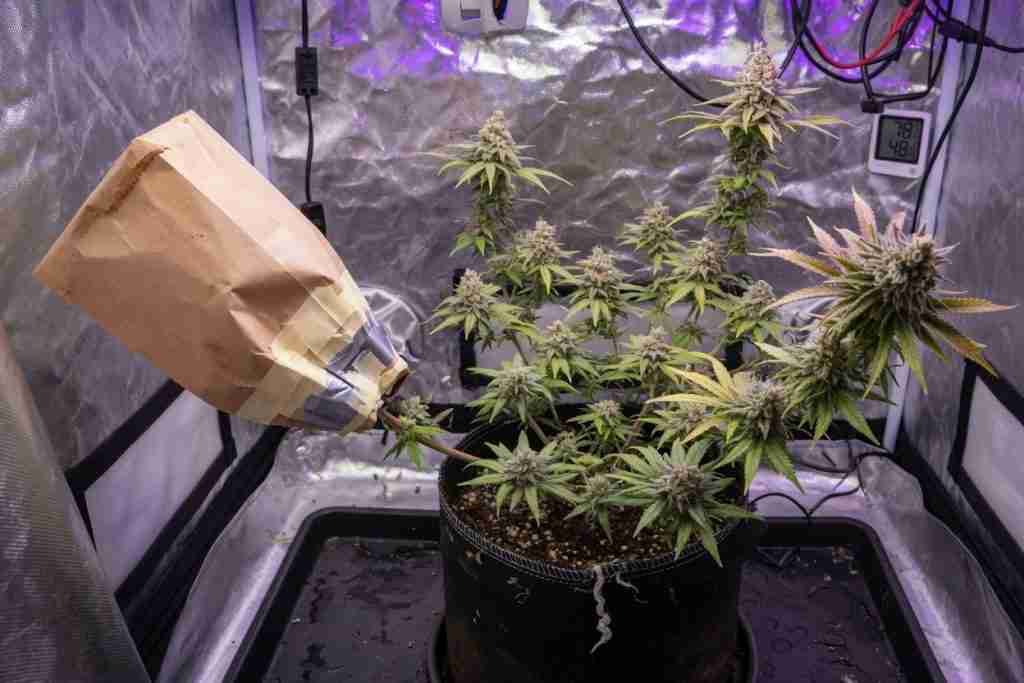
Bag one lower branch. Brush pollen inside the bag. Tape the mouth on the stem. Leave it a day. Pull the bag off outside the tent if you can. That branch makes seed. The tops stay sinsemilla if you did not leak. This is how a four-plant house still gets a new weed strain and a smoke. Label the seeded branch with tape. At chop you will thank yourself. Harvest and cure for the seedless tops is the usual walk: harvest and cure cannabis plants.
Let the Seeds Finish, Then Store Them

Seeds take about four to six weeks after a good pollination. Calyxes swell. You will see stripes through the bract if you look. Ripe seed is hard, dark, often tiger-striped. Pale green seed is young. Young seed pops poorly and makes weak plants. Leave the seeded branch on the plant until the seed is hard, even if the seedless tops are ready a week earlier. You can cut the ripe tops and leave the seeded arm a little longer if the plant will take it.
Dry the seeded flowers until they snap. Break them up over a tray. Seeds fall. Toss the pale ones. Air the keepers a few days in a bowl, then a jar with a dry pack in a cool dark drawer. You are storing seed, not flower. Do not invent a magic germ number. Named packs on this site have their own floor on the FAQ. Your homegrown seed is untested. Pop extras. Write the date on the jar. A new pot strain you cannot sprout next year is a one-off.
Grow the F1 and Hunt the New Marijuana Strain

Those seeds are F1 if the parents were two different lines. Grow as many as the tent and the law hold. Label every cup. Clone keepers before flip if they are photoperiods. Run the same room so you are comparing plants, not corners. F1s often look closer to each other than F2s will. You are still hunting. One plant will be the one you wanted. Most will be “fine.” Fine is compost unless you have space. Score against the notebook, not against a social-media cola.
Do not name a strain until you have a clone that repeats, or seed that repeats. A single F1 winner is a cut. Keep it. Flower it twice if you can. If it still hits the list, that cut is your new cannabis strain in the clone-only sense. If you want seed that other people can pop, you are not done. You are at the start of stabilization. People also ask how long this takes. One cross and a hunt is a season. A seed line you can trust is years. There is no shortcut that skips the culls. Do not steal a catalog name and slap F1 on it. Call it what you crossed, with your tag, until the line earns a short name you can say out loud.
Stabilize: F2, Backcross, and Feminized Seed
F2 is the cross of two F1s, or of an F1 onto itself through a brother-sister pair. Traits split. This is the generation that teaches you whether the fuel nose was luck. Grow more plants, not fewer. Keep the ones that still hit the list. Cross those. F3 and F4 get tighter if you are ruthless. An IBL, an in-bred line, is that work done until the pack grows like a family instead of a crowd. Backcrossing (BX) is taking a winner back to one original parent to pull a trait harder. BX1 is the first return. It can lock a nose and also drag back a stretch you already dumped. Write down what you are pulling, and what you are willing to drag.
S1 seed is a female reversed onto herself. You get fems. You also stack whatever made her herm-prone if you were sloppy with the reverse. Use it when you have a clone-only keeper and you want seed of her, not when you are still hunting a male. The how-to is the feminized page, not this one. Regular males keep true XY pollen in the line. If your new marijuana strain will be a seed pack, decide early: regular for breeders, fems for growers who do not want boys. Both can be honest. Mixing the story is how forums get loud. Line breeding is simpler than it sounds: keep brother and sister that both hit the list, cross them, grow the kids, keep the ones that still hit the list. Repeat until a pack of ten looks like a family, not a rummage sale. That is the work hiding under every famous new pot strain that actually repeats.
Pros, Cons, and Real Specs
Pros: you pick the traits your room actually needs. You can keep a cut that no catalog has. You learn sexing, pollen, and selection in a way a shop pack never teaches. You can pollinate one branch and still fill jars. A small, labeled project beats a fantasy of twenty strains a year.
Cons: pollen is messy. One open male can seed a whole crop. Four legal plants is a tiny hunt. F1 names on the internet are often unstable. Stabilizing eats years and tent space. Homegrown seed has no pack test behind it. Males take a tent you would rather fill with flower. Frozen pollen fails if it cakes. STS work can stress plants into herms if you treat it like a party trick.
Specs you can hang on the wall. Male sacs open about two to three weeks into 12/12. Females take pollen best about two to four weeks into flower. Seeds fill for about four to six weeks after a clean hit. Dry seed a week, then jar it cool and dark. Pollen is best used fresh; dry and frozen it can last months, not forever. F1 is the first cross. F2 splits. A clone-only “strain” is one genotype. A seed strain is a population. One branch bag makes seed without wrecking the tops if you do not leak. Regular seed for true males. Photoperiod mothers so you can rerun the cross. Autos if you accept a one-shot parent. Brush pollen on white pistils, not on brown hairs at the end of flower. After you pollinate, keep the seeded plant’s runoff and leaf trash out of the flower tent. Pollen rides on everything you touch.
Questions Growers Ask About a New Cannabis Strain
Can I create a new weed strain with two fems? You can reverse one and pollinate the other. That is feminized seed. It is a real cross. It is not a regular line with a true male. Use the feminized guide for the spray and the timing.
Is an F1 a new pot strain? It is a new cross. It is a strain in the clone-only sense if you keep the winner. It is a seed strain after you hunt more generations and the kids look like the parents you kept.
How many plants do I need? As many as the law and the tent hold. Four plants is a look. Thirty is a hunt. A hundred is how catalogs talk. Be honest about the sample.
When do I pollinate? When pistils are white and plentiful, usually week two to four of flower. Brush a little. Bag the branch if you still want smoke.
How do I know the seed is ready? Hard, dark, often striped. Soft and green stays on the plant. Dry, then store cool.
Do I need a lab? A nose and a notebook get you a home line. A lab tells you numbers. Neither replaces growing the plant twice.
What if pollen hits the whole tent? You get seedy marijuana and a lesson. Next run, males live in their own box. Wash the clothes. Keep the new cannabis strain work on purpose, or do not do it in the flower tent at all.
Do I register the name? There is no global strain office that stamps your cross. A name is a label you use. If you ever sell seed, the honest label is the two parents and the generation: F1, F2, BX1. People will still call a clone-only cut by a nickname. That is fine if the cut is real and the seed story is not fake.
Can I breed outdoors? You can, if you are the only pollen in the wind. A neighbor’s male, or a hemp field, will write itself into your new weed strain without asking. Indoor isolation is how you know who the dad was. Outdoor work is for open pollination when you accept mystery dads.
However you run it, the steps do not change. Write the goal. Clone the parents. Isolate the male. Move a little pollen. Wait for hard seed. Hunt the kids. Keep the ones that match the page you wrote on day one. That is how a learner makes a new cannabis strain that still looks like itself next year.