How to Control Flowering with Photoperiod Seeds for Maximum Yields

You can veg a photoperiod plant until the tent looks full, then you can tell it to make flowers. That is the whole trick behind flowering with photoperiod seeds. Autos do not wait for you. These plants do. Flowering with photoperiod cannabis seeds is you holding the calendar. Flowering with photoperiod marijuana seeds is the same job with a different search term. The plant still reads night length. You still decide when night gets long.
Maximum yield is not a magic 12/12 sticker. It is a plant that filled its space, a dark period that stayed dark, and a flip you timed before the stretch kissed the lamp. However, a lot of first grows miss that by a week. They wait until the canopy already looks “done,” then they flip, and two weeks later the tops are bleaching. This page is how you control flowering with photoperiod seeds so the jar is heavier, not just prettier on week two.
Autos run on age. Photoperiods run on night. That is why a photoperiod pack can sit in veg while you fix a weak root, train a screen, or wait for a clone to catch up. Named feminized packs on a listing are photoperiod unless the card says auto. You still have to flip them. You still have to keep that night honest. Walking into a tent that already smells like week six, you can tell who respected the clock.
You will see people argue about 11/13, 13/11, and a fade from 18 down to 12. Fine. The first job is still the same. Build a frame. Pick a flip height. Make twelve hours of dark that stays dark. Then you can tinker. Skipping those three and buying a new bloom bottle is how a closet stays light on weed.
What Flowering with Photoperiod Seeds Actually Controls
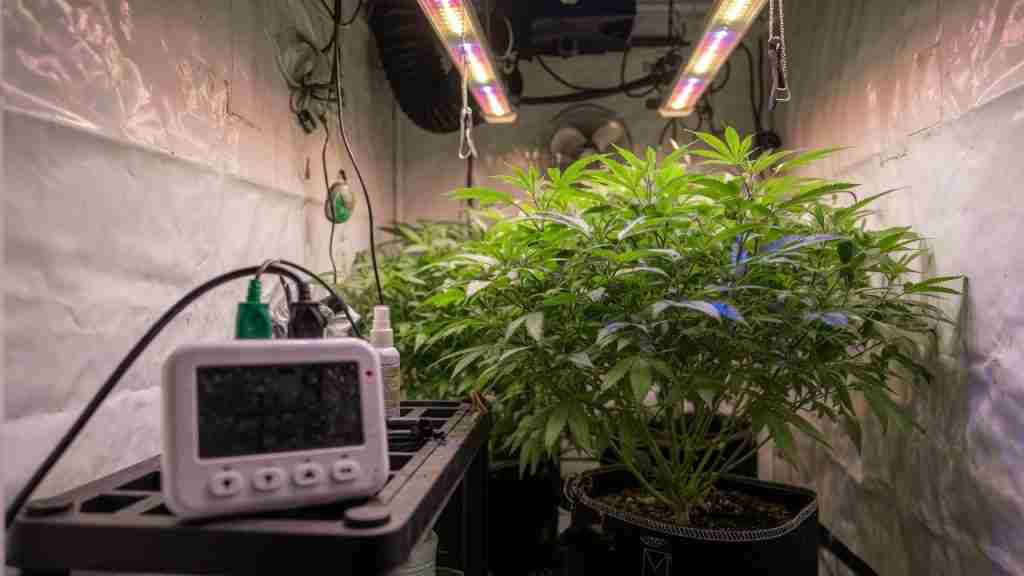
Photoperiod weed waits for a season. Long days mean leaves and stems. Long nights mean flowers. Indoors you fake the season with a timer. Outdoors the sun does it, unless you pull a tarp. That is control. You are not making the plant smarter. You are choosing the day the clock starts.
Control also means size. Veg longer and you get more sites, as long as the light still hits them and the pot can feed them. Flip a tiny plant and you get a tiny harvest. Flip a monster in a short tent and you get a heat-burned ceiling. The sweet spot is a frame you trained, then a night long enough to lock flower, then weeks of honest light on those sites. That is flowering with photoperiod seeds for maximum yields in one paragraph.
Count nodes, not just days. A seedling with three or four nodes is still a kid. Around eight to ten nodes, with pre-flowers at the joints, you have a plant that can actually flower well. Clones skip some of that wait because they already came from a mature mom. Seed-grown girls need that extra veg. Flip because the canopy matches the room, not because a calendar app pinged “week four.”
Mothers stay in veg forever if you keep the days long. That is another kind of control. Take cuts, root them, veg the keepers, flip the rest. One photoperiod seed can feed a year of runs if you like the plant. Autos do not give you that. They age out. Photoperiods wait. Use that.
Night length is the switch

People talk like the lamp turns buds on. The plant is counting dark. Leaves hold a pigment that flips form in light and slowly flips back in the dark. When night stays long enough, flowering hormones get the green light. Interrupt that night and the count resets. A phone flashlight at 2 a.m. is not “just checking.” It is a fake sunrise.
Most indoor catalogs flower hard on 12 hours of true night. Some lines will start pistils with a little less dark than that. Some old tropical lines want even longer nights. You do not need a lab. You need a timer that actually shuts the lamp off, a tent that does not glow, and a note on the pack for flower weeks after the flip. The weeks on a photoperiod listing start when nights get long, not when the seed cracked.
Check the dark like you mean it. Zip the tent. Kill the room lamp. Sit inside for a full minute. Let your eyes catch up. If you can still read a label, it is not dark. Tape the little LEDs on the humidifier, the controller, the power strip, even the inline fan brick. A phone camera on night mode will show a glow your eyes miss. Do this before you flip, while a leak is still cheap to fix.
Outside, a porch flood is the same leak. The plant does not know it is “just a security light.” It knows the night got shorter. Cover the plant, move the lamp, or pick a darker fence line. Indoors or out, flowering with photoperiod seeds is a darkness job first.
Flowering with Photoperiod Cannabis Seeds Indoors
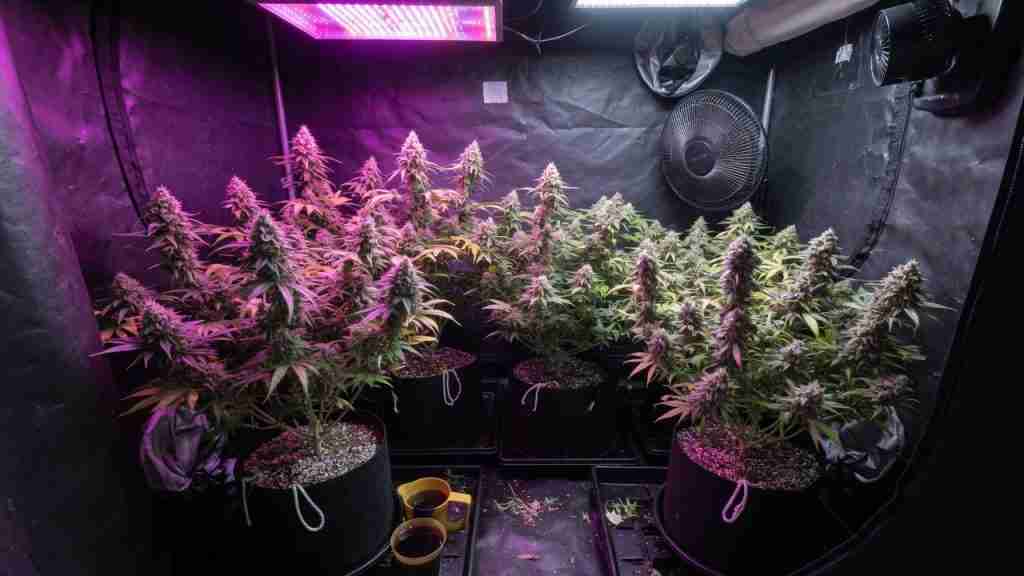
Indoors you own the season. Flowering with photoperiod cannabis seeds here is a two-speed bike. Veg is usually 18 hours on and 6 hours off. Some people run 20/4. Plants still like a rest. 24/0 veg can work, though roots and stretch often look happier with a real night. Flower is 12 on and 12 off unless you have tested a longer flower day on that exact cut.
Keep veg until the plant is sexually mature and the canopy matches the room. Pre-flowers show at the nodes, little teardrops with two white hairs on a female. That is a good sign you can flip. A seedling with three nodes will make sad flowers if you rush it. Give it a frame. Then flip. The harvest gets bigger because you built more factories before you asked for product.
Typical home veg from seed is four to eight weeks after the plant leaves the seedling stage. A clone from a mature mom can be ready in two to four weeks of veg if you already trained it. A 2×2 tent wants a shorter veg than a 4×4. The pot matters too. A plant in a 3-gallon fabric bag will stall if you veg it like a 10-gallon tree. Roots fill the bag, then they circle, then they sulk. Flip when the bag is well rooted and the canopy is even, not when you “feel like” a longer veg.
18/6 is the workhorse veg schedule. 20/4 is fine if your room runs cool and you want a little extra daily light. 24/0 can push growth, though a lot of plants stretch cleaner with a real rest. Flowering with photoperiod cannabis seeds indoors does not need a fancy fade. One day it is 18/6. The next day it is 12/12. The plant notices the longer night. That is the point.
When to flip for maximum yield
Flip on size, not on boredom. Photoperiod plants stretch after the switch. Many hybrids about double. Sativa-leaning lines can go two and a half or three times. Indica-leaning bushes might only add half again. Read the listing for stretch. If it is silent, assume double and leave a safety gap to the lamp.
A simple home rule: flip when the trained canopy sits at about half the final height you can live with. Another way to say it is 50 to 70 percent of the usable vertical space, counting the pot, the light, and the hanging gap the manufacturer wants. In a typical 5-foot tent with a thick LED, that often means flipping around 18 to 24 inches of plant. A 4-foot cabinet wants an earlier flip. A 7-foot room can veg longer and stack more sites.
Do not flip a plant that is still in shock. A fresh transplant, a hard topping yesterday, a mite outbreak, or a dry-back that made the leaves taco — wait. Give it a week of honest veg so it can stand up. Flowering on a stressed plant is how you get nanners, stalled stretch, or a canopy that never fills. The timer can wait. The plant cannot un-stress in the dark.
Sexing is easy on feminized photoperiods because almost every plant is female. Regular seeds still throw boys. Boys show pollen sacs, little grape clusters without hairs. Pull them before they open or they dust the room. You can wait for pre-flowers in late veg, or you can flip a small tester and read it in week two. Either way, do not mix a mystery male into a flower tent you care about.
Stretch math you can do with a tape
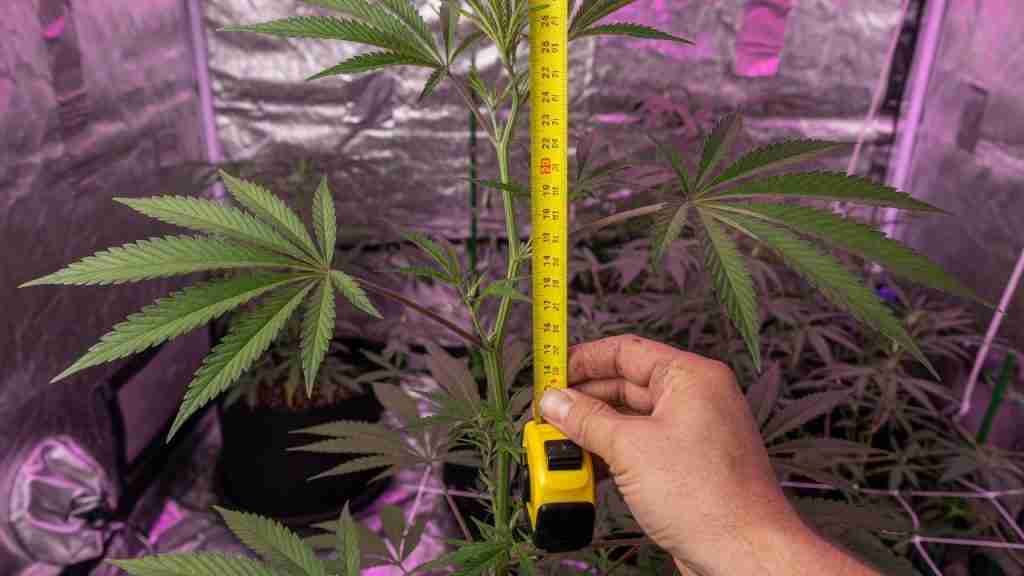
Measure usable plant height. That is tent height minus pot, minus fixture, minus the gap you need so leaves do not cook. Divide that number by the stretch you expect. Flip near that height, measuring from the soil to the average canopy, not the tallest single leaf.
Example. You have 40 inches of usable height. A 2× stretch line should flip near 20 inches. A 1.5× bush can wait until about 27 inches. A 2.5× stretch should flip nearer 16 inches. Write the date on tape on the pot. Flower week one starts that night, not the day you saw the first hair. People argue about calendars. The tape does not.
How to set a clean 12/12
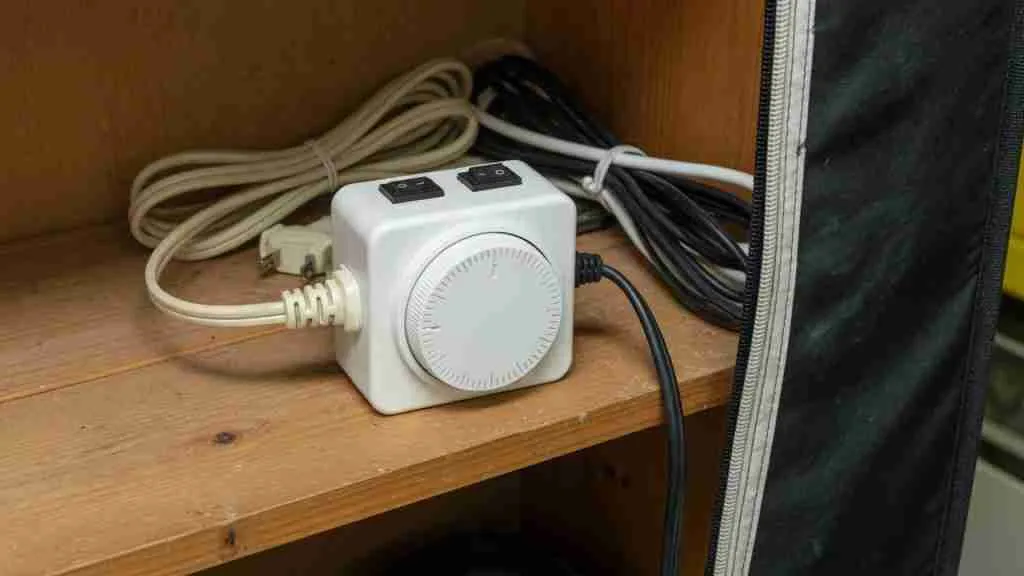
Pick a 12-hour window and stick to it. A lot of home growers run lights at night so the tent dumps heat when the house is cooler. That is fine. The plant does not care which 12 hours, as long as they are the same every day. Program the timer. Watch it click off once with your own eyes. Some smart plugs keep a ghost schedule. Test it.
You do not need to fade from 18 to 12 over a week. Most plants take a straight flip. Pistils show in about a week, sometimes two. Raise flower intensity after the stretch starts, not the second the timer changes, if the tops are still thin. A sudden blast on a soft canopy can bleach the very sites you wanted to keep. Walking into the tent on flip day, a notebook and a working timer beat a new bottle of bloom juice.
Mechanical plug-in timers are boring and they work. Digital ones drift after a power blip unless they have a battery. Smart plugs forget Wi-Fi. Watch the first night. Watch it again after a storm. Exhaust and oscillating fans can stay on 24 hours. The lamp is the thing that must sleep. If the carbon filter and the light share one timer, you cook smell into the house at lights-off. Split those jobs.
Daylight saving time has wrecked more 12/12 rooms than people admit. The phone jumps an hour. The cheap timer does not. Suddenly night is 11 hours. Check the clock the weekend the time changes. Write “flip night” on tape on the pot so you are not guessing week numbers later. Oh, and keep the tent closed when the lamp is off. A peek “just to see” is a leak with extra steps.
Flowering with Photoperiod Marijuana Seeds Outdoors
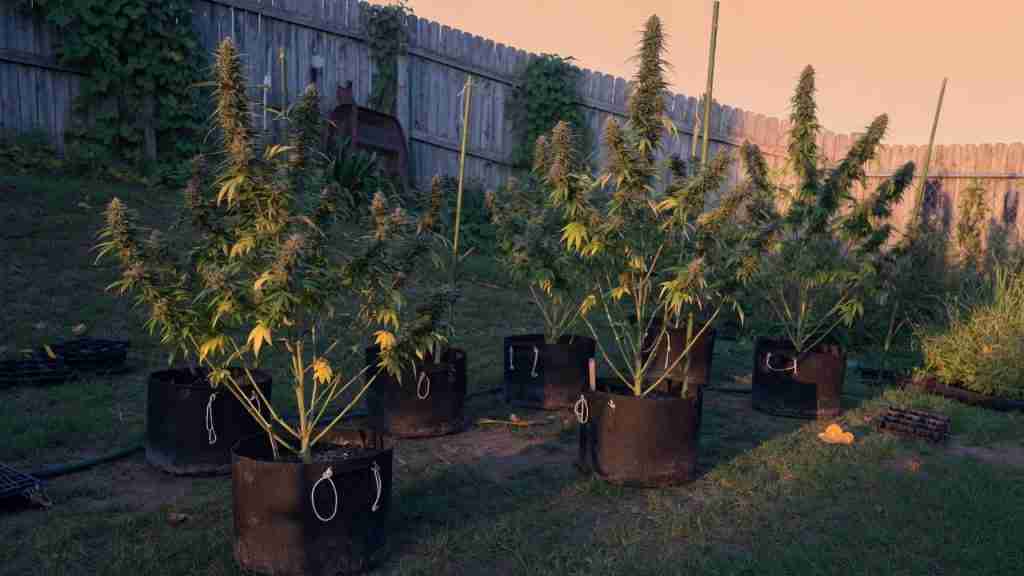
Outside, flowering with photoperiod marijuana seeds follows the sun. In the northern hemisphere, nights get long after midsummer. Most photoperiods show in August into September, then they need their listed flower weeks after that. An “8-week” pack still needs those 8 weeks after the outdoor flip. If frost hits in early October, a late dessert line will not finish because you wished. Match finish to first frost, plus a little weather padding.
Streetlights, porch floods, and a neighbor’s security lamp can keep a yard plant leafy. The plant sees night the same way it does in a tent. Cover it, move it, or pick a darker corner. Canada’s recreational cap is four plants per household, not per adult. Quebec still bars recreational planting. Manitoba indoor-only since 1 May 2025. Follow the rule where you live. The light clock does not replace the law.
Latitude sets the outdoor flip. Farther north, nights lengthen sooner after midsummer, so photoperiods often show earlier. Farther south, they can sit leafy later into the year. An “early” pack is built to finish before frost. A long dessert line wants a long, dry autumn. Match the pack to your first frost date plus a couple of wet weeks of padding. A 10-week flower that starts in mid-August is a mid-October chop. If October is a rain month where you live, pick a faster line or run light dep.
Pots outdoors still help you. You can drag a fabric bag away from a floodlight. You can bring it under a porch for a storm. In-ground plants are stuck with the yard you gave them. Either way, keep water off the buds late. Morning sun that dries dew is a gift. A dense cola that stays wet overnight is a mold bet you will lose.
Light deprivation for an earlier chop
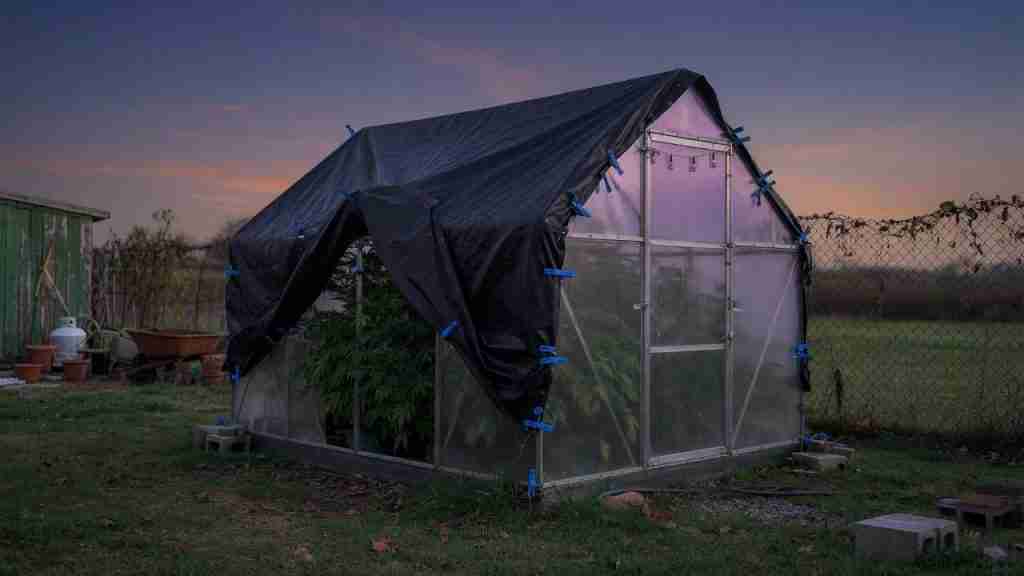
Light dep is a tarp or a greenhouse blackout that forces 12 hours of dark while summer days are still long. You get an earlier harvest, sometimes two outdoor rounds if you start early and the climate allows. Pull the cover at the same time every day. A sloppy tarp that leaks sunset is a confused plant. Aim to finish before autumn rain if you live where September gets wet. Mold loves a dense cola in a damp week.
Start the blackout once the plant has a frame, the same as an indoor flip. A tiny transplant under a tarp still makes a tiny jar. People use light dep to beat October. They do not use it to skip veg. You still build the plant, then you steal autumn early.
A working dep day looks like this. Cover at the same clock time, every day, for twelve hours. Uncover at the same clock time. No “I was late so I left it an extra hour.” That extra hour is a leak. The tarp has to be light-proof, not just shade cloth. If you see the greenhouse glow from the road, the plants see it too. Clips, magnets, and a tight hem beat a floppy blanket that lifts in wind.
Humidity jumps under a closed tarp. Crack a little exhaust or a fan inside the dark so the air moves. Wet still air plus thick buds is how you get bud rot in August. Two outdoor rounds are possible if you start early, dep the first crop in midsummer, chop, and flip a second set while days are still useful. That is extra work. It is also how some short-season yards get two jars instead of one soggy October.
Stretch, Training, and Headroom

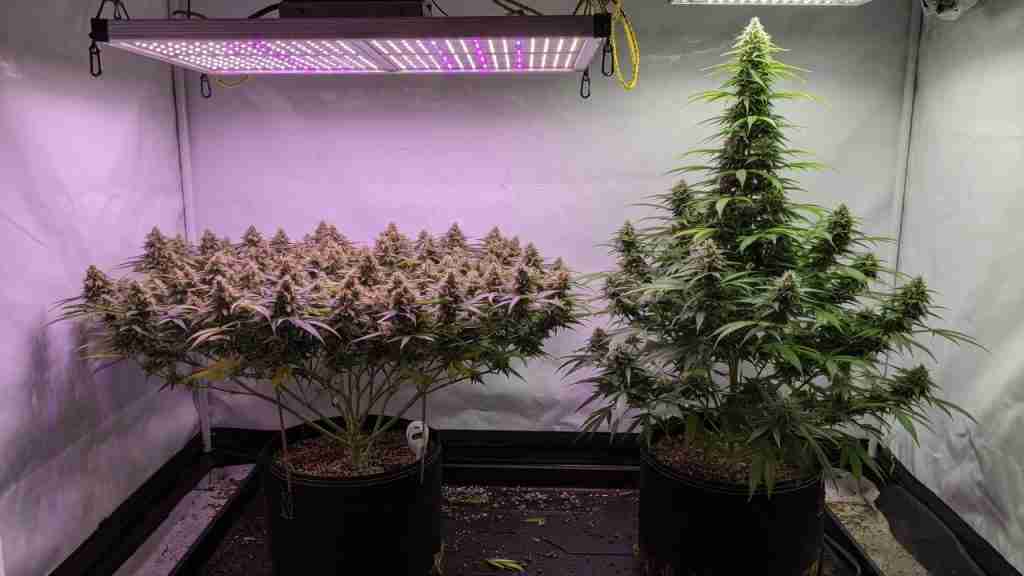
The first two or three weeks after flip are stretch. Internodes open. The plant races for light. This is when a well-trained canopy turns into a flat table of tops, or a messy Christmas tree that shades itself. Yield hides in that choice. A sea of even tops uses the lamp. One giant spear with popcorn below wastes watts.
If you topped in veg and spread the arms, stretch fills the screen. If you never trained, stretch makes a pole. You can still tuck and tie in the first ten days of flower while stems are flexible. After that, leave it alone. Heavy topping in week four of flower costs sites the plant will not replace in time.
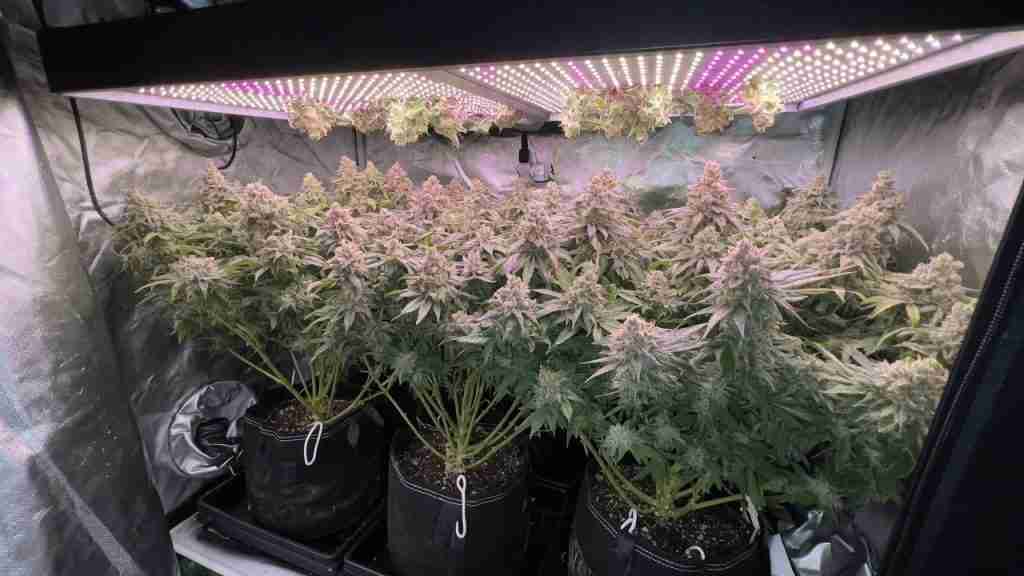
Raise the lamp as the plant climbs. A canopy that was 18 inches from the diodes on flip day can be 6 inches away by day 14. Heat bleaches faster than people think. If the tops taco, go pale, or smell like cooked sugar, lift the bar or dim it. Stretch is not a contest to kiss the light. It is a race to even tops. A clip fan across the canopy keeps stems thicker and helps the plant handle the extra intensity you will add later.
Sativa-leaning photoperiods can look like they will never stop climbing. They will. Most of the vertical jump is done by the end of week three. If a line is still adding internodes in week five, you may have a leak, a weak lamp that is making it reach, or a tropical cut that just wants height. Dim, raise, and tie. Do not panic-chop the main stem in bulk weeks.
Last training before you drop the lights
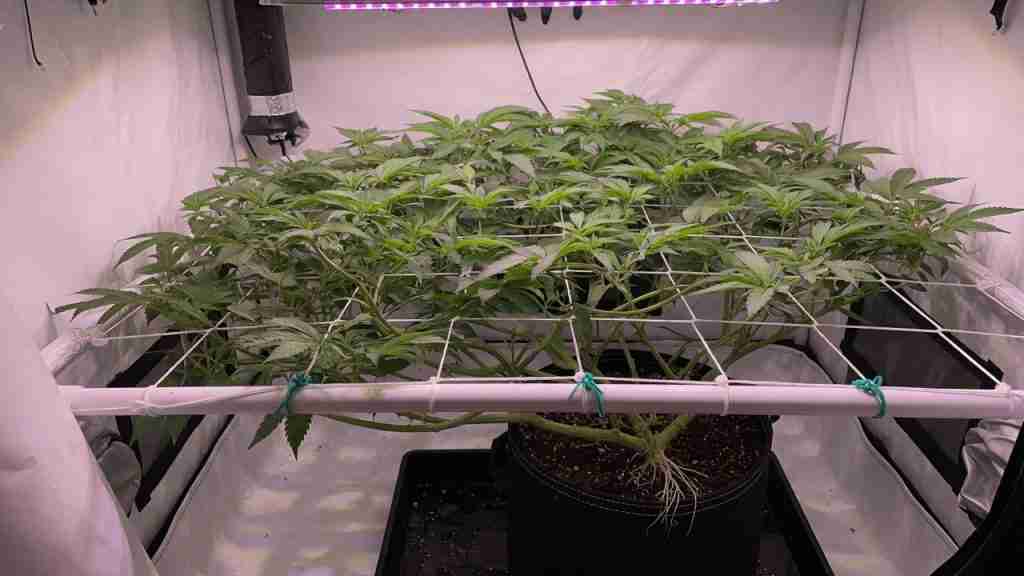
Finish topping, manifolding, and big bends at least a week before flip so the plant can heal. Low-stress ties can continue into early stretch. Lollipop the bottom third at flip, the stuff that never sees the lamp. Those sites steal. They do not pay. Do not strip the plant bald in week five. That is how you stall bulk.
A screen of green wants the net filled to about 70 percent before 12/12, because stretch finishes the fill. A sea of green wants many small plants flipped early. One plant in a 2×4 wants a wide bush, one top, then arms tied out until the footprint is full. Pick one map. Mixing a tall untrained plant with a screen in the same tent is how you shade your own work.
Lollipop means you strip the lower third, the stuff in permanent shade. Do it at flip or in the first ten days. Those popcorn sites steal sugar. They never swell. Leave the fan leaves that still feed a top until they yellow on their own, unless a leaf is laying on a bud and blocking light. A bald plant in week two looks “clean” on a forum. It also lost a lot of its solar panels.
Supercropping — a gentle pinch and bend on a tall stem — can save a stretchy top in week one or two. You hear a little crackle, then you splint it if it needs it. The knuckle that heals is strong. Do not supercrop woody week-six colas. They snap for real. Trellis nets, yo-yo supports, and bamboo in the pot are cheaper than a folded cola in week seven.
Week by Week After You Flip
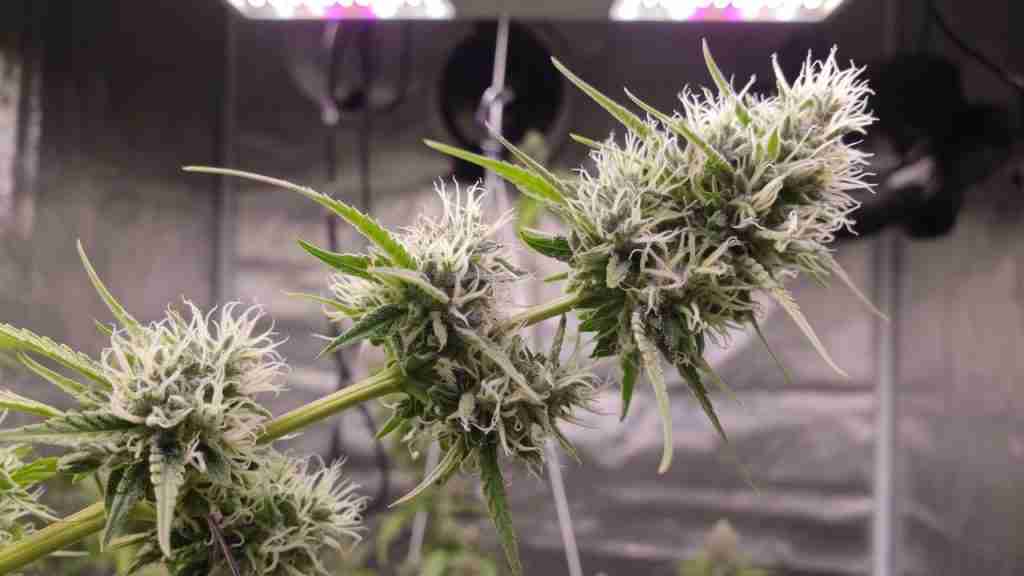
Count from flip day. Pack “8 to 9 weeks” means 8 to 9 weeks of 12/12, plus dry time after. Hybrid photoperiods often run 8 to 10. Long sativas can sit 11 or 12. Believe trichomes at the end, not a forum that chopped the same name last year in a different room.
Keep a simple log. Date of flip. Height that day. Stretch on day 14. First real smell. First support. First amber trichome. You will thank yourself the next run when you try to remember whether this cut doubled or only added half. Phone photos from the same corner of the tent beat memory.
Stretch, bulk, and the finish window
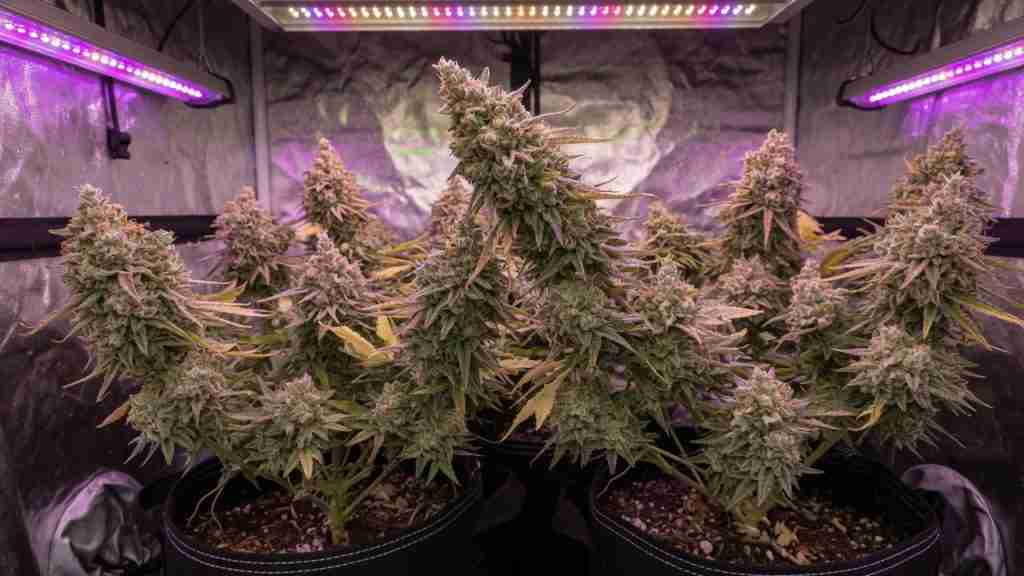
Weeks 1 to 3: stretch, white pistils at every node, still a little nitrogen in the feed so the plant can build. Raise the lamp as it grows. Last light defoliation if a leaf is sitting on a bud site. Tie the tallest arms. Water like veg, because the plant is still making leaves and stems. If you crash nitrogen to zero on night one, the plant yellows while it is still trying to double in size. Ease toward bloom, do not slam it.
Week 1 often looks like “nothing happened.” Then internodes open. Week 2 is when you see hairs at almost every joint if the dark was clean. Week 3 is the messy one. The plant is tall, the buds are still small, and you wonder if you flipped too late. You probably did not. This is stretch doing its job. Keep tying. Keep the lamp gap. Do not start a new training plan now.
Weeks 4 to 6: stretch slows. Budlets stack. Smell gets real. Carbon filter on. Switch fully to bloom feed. Humidity down toward the mid 40s. Check daily for pests hiding in the new density. Support colas before they fold. A folded stem in week five is lost weight. Calyxes pile up. Sugar leaves frost. This is bulk. The plant drinks more, then it drinks in pulses. Lift the pot. A light bag wants water. A heavy bag can wait. Wet feet in flower invite fungus gnats and sad roots.
Week 4 is a good time to look under the canopy with a flashlight. If you still have a jungle of baby sites in the dark, you can clean a little. If the canopy is already even, walk away. Week 5 and 6 are when overfeeding shows as burned tips and dark, clawed leaves. Back off. Burned tips do not un-burn. They just sit there looking ugly on the jar photos.
Weeks 7 to harvest: pistils curl and darken. Trichomes go from clear to cloudy. Some amber if you like that. Drop humidity near 40 percent so mold stays out of thick tops. Many people ease feed in the last 10 to 14 days and give plain water, especially in bottled salt grows. Living soil can just drink water at the end. Chop when the heads look done, not when a calendar app pings. Dry slow. A fat harvest in a hot closet still turns to hay.
Use a loupe or a cheap microscope on the trichomes, not the pistil color alone. Clear heads are still cooking. Cloudy heads are the usual chop for a brighter effect. A little amber is a heavier, sleepier jar for a lot of people. Wait too long and the buds keep swelling a bit, then they oxidize and the smell goes dull. Foxtails late can mean heat, too much light, or a cut that just foxtails. Cool the room a few degrees before you assume you need another two weeks.
Flush talk is loud on the internet. In bottled salt, a 7 to 14 day water-only finish can help the plant use what is already in the pot, and it can make the burn on the leaf fade. In living soil, you already fed the soil, so you just water. Do not starve a plant for a month and call it a flush. That is just a hungry plant. Hang whole or in big branches at about 60 degrees and 60 percent humidity if you can. Slow dry fills in the work you did after the flip.
Specs That Hold Flower in Place
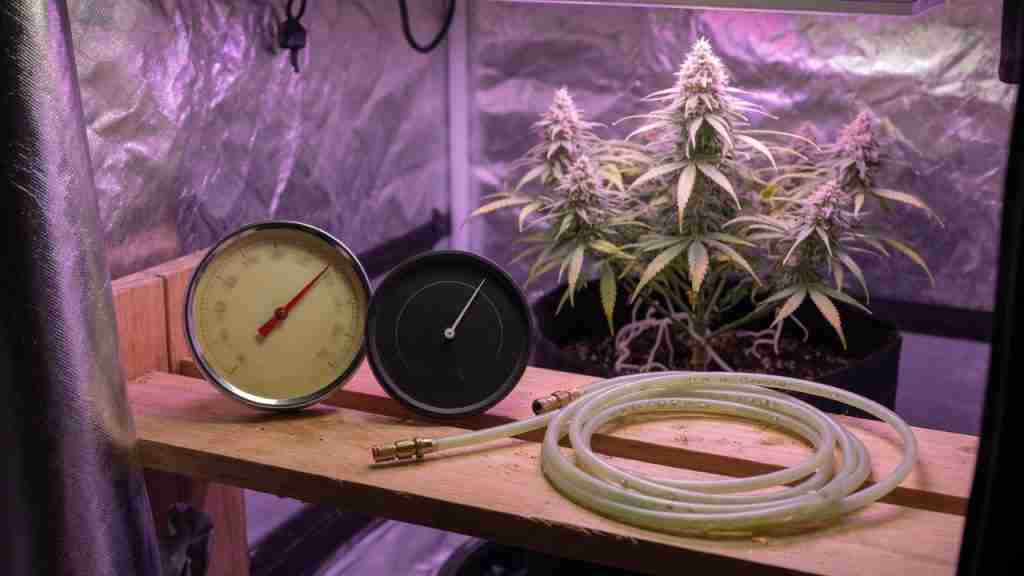
Numbers keep you honest. Your tent is not a magazine tent. Still, a working window beats guessing. Raise intensity as the plant can take it. If leaf edges taco and tops bleach, you went past the plant, not past a forum brag.
Light, heat, humidity, and feed numbers
| Spec | Target | Why it matters |
|---|---|---|
| Veg light | 18/6 (20/4 optional) | Long days keep photoperiods leafy |
| Flower light | 12/12 unbroken dark | Night length locks bloom |
| Seedling PPFD | 100–250 | Babies bleach easy |
| Veg PPFD | 300–600 | Stocky frame |
| Flower PPFD | 600–900, up to ~1000 with air and CO2 | Fills buds without frying |
| Flower day temp | 24–27 C (75–80 F) | Growth without a sauna |
| Night drop | A few degrees cooler | Helps color and rest |
| Early flower RH | About 50% | Stretch without a swamp |
| Late flower RH | About 40% | Thick buds mold in wet air |
| Soil pH | 6.0–6.5 | Food can get in |
| Coco pH | 5.8–6.2 | Coco likes it a touch more acid |
| Feed shift | Less N, more P and K after stretch | Leaves built the factory, now fill it |
| Flip height | ~50% of final height, or usable height ÷ stretch | Stops a canopy crash |
Daily light integral rises if you keep the same brightness and add an hour of day. That is why some rooms test 13 hours of flower light. More photons can mean more weight. It can also delay the finish a few days. Cultivar matters. Until you have data on your cut, 12/12 is the schedule that always works.
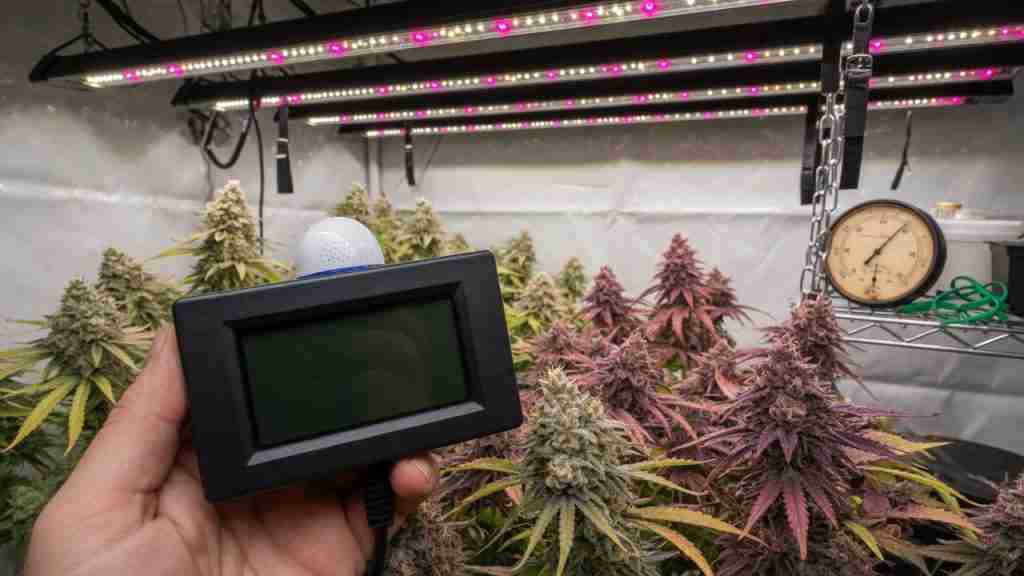
VPD is just “how thirsty is the air.” You do not need a lab chart on the wall. If the tent is hot and wet, buds rot and stems stay weak. If the tent is hot and bone-dry, the plant drinks itself into a crisp. Mid flower likes cooler nights and drier air than veg. A $15 meter that you actually look at beats a $200 meter you ignore. Put it at canopy height, not on the floor where it lies.
Water to a little runoff in coco. In soil, water when the pot is light, then soak it, then wait. Flowering plants hate a swamp. They also hate a dust-dry bag in week six when the colas are heavy. Even moisture. Room-temp water. pH in the window in the table. If leaf tips burn, your feed is hot or your dry-back is too hard. If the whole plant is pale in bulk weeks, you may have crashed nitrogen too soon or locked out the roots with a bad pH.
CO2 is optional. A sealed room with extra carbon dioxide can take PPFD near 1000 and stay happy. A leaky bedroom tent cannot. Dumping a CO2 bag into a zip tent with the exhaust roaring is throwing money at air you already dumped outside. Get the dark, the height, and the humidity right first. Those three move more yield for a home grower than a gas bottle.
Mistakes That Steal Yield
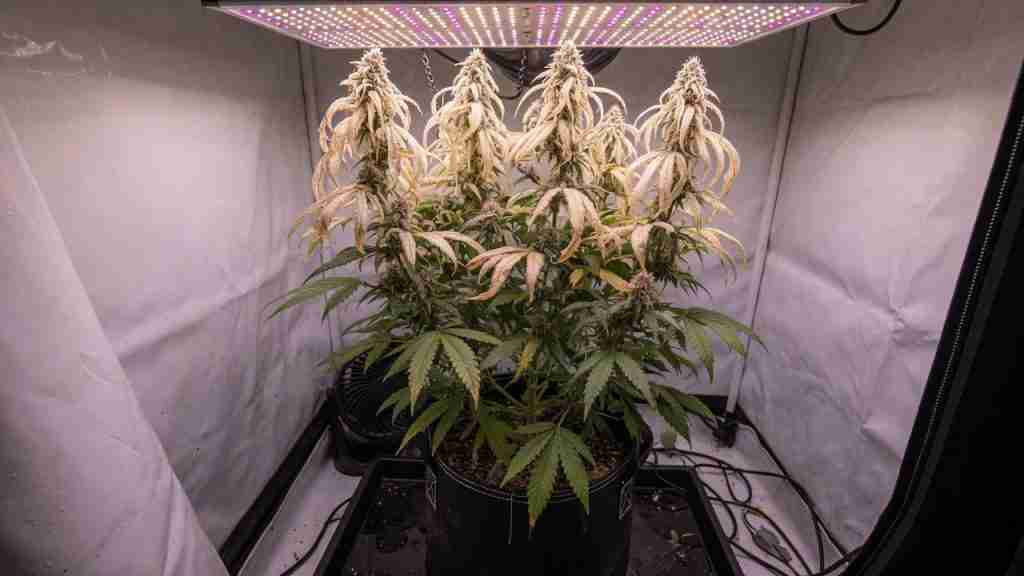
Most lost jars are boring. A leaky zipper. A flip two weeks late. An auto sharing a 12/12 tent. A feed spike in week six because a bottle said “heavy bloom.” Fix the boring stuff and the plant will do the loud part.
Light leaks, mixed tents, and re-veg

Sit in the tent at lights-off for a minute. Let your eyes adjust. Tape the power-strip LEDs, the humidifier eyes, the controller pips. Zip fully. A hallway lamp under the door counts. Repeated night breaks can stall flower, throw odd single-blade leaves out of buds, or stress a sensitive female into nanners. One dim glimpse is not always a death sentence. A nightly phone tour is. Check leaks before you flip, not after pistils show.
Re-veg looks like round leaves turning skinny again, buds sprouting shoots, and a plant that cannot decide. You stretched the night, then you leaked it, or you flipped back to 18/6 by accident. Mixed tents are the other classic. An auto in a photoperiod flower room loses six hours of food. A photoperiod in an auto 18/6 room never flowers. Give them separate boxes, or accept the trade.
Flip too early and you get small, fast plants. That can be a plan if you want a sea of green. Flip too late and you get a canopy in the diodes, foxtails from heat, and larf below. You cannot unscrew a burned top in week ten. You can always veg a little longer next round. First time on a new stretchy line, flip conservative.
Hermaphrodites — nanners, little yellow bananas in the buds, or pollen sacs on a girl — can come from bad genetics, or from you. Light leaks, huge heat swings, a brutal defoliation, and a drought in bulk weeks are classic stressors. If you see a few nanners late, pick them off and watch. If the plant is covered, pull it before it seeds the room. A seeded jar is still smokeable. It is not the yield you were aiming for.
Another quiet thief is mixing schedules. Veg tent and flower tent should not share a leaky zipper wall. Light from the 18/6 side bleeds into the 12/12 side and the flower plants stall. Two small tents beat one clever cardboard divider. Same with an auto in a photoperiod flower room. The auto loses six hours of food every day. It will finish. It will finish smaller. Keep like with like.
Overwatering in early flower looks like a plant that stretched, then sat there with droopy, shiny leaves. The roots cannot breathe, so the tops cannot drink. Let the pot get light. Add air. Do not “fix” it with more bloom juice. Underwatering in week six looks like taco leaves at noon and a bag as light as a shoe. Those colas will not swell if the plant spends every afternoon in a wilt.
Pros and Cons of Controlling the Flip
Pros
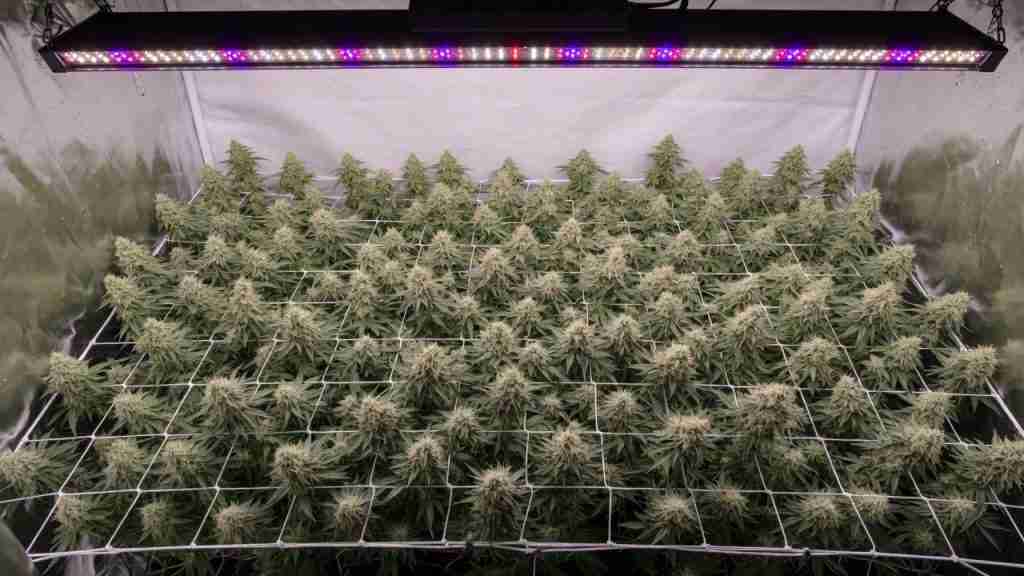
You pick harvest week. You veg until the screen is full. You can top, bend, and clone a mother. One well-grown photoperiod in a 2×4 often beats a rushed auto on weight. Named packs list flower weeks you can plan around. If week one of veg is messy, you can wait. The plant will still flower when you flip. That recovery time is why a lot of first indoor growers should not fear photoperiods. You get to practice. You get a bigger plant if you wait. You get weed that finished on your clock, not the seed’s panic clock.
You can also stagger. Keep a mom. Flip a round. Veg the next cuts while the first round flowers in the other tent. That is a simple perpetual. Harvest becomes a habit, not a once-a-year panic. Outdoor dep gives you a similar trick with the sun. Control is the whole point of flowering with photoperiod marijuana seeds. Autos cannot pause. These plants can.
Cons
You must run a dark period that is actually dark. The run is longer than an auto, so the power bill is longer. Stretch can wreck a short tent if you guess wrong. Outdoor photoperiods finish in the wettest weeks unless you dep or pick an early line. You cannot veg forever in a closet and call it yield. Extra veg in a dim corner just makes a lanky plant. Control is work. If your life is chaos for a month, an auto might finish while you were busy. A photoperiod will sit in veg and wait, which is a gift only if you come back and flip it.
A tall sativa in a 4-foot tent is a bad marriage. You will flip early, get a skinny plant, and blame the seed. Match the cut to the ceiling. Indica-leaning bushes are kinder in short rooms. Stretchy lines want height or a screen you fill sideways. Read the listing. If it is silent on stretch, assume double and plan the flip short.
Questions Before You Touch the Timer
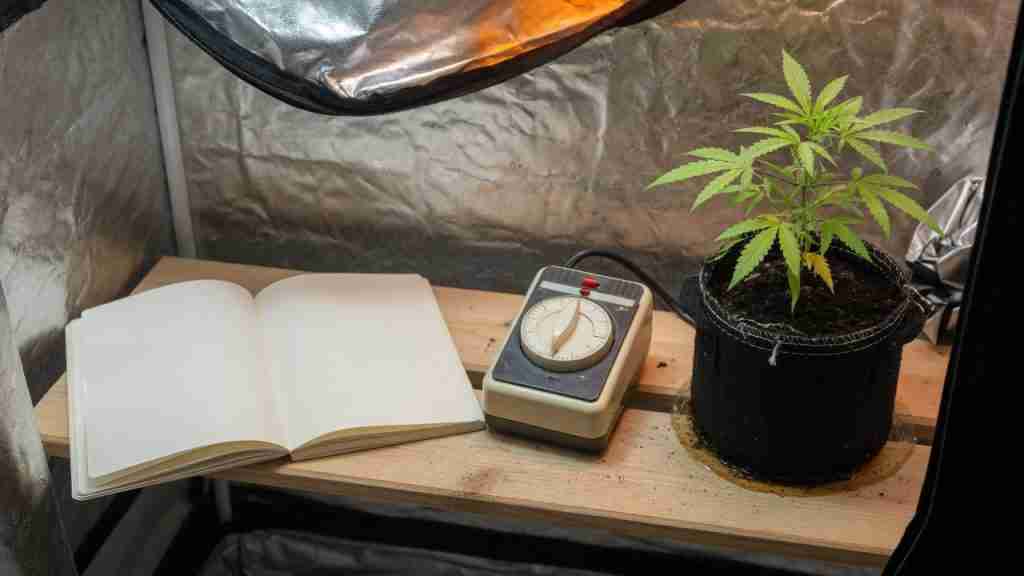
Can you run 12/12 from seed
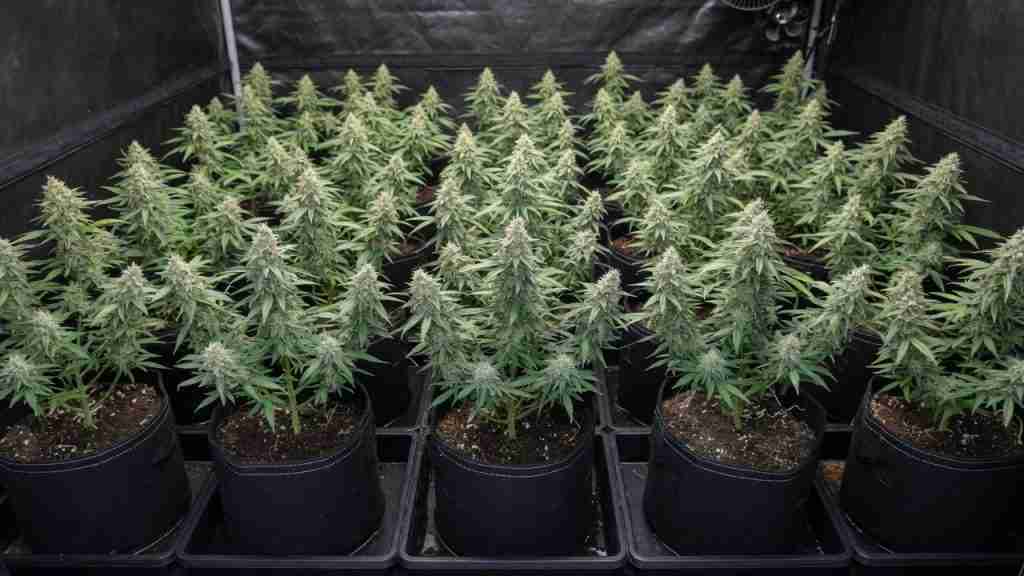
Yes. The plant will stay small and flower as soon as it is mature enough. People do this for a sea of green, lots of little plants, one cola each. You trade training time for speed and count. Maximum yield per plant is lower. Yield per square foot can still be fine if the lamp is even and the dark is clean. Do not 12/12 a single seedling in a big tent and expect a tree. You skipped the part where you build the tree.
Give seed plants a short veg even in a sea of green if you can. Ten to fourteen days of 18/6 after they stand up makes a sturdier cola than flipping the second the seed cracks. Then 12/12. Space the pots so each top gets light. A crowded SOG shades itself and you are back to popcorn. Legal plant counts matter here. Four plants in a Canadian recreational house cannot be a 20-plant sea of green. One or two well-trained photoperiods will beat a closet full of illegal extra cups.
Clones can go 12/12 almost immediately because they are already mature. That is why a sea of green is usually cuts, not seeds. Seed-grown photoperiods need those first nodes. If you only have seeds and a small tent, veg them to eight nodes, top once, flip. You will still get more than a 12/12-from-crack seedling that never made a frame.
Will 13 hours of light make more bud
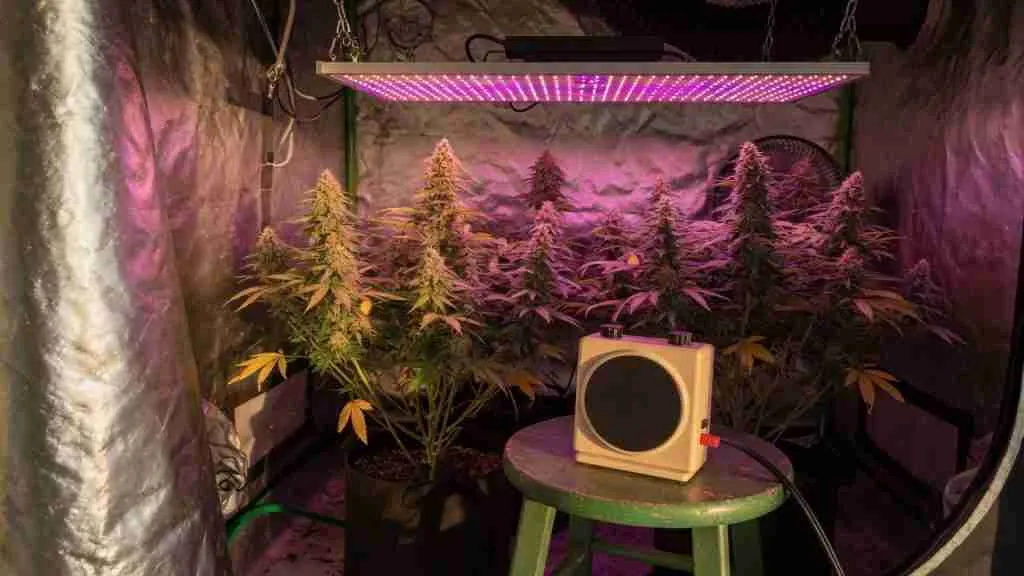
Sometimes, on some cuts. Research on indoor photoperiods has shown some cultivars initiating flower even at 13 or 14 hour days, and a few high-THC lines packing more floral weight at 13/11 than at 12/12, with potency holding or even rising. Other lines still want a full 12 hour night. Flowering can start a few days later under the longer day. That extra hour also dumps more daily light on the canopy if intensity stays the same.
Treat 13/11 as a test on a clone you can replace, not as a first-grow rule. A safe pattern some rooms use is a strict 12/12 for the first week so flower locks, then a slightly longer day if the cut likes it. Late flower, some growers shorten to 11/13 to hurry a slow sativa. That can help ripening. It does not replace cloudy trichomes. However, if you only have one tent and one pack, run 12/12, protect the night, and time the stretch. That still puts more marijuana in the jar than a leaky, late flip with a fancy schedule.
Going back to 18/6 after flower has started is how you re-veg. The plant throws single-blade leaves out of buds and tries to be a bush again. It can work if you want to save a cut. It is a slow, ugly month. Do not do it by accident because you borrowed the timer for a veg tent. Once you flip, stay flipped until chop, unless you meant to keep the plant as a mom and you are ready to wait.
How long should you veg? Until the trained canopy sits at the height your stretch math allows, with eight to ten nodes and a pot that is rooted. That might be four weeks. It might be eight. A tiny cabinet might be three. There is no moral prize for a 12-week veg in a dim corner. Extra days only pay if the extra sites still see the lamp.
When the timer is set and the dark is real, flowering with photoperiod seeds is just you choosing the day the plant stops making leaves and starts filling the sites you built. Take the tape measurement. Write the flip date. Keep the night boring. The yield lives in those quiet hours.