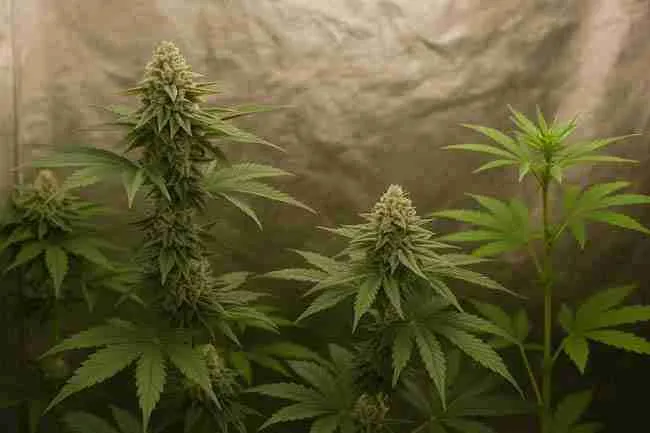
How to Clone Cannabis


How to clone cannabis is a wet cut and a wait. You take a branch off a plant you already trust, keep that wound from drying, and give the node time to throw roots. The new plant is not a relative of the donor. It is the donor, on its own roots. Same smell, same stretch, same sex. If she was female, the cutting is female.
The shopping list is short, and most failed trays ignore it. A clean razor, a glass of water, gel in a shot cup rather than the bottle, a soaked plug, and a dome if the room is dry. Rooting gel helps. It does not save a stem that sat in the air, a plug that was a brick, or a leaf that crisped on day one. The razor, the trim, the plug, and the white roots in the photos below are from this bench, not a stock library.

A seed is a new mix. Even sisters from one pack are not copies. A clone is the copy, which is why people keep a mother and also why a sick mother fills a tent with the same trouble. If you still want the hunt, start from seed. Cannabis seeds versus cannabis clones is that choice. This page is the cut itself, for marijuana you have already decided to grow again.
What Cloning a Cannabis Plant Actually Does
You are not sprouting anything. You are asking a stem to build roots from a node, the joint where a leaf meets the branch. Those cells can do it if the cut stays wet, the air around the leaves stays humid, and an air bubble never plugs the stem. That bubble is the quiet failure. The cutting tries to pull water the moment you sever it. If the only thing available is air, the leaf wilts later and no amount of mist fixes the clog.
Take the branch from a plant still in vegetative growth. A mother stays on a long day, usually 18 hours of light and 6 of dark, so she does not flower while you keep taking tips. How to hold her, and when to retire her for one of her own cuts, is the mother cannabis plants guide. Here you only need one healthy branch and a tray that is ready before you cut.
Once a cutting has roots and its own pot, it is a plant. In Canada the federal cap is four plants per household, not four plus a free tray. Count what you mean to keep. A lease can still say no. The shop sells seeds. It does not hand out permission to grow.
The Copy Includes the Pests
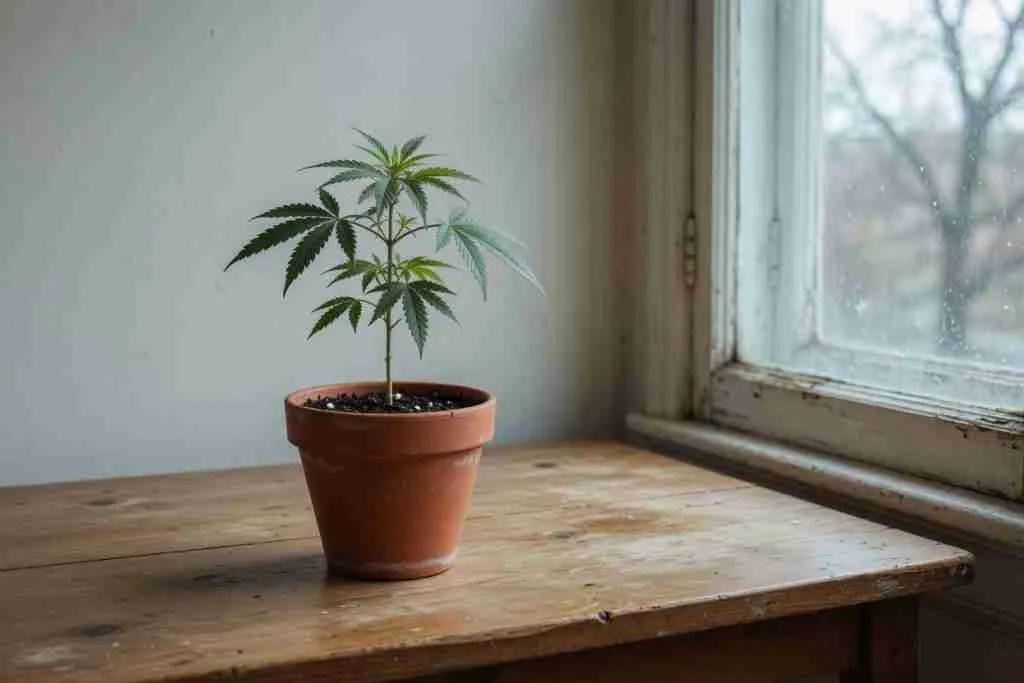
The copy is exact. Spider mites, powdery mildew, and a virus move with the leaf. Hop latent viroid is the quiet one: the donor can look almost fine, root slowly, and yield poorly, and every cut is the same plant. Wipe the blade with alcohol between donors. Do not take a yellow, chewed, or twisted tip just to save a branch. You would be cloning the problem.
A cutting that arrived from a friend does not go straight into the tent with the mother. Park it apart until it grows a clean set of leaves. Ordinary stem rot rides a dirty razor just as easily as a virus does. Pest management starts at the cut, not after the tray is full of the same bug.
What You Need on the Bench Before You Cut
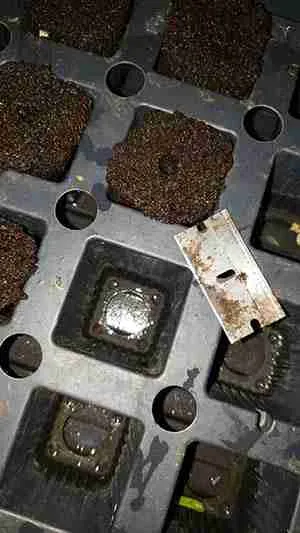
Lay the tools out before you touch the plant. After the stem is cut, you should not be opening a cupboard.
- Scissors for the leaves.
- A sharp razor for the stem. Wipe it with 70 percent alcohol first. A torn cut and a dirty edge are how rot starts.
- A glass of clean water. A little soluble seaweed in that glass is optional. We use it to keep the cut green while it waits. It does not replace roots.
- Rooting gel, already poured into a shot cup. Never dip a cutting into the bottle. One bad stem ruins the jar, and you will not see it until the next tray fails.
- Peat plugs or small rockwool cubes, soaked and drained.
- A tray, and a clear dome if the room is dry.
- A spray bottle if you plan to mist instead of doming.
Cloning marijuana does not require a heated prop house. It requires those things within arm’s reach. If you have no donor yet, you are not behind. You pop seed, grow the plants out, and take cuts from the one worth repeating. The cannabis seeds store is where that pack comes from. The cut comes later.
Soak the Plug, Then Let It Drain
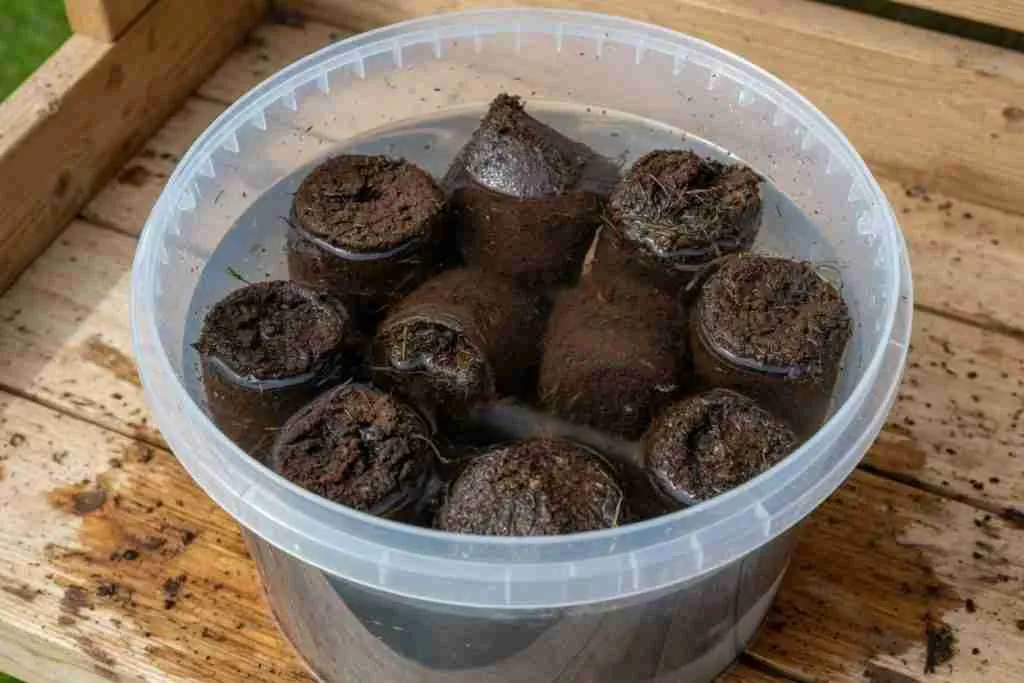
A dry plug pulls moisture out of the cutting. A plug sitting in a puddle rots the stem before a root exists. Soak the plugs, then let them drain until they are moist and still full of air. Do not squeeze a peat plug into a wad, and do not wring a rockwool cube into a brick.
We put a little soluble seaweed in the soak water. It is a light drink for a stem with no roots, not a bloom feed. Rockwool comes out of the bag alkaline, often up around 7 or 8, which stalls the root. If you use cubes, soak them in water you have brought to about pH 5.5 to 6.0, then drain. The rooted photos later on this page are peat plugs, not cubes. Both media work if they are wet and airy. A cheap medium is fine here. Fancy is not the variable.
Which Plant You Take the Cutting From
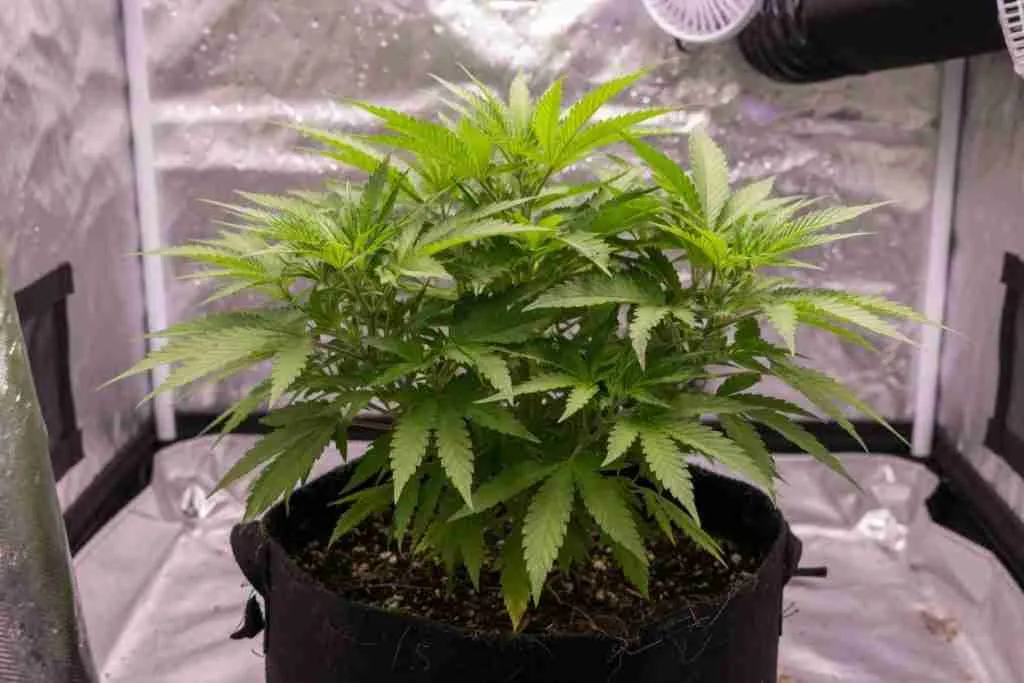
Pick a branch that is growing, not surviving. You want a stem that is firm and still flexible, not a hollow stick and not a hair-thin shoot from the dark bottom of the plant. About 4 to 8 inches, with two or three nodes, is the range that keeps showing up on home benches and in commercial rooms. Longer than that and you are supporting a bush with no roots. Shorter than that can work, and it is fussier.
The donor should be a few weeks into veg, healthy, and female if flower is the point. Vegetative growth is the long-day stage. The vegetative stage is where you take these cuts, not after the pistils show. Lower and middle branches often root as readily as the top. They are less woody. Skip the pale, stretched shoots that never saw the lamp.
If the pack was regular seed, sex the plant before you fill a tray. A male clones into a male. Feminized and regular seed is the difference between skipping most of that coin flip and doing the check yourself. You still watch later. Stress can throw a herm on a plant that rooted as a female. The clone does not get a new personality. It gets the donor’s.
Leave Flowering Plants and Autos Alone
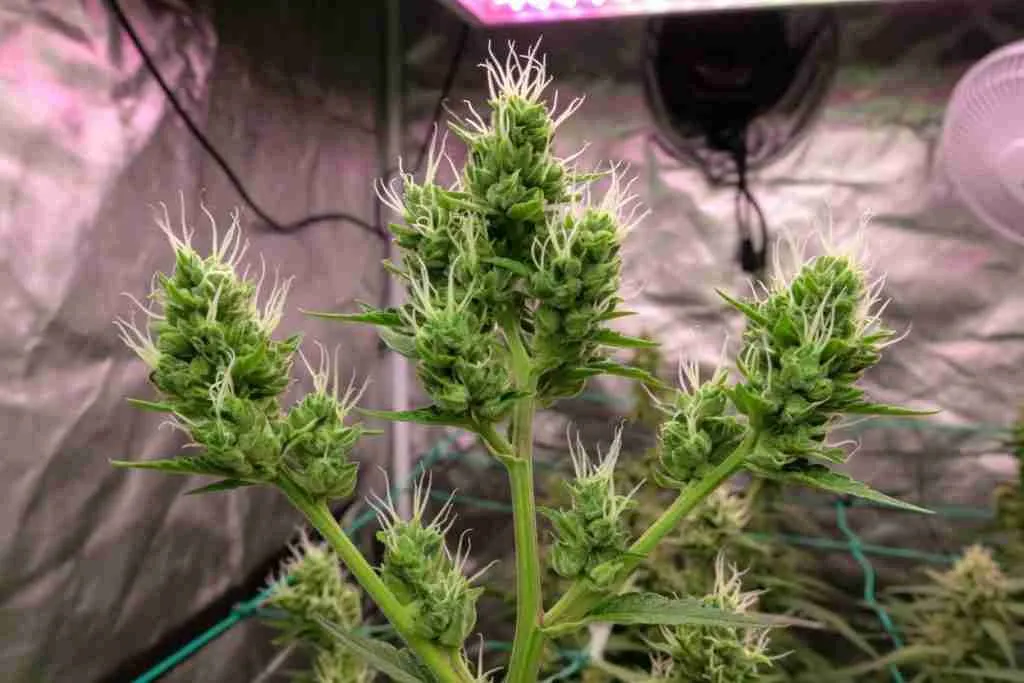
You can take a cutting from a plant in flower. People do. Those cuts root slower, and they would rather keep flowering than build a new vegetative plant. Reveg is a project: long days, a weird regrowth, and weeks you did not budget. If you can, take the cuts a week or more before you flip the donor to 12 hours of dark. White pistils mean you are late for an easy tray.
An autoflower is a worse plan. The clock started at sprout. A cutting does not reset it. You get a smaller plant on the same schedule, not a mother you can keep under 18 hours and cut again in the fall. If you want this weed next cycle, start a photoperiod. Clone that. Leave the auto to finish.
How to Take the Cutting

The glass of water is already on the bench. With the razor, cut the branch just below a node. One stroke. Then the cut end goes into the water. Do it before you admire the cutting, label anything, or answer a text. The stem will pull. Give it water, not air.
You can take several and stand them all in the glass. That is better than trimming the first one while the second dries on your palm. The untrimmed cutting in the photo still has every leaf. That is the moment before the scissors, not the shape you stick in the plug.
Get the Cut End into Water
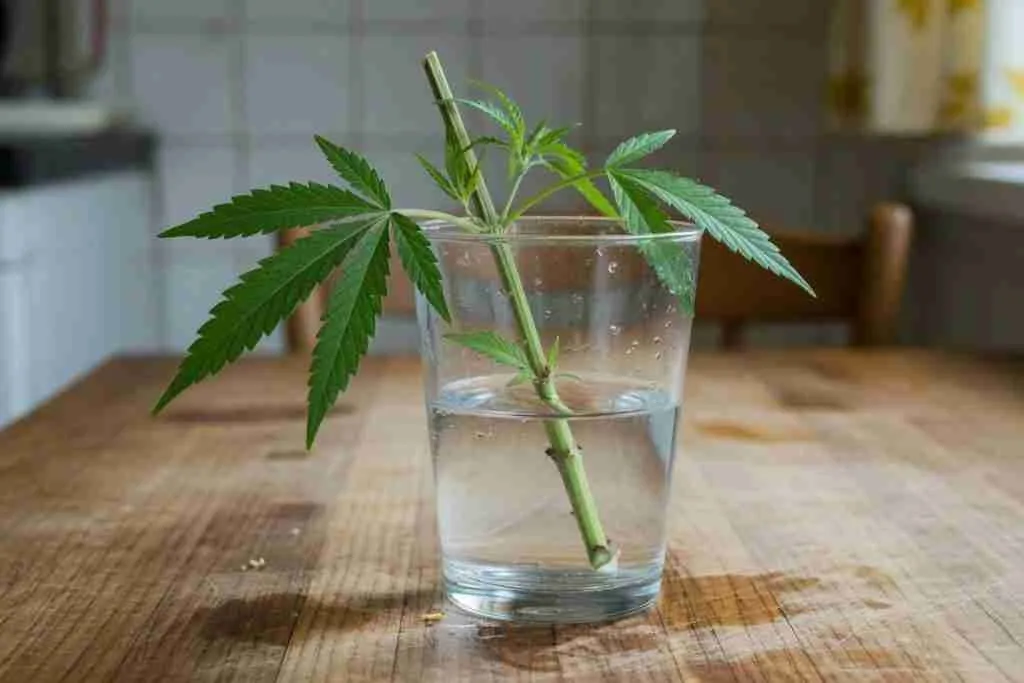
The glass is a pause, not the pot. It holds the wound wet while you trim and make the second cut. A little soluble seaweed in the water is optional. Do not turn the glass into tea. Leaves left underwater will rot and cloud it. Stems in the water, foliage in the air.
Some growers never leave the glass. They root the cutting in the cup and pot it when the roots are long. That works, and it is slower to look at than a plug under a dome. The walk-through is cloning cannabis in a cup of water. On this page the glass is step one. The plug is where the cutting spends the next two weeks.
Trim the Leaves, Then Cut Through the Node

Lift one cutting out of the glass. Strip the lower leaves with the scissors. Leave the top growth and the tip. On the biggest fans that remain, clip the outer tips. A cutting with no roots loses water through those leaves. Less leaf means less wilt for the week it cannot drink. Do not scalp it to a stick. It still has to photosynthesize.

Lay the stem down. Make a second cut at about 45 degrees through the node, just above the first cut. Roots show at that node first, more often than they show from a random slice of internode. The angle is extra wound surface, not a ritual. If you scrape, scrape lightly along the bottom inch. You are scuffing the outer skin, not peeling the stem. Then the new wound goes to the gel before it skins over.
Gel From a Shot Cup, Then Into the Plug

Roll the bottom of the stem in the shot cup for a few seconds. Coat the part that will sit inside the plug, including the node you just opened. The gel is an auxin and a seal. Which brand matters less than whether you used any, and less than whether the medium is right. A thicker glob does not make a hollow stem root. Tap the excess. A paste cork in the plug can do the opposite of what you want.
Slide the stem in. Do not ram it. A bent or split stem rots. The buried node belongs inside the medium, and the stem should touch it. An air gap around the cut dries the wound from the inside, which looks like a cutting that “had gel and still died.” If the hole is loose, pinch the plug so it holds. The photo is this moment: cutting in the plug, no roots yet, tray waiting.
Humidity and Light While the Cuts Have No Roots
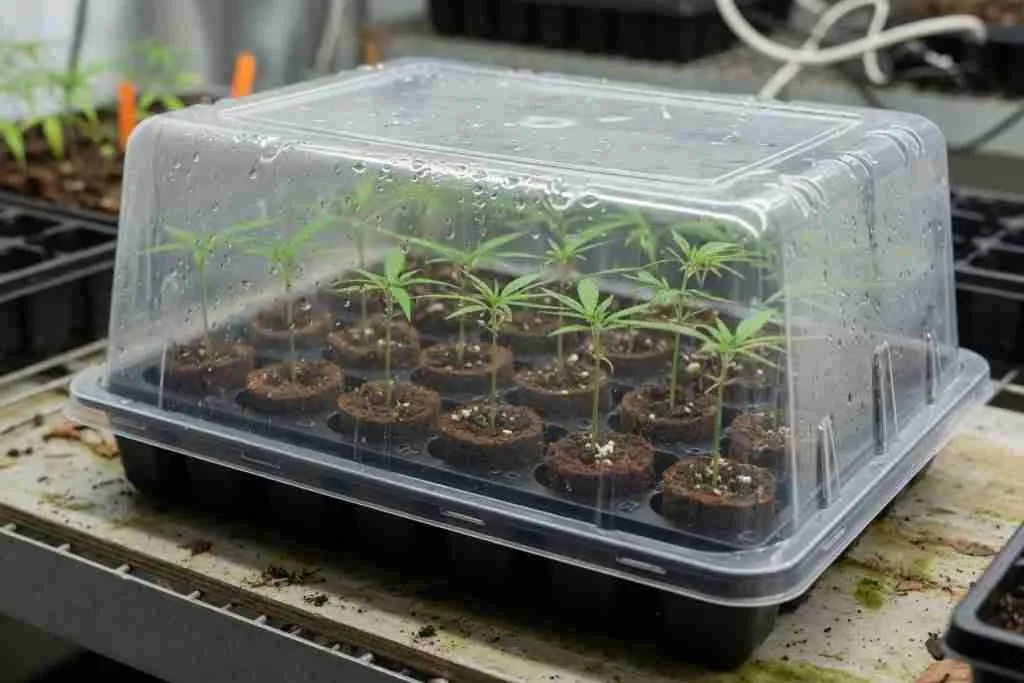
For the next few days the leaves are the water supply. In a dry room, cover the tray. Leave the dome on for about four or five days, and lift it once a day so you are not running a swamp. Warmth at the plug matters as much as the lid. About 72 to 78°F at the tray is the band where cuts actually move. A cold floor under a pretty dome is a tray that stays green and does nothing.
Light stays long and soft. Eighteen hours is enough. Twenty-four does not hurt a cutting, and it is not required. What hurts is a flower lamp an inch off the plastic. Those leaves cannot replace water yet. Park the tray at the edge of the tent, or under a dim LED, not in the hotspot. Grow lighting for a full plant is a different distance and a different intensity. Humidity domes get used on seedlings too. A clone is fussier than a seedling, because the seedling already has a root.
When the first real roots show, crack the vents a little more each day. Moving a rooted cut from a sealed dome into a dry room in one hour flops plants that were fine that morning. Give them two or three days to meet the room. If they wilt when you crack the lid, close it and try again tomorrow.
Mist If the Room Is Already Humid
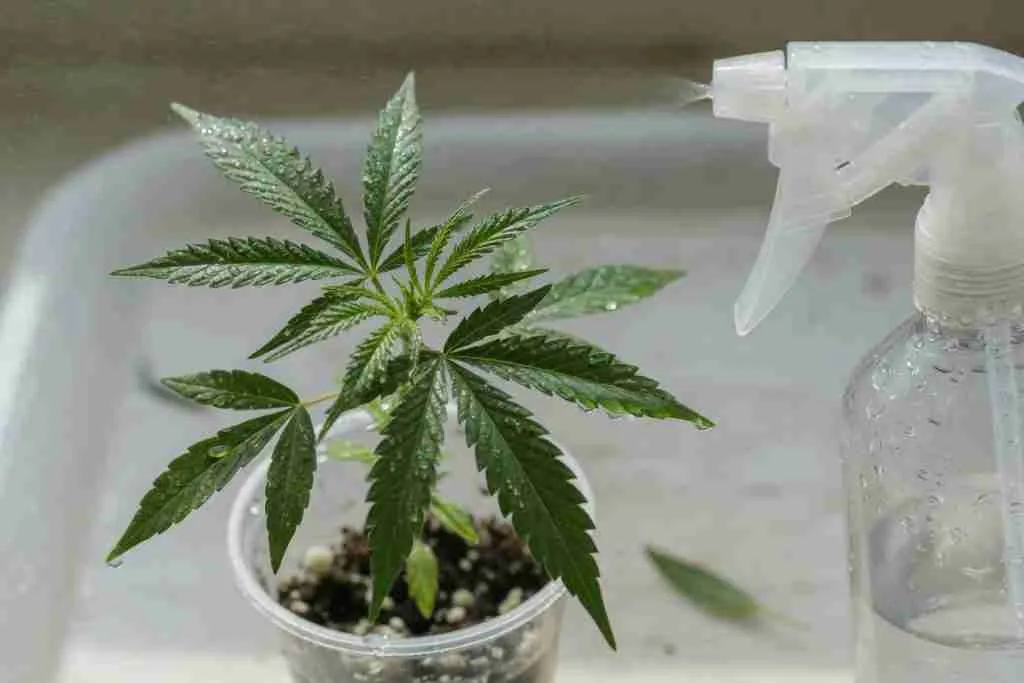
If the room is already moist, you can skip the dome and mist the leaves two or three times a day for those first days. Seaweed in the spray bottle is the same light drink as the soak, not a foliar feed schedule. Droop on day one is almost always dry air or a bubble in the stem. It is rarely “they need cal-mag.” Mist more often, or put the dome on. If the leaves are wet and molding, you have the other problem: no air exchange. Lift the lid.
A Water Cloner Is the Other Bench
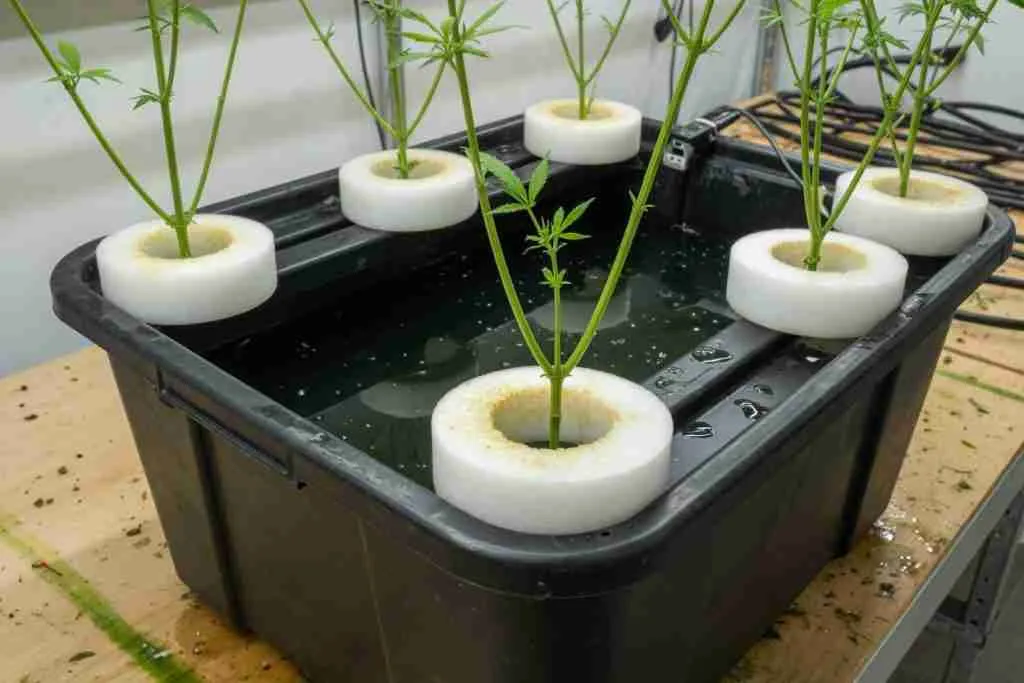
A cloner holds the stems in collars over a reservoir and wets the cut ends on a cycle, or all the time. You still take the same cutting. You still keep the wound from drying. You still want a node at the wet end. The dome matters less, because the stem is wet by design. Mild water, around the same 72°F, pH near 5.8 if you measure, and a clean tank. Slime is how a whole cloner dies on the same morning. Scrub it between rounds. Do not “top up” a green reservoir and hope.
Learn the plug first if you are doing a handful. The cloner earns its keep when you are doing dozens and you will actually clean it. The biology does not change. A hollow stem and a flowering donor fail in a cloner too.
How Long Cannabis Clones Take to Root

Plan on 10 to 14 days before roots come out of the plug. An easy cultivar in a warm tray can show in a week. A stubborn one can sit for three. Warmth, a moist plug, and a stem that never dried are what move that date. The gel shortens the wait for a lot of people. A second dip on day 7 does not.
Do not tug the stem every morning. If you check, lift the plug. A little resistance means something is holding. The roots you transplant are white and firm, out of more than one face of the plug. The first hair is not a transplant. You will rip it off in the pot and set the plant back a week.
What Those White Roots Should Look Like

White, slightly fuzzy, several of them, long enough that the plug is anchored. That is the pair of photos here, two angles of a peat plug that is ready to move. Brown slime is rot. A sour smell is rot. A plug that falls apart in black mush does not get buried “to see if it makes it.” It gets binned, and the razor gets alcohol before the next donor.
When the Tray Just Sits There
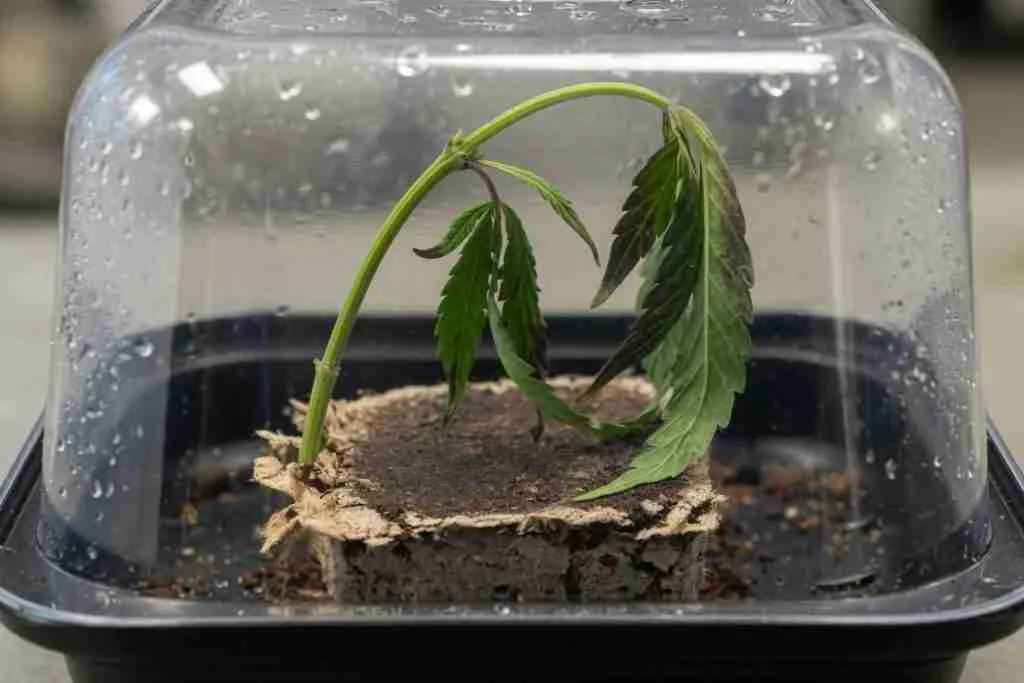
Walk the short list before you buy another bottle. Was the donor in flower, or was the stem hard and hollow. Did the cut sit in your hand. Is the plug cold and saturated, or dry at the edges. Is the dome a dripping box with no air, or is the room dry enough to crisp a leaf overnight. A fold-over on day one gets the dome and a look at the cut end. A green cutting with no roots on day 14 gets warmth under the tray and patience.
Mold on the leaf is too much wet air. Pull any stem that is mush so it does not take the neighbors. Yellow on an otherwise turgid cutting, late in the second week, is often just a plant that has used the leaf while it built roots. That one can still be fine. A cutting that yellows and wilts together is usually the stem, not a missing nutrient.
How to Transplant the Rooted Clone

Lift the plug. Not the stem. Set it into a small pot, or into the system, so the new roots are covered and the plug is not sticking up in the air like a cork. The tray in the photo is the batch before that move. They are green and rooted enough to leave the dome. They are not ready for a flower lamp and a giant pot of dry soil.
Do not let the plug dry between the tray and the hole. A root that dries back now stalls the plant you just spent two weeks on. Soil, a soilless mix, or hydro all accept a rooted plug. The medium can wait as a decision. The wet plug cannot. A clone dropped into a big dry pot “until it needs water” is how people lose a perfect tray on transplant day. Watering a fresh transplant is a small, even drink, not a flood that leaves the plug swimming.
Water It In Before You Walk Away
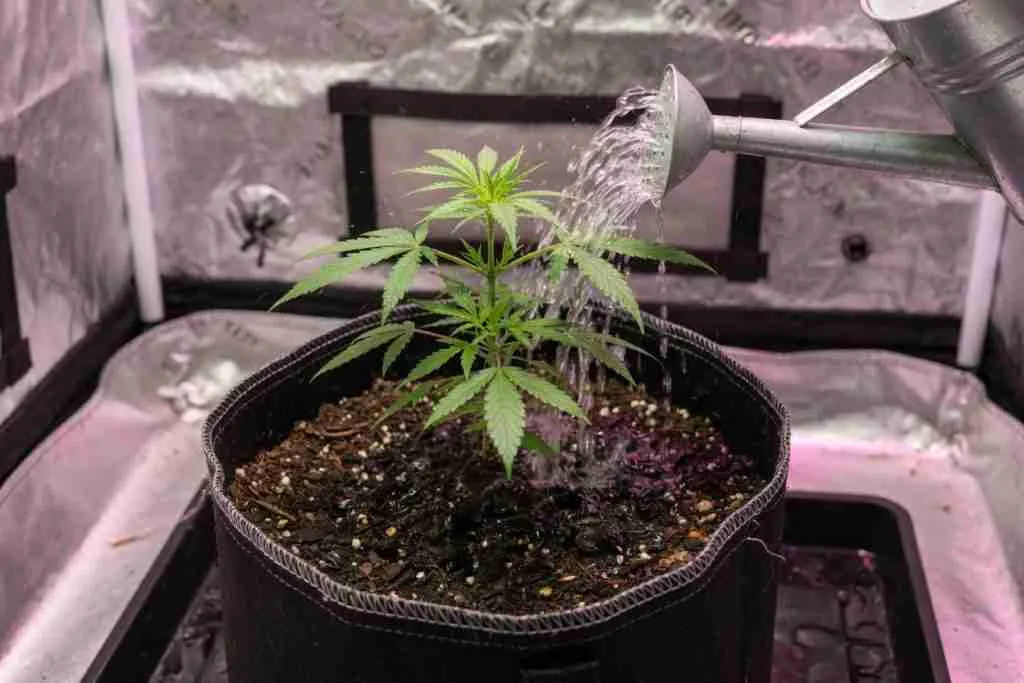
Water the pot after the plug is seated. You are closing air gaps around the new roots. Then put them under a normal veg light and leave them alone for a few days. They will look paused. That pause is the roots moving into the new medium. It is not a sign to feed them like a plant in week six of flower. Plain water, or a very light feed if the mix has nothing in it, is enough until they start growing again.
A Pinch of Mycorrhizae at the Root Ball
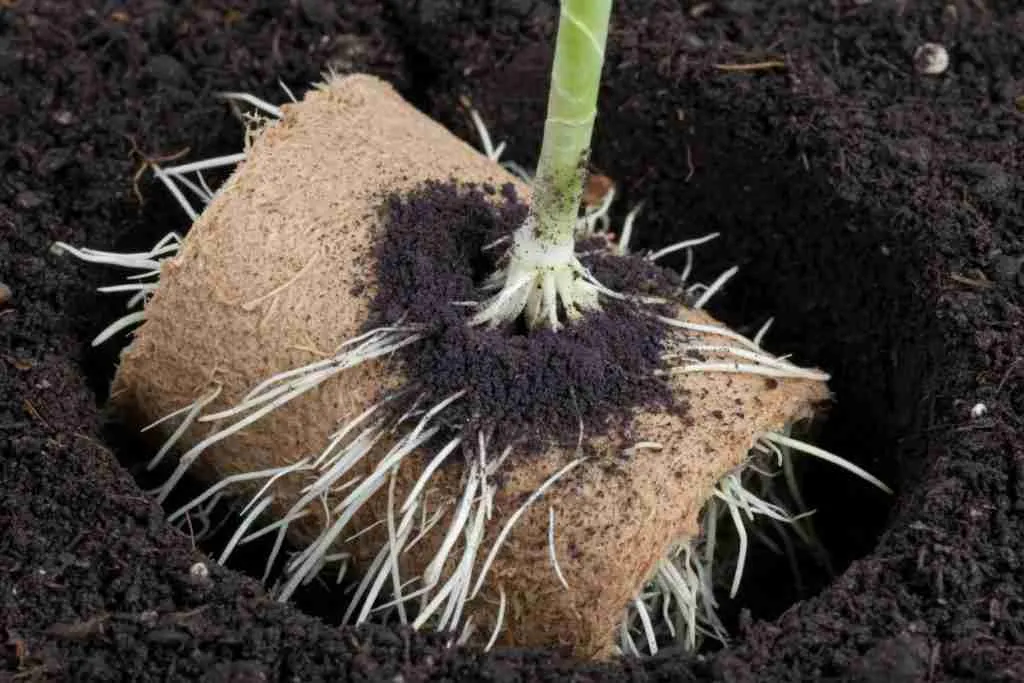
A pinch of mycorrhizal inoculant on the plug as it goes into soil or coco gives the new roots a fungal partner. Use it at transplant. Do not paste it on a cutting that has no roots yet. It will not rescue a dried plug or a rotten stem. If you skip it, the plant still grows. The inoculant is a head start, not a step the tray depends on.
How to clone cannabis, once the tools are boring, is the same three checks every time. The donor was healthy and still in veg. The cut hit the water, then the node, then a moist plug. The leaves stayed turgid until white roots showed on more than one side. The weed in the next jar should be the plant you already liked, not a surprise. If you do not have that plant yet, grow it from seed first. The razor can wait until you have something worth copying.