How to Avoid Common Mistakes in your first Marijuana Indoor Garden


You get home, you zip the tent open, and the top of the soil looks a little pale, so you pour some water. You do it again the next night, because that’s when you’re standing there. A few days later the leaves droop, and droop looks like thirst, so the jug comes out again. Oh, that habit is how a first Marijuana Indoor Garden usually goes wrong. The pot is already heavy. The roots are wet, and roots need air as much as they need a drink. More water doesn’t rescue them.
Well, daily water is the big one, and it isn’t the only one. A lamp meant for a desk can stretch a seedling into a skinny noodle. A lamp that sits on the leaves can bleach the top. Six cute sprouts can fill a tent until you can’t find the pots. A bottle poured at the full chart can burn the tips while you’re trying to be kind. However, you can sidestep most of this if you set the room up before you sow, hang the lamp where your hand can stay comfortable, and lift the pot before you pour.
Hey, plenty of people just call the plant weed. The name isn’t the job. The job is a corner you can live with, a lamp that matches the tent, and water you give when the pot is light. You don’t need a lab for any of that. You do need to change one thing at a time, then wait long enough to see what the next leaf does. Look, you’ll still slip. A watched pot is a real indoor problem, because the tent is ten steps from the couch. Slow and steady beats a weekend of panic.
Build the room for your first Marijuana Indoor Garden
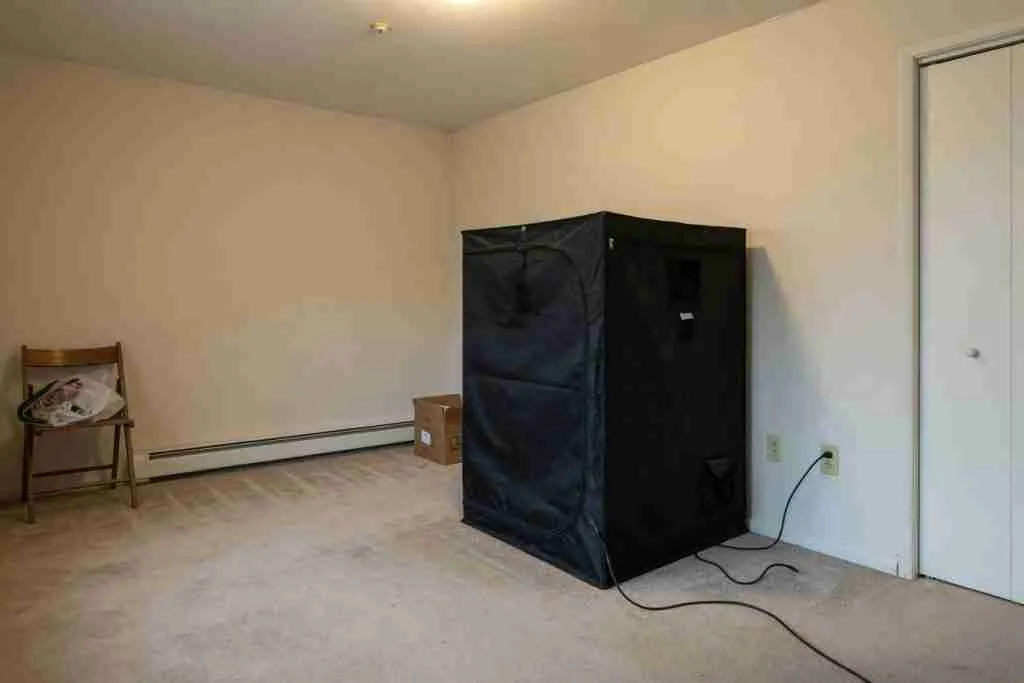
A garden isn’t only a seed. It’s the tent, the pot, the soil, the moving air, and the plug on the wall. If you sow first and shop later, the plant sits in a bad spot while the boxes show up. Build the room, run the lamp for an evening with nothing alive in it, and notice whether the corner gets hot, loud, or hard to open. An empty tent can slide two feet to the left. A rooted plant is a much worse thing to drag across the carpet.
Pick a tent you can still reach into when the plant is tall, not only when it’s a sprout. A tent about two feet by two feet is an honest home for one plant. A tent about two feet by four feet can hold two, if your hand can still get to the back one without crushing the front one. People buy the small tent and then bite off more than they can chew. The seedlings look lonely on day one. They don’t look lonely in week six, when the leaves have met in the middle and the zipper scrapes the tops.
Use a fabric pot for the plant that will finish in it. About three gallons is enough for a modest plant. About five gallons suits one stronger plant, if you won’t drown it. A huge pot plus a tiny sprout is a classic miss, because the roots haven’t filled the soil and it stays wet for days. If the plant flowers when you shorten the day, start it in a small cup about the size of a large yogurt cup, with holes in the bottom, and move it up once the roots hold the soil together. If it flowers by age, an autoflower, sow it in the finish pot. A late move can stall an auto, and it doesn’t get extra weeks to recover the way a timer plant does.
The soil has to drain. Squeeze a damp handful. If water streams out, it’s mud, and mud is how you overwater while you think you’re being careful. If it falls apart like dust and won’t hold even when it’s moist, water runs down the inside wall and misses the roots. You want a mix that holds its shape when damp and still crumbles when you poke it. Those little white bits, perlite, keep pockets of air in the mix. Set a tray under the pot so the floor stays clean, and empty that tray. The pot shouldn’t spend the night standing in a puddle.
A small fan should make the leaves tremble, like a quiet nod, not a storm that plasters them flat. Still air feels harmless in week one. Later, thick flowers in damp, still air are how mold gets started. Point the fan across the tent, not straight into one cola from an inch away. In the first days after you sow, leave the seed alone and don’t dig it up every morning to check. Keep the cup in a room that feels fine in a t-shirt, under a gentle lamp. The first two leaves are smooth. The next ones look like the familiar jagged leaf. That’s a growing week, and it isn’t a feeding week. If you finally look and the seed is mushy and sour, it’s done. If it’s still firm, cover it again about as deep as the seed is thick, and give it more time.
When a timer plant is ready to move up, do it because the roots are holding the soil, not because you’re bored of the little cup. Water it the day before so the root ball is damp, not dripping and not dust. One hand over the soil, tip the cup, and keep the ball together. Set it in the new pot at the same height. Don’t bury a seedling up to its leaves. Water lightly so the new mix settles, then go back to judging the pot by weight. A gentle bend of the main stem can wait until the plant has several joints and is growing happily again. Those joints, where a leaf meets the stem, are the nodes. If a soft tie is holding a bend and you hear a crack, stop. Don’t train a plant on transplant day, and don’t train one that’s sitting wet.
Pick a corner you can live with
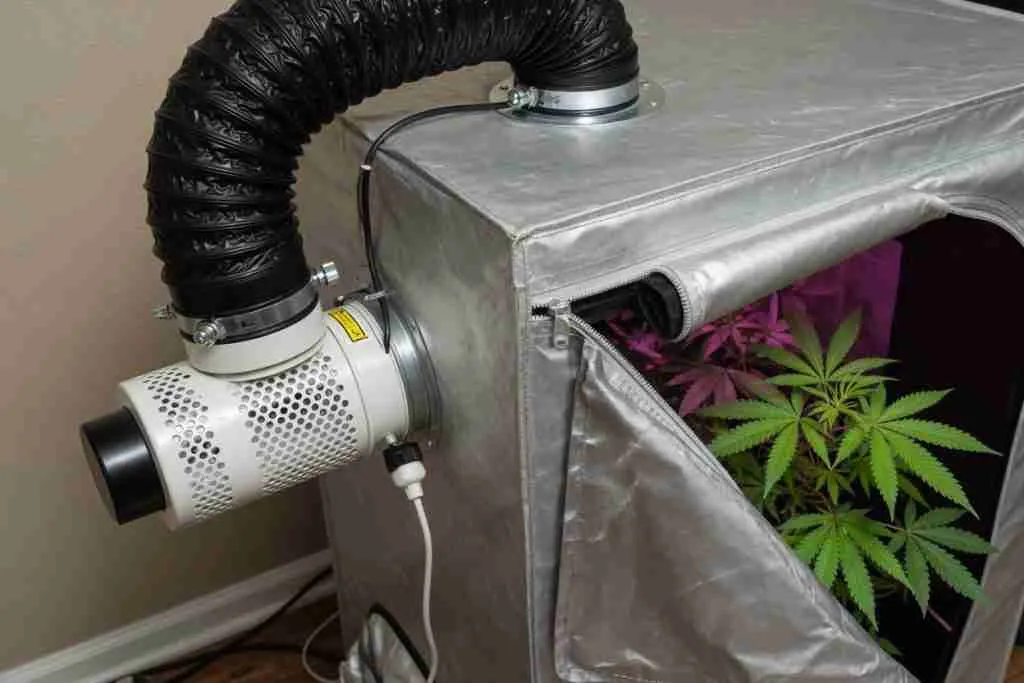
Pick the corner the way you’d pick a spot for a noisy heater you have to visit every day. The door has to open fully, and your hand has to reach the back wall. The plug shouldn’t already be feeding a space heater and a microwave from one tired bar. Run the lamp, the fan, and any filter for an hour, then feel the cords. A warm cord is a warning. Unplug it and spread the load. Don’t keep using a power bar that feels hot in your hand. However, a warm tent and a hot cord aren’t the same problem, so check both before you ever sow.
After the lamp has been on, put your face near plant height. If the tent feels like a hot car, the plants will feel it too. An upstairs room in summer can do that even with a decent lamp. A cold garage in winter can stall a seedling during the dark hours, when the lamp is off. A room that already feels comfortable in a t-shirt is the easy answer. If the tent runs hot, a small exhaust fan can pull air out. Fresh air has to come back in through a lower vent. If the walls suck inward and the door pops when you unzip it, open that vent a little. You aren’t building a sealed box. You’re keeping a breeze so damp air doesn’t sit on the flowers later.
Smell shows up late, and you should plan for it while the tent is empty. A seedling barely smells. Flowers can travel through a closed door and down a hall. A carbon filter is a can of carbon with a fan pushing air through it, and it’s the usual way to scrub the smell before it leaves the tent. If you rent, or if you share a wall, sort that out before you flip a plant into flower. Noise belongs in the same decision. An inline fan can hum all night. A tent beside the bed will keep you awake, and then you’ll skip the checks because you’re sick of the room. A spare room you’ll actually open is kinder than a brighter lamp you resent.
Light leaks matter once a timer plant is flowering. The dark hours have to be dark, not just dim. A zipper gap, a bright window, or a glowing screen can confuse the signal that keeps it in flower. Checking the tent at midnight, the top of the soil looked pale, so the jug came out again, and the phone screen lit the flowers the whole time. The water was one mistake. The phone was the other, and it’s the one people forget. A plant that flowers by age is less fussy about a broken night. Heat, and a lamp that never turns off, can still wear it out. Give every plant a real dark break.
Leave room for the plants to finish
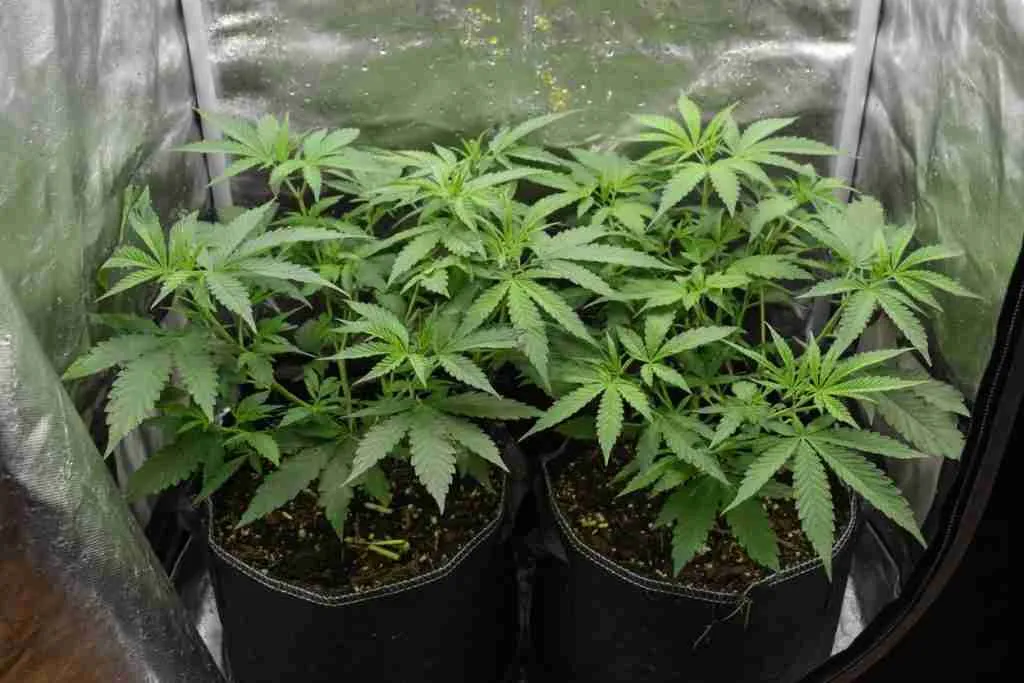
The long and short of it is that plants get much bigger than the pots you see today. Leaves overlap, air stops in the middle, and the plant in the back stretches into a weak stem. The flowers stay small because the lamp never really reaches them. You started with what looked like a polite little forest, and you finish with disappointed tops you can barely water. Say you sow six seeds because the pack had extras and the tent looked empty on Saturday. A month later you’re in over your head. You can’t reach the back pot without kneeling on the front one, and you don’t see a yellow leaf until the damage is old. Two plants you can walk your hand around will beat six plants you can’t touch. Extra seed belongs in a cool, dry cupboard. Seed in a cupboard isn’t a plant, and it doesn’t need a lamp.
Some of that seed is also a gamble on sex. Seed from a friend’s jar, the kind people call bag seed, can be male. A male grows little balls on a short stalk at the nodes, and those balls open into pollen, a yellow dust. The fan can carry that dust onto every flower in the tent, and the flowers you wanted smooth end up full of seeds. A female shows white hairs at those same nodes. The hairs are called pistils. Balls and no hairs means it leaves the tent as soon as you’re sure. A plant with hairs and balls can still throw pollen, so it goes too. Nip it in the bud, in the plain sense of those words, while the plant is still small. Seed sold as female usually skips this surprise, and you should still look. The first signs are often lower, under a leaf you have to bend aside. Catching a male in week three is a small chore. Catching one in week eight, when the tent is finally full of flowers, is the straw that breaks the camel’s back.
In Canada, recreational home growing is capped at four plants per household, not four for each adult, and a seedling counts as one of them. Quebec doesn’t allow recreational home growing at all. In Manitoba, recreational plants have to stay indoors, and that rule has been in place since 1 May 2025. You also have to be 19 there. A fifth sprout isn’t a cute extra. It’s another plant. If your local rule is stricter, follow the stricter rule. The tent doesn’t get a pass because the plants are still short.
Choose a real lamp for your first Cannabis Indoor Garden
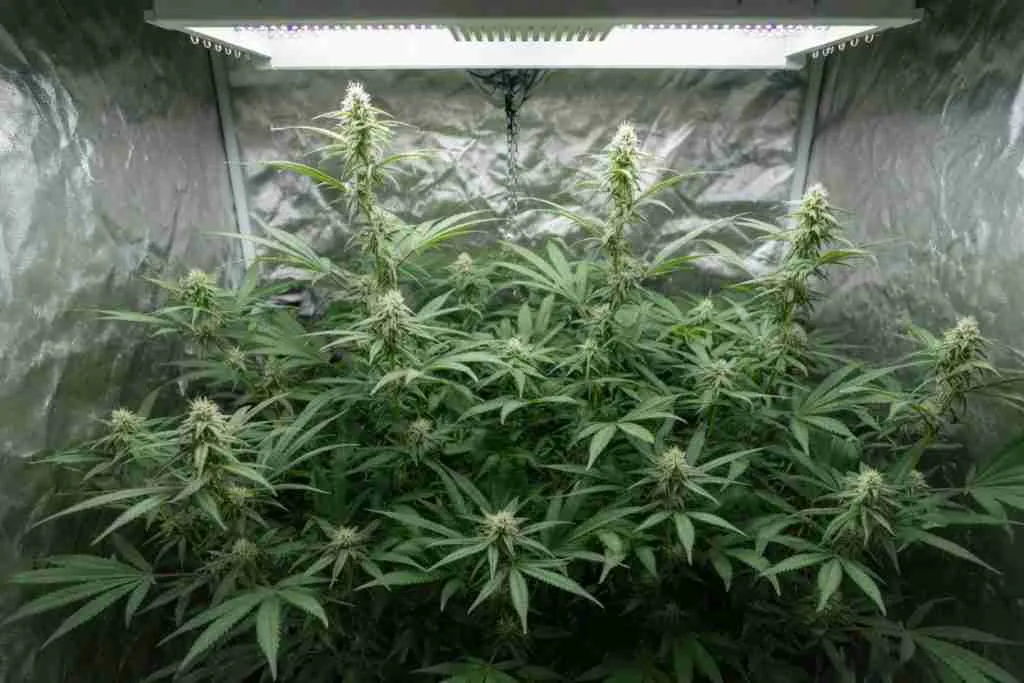
A household bulb can light a desk and still leave a cannabis plant pale and stretched. A little shelf lamp sold for lettuce often does the same thing. The plant reaches up, the gaps between nodes get long, and the stem stays thin. People see that stretch and guess the plant is hungry. A lot of the time it’s hunting for light. You want a lamp made for plants, sized to the tent you actually own, on a timer you don’t have to remember at bedtime.
Stretch and bleach are opposite problems, and mixing them up gets expensive. Stretch means the lamp is too weak or too far, so the plant hunts and the stem gets leggy. Bleach means the top leaves fade toward pale yellow or white, sometimes curling up like a taco, because the lamp is too close or turned too high. Don’t fix stretch by dropping the lamp onto the leaves. Don’t fix bleach by hiding the plant under a desk bulb in a dark corner. Match the lamp to the floor of the tent. A small tent wants a modest light the maker says will cover that footprint. A huge lamp in a tiny tent cooks one plant and heats the room. A tiny lamp in a big tent grows a decent middle and stretchy corners. Empty floor is cheaper than a second plant you can’t light.
The hours stay simple if you pick a plan and leave it alone. While the plant is making leaves, run the lamp about 18 hours on and 6 hours off. A photoperiod plant, which you can call a timer plant, flowers when the days get short. You make that short day by switching to 12 hours on and 12 hours off, and you keep the dark half truly dark. An autoflower flowers by age. Leave it on the long day the whole way. Don’t put an auto and a timer plant on the same timer if one of them needs a short day and the other doesn’t. One of them will be stuck in the wrong season.
Flip a timer plant when it has filled about half the tent, not when the leaves already touch every wall. In the first two or three weeks of flower, a lot of plants stretch hard and get much taller. If the tent is already packed, those tops grow into the lamp and you bleach the flowers you just started. Leave headroom on purpose. That choice saves more flower sites than a late bottle of food. Autos aren’t all short either. Some stay modest, and some don’t. If the gaps between nodes are tight and the top isn’t fading, the height is fine. If the top is bleaching, or the stem is a long pale ladder, move the lamp and then stop fiddling for a day.
Hang the lamp where your hand stays comfortable
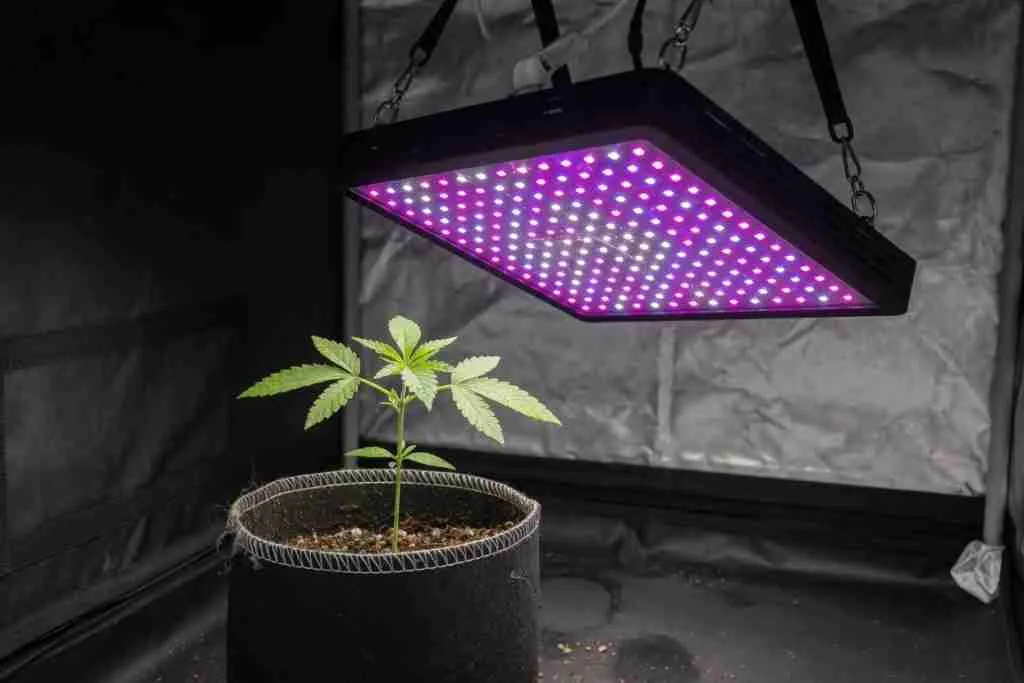
Hold the back of your hand at the top leaves and count slowly to ten. If your skin wants to pull away, the lamp is too close or the dimmer is too high. Raise it, or turn it down. If you feel almost nothing and the plant is stretching, lower it a little or turn it up one notch. Seedlings like the light softer than a flowering plant does. A dimmer helps in week one, because you can hang the lamp at a sensible height, keep it gentle while the stem is weak, and turn it up as the plant gets sturdy. Then leave it. Chasing the lamp up and down every time you walk past is its own mistake. Move it once, remember where it hangs, and look again tomorrow.
The tops rise, especially after a timer plant flips to the short day, so check the gap every few days during that stretch. A cola that grows into the diodes gets pale, burnt tips, and those tips don’t turn green again. You judge the next leaves, not the scar. Standing over the leaves with a full bottle, the tips were already tan and crispy, and food wasn’t the reason. The lamp was. Pouring food on that same afternoon would have sent you out of the frying pan and into the fire. Pale new growth only at the very top, with the lower leaves still green and the pot drying on schedule, is usually the lamp. Pale leaves starting at the bottom of an older plant are a different story, and they still don’t mean you should flood the pot tonight.
Don’t inspect a flowering timer plant with the room lights on and a phone light in your teeth. Do the real checkup while the lamp is already on. A plant that flowers by age forgives a sloppy night more easily, and it still doesn’t forgive a lamp sitting on the flowers or a schedule with no rest at all. Let the lamp turn off. If the stem leans hard to one side, turn the pot a quarter turn every day or two so the lean doesn’t become the shape of the plant. That’s a small habit. It isn’t a rescue.
Tell water from food in your first weed Indoor Garden
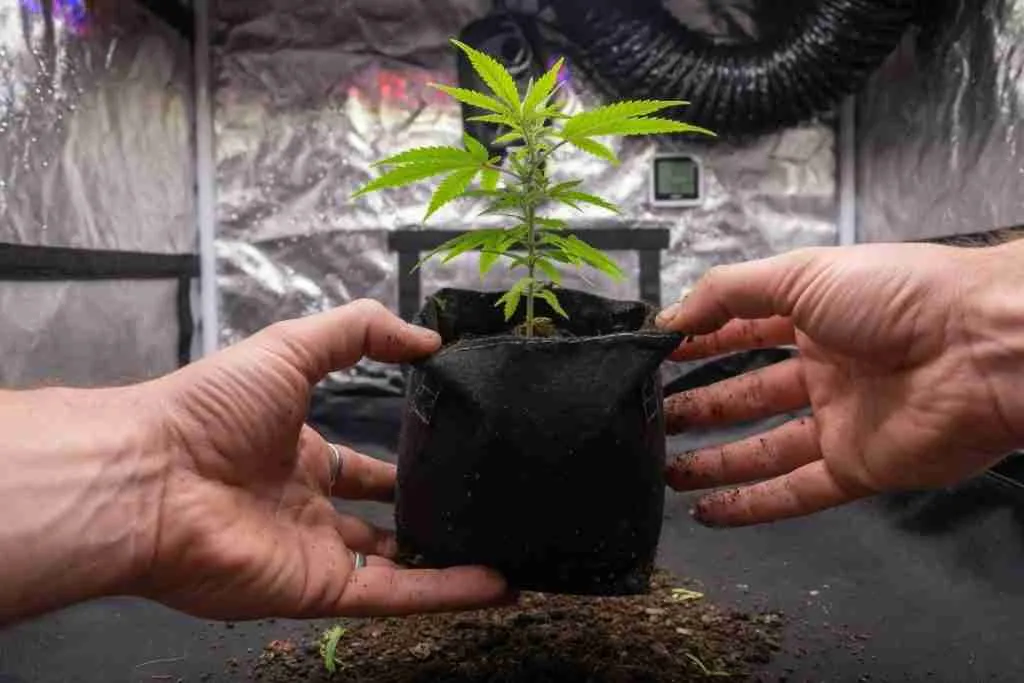
Water and plant food fail in different ways, and they look the same if you only stare at one leaf. Treat them as two knobs. Turn one, then wait. If you twist both because you’re nervous, you won’t know which one helped, and you’ll probably do it again tomorrow.
Overwatering is the mistake beginners repeat most, and it looks like kindness. The top of the soil turns pale while the bottom is still a swamp. Roots drink, and they also have to breathe. Soggy roots can’t get air, the plant droops, and the extra water makes a deeper swamp. Learn the weight instead of the color of the surface. Lift the pot right after a real watering and notice that it’s heavy, like a small bag of groceries. Lift it each day after that until it feels clearly lighter. The lighter pot gets water. The heavy pot doesn’t, even if you’re bored, even if the top looks dry, and even if a note on the wall says to water every day.
When the pot is actually light, water it thoroughly. Pour slowly, in a circle, until a little runs out the bottom, then stop. A tiny sip only wets the top, and the middle of the root ball stays dry. That’s underwatering, and it wears the same droopy face. Thirst is a light pot with leaves that feel thin. Give one real drink, empty the tray, and let the pot lighten again. Don’t sip every evening because that’s when you got off work. Your shift isn’t the plant’s clock.
Food is the other knob, and the bottle makes it look more urgent than it is. The chart is often written for a big plant in a mix that holds no meals of its own. A seedling in rich potting soil may need no bottle at all for the first few weeks. If you do feed, start around a quarter to a half of the label, and wait until there are several jagged leaves, not only the first smooth pair. Tan, crispy tips on a dark green plant in a light pot can mean the mix was too strong. Yellow, droopy leaves on a heavy pot are usually the water. Don’t answer a swamp with a stronger bottle. A spotted leaf also isn’t an automatic reason to grab a calcium bottle. Check the weight, then check the lamp. Leaves that are already hurt often stay hurt. The new growth is the report.
There’s a scale called pH, and you only need the plain idea. Seven sits in the middle. Soil likes the water a little under that middle, about 6 to 7. A soilless mix, such as coco, likes it a bit more sour, under 6 and not as low as 5. If the water is far outside that neighborhood, food can sit in the pot unused while the plant looks hungry. People add more food, the tips burn, and the plant looks worse. Test the water you’re about to pour, with drops or a pen you rinse and put away clean. Get into the neighborhood, then stop chasing the number all afternoon. One change in one day keeps this honest. If you raise the lamp, strengthen the bottle, and soak the pot before dinner, you’ve built a puzzle you can’t solve. Write down the one thing you did, and look again in a couple of days at the same hour, with the lamp on.
Stop watering because the top looks dry
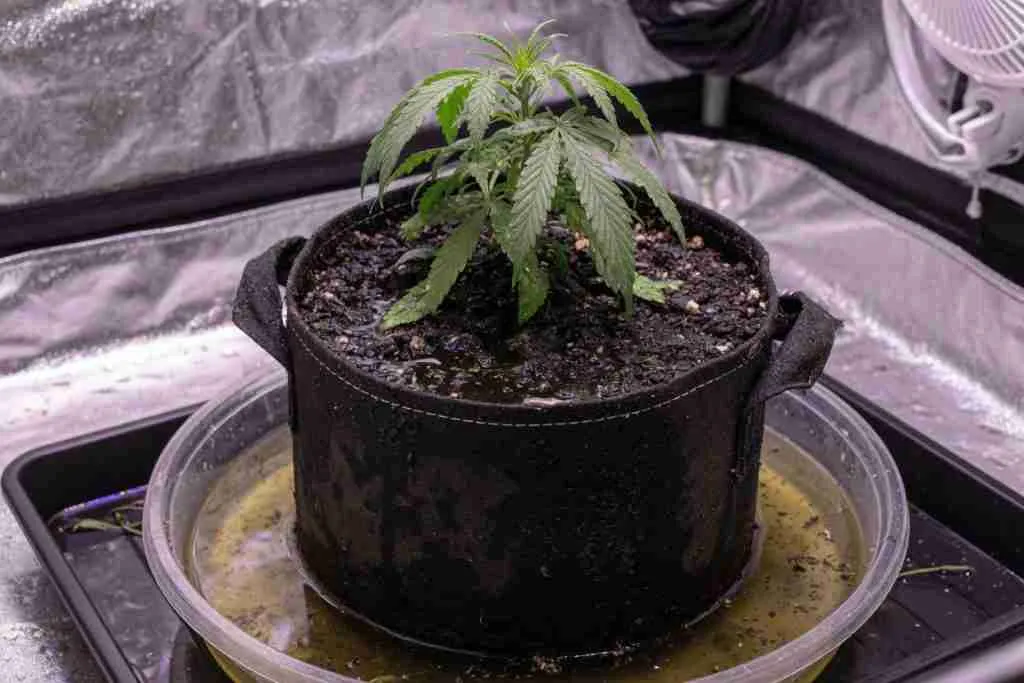
The top inch or two dries first, because the fan and the lamp can touch it. Under that crust the root ball can still be cool and wet. Push a clean finger in. If it’s damp around the second knuckle, wait, unless the pot is already light and the plant is clearly thirsty. If it’s dusty and the pot lifts like it’s mostly air, then water. The pale surface is a hint. It isn’t the decision. The holes in the pot have to stay open, or the weight test starts lying. A pretty outer pot with no hole is just a bucket, and the roots rot while you think you were careful. Dump the saucer every time. If you come back and it’s full of brown water, the mix is holding more than you thought, so wait longer before the next drink.
A little droop in the morning that lifts once the lamp has been on can be ordinary, especially in flower. Droop that stays all day on a heavy pot is too much water. Droop that stays all day on a light pot is thirst. Learn those two pictures and a lot of the panic goes quiet. Water the soil, not the flowers. Wet buds in still air invite mold. If one bud goes brown and mushy inside, that piece is finished. Cut it out with a clean trim if the rest of the plant is sound, get the air moving, and let the tent dry a bit. A kitchen spray won’t turn that brown part back into a healthy cola.
The little flies that hop off the soil are another bill from a pot that never dries. They like wet mix. A yellow sticky card catches the adults that are already flying, and the longer fix is letting the top dry. You usually don’t need to fog the tent on a first grow if the soil gets to breathe. Seedlings do like the air a bit more moist than fat flowers do. A clear cup over a new sprout, with a gap for air, can help for a few days if the room is desert-dry and the pot isn’t heavy. Take it off once the stem stands up strongly, or you’ll grow fuzz instead of a plant. When the flowers are thick, you want the air drier than a steamy bathroom. A cheap meter on the wall is enough to watch the trend. Dripping walls and dense colas mean more air and less water. You don’t need a perfect number on the meter.
Set the timer and leave the night alone
Put the lamp on a timer the day you build the tent, and then stop being the timer yourself. A schedule you remember most nights will drift. A timer plant in flower suffers when the night gets short, or when a bright room breaks it, because that dark stretch is the signal that keeps it flowering. Use about 18 on and 6 off while it makes leaves. When you want flowers, switch to 12 and 12 and stay there. Don’t give it a long day on the weekend so you can look after dinner. An autoflower can keep the 18-and-6 day from sprout through harvest. You don’t shorten its days to force a bloom. It flowers when it’s old enough, often around a month from sprout, sometimes sooner or later than the pack guessed. That number is a hint, not a contract. Shortening an auto just in case usually costs growth, and it doesn’t finish the flowers any faster in a way you’ll like.
Start the bottle at half strength or less
If the soil was sold as a rich mix, skip the bottle until the plant asks. You’re looking for paler new growth, a light pot, and a lamp that’s already comfortable at the tops. Even then, stay under the chart. About a quarter of the label is a sane first try in soil. About half is plenty if the plant is clearly growing and still looks hungry the next time the pot is light. A full chart in week two burns tips on a plant that’s still small. Mix the food into water that’s already in the right pH neighborhood, and pour it only on a light pot. Feeding a heavy pot is overwatering with extra salts in the swamp. If the tips are already crisp, the next drinks are plain water, once the pot actually needs them. Don’t triple the dose to catch up. And if you moved the lamp yesterday, don’t also change the bottle today.
Write one line in a notebook
A scrap of paper, or a note on your phone, only needs one line when something changes. The date, whether the pot felt heavy or light, whether you watered, whether you fed, and whether you moved the lamp. That’s the whole notebook. It pays you the week a leaf looks wrong, because you can see you fed three times in five days, or that you’ve watered every evening since Tuesday because that’s when your show comes on. Memory gets foggy when you’re worried. The line doesn’t argue, and it stops you from fixing a problem you already fixed yesterday.
Wait to cut until the sparkle turns cloudy
The day the flowers first look pretty is usually too soon. A lot of the weight shows up late, and the sparkle on the flowers tells you more than a circle on the calendar. That sparkle is a crowd of tiny crystals. Clear crystals usually mean it isn’t ready. Cloudy crystals are the window most people wait for. A few that have turned amber mean you waited a little longer, which some people like. A cheap magnifier is enough. Hairs that shift from white to orange are only a hint, because wind and age can darken them while the crystals on the fat part of the flower are still clear. Read that fat part. Many timer plants want something like eight to ten weeks after flowers start, and some want longer than the shortest number on the pack. Autos are often faster if you count from sprout, and the pack can still be hopeful. If you aren’t sure, wait a few days and look again. Cutting early is the mistake. A few extra days, while the pot still cycles from heavy to light, rarely is.
Weigh the pros and cons and keep the specs handy
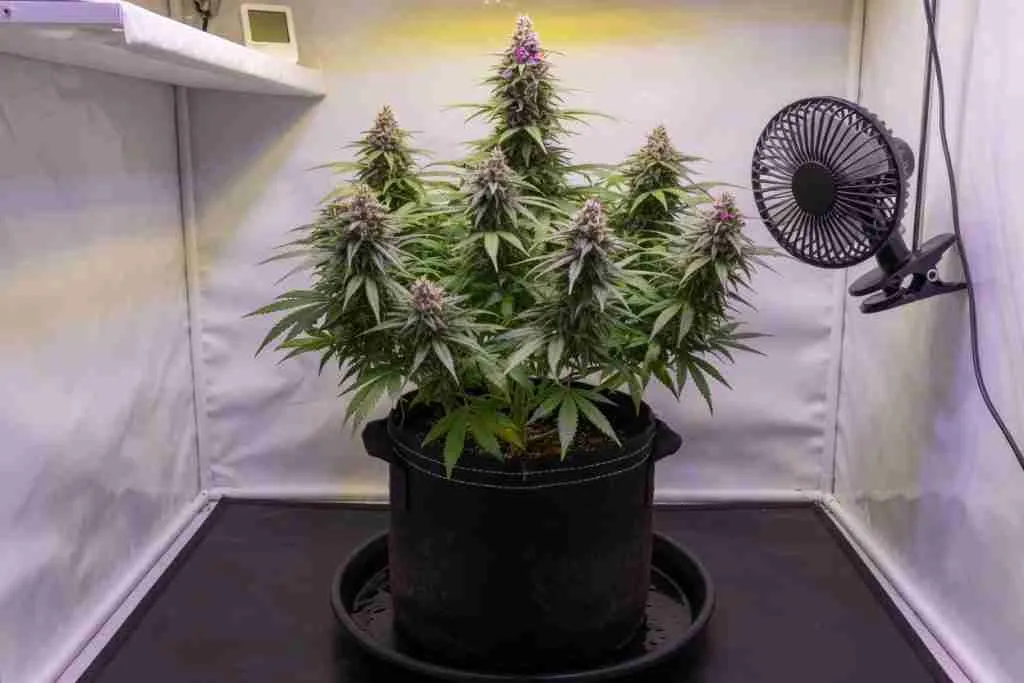
Growing inside gives you a season you choose, and it sends you a bill. One tidy plant in a tent you can manage will teach you more than a crowded tent you dread opening. You can sow when the sidewalk is icy, or when it’s too wet outside to keep a leaf dry. You can catch a male, a heavy pot, or a lamp that crept too close while the problem is still small. Bugs from the yard have a harder time getting in, as long as you don’t drag an outdoor plant inside for company. You also choose when a timer plant flowers, so you can flip it while there’s still headroom.
The bill is electricity, heat, noise, smell, and your own helpful hands. The lamp, the fan, and a filter can run for months, and the power bill notices. The room runs warmer than the rest of the home. Flowers smell unless the air is scrubbed on the way out. The gear costs money before you’ve cut anything, so a failed first run stings. Because the plant is ten steps away, pouring water feels like care, and that’s how people love a plant to death. None of this means you should skip an indoor garden. It means you should start smaller than your excitement on day one.
- Give one plant a tent about two feet by two feet, or two plants a tent about two feet by four feet, and leave a path for your hand at the end.
- Finish in a fabric pot of about three to five gallons. Start a timer plant in a small cup with holes. Sow an autoflower in the pot it will finish in.
- Use a lamp made for plants, on a timer. Run about 18 hours on and 6 hours off while it makes leaves.
- Switch a timer plant to 12 hours on and 12 hours off when it has filled about half the tent, and keep that night dark.
- Leave an autoflower on the long day. Don’t share its timer with a plant that needs the short day.
- Keep the back of your hand comfortable at the tops. If your skin wants away from the lamp, raise it or dim it, then leave it until tomorrow.
- Lift the pot every time. Water thoroughly only when it feels light, and empty the saucer before you walk away.
- In rich soil, skip the bottle at the start. Later, mix about a quarter to a half of the label, and only on a light pot.
- Keep water for soil around 6 to 7. Keep water for a soilless mix a bit more sour, under 6 and not as low as 5.
- Let a fan make the leaves tremble. Change one thing, write one line, and wait a couple of days.
- Keep no more plants than your local rule allows. A sprout already counts.
On a good day the plant looks a little boring, and boring is the goal. The stem slowly thickens. New leaves come in lighter and then catch up. They hold themselves out, instead of clawing down in a dark curl or taco-ing up under the lamp. You can still see some wall behind a young plant. The pot gets lighter over a few days, you water, and tomorrow looks about the same, not suddenly worse. If it looks worse right after you helped, the help was too much water, too much food, or a lamp you moved too close.
When something looks wrong, use the same order so you don’t invent a new hobby of panic. Lift the pot first. If it’s heavy, don’t water and don’t feed. Put your hand at the tops second. If the lamp is hot, raise it or dim it. Read the note third. If you changed something yesterday, wait, because plants answer over days, not over a coffee break. A raised lamp doesn’t repaint a bleached tip by morning, and a dry-down doesn’t make an overwatered plant snap upright in an hour. Glance under a leaf if you see specks or faint webs, and don’t answer those with a soak or a random spray on the flowers. Take a male out if you finally see balls instead of white hairs. Only then should a milder feed even be on the table.
So the next time the top of the soil looks pale, pause and lift. If the pot is still heavy, put the jug down and close the zipper. Check the lamp with the back of your hand while you’re already there. Glance for white hairs or little balls if the plant is old enough. Then leave the night alone, with the phone in your pocket and the timer doing its job. The morning the leaves have lifted on their own is the morning the lesson sticks. One plant, or two if the tent is truly wide enough, a lamp that fits the floor, a pot you can pick up, and a clock you don’t argue with. That’s the whole garden. The fancy tricks can wait until you’ve finished a plant without drowning it, burning the tips, or crowding it into a corner you can’t reach.