How Mutation Breeding Works for Cannabis

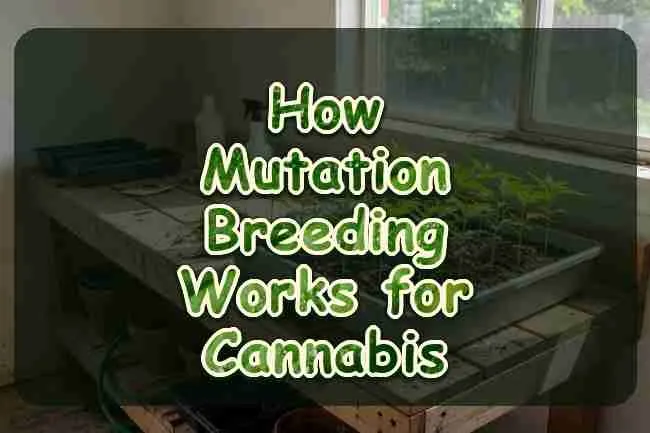
Mutation Breeding is a lab program that changes DNA on purpose, then throws away almost every plant that comes out of it. A marijuana plant with one odd leaf in a seed pack is usually a shuffle, not a treated seed. A weed plant you keep because it looks strange is a clone candidate, not a strain. The useful change, if there is one, still has to show up again in the kids. Until it does, you have a story and a plant in a pot.
A cross brings in a second parent. A mutation edits the plant you already have. Most of those edits do nothing you can see. Some kill the seedling, bleach it, or leave it sterile. A few change something you might want, such as finish time or a smell the line never had. You do not get to order which letter moves. You grow a crowd, you compare that crowd with sisters that were never treated, and you keep one plant only when the difference survives the comparison.
This page is that comparison. How to read the family on a packet is the strain lineage page. How to move pollen is the cannabis breeding guide. What a finished line actually is, after the generations, is how to create a new cannabis strain. Do not try to do all three jobs with a jar of chemical on the kitchen counter.
Mutation Breeding starts with seed you already know
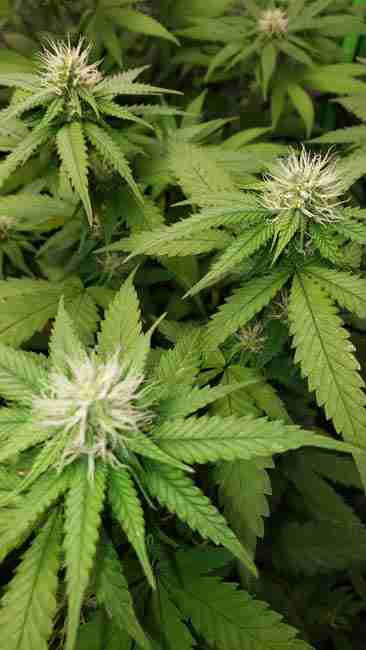
You start with a line whose height, finish, and smell you can already describe. The plants in the photo are what that looks like in flower: sisters in one room, doing the same job. If you cannot say what normal is, you cannot spot a change. A mystery polyhybrid is a bad place to begin, because the pack was already going to split. Short, tall, loud, and quiet were coming anyway. Treat that seed and you will not know whether the odd plant is your treatment or the shuffle the breeder already put in the bag.
Write the normal plant down before you touch anything. Internode length. Leaf width. How many days until white pistils. Whether the smell is fuel, fruit, or dirt. What the fan leaves do in the last two weeks. That note is the control. Sisters sown the same day, in the same mix, under the same lamp, are the other half of the control. A plant that is short because its pot dried out is not a discovery. A plant that is short while its sisters, in wet pots, are tall, is at least a candidate.
The seed itself is still just a dormant plant in a shell. What that shell is, and what the words on a packet do and do not promise, sits on what cannabis seeds are. A treated seed does not become a new packet because you soaked it. It becomes a bet that one seedling will differ, and that you will have enough sisters to notice.
What this program is, and what people call it by mistake:
- It starts from a line you can describe, then a treated batch, then a crowd big enough to cull.
- Most of the crowd is junk. Dead seed, pale seedlings, and sterile plants are the ordinary result.
- One pretty plant is a keeper candidate. It is not a name you can print.
- An odd leaf in a shop pack is a phenotype until the kids repeat it. Scoring what you see is the phenotypes page.
- A purple bud can be the family, a cold night, or a real change. One cola cannot tell you which.
- A stretched cola under a hot lamp is usually the lamp.
- A thicker leaf is a clue, not a chromosome count.
- A chosen gene put in on purpose is a different job from random damage.
A letter change is not a new parent
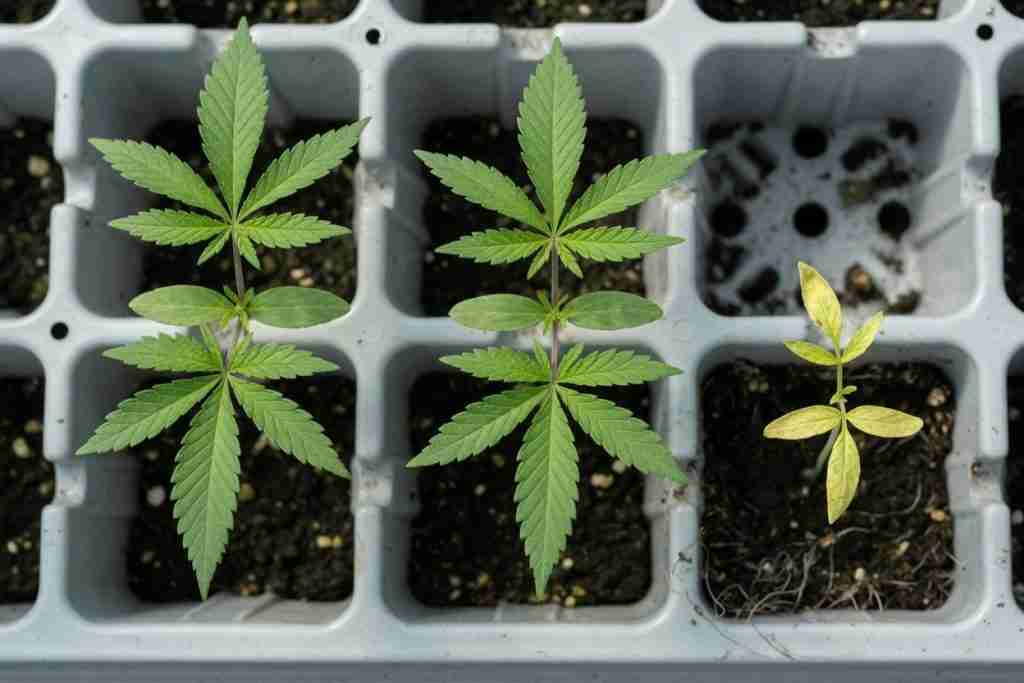
Picture two healthy seedlings and one that is tiny and pale in the same tray. That pale plant is the usual face of a bad edit. The DNA letter changed, or the seedling was simply weak, and you still cannot tell those apart on day ten. You do not feed it a rescue bottle to “save the mutation.” You note it, you keep it only if it lives, and you judge it against the two green sisters, not against a photo you liked online.
A new parent would have brought a whole second family of traits. You would see that family’s stretch, nose, and clock mixed through the kids, and you would expect the mix to split again when those kids make seed. A letter change is narrower, and it is also messier, because the treatment does not edit one letter and stop. Labs that publish this work find a heavy load of extra changes in every treated family. The plant that looks right can still be carrying damage you will meet as weakness, sterility, or an ugly split in the next generation. That is why the first odd plant is not the strain.
A sterile plant is a dead end for seed even when the flower looks fine. If it will not make pollen and it will not take pollen, a clone is the whole future of that individual. You cannot breed a letter you cannot pass on. Hard treatments end there more often than they end in a winner: the plant lives, the flowers look interesting, and the next generation does not exist. Write “no seed” in the note and stop calling it a line. A clone of a sterile keeper is honest. A packet with its name on it is a lie.
Retail seed already shuffles without anyone treating it. Two sisters from one pack can look like cousins. That is a phenotype hunt, and it is the honest way a home gardener finds a favorite. Calling that hunt a mutation program inflates a normal pack into a science project. Grow the pack. Keep the plant that matches the list you wrote. Leave the lab chemicals in the lab.
Screen a crowd and throw most plants out
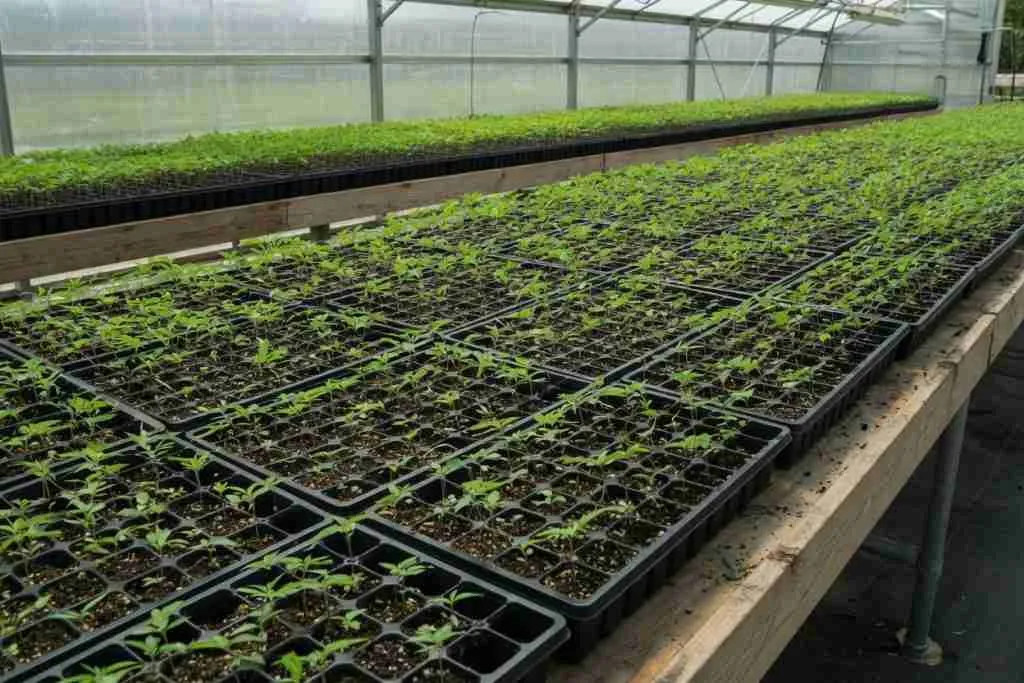
The bench in a real screen looks like a greenhouse full of trays, not like four pots in a tent. A rare change needs a crowd or it never shows up. Breeders sow far more seed than they intend to keep, then kill most of it for being ordinary, weak, or wrong. The treated seed and a tray of untreated seed from the same mother go in on the same day. Same mix. Same light. Same water. If only the treated tray looks sick, the treatment was too hard or the change is damage. If one plant in that tray stands apart while the rest match the control, you have a note worth following.
Labs do the damaging step with tools a tent does not have. The chemical you will see named in papers is ethyl methanesulfonate, usually shortened to EMS. The physical version is ionizing radiation, often gamma rays. Both break or rewrite DNA. Both are hazardous. EMS is a toxic laboratory reagent. Gamma work happens in a licensed facility, not under a grow lamp. This page will not give you a soak time, a concentration, or a distance from a source. Those numbers are how people hurt themselves and kill a batch, and they do not belong in a home recipe.
Cull in an order you can repeat. First, anything that did not sprout or fell over in the first week. Second, plants that stay pale or twisted while the control tray is green. Third, plants that match the control so closely you would not notice them in a lineup. Those matches are not a failed experiment. They are the line, and they are the crop if you are growing to smoke. The plants you follow are the few that differ in one thing you wrote down in advance, and that still finish. A plant that differs by dying early has already answered you.
Your lamp is for growth. Leaving a plant under it for an extra hour does not run a mutation program. Ultraviolet diodes sold for resin are not a gamma source either. If a company tells you a light schedule will rewrite the cultivar, they are selling a lamp. The rewrite, when it is real, was done to seed before you bought it, and even then the seller should be able to show you the generations after the find, not a single treated mother.
Write the odd plant down before you name it
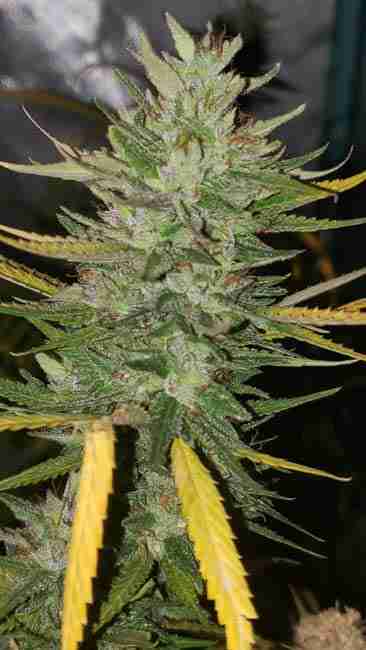
The cola in the photo is a useful warning. It is stacked and foxtailed, and the fans under it are yellow. That can be heat, a lamp too close, a hungry pot, or a plant that was always going to build loose flowers. It can also be a genetic change. You do not get to pick the flattering story on the day you notice it. You write the date, what the sisters look like, how close the lamp is, and whether the pot was light or heavy. Then you wait for the next leaves, or for the kids. A name on day one is how a light burn becomes a fake cultivar.
Color gets the same treatment. A purple flower can be the line, a cold finish, or a new letter. Smell gets it too. A fruit nose that the mother never had is interesting only if the sisters in the same room do not have it. Write the smell in plain words while the flower is fresh. Memory will turn “a little sweet” into “a brand new terpene” by next month.
Some odd shapes already have names because breeders found them and then crossed them on purpose. Webbed leaves, fern-like leaves, tiny rounded leaves, and white stripes are that list. Finding one striped seedling in your tent is not the same program as holding a line that repeats the stripe. How those visible forms get kept and stabilized is the mutant cannabis genetics page. This page stops at the moment you notice the plant. Their page is the breeding that comes after a known visible trait.
Extra chromosome sets are a different trick
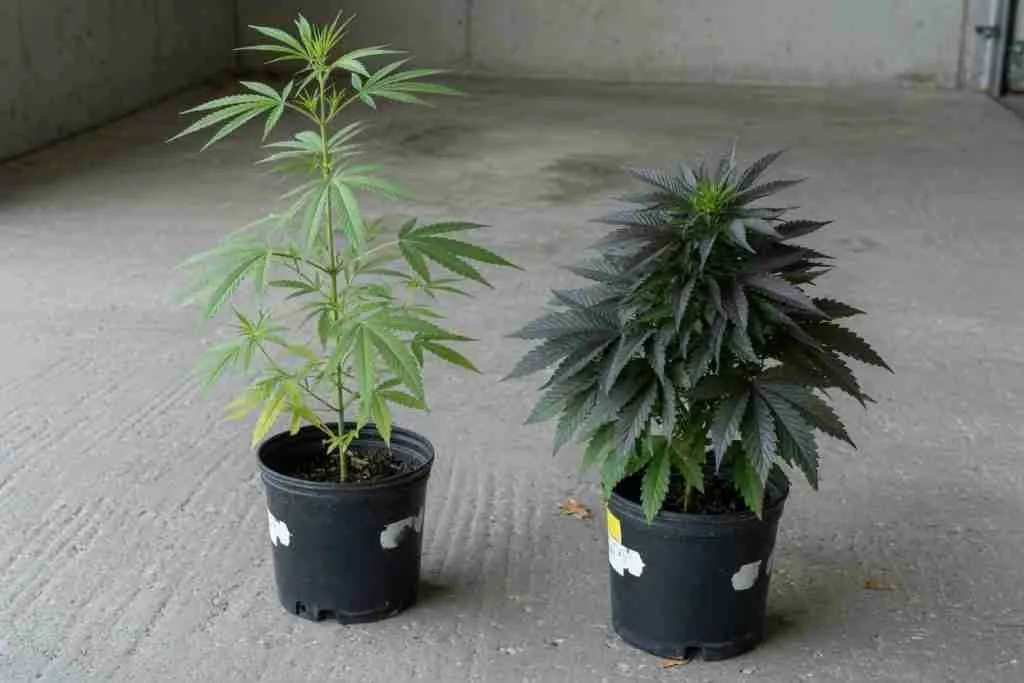
A point mutation changes a letter. A polyploid plant carries extra full sets of chromosomes. Cannabis ordinarily has two sets. That is the diploid. Four sets is a tetraploid. Three sets, from crossing those, is a triploid, and triploid plants are often the ones people chase because they can flower with few seeds. The two plants in the photo are only a picture of “these do not match.” Color, height, and leaf bulk can come from a normal pack. They are not a ploidy test.
Labs make extra sets with chemicals that stop a dividing cell from separating its chromosomes. Colchicine is the old drug used for that. It is a poison, the same compound used in medicine at very small amounts, and it does not belong in a soak on a kitchen counter. Other lab chemicals exist for the same job. This page will not mix them, time them, or tell you how long a seedling should sit in them. A plant that survives the soak may be unchanged, only partly changed, or truly polyploid. Survival is not proof.
The potency story is not settled, so do not buy a thicker plant as a stronger plant. Some lab reports find more flower mass and more cannabinoids when the chromosome count goes up. Other reports find tetraploid plants making less THC than the diploid they came from, with only the mixed-ploidy plants looking richer. Until someone counts the chromosomes, you are looking at a leaf. Treat the disagreement as the fact. A shop that promises a polyploid pack should be able to say who counted, and on which generation, not just that the leaves look wide.
Thick leaves are a clue not a proof
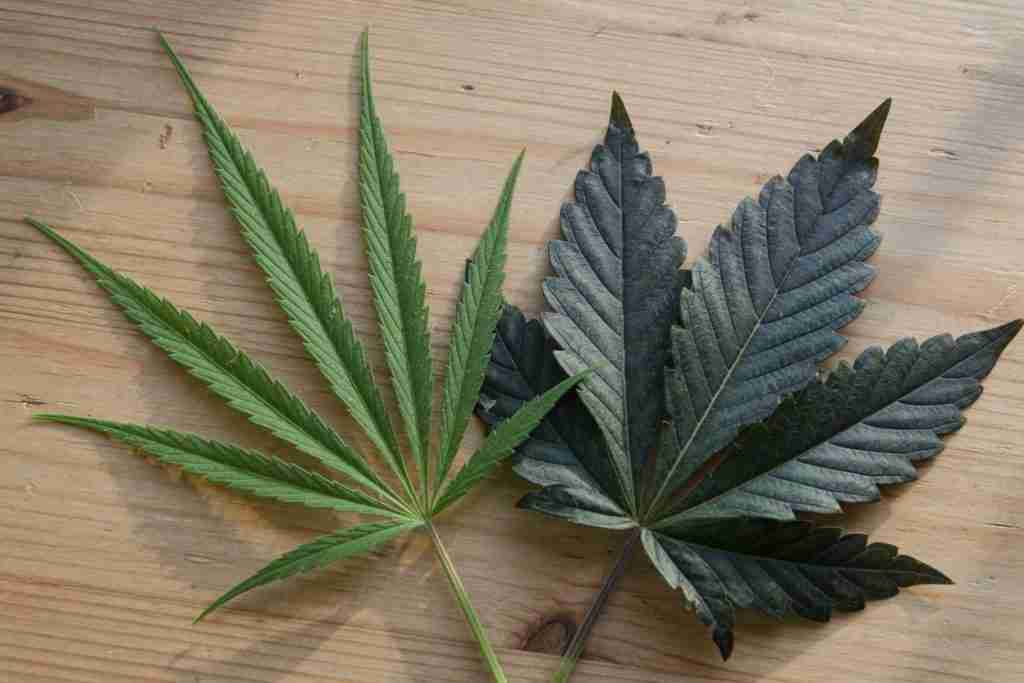
Set a normal leaf next to a broader, thicker, darker one and you have a clue. Polyploid plants often show larger stomata, the tiny pores on the leaf, and the leaf can feel leathery. They can also grow slower and stockier. A heavy feed, a different phenotype, or a cold room can fake parts of that look. You cannot see a stoma’s size well enough, with a phone, to certify a chromosome count. The tool for that is a flow cytometer or a count of chromosomes under a microscope. Home growers do not have either. A nursery that claims the count should show the lab result, not a macro photo of a fan leaf.
If you do find a stocky plant you love, keep it as a clone and grow it again in a fresh pot before you tell yourself a story. If the second run, under a calmer lamp and a lighter feed, goes back to the sister’s leaf, the first run was the room. If it stays thick and the flowers still interest you, it is a keeper cut. It is still not a counted polyploid, and it is still not seed you can sell as a new line. Seed comes after breeding, and breeding is the next section, not a bottle.
The keeper still has to be bred
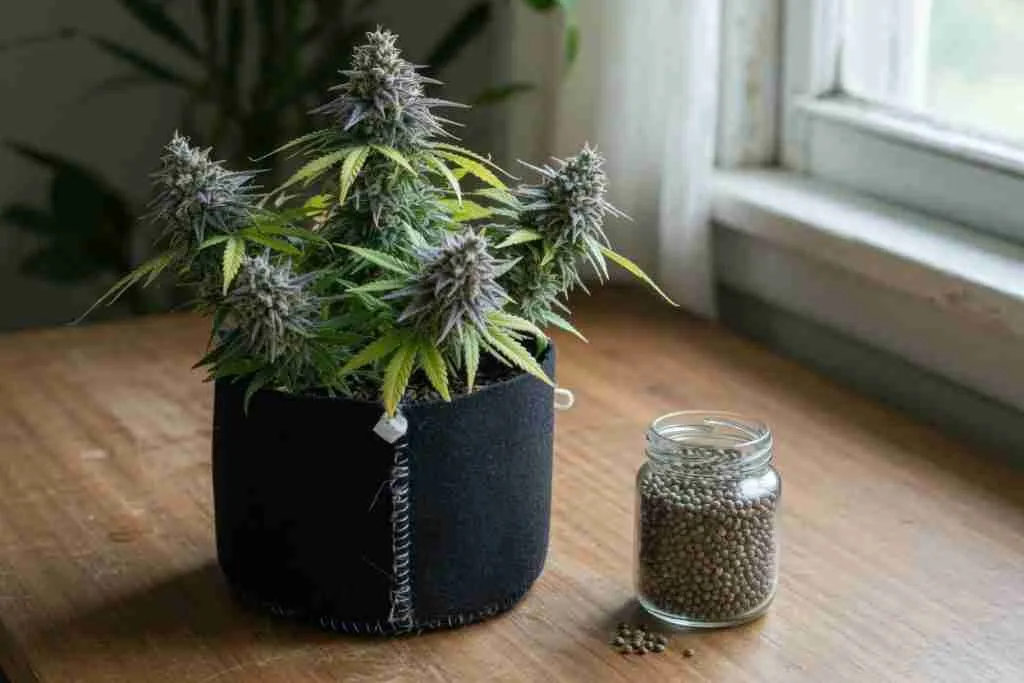
The jar beside a keeper is the part people skip. Seed from that plant is not “the mutation, locked.” The treated generation is full of extra damage. Breeders cross the keeper back to a clean, untreated plant from the same line, or they self it, then they grow those kids and throw out every one that lost the trait or gained a new problem. Each pass sheds some of the junk. It also takes space, males or a reversal you understand, and a written target. How to move the pollen without seeding the rest of the room is the breeding guide. This page does not repeat those steps.
The letters on the packet you end up with are a different lesson. An F1 is the first cross. An F2 is where the family splits in public. A backcross walks the kids toward one parent. An S1 is a self. What those labels do and do not promise is S1, F1, F2, and BX. What “stable” should mean when you buy the finished seed is genetically stable seed. If the seller cannot say which of those the jar is, the jar is a hunt, and a hunt is fine when it is labeled as a hunt.
One pass back to the clean parent does not finish the job. The kids of that cross still split, and some of them show damage you did not see on the mother. You grow that generation, you keep only the plants that still show the one trait, and you do it again. How many times is a breeding decision, and it lives on the create-a-strain page, not in a promise that the first jar is uniform. If you need seed this season and you do not have room for those generations, tell yourself the truth. You have a keeper cut. Cuts are not packets.
None of this is a GMO. A genetically modified plant has a chosen gene put in on purpose. Mutation work is a scatter of random damage, then a human keeping the one change they can see. The genetically modified cannabis page owns that difference. Do not call a webbed leaf, a fern leaf, or a thick fan a GMO because it looks unusual. And do not call a single treated mother a cultivar. A cultivar repeats. One plant in one tent does not.
Four plants cannot run the screen
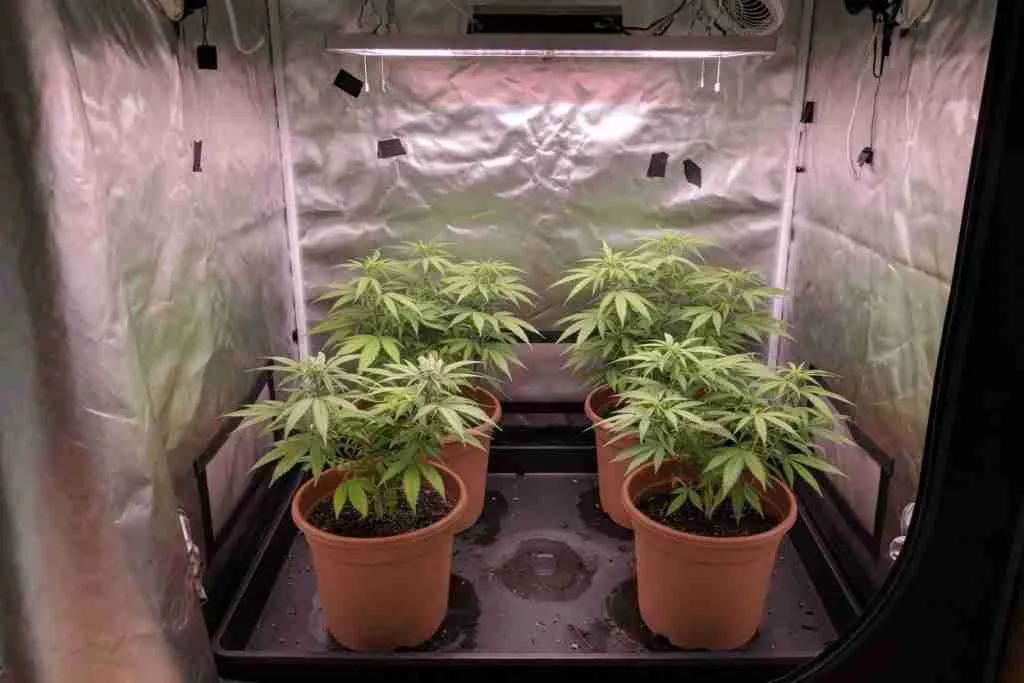
In Canada the limit is four plants per household, and a seedling counts as one of them. Quebec prohibits recreational home growing. Manitoba has been indoor-only since 1 May 2025. A mutation screen wants a crowd you are allowed to kill. Four plants is a garden. Use them to grow a pack you chose on purpose. If one of the four is truly odd and strong, keep a clone and let a legal breeding room test the kids. Do not soak the other three in a reagent to force a strain into a month.
A household garden still has a job. Sow sisters, not four different jars, if you want to see whether one plant is actually different. Give them the same pot size and the same dry-down. Write the odd one up the way the earlier section says, and resist naming it. Growing that first pack well is ordinary cultivation. The F1 grow guide is the place for running a matched set. It is not a screen, and it does not need to be.
If the odd plant is weak, pale, or sterile, throw it out. Most treated plants, in a real program, end that way. Keeping a sick plant because the word mutation sounds valuable just fills the tent with a plant that cannot finish. The sisters that match the note you wrote at the start are the crop. The rare keeper, if it is real, earns a second run and then a breeder. It does not earn a chemical experiment in the only four pots the law allows.
Keep the idea boring on purpose. Know the line. Treat seed only in a lab that already does this work. Grow a crowd next to untreated sisters. Write the odd plant down. Throw out the junk. Breed the keeper until the kids repeat the one trait, and call it a strain only then. An odd leaf, a purple bud, a foxtail, or a thick fan is a note in a notebook. It is not a new cultivar, and it is not a reason to bring a poison into the house.