


How Much Light Leak Can Photoperiod Cannabis Plants Tolerate?


How Much Light Leak Can Photoperiod Cannabis Plants Tolerate starts when you name the night you already broke, not when you buy a brighter lamp for the morning. A glow in the middle of the dark can make that night feel short. You want the glow that still matters, and the glow you can leave alone.
Picture a real night. The leaves looked a little droopy, so you unzipped the tent to check the pot. The kitchen lamp was still on. Opening the tent with the room light on, the dark period ends in one bright second. A week later the tops looked leafy again, and the flowers seemed to hesitate. That visit was the leak.
What a seed is lives on what a seed is. The two clocks live on the clock difference. The pack choice between a photoperiod seed and an age-clock seed lives on the pack choice. The flip, the timer, and what to do after a power cut live on the flip and the timer. Putting a harvested plant back into leaf on purpose lives on putting a harvested plant back into leaf. This page stops at the stray light during a night you meant to keep dark.
However, a closed tent is only as dark as the glow you can still see after your eyes settle. The list for Nova Scotia and the list for Delaware are two doors into the same catalogue. A small pack beats a single bean you cannot spare, which is why a 5-pack is the default order. Packs leave on the clock on shipping. Other rooms sit on the Canada hub and the United States hub. Read the rules where you live before you pop a seed.
You are in the same boat as every grower who finds a pinhole and panics. Moonlight on a closed window is not a porch light painted across the leaves. A little lamp you can spot from the doorway is not a seam you only find with your eye pressed to the cloth. Keep your eyes peeled, sit until the room comes back into view, and fix the bright thing first.
How Much Light Leak Can Photoperiod Cannabis Plants Tolerate

Name the night before you name the tape. Photoperiod means the plant uses the length of the unbroken dark to decide whether it keeps making leaves or starts building flowers. The day lamp can be huge and still not be the boss of that decision. If a light the plant can read shows up in the middle of the night, the plant adds that light to the day and the dark has to begin again. The specification is an uninterrupted night, not a perfect cave you will never build.
The pro of treating the night as the signal is that you walk to the door when the flower stalls, instead of shopping for a brighter morning lamp. The con of treating every photon as a disaster is a taped vent, stale air, and a glow the plant never used. Fix what is plain as day, and leave what you cannot find.
Other pages already own the hours and the other symptoms. Leaf growth before flower lives on leaf growth before flower. Whether those leafy weeks need any night at all lives on whether leaf growth needs a night. The weeks of bloom live on the flower stage. A long gap between leaves lives on the reach between the leaves. Wilt, taco leaves, and a stall from heat or thirst live on what stress looks like. If the night was truly dark and the plant still looks unhappy, go to those pages.
Light Leak Can Photoperiod Marijuana Plants

The zipper is a pain in the neck because you open it every day. A white line along the teeth is a leak you can point at. If you can still point at it after your eyes adjust, cover it tonight. A seam you find only with your face on the fabric is a smaller worry. You will kick yourself if you chase that seam and leave the zipper open.
A street lamp belongs in the same family when it lands on the plants. If you can see a patch of that lamp on a leaf or on the tent wall, the plants can see it too. A street lamp that never reaches the tent is not your emergency. Move the tent, hang a thick curtain, or turn the window away from the flowers. Plants that live outside are a different room, and that year lives on the outdoor year.
A phone over the flowers, a laptop with the door cracked, and a hall lamp while you peek are days the plant did not ask for. See the leaf while the day lamp is supposed to be on. Once in a blue moon a fan screams and you have to go in. Do that with the room lamps off, and make it short.
A crack under the tent door

The floor tells on the door. A bright line along the skirt means the fabric does not meet the ground, the skirt is folded under, or a cord is propping the wall up. A rolled towel is the fast cover. Tape stays put if the towel creeps when you walk past. Do not stuff the intake so hard that the fan pulls the walls in. How the shell should breathe lives on the tent. You only own the light at the floor.
A port left open around a fat cable is a little window. Pull the drawstring, then add dark cloth if you can still see the room through the gap. A port that throws a spot on a leaf gets fixed before bed. A hole you cannot see can wait until daytime, so you do not block a vent you need.
A towel has honest limits. The pro is that it is fast and easy to pull away. The con is that it moves, it can hold damp, and it does not close a zipper that is open higher up. Use it on the floor, then close the teeth.
Light Leak Can Photoperiod Weed Plants
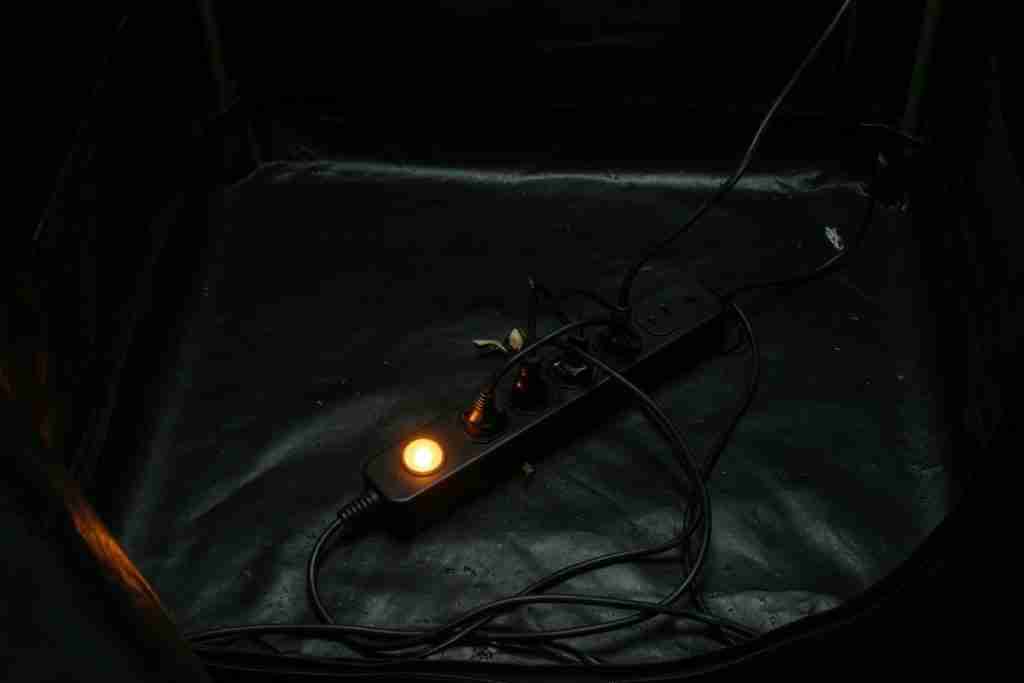
The little lamp on the gear looks too small to matter, which is why people defend it. Left glowing on the power strip, the night never really starts for the plant beside it. If you see that glow from the doorway after your eyes settle, cover the lamp or move the strip outside. Do not cover a vent or a hole the box uses to stay cool.
A blinking timer, a dehumidifier dot, a camera point, and a power brick glow take the same test. Cover an obvious dot, or move the box. A dot you find only with your nose on the plastic can wait. What the timer should do after a power cut lives on the flip and the timer page. Do not answer that cut by clicking a lamp on at midnight.
Look, the plant is counting the dark, and a brighter lamp will not fix a night you already broke. People hear that a green lamp is safe for a night visit. That story is a wish. Oh, the little green lamp is a pain in the neck precisely because it feels allowed. A green lamp you can work under is still a lamp. Leave it off until the day lamp is meant to be on. A color does not give the plant permission to ignore the light.
A tiny lamp on the gear
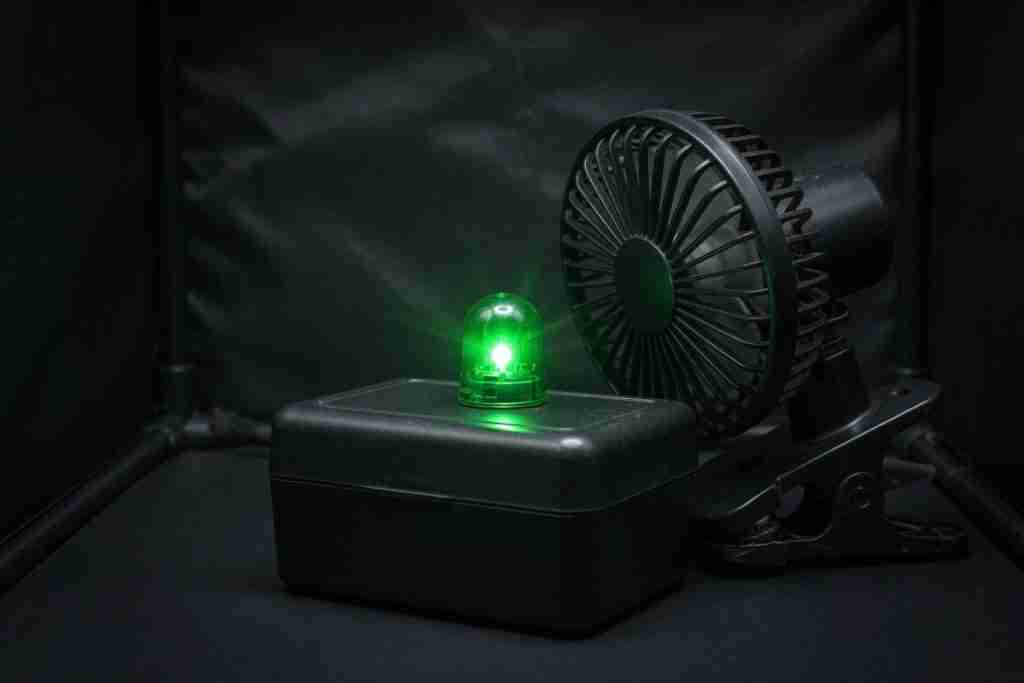
The fan can stay inside. The controller can stay if it does not glow. The tiny lamp on the box does not have to stay visible. A scrap of black tape over only that lamp, kept off any button you need, is the repair. If the tape gets warm, peel it off and move the box outside the tent. Warm tape is a warning. A cool lamp cover is a repair you can touch and forget.
Fix a glow you could read a label by, or a glow you notice without searching. Leave a glow you find only by cupping your hands around the box. A porch light that never reaches the tent is not a porch light painted on the flowers. Moonlight through a closed window is not a reason to wrap the house. The light has to arrive on the plant.
One piece of tape on the lamp inside the tent lets the night go dark while the machine still runs. Peel it in the morning if you want that status while you are working. Do the zipper and the floor before you cover every dot in the house.
What the dark night is for
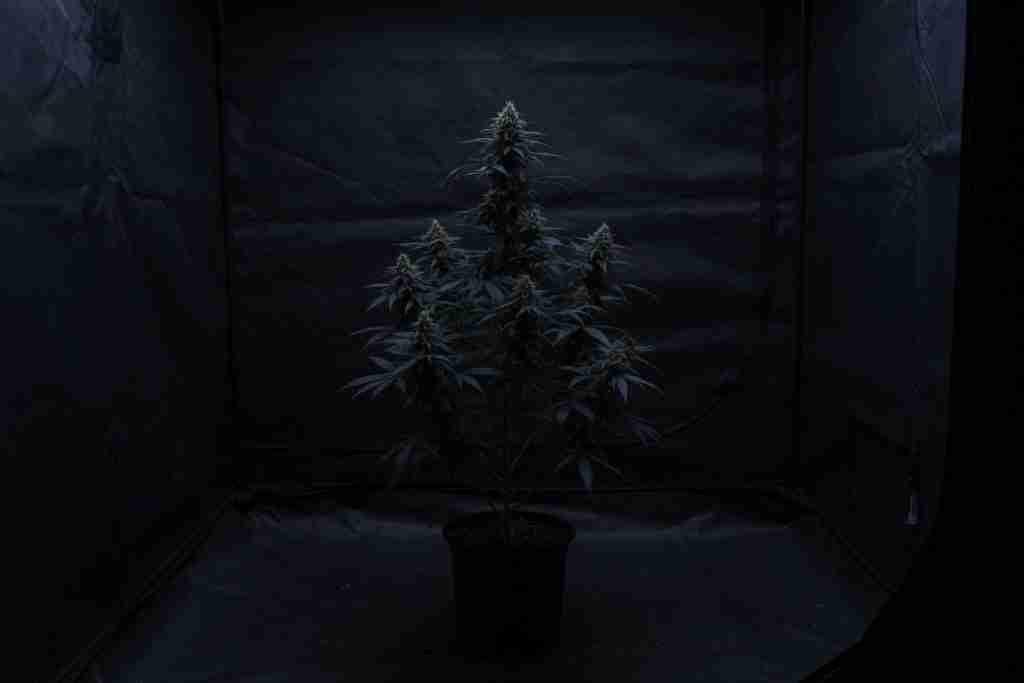
The night is the sentence the plant reads. A long unbroken night says flower. A short night says keep growing leaves. It is measuring whether the dark stayed dark until the lamp was supposed to come back. A bright hole in the middle makes two short nights, and those do not add up to the flower signal.
A short-day plant flowers when the night stays long. A Purdue horticulture note walks through why a short-day plant flowers on a long night, and a plant in your tent is using that same kind of count. A lamp in the night makes the plant read a long day. Do not borrow a number from that note and call it a leak budget. The test is your eyes.
During leaf growth, stray light usually just keeps the plant leafy. That can annoy you if you thought you had flipped, and it rarely ruins the plant. During flower, the same leak can slow the flowers, push new leaves through the tops, or, on an unstable plant, grow a few male flowers. Do not shrug off a flower leak with a leafy-week story.
An age-clock plant does not use this night length. Light that is fine for it is the leak for the photoperiod plant beside it. A small lamp left on for one of them steals the night from the other. Give them separate dark, or do not share the tent. One timer cannot serve both clocks.
The plant reads the night not the day

You can hang a wonderful lamp and still fail the night. A lamp that is too close, a dead corner, and a panel that never fills the tent live on lamp mistakes. The color of that lamp lives on lamp color. Neither page can patch a door you opened at midnight. Barking up the wrong tree looks like a new panel arriving while the zipper stays open. The plant keeps reading a short night under a more expensive sun.
The plant keeps a running memory of whether light just happened, and a flash in the middle resets it so the dark has to start over. A door opened under a bright room is that flash. A street lamp on the tent every night is worse, because it repeats. The moon that never lights the interior is not a flash. Bright and repeated is the problem.
There is a light at the end of the tunnel, and it is a night you watched stay dark. Cover what is still obvious, then leave the tent alone until the day lamp is meant to rise. If the plant still stalls, the night was not the missing piece.
A leak during flower is a different mess

Flower is when the night has a job you asked for. New leaves in the buds, tops that loosen into spears, and a flower that stalls are the usual sights. Heat and a dry pot can twist a top too. If the room is calm and the only new thing is a light you found at midnight, blame the light before you blame a bottle. Read the new growth, not the growth that already happened.
The pro of catching the leak in the first nights is that the plant often returns to flowering once the nights are whole, and you lose less time. The con of catching it late is leafy buds, a longer finish, and seeds if a male flower already opened. You cannot close a flower that already opened. You can keep the next night dark. Do not rip the plant out on the first odd leaf, and do not ignore a tent that has been glowing for weeks.
A spear of flower can also come from a lamp that is too intense on the top. If the night is truly dark and only the top under the lamp is spearing, that is a day problem for the mistakes page. Check the night first so you do not raise a lamp that was fine. If both are true, fix the night and give the top some air. This page will not invent a hanging distance. Two changes on the same morning will leave you guessing which one the plant answered.
Herms and foxtails from a broken night

Some plants answer a broken night with a few male flowers on a female plant. Growers call the long yellow ones bananas. They can shed pollen and seed the flowers around them. An unstable plant is more likely to do it. A steady plant may only grow extra leaves. Check while the day lamp is on, lift the bananas gently, and keep the nights dark after that. This page will not hand you a recipe for making pollen.
Loose spears from a night problem show up over the whole plant, often with leaves caught in the stack. Loose spears from a hot lamp sit under the brightest spot, while the lower flowers stay normal and the night was dark. If the night fails the sit test, the night is first. If the night passes and only the lit top is spearing, the day lamp is first. A whole night is never the wrong gift for a photoperiod plant in flower. Watch for a few days before you move the lamp.
Seeds in the jar are the cost people feel later. One open male flower can do that job. The con of ignoring bananas is a seeded harvest and a lot of picking. The pro of a dark night, after you remove the ones you can see, is that new bananas are less likely when the light was the trigger. If the plant keeps making them in a tent that stays dark, the cause is the plant. That is a stress read, not another roll of tape. Decide in the daytime whether that plant stays in the room.
Reveg starts with one-finger leaves

A single skinny leaf, one smooth blade where a fan leaf should have several fingers, is the early sign that a flowering plant is sliding back toward leaves. People call that slide revegetating. Sending a harvested plant back to leaves on purpose is the other page, and it is a choice you make after the flower is cut. Here, the same leaf means the night was not a flower night. Find the leak before you follow a method that wants the slide.
Odd leaves can also come from stress, a hard cut, or a plant that was never stable. One smooth blade is a clue, not a verdict. A tent full of single blades, plus stalled flowers, plus a light you can see at the door, is a verdict. Fix the door, and leave the pruning plan for another day. If you strip leaves on the same afternoon you find the leak, you will not know which change the plant is answering.
If you already cut the plant and you want leaves again, you are on the other page. If flowers are still on the plant, whole nights are the way back. The leafy bit that already grew will not tighten. The next bit can.
How to find the leak tonight
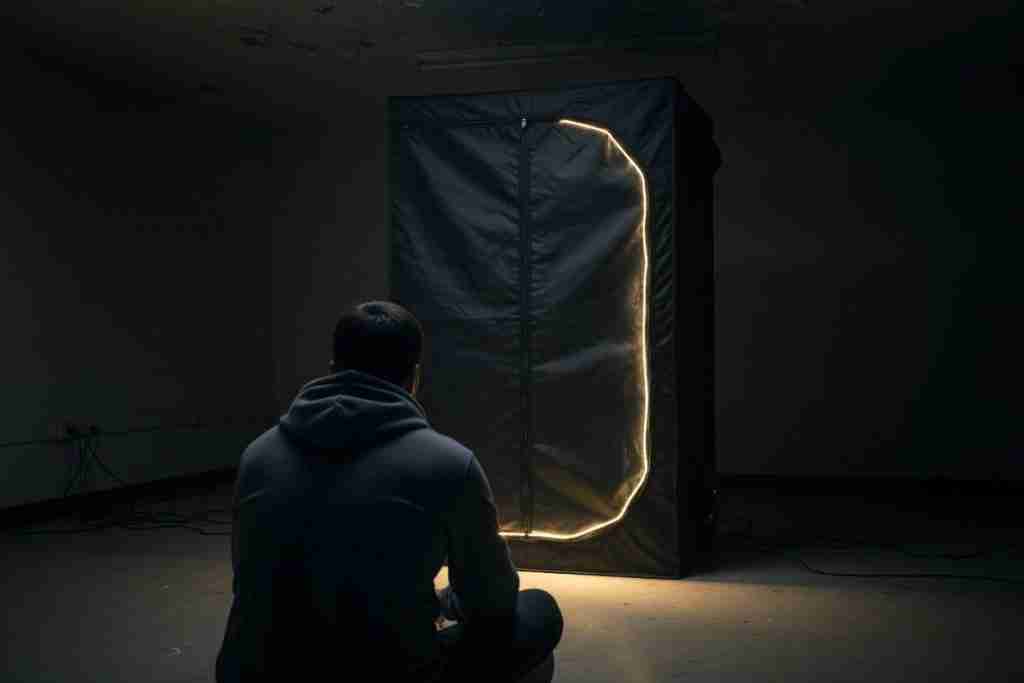
Turn the grow lamp off on time, and turn the room lamp off too. Sit until the shapes come back. A leak that vanishes as your eyes open was never the bright kind. A white line you can still see when the pots come back is the one you tape. A glance from a lit hall hides the real line.
Walk the zipper, the floor, the ports, the window, and the gear. Do not use a flashlight for the search. It blinds the test, and it is a leak of its own. Use your hands to find the zipper pull. If you cannot see a single bright line, you have a dark tent, and you can go to bed. If you see one line, mark it by feel and fix it after the test. The test and the repair do not have to happen under the same light.
A window is a leak when an outside lamp shows up as a patch on the fabric or on a leaf. A dim square of glass, with a dim interior, is not that patch. Curtains help, and moving the tent off that wall helps more. Outdoor plants under a street lamp need the cover on the flip and the timer page, not tape on a tent.
Tape, towels, and a look with the lights off
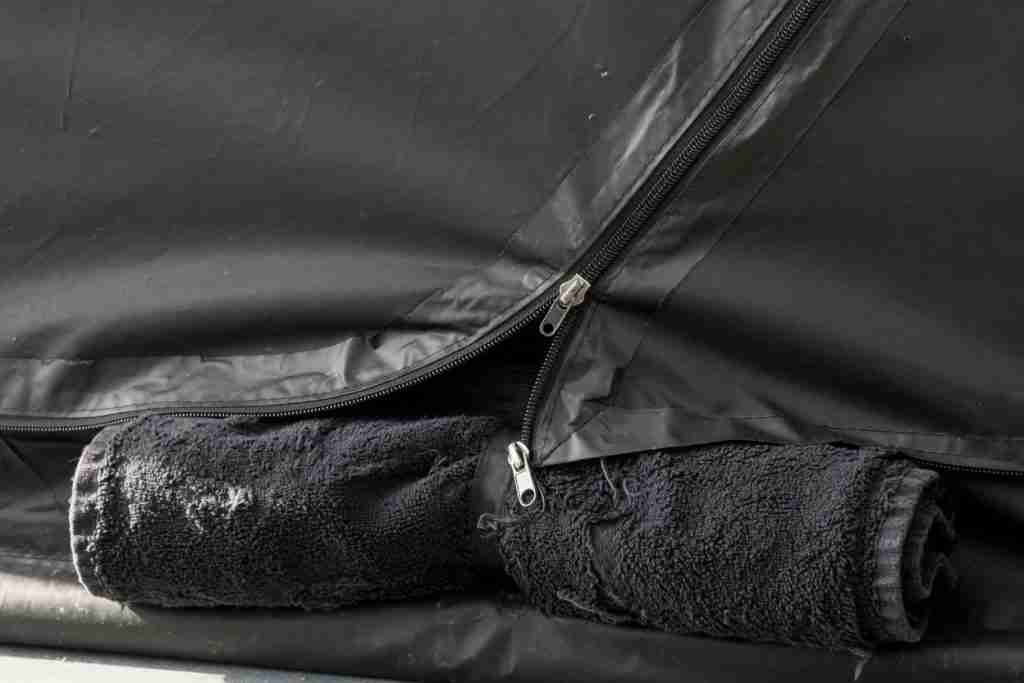
Tape the zipper where the line shows, from the outside if you can, so you are not inside the tent with a lamp. A towel goes on the floor line. Draw every port closed. Move the glowing strip out, or tape only its lamp. Then sit again. The second sit is the check. If the line is gone, you are done for tonight. If a new line shows, cover that line only. A second blanket over the whole tent is how people cook a crop while feeling thorough.
The pro of this order is that you change one thing, you can feel the result, and you do not block the fan. The con is that daily zipper travel peels the tape, a towel can wick a spill toward the skirt, and a port wrapped too tight can pinch a cable. Check the repair in the daytime with the fan running, so you did not trade a leak for a hot tent. The room as a whole lives on the indoor room. If the walls suck in, give the air back.
Tomorrow night, sit once more. After your eyes settle, you cannot find a line, a dot, or a patch bright enough to point at. That is the specification you can keep. If the flowers were already confused, give them several whole nights before you judge the new growth. The old leafy bit stays leafy. Fix what you can see, leave the moon alone, and do not open that zipper under the kitchen light again.
