How Much Light Do Cannabis Seeds Need?

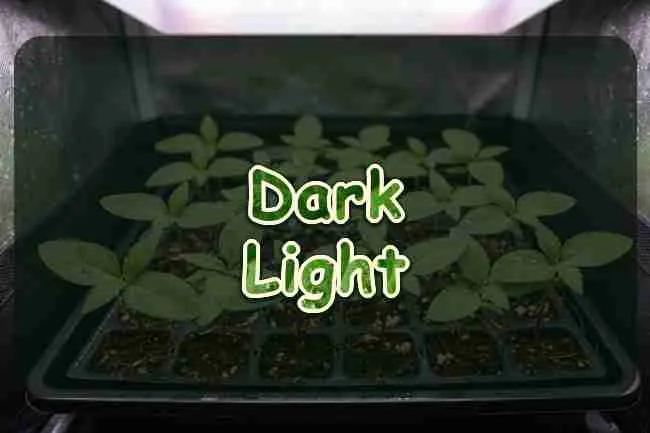
How Much Light Do Cannabis Seeds Need is two different jobs. The marijuana seed inside a closed shell wants moisture, warmth, and air. The weed plant that pushes out of that shell wants light the hour the stem clears the mix. Mix those jobs up and you either dry a seed under a lamp or leave a sprout in a cupboard until the stem is a pale string.
A seed does not photosynthesize. The food for the first push is already in the shell. Water, oxygen, and a warm spot crack it. Light becomes the meal only after green tissue is in the open air.
How Much Light Do Cannabis Seeds Need

Those hooks are the handover. The stem is up and the seed leaves are still pale. Leave them in the dark and the stem spends stored food on height. A clear dome holds humidity for a new root, and it also shades the plant and traps heat. Have the lamp on above the tray, and crack the lid once the seed leaves open.
Sow straight into a pot and the lamp can be on from the hour you water it in. About a centimeter of mix is enough cover. Deeper, and a weak seed runs out of fuel before it hits air. The mix is the dark the seed wants. A black tent until you see green only means the first hook stretches before you look.
If you pop seeds on a towel, that container stays shut and out of the sun until the root shows. A lamp on a damp towel is a dryer with extra steps. The germination page is the sprout method, the glass of water, and the towel. This page starts when that root is out and the seed is going into a pot. Plant it root down, cover it lightly, and put the pot under the light the same day. Waiting until the seedling “looks ready” is how you grow a stem instead of a plant.
Older seed can sit longer under the surface. That delay is age and moisture, not a missing bulb. The older-seed page is the wait. Keep the mix damp and warm, and give light the moment anything green shows.
A cutting is a different plant from a seed, and people land on this question with both. A fresh cut has no working roots yet, so it wants the dim end of the same lamp, a dome, and less ambition. The clone page is that job. A seed that has already pushed a root can take the seedling schedule below. Do not run a rooted seedling in the dark because a clone guide told you to keep cuts shaded.
Before the shell opens
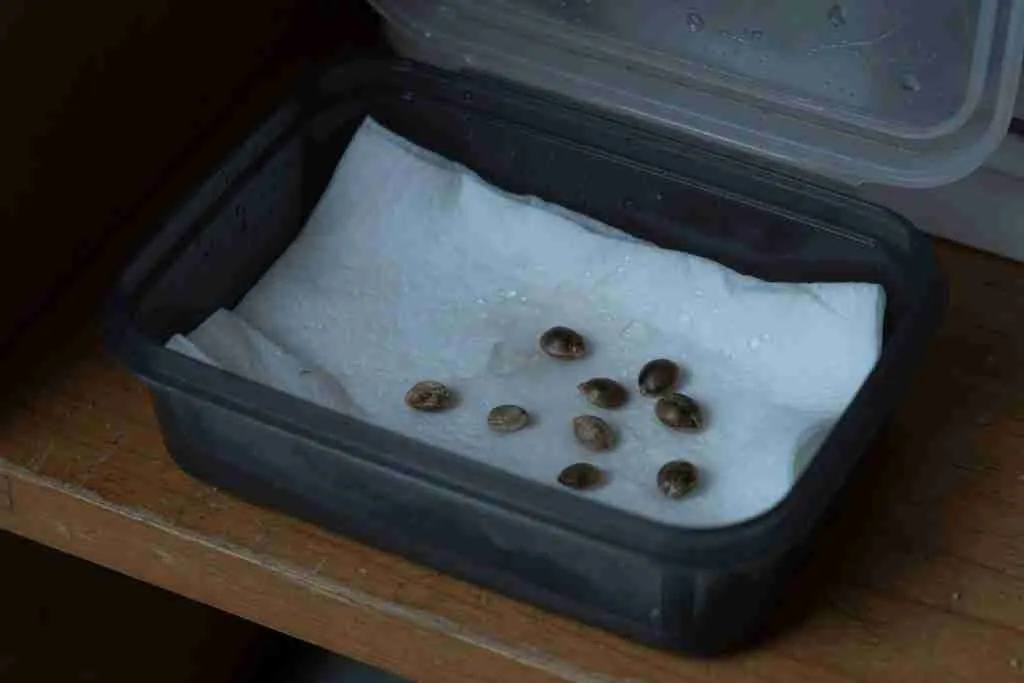
A closed seed on a damp towel needs the towel wet but not swimming, a little air, and ordinary room warmth, about the mid-70s F or 24 C. A cold sill at night stalls it. A heat mat with a thermostat is optional. A lamp is not a heat mat. A board parked an inch above the box cooks the towel. Warm the shelf. Keep photons off the naked seed.
The box stays dark so the paper stays moist, not because a photon poisons a seed. Check it twice a day. Mist dry corners. Tip out a puddle. A sealed jar with no air is worse than a dim cupboard with the lid cracked.
Skip charts that put a cloudy-day lux number on germination and then move a seedling to a flower clock. Lux is built for the human eye. A phone app will not match a quantum meter at the leaf, and a dim-office reading is how seedlings stretch. The unit that matches the leaf is PPFD, the photon count on the foliage. It starts to matter when there is foliage.
Twelve hours on and twelve off does not open a shell faster. Plant when the root is about as long as the seed. Extra days in the towel tangle the root in the paper, and the stem that finally reaches a pot is already weak.
The day-by-day seedling page is the diary after the plant is up. The first-week page is hang distance and water once you are looking at a standing plant. Stay on this page for the decision those diaries assume: dark while the shell is closed, light as soon as the stem is in the air.
Hours on the timer
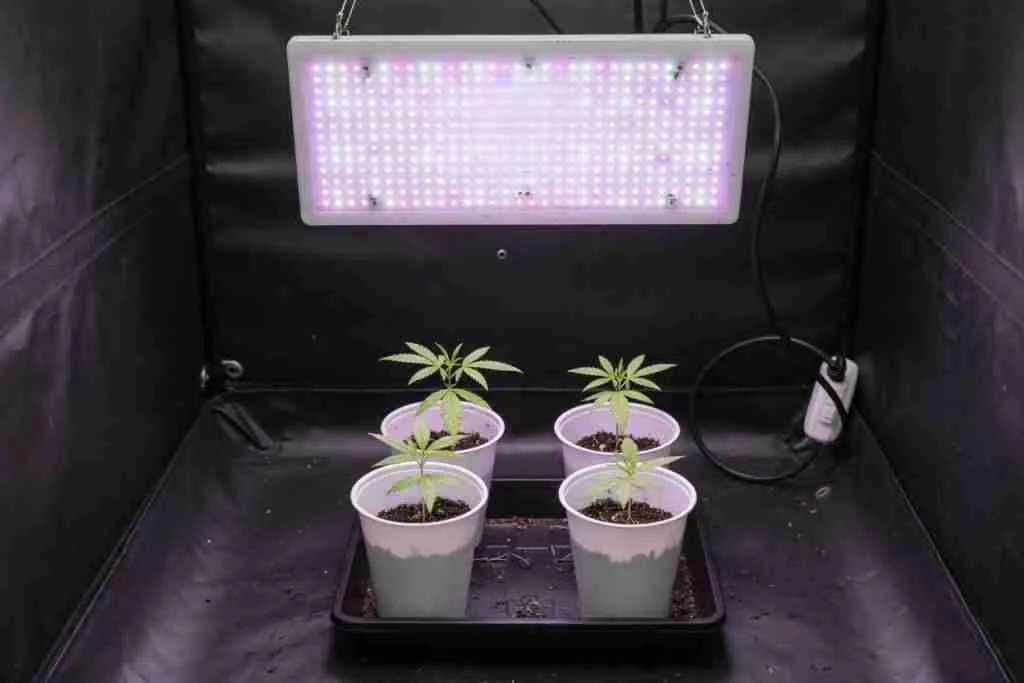
Once the hook is up, run a long day. Eighteen hours on and six off fits almost every seed you start indoors. It will not flower a photoperiod plant, it includes a night, and you can keep it into vegetative growth. Twenty on and four off is the other common choice, especially for autoflowers, and it is fine on photoperiod seedlings if the room stays cool. Do not run the lamp all night and call the brightness gentle. Do not cut a seedling to twelve hours because a flower chart said it should graduate.
The plant adds photons across the whole day. The name for that daily total is the daily light integral, DLI, in moles per square meter per day. You can grow a seedling without memorizing the name. You cannot ignore the idea. Brightness at one moment is PPFD. Hours times that brightness is the meal. The conversion people use at home is PPFD times hours times 0.0036.
Run the numbers you will actually set. 150 PPFD for 18 hours is about 9.7. 200 PPFD for 18 hours is about 13. 250 PPFD for 18 hours is about 16. A working seedling band sits roughly from 6 to 16. 300 PPFD for 18 hours is about 19, which is early vegetative light. That is reasonable once the plant has several sets of true leaves. It is a lot for a plant that only has two seed leaves and a root the length of a staple.
An all-day lamp hides in that math. 200 PPFD sounds polite. Leave it on for 24 hours and the daily total is about 17.3, up at the top of what a young plant wants, with no dark period. Same fixture, same dimmer, bigger meal, because the clock changed. Leaves that look tired, pale at the growing tip, or curled after a week or two of constant light are often asking for the six-hour night. Give them the night before you buy a bottle.
Set the timer and leave it. The flowering-stage page is where an uninterrupted 12-hour night decides the crop. Do not rehearse that schedule on a seedling. Off has to be dark. A hallway through a cracked zipper is still light, and the stem will lean toward it.
A switch on the cord is not a schedule. An outlet timer, or the one in the fixture, is what holds eighteen and six while you sleep. The tent page is the box and the hardware. Corners of the tray run dimmer than the middle. Rotate it each morning before you shop for another bulb.
A window is a weak lamp
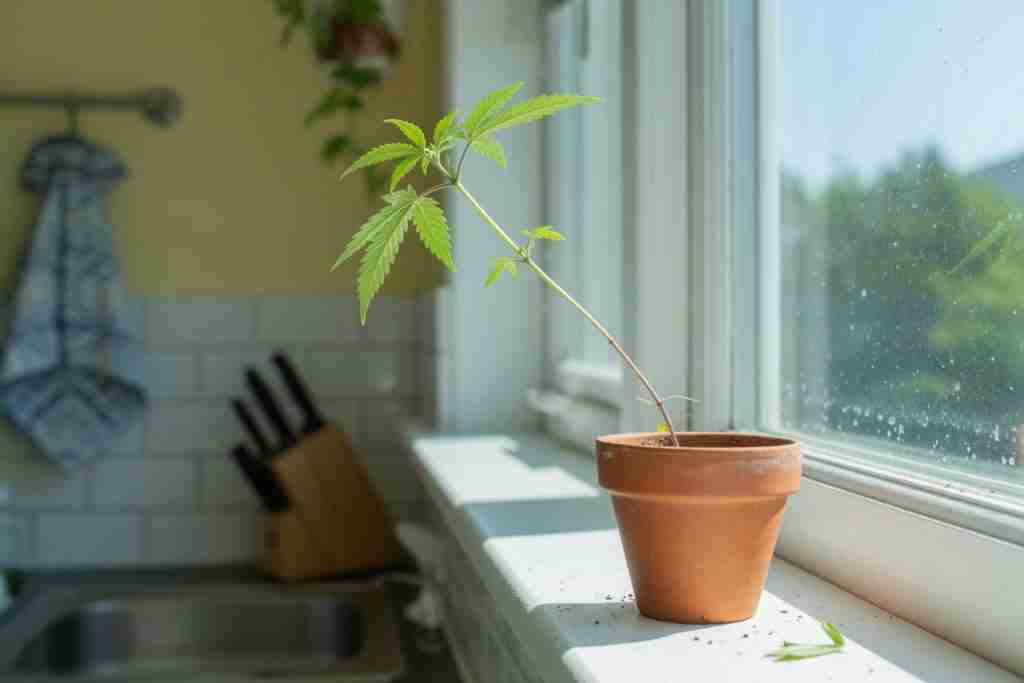
A window can start a seed. It is a poor place to finish a seedling. A few hours of sun through glass, pot turned daily, will hold one or two plants only while the stem stays short. A north window, a winter window, or a pot back on the counter is the lean in that picture. Turning the pot slows the lean. It does not add hours. A sill that is bright at breakfast and shaded before lunch is not an 18-hour day. Move the plant under a lamp the week the stem starts to run, and keep the leaves a finger off the glass so a hot pane does not cook them.
A seedling that lived under a dim board will bleach in full noon sun on the first day out. A plain harden goes like this. Day one, about two hours of morning shade. Day two, about four, still no noon. Day three, a longer morning only if the newest leaf held its color. A pale tip sends you back a day. Do not make up a missed morning by leaving the pot out through the hottest hour. Dappled shade is the first outdoor step. Open concrete at lunch is a burn.
Foil on the sill bounces a little light. It does not turn a short winter day into a long one. The indoor growers guide is the room around a real lamp. This page stays on how much of that light the seedling gets.
Intensity the leaves can use
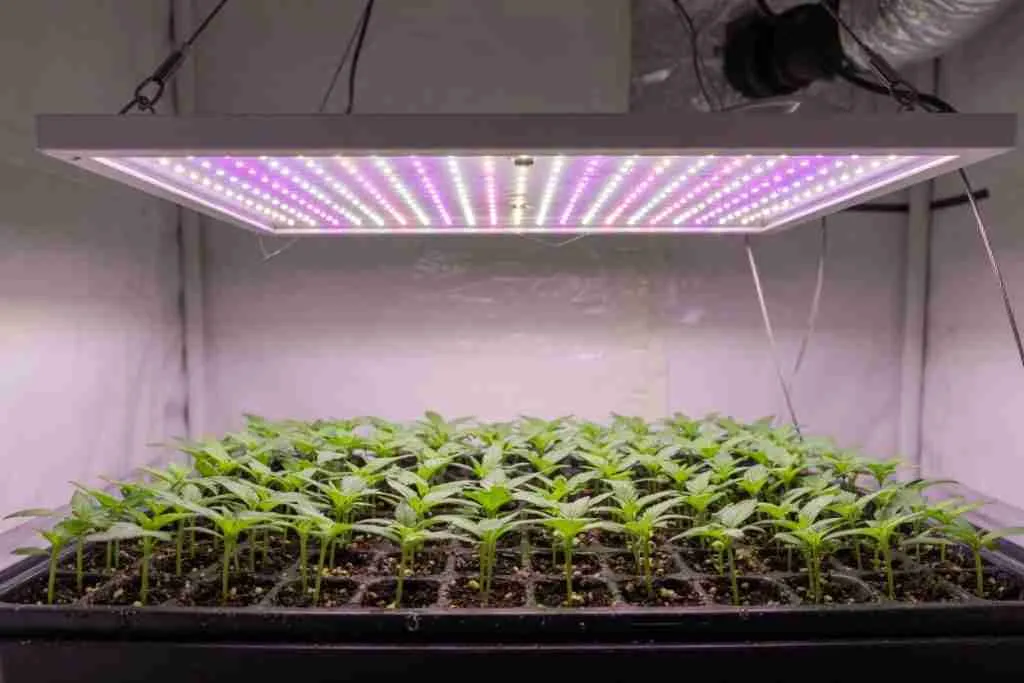
Hang height is not one number for every fixture. A small bar and a wide panel at the same distance are not the same intensity, and the center of a tray is brighter than the rim. Use the seedling line on your chart if it has one. If it only lists vegetative and flower, start on the lowest dimmer at the vegetative height or a little higher. Long stems under a lamp that merely looks on are still a short meal, or a lamp that is still too far.
For the first week after the seed leaves open, aim around 100 to 200 PPFD at the top of the plant. When two or three sets of true leaves are flat and the stem is stocky, you can sit around 200 to 300. Seed leaves are the smooth ovals from the shell. True leaves are the serrated ones. One small serrated leaf is not two sets. Count a set when a pair has opened flat. That is when the higher band starts to earn its keep. Before that, extra light mostly buys a shorter stem, until you overshoot and bleach the ovals.
If you only keep two settings, keep these. About 150 PPFD for 18 hours while the ovals are opening. About 250 PPFD for the same 18 hours once two serrated sets are flat. The jump follows the plant, not a date on the calendar. Distance moves the reading faster than people expect. Dropping a panel from around a foot and a half above the leaves to closer than a hand’s span can double what the leaf sees, sometimes more, depending on the diodes. Move it by inches, then wait a day. Do not drop it from the ceiling onto the pot in one gesture.
The vegetative-stage page is where the number climbs further, into a range a brand-new seedling should not see. A reading of 400, or 600, on a plant that still fits in a small cup is a vegetative number parked on a baby. Dim the board or raise it. If the fixture cannot dim, distance is the dimmer. Move it up until the new growth looks calm, then stop fiddling.
A full-spectrum white LED, turned down, is the seedling lamp if that is the fixture you will use for the rest of the grow. Cooler light tends to keep early stems shorter. A heavy red flower mix, run hard, pushes stretch. Leave ultraviolet gadgets in the drawer. A sprout does not need them.
Measure at the leaf, not on the floor and not on the diode. A corner plant stretching while the middle stays short is the fixture, not a bad seed. A phone can compare those two spots. It is not a PPFD meter. Apps that convert lux are guessing the spectrum. A quantum sensor speaks the unit used here. You can grow without one. You cannot treat a screenshot as a lab result.
No meter: read the plant. Short stem, flat green leaves, seed leaves still attached: you are close. Stem adding length every day: add light before food. One step on the dimmer, or a little closer, then look tomorrow. Hungry and light-starved seedlings both go pale, and the bottle is what people grab. At this age extra food in a small hot cup burns the root. Fix the lamp first.
Heat is a separate dial. Hold the back of your hand at leaf height. If you pull away, the seedling would too. A modest PPFD can still cook a leaf a few inches from a warm driver. Raise the board and put a gentle fan across the cups. The VPD page is the humidity worksheet for later. You do not need it to move a leaf out of still, hot air.
Stretch, bleach, and heat

Same tray, two stems. The tall one already spent itself looking for light. You cannot push it back into the cube. You can stop the next centimeter by raising intensity one step or dropping the lamp slightly. Stake a floppy stem, or set the cube deeper in a larger cup and backfill, as long as the seed leaves stay in the air and the mix stays damp rather than soup. The stretched cells do not shrink. The next gap between leaves is the one you still control. The picture is a comparison, not a PPFD reading.
A warm room stretches a stem even under a decent lamp. So does a dome left on after the seed leaves green up: the plastic shades them and the wet air keeps the tissue soft. Dome off once the plant is standing and the mix holds moisture for more than an hour. You want a rustle of air, not a gale.
A dry cup stretches too. Feel the cube before you blame the lamp. The watering page is how wet that cube should be. Long gaps and thin color point at light. A feather-light cube and slack leaves point at water. Fix the one your hand can feel.
Light bleach shows on tissue facing the lamp: newest leaves pale yellow or near white, edges curling, sometimes a taco fold. Do not answer the first pale tip with a heavier feed. Raise or dim the lamp and wait for the next leaf. Green new growth means you found it. Yellowing from the bottom, under a lamp that was already high and gentle, is root or food, not burn. The seedling-stage page is that wider checklist. Use it after the lamp is in a sane place.
Seed leaves often open yellow-green and darken over a day or two. That is the handover, not a reason to drop the board onto the tray. If the stem is racing and the color stays lemon, move the light closer. If the color greens and the stem stays put, leave the dimmer alone.
Photos, autos, and outdoor sun
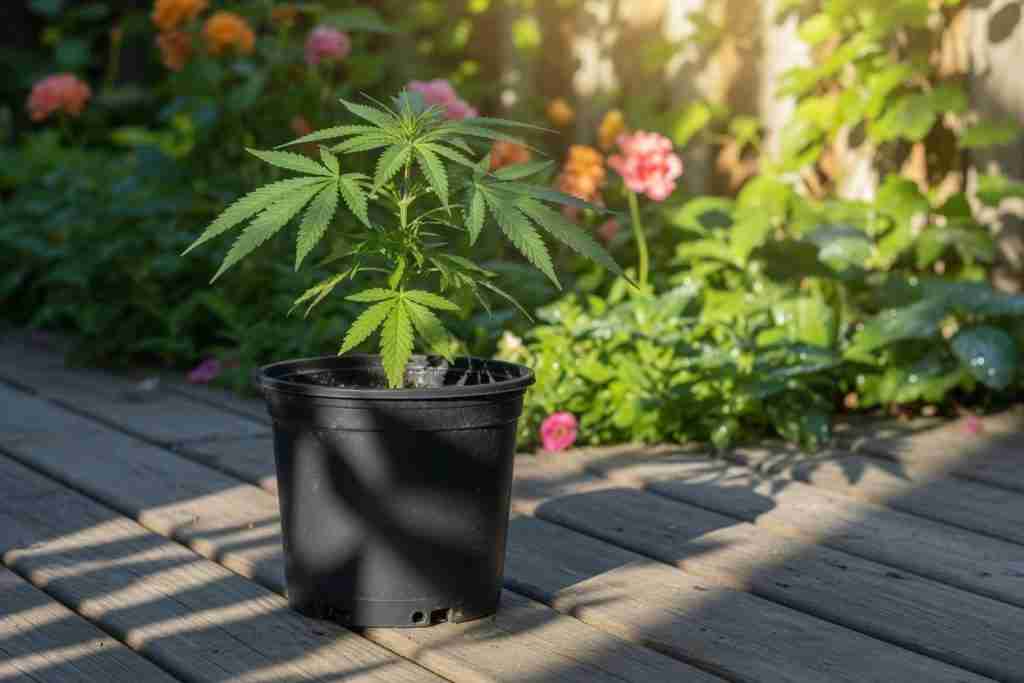
A photoperiod plant flowers when the night gets long, usually because you set twelve hours of dark on purpose. Through seedling growth, do the opposite. Keep 18/6 or 20/4 until you have a plant you mean to flower. Flipping a plant the size of a coffee cup gives you a tiny flower. Choose the flip later. Write the clock on the tent.
An autoflower will flower on a long day when its own clock says so. Leave 18/6 or 20/4 in place from sprout onward. Cutting an auto to 12/12 does not speed a useful harvest. It just removes photons while the plant is trying to bulk. Cotyledons still want the gentle band. A long day is not permission to park flower-room intensity on a sprout.
If that one tent is already on 12/12 for photoperiod plants in flower, do not start autos in it and expect a normal run. Give the auto its own long day. Seedling intensity early, long day kept.
Outdoor sun is another clock. A seedling raised under 18 hours and moved out in early spring meets a shorter day and a colder night. A photoperiod plant may try to flower, then stall or reveg when the days lengthen. Start outside when the days are already long, or keep the indoor lamp until the nights are short enough. A plant with several true leaves, in broken shade, is ready for a first trip out. A two-day-old sprout is not. Morning shade, then a longer morning, then a break from noon. Pale curled tips mean you skipped a step. Bring the pot in if the night will frost.
If the law where you live caps how many plants you may keep, a seedling under a lamp counts as a plant. In Canada the home-grow cap is four plants per household, not per adult. Quebec prohibits recreational home growing. Manitoba allows indoor growing only, and only for adults 19 and older, a rule in place since 1 May 2025. A closet lamp does not make an extra plant legal, and it does not turn a seedling into something that “does not count yet.”
When the dial comes up
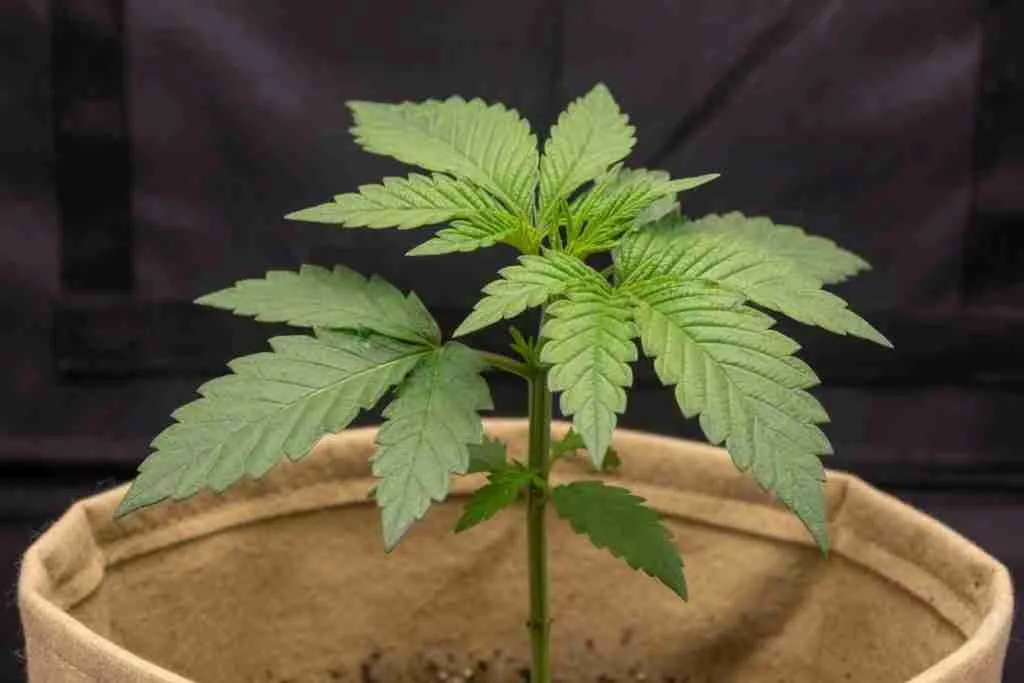
Turn the dial up when the plant asks, not on a calendar morning. Seed leaves still healthy, two or more sets of true leaves flat, stem thicker than at sprout, plug holding together when you lift it. Then move from the 100 to 200 band toward 200 to 300, or add two hours if you want 20 instead of 18. Not both on the same morning.
Creep. About ten percent on the dimmer, or an inch or two lower if there is no dimmer, then look the next day. Curling, bleaching, or a hot leaf: go back. Wider gaps between leaves: come forward. Write the hours and the dimmer mark on the tent so the next seed inherits the setting that worked. Water and pot size on those same days live on the first-week page.
Training, topping, and a much bigger pot are past this question. Seedling stage carries the handoff. A higher daily total lives on the vegetative page. Flowering light is a different clock, chosen when you want flowers. A lamp will not open a dead shell, and a strong seed will still stretch into a string if the tent stays dark after it sprouts.