How much cannabis can you get from growing one plant?


How much cannabis can you get from growing one plant? Weigh dried, trimmed flower. That is the only number that belongs in a jar. A wet plant on harvest day is mostly water. Indoor tents often land between about one ounce and a half pound per plant. Outdoor in-ground photoperiods can beat that if the season is long. Autos usually sit lower because the clock is short. Shop seed in the cannabis seeds store. The rest of the grow library is on the cannabis cultivation blog.
Ignore “a pound every time” videos unless you can see the tent, the wattage, the veg weeks, and the scale after a slow dry. A first marijuana plant in a 2×2 under a modest LED is often 14–56 grams of weed. A trained photoperiod that owns a 4×4 can push toward a pound. The same cultivar in a patio pot will not match an in-ground tree. Canada’s rec cap is four plants per household. Quebec still bans rec home grow. Manitoba has been indoor-only since 1 May 2025. Four neglected plants still jar less than one plant that filled the light. Seed-to-harvest: growing weed. How many packs to pop: how many cannabis seeds.
Weigh Dry Flower, Not the Wet Plant
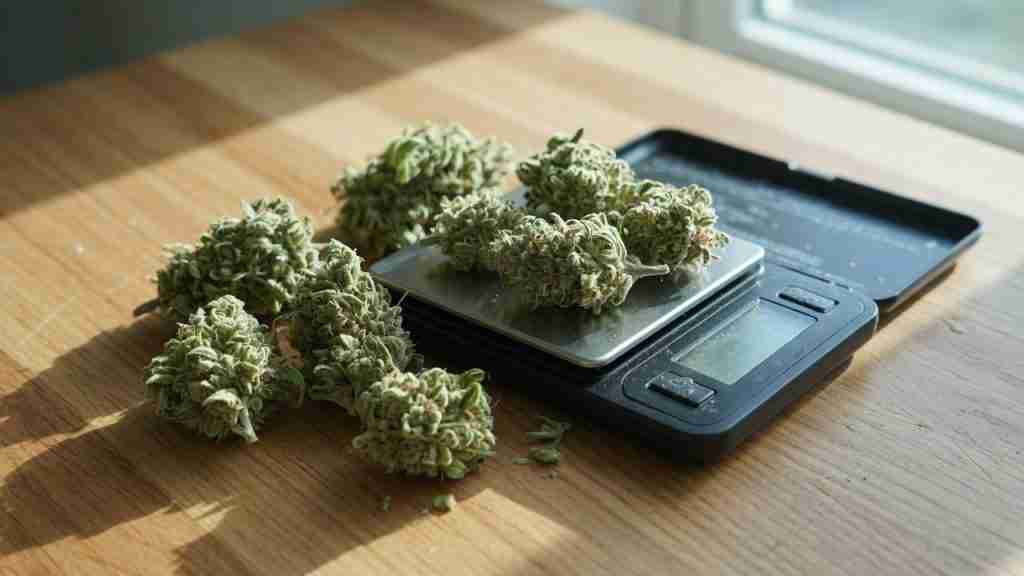
Harvest weight on the day you chop is a vanity number. Stems, water, and fan leaf are in that pile. A slow dry pulls most of that water. Trim then pulls the sugar leaf you will not smoke. What is left is dried buds. That is the yield this page talks about. If someone quotes wet grams, divide your expectations. Many plants lose about three quarters of that first weight by the time stems snap and the trim is done. A “500 gram plant” on Instagram is often 100-something in jars.
Use a kitchen scale in grams. Ounces are fine for talking. Grams are what you log. Weigh after the dry, after the trim, before the cure. Cure does not add weight. It can lose a little more as moisture evens out. If you weigh popcorn and A-bud as one number, say so in the notebook. If you throw larf in the hash bag, do not count it as flower. Harvest timing: harvest time. Hang and jars: dry, cure, and store cannabis buds.
Write the number down. Date chopped. Date jarred. Wet whole plant if you insist, then dry flower, then A-bud vs popcorn. A year from now you will remember “about four ounces” and be wrong. The notebook tells you whether the next run should veg longer, drop a plant, or change the pot. If the dry flower is half of what you expected, look at the canopy photo from flip day before you blame the pack. Empty corners at flip stay empty in flower.
Pack labels that shout “650 g/m²” are tent totals, not one plant. Grams per square metre assume a full canopy under a real light. One plant in a corner of a 4×4 is not a square metre of bud. Read the label as a ceiling for the space, then divide by how many plants actually fill it. Quality of those grams still matters more than a puffy ounce: growing quality cannabis buds.
Honest Ranges for One Plant
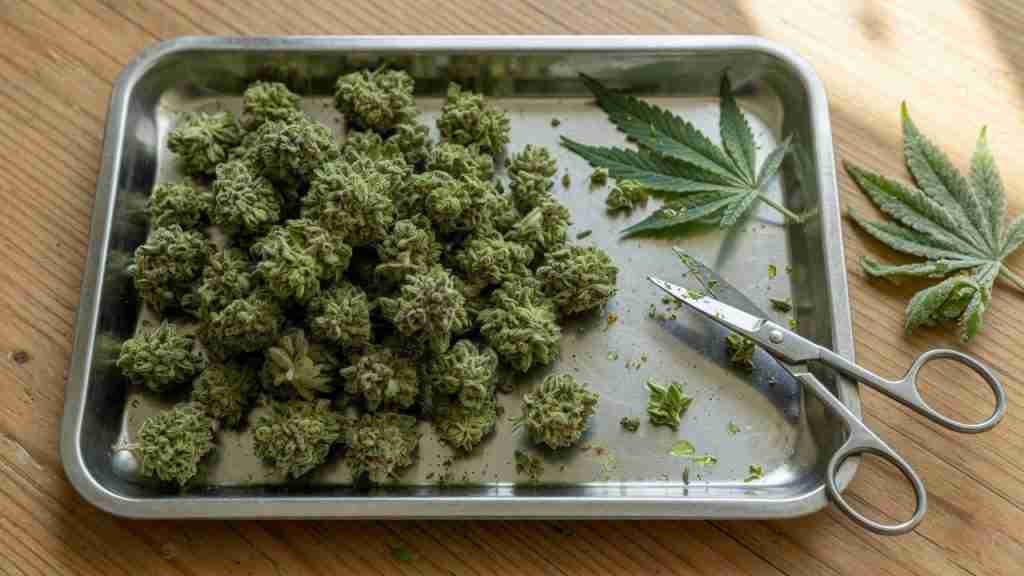
These ranges are dried, trimmed flower. Beginner means a first or second run with a real light and no major crash. Solid means you can keep VPD, water, and a canopy without burning it. Dialed means the light is sized to the tent, veg was long enough, and you trained. Outliers exist. They are not a plan.
| Setup | Beginner | Solid | Dialed |
|---|---|---|---|
| Indoor 2×2, one plant, about 100–150 W LED | 1–2 oz (28–56 g) | 2–4 oz (56–112 g) | 4–6 oz (112–170 g) |
| Indoor 4×4, four plants sharing ~400–500 W | 1.5–3 oz each | 3–5 oz each | 5–8 oz each |
| Indoor 4×4, one trained plant | 3–5 oz | 6–10 oz | 12–16 oz |
| Indoor auto, 3–5 gal pot | 0.5–2 oz | 1–3 oz | 3–5 oz on a modern line |
| Outdoor fabric pot, patio | 2–6 oz | 4–12 oz | up to about a pound in a long season |
| Outdoor in-ground, full season | 4–8 oz | 8 oz–2 lb | 2 lb and up when the climate cooperates |
A number you will still hear is “about a quarter pound indoors, about a half pound outdoors.” That is a mid-skill average for a healthy photoperiod, not a law. First tents often sit under a quarter pound. In-ground trees in a long, dry autumn can bury a half pound. Autos sit on their own row because they do not get extra veg. Indoor vs outdoor as a method fight: indoor vs outdoor cannabis cultivation. Cost of those grams: how much it costs to grow an ounce.
First-plant misses have a short list. Hot soil in week one. A cup that never got a final pot. Lights too far, so the plant stretches and the cola is airy. A flip on a plant that still looks like a seedling. Harvest a week early because you were tired of waiting. Any one of those can cut a 3-ounce plant down to an ounce. The cultivar did not fail. The run did. Do the same pack again with a bigger bag and an even canopy before you shop a “yield monster” name.
Indoor Tents: The Light Sets the Ceiling

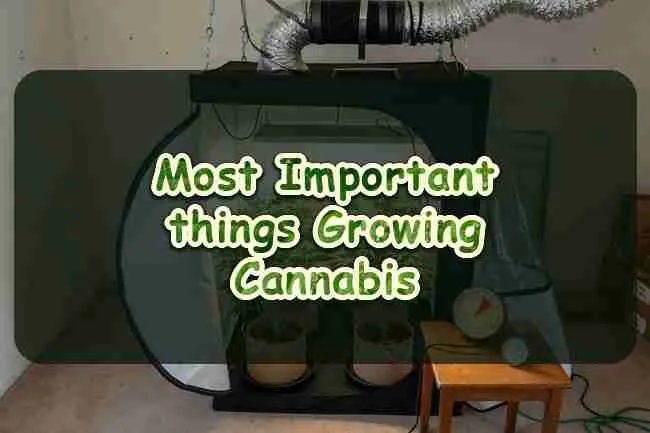
Per-plant yield indoors is mostly “how much of the light did this plant own?” A board that covers a 2×2 will feed one plant well and starve four. The same watts spread over a 4×4 of eight cups makes popcorn. Tent size: grow tent for cannabis seeds. Indoor run: indoor cannabis growers guide.
One plant in a 2×2
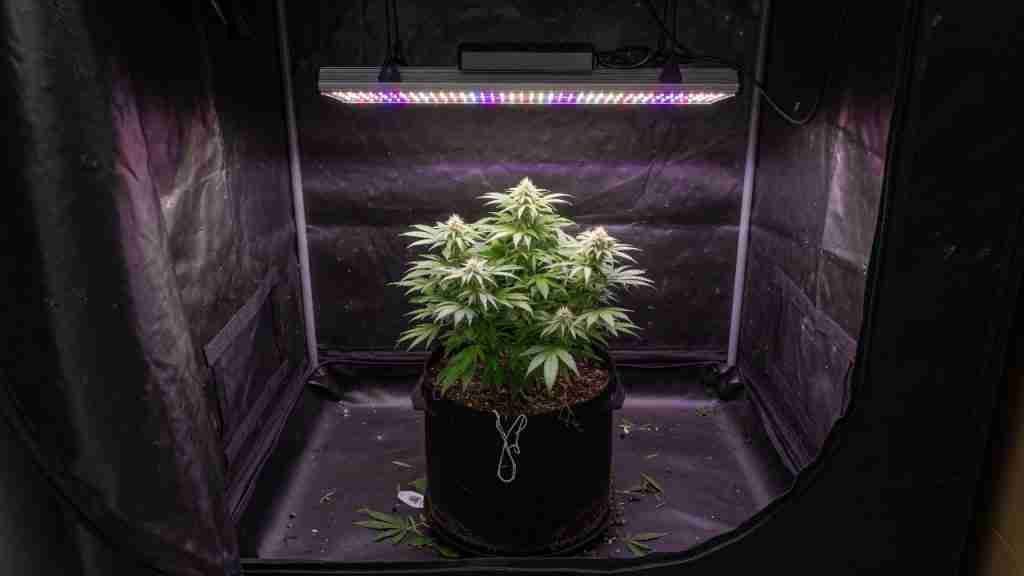
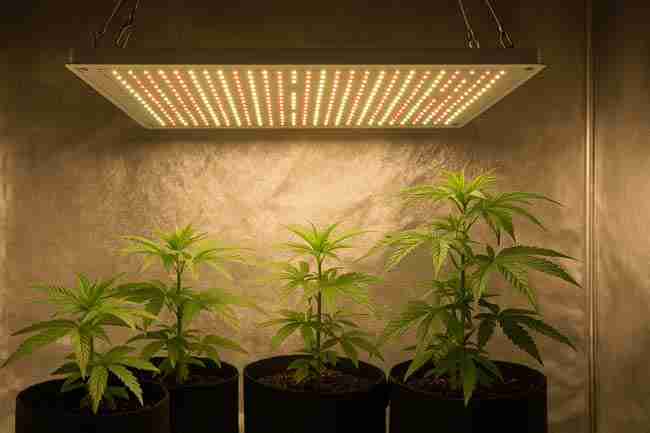
A 2×2 with a 100–150 watt LED is a single-plant box. Fill the footprint with canopy, not with extra stems. One plant in a 3- to 5-gallon fabric pot, tied out, flipped when it covers most of the floor, is the job. First runs often jar 28–56 grams. That is a month or two of daily personal use, not a year. If you add a second plant, you split the same photons. Two tiny plants can jar less than one trained plant. First crop: planning your first cannabis crop. Checklist: new cannabis growers checklist.
One plant vs four in a 4×4
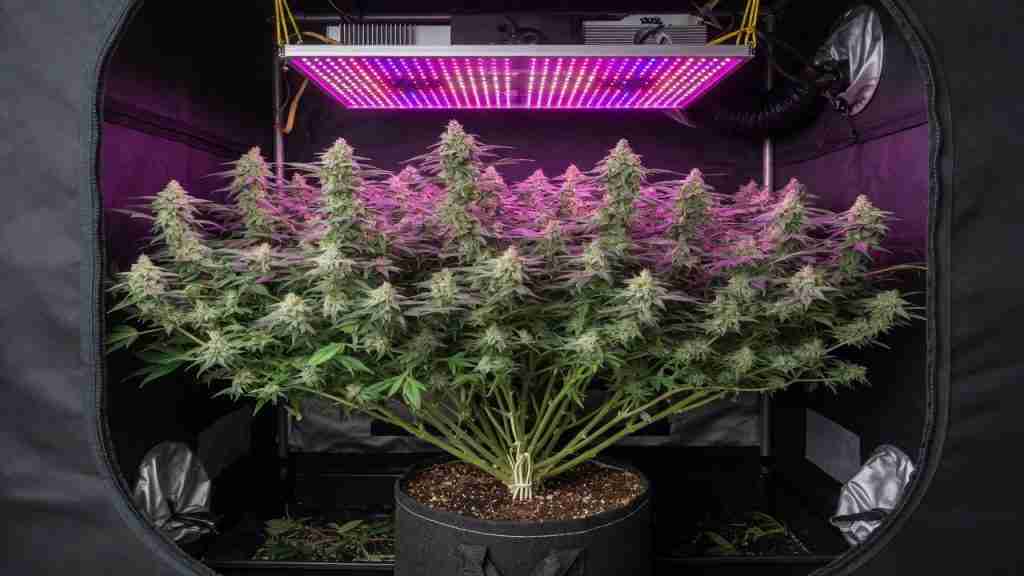
A 4×4 under a 400–500 watt class LED is where the “pound plant” talk starts. One photoperiod, vegged 6–8 weeks, screened or tied, can fill that square. Dialed growers do hit 12–16 oz on that plant. Four plants in the same tent usually jar a similar tent total, split four ways. The light did not get bigger because you added cups. If your law caps you at four plants, four medium plants that fill the canopy beat one giant and three afterthoughts. If your law caps you at one, veg longer and train. SCROG that space: SCROG your way to a bumper harvest. LST if you do not want a net yet: low stress training cannabis.
Grams per watt is a tent number
Old HPS talk was “one gram per watt.” That meant the whole room, not each plant. A 600 watt HPS that actually pulled 600 watts and filled a 4×4, in skilled hands, could jar around 600 grams total. Beginners more often see 0.25–0.5 grams per watt of the whole tent. LEDs are listed by draw and by marketing watts. Use the wall draw. A 150 watt board that jars 75 grams of dry flower is 0.5 g/W. That is a fair first run. Chasing 1 g/W before you can keep a canopy even is how people overfeed and overheat. More technique lives on increase cannabis yields for all strains. Budget gear: grow cannabis on a budget.
If the board is dim in the corners, those corners do not count as canopy. Take a photo from above at lights-on. Green should cover the floor, not a ring of empty fabric. Raise or dim so the tops do not bleach. A bleached spear looks big and weighs like foam. Even PPFD across a flat of colas beats one scorched main. You do not need a lab meter to see a dark edge and a white crown. Move the light or tie the plant until both look the same green.
Autos vs Photoperiods
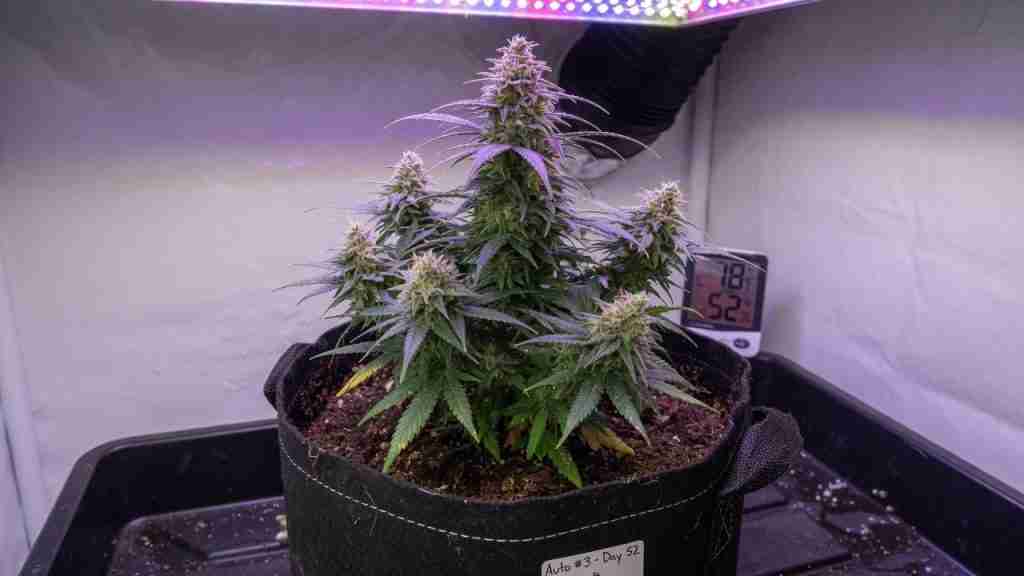
An autoflower does not wait for you to veg. The clock starts at sprout. You cannot add four extra weeks of sites. Typical home autos in a 3- to 5-gallon pot jar 14–85 grams. Modern lines under a real LED, started in the final pot, can push 85–140 grams. That is still not a 4×4 photoperiod that vegged two months. If you need one plant to fill a 4×4, pick a photoperiod. If you need a jar in 10 weeks, pick an auto and accept the smaller bag. Auto grow: grow autoflowering cannabis plants. Size work: how to grow large autoflowers. Clock vs flip: photoperiod vs autoflower.
Do not top an auto in week four and then blame the type for a 20 gram jar. Do not transplant it in week three. Do not run it at 12/12 next to a photo in flower unless you already accepted a smaller plant. Photoperiods give you veg as a lever. That lever is most of the indoor “one plant, big number” story. Flip: photoperiod cannabis seeds explained. Auto feed: fertilizing autoflowering cannabis plants.
Outdoor Pots vs Ground
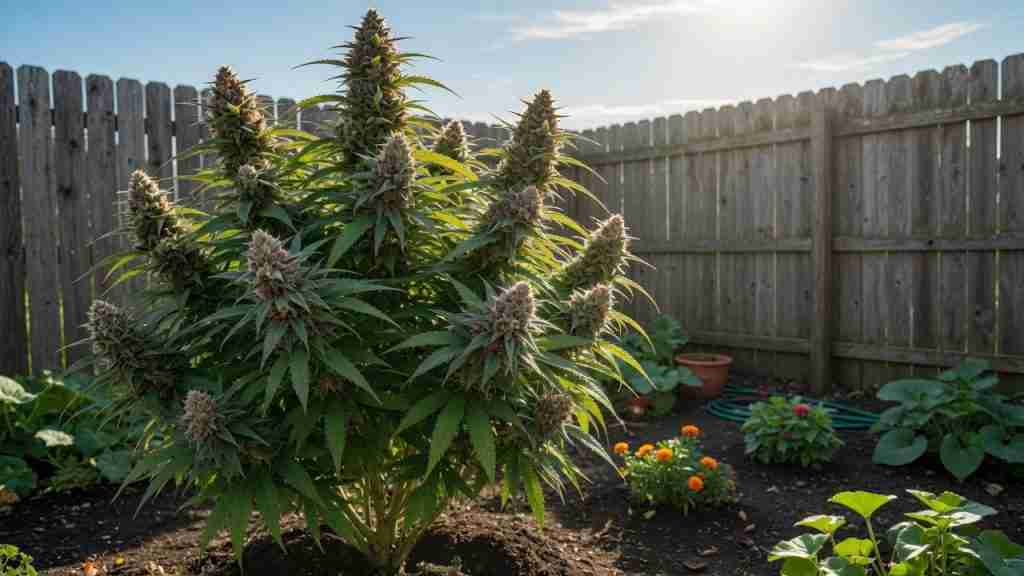
Sun is a lot of watts. Root room is the other half. A patio plant in a 7-gallon bag is still a container plant. It can jar a few ounces to maybe a pound in a long, bright season if you water and feed it like a crop. An in-ground photoperiod started in spring, in real soil, in a climate that stays dry through September, is how people talk about 1–2 pounds from one plant. Monster plants above that exist. They need months, not a May start in a 5-gallon bucket. Outdoor method: growing cannabis outdoors. Outdoor seed: best cannabis seeds for outdoor growing.
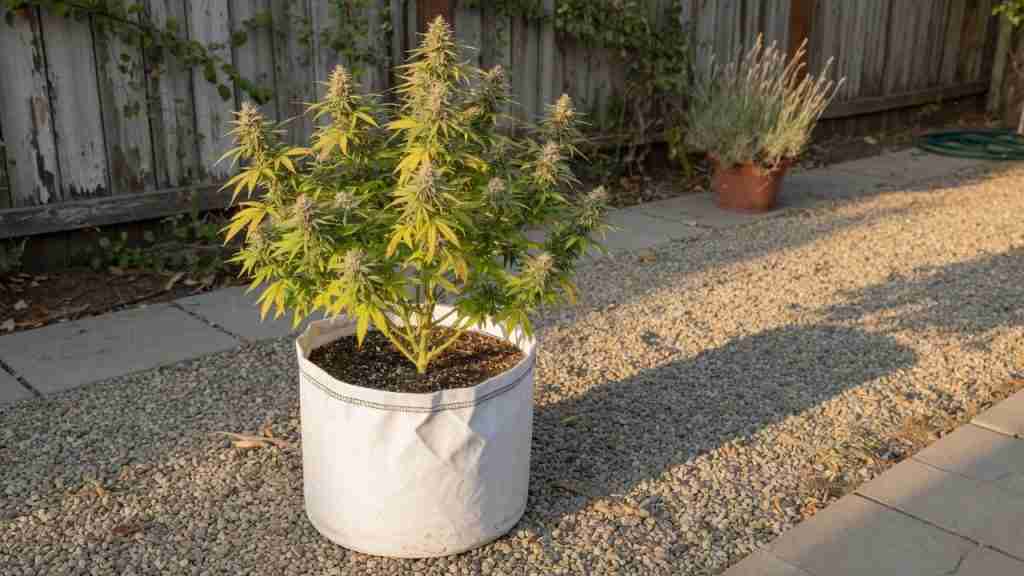
Weather writes the outdoor number. A wet September can turn a half-pound plant into a compost pile. Pests, wind, and theft do the same. A greenhouse stretches the season and still needs airflow. Do not plan your year’s supply on one outdoor plant unless you have already finished a season in that yard. Containers: growing cannabis in containers. Roots that stall the plant: root bound cannabis.
Planting date is the outdoor lever people skip. A photoperiod that goes in the ground in June has missed a month of sun. It will still flower when nights lengthen, just smaller. Start indoors in April or May, harden off, then bury it or drop a 15- to 30-gallon bag where it gets the day’s sun, not afternoon leftover. An auto can go out after frost and still finish; it will not become a tree. Two outdoor autos, staggered a month apart, can beat one late photoperiod if your autumn is wet. Pick the tool that matches the frost date, not the forum photo from California.
What Actually Changes the Number
Genetics and the pack
Some cultivars stack dense flower. Some stretch into airy spears. A haze you veg for eight weeks can still jar light if the flowers never pack. A short indica hybrid with an 8–9 week flower can beat it in a 2×2. Read parents and flower weeks, not a THC shout. High-THC seed is not high-yield seed. Yield-leaning photoperiods still need the light. Shop families: indica vs sativa vs hybrid. Loud flower: high THC cannabis seeds.
Veg time is free sites
On a photoperiod, extra veg is extra canopy if the tent can hold it. Two weeks of veg makes a small plant. Six weeks of even LST makes a screen. Flip when the canopy is 70 percent of the floor, not when a blog says week four. Stretch in early flower still adds height. Leave headroom. Seedling: cannabis seedling stage. Veg: cannabis vegetative stage. Flower: cannabis flowering stage.
Pot size is a ceiling
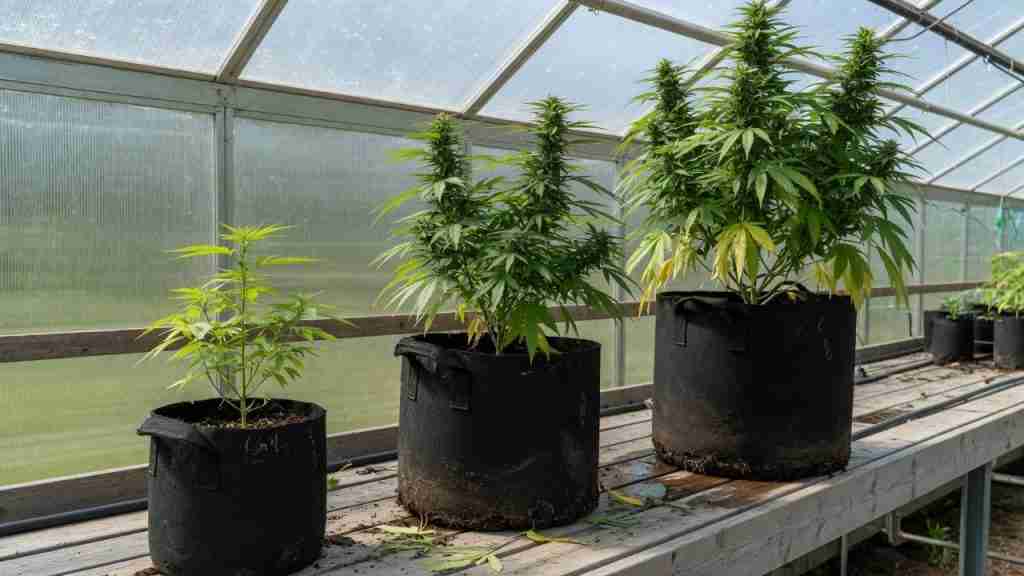
A 1-gallon cup will not make a pound. A 5-gallon bag is the usual indoor marijuana photoperiod size. A 7- to 10-gallon bag helps one plant in a 4×4 if you can dry it down between waterings. A 15-gallon on a dim patio is a wet brick. Match pot to light and to how often you can lift it. Roots: cannabis roots healthy. Pots vs ground is already on the container page linked above.
Training fills the light
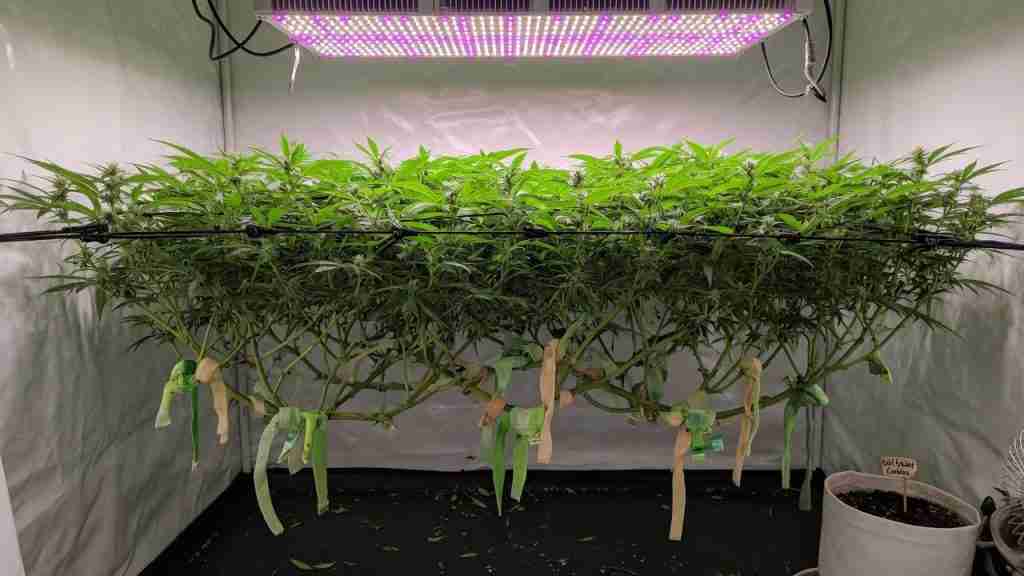
An untrained Christmas tree wastes the edges of the board. Tie the main down. Open the middle. A screen holds a flat of colas instead of one spear. That is how one plant matches four small plants in the same tent. Training does not add watts. It stops you from wasting them. How to push yield without rewriting this page: increase cannabis yields.
Defoliation is not a yield trick by itself. Strip fans that block bud sites. Leave the ones that feed the cola. A plant you stripped bald in week three of flower will stall, then you will call the harvest light. Same with late topping. If you need more sites, do that work in veg on a photoperiod. On an auto, a soft tie in week two is the whole training plan for most home grows.
After Harvest: Trim, Dry, and How Long It Lasts
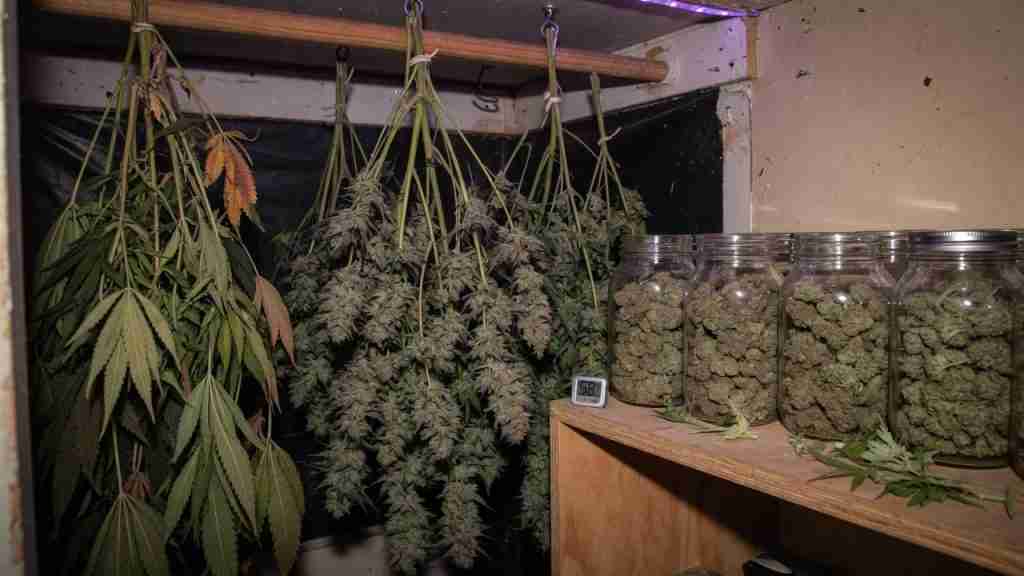
A fast dry steals weight and terps. A wet jar steals the crop. Hang in the dark with air moving in the room, not blasting one cola. Jar when small stems snap. Then you have a real number. Whole plant vs branches: whole plant hang vs branch hang vs rack drying. Cure routine stays on the dry-and-store page already linked.
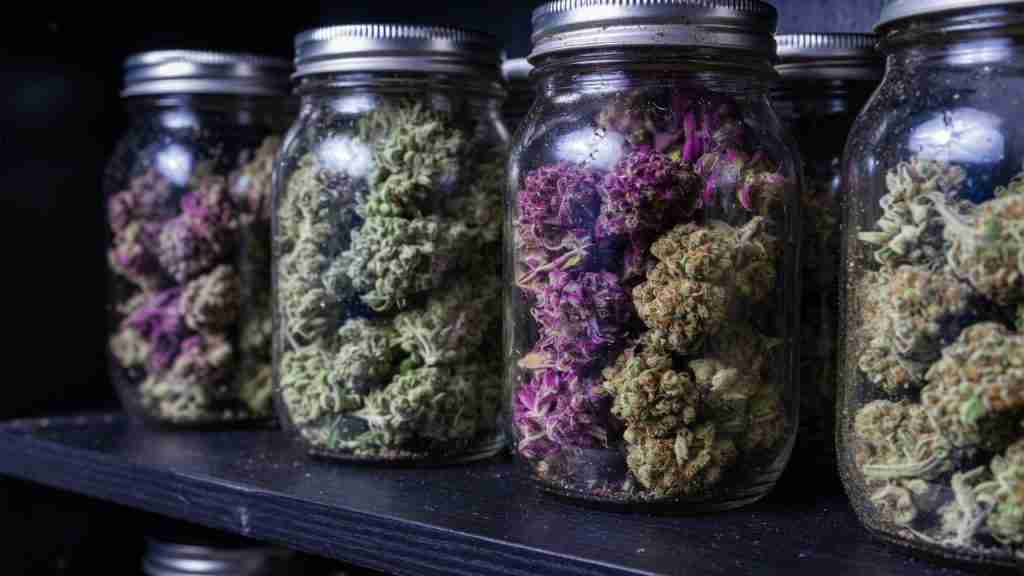
Personal use math is simple if you are honest about daily grams. One gram a day is 365 grams a year, about 13 ounces. A solid indoor plant at 112 grams (a quarter pound) covers about four months at that pace. Two grams a day burns it in about two months. Half a gram a day stretches it past half a year. A light user can cover a year with two or three good indoor plants, or one strong outdoor plant, if the law allows that count. A heavy user cannot. Plan the next run before the jar is empty. Do not grow more than you can dry, jar, and keep legal.
Four rec plants in Canada are four finished plants, not four plus the seedlings on the windowsill in some reads of the cap. Check your own rules. A plant that dies in week two still counted as a plant while it was in the tent. Pop extras only if your law and your space can take the loss. Budget if the goal is supply, not a trophy tree: grow cannabis on a budget.
One Plant Yield FAQ
How much weed does one indoor plant produce?
Most home tents jar 1–6 ounces of dried flower from one plant. A 2×2 first run is often 1–2 ounces. A trained plant that owns a 4×4 can reach a half pound to a pound. The light and the veg time set that more than the nickname on the pack.
How much does one outdoor plant yield?
A patio pot often lands in ounces, sometimes up to a pound. An in-ground photoperiod in a full season often lands around a half pound to two pounds when the weather holds. Plan for the middle, not the forum story.
Is a pound per plant realistic?
Indoors, yes, as an expert 4×4 single-plant job with months of veg and a light that actually covers the tent. Outdoors, yes, as an in-ground plant in a long season. It is not a first-tent number and it is not an auto in a 3-gallon bag.
Do autos yield less?
Usually, because they flower on age. You trade veg weeks for speed. A modern auto under a real LED can still fill a personal jar. It will not match a photoperiod you vegged to fill the same tent.
Should I grow one big plant or four small ones?
Fill the light. One trained plant in a small tent. Four plants in a 4×4 if the law and the canopy both fit. Tent total often matches. Per-plant numbers drop when you split the board. Risk also splits: one sick plant is the whole crop if you only grew one.
When do I weigh the harvest?
After a slow dry and a trim, before or at jar. Wet weight on chop day is for bragging, not for this page.
Will a bigger pot always mean more bud?
Only if the light and the veg can use the extra root. A huge pot under a weak bulb is wet soil. A small pot under a strong board is a daily watering job and a small plant.
How many joints is that?
A gram is roughly two modest joints or a few bowls, depending how you roll. A 28 gram ounce is not “a couple weekends” if you share. A 112 gram quarter pound at one gram a day is about sixteen weeks. That math is why one well-grown plant can cover a light personal habit and why a first tiny auto cannot. If you also cook or press, flower weight leaves the smoke jar. Count what you actually burn.
When do I chop so I do not lose weight?
Cloudy trichomes with some amber is the usual personal-use target. Chopping when the plant is still half white pistil leaves yield on the table because calyxes have not stacked. Waiting until everything is amber can dry the plant out and does not add much more dry flower. Look at the heads, not the calendar on the pack. Trichome timing: trichome harvest timing.