


How Do I Move Clones From Indoor Lights to Outdoor Sunlight?


Move Clones From Indoor Lights to Outdoor Sunlight is the slow walk from a lamp to the real sky, and you do it in shade before you ever trust noon. A cutting that rooted under a lamp has never felt a full day of sun, wind, or dry air. If you throw it in at the deep end, the top leaves go pale while the pot is still wet. The drink was fine. The sky was too much, too fast. This page is the walk between those two rooms.
Move Clones From Indoor Lights to Outdoor Sunlight
Look, the lamp was a kind room, and the sky is not trying to be kind. Under the lamp the light comes from one direction, it stays about the same all day, and the air barely moves. Outside, the light moves, the wind shows up without asking, and a bright wall can bounce a second dose of sun onto leaves that were happy an hour ago. You’re not being fussy when you slow down. You’re matching the plant to a room it has never lived in.
Picture the day you got impatient. The forecast looked friendly, so you carried the tray to the open lawn at lunch. By evening the upper leaves were washed out and a little limp, and the soil was still damp. That is the trick. A sun-shocked plant can droop with wet feet. More water does not paint the green back on. Shade does, if you caught it before the leaves crisped.
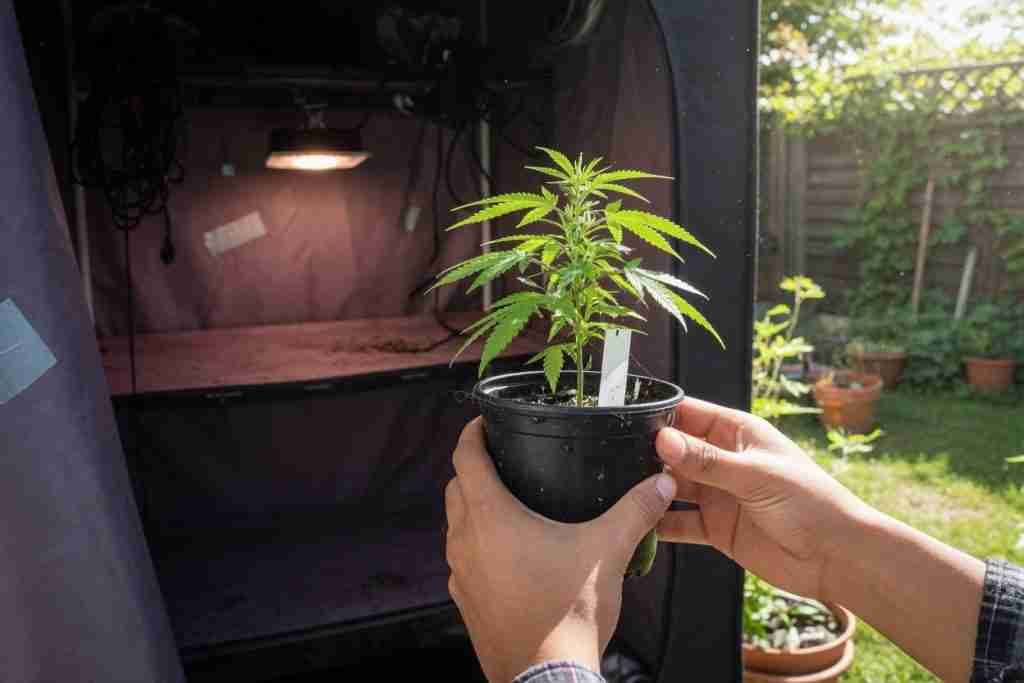
A grower in Wisconsin and a grower in Massachusetts can both stand in a doorway with the same tray and the same decision. The sky is local. The leaf is not. If you’re still choosing what to sow before you ever take a cut, start from the Canada list or the United States list and pick for the finish you actually get. Read the rules where you live before you pop a seed.
Move Cannabis Clones From Indoor Lights to Outdoor Sunlight
This page starts when the roots already hold the mix. The snip, the dome, and the first white nubs belong on the page that shows the cut itself. A fresh stick with no roots does not go outside for a sun lesson. It goes back under the dome. If the plant in your hand came from somebody else, let it sit alone before it shares your tent. The intake steps for a new cutting are a different job, and you finish that job before you practice daylight.
Get your ducks in a row before the first morning. You want a shady spot you can reach, a way to bring the pots back in, and a plant that stays in the pot it rooted in. Don’t put the cart before the horse. A huge outdoor bed plus full sun plus a brand-new hole is three shocks at once. Leave the plant in the pot it already trusts. The garden bed can wait until the leaves have kept their color through a mild afternoon.

A seedling from a seed is a close cousin, not the same student. If the roots have not filled a tiny cell yet, stay on the seedling stage page until that pot holds together. The sun lesson is the same idea later. Shade first. A longer visit only when the plant looks bored, not burned. Hold a day when it looks hurt.
Why Indoor Leaves Burn
Indoor leaves are built for the lamp they grew under. They are often a bit thin, and used to light that never carried the full punch of open sky. Sunlight has a harsh part a household lamp barely copies, and that part bleaches the upper leaves. The leaf loses color. Pale patches show up on the faces that pointed at the sky. Tips can brown later. Lower leaves often stay greener. That pattern tells you it was light, not a hungry plant, and not a dry pot.

Carrying the tray through the bright door, the first leaves looked paler than they had under the lamp. You can see it best if you hold one pot next to a pot that stayed inside. The indoor one is an even green. The outdoor one looks sun-faded on top, like a shirt left on a line. If the edges also lift into a little boat, or the whole plant flops while the mix is damp, you went too far that day. Take it back to deep shade. Don’t feed it to “help.” A strong meal on a hurt leaf is another job piled on a tired plant. Plain water, only if the pot is actually light, is the whole rescue.
Bleached tissue doesn’t turn dark green again. New growth can come in green if you stop the damage. You’re waiting for a fresh set at the top, not for the pale leaf to repent. If every new leaf also fades, you’re still too bright. Back up. The proof is in the leaves, not in a napkin calendar.
A Shady First Morning
Setting the pots on the east side of the house, the morning light stayed gentle while the afternoon stayed behind the wall. That is the shape of a good first visit. Morning light, then shade, then back indoors before the day bakes. A porch roof, the shadow of a tree, or a loose pale cloth on a frame can do the same job. The cloth should move a little in the air. A wrapped, airtight cover is a different problem, because wet air gets trapped and the leaves stay damp. You want softer light, not a plastic bag in the sun.

A cloudy spell is a gift, and you should take it. Clouds do part of the softening for you, so a first outing on a gray day is kinder than a first outing under a hard blue sky. Don’t hear that as “dump them in the garden because it is cloudy.” A gray noon can still be brighter than your lamp, and the clouds can leave. Start short. Watch the leaves. If they stay upright and the color holds, the next visit can run a little longer. If they pale, taco, or droop, you repeat the easier day instead of climbing the ladder.
Where you set the pots matters as much as how long they sit. A white wall or a shiny door can throw light back and undo the shade you thought you had. Put your hand on the pot. If the plastic is hot, the roots are sitting in a warm bath they did not ask for. Slide the tray back into shade.
Move Marijuana Clones From Indoor Lights to Outdoor Sunlight
A weed chart will not choose that first morning for you. People love a tidy schedule that says which day gets which dose of sky. Your plant can’t read it. One cutting rooted in a bright tent and already had the dome off for days. Another came out of a humid dome yesterday and has never felt a breeze. Those two don’t share a timetable. You watch the leaf, you add a little time when the plant looks bored, and you hold the line when it looks hurt. Bored looks like leaves out flat, color steady, and no droop in the afternoon. Hurt looks like pale tops, edges that curl up, or a flop that shows up while the mix is still damp.

About a week is a fair span for a plant that keeps looking fine, and sometimes the walk takes closer to two weeks when the weather swings. That’s a range for your judgment, not a promise. A hot, cloudless week can make you repeat the shady mornings. If you skip ahead because you’re tired of carrying pots, you bite off more than you can chew.
Wind Water And Mild Nights
Light is the famous shock. Wind is the quiet one. A cutting that lived under a dome, or in a still tent, has a stem that has never held itself against moving air. The first breeze can fold a soft top, dry the leaf faster than the roots can drink, and make you blame only the sun. Give the early visits a wind break. The house wall or a row of bigger pots can take the gust. You still want some air. You don’t want a gale on the first day outdoors. If the stem rocks the whole pot, move the tray.

Water changes because the sky changes. Outside, sun and wind pull moisture out of a small pot much faster than a lamp in a quiet tent. Check the pot by weight, not by guilt. Light pot, water. Heavy pot, wait. A droop with a heavy pot is a light problem or a heat problem until you prove otherwise. Don’t drown a pale plant to apologize. Vegetable growers say the same plain thing about why a transplant needs shade and a slower drink before it lives outside. Don’t let the plant wilt if you can help it, and don’t pour on a heavy feed the same day you introduce real sun. Once these plants actually live outdoors, the daily drink belongs on the watering page. This page only needs the rule that keeps you from confusing thirst with sunshock.
Feed is the easy mistake after a hard morning. The leaves look tired, so you reach for a strong bottle while the roots are already meeting a new sky. Wait. Use the mild mix they already know, or plain water, until a new set of leaves has come in green. You can feed a healthy plant tomorrow. You can’t un-burn a tip you scorched because you were nervous.
The Pot In Your Hands
Before the first trip outdoors, tug gently at the stem. If the whole mix lifts as a plug and you see roots holding it together, the plant can travel. If the mix falls apart, or you only see one lonely thread, it’s not ready for a doorway lesson. Keep it inside and let the roots finish. A plant that can’t hold its own pot will stall outside even in perfect shade, because every bump breaks the new threads. Roots first. Sky second. That order saves you a week of confusion.

Pot color is a real detail, not a style choice. A black nursery pot in open sun gets hot, and hot mix slows roots that were doing fine indoors. A lighter pot stays cooler. If black is what you have, keep those pots in shade longer, and don’t set them on metal, stone, or a dark deck that stores heat. When you finally plant them into the garden, do it on a cloudy day or toward evening, into a spot that still has some afternoon shade. Water the hole, set the root ball in without crushing it, and leave the strong feed for another day. The move into the ground and the move into all-day sun should not be the same hour.
When The Night Turns Cold
Early in this walk, the pots come back inside before a cold night. A plant from a warm tent can stall or just sit there after one chilly dark. Frost is not a training tool. Bring them in while you can still see the path. A garage that stays mild is fine. A freezing shed is not indoors. If you would not sleep there in a thin shirt, don’t ask the clones to.

Night length is the other half of the dark, and it has nothing to do with frost. A plant that flowers when nights grow long can start flowers just because you moved it outside while the nights were still long. You thought you were giving it sun. The plant thought the season had turned. If you still want leafy growth, wait until the nights are mild and the days are long enough that veg is what you are asking for. Read how day length decides veg or flower before you bet a whole tray on a cool spring evening. A plant that doesn’t use that clock is a different student, and that page keeps the difference straight so this one does not have to.
If flowers start early, more afternoon sun will not erase a signal the night already sent. Accept the early flower and read the flowering stage for what comes next, or start the next tray when the nights match the goal. Sun training and season training are not the same switch.
What A Rush Can Cost
A rushed tray looks fine at lunch and awful at dinner. The upper leaves bleach and never green up. Growth stalls while the plant rebuilds a top that can stand the light. A wet droop gets mistaken for thirst, so the roots sit in a soggy pot. Wind snaps a soft top you could have sheltered. A hot black pot cooks the roots you waited weeks to grow. It feels mysterious the first time because the plant was green when you set it down.

A hurt plant is busy repairing leaves, so it’s not building the frame you wanted. If the goal after this move is steady leafy growth, read the vegetative stage once the sun lesson is done. Don’t start training cuts on the same day you first leave them in real afternoon light. One change at a time.
Outdoor air brings insects the tent never had. Check the undersides when you bring the pots in. A speck that moves is news. Don’t spray a harsh mix on the same afternoon you gave them their first hard light. A sunburn plus a spray burn looks like one disaster and teaches you nothing about which one did it.
Pros And Cons Of A Slow Move
However, a slow move is not free, and you should know the trade before you preach it to a friend. On the plus side, the leaves keep more of the green they grew under the lamp. You learn this plant’s limit on a short visit instead of on the whole garden. You can bring the pots back in when the night turns cold. A gray day can do some of the softening for you. The roots stay in a container you can pick up, so a mistake is reversible. You also get a clear signal. New green at the top means the lesson is working. Pale new leaves mean it isn’t.
On the other side, you will carry pots day after day, and the plants often sit still instead of leaping. You need a shady place you can actually use. A slow plan fails the morning you leave them in the open just this once. Neighbors who dump a tray straight into a bed can look smarter until their tops fade. Pick the fuss on purpose.
- You gain leaves that keep their color, a chance to undo a bad hour, and a plant that still fits in your hands.
- You give up speed, and you give up the feeling that the garden starts the minute the tent door opens.
- You need shade, a wind break, and a mild room for the early nights.
- You don’t need a chart, a special bottle, or a bigger pot on the same morning.

If you only have one spot, time does the sorting. Morning is the gentle class. The hot middle of the day is the advanced class, and beginners don’t attend. A plant is ready to stay when it has kept its color through a mild afternoon, the stem has handled a normal breeze, and the night you left it out was mild. Until then it is still a visitor.
The Day You Leave Them Out
Leaving them out is a decision, not a mood. The plant has handled longer visits without pale tops. The pot is not roasting. The night ahead is mild. The spot you chose still has some afternoon shade, or the plant has already lived through a soft afternoon without complaining. You water in the morning if the pot is light, and you don’t celebrate with a heavy feed. If you’re planting into the ground that day, do it when the light is easing off, not at the brightest hour, and keep the root ball intact. Firm the soil so the stem does not wobble. A wobbling stem in a new hole spends its energy on staying upright instead of growing.

Here is the short specification, in words you can remember without a poster. Roots hold the plug before the first trip. The same pot stays until the color holds. Shade and morning come before afternoon. You add time only when the plant looks bored. You go backward when leaves pale, curl up, or droop on a damp pot. Early nights happen indoors. The garden planting waits for cloud or evening and for a spot with some afternoon shade. Plain water beats a strong meal on the first real sun day. Wind gets a break until the stem has practiced. Hot black plastic gets shade longer than a light-colored pot. A bright wall is treated like extra sun, because that’s what it is.
Write one line if you move more than a couple of pots. Date, where they sat, and what the tops did. Next season you will not remember which choice was yours and which one you copied. The note will.
How You Know They Are Ready
Ready is a look, not a wish. The newest leaves come in as green as the healthy ones, not as a paler copy of the burned ones. The plant greets the morning upright. A normal breeze moves the leaves and doesn’t fold the top. The pot dries in a steady way you can predict, instead of collapsing into a wilt every afternoon. You have left them through one mild night without a stall. If any of those are missing, you’re still in the lesson. There’s no prize for declaring them outdoor plants a day early.

Old pale leaves can stay as scars. A leaf that is mostly white and crisp can come off if it is clearly done. A leaf that is only a little faded can stay. Don’t strip the plant bare on the same day you change its sky. Leave some green so it can feed itself while the new top takes over.
After they are truly living outside, water for wind and sun instead of for a tent, and keep an eye on night length if this plant flowers by the season. The sun lesson is over when the color holds and the new leaves look like they belong in that yard. It’s not over just because you’re tired of the doorway.
The shade was the teacher. The sun was the test. The garden only gets the clones that kept their color and grew a new set of leaves.
