How CO2 Enrichment Methods Affect Cannabis


CO2 enrichment methods affect cannabis yield only after the lamp is already strong enough to use the extra carbon. A marijuana plant does not turn that gas into a higher percentage in the jar. The weed gets heavier only when the room can hold the gas while the lights are on, and only when heat and humidity still let the flowers finish. The method you pick changes those two things in different ways. A tank adds gas. A burner adds gas plus weather. A bag usually adds neither a number you can hold nor a harvest you can weigh.
Ambient air sits near 420 ppm. Plants have been building sugar from that number since before anyone hung a lamp in a closet. Enrichment is the decision to push the number up, often into a band around 800 to 1200 ppm, sometimes toward 1500 in a room that is already tuned. Photosynthesis research on cannabis has shown a real gain as the number climbs through the mid-700s under strong light. Greenhouse work often finds that most of the extra flower is already in by about 1200 ppm, and that pushing further buys less. Grow write-ups like to quote something like a fifth to a third more biomass. Treat that as a ceiling in a healthy, bright, stable room. It is not a coupon, and it does not show up because you hung a product in the corner.
CO2 Enrichment Methods Affect Cannabis

Judge every method against the flower you are actually trying to finish. Faster sugar production can mean a heavier cola. It can also mean a room that runs warmer, wetter, or both, and those side effects change density, mold risk, and how the jar smells after the dry. The cola in front of you does not care which catalog photo sold you the gear. It cares whether carbon was the thing holding photosynthesis back, and whether the air around the bud stayed fit to ripen.
Fresh air is the method most home tents should keep. An exhaust fan that trades room air for outside air holds the plants near ambient. That is not enrichment. It is also why a tank solenoid fighting a fan that never stops is a donation. The gas leaves with the heat. If you cannot close the room while the lights are on, you do not have a CO2 project yet. You have a climate project. Exhaust, a way to dump humidity, and a lamp that already fills the canopy come before a cylinder. The order of that first tent purchase sits on the tent setup costs page. This page starts when that gear is already doing its job.
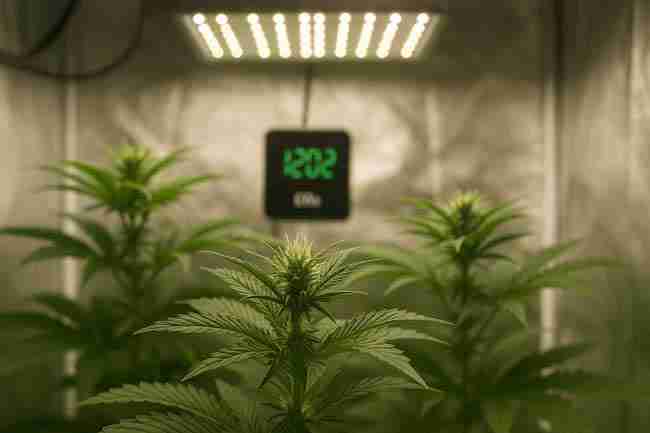
The gas is heavier than air. Released at the floor, it pools where the pots are and starves the tops you care about. Released above the canopy, with a circulation fan moving the room, it has a chance to pass the leaves on the way down. The sensor belongs at canopy height for the same reason. A reading taken on the floor will lie to you, and you will crank the regulator to chase a number the leaves never saw. None of that is a reason to seal a bedroom. It is a reason to measure the tent you already grow in.
The method only matters after the light
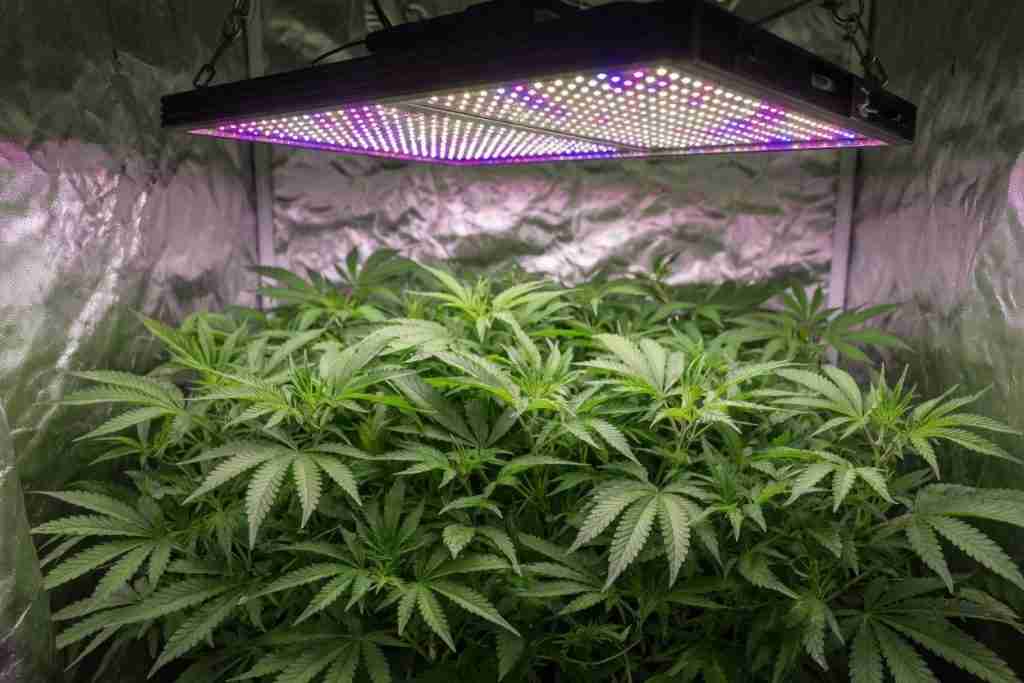
Carbon dioxide is a raw material for photosynthesis, and photosynthesis is a light reaction. In the dark the leaf is not building sugar, so extra gas at night is wasted money and a needless load of the air you breathe. Under a modest lamp the leaf is already limited by photons, not by the 420 ppm walking in through the duct. Adding gas on top of a dim canopy does not unlock a bigger plant. It adds a variable you will misread the next time a leaf yellows.
The practical line is a canopy that is already bright, on the order of 900 PPFD and up, with the tent able to shed the heat that brightness makes. Below that, fix the lamp or the distance. The grow-side ceiling for light, heat, and the tricks that do not raise potency is the maximizing THC page. Read it before you buy a cylinder to chase a percentage. Enrichment is allowed to ask for a slightly warmer leaf, because the photosynthetic optimum shifts up a little when carbon is abundant. It is not permission to cook the room. Days that were already hot get hotter. A leaf that was comfortable at ambient can canoe once you both raise the gas and leave the lamp on the tops.
A useful test is dull and worth doing. Read the canopy with the exhaust running the way you normally run it. Read it again with the exhaust paused and only a circulation fan moving air inside the tent. If the second number will not climb and stay up once you release gas, this tent is not a candidate. A zipper that gaps, a duct that never quite seats, and a fan that kicks on every few minutes will flatten the reading back to ambient. You can still grow excellent flowers that way. You grow them on fresh air, and you stop paying to enrich air that is already leaving.
Water and roots have to be boringly fine too. A plant that is droughted, root-bound, or swinging in pH will not spend the extra carbon. People then conclude the method failed. The method never got a turn. If the plants are stressed, put the controller back to ambient and fix the real limit. Enrichment is a multiplier on a grow that is already working. It is a poor fix for a grow that is not.
A tank changes the gas, not the weather

A compressed cylinder is the method that belongs in a tent or a small sealed room. It adds carbon dioxide and almost nothing else. No flame, no extra humidity, no heat load beyond whatever the lamp was already making. That is why yield and quality stay easier to separate. If the flowers get heavier, you can believe the gas did it. If they get airy or moldy, you look at the climate you already had, not at water vapor the cylinder invented.
The hardware that makes a tank honest is dull. A regulator, a solenoid that can shut, and a controller tied to a sensor. The controller opens when the canopy falls under the target and closes when it reaches it. A needle valve left cracked open all day is not control. It is a slow leak with a bill, and it keeps dosing after the lights go out. Strap the cylinder upright so it cannot walk off a stand. Refills are the ongoing cost. A small tank in a leaky tent empties while teaching you nothing, because the number never held.
Read the probe in the middle of the lights-on period, not at the door when you first walk in. Breath on a handheld meter is a puff of gas, and it will flatter the room for a minute. Leave the sensor hanging and write the number down for a week. A target you hit for twenty minutes and then lose is not the target the leaves lived in. The leaves live in the average. If that average will not sit still, fix the seal before you raise the setpoint.
What should the target be? Seedlings and clones stay at ambient. They have little leaf and a gentle lamp. Vegetative plants under a real light can use something like 800 to 1200 ppm if you want faster structure, and many growers never bother until flower. Early and mid flower is the window where a bright canopy actually spends the carbon, still in that same band, with some tuned rooms edging toward 1500. The last week or two, drop it. Bulk is mostly done, and the finish wants a cooler, drier room. How far the extra ppm stops paying per gram, and where the people-safety line sits relative to a plant target, is the job of the high CO2 and diminishing returns page. Use this page to decide that a tank is the method. Use that page before you chase a higher setpoint for sport.
If a monitor in the room climbs into the thousands, that is no longer a plant setting. Leave, open the space to fresh air, and find out why the valve did not stop. Workplace guidance treats 5,000 ppm over a workday as a people limit. A grow target lives far under that. Do not sleep in a sealed room with a cylinder that can keep releasing. Do not disable the alarm because it interrupted a night. The plant will survive a night at ambient. You need the oxygen.
A burner changes the weather too
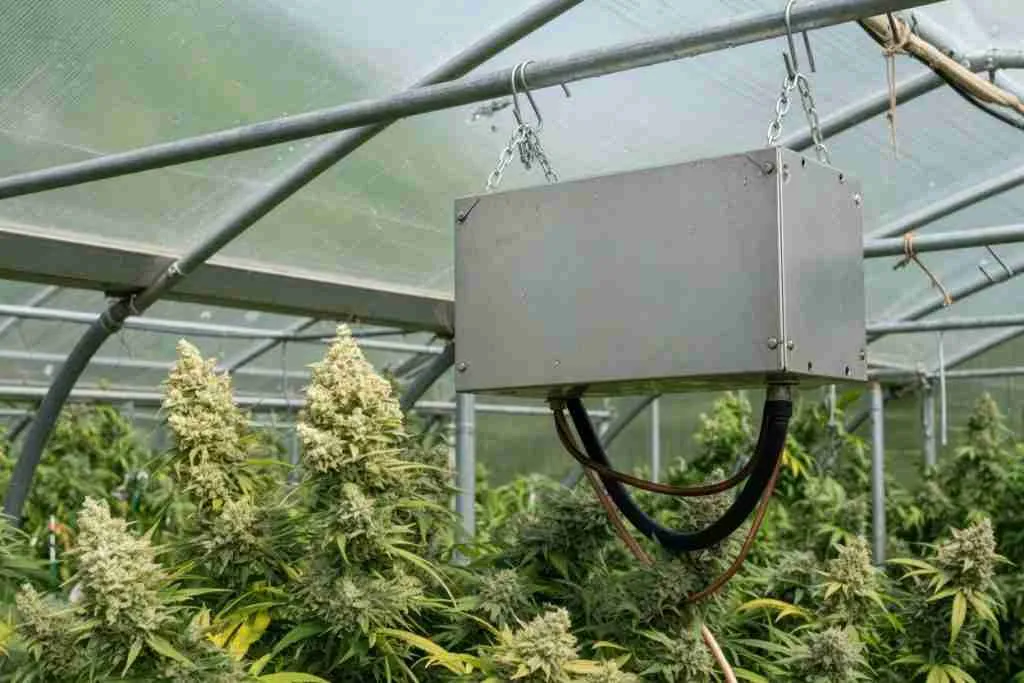
A CO2 generator burns propane or natural gas. The flame makes carbon dioxide, heat, and water vapor together. In a large room that already has cooling and a dehumidifier, the gas can be cheap per ppm and the weather can be hauled back out. In a home tent the weather stays. Flower that was dense gets looser in warm, wet air. Botrytis likes that air. Terpenes that were going to stay in the trichome cook off or never quite develop, and you will swear the cultivar changed. It did not. The method changed the room the cultivar was finishing in.
A poor flame can also put carbon monoxide in the air. That is a people problem sitting next to a plant problem, and a home tent is the wrong place to learn the difference. No open flame belongs in a cloth box full of leaves, wiring, and a carbon filter. Leave burners to rooms that already have fire planning, a carbon monoxide alarm, and nobody sleeping on the other side of the wall. If you cannot dump the heat and the moisture the burner makes, the yield story is fiction and the quality story is mold.
This is the part rankings blur when they list “generator” next to “tank” as if they were flavors of the same idea. They both can raise ppm. Only one of them leaves humidity and temperature where you set them. If your quality complaint is airy buds or a wet tent in week five of flower, a burner will make that complaint louder. The weeks themselves, and what the plant is doing in them, are on the flowering stage page. Match the method to the week you are actually in. Early flower can spend carbon. Late flower is a dry-down, not a second vegetative push.
Bags do not hold a number
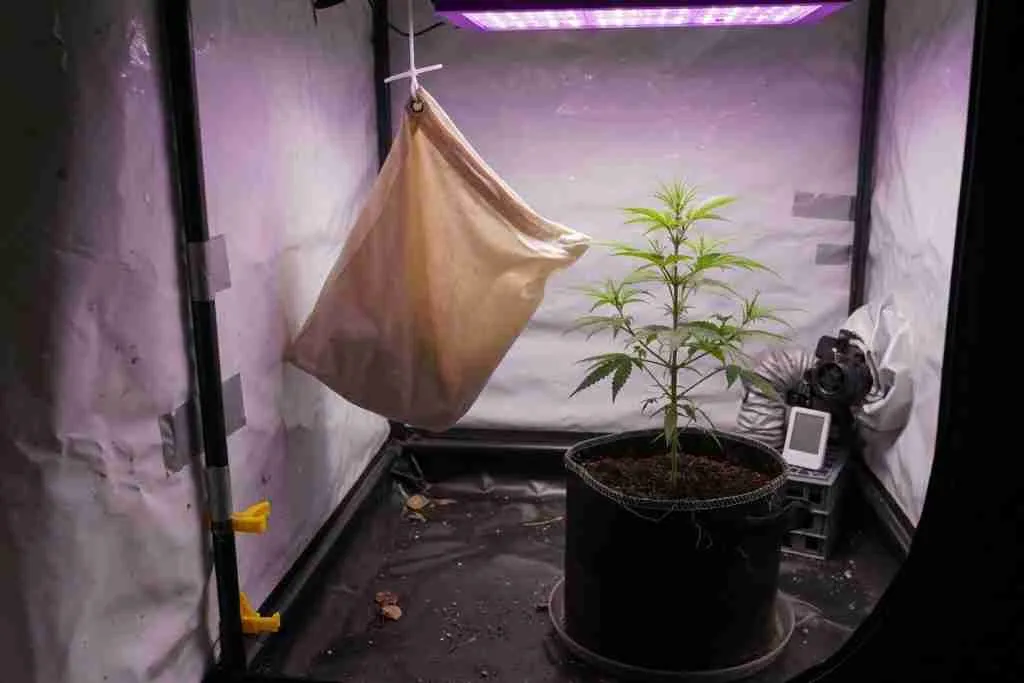
Hang a fabric bag, a mushroom block, or a bucket in the corner and you have added an object. You have not added a controlled atmosphere. Those methods release a little carbon dioxide while something living eats a substrate. Output rises and falls with temperature and with how fresh the culture is. It does not listen to a sensor. In a tent of any real volume the canopy ppm barely moves off ambient, especially if any air is leaving the room. Yield does not move either. You paid for a story.
The quality risk is the other direction. A ferment smells. A wet substrate can bring gnats. Compost in the tent is a pest invitation wearing a science costume. None of that makes the cola heavier. If you want to understand the slow, uncontrolled end of the scale, the detail lives on raising CO2 without a tank. Read it as a tour of what those tricks can and cannot do. Do not read it as the setup that replaces a regulator.
Dry ice is the same family of disappointment with a worse safety note. It dumps a cloud you cannot meter, it burns skin, and it is gone by morning. Exhaled breath into a tube is a gimmick. A person cannot hold 1000 ppm over a canopy for a flower cycle, and the room you are breathing into is the room you are standing in. If the only methods you can run are a bag or a bucket, skip enrichment. Spend the money on the lamp and on air that actually leaves the tent. Ambient, delivered on purpose, beats a number you cannot prove.
Quality is not a higher percentage
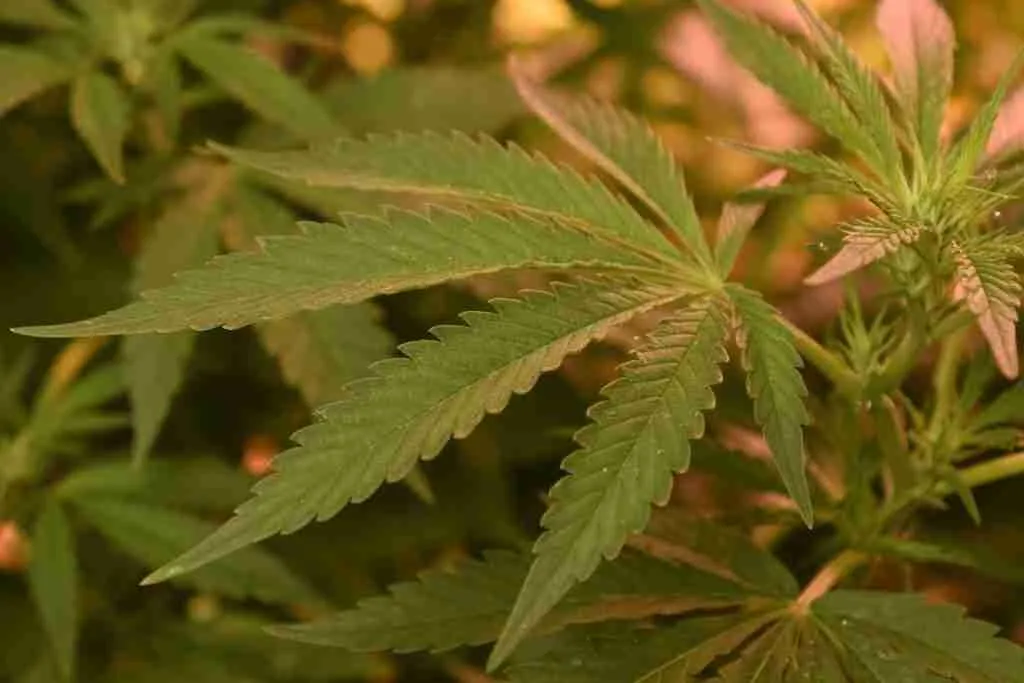
Heavier flowers are a yield result. A higher THC percentage is a different claim, and enrichment does not automatically deliver it. More carbon can build more flower mass. The percentage in each gram still comes from the pack, the light, the ripeness of the resin, the dry, and the cure. A jar can contain more total cannabinoids because it contains more grams, while each gram tests about the same as it would have at ambient. If someone sells you gas as a potency switch, they are selling the wrong page.
The nose is what growers notice first, and they blame the cultivar. A room that ran warmer, with the leaf cooling itself less, often finishes as a flatter jar even when the scale said you won. That is not a cue to add a fragrance product. Keep the day temperature in the band you trusted before the gas, and shut enrichment off while the resin is ripening. Weight is something you can weigh. The smell survives only if you do not cook it on the way to the cut.
There is a leaf-level catch that shows up as a quality problem. At higher ppm the stomata do not stay as open. The plant transpires less. Less water moves from root to leaf, so calcium and anything else that rides that stream can lag even when the bottle is unchanged. The leaf also runs a little warmer, sometimes a couple of degrees, because it is not cooling itself the same way. Edges that lift under a warm lamp are that story. They are not an order to double the feed on the same day you opened the valve. Fix the distance and the room temperature first. If a new pattern shows up only after the gas went on, the gas is part of the pattern.
Burner rooms fail quality even when the ppm looks perfect on a logger, because the flowers spent week five wet. Tank rooms fail quality when the grower leaves 1500 ppm running through the fade and wonders why the nose is flat. Shut the gas off for the finish. Ripeness is a resin call made on the calyx, not a carbon call. That read lives on the overripe buds page. Cut when the heads say so. Do not keep dosing because the cola is still gaining a little weight you will lose to a harsh dry.
When to turn the gas off
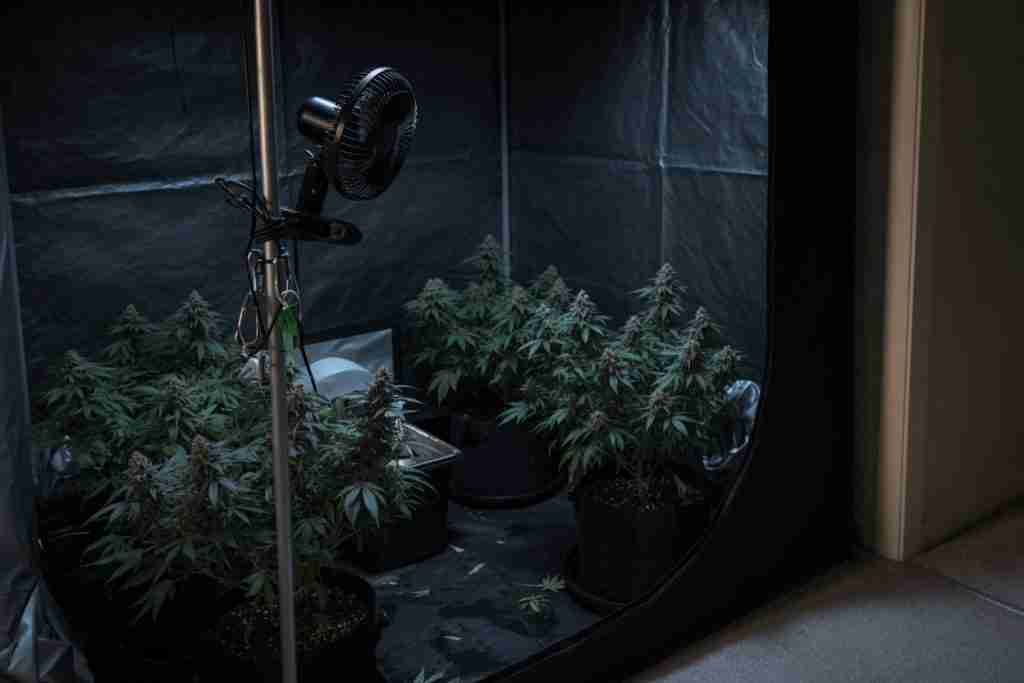
The lights in that tent are off. The fan can stay. The gas should not. Every method, tank or burner or bag, is a lights-on tool. Wire the solenoid or the burner to the same period as the lamp, or shut it by hand when you kill the light. A controller that only knows ppm will keep topping the room up all night if the number drifts down, and you will sleep next to a climb you did not need. Plants are not photosynthesizing. You are just storing carbon dioxide in a box.
Turn it off, or never turn it on, in four other cases. Seedlings and fresh cuts stay at ambient. A stressed plant, drooping or burnt or clearly unhappy, goes back to ambient until the cause is fixed. The last one to two weeks of flower go back to ambient so the finish can be cool and dry. And any reading that runs away into the thousands means the people leave first. Ventilate. Then fix the valve. A harvest is not worth a headache, confusion, or worse in a closed room. If you share a house with anyone else, the alarm is part of the method, not an accessory you add once the plants look good.
Outdoor plants and a tent with the duct wide open are already off. Wind and exhaust hold them at ambient no matter what you release. Do not fight that. Enrichment is an indoor, lights-on, room-can-hold-it technique. Pretending a patio plant needs a tank is how this subject gets silly. The plant outside is limited by the sun, the season, and the soil. Give it those. Save the cylinder for a canopy that is light-saturated and still hungry for carbon.
One room, then measure
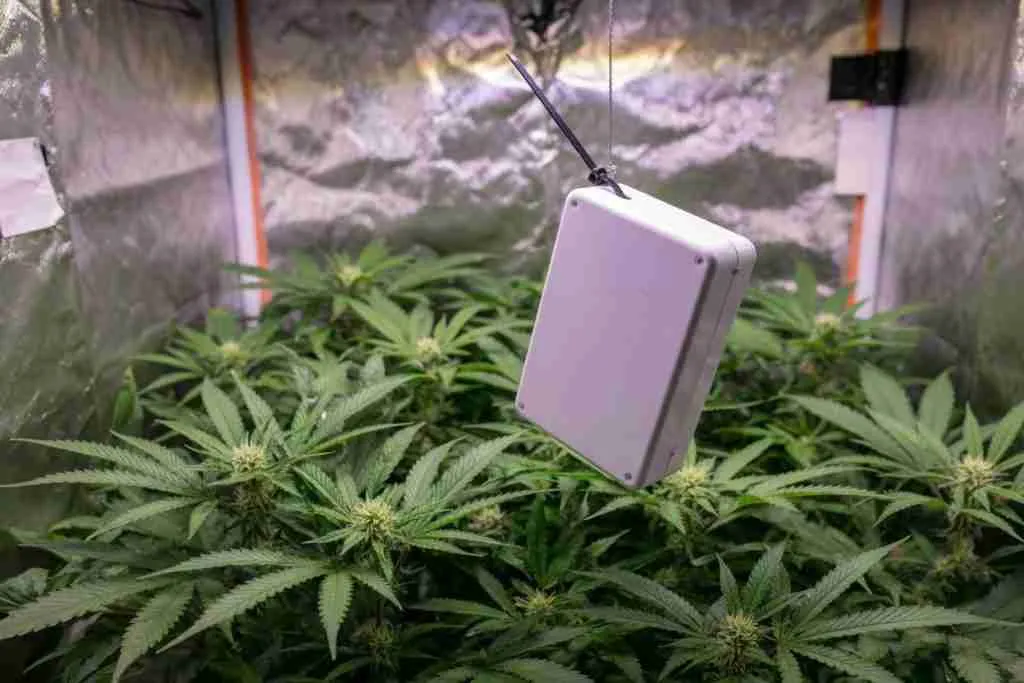
Buy the sensor before the cylinder. Hang it at the canopy, face it so you can read it without breathing on it, and log the number with the lights on for a few days before you add anything. You need to know what ambient looks like in that tent with the exhaust in its normal pattern. If you cannot hold a raised number for the lights-on period after you start, you do not have enrichment. You have a leak, an exhaust schedule, or a valve that is not really closing. One method at a time. A tank plus a bag plus a cracked window is three stories and no result.
Canada allows four plants per household, not per adult. Quebec prohibits recreational home growing. Manitoba has been indoor-only since 1 May 2025, and adults there are 19 and older. A seedling counts. A cylinder does not add a plant, and a heavier cola does not add a plant. Do not pop extras because enrichment made you optimistic. The order from seed to jar, without this variable stacked on top, is the 10 steps of a finished grow. Run that order until the room is predictable. Then add gas, on a timer with the lights, at a target you can hold, and shut it off when the flowers are finishing.
Write the choice in one line before you spend the money. Is the canopy already bright? Can the room hold a number with the lights on? Do you need gas only, or are you about to add heat and water as well? If the answer to the first two is no, stay at ambient. If the third answer is a burner in a tent, stay at ambient. The growers who see a difference are the ones who changed the gas and left the rest of the room alone long enough to measure it.