


How Can I Stop My Cannabis Plants From Stretching?


Stop My Cannabis Plants From Stretching starts when you read the new gap between the leaves, not when a forum tells you the plant is ruined. A stretch is stem the plant spent to get closer to light, or stem it spent because flower just began. The piece that already grew will not pull itself short again. You can only change the next piece. Treat every tall plant as the same mistake and you will fix the wrong thing.
You are in the same boat as every new grower who finds a skinny tower. The leaves can still be green. The clue is the distance between them. A short gap means the plant was content. A long bare gap means it was reaching, or it was doing the early flower push many packs are built to do. Those are not the same job. Reaching for a lamp that sits too high, the stem adds a long bare gap before the next leaf.
What a seed is lives on what a seed is. How a sprout starts lives on how a sprout starts. Why a sprout dies in the first days lives on why a sprout dies in the first days. The seedling stage lives on the seedling stage. The day-by-day look lives on the day-by-day look. The humidity lid lives on the humidity lid. Leaf growth before flower lives on leaf growth before flower. The flower stage lives on the flower stage. The clock difference lives on the clock difference. This page stops at the gap you can still change.
However, a long stem is still only a description of the room you already ran. The list for British Columbia and the list for Vermont are two doors into the same catalogue. A small pack beats a single bean you cannot spare, which is why a 5-pack is the default order. Packs leave on the clock on shipping. Other rooms sit on the Canada hub and the United States hub. Read the rules where you live before you pop a seed.
Standing under a lamp you hung last week, the empty air above the pot looks like plenty of room. It is not a measurement. If the newest gap is already long, the room was a reach. Close the tab that promises a bottle will shrink it.
Stop My Cannabis Plants From Stretching
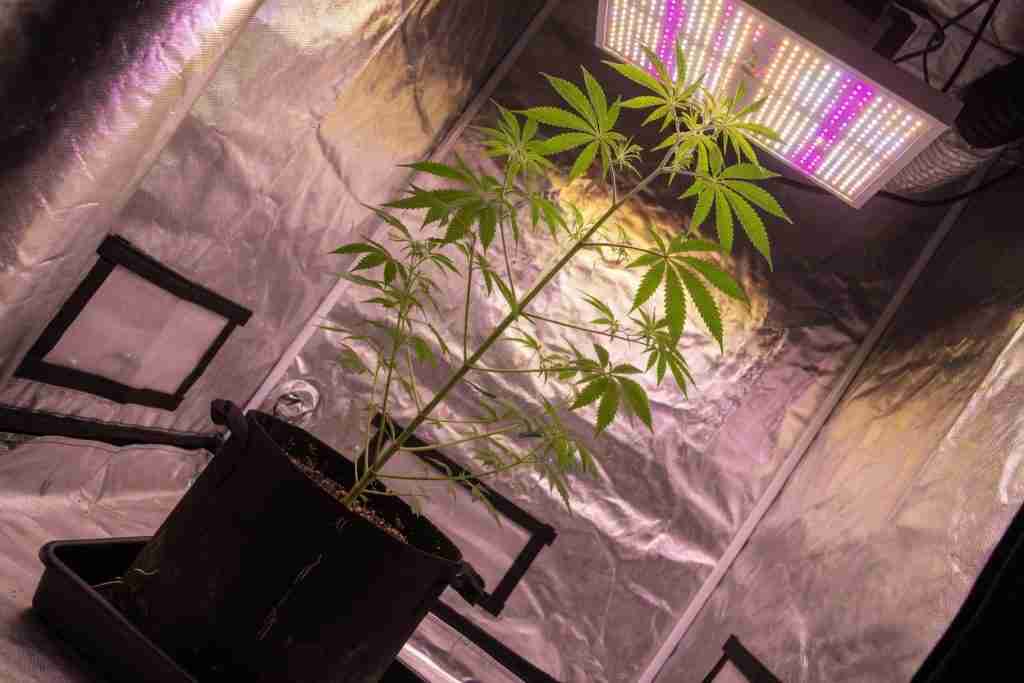
Name the gap before you name the cure. The stem piece between one leaf set and the next is the gap. A tight stack on a short piece of stem is a plant that had enough light. A long bare piece, with leaves stuck at each end like flags, is a plant that spent its growth on height. You need the newest growth, because that is the only witness that still matters.
People mix up three reaches. A seedling stretch is a young plant that cannot see enough light, or that sees it from the side. A shade reach is an older plant in leaf growth whose lamp is too high, too small, or blocked by the plant beside it. A flower stretch is the upward push when a photoperiod plant reads a short day, and it also shows when an age-clock plant decides it is time. Treat the flower push like a hungry seedling and you will lower a lamp onto flowers that were going to rise anyway.
A lean is not always a stretch. A plant can bow toward a window, or toward the bright side of a lamp, and still have ordinary gaps. That is a direction problem. The long gap is a distance problem. You can have both. Change one thing, then wait for new leaves, or you will not know which lever worked.
Read the gap between the leaves

Slide a finger from the top leaf set down to the one below it. A long trip on bare stem means the plant was reaching while that piece was built. A short trip means it was stacking leaves. Do this on two plants in the same tent. Sisters from one pack gap differently if one sits in the bright middle and one sits in the dim corner. The corner plant is talking about the corner.
Also feel the stem. A weak-light reach is often thin, pale, and floppy. A flower push on a well lit plant can be long and still firm, because the plant is rising on purpose. Thin and floppy wants light, air, and sometimes a stake tonight. Long and firm in early flower wants headroom. A heat-curled top is a different read. The taco leaf and the stall are not a stretch just because the plant is tall.
The old gap will not shrink
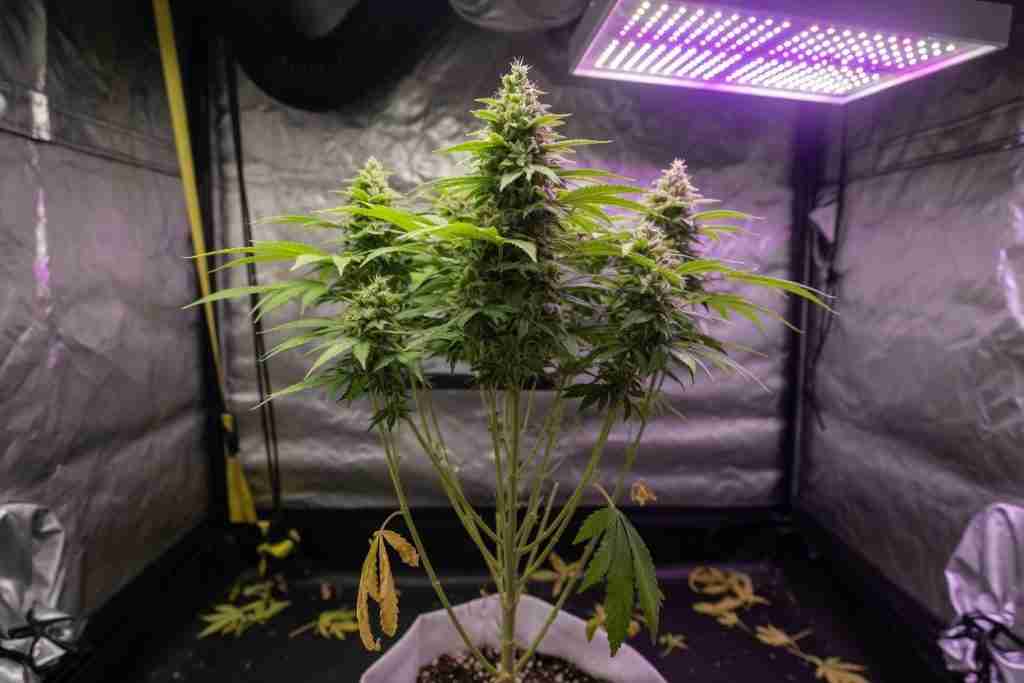
The horse has already left the barn on any gap you can see today. You can put the toothpaste back in the tube about as easily as you can shorten that piece. Water, feed, and a darker night will not fold it up. Make the next piece shorter, and support the piece that is already long.
A before-and-after photo fools people. They fix the lamp, the new top tightens, and they think the whole plant shrank. The bottom still shows the week you were late. Judge only growth that appears after the change. If the new gaps are still long, you have not found the lever, and a second bottle will only muddy the story.
Seedling stretch is not flower stretch
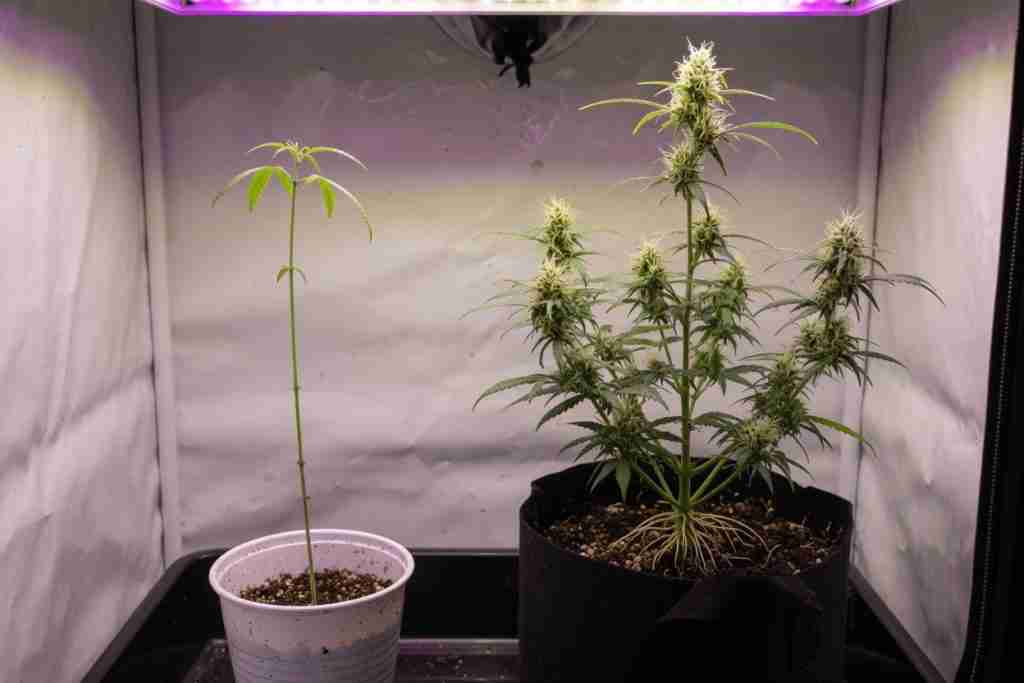
A seedling stretch shows while the plant still has its first smooth leaves and maybe one serrated set. The stem is a pale thread. It falls over if you bump the cup. A window, a lamp across the room, a dome left on until the light is soup, or a panel hung for a full tent while the plant is a dot, all tell the same lie. The light feels far, so the plant spends itself getting closer. Bury a soft seedling stem up to the seed leaves and that buried piece can root, if the mix is damp and not soggy. Do not bury a woody flower stem and hope for the same trick.
Flower stretch shows when white hairs start and the tops accelerate. The plant is changing jobs, not failing. A photoperiod plant often does its biggest rise early in flower, then slows as the flowers take the lead. An age-clock plant does not wait for a timer. If it is already tall when flower starts, you cannot pause it. That tie lives on the autoflower tie-down. A short catalog flower can still rise hard. That claim lives on a short flower week.
A plant still in leaf growth that suddenly gaps long, with no white hairs, is almost always light, heat, or crowding. Check the timer before you invent a story. A timer that slipped into a short day starts the flower push early. What a broken night does lives on what a broken night does. Do not use a dark shock as a height trick. Forum posts love it. It is a different job, and it can throw a photoperiod plant off the flower you wanted.
A window makes a plant lean
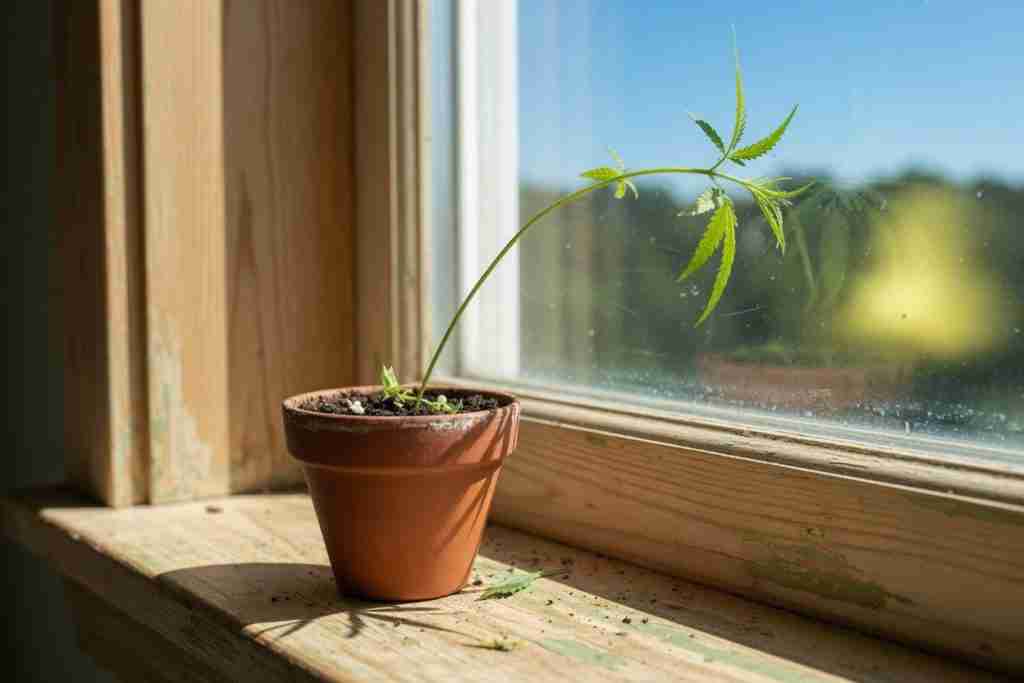
A sill is a lamp with one bright side. The plant bends toward the glass and people call it a stretch even when the gaps are only a little long. Turn the cup so each side gets a turn. Better, put a lamp overhead. A foil box bounces some light back, and it still loses to a real overhead lamp in a dim room. Outdoors, open sky rarely does this. A dark porch or a wall that blocks the day can still make a reach. Move the plant into the open day.
Edge plants in a tent bow inward when the panel only paints the middle. Center it. If the panel is smaller than the canopy, the edges keep leaning. Rotate those pots while you decide whether the lamp is big enough. The tent lives on the tent. A dark lower shelf is not a cure, and that choice lives on a second shelf.
Light from above beats a pep talk
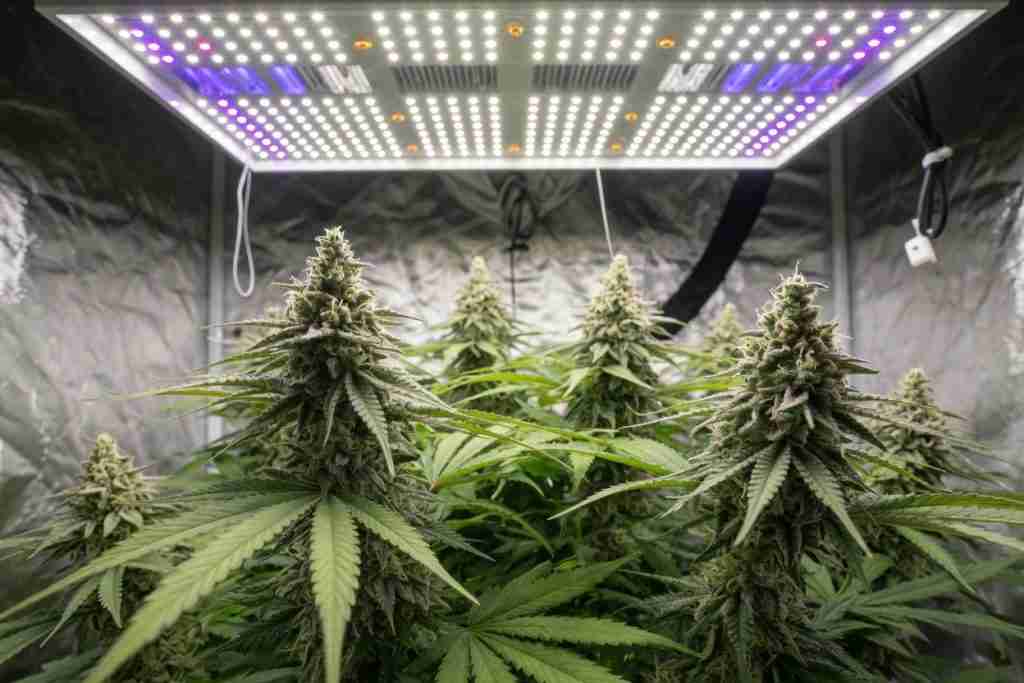
Light is the first lever because the plant is answering a signal, not your worry. Weak or far light says “I am losing,” so the plant spends stem. Strong overhead light says “I am already in it,” so more growth goes into leaves. Lower the panel you have until the tops are clearly lit and the leaves stay calm. After hanging the panel too far up, the newest leaves sat a long way from the last pair.
Raising the lamp because the plant got tall is barking up the wrong tree. Lifting it makes the next gap longer. If the tops are now too close and the leaves canoe, bleach, or droop, that is a burn, not a reason to put the lamp on the ceiling. Cool the room, dim a little, or bend the tall stem using the training pages. More light in a hot box creates a stretch and a burn in the same week. Hold the back of your hand at the top. If you want to pull away, the panel is too close for the heat you have. The first indoor garden lives on the first indoor garden.
The pro of a closer lamp is a shorter next gap. The con is heat at the leaf. Flat green tops mean you can stay. Pale tips and taco leaves mean you went too far. Match the footprint too. A panel that only lights the center will stretch the edges. Hang it over the group, then watch new gaps for a few days. Lamp mistakes live on lamp mistakes. Newer lamp ideas live on newer lamp ideas. The even plane lives on the light plane.
A warmer lamp color can invite the reach
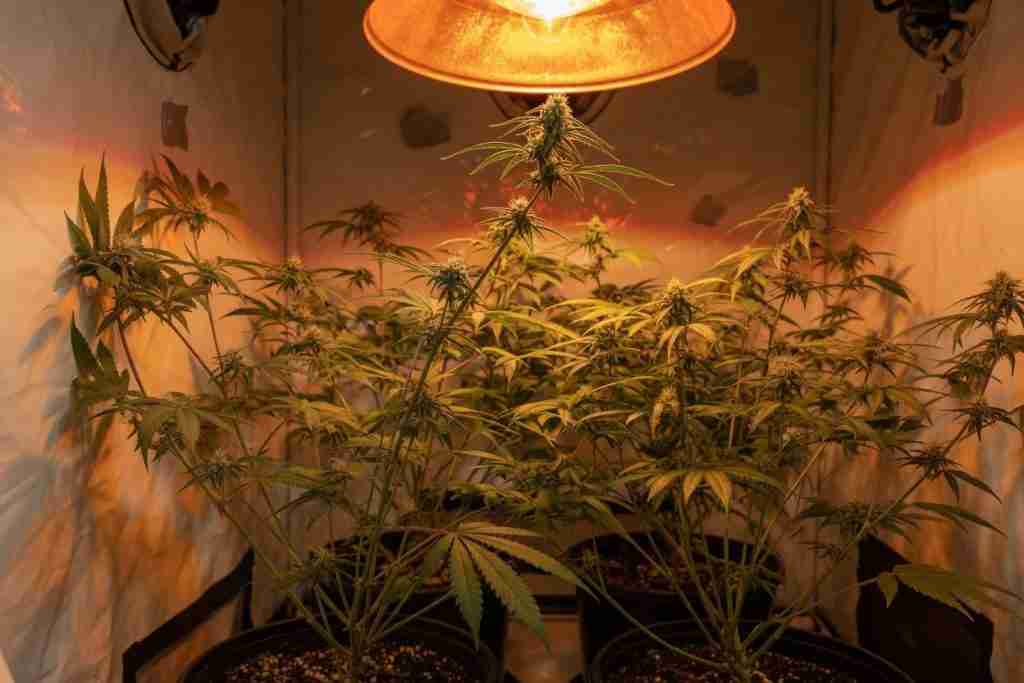
Color is a smaller lever than distance. A cooler, whiter lamp in leaf growth often keeps gaps a bit tighter. A very warm, orange-looking lamp can invite a longer gap, especially if it is also far away. Leaves over a neighbor shift the light that gets through, and the plant underneath reads a crowded signal and reaches. That is the same story as a seedling under a forest roof. Keep plants out of each other’s shade, and do not run your warmest flower setting while you are trying to slow a reach.
The pro of a cooler early setting is a plant that is easier to keep under the panel. The con is swapping toys every week when one dimmer would do. If the panel has a cooler-looking setting, use it while the gaps are long, then let the flower setting happen once the rise settles. If the panel is fixed, distance and heat matter more than the paint on the diodes. Color shopping lives on lamp color.
Heat, wind, and a crowded room

A warm day that runs much hotter than the night invites longer gaps. A tent packed so every leaf sits on the next plant is a shade tent, even with an expensive panel. The middle plants reach because they live under a roof of other leaves. Spread the pots, or remove the plant that no longer fits. The Christmas-tree shape that wastes light belongs on the light-plane page.
A wet cup and a heavy feed can soften a young plant until it flops, and they are still not the first suspect. Fix the light before you blame a missing bottle. When to water lives on when to water. This page will not hand you a feed recipe. Pale, burnt, or clawed leaves are a different problem than height.
Wind is the other half of this room. A stem that wobbles a little builds thicker. Dead air stays soft, then folds when the top gets heavy. Aim a small fan so the leaves tremble and do not slap the pot all day. A fan in a dim corner makes a tough plant that is still leggy. A soft pass of a clean hand across dry tops can thicken a young stem, and a hard swipe bruises it. Do not brush flowers, and do not brush a wet plant. The fan will not pull yesterday’s gap back down.
Stop Marijuana Plants From Stretching
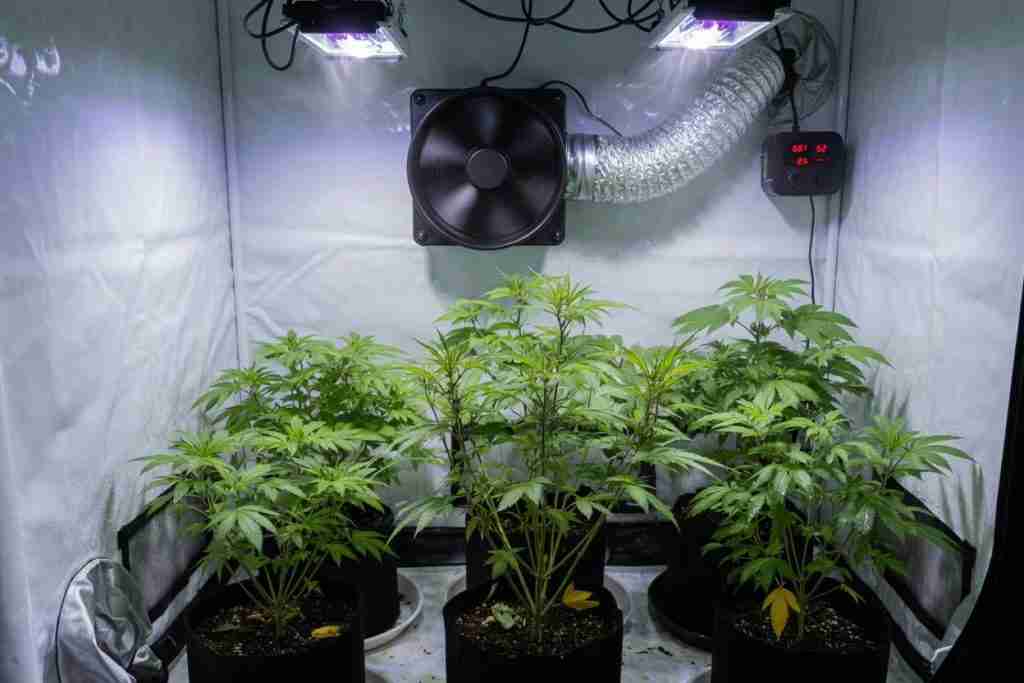
Look, the old gap is already built, and no feed bottle takes it back. What you can steer is the next morning. Vegetable-transplant work is the cleanest public note on this, and it is about bedding plants, not a secret dial. Why a vegetable transplant gets leggy comes down to low light, a wet cup, a heavy feed, pots left crowded too long, and a day that runs warmer than the night. The same note says a short cool spell at the start of the day can keep new gaps tighter, in the same family as a night that stays a little warmer than the day. A gentle brush on dry tops can help, and a rough brush damages tender plants. Do not copy a degree chart onto your tent.
Ranking pages fight about the night. Some say drop the night far below the day. Others, including people who log rooms, say a night about as warm as the day keeps the morning rise in check. The vegetable note sits closer to the second camp, and the useful part you can feel is the cool start of the day. Run the exhaust harder for a short while as the lamp comes on, so the tent does not spike, and do not let the night crash into a cold chill. If the plant stalls or the leaves claw, you overdid it. A stall is not a shorter plant you can be proud of.
The specifications are plain. The new gap is the score. Light comes from above and reaches the edges. Top leaves stay flat. Your hand can rest at the top without flinching. Leaves are not piled in a mat. The day is not wildly hotter than the night, and the first part of the day is not the hottest hour. A fan moves the leaves. You change one lever, then you wait. If you cannot say which lever you moved, you cannot learn.
Put the pros and cons next to those checks. A closer lamp shortens new gaps and can cook a hot top. A cool start to the day can tighten growth and can stall a tender seedling if you make a fridge. More space gives each plant its own light and means you keep fewer plants. A lighter hand on water keeps soft seedlings sturdier and will not rescue a dim corner. A gentle brush can thicken a young stem, and a hard one only bruises leaves. None of these shrink a gap that is already there.
The flower stretch is a budget
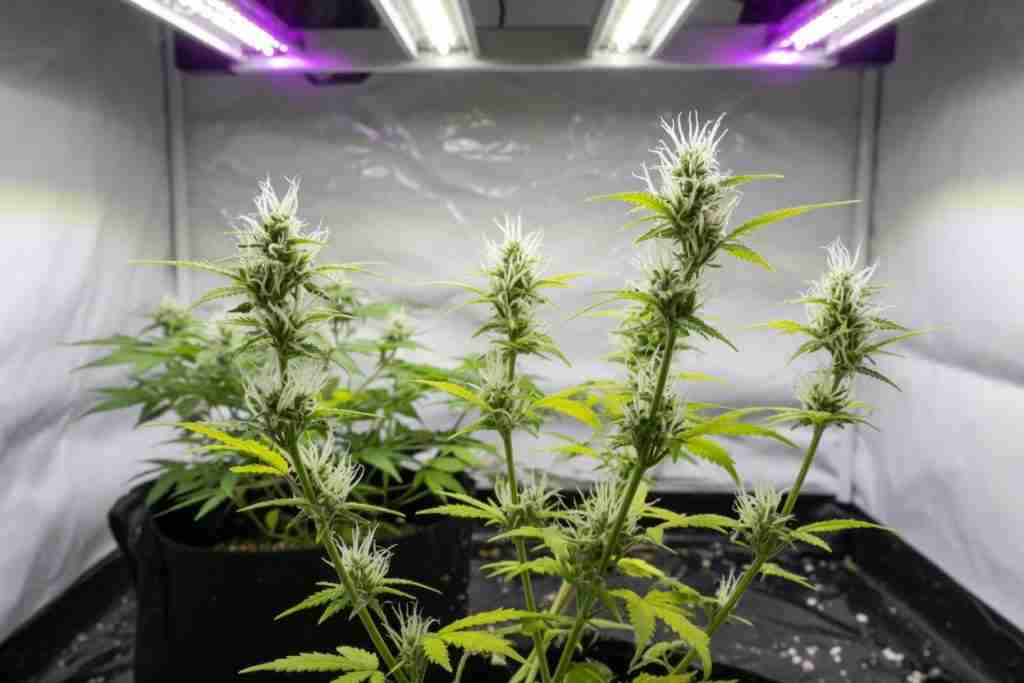
You will not cancel the flower stretch. A photoperiod plant spends a burst of stem before the flowers fatten. That burst is the budget. Flip when the tops are already kissing the lamp and the budget is overdrawn. Flip while a real pocket of air remains and the rise has somewhere to go. How tall a pack likes to get lives on how a tall pack behaves. The message inside the plant lives on the stretch message. Do not look here for a spray.
Flipping a very young plant can backfire. It has no base yet, it settles slowly, and the rise can run on. Waiting forever in leaf growth builds branches and also eats the air you needed. Picture the plant clearly taller than it is now. If that picture hits the lamp, you are late. A tiny box lives on a tiny box, and a short indoor pack lives on a short indoor pack. Buy the ceiling you have.
Stop Weed Plants From Stretching
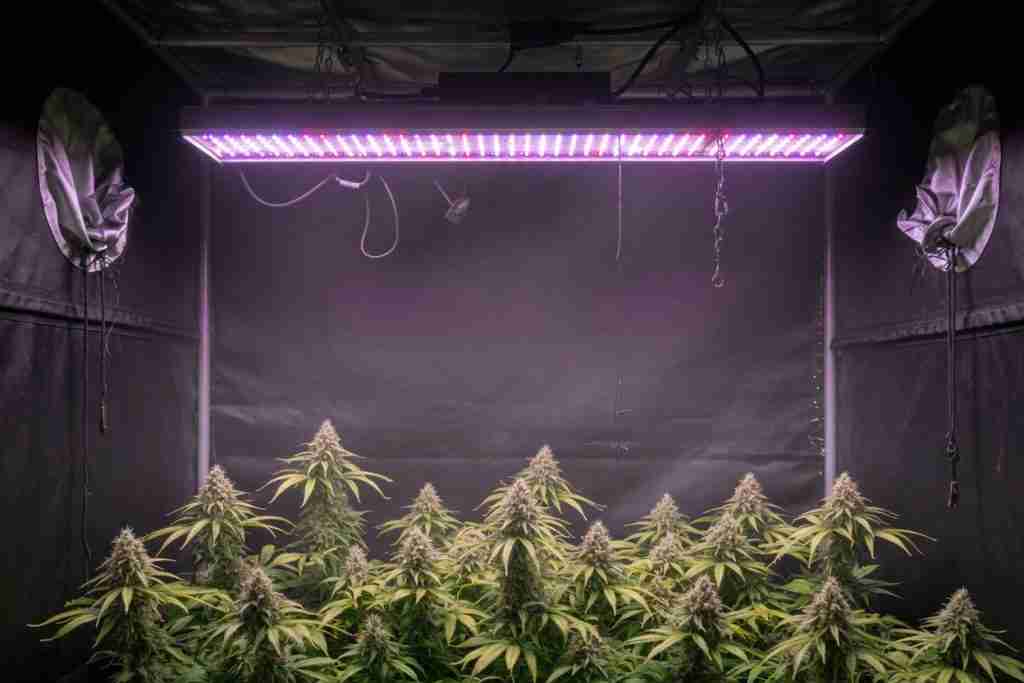
Training does not stop the rise. It spends the rise sideways. The tie-down lives on the tie-down. A hard bend lives on a hard bend. The screen lives on the screen. What that screen is not lives on the screen and the hard bend. A tip cut lives on a tip cut. Sideways training lives on sideways training. Leaf removal lives on leaf removal. The lower strip lives on the lollipop cut. Use those pages for the steps.
The budget itself has pros and cons this page does own. Flipping while air remains gives the rise a place to land, and it can leave a smaller plant than a long leafy build. Waiting gives you more branches, and it can put tops in the diodes later. Bending keeps the lamp, and a stiff stem can snap. A screen turns the rise into width, and it is a daily tuck while the stems are soft. Cutting a frightened half off in one afternoon is not a plan. A bottle that claims to freeze height is not a step here. You do not need it to read a gap.
Sisters will not rise the same under one lamp. One stacks tight. One ladders and needs a bend. That is a pack being a pack. Keep the ladder if you have room to redirect it. The weeks after the rise settles live on the flower page. The timer itself lives on how the timer starts flower. Come back here only when the question is still the gap.
A stake saves a stem you cannot shorten
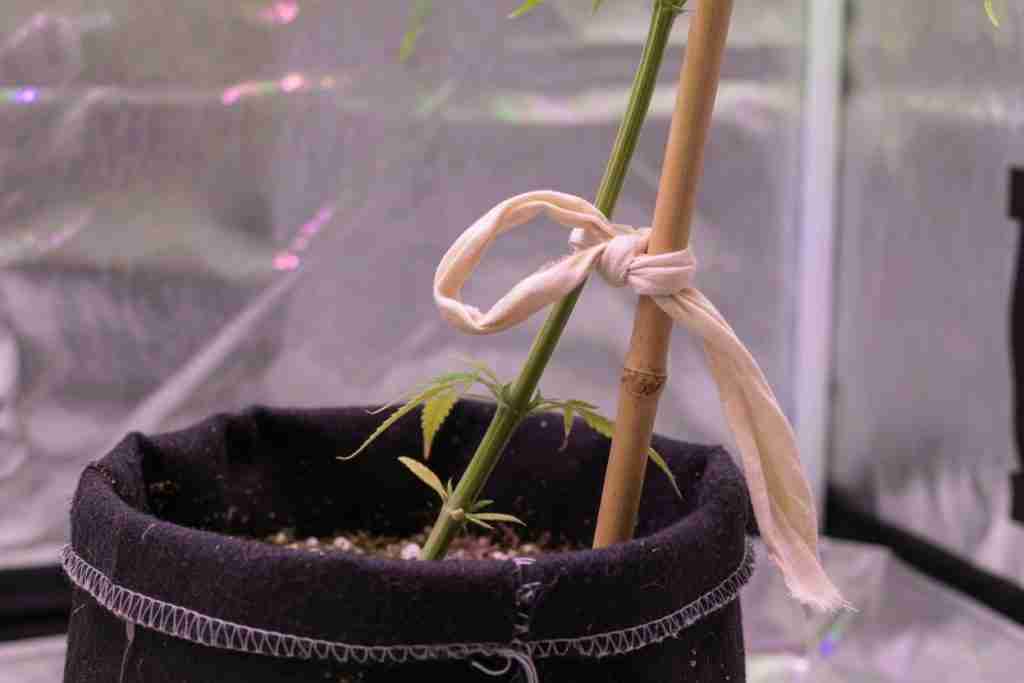
When the stem is already long and it folds, you are in rescue. A plain stake and a soft tie hold it while new growth, if you fixed the light, comes in tighter above the weak point. Tie loosely. A hard cinch scars the stem. Set the stake before you yank the plant upright. For a soft seedling, sinking the long stem into a deeper mix, up to the seed leaves, is often kinder than a forest of sticks. Keep that mix damp, not shiny. A soggy bury rots the part you hoped would root.
The pro is that you keep a plant that would have folded and stayed wet. The con is that the stake teaches the next gap nothing. If you need a taller stake every week, you are still reaching. Outdoors, a storm finds a skinny stem before you do. One soft tie to a firm stake, put in before the wind, beats a rescue in the mud.
Skip the moves that keep failing. Do not raise the lamp to give it room and then wonder why the next gap is longer. Do not drown the cup to make it sturdy. Do not stack feed on a seedling that is pale because it is reaching. Do not black out a flowering plant for a day and call it height control. Do not buy a height-freeze bottle because a comment swore by it. Do not cut the plant in half because you are embarrassed. Fix the signal, support what already grew, and score yourself on the gap that grows next.
