Homemade Fungicides for Cannabis Plants: Keep Your Green Ladies Happy, Healthy, and Mold‑Free

Homemade Fungicides for Cannabis Plants start with a name, not a potion. You figure out whether the mark is powdery mildew, bud rot, a root fungus, or a leaf spot, then you mix one kitchen job for that mark. A jug of everything from the cupboard is how you burn a leaf and still leave the fungus sitting on the underside you never flipped.
The white matte circle on a fan sits on powdery mildew on cannabis. Gray inside a cola sits on cannabis bud rot. A sour pot and a collapsing seedling sit on root rot in cannabis. Garlic, chili, and oil aimed at insects sit on diy organic pest repellents. Neem as a bought oil sits on cannabis pests with neem oil. Stay here for the kitchen mix, for spray versus a drench, and for why a wet tent laughs at both.
Marijuana slogans that sell a kitchen cure-all are selling a picture. A weed forum recipe that dumps baking soda, vinegar, oil, soap, and garlic into one bottle is a chemistry experiment you do not want on a cola.
If you still need seed for a room you mean to keep clean, a pack from the Alberta shop and a pack from the Missouri shop are the same list. Spare seed sits on why a 5-pack is the default order. Popping them sits on cannabis seed germination. First leaves sit on the cannabis seedling stage. Packs leave on the clock on shipping. Other rooms sit on the Canada hub and the United States hub. Quebec still bans recreational home growing, so a tent there is a legal dead end. Read the rules where you live before you pop a seed.
Homemade Fungicides for Cannabis Plants
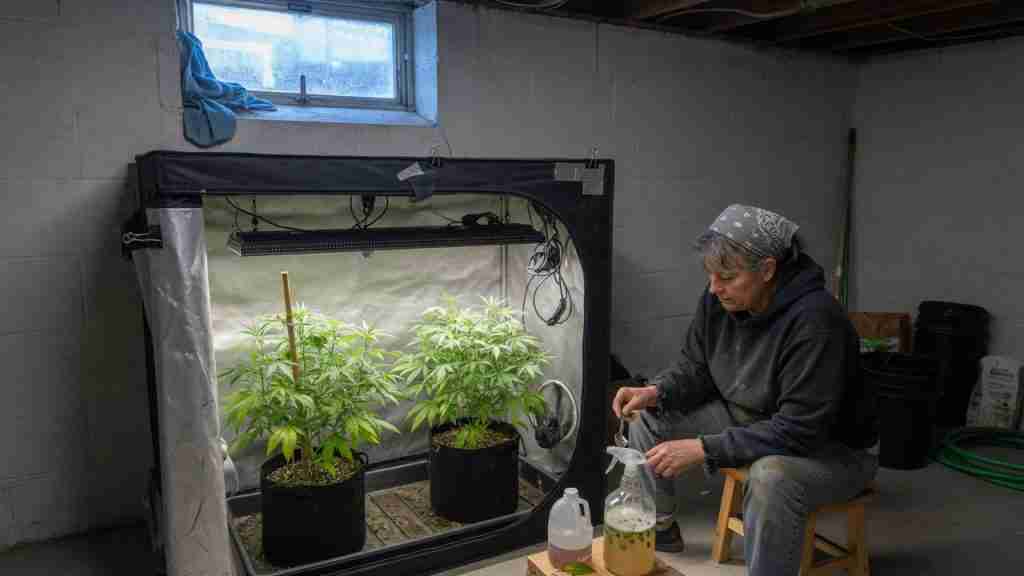
A kitchen fungicide is a contact job. It sits on the leaf for a few hours, shifts the surface the spore was using, and then it is gone. It is not a vaccine. It is not a systemic that travels through the stem and hunts a fungus in the heart of a cola. Baking soda and potassium bicarbonate raise the pH on the cuticle. Milk leaves a thin film and, in bright light, a bit of peroxide chemistry. Garlic water carries sulfur compounds that bother some foliar fungi. Vinegar is an acid. Soap is a sticker, not the killer. Oil is a film. Each of those is one tool. None of them replace moving air, a dry rim, and a canopy you can see through.
The box itself sits on grow tent for cannabis seeds. The jug sits on how to avoid common mistakes in your first indoor garden. The cannabis vegetative stage is when a foliar mix has a chance. The cannabis flowering stage is when the same mix becomes a wet blanket on a cola.
You mix fresh. Yesterday’s bottle of milk is a sour science project. A cloudy jug under the sink is not a stockpile. One litre is enough for a home tent. Shake it. Spray it. Dump the rest. If you cannot name the fungus, you do not get a spray. You get a loupe and a bag for the worst leaf.
Name the Fungus Before You Mix
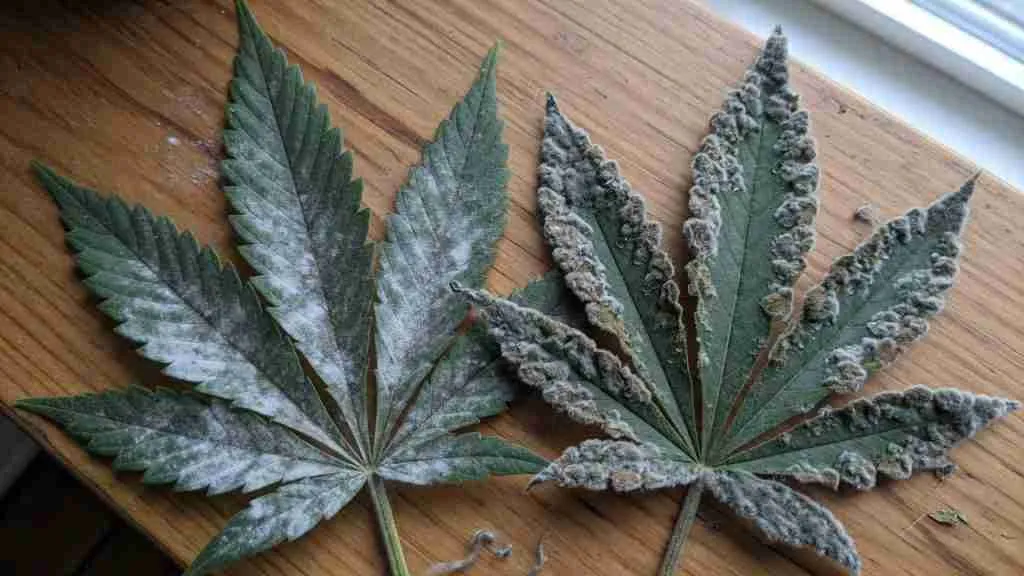
Look, white flour on a fan is not gray fuzz in a cola. Powdery mildew is a matte circle that wipes and comes back. It likes still air and a leaf that stays dry on top while the room stays humid. Bud rot is wet, gray to brown, and it lives inside the flower. You smell it before you see it if you bury your nose in the cola. A kitchen spray on that cola adds water to the rot. Cut the cola into a bag. Do not baptize it.
Root fungus is a different kingdom of problem. Pythium and its cousins live in a pot that never gets light and never gets air. The plant wilts while the mix is wet. The stem at the soil line can go slimy on a seedling. That is not a foliar job. Dumping garlic water on the crown soaks the one tissue that still had a chance. Dry the pot. Empty the saucer. The watering lift sits on water cannabis plants. The disease itself sits on the root-rot page. This page owns the refusal: leftover foliar is not a drench.
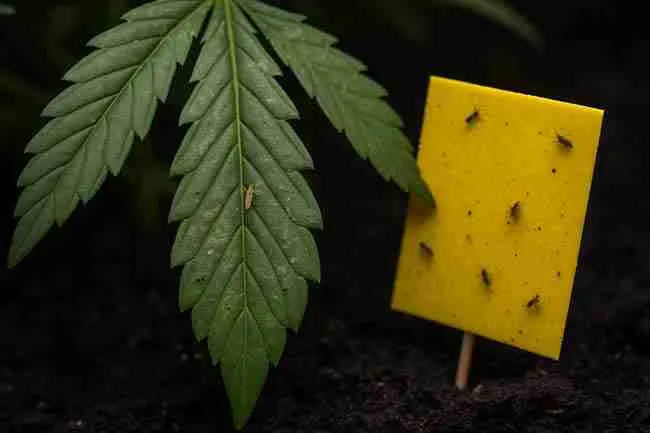
Leaf spots that are brown rings, yellow halos, or black pinpoints can be a fungus, a bacterium, a burn, or a deficiency. Flip the leaf. If you see silk and stipple, that is a mite, and it sits on cannabis and spider mites. Silver streaks and black specks sit on thrips on cannabis. Flying dots from a wet surface sit on fungus gnats. A weekly walk sits on integrated pest management. A kitchen fungicide does not treat an insect. If you spray baking soda at a mite, you burned a leaf and the mite still has eggs on the underside.
White Dust Is Not Gray Rot
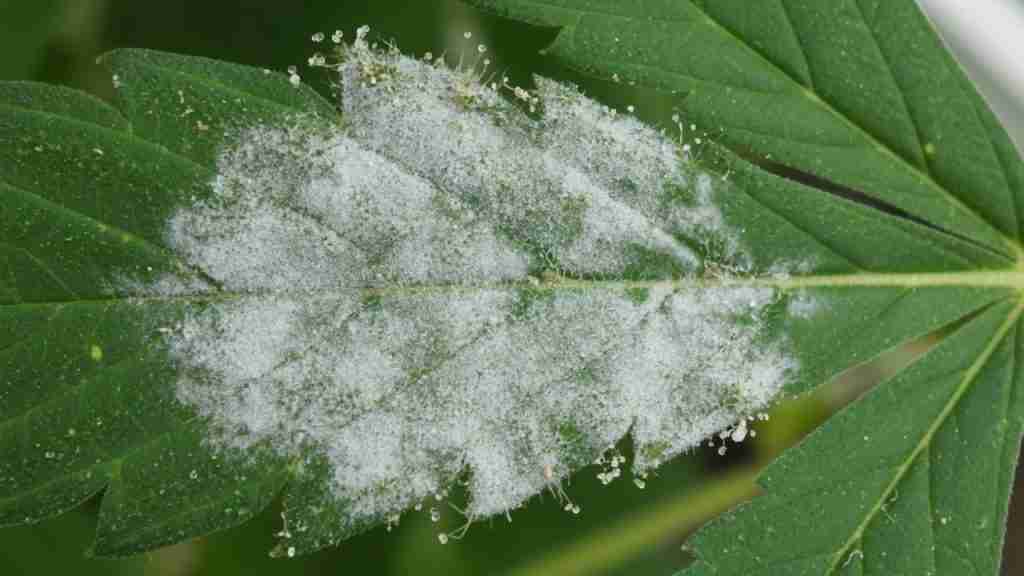
Trichomes sparkle. Dust is grit you can blow. Powdery mildew is a living matte that returns after a wipe. Confirm in morning light, not with a phone flash that turns everything white. Bag the worst fans. Do not compost them in the tent. Then you earn a foliar, and only on tissue that is still a leaf, not a flower. The encyclopedia of that fungus sits on the powdery mildew page. This page owns the kitchen answer once you are sure.
Gray rot inside a dense top is already past a spray. You will wet the bract, trap the spore, and watch the brown travel overnight. Harvest early if the plant is close. Cut the site with clean shears. Take the bag out of the house. The bud-rot page owns the rest. A kitchen mix does not un-rot a cola. Anyone who tells you to dunk a flowering top in milk is asking you to feed the rot.
A seedling that folds at the soil line is damping-off, not mildew. The cube was wet and a water mold took the stem. Pull it. Do not spray the tray with baking soda. You will salt a root that is three days old.
One Mix for One Job
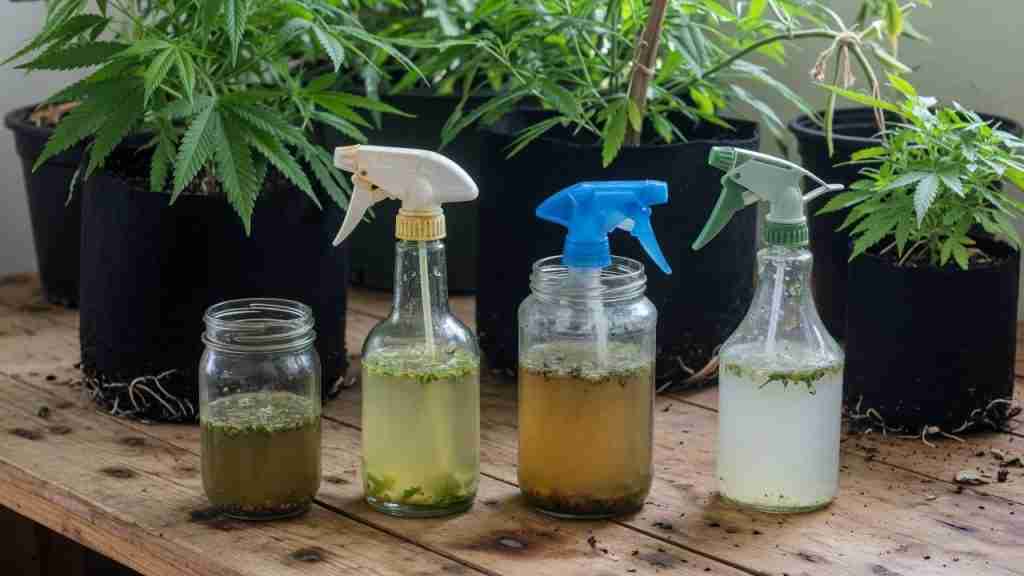
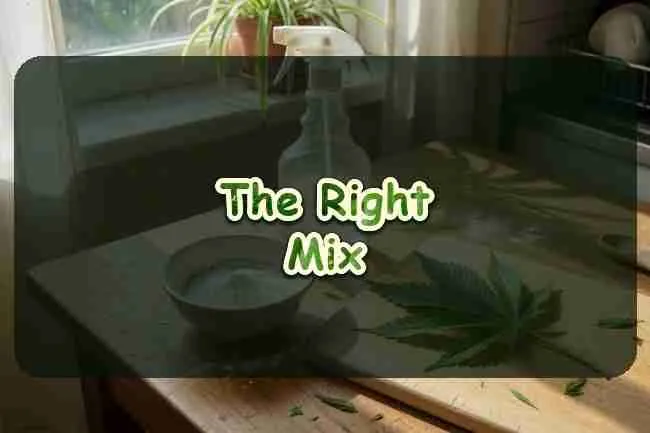
The internet loves a kitchen sink. Oil, vinegar, soap, garlic, and soda in one jug is how you scorch a fan and clog a nozzle. Acid fights alkali. Oil sits on a hot leaf and cooks. Pick the job. Mix that job. Dump it when you are done.
A sticker is a drop of unscented castile or a true soap, not a degreaser and not a lemon dish liquid with perfume. The sticker helps a bicarbonate mix wet the leaf instead of beading. It is not the fungicide. Two or three drops in a litre is a film. A squirt from the sink bottle is a burn. If the mix foams like a car wash, you used too much soap. Dilute or dump.
Neem is a bought oil with its own page. Do not add it to a bicarbonate mix. Oil plus a hot lamp is a cooked leaf. Hydrogen peroxide as a habit sits on hydrogen peroxide with organic cannabis gardens. A splash on a cutting cube is one job. A weekly peroxide foliar is a bleach. Put that bottle back unless you are disinfecting a tray between runs.
Baking Soda Versus Potassium Bicarbonate
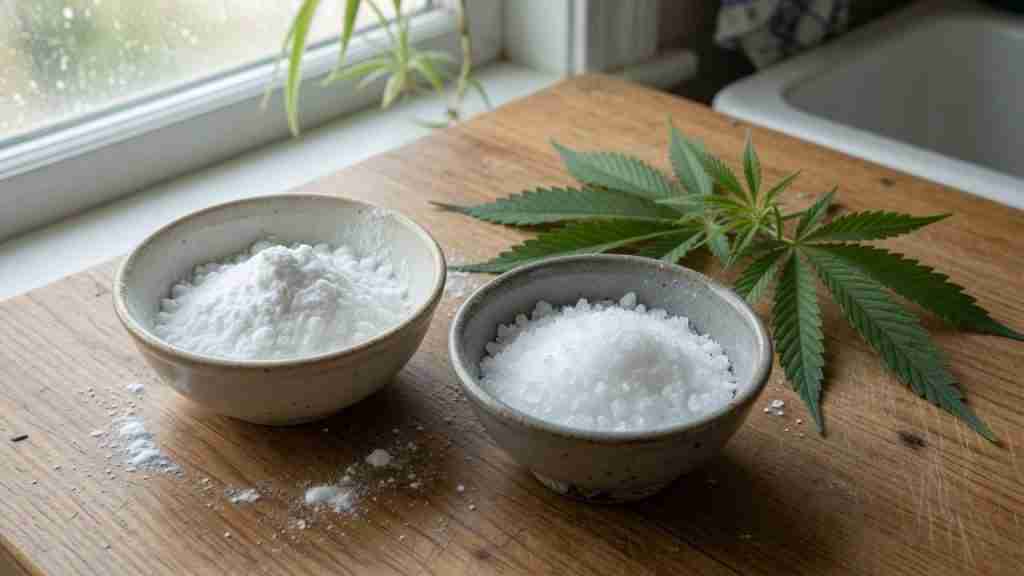
Baking soda is sodium bicarbonate. It is in the cupboard. A level teaspoon in a litre of water, plus two drops of unscented soap, is the home mix that actually has a chance on early powdery mildew. Shake until the powder is gone. Spray until the leaf glistens, tops and undersides, then stop. Lights off. Repeat in a few days only if the matte is still alive. A heaping tablespoon in a litre is how you burn pistils and leave a white crust that looks like the fungus you were chasing.
However, potassium bicarbonate does the same pH job with potassium instead of sodium, and it burns a leaf less often if you keep the spoon honest. Food-grade powder from a garden shop or a brew-supply shelf is the same chemistry that commercial organic mildew products are built on. A level teaspoon in a litre, plus a drop of soap, is the working mix for a home tent. Weighing on a kitchen scale beats a heaping spoon of a fluffy powder. Stronger is not kinder. The leaf does not want a salt lick.
Sodium stays in the pot if the drip hits the mix. Potassium is a nutrient the plant already uses, which is why that version is the better repeat tool in veg. Neither mix is a feed. Patch-test one fan and wait a day. If the leaf puckers or crisps, you mixed too strong or the lamp was still hot. The next mix is weaker, not angrier.
Milk Is a Leaf Tool Not a Soak
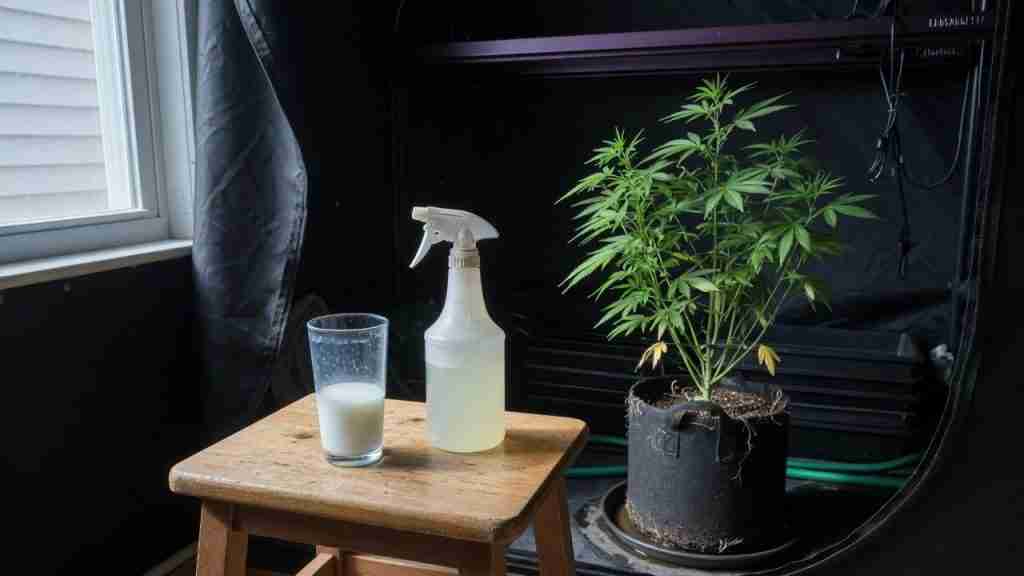
Milk is a contact tool for powdery mildew on foliage, not a miracle and not a flower dunk. Use skim or low-fat so you are not painting lipids on the leaf. One part milk to nine parts water. Mix fresh. Spray the fans in veg, undersides included, and let it dry. Whole milk sours, smells, and clogs. A litre of leftover milk mix in a warm tent is a biology experiment you did not order.
Some of the milk story needs light. Spray at lights-off so the leaf is wet in the dark, then the lamp hits the film after it has settled. It does not mean you soak a cola. A wet flower plus milk is food for whoever already lives in that flower.
Milk does not replace bicarbonate on an advancing infection. It is a mild weekly film in veg when the mark is faint or when you are trying to keep a clean room clean. If the matte is spreading across fans, pick potassium bicarbonate. If the mark is inside a flower, pick a bag and a pair of shears. Do not combine milk and baking soda in one tank to feel thorough. You get a curd, a clog, and a smell. Two jobs, two days, two bottles.
Spray Is Not a Drench
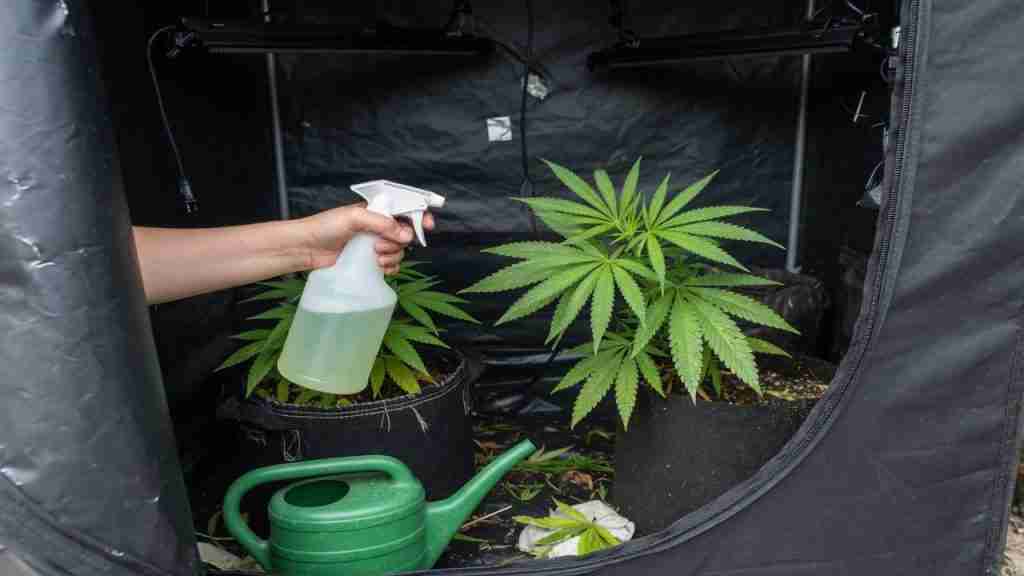
A spray coats a surface. A drench soaks a root zone. Foliar leftover poured at the stem is how you wet the crown, raise the humidity at the soil line, and invite the exact fungus you were trying to chase off a fan. If the pot is the patient, the job is air and a dry-down, not a kitchen soup. The root-rot page owns that diagnosis. This page owns the split: the bottle stays a bottle. The can stays a can.
Molasses in a drench is sugar for whoever already lives in the mix. In a living pot that can be a snack for the web. In a sour, wet pot it is lunch for the wrong crowd. Garlic-ginger simmered and poured at the base is folklore with a wet footprint. If you want the mix alive, stop bleaching it and stop drowning it. The loop sits on a balanced cannabis ecosystem. A salt crust and a flush sit on flushing cannabis. Do not invent a third job called kitchen drench just because the spray bottle was still half full.
Seedling cubes get a dry surface, not a bicarbonate bath. Cinnamon on a cutting cube is a folk tale. A cinnamon foliar is a sticky mess. Horsetail tea is a preventative you spray on foliage in humid weeks before the mark shows. It is not a rescue of gray rot.
Lights Off Undersides Then Stop

Spray when the lamp is off and the canopy has cooled. A wet leaf under a hot bar is a burn even when the mix was honest. Outdoors, dusk is the same idea. Cover the underside. Powdery mildew lives there while you keep photographing the top. Lift the leaf. Mist until it glistens. Move on. A fog of the whole tent from the zipper is how you miss the back wall and soak the floor.
Foliar method in flower sits on foliar feeding cannabis plants in flowering. That page owns feed on a leaf. This page owns the stop date for a fungicide: once pistils take the tops and the colas start to stack, you are wetting a flower. Stop. Cut the worst fan. Add air. A late bicarb spray on a dense top is how you trade mildew for rot. If you are already in thick flower and the mark is on a fan, remove the fan. Do not chase it into the cola with a bottle.
Patch-test is not optional on a new mix or a new cultivar. One fan, one night, look in the morning. Pucker, bleach, or a crispy serration means you back off. Repeat only while live fungus is still there, not on a calendar you copied from a blog. Three honest sprays a few days apart in veg beat a daily baptism. Between sprays, the room still has to move air. The bottle cannot do the fan’s job overnight.
Never Tank Mix Soap Oil Acid and Soda
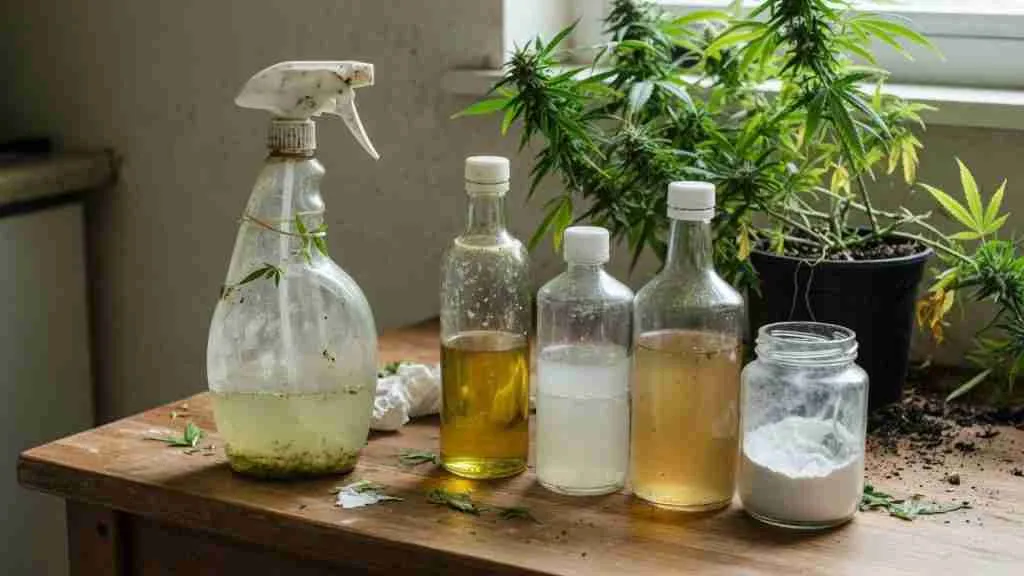
Soap is a sticker. Oil is a film. Vinegar is an acid. Baking soda is an alkali. Garlic water is sulfur and pulp. Each one has a reason to exist alone. In one tank they fight, then they sit on a leaf as a residue you cannot name. Acid plus soda fizzes and leaves salt. Oil plus a hot canopy cooks. Vinegar plus a young fan burns. Garlic pulp clogs the nozzle and rots in the bottle. If a recipe asks you to combine all of them, the recipe is a list, not a method.
Copper is orchard chemistry, not a kitchen mix. Skip it. Garden sulfur, if you ever buy it, is veg-only and not this page. Essential oils from the spice rack are perfume. A drop of oregano oil in a litre is how you burn a leaf. If the job is insects, the pest-spray page owns garlic and chili. If the job is fungus, you already have bicarbonate, milk, and a garlic soak that does not include oil.
Tape a date on the bottle you actually use. Rinse the sprayer when you are done. A nozzle full of last week’s garlic is how this week’s bicarbonate comes out in lumps and burns a stripe down the midrib. Strain garlic through a cloth. Keep bicarbonate in its own clean bottle.
A Wet Tent Beats Any Kitchen Spray
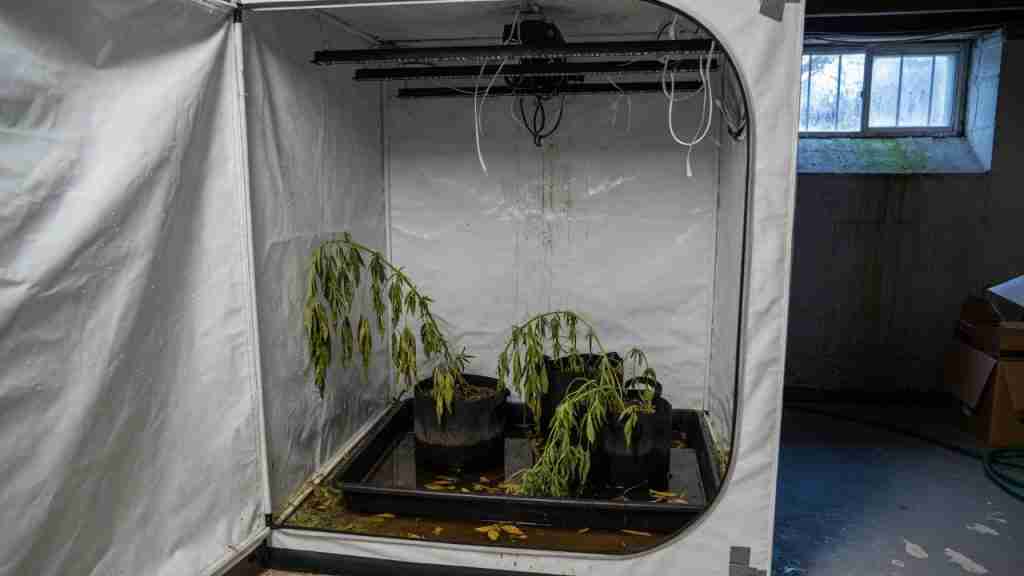
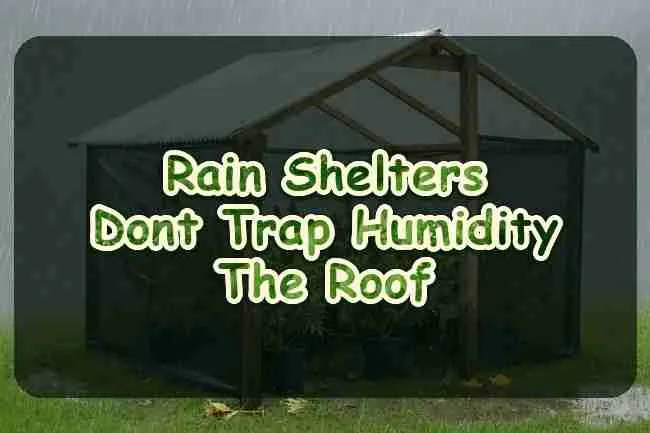
You cannot spray away a wet tent. Condensation on the walls is the room telling you the air is full and still. A tray of standing water is a pond under the pots. Wilted plants in that pond are drowning, and the fungus you fear already has a spa. Intake, exhaust, and a filter sit on ventilation for cannabis grow. The closed loop sits on the ecosystem page. Fix the weather, then decide if a leaf still needs a film. A bicarbonate spray in a sweating box is a wet leaf in a wet room. That is rot weather with extra steps.
Air that actually moves through the canopy beats a jungle of clip fans aimed at one wall. You want the inside of a cola to dry after lights-on. A companion pot that only raises humidity sits on companion planting for cannabis. A beetle you buy sits on beneficial insects in your cannabis garden. A mulch that stays soggy against the stem sits on mulching cannabis plants. Pull the wet mat off the crown. The kitchen bottle was never going to do that.
Scout before you spray the whole room. One matte circle on one fan is a leaf and a mix. A tent that is white on every top is a climate failure that will return the morning after your spray dries. Isolate a sick pot if you can zip it away. Wipe the walls between runs. Dead leaves leave the tent in a bag, not in a corner. A harvest still sits on harvest and cure. Get the room honest first, or the jar will smell like the week the walls sweated and you kept misting anyway.
Garlic Soak Is Foliage Work
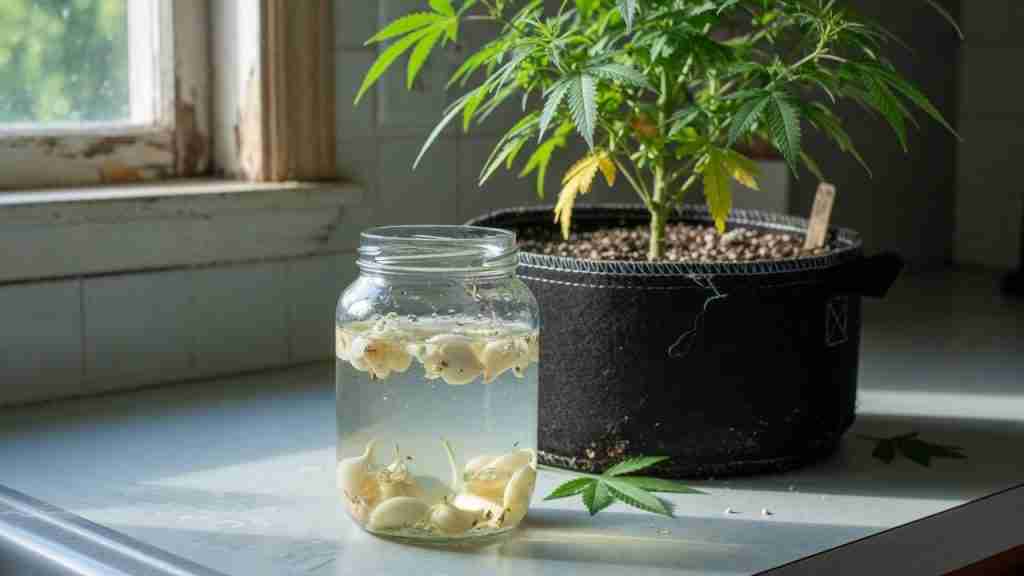
Garlic water is a foliar sulfur soak, not a pest film. Crush five cloves, sit them in a litre of water overnight, strain through a cloth, and spray veg foliage lights-off. Allicin and related compounds bother some leaf fungi. The leftover pulp belongs in the compost, not in the sprayer. This is not the garlic-chili-oil mix for insects. That recipe, and the oil that makes it a pest tool, sit on the pest-repellent page. Do not add chili or oil here to feel complete. You will change the job and cook the leaf.
Garlic stinks. Indoors it will stink in the house. That is not a reason to skip straining. It is a reason to spray, dry, and exhaust. Do not pour the soak into the pot. Do not mix it with bicarbonate in the same bottle. Use it as a veg foliar when you named a leaf fungus and you do not have potassium bicarbonate yet, or as a rotation after a bicarbonate pass, not as a daily perfume. If the plant is in flower, skip garlic. You will scent the cola and wet it. Neither is a gift.
Neem stays on its own page. A bought mix still wants lights-off and a stop before dense flower. Do not homemade-neem a bottle of cooking oil and dish soap. Cooking oil is a fryer film. This page owns the cupboard jobs that do not need a garden-centre oil.
Vinegar Burns Faster Than It Helps
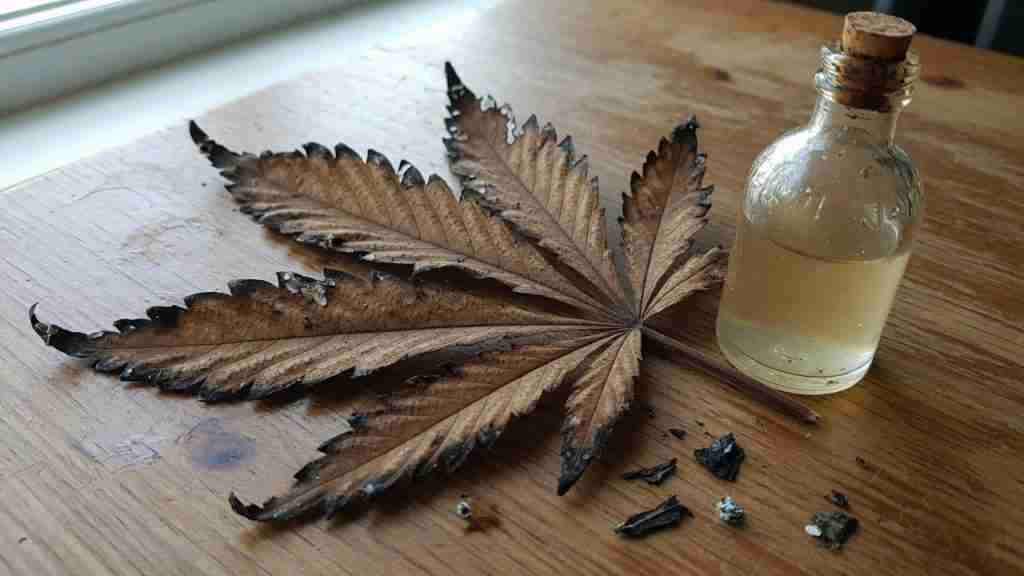
Vinegar is acetic acid. A leaf is not a countertop. A tablespoon of white vinegar in a litre is already an aggressive mix, and growers still burn fans with it because they double the spoon when the first pass did nothing. The fungus did not care. The cuticle did. Apple cider vinegar is still acid with extra color. Skip vinegar as a default. If you already mixed it, dump it. Bicarbonate and milk are the cupboard tools that belong on a cannabis fan. Vinegar belongs on glass.
A crispy brown edge after a kitchen spray is not mildew dying. It is you. Stop. Do not add another bottle to reverse a burn. New growth will tell you if the plant moved on. A dead fan will not turn green. This page owns the burn you caused with acid, a heavy soda spoon, oil under a lamp, or a tank mix you should have refused.
Seed for the next clean run is still a pack, not a spray. The store is cannabis seeds store. The room you actually run is what makes that pack look like the pouch. Name the fungus. Mix one job. Spray lights-off on the underside. Stop when the flower stacks. Dry the tent. Write what you used. Everything else is a cupboard looking for a problem the weather already explained.