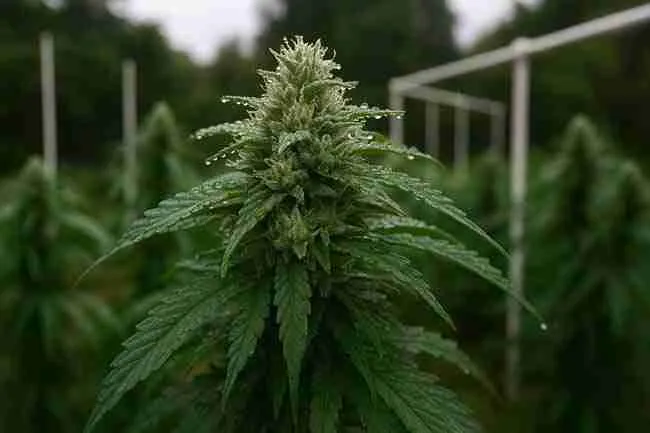
Homegrown Cannabis


Homegrown cannabis is the flower you grew, dried, and jarred yourself. A marijuana plant in a spare room or a backyard pot is not a shorter line at the shop. It is a living crop with a legal cap, either a power bill or a season, and a dry you can ruin in a weekend. Shop weed can be perfectly fine. It can also be flower that was cut to a calendar, dried hot, and trimmed by a crew that already had the next room waiting. Your jar carries the opposite risk. Nobody else is coming to fix a cure you rushed.
That is the decision, before any shopping list. If you want a cultivar the counter stopped keeping, and you will wait months and follow the rule where the plant will sit, grow it. If you want flower tonight, buy it. This page is how to tell which job you are actually taking on.
Homegrown Cannabis

The words get used as if they were a grade, the way people say craft and expect the jar to be better. They are not a grade. They only mean you were the one who grew it. A company grows flower to turn rooms on a schedule. Plants that finish fast keep their spot. Plants that stretch, or take a long flower, or smell like something the wholesale buyer does not recognize, get dropped even when the people who smoked them liked them. At home you can keep that plant. You can let it veg until the tent is full, or you can flip it while it is still short. You can trim it on a tray in the evening and leave it hanging until the small stems snap, instead of pulling it because a drying rack has to be empty by Monday.
Freshness holds up only for a while. Flower dried cool, jarred when the stems snap, and opened over the next couple of months smells like the plant you cut. The same flower left in a warm cupboard until next summer smells like hay, whether a company grew it or you did. There is no panel on your jar unless you pay a lab, so the control people praise cuts both ways. You know what went into the pot, including a panic spray. A new packet every run feels like progress. It is usually how you avoid learning one plant.
Convenience is the other claim that needs a clock on it. A finished jar in the cupboard is convenient. A seedling is not. If you flower every legal plant at the same time, you get one heavy month and then a gap while the next run catches up. Staggering runs closes the gap, and it also stacks plants. Seedlings, a plant still in veg, and a plant in flower can all be alive on the same day. Where the cap counts living plants, the stagger has to fit under the cap. A second set of cups started “so you do not run out” is how people blow a household limit while telling themselves they only have a few in flower.
Not automatically better

Home flower beats the shop when a few specific things happened. You waited until the resin heads on the buds were mostly cloudy, with a few amber, instead of cutting because a friend was coming over. You dried in the dark, cool, with air in the room and no fan pointed at the colas. You grew a plant the shop will not keep because it takes a long flower and does not pack a room the way a commodity cultivar does. You did not fog the buds with perfume and call the result terpenes.
The failures are just as specific, and they happen in legal houses all the time. You cut because the pistils went orange. That is a hint, not a finish. You dried the branches in a hot closet and the smell left with the water. You sealed a jar while the cores were still soft, and a week later it smelled like cut grass and ammonia. You parked the lamp on the tops until they bleached, and the buds stayed airy. None of that turns into good flower because the plant lived at your address. The cut and the dry grade the jar.
Money sits in the same honest bucket. The sun does not invoice you. A lamp does, and so does the fan that runs beside it, and so does the carbon filter you change when the hallway starts to smell again. The first indoor finish often costs more than the flower it replaces, because the tent, the lamp, and the filter are purchased once. Later runs are mostly a packet of seeds, a bag of mix, and the power to get to the cut. Rare use makes that payback slow. A weekly jar, where growing is allowed, makes the gear look reasonable by the second or third finish. What to buy first, and what to skip, is the tent cost page. Do not let a cart add a second lamp before the first plant has been jarred.
The rule where you live

Do this before a seed hits water. A shop that sells flower is not permission to grow a plant. Those are different rules, and mixing them up is how ordinary people meet a fine. Some places let an adult grow a small number of plants for personal use. Some allow plants only for a registered patient. Some will sell you flower over a counter and still treat a plant in a closet as a crime. Washington, Illinois, New Jersey, and Delaware are the examples that catch people: adult-use sales exist, and a recreational plant at home does not. Other places allow the plant and then let a city, a county, or a landlord narrow it. A patient card from the state next door does not travel with the pot. The rule is the rule of the address, not the rule of the place you used to live.
Read the rule for the address where the plant will actually sit. A national map from last spring is not that rule. Check four things in the text, not in a comment thread. Who may grow: any adult, or only a patient on a registry. How many living plants, and whether the cap is per adult or per household. Whether they have to be indoors, locked, and hidden from the street. Whether you may give any of the harvest to another adult, and the line that you may not sell it. A lease can forbid the plant in a building where the state allows it. A city can ban pots on a balcony and leave a tent alone, or the other way around. If you rent, find that out before the tent is in the spare room. Hoping the landlord does not notice is not a setup.
Do not copy a plant number off a roundup article. Those lists disagree with each other, and the statutes move. In a lot of household caps, every living plant counts, including the ones that only have seed leaves. A tray of spares in case one fails is not invisible. If the rule says six and you have six in flower plus four in cups, you may already be over the line. If the rule really does split mature plants from seedlings, it will say so. Do not invent the friendlier reading because the cups are small.
Personal plants are not a license

Where a personal garden is legal, you generally do not apply for a cultivation license to run it. The license is the commercial door. It is how a business is allowed to produce cannabis and sell it. A few plants in a spare room, in a place that allows them, are not a licensed production site. You do not file an agriculture form, book a security clearance, and wait on a site inspection so you can keep a tent for yourself. The personal allowance, where it exists, is the allowance. It is not the first step on a producer application, and it does not convert into one because you got good at it.
You also do not sell what you cut, and you do not trade the jar for rent, gear, or a favor that is obviously payment. That is the sloppy edge. Handing a legal amount to another adult, in a place that allows adults to share, is a different act from taking money or posting a menu. If the plan is to grow and supply people for cash, you are describing a business. The license path is the one with an application, background checks, and a site that has to pass somebody else’s inspection. This page does not walk that path. A hobby tent does not become quiet retail because you were careful with the dry.
Sun or a room that costs money
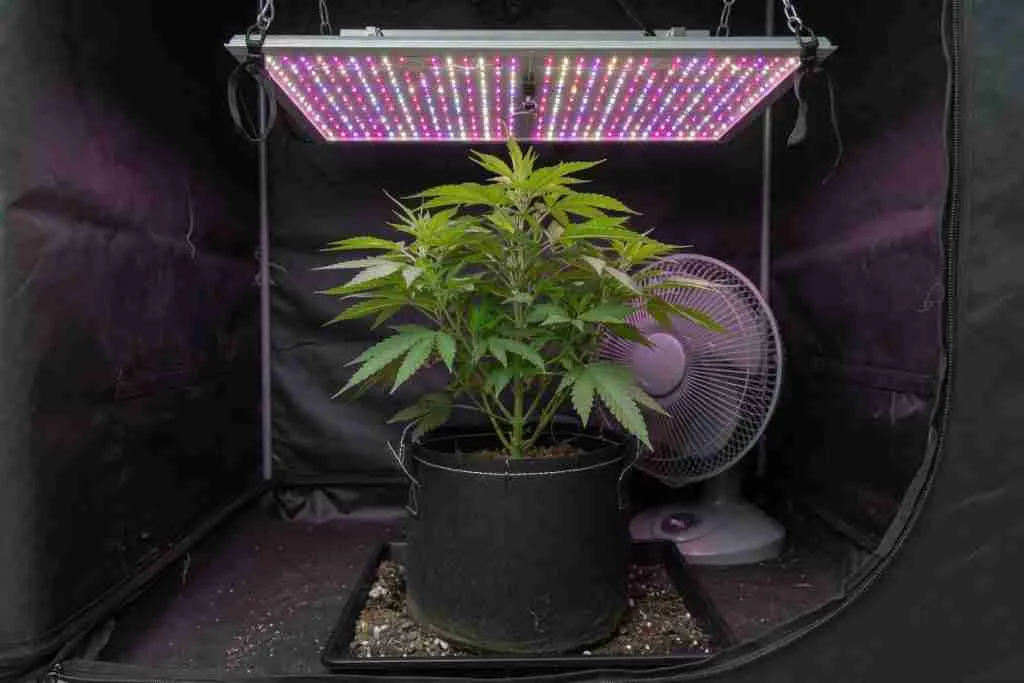
There are two setups that match how people actually live, and a lot of expensive ones that do not. Outdoors, the plant wants direct sun for most of the day, a pot or a bed with drainage, a mix that holds moisture without staying swampy, and a season that fits the cultivar. The light is the part you do not buy. The season is the part you do not control. A photoperiod planted late may not finish before frost. An autoflower is often the outdoor plant that fits a short summer, because it flowers by age instead of waiting for the nights to get long. Wind, rain, and insects are the bill you pay instead of power. If the local rule says plants must be out of public view, a pot on the front step is already a problem, no matter how healthy the leaves look.
Indoors, you are building a small room that does not care what month it is. A tent, a lamp, a timer, a fan, and a filter will grow a plant in a climate that would stall it on the porch. The lamp is why the power bill moves. It runs many hours a day for months. A fan runs with it, because still air in a warm tent is how mold starts, and because flower smells. A carbon filter on the exhaust is the tool that keeps that smell in the tent instead of in the hall. Sizing that fan, and why a cracked window is not the same thing, is the ventilation page. The wider indoor room, past this decision, is the indoor grower guide. You do not need both open on night one. You need to know the lamp, the air, and the tent are the actual purchase, and the plant is the cheap part.
Heat shows up in the buds. Flower prefers the mid 20s C with the lights on, and a bit cooler in the dark. A tent that runs hotter than that, day after day, tends to give airy flowers and a smell that never quite arrives. Cool the room or hang the lamp higher. Do not add a second light to a box that is already hot. Tops that taco upward, or go pale while the lower growth is still green, are a lamp problem. A windowsill is the other fake saving. The plant stretches toward weak glass and never becomes the project a lamp would have been.
Soil is the right medium for a first plant at home. A reservoir, air stones, and a bottle of mineral feed is a second project, and it fails faster when you are still learning how a leaf is supposed to look. A bag of aerated mix in a fabric pot is enough. How to pick that mix is the soil guide. Water when the pot feels light, not because a calendar said Tuesday. The watering page has the lift test. A seedling does not want a full-strength bottle. The seed and the mix carry it until it has real leaves. Burning the tips on a plant the size of your thumb is the usual way people feed a seedling to death. If the mix was already charged, more food in week one is not care. It is a burn.
Who can open the door
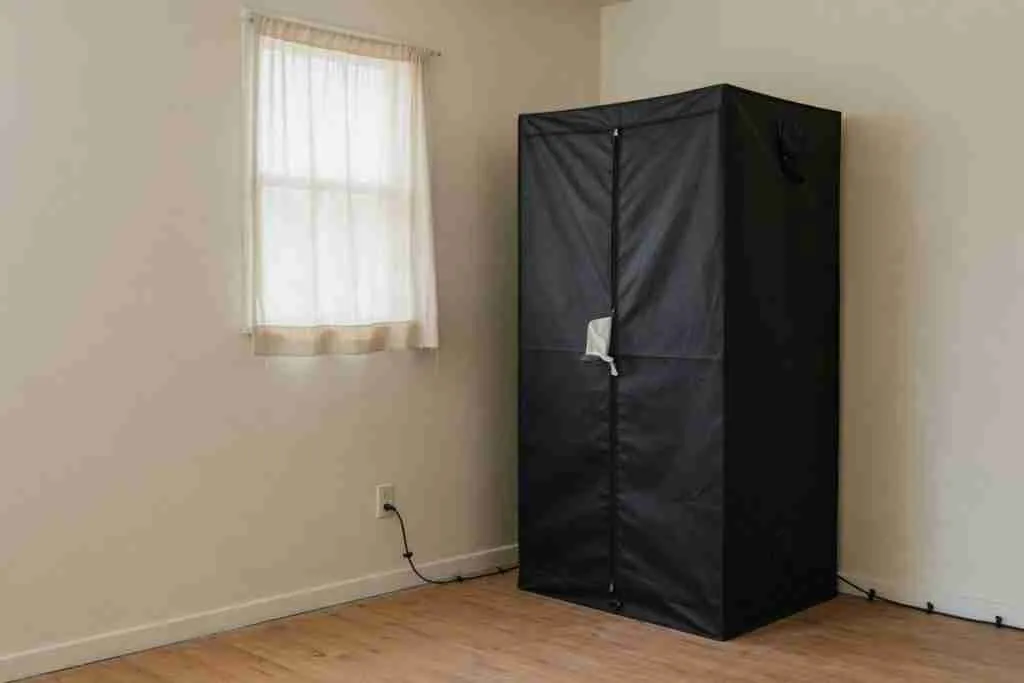
The tent is in a house where other people live, including people who did not agree to a hobby that smells. Lock the room if children or pets are in the house. A curious dog and a bag of fertilizer is a vet visit. A child and a jar of flower is not a story you want. The plants and the finished jars stay in the same locked space, not on a bookcase in the living room. Finished flower does not need a lamp. It needs a cool, dark cupboard and a lid that actually seals. If the only lock in the apartment is the front door, the tent does not get to live in the room where a toddler plays.
Water and electricity share a floor in this hobby, which is how fires and rotten subfloors start. Put the pots in a tray. A tent with no tray dumps runoff into the carpet, and that wet pad grows mold long after the leaves look fine. Run the lamp, the fan, and the filter on a circuit that can hold them. Do not daisy-chain power strips under a wet tray because the tent was far from the outlet. The load, and what a warm cord means, is the fire safety page. If a cord is hot, unplug it. Do not wait for the end of flower to see whether it stays hot. A cheap power strip buried under a fabric pot is the piece people forget to photograph when they show off the garden.
Smell is a household problem, not a character flaw. Veg can be a faint green smell. Flower is not faint. A filter helps. It does not end an argument with the person who shares the air. If they do not want a flowering plant in the apartment, a better fan is not consent. Settle that before you change the timer to a flowering schedule, because a plant in flower is much harder to pause and much ruder to move. Drying in the same apartment is a second wave of smell, often stronger than the live plant for the first few days. Plan the dry where the people you live with can stand it, or do not start a plant you cannot hang.
Seed to a jar you will smoke

You will not smoke this plant next weekend. A photoperiod seed indoors is often about three to five months to the cut, and then the dry still has to happen. An autoflower is often about ten to fourteen weeks from seed to cut, on its own clock. It flowers by age. You do not switch it to 12 hours of dark to make it bloom, and you do not pause it while you learn to transplant. If you choose an auto, it starts in the pot it will finish in. A photoperiod can move pots, and it waits for you to change the light. That patience is why people with a short tent still pick a photoperiod and simply flip it sooner. The auto is the plant you pick when the season, or your calendar, will not wait.
The stages are a map, not a mood. A closed seed needs moisture, warmth, and air. It does not need photons. Light starts when the stem is in the air. A seedling wants a long day, about 18 hours on, and it does not want a 12 hour night. That long dark period is a flower signal for a photoperiod, and a seedling has nothing to flower on. Vegetative growth is the stretch where you decide the size of the plant. Flower, for a photoperiod, starts when the nights are long and actually dark. A light leak during the dark period keeps a photoperiod stretching without stacking flowers. The stage page is where each handoff is spelled out. This page only needs you to stop doing next month’s job on this week’s plant.
A seed and a cutting are not the same object in a house. A clone is a head start. It is already female, and it is already growing, so you skip the fragile first fortnight. It can also walk pests and disease into a clean room, because it grew somewhere else first. A seed starts slower and starts cleaner. For a first plant in a home, the seed is the calmer choice. If you already know how to look at a cut and you trust the source, a clone saves weeks. The seeds versus clones page is that comparison. Do not take a gift cutting from a garden you have not looked at. Friendship is not a pest inspection.
The cut is where flower from home either earns the reputation or loses it. Mostly cloudy resin heads, with a few amber, is the window. Mostly amber is past it. Orange hairs are not the test. The overripe guide shows the look without this page turning into a loupe manual. After the cut, the plant is not in a new growth stage. Hang it in the dark, cool, with air in the room and no fan on the flowers. When the small stems snap, jar it. A hot, fast dry is where a loud flower goes flat, and a cure does not fully bring that back. The dry and cure page owns the hang and the burp. Calling the dry a race is how people jar wet buds and then blame the cultivar.
The plant has to fit the room

Pick the plant for the room you have, not for the photograph on a packet. A short tent wants a plant you can keep short, which usually means a shorter vegetative period on a photoperiod, or a cultivar that does not explode upward when flower starts. Many plants put on about as much height again after you change the light. If the tops are already near the lamp on the day you flip, you are late. Flip earlier on the next run, or train while the plant is still growing and flexible. Do not top a seedling, and do not top a stressed autoflower. An auto that stalls does not get those days back. Bending a photoperiod in veg is a size tool. Doing it the week you flip is how branches snap.
The cap is a ceiling, not a target. A tent full of plants with wet leaves touching is how mold starts in flower. One plant with a path to the pot will outsmoke four pressed against the plastic. A feminized packet matters when that ceiling is small, because regular seed can hand you males and eat the legal spots. You still look at the joints. A teardrop with a hair is a female. A smooth sac on a short stalk is a male. Stretch alone is not a sex. Which clock to buy, a photoperiod or an autoflower, is separate from the name on the packet. The photoperiod or autoflower page is that choice. Make it before the seeds are in cups. Then grow that same plant again. The second run is where the jar starts to beat a random shop bag, because you already know the height, the flower time, and the dry.
In Canada the cap is four plants per household, not per adult. Quebec prohibits recreational home growing. Manitoba has allowed indoor growing only since 1 May 2025, and the age there is 19. A seedling counts. A second set of cups still counts. The order from the seed through the dry sits on the 10 steps page.