Places for Outdoor Cannabis


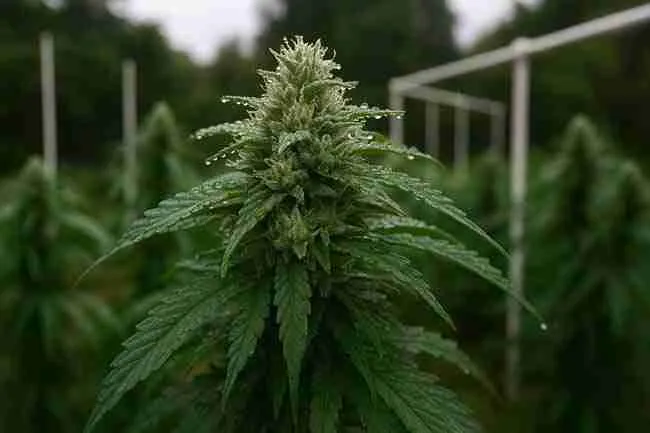
Places for Outdoor Cannabis are a site decision. The guides that rank for this search keep landing on the same four checks: direct sun, ground that sheds water, air that actually moves, and a season long enough to finish. They get loud about which region is perfect. A dry Mediterranean fall is easier than a wet September in Halifax or a short prairie summer. You still grow in the yard you have. Moving is not the lesson. Reading the spot is.
Sun is the check people skip. Bright shade feels like light to your eyes and starves a flowering plant. Six hours of direct sun is the floor most outdoor growers cite. Eight to ten hours is what fills a cola. In the northern hemisphere a south-facing spot gets the long arc. East light is real and it ends early. A north wall is where houseplants linger, not where marijuana ripens.
Then the calendar. You start seed indoors and move plants out after frost, once nights stay above about 10°C (about 50°F). A photoperiod plant flowers as the days shorten and often needs September, sometimes part of October, to finish. If your first cold rain or your first hard frost usually shows up in mid-September, that plant does not fit the spot. A fast finisher or an autoflower does. Wet cold at the end rots dense weed faster than a cool, dry night does. No bottle fixes a shady hole.
Places for Outdoor Cannabis Start With the Yard

A plant at the edge of a clearing gets light from more than one side. That is the whole point of walking the yard before you dig. A corner buried in brush can look lush and still be dim at the bud sites. Stand where the plant will stand. If a roof, a tree, or the neighbour garage covers that patch at noon, it is not your patch.
You are choosing a place for the whole run, not for the afternoon you happen to look. June sun sits high. It clears fences and young trees that will shade the same cola in September, which is when the flower actually needs the hours. Face south and write down what is in the way: the house, a shed, a maple, the balcony above you. The outdoor grow guide covers how to run the season once the spot is honest. This page is about whether the spot deserves a plant.
Walk the Sun Across a Whole Day

Do the walk on a clear day. Once in the morning, about an hour after sunrise. Once at noon. Once in the late afternoon, when the light is already sideways. A shed, a fence, or your own house can park the plant in shade for the hours that build flower. Dappled light through leaves is not a gentle version of full sun. It grows a leafy plant and airy buds.
A balcony uses the same walk. South-facing is the exposure that works through a Canadian summer. East can carry a small autoflower if the afternoon is not a brick wall. North-facing is a no for a photoperiod you hope to finish dense. West-facing loads the plant with hot late sun, which is a heat problem more than a light shortage.
Mark the shade. A stick in the ground, or a photo on your phone at those three times, beats memory. July makes every corner look bright. September does not. If the only direct sun is a thin slice before 9 a.m., believe the stick.
September Shade Is Not June Shade

The sun drops as the season turns. Shadows get long. The tree that was a nice backdrop in June can cover the plant from mid-afternoon on, right when the flowers are trying to swell. A lot of thin outdoor harvests start with the sentence “it was sunny when I planted.”
If the clear hours are only early morning, you will still grow a plant. You will not grow the dense flower people mean when they talk about outdoor weed. A pot can still be moved. A plant already rooted in the ground needed this answer before the hole was dug. A gentle south slope beats a flat spot under a canopy. You are collecting hours of direct light, not framing a photo.
City lots add a second shade source: the building next door. A gap that is open in June can close when the sun sits lower. Walk the spot again in your head for late September, not just for the solstice. If you cannot picture six direct hours then, pick a different corner or grow the plant in a container you can roll.
Water Has to Leave and Still Be Near
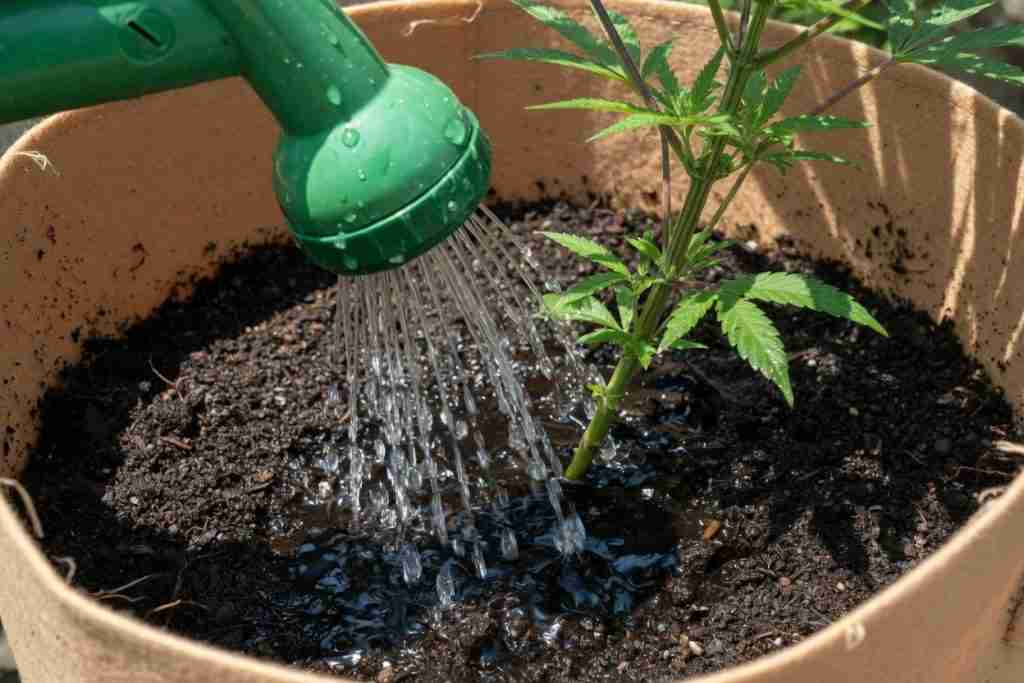
Two failures look opposite and show up in the same month. The hole holds water, so the roots sit cold. Or the spot is sunny and bone dry, and you cannot get a hose there once July heat arrives. A large outdoor plant on a hot day empties a pot. How to read that pot, and how much to pour, lives on the watering guide. This page only asks whether you can reach her without a hike.
Water the soil. Wet leaves in a still corner are how September trouble starts, and water poured on the patio beside the pot never reaches the roots. If the hose only reaches the driveway, the driveway is not a grow spot just because it is bright. Hauling cans sounds fine in May. It is a missed day in August, and missed days in August are the weeks the plant is drinking the hardest.
A Low Spot Holds the Rain
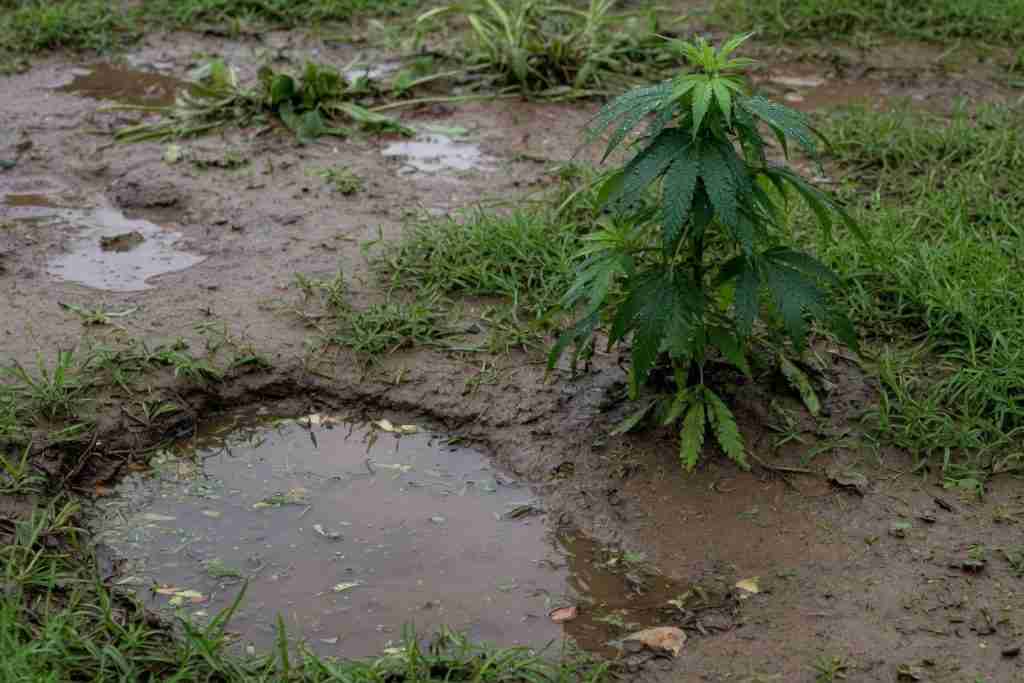
After a hard rain, walk the yard again. The hollow that still holds a puddle hours later is telling you the truth. Clay and hardpan keep that water. Cannabis roots want air as much as they want a drink. A plant set in that mud can look fine on day one and stall once the roots hit the sour layer.
Test it before you commit. Dig a hole about as deep as a spade blade, fill it with water, and come back. If water is still sitting there after a few hours, do not plant in that hole. A raised bed or a mound of amended soil lifts the roots above the puddle and still lets them use the ground under it. A lot of city fill and a lot of Quebec clay behave this way. They also stay cold in spring, which steals days you do not have.
The plant in the photo is the mistake, not the plan. Standing water beside the stem means that site lost. Move her, or do not put the next one there. Filling the hollow with a bucket of bagged mix does not change the water table under it.
Look at the Soil at the Stem

The base of the plant shows you the real medium. If water beads and runs off, or the surface goes slick after a rain, the roots are not breathing. Work compost and something chunky through a wide area. A coffee-can plug of bagged mix dropped into clay is a pot with no drainage holes. Roots hit the wall and circle.
The soil guide is about what a seed wants in a cup. Outdoor ground is a wider job: drainage first, then a root run that matches the plant. Do not bury the stem deeper to “fix” a wet hole. That rots the stalk. If the native soil will not drain no matter how you amend a reasonable hole, stop arguing with it and use a bed or a container.
A container is a water tank you can actually move. A patio herb pot is not an outdoor finish pot. Final outdoor containers are large, and fabric dries faster than plastic, which helps in a wet week and punishes you on a windy afternoon. The pot-size guide has the ranges for in-ground beds and for pots. Follow that page instead of guessing a gallon number in your head. The container guide is the companion if the whole run will live in pots. Water them at the soil line, the way you would a plant in the ground.
Wind and Walls Change the Day

A little wind is useful. It dries leaves after rain and keeps a bud from sitting wet. A wind tunnel is how a branch snaps in August and a pot goes dry by noon. Prairie yards and high balconies are the hard version. If the weather comes from the north and west, shelter that side, and do it with something that does not throw a solid shadow across the plant at midday.
A plant beside evergreens has shelter. She can also sit in a pocket of still, damp air if the trees close in. Still air, dense flowers, and a September rain are how bud rot starts. You want a breeze you can feel on your face. Not a gale, and not a closet. A permeable screen or a bit of open distance from the tree line beats a solid tarp. Solid walls make eddies. Eddies break stems, then leave the leeward side dead calm.
Stake anything that is already leaning before the flowers gain weight. The stake does not replace a better spot. It keeps a decent spot from losing a branch in one storm. Tie loose. A tight tie on a thickening stem is a wound you gave yourself.
A Patio Wall Is a Small Climate

A wall stores heat. That can save a cool night, and it can cook a plant on a south or west exposure in July. A patio next to the house is a real outdoor place: easy to water, easy to watch, and easy to misread. The wall’s shadow after mid-afternoon matters more than how bright the concrete looks at lunch.
A west wall stays hot late. An east wall gives morning sun and then shade, which can be enough for an autoflower and thin for a photoperiod you want dense. Stone and concrete throw heat back onto the leaves. Leave a gap so air can pass between the plant and the siding. A plant shoved into a corner traps humidity on the flowers even when the rest of the yard feels breezy.
Weight matters on a balcony. A wet fabric pot is heavy, and the railing was not designed as a grow bench. If you rent, the lease can ban the plants even where the province allows them. Sort that out before you buy soil. Smell travels in a small courtyard. A polite setup still smells like weed in late flower. That is not a reason to hide the plant in a darker corner. It is a reason to know your building.
A Greenhouse Buys Days

A greenhouse, a cold frame, or a hoop with plastic on the ends buys frost days in spring and fall. It does not invent a long dry autumn. On a sunny May afternoon an unvented house cooks seedlings. In flower, the same closed house holds humidity on the buds. Open it when the day is warm. Close it for the frost night, not for every cool evening.
Placement is the same sun test as an open garden. A greenhouse on the north side of the garage is a warm shed. Put it where September light still reaches the plants, and leave the door able to open. The greenhouse guide goes through the structure. A second outdoor run, if your season can actually hold one, belongs on the northern-climate page. This page will not pretend every yard gets two harvests because a sheet of plastic went up.
If the season is short, a vented greenhouse plus a fast plant is a fair plan. A greenhouse plus a long flowering time that wants November is how you meet mold late. Match the pack to the week you can honestly harvest, then use the house to protect that week. Do not use it to stall a plant that was the wrong choice in April.
Match the Plant to the Season

A full canopy in direct sun is what a long enough season looks like in the middle of the run. Getting there is the calendar, not a trick. Start seeds indoors while it is still too cold outside, several weeks before the last frost, under lights if the windowsill is dim. Move them out only when nights hold above about 10°C. In a lot of southern Canada that is late May. On the prairies and farther north it is often early June. A late frost does not care that the long-range forecast looked kind.
Photoperiod plants veg on the long days and start flowering as nights lengthen after the summer solstice. Many are still ripening in September and into October. If your first hard frost or your first week of cold rain usually lands in mid-September, you do not have that window. Pick a fast-finishing photoperiod or an autoflower. The climate strain guide and the autoflower guide are where a pack gets matched to a short fall. A long flowering time on a menu is not a prize if your fall is wet.
Southern British Columbia has a longer outdoor window than Winnipeg, and coastal rain is the price. A dry interior summer is a different price: heat and a hose. The zone guide is a map of those windows across the continent. Your local last frost still beats a national table. Watch the week you mean to transplant, not the average from a chart printed for a city three hours south of you.
Move Out After Frost Has Left

The day a young plant hits open ground is when the spot either works or it does not. Harden her off for about a week first. A windowsill plant set straight into a windy afternoon wilts even in perfect soil. A few hours outside, then longer, then a full day, then the night. Skip that and you will blame the hole for a shock you caused.
Plant at the same depth she was in the pot. Water her in so the soil closes around the roots. If the spot failed the puddle test, she goes in a raised bed or a pot, not in the mud “to see.” Slugs, caterpillars, and grasshoppers will find an outdoor plant. That is a scouting job. It is not a reason to tuck her into deeper shade. Shade costs you more flower than the bug you can see and move.
Leave room between plants. Four legal plants crammed into one wet corner share disease and shade each other. Spread them where each top still sees sky. Training, topping, and leaf work can shape a plant that already has light. They cannot pour sun into a dark fence line. Do that work on a healthy plant in a decent spot, or skip it and let the season do the veg for you.
A Cool Night Is Not a Freeze
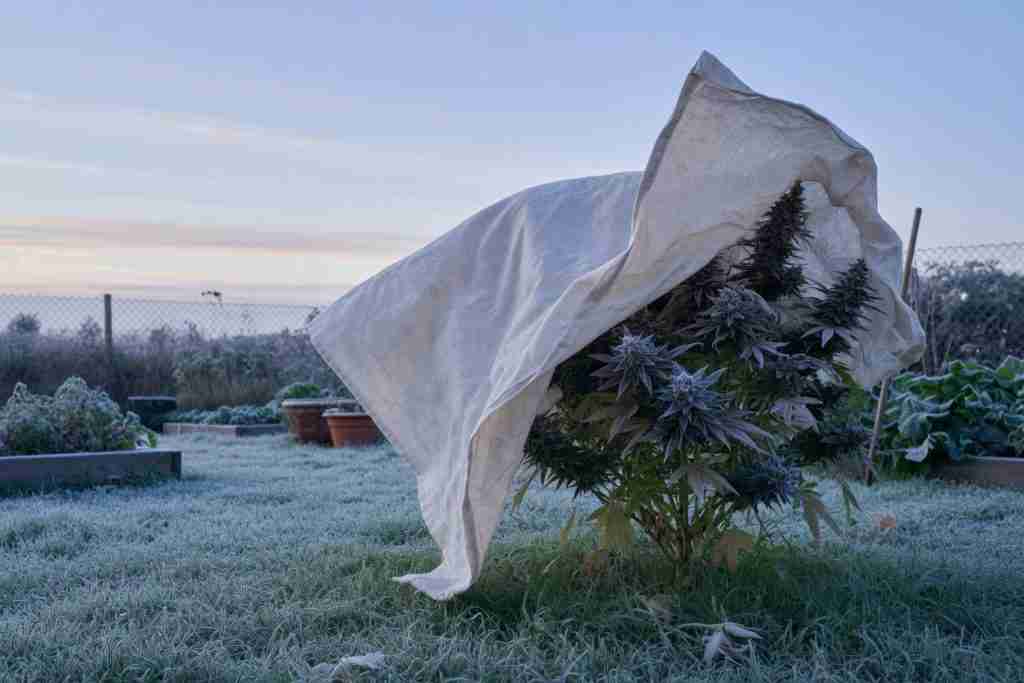
Flower likes nights cooler than the days. A drop into the teens Celsius is normal in a lot of Canadian Septembers, and it does not by itself ruin a plant. A freeze is a different event. Frost on the lawn means you are at the edge. A hard frost blackens leaves. Do not plan on a plant toughing out ice because an indoor chart said cannabis can sit near freezing for a while. Outdoors, ice on the leaves is damage. A wet freeze on ripe buds is rot on the next mild day.
If a frost night is forecast and she is not finished, a loose cover can save the tops. Put it on in the evening. Take it off once the sun is up. A cover left through a warm day sweats the flowers. A pot you can roll is simpler: into a shed or a garage overnight, back out in the morning. That mobility is the real reason to choose a container in a short season. An in-ground plant does not get the same rescue.
Cold wet weather at the end of flower is when you stop waiting for one more perfect week. The flowering guide is how you read ripeness. The place decides whether you get the week at all. Harvesting a few days early from a dry plant beats watching a dense cola melt in a rainy cold snap. The spot you picked in May is still in charge in October.
Heat Folds the Leaves

Leaves that curl up in the middle of a hot afternoon are saving water. Check the root zone before you reach for a bottle. A dry pot in full sun, especially against a west wall or in a dark container, will do this on a day that climbs through the low thirties Celsius. Water the soil. If the same leaves fold every clear day even when the pot is moist, give her light shade in the hottest hours only. A cloth that stays up all day is a new shade problem.
Desert yards and hot interior valleys sometimes need that midday break. A cloudy maritime summer usually does not. Do not copy a shade-cloth habit from a climate you do not have. The indoor environment page is about a tent you can set. Outdoors you get the day you get, and the fix is water, airflow, and not parking the pot on heat-soaked concrete with an empty root zone.
The Yard Is Still Only Four Plants

In Canada the federal cap is four cannabis plants per household, not per adult. A bigger yard does not raise it. Two adults in one home still means four. British Columbia adds a visibility rule for non-medical plants: they must not be visible from a public place, which includes the street, the sidewalk, a park, a sports field, and a school. A neighbour looking over from their own yard is not that rule. If the colas stick up over the fence, the street can see them, and the fence has not finished the job. Landlords and strata councils in B.C. can ban growing even when the province allows it. A home licensed for child care is not a grow site.
Quebec still prohibits recreational home cultivation, including planting seeds. Manitoba allows adults 19 and older up to four plants, indoors only, locked away from anyone under 19, under the rules in force since May 2025. Outdoor is not allowed there. A Winnipeg backyard is not a legal outdoor spot just because the federal act mentions plants. Other provinces mostly follow the federal four, and cities and leases can be tighter. Read yours before you dig. Seeds from a Canadian shop are a pack, not a permit.
A fence on your own property is about the street and about ordinary privacy. It does not change the sun, the rain, or the plant count. It is also not a plan for land that is not yours. Parks, ditches, and someone else’s woodlot are not places for outdoor cannabis. They are other people’s ground. If the only sunny private corner you have is a wet hole, use a better corner of the same yard, a pot you can put in the actual sun, or an indoor run. Forcing a plant into a spot that cannot finish wastes the season you do have.
Pick the place with the sun walk, the puddle test, a hose you can reach, and a finish date your weather can hold. Then buy the pack that fits that calendar and that legal count. The plant will tell you if you lied about the spot. She tells you in September, when it is too late to move the shade.