Growing Cannabis Yield per kWh: The Metric That Pays Your Power Bill

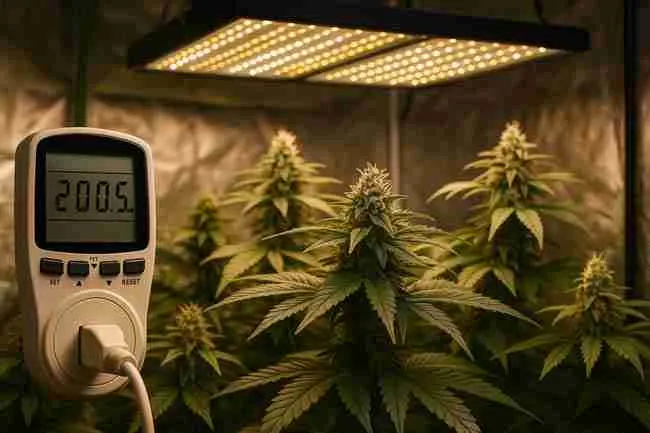
You pay for every watt that runs through your grow. Your plants don’t care about your power bill, but your wallet sure does. That’s why cannabis yield per kWh is the metric that quietly decides if your grow is smart… or just expensive.
Once you start thinking, “How many grams am I getting for every kilowatt-hour I burn?” everything in your grow tightens up: lights, fans, timing, even the strains you pick. You stop guessing, and you start treating your tent like a tiny factory that has to pay its own electric bill.
Let’s walk through it step by step, in plain language, so you can grab a notebook, do a few quick numbers, and actually see if your grow is working for you.
What “Cannabis Yield per kWh” Really Means (and Why You Should Care)
“Cannabis yield per kWh” sounds fancy, but it’s dead simple:
How many grams of dry bud you get, divided by how many kilowatt-hours (kWh) of electricity you used.
If you grow 300 grams and your equipment used 600 kWh, then:
- Cannabis yield per kWh = 300 ÷ 600 = 0.5 g/kWh
That’s it. One number that tells you your grow efficiency.
Why this metric matters more than “grams per watt”
A lot of people brag about grams per watt of light. That’s fine, but it ignores:
- Fans
- Dehumidifier
- Air conditioner
- Heaters
- Pumps, air stones, controllers, etc.
Your power company doesn’t charge you “per watt of LED.” It charges you per kWh on the whole bill. So if you only look at light watts, you miss the real picture.
Cannabis yield per kWh:
- Includes all the power-hungry gear
- Tells you if that new fan, AC, or extra veg time was actually worth it
- Lets you compare HPS vs LED cost savings in a fair way
- Helps you predict if your harvest can cover your electric bill (or at least soften the blow)
Once you start tracking this, you stop asking, “Can I grow big buds?” and start asking, “Can I grow big buds without wasting money?”
How to Calculate Your Cannabis Yield per kWh (Step-by-Step)
Don’t overthink it. You just need three things:
- How much power your gear uses
- How many hours it runs
- How much dry bud you got at the end
Step 1: List your gear and watts
Write down all the electrical things your grow uses:
- Main grow light: 480 W
- Exhaust fan: 60 W
- Oscillating fans (2): 20 W + 20 W = 40 W
- Dehumidifier: 300 W
- Small AC (if used): 800 W
- Air pump, water pump, etc.: maybe 20–50 W, depending
You don’t need to be perfect. You just need to be honest and close.
Step 2: Count how many hours they run
Now think about your schedule:
- Veg lights: 18 hours/day
- Flower lights: 12 hours/day
- Exhaust fan: maybe 24 hours/day
- Dehumidifier: maybe 12 hours/day
- AC: maybe 6 hours/day in hot times
You can be rough at first, then tighten it later with a power meter or smart plug if you want to get nerdy.
Step 3: Turn watts into kWh
Electric bills use kWh, not watts. To convert:
kWh = (watts × hours) ÷ 1000
Let’s say your flowering period is 9 weeks (63 days) and we’ll just focus on that to keep it simple.
Example for flower:
- Light: 480 W × 12 h/day × 63 days
- 480 × 12 = 5760 Wh/day
- 5760 × 63 = 362,880 Wh = 362.9 kWh
- Exhaust fan: 60 W × 24 h/day × 63 days
- 60 × 24 = 1440 Wh/day
- 1440 × 63 = 90,720 Wh = 90.7 kWh
- Oscillating fans: 40 W × 24 h/day × 63 days
- 40 × 24 = 960 Wh/day
- 960 × 63 = 60,480 Wh = 60.5 kWh
- Dehumidifier: 300 W × 12 h/day × 63 days
- 300 × 12 = 3600 Wh/day
- 3600 × 63 = 226,800 Wh = 226.8 kWh
Total for flower:
- Light: 362.9 kWh
- Exhaust: 90.7 kWh
- Oscillating: 60.5 kWh
- Dehumidifier: 226.8 kWh
Total = 362.9 + 90.7 + 60.5 + 226.8 ≈ 741 kWh
You can add veg power too, but even just tracking flower gives you a solid picture.
Step 4: Weigh your dry bud correctly
You only count fully dried, trimmed bud. No wet weight, no stems, no leaves, no jar with lid, none of that funny business.
Let’s say you harvest and end up with:
- 280 g of dried buds
Step 5: Do the final math
Cannabis yield per kWh = Dry grams ÷ Total kWh
For this example:
- 280 g ÷ 741 kWh ≈ 0.38 g/kWh
So your grow is giving you 0.38 grams of cannabis per kWh.
Now you can compare grows, different lights, new fans, or even new tents.
Example Table: Comparing Different Cannabis Yield per kWh Results
Here’s a simple table to see how different setups might look:
| Setup Type | Light Type | Total kWh (per run) | Dry Yield (g) | Cannabis Yield per kWh (g/kWh) |
|---|---|---|---|---|
| Old 600W HPS, hot room | HPS | 900 | 300 | 0.33 |
| Basic 480W LED, OK environment | LED | 750 | 350 | 0.47 |
| Tuned LED, dialed climate | LED | 700 | 420 | 0.60 |
| Super sloppy grow, bad stress | LED | 700 | 200 | 0.29 |
You can see how grow efficiency jumps when:
- You run a good LED
- You control heat and humidity
- You keep plants happy instead of stressed
That’s where LED cost savings show up in real numbers, not just in marketing charts.
What’s a “Good” Cannabis Yield per kWh?
You’re not running a commercial warehouse, so don’t beat yourself up. But you should still aim for progress.
Very rough ballparks for home growers:
- 0.25–0.35 g/kWh – New grower, first or second run, making mistakes
- 0.35–0.5 g/kWh – Decent grow, OK environment, average training
- 0.5–0.7 g/kWh – Efficient LED, dialed climate, good training, solid genetics
- 0.7+ g/kWh – Very tight grow, high skill, strong strain, optimized everything
If you track your number over time, your goal is simple:
“Can I push my cannabis yield per kWh a little higher each run?”
Not by working harder… but by being smarter.
How Your Lights Shape Cannabis Yield per kWh
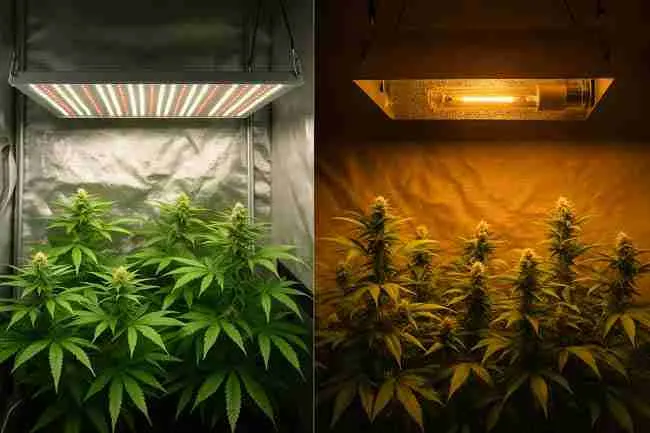
Lights eat the biggest chunk of your power bill. So if you’re chasing cannabis yield per kWh, you’ve got to get real about your lighting.
LEDs vs HPS: Where LED Cost Savings Actually Show Up
You’ve heard it all before: “LEDs are more efficient.” But what does that mean for you?
- HPS
- Cheaper upfront
- More heat
- Lower efficiency (less light per watt)
- Usually worse grow efficiency over a full run
- LED
- Higher upfront cost
- Less heat (but still some)
- Higher efficiency (more photons per watt)
- Better long-term LED cost savings on your bill
- Often higher cannabis yield per kWh once dialed in
If your LED costs more but saves you 20–30% on power and grows more grams per run, it literally pays for itself over time.
Dialing in the right power level
You don’t just slam your LED to 100% because you can.
- Small tents (2×2, 2×4): 200–300 W of good LED is often enough
- Medium tents (3×3, 4×4): 300–500 W of good LED is typical
- Big tents (4×8+): 600–1000+ W total, but spread evenly
Too little light = fluffy buds, low yield.
Too much light = stressed plants, bleaching, wasted kWh.
You want that sweet spot where:
- Plants pray (leafs angled slightly up)
- Buds stack tight
- Temperatures stay in range without insane AC use
That’s where your cannabis yield per kWh climbs.
Environment: The Silent Killer (or Booster) of Grow Efficiency
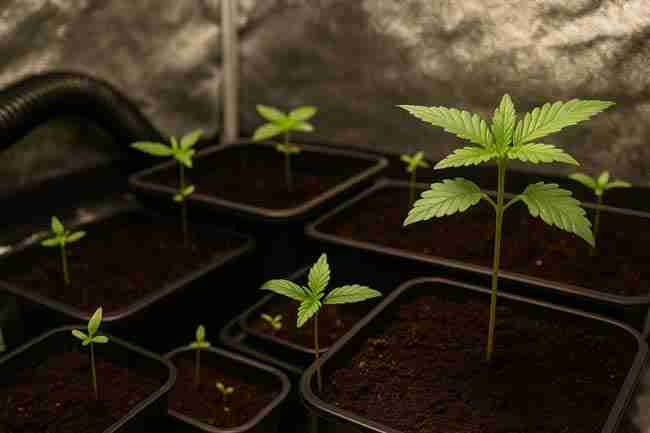
You can have the best LED on earth, but if your environment sucks, your cannabis yield per kWh will, too.
Temperature and humidity
Aim for something like:
- Veg: 22–28°C (72–82°F), RH 55–70%
- Flower: 20–26°C (68–79°F), RH 40–55%
If it’s too hot:
- Plants slow down
- You burn extra kWh running AC
- You might even dim your light to keep temps down (less light, same power overhead elsewhere)
If it’s too humid:
- You run dehumidifiers more
- You risk mold (and losing harvest… zero g/kWh if you toss a crop)
If it’s too dry:
- Plants transpire weirdly
- Leaves crisp
- Growth stalls
You’re paying for those watts, so your job is to keep conditions where plants actually use the energy you’re feeding them.
Airflow and exhaust
Yes, fans cost power, but:
- Good airflow = fewer mold problems
- Strong stems = better bud support
- Stable temps = less work for AC or heaters
A slightly higher power draw for smarter airflow can increase your cannabis yield per kWh overall.
Grow Style: Training Your Plants to Use Every Photon
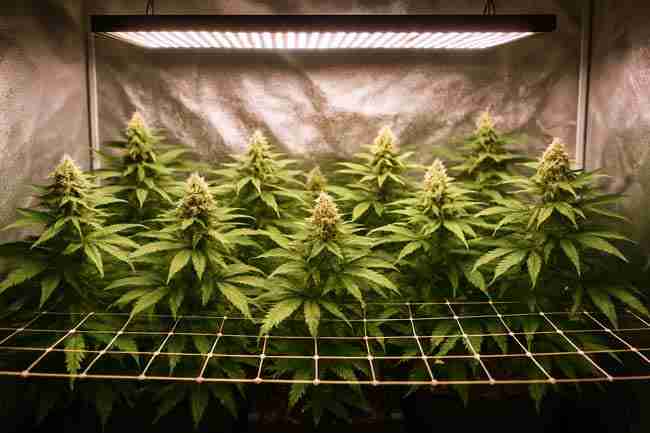
The shape of your plants changes how well light energy turns into bud weight.
SCROG, SOG, and simple topping
You don’t need to get fancy, but training helps:
- SCROG (Screen of Green)
- You fill the whole footprint with an even canopy
- Fewer wasted dark corners
- High potential cannabis yield per kWh
- SOG (Sea of Green)
- Many small plants, short veg time
- Fast turnover
- Efficiency can be high if legal and practical
- Basic topping / LST
- You spread branches out
- More tops in the “good light” zone
- Less wasted light on empty floor or bare stems
Training is basically telling the plant:
“Hey, buddy, move your leaves and buds where the photons are.”
Every top in good light is another place where your grow efficiency jumps.
Veg time and plant count
Too long in veg:
- Plants outgrow the tent
- You chop off half of them anyway
- You paid extra kWh for growth you didn’t harvest
Too short in veg:
- Not enough canopy
- Light hits the floor instead of leaves
- You waste watts
You’re aiming for a full, even canopy that starts going “wall to wall” right around early flower. That’s the sweet spot.
Genetics: Not Every Strain Has the Same Yield Ceiling
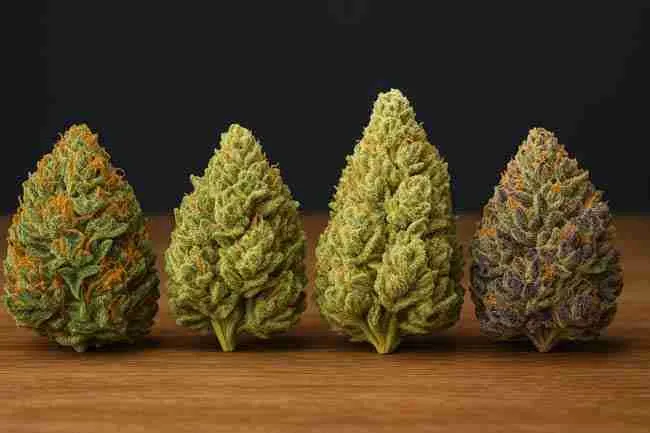
Some strains just don’t stack big buds. They might be:
- Super tasty
- Super potent
- Super colorful
…but low-yielding.
Others are chunky brick builders that turn light into mass like crazy.
For higher cannabis yield per kWh, look for:
- Strains known as heavy yielders
- Healthy vigor and fast growth
- Buds that pack on weight in mid to late flower
You don’t have to ditch your favorite exotic strain. Just understand that two strains under the same light can give very different grams per kWh.
Daily Habits That Quietly Boost Cannabis Yield per kWh
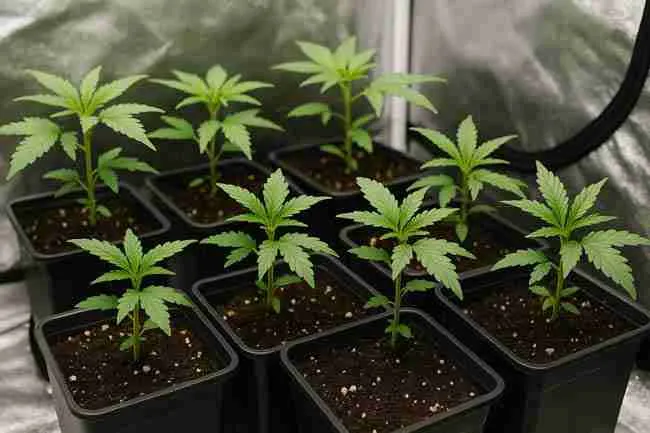
You don’t need to buy more gear to improve your numbers. A lot of it is just how you run what you already have.
Smart timer use
- Make sure lights are on exactly the schedule you intend (no leaks).
- Use timers for dehumidifiers and fans when possible.
- Avoid leaving everything running hard in the room when lights are off, unless you actually need it.
Idle watts don’t grow bud.
Fixing little leaks and inefficiencies
- Light leaks cause herms, which can wreck yield.
- Air leaks waste cooled or heated air.
- Sloppy ducting makes fans work harder.
These small things add up over weeks.
Preventing mistakes that erase your kWh
The fastest way to destroy your grow efficiency is:
- Root rot from overwatering
- Nutrient burn and lockout
- Bugs and mold you ignore too long
- Power outages you don’t prepare for at all
Every time you lose a plant or a whole crop, your effective cannabis yield per kWh drops toward zero. Prevention costs less power than fixing disasters.
Pros and Cons of Chasing Maximum Cannabis Yield per kWh
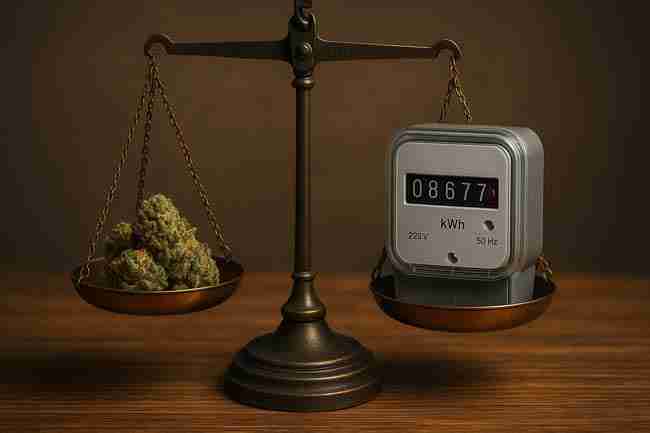
Like everything, there’s a balance. You can take efficiency too far, or not far enough.
Pros
- You actually see if your gear and habits pay off
- Easier to justify a good LED because you see real LED cost savings
- Helps you size your tent, light, and equipment sanely
- Forces you to focus on plant health, not just toys
- Over time, your harvests start to pay a bigger chunk of your electric bill
Cons
- You might obsess over numbers and forget to enjoy the grow
- You might push plants too hard chasing a record
- You might cheap out on comfort or safety gear “to save watts”
- Tracking takes a bit of time and attention
The sweet spot?
Use cannabis yield per kWh as your compass, not your religion.
Quick Specs Cheat Sheet for an Efficient Home Grow
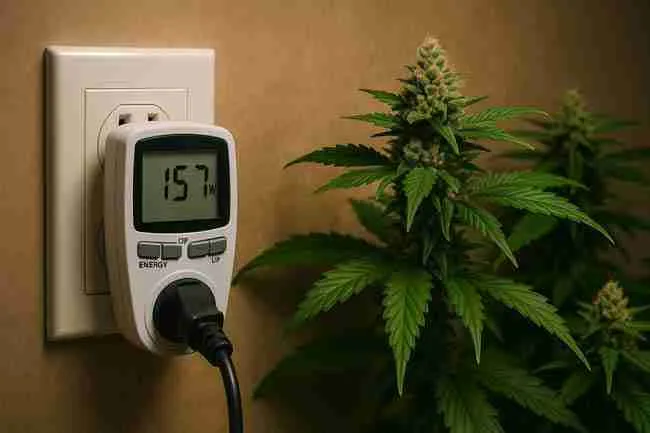
Here’s a rough “spec sheet” you can use as a starting point. You’ll tweak it for your space and climate.
Lighting
- LED power:
- 2×2: ~150–250 W
- 3×3: ~250–350 W
- 4×4: ~350–500 W
- Target canopy PPFD (flower): 600–900 µmol/m²/s (if you have a meter)
Environment
- Veg temps: 22–28°C (72–82°F)
- Flower temps: 20–26°C (68–79°F)
- RH veg: 55–70%
- RH flower: 40–55%
- Strong but gentle air movement across canopy
Power draw habits
- Keep dehumidifier and AC sized correctly, not massive overkill
- Use quality, efficient fans
- Keep gear clean so it doesn’t have to work harder
If you run something like this and keep your plants happy, your cannabis yield per kWh will naturally climb.
FAQ: Cannabis Yield per kWh, Grow Efficiency, and LED Cost Savings

What is cannabis yield per kWh in simple words?
It’s just how many grams of dried bud you get for each kilowatt-hour of electricity you use in your grow. Higher cannabis yield per kWh means more bud for the same power bill.
How do I improve my cannabis yield per kWh the fastest?
The quickest wins usually come from:
- Switching from old HPS to a good LED
- Fixing temperature and humidity
- Training plants so light hits more bud sites
- Avoiding big mistakes like overfeeding, overwatering, or pests
You don’t always need more gear. You mostly need better grow efficiency.
Are LEDs always better for cannabis yield per kWh?
Not automatically. A cheap, bad LED can perform worse than a well-run HPS. But good LEDs:
- Use less power for the same light
- Produce less wasted heat
- Often give better LED cost savings over time
If you set them up right, LEDs usually help you raise your cannabis yield per kWh.
Do I count fans, dehumidifiers, and AC in my calculation?
Yes. If it plugs into the wall and helps your grow, it should be counted in your total kWh. That’s the only way to see your true grow efficiency, not just light efficiency.
What’s more important: grams per watt or cannabis yield per kWh?
Grams per watt tells you how well your light is performing.
Cannabis yield per kWh tells you how well your whole grow is performing.
If you care about your power bill, cannabis yield per kWh is the better metric to track.
Can a small home grow really “pay the power bill”?
You still have to pay the electric company, of course. But if you:
- Run an efficient LED
- Keep your environment dialed
- Hit a solid cannabis yield per kWh
…then the value of your harvest can easily outweigh what you spent on power. In that sense, the metric really does help your grow pay its own power bill.
Final Thoughts: Treat Your Grow Like a Tiny Power-Paid Factory
When you start tracking cannabis yield per kWh, your grow stops being a mystery. You’re no longer just hoping your buds are good enough. You’re running a small, smart operation where:
- Every watt has a job
- Every plant has a purpose
- Every harvest teaches you how to do better next run
You don’t need to be an engineer. You just need a notebook, your electric bill, and a scale. Once you see that number, you’ll never look at your grow the same way again.
Your goal from now on is simple:
“Grow more grams from every kWh I pay for.”
Do that, and your plants don’t just look good. They start paying you back.