Growing Cannabis in Containers: Fabric vs Plastic, Size, and Roots

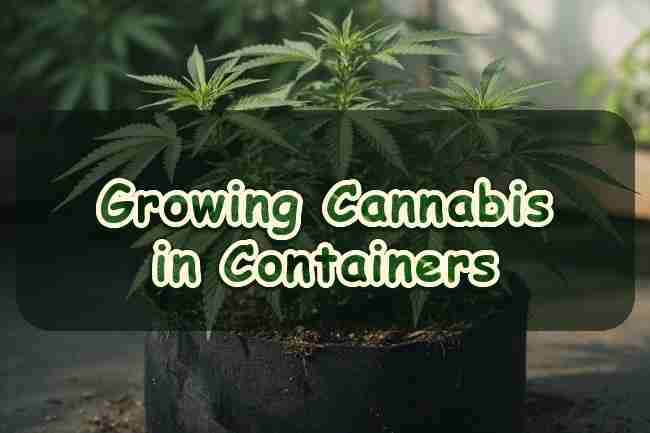
Growing cannabis in containers is how most home tents actually work. The pot is the root zone. Size, material, and drainage decide whether you water every other day or drown a seedling in a swamp. Get the container wrong and you spend the run chasing yellow leaves that were never a nutrient problem.
This page is the practical version. Plastic vs fabric vs air pots. What air pruning actually does. Gallon sizes by stage, including autos. When to transplant. Why a 20-gallon bag is a bad first cup. Heat, mulch, trays, and risers. Start with seeds that match the pot, not the other way around: cannabis seeds store and how to pick cannabis seeds.
Can You Grow Cannabis in Containers?

Yes. Indoors, pots are the default. Outdoors, a pot is how you keep native dirt, grubs, and a waterlogged yard out of the root zone. Cannabis will finish in a container start to harvest if the pot fits the plant, the mix drains, and the pH is in range: pH for growing cannabis.
Containers take more watering than in-ground beds. That is the trade. You also get control. You can move a pot out of a July bake. You can lift it. You can dump a bad mix. In-ground is easier on vacation. A pot is easier when the soil in your yard is clay or when the plant has to live in a tent: grow tent for cannabis seeds.
Hobby indoor grows are almost all container grows. DWC is a bucket. Coco is a bag. Soil is a bag. The argument is not “pot versus hydro.” It is which box the roots live in and whether that box can dry. If you cannot lift the pot, you cannot tell when to water. That is why 45-gallon outdoor tubs belong outside with a hose, not in a spare room you visit at 10 p.m. Canada’s four-plant cap still fits four matching 5-gallon fabrics. It does not require four whiskey barrels in the basement.
Plastic vs Fabric vs Air Pots
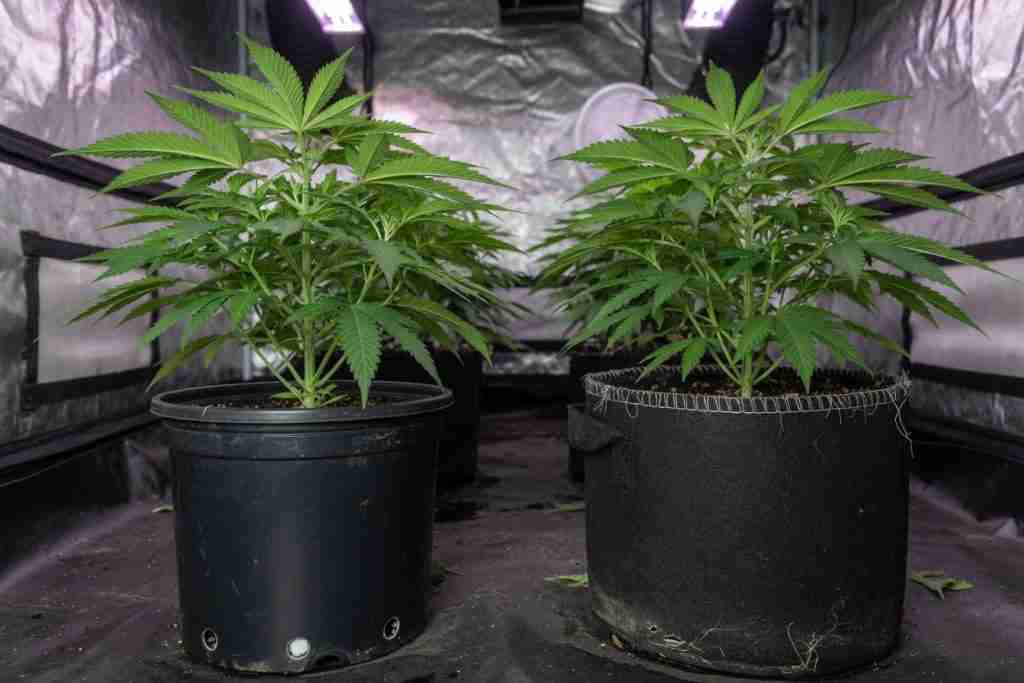
Ranking pages in 2026 keep repeating fabric vs plastic because that is the real home-grow argument. Fabric air-prunes and dries fast. Plastic is cheap and holds water. Air pots punch holes so roots hit air on purpose. None of them grow the plant for you. They change how often you water and what the roots do at the wall.
| Plastic | Fabric | Air pot | |
|---|---|---|---|
| Air pruning | No. Roots circle. | Yes, at the fabric wall. | Yes, at the holes. |
| Drainage | Bottom holes. Can pool. | Sides and bottom. | Sides and bottom, fast. |
| Overwater risk | Higher | Lower if you let it dry | Low, easy to under-water |
| Watering | Less often | More often | More often |
| Heat in sun | Black plastic cooks | Cooler, still dries | Airy, dries |
| Best for | Inconsistent watering, organic slow dry | Most tents | People who will water on time |
Plastic Cannabis Containers

Plastic is what most people already own. Cheap. Stackable. Holds moisture, which helps if you cannot water daily. Organic living soil often prefers that slower dry. Drill extra holes if the pot only has two sad slits. A ring of holes 1 cm up from the bottom beats one hole in the center that clogs with mix. Black plastic in full sun is a radiator. The mix at the wall can cook roots while the top still looks fine. Use light colors outdoors or shade the pot.
The other plastic failure is the mix shrinking off the wall. Water then runs down the gap and out the holes. The core stays dry. You think you watered. You rinsed the rim. If that happens, water slowly in a ring until the whole mass takes it, or bottom-water once to re-wet, then go back to the top. Medium still has to drain: best medium to grow cannabis.
Reuse plastic for years. Wash it. A crust of old salt on the rim is last run’s EC. Roots will circle if you leave a photoperiod in a 1-gallon too long. That is not a reason to ban plastic. It is a reason to transplant on time.
Fabric Cannabis Containers

Fabric is the pot we keep putting in tents. Felt walls. Roots hit air and stop instead of circling. The whole wall drains. Overwatering is harder if you wait until the bag is light. The cost is watering more often, especially under a real LED or outdoors in July. In a hot tent a 3-gallon fabric can need water daily in late flower. Plastic of the same size might go two days. Plan for that or you will come home to a wilt that looks like a deficiency and is just thirst.
A wet fabric bag is floppy. Fill it in place. Do not plan to yoink a 7-gallon of wet soil across the room by one handle. Handles tear. Wash and dry between runs. They last a few seasons, then they thin out. Cheap enough to replace. Sit them on a tray. They weep. Indoor climate still rules dry-back: indoor cannabis growers guide and ventilation.
Coco in fabric is a fast pair. Soil in fabric is fine if the mix has perlite. A dense peat brick in fabric still drowns if you water like it was plastic. The bag does not fix a swamp mix.
Air Pots and Smart Pots

Hard plastic with holes on the sides and bottom. Roots grow to a hole, hit air, prune, branch. Same idea as fabric, more structure. Water can shoot out a high hole before the bottom is wet. Water slower. Watch the tray. These are not set-and-forget if you blast the can from the top and call it done.
People use “Smart Pot” for fabric bags and for holey plastic. The original photo on this page is the holey kind. Fabric bags are the other H3. Pick one system and learn its dry-back. Mixing types in the same tent means two watering clocks.
Air pots look aggressive. Roots poke out and brown at the tips. That is the prune, not rot, if they are firm and the mix is not sour. If the tips are slime and the mix stinks, you have a wet tray problem, not a brand problem. Water slower so the bottom wets before the side holes fountain. A tray catch is mandatory. These pots are messy on a hardwood floor.
What Air Pruning Actually Does
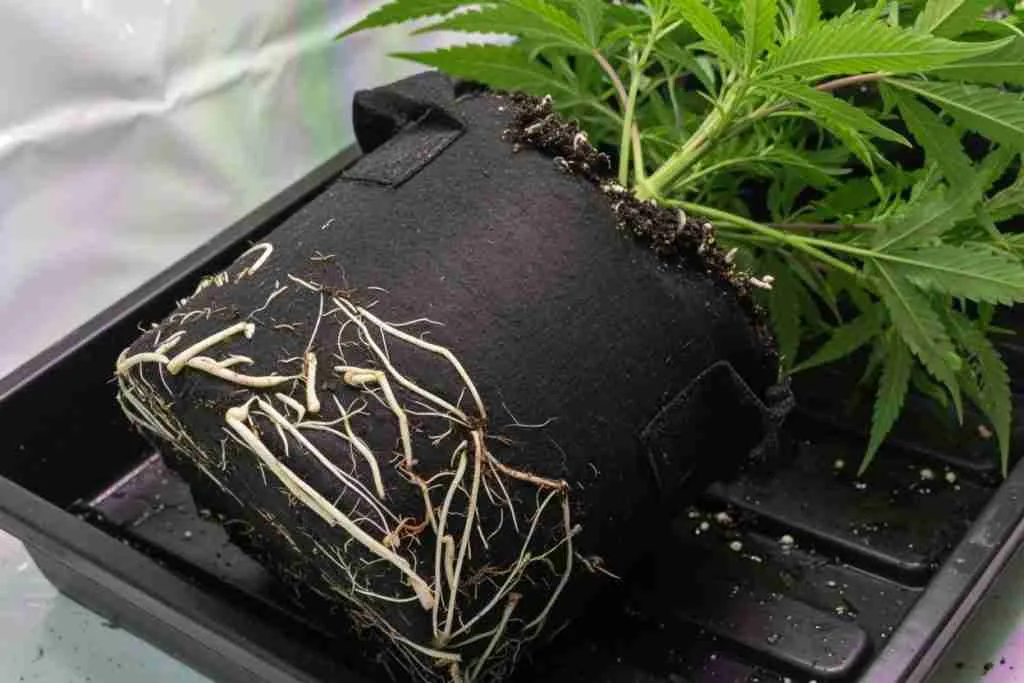
Air pruning is not magic. A root tip hits dry air at the fabric or at a hole. The tip dies. The plant branches behind it. You get more tips instead of a rope circling the pot. More tips means more surface for water and food. Same idea as topping a branch: you stop the leader, you get two.
It only works if the wall can dry. A fabric pot sitting in a puddle is a plastic pot with extra laundry. Risers exist for that. Hydro buckets are a different job: DWC hydroponics.
When you slide a healthy fabric plant, the outside of the mass should look like a white fuzz of short tips, not a woven rope. That fuzz is the prune working. Brown dry tips at the fabric are normal. Black mush is not. If you only ever see circling, you are in plastic too long or the fabric has been sitting wet.
Rootbound Plants
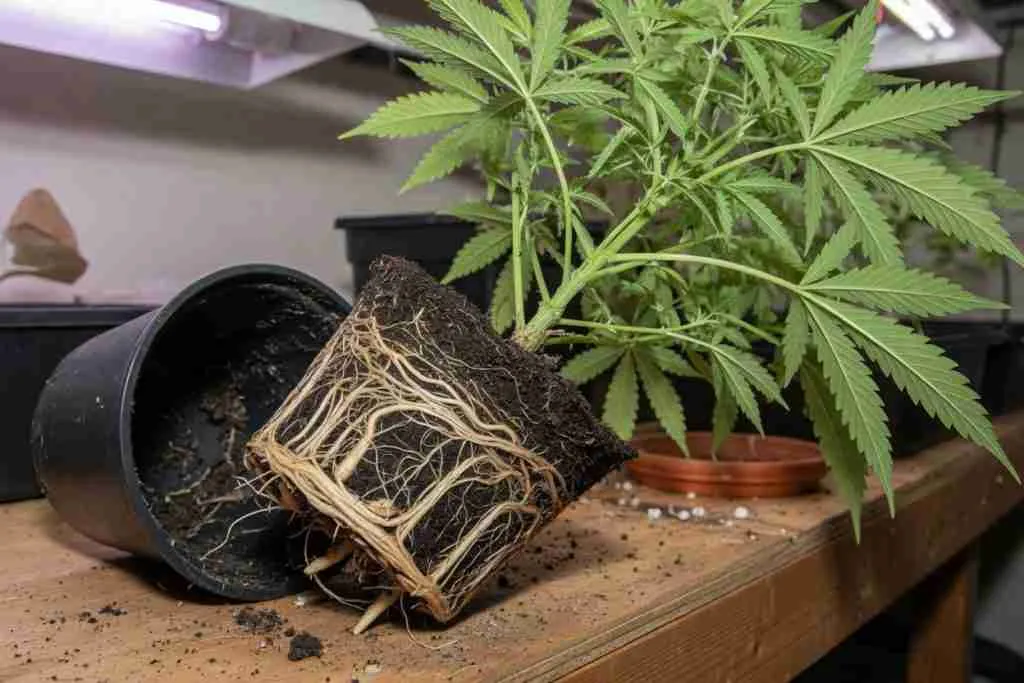
In plastic, roots hit the wall and turn. They lap the pot until the mass is a coiled basket. Water runs through and the plant still wilts. New growth slows. That is rootbound. Slip the plant out. If you see a white net around the outside, it is time to up-pot, or you waited too long. A plant that needs water twice a day in a small plastic pot is telling you the mix volume is gone. Do not just water more. Give it a bigger box.
Fabric and air pots fight circling. They do not make a 1-gallon bag into a tree forever. The plant can still run out of mix, dry in an hour, and stall. Air pots do not get classic circling. They still need mix volume for a photoperiod you veg for six weeks. Can they get “rootbound”? Not the spiral kind. They can still be too small.
How Important Is Container Size?
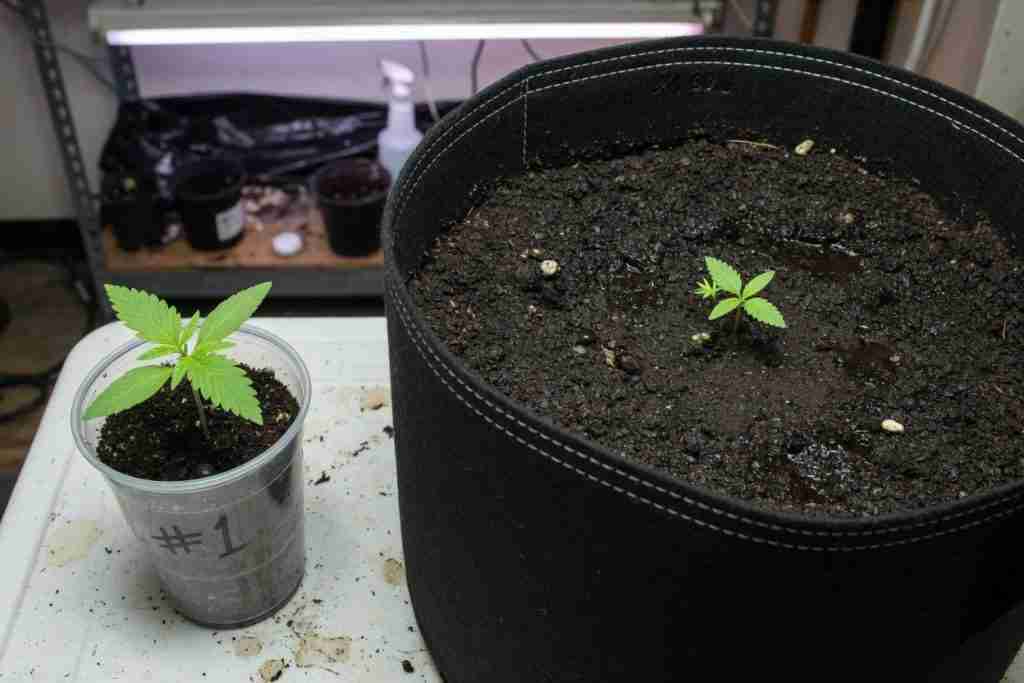
A seedling in a 20-gallon bag is how you grow fungus gnats and a drowned taproot. The plant cannot drink the water that mass holds. Rankings in 2026 all say the same thing: start small, step up for photoperiods, plant autos in the final pot. The cup in the photo next to the giant bag is the correct first home. The tiny plant in the lake of wet mix is the mistake.
Humidity domes belong on trays of cups, not on a 20-gallon swamp: humidity domes and seedling care.
| Stage / style | Pot |
|---|---|
| Seedling | Cup to 1 gallon |
| Early veg, a few true-leaf sets | About 2 gallons |
| Photoperiod indoor finish | 5 to 7 gallons for most tents |
| Autoflower indoor | 3 to 5 gallons, final pot from the start |
| Outdoor photoperiod | 10 to 25 gallons depending on season |
The old leaf-count cheat still works as a feel check: under one gallon as a seedling, around 2 gallons once you have a few sets of true leaves, 5 gallons as the plant fills a small tent, 10 gallons if you are pushing a big outdoor or a long veg. Do not treat it like law. A 2×2 with one plant is happy in 3 to 5 gallons. A 3×3 often holds two 5-gallon fabrics you can still walk around. A 4×4 with four 5-gallon pots is a common home layout. Four 10-gallons in a 4×4 is a jungle you cannot defoliate. Plant count: how many cannabis seeds.
Outdoor, 10 gallons is a patio plant. 15 to 25 is a real bush if you veg all summer. 45 gallons is a raised bed you water with a hose. Organic outdoor mixes like the extra volume because the pantry sits in the soil. Salt-fed indoor plants do not need that pantry. They need a root zone you can wet and dry on a schedule.
Square fabric bags pack a tent better than round of the same gallons. In a 2×2 that is the difference between walking around a plant and climbing over it. Wet weight is the other limit. A soaked 5-gallon of soil is around 20 to 25 pounds. A 7-gallon is closer to 30. If you cannot lift it to check, you will water on a calendar and overwater. That is why indoor finish pots stay in the 3 to 7 gallon range unless you have a hose and a floor drain.
Autos hate a late transplant. Give them the final bag on day one, or close to it. Photoperiods can step cup to 2 to 5. Seedling care: seedling stage, day by day, and best start steps. Photoperiod clock: photoperiod cannabis seeds explained.
Transplanting Up a Size
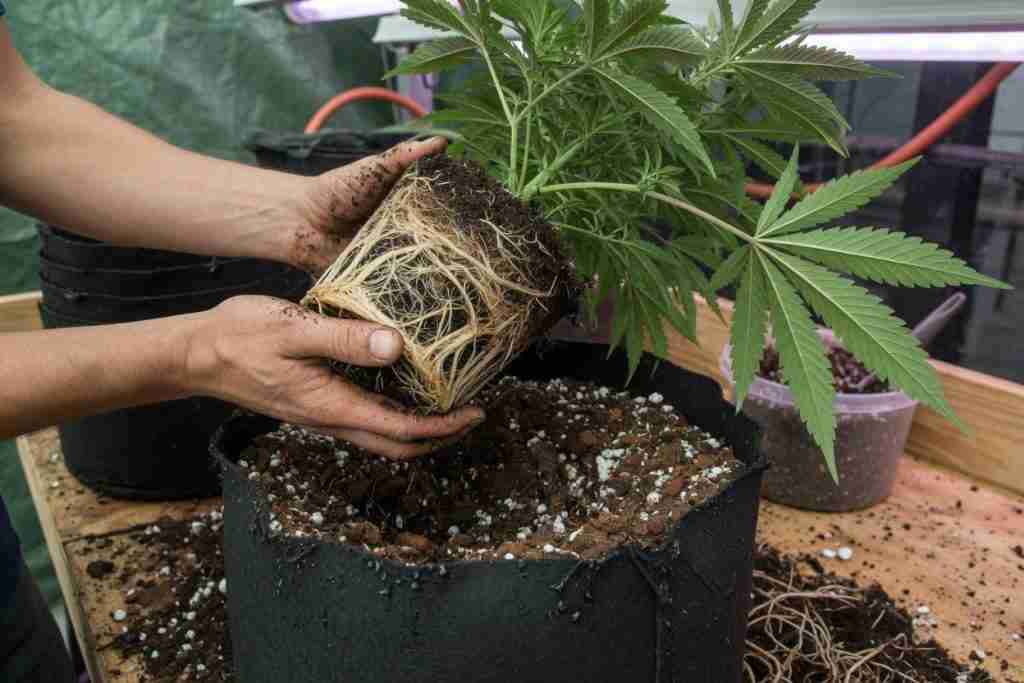
Water the old pot so the mass holds. Tip it. Support the stem. Drop it into a hole in the new mix at the same depth. Fill. Water in. Do not bury the stem in a wet crater. Do not tease every root unless it is a solid coil; then loosen the bottom spiral with your fingers so new mix can enter. Same-day transplant, lights on, then leave it alone. No feed bomb “to help it settle.”
Signs you waited: circling, water that blasts through in two seconds, a plant that dries an hour after you water a small pot, slow new leaves in veg. Transplant before the coil, not after the plant is sick. Veg still has to grow after the move: vegetative stage.
A buddy of mine dropped a seedling into a 15-gallon outdoor bag in May, went to work for four days, and came home to a swamp and a stem that folded. The bag never dried. Yikes. Cup first. Then the big bag when roots show at the drain. Roots at the cup holes are a green light. A pale seedling with two leaves is not.
Do not transplant in the middle of a stretch week in flower unless the plant is dying in a tiny pot. Flower stretch plus a ripped root ball is how you stall colas. Plan the final pot before the flip.
Do Bigger Pots Mean Bigger Buds?
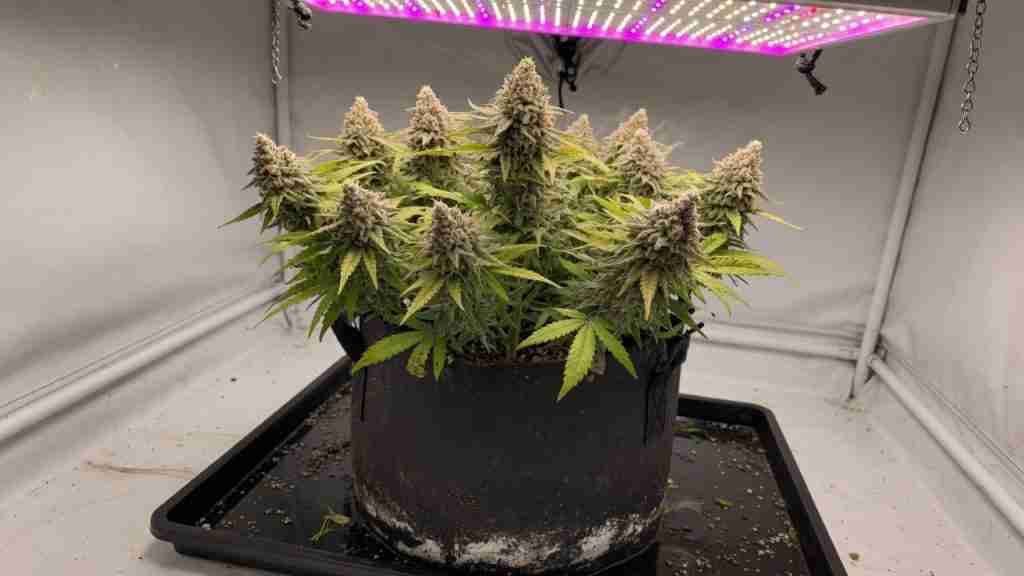
No. Genetics, light, and a root zone that is not drowning make buds. A huge pot of wet peat makes a small plant with gnats. People finish decent colas in solo cups for a joke challenge. That does not mean you should. It means volume is not THC. The solo-cup runs that look decent have a light in the plant’s face, a mix that drains, and a grower who waters like a surgeon. Miss one of those and the cup is a coffin.
Bigger helps when the plant is big enough to use it: outdoor photoperiods, long veg, organic mixes that need a pantry. Indoors, 5 gallons of airy mix under a light that actually covers the pot beats 20 gallons of swamp in the corner. A 7-gallon fabric in a 2×2 often wastes floor and dries unevenly because the light does not cover the edges. Match gallons to canopy, not to a forum flex. Flower still needs the room to finish: flowering stage.
Living soil wants more volume because the food is in the mix. Salt-fed coco or peat can finish in 3 to 5 gallons if you feed every water. Do not buy a 20-gallon bag to “make bigger buds” under a 150-watt light. The extra mix is a reservoir the roots never fill. LST and a screen work in 3 to 5 gallons because you are spreading the same plant, not growing a taller taproot tree.
Keeping Container Soil Cool in Summer
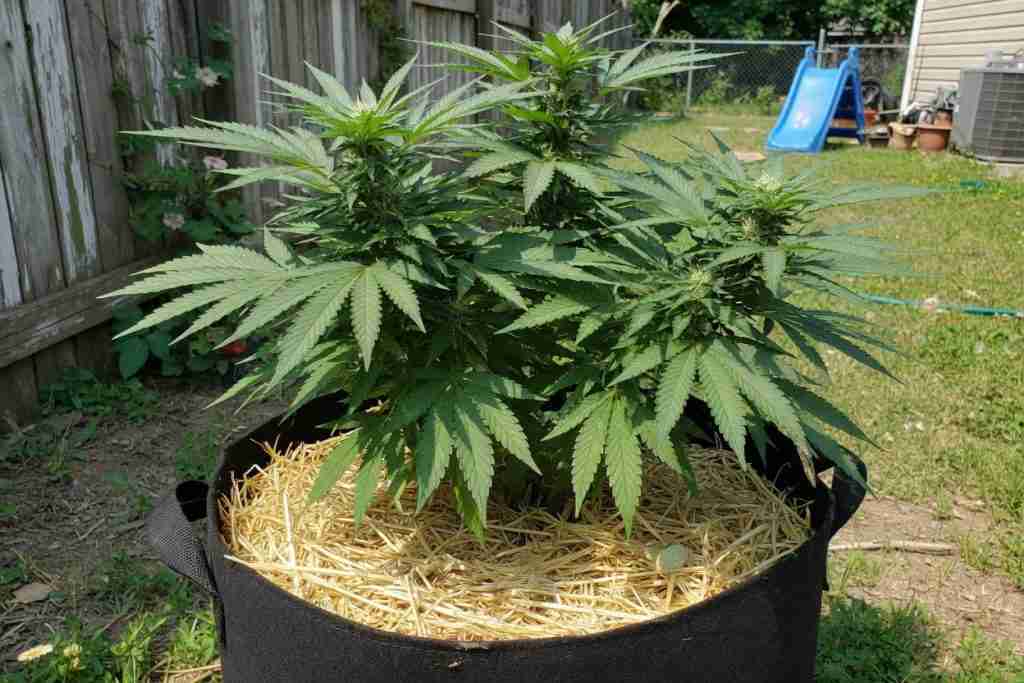
Mulching
Outdoor pots bake. Mulch on the surface is cheap insulation. Straw, shredded leaves, even a thin grass layer. It slows evaporation and keeps the top from turning into a crust. Do not pile wet grass into a slime cap that invites gnats. A light layer. Water still has to reach the mix. In a heat wave, mulch plus afternoon shade beats dumping ice cubes in the pot, which shocks roots and does not fix the black plastic oven on the south wall.
White pots, fabric, or a wrap of cardboard on the sun side all drop wall temperature. Concrete under a pot reflects and cooks. Wood decking or soil is kinder. If the pot is too heavy to move, you planned the spot wrong in May.
Move Pots Out of the Bake
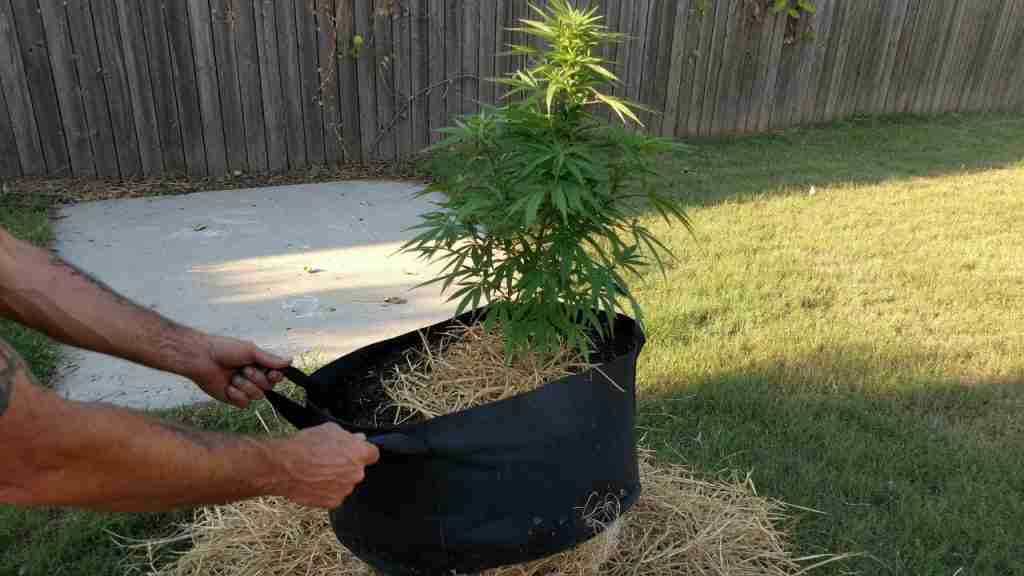
If you can lift it, move it. Afternoon shade on a 32°C day is kinder than a black plastic pot on concrete. Fabric still dries. Plastic in sun still cooks. Light-colored pots help. Wheels on a dolly beat a hernia. If the pot is already too heavy to slide two feet at noon, you parked it in the bake on purpose in May. Outdoor season notes: growing cannabis outdoors.
Drainage
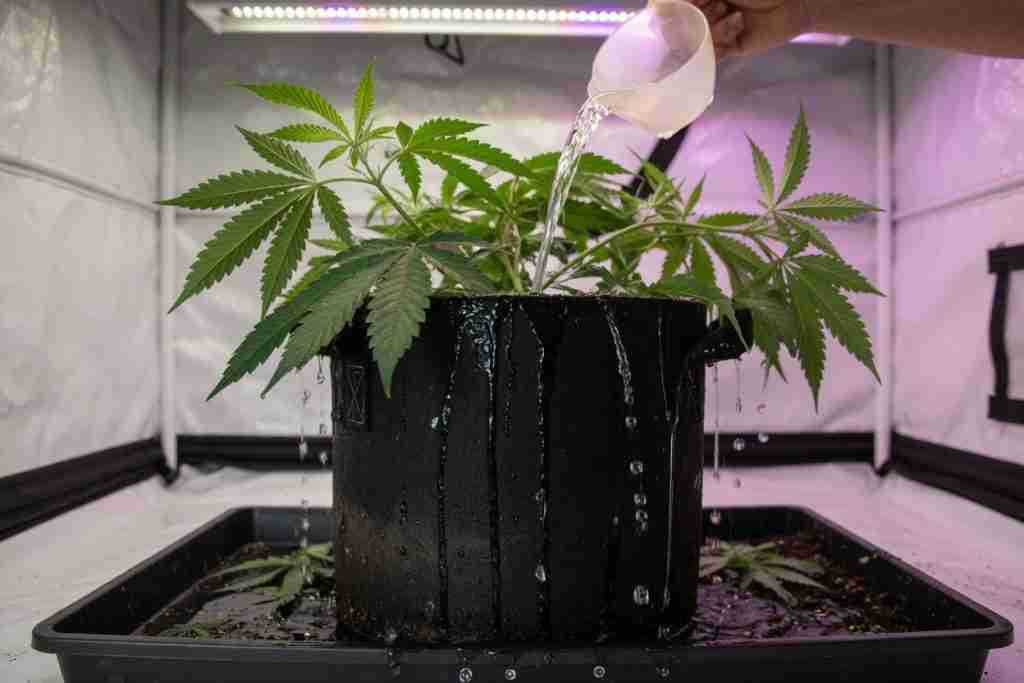
No drain holes, no grow. A cache pot without a hole is a vase. Water until you get runoff, then dump the tray. Roots in a saucer of stale water are swimming. Fabric weeps from the sides. That is normal. Plastic should dump from the bottom. If it does not, you have a plug of compacted mix or too few holes. A layer of coarse pebbles in the bottom of plastic is a myth that makes a perched water table. Mix should be airy all the way down. Perlite in the mix, not a rock bed. A pretty cache pot with no holes is a sleeve. Lift the grow pot out, water, drain, put it back. If you water the nursery pot while it sits in the cache, you built a bathtub.
Watering is still lift-the-pot, not a calendar. Fabric lies if you only poke the top. The wall can feel dry while the core is wet, or the opposite after a hot day. Same-size pots of the same mix let you learn the weight. Mixed sizes in one tent means you guess. How to water without guessing: water cannabis plants. Yellow in a wet cup is not always nitrogen: seedling yellowing.
Water in a ring, not a puddle against the stem. In fabric, soak until the sides darken and drip. In plastic, soak until the bottom runs, then stop. Daily sips that never wet the whole mass make a dry core and a wet crust. That is how you get both gnats and a thirsty plant.
Why Risers Matter Under Fabric
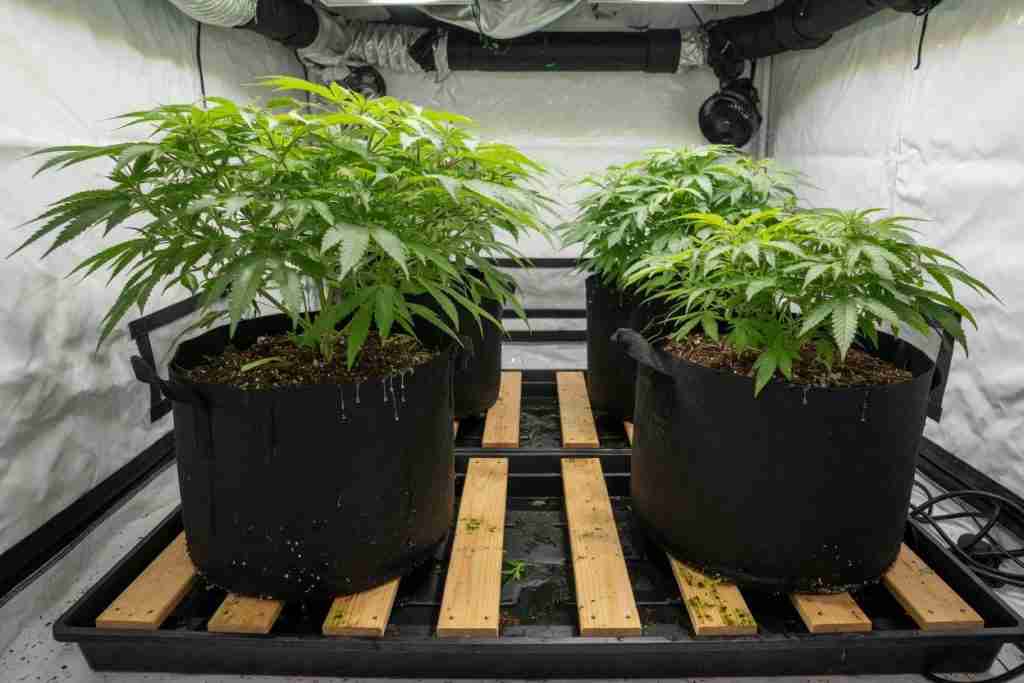
A fabric bag on a flat tray sits in its own runoff. The bottom seals. Air pruning stops. Roots at the base drown. Slats, a rack, pot feet, a wood grid. Anything that lets the bottom breathe and the water leave. Then empty the tray. A tent floor with four bags in a puddle is a gnat farm. Check the tray at lights-on. If it still holds yesterday’s water, you watered too much or the drain is blocked.
Risers also keep the bag from wicking dirty tent-floor water back up. That floor is not sterile. Fabric will drink whatever it sits in. Lift the bag. Let it drip. Set it back on dry slats.
Healthy Roots in a Pot
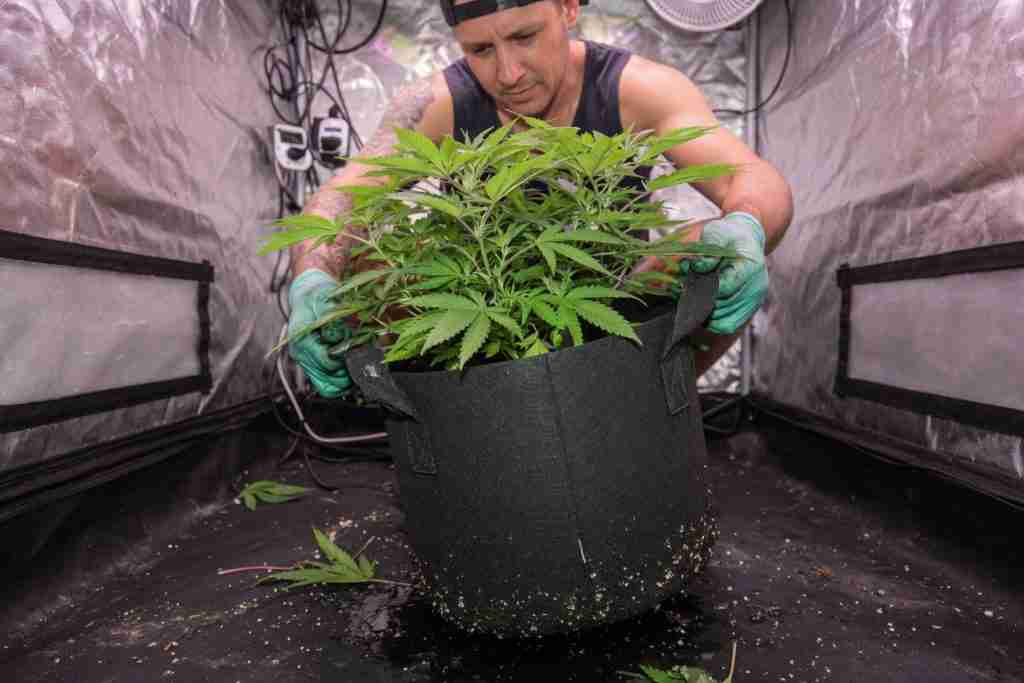
White, fibrous, smelling like soil not swamp. That is the goal. The pot is only a box for that. Match material to how often you can water. Match gallons to the stage. Drain. Lift. Transplant before the coil. Pick a mix that is not backyard clay: organic cannabis soil.
You can grow in a beer cup with holes. We have seen it. The plant will be small and the mix will dry twice a day. That is a seedling home or a joke, not a harvest plan. Graduate the cup. Ice cream tubs with a drill work for a month. Then the roots circle and you are back to this page.
Worked picks. First tent, 3×3, photoperiod: fabric, 1 gallon then 5, tray and risers, water when light. Auto in the same tent: 3 to 5 gallon fabric from the start. Outdoor patio, black plastic in July: shade the pot or switch to fabric and mulch. Four plants in a 4×4: four matching 5-gallon fabrics, same mix, same water day. The container is not the brand. It is whether the roots can breathe.
Growing cannabis in containers fails when the pot is a swamp, a radiator, or a 20-gallon joke for a two-week plant. Get those three right and the genetics can do their job. Match the pot to the seed type too: autos in the final bag, photoperiods stepped up, outdoor lines in something you can still water in August. The shelf: cannabis seeds store.