Growing Cannabis for Free: Sun, Compost, Clones, and What Still Costs

You cannot grow cannabis for zero dollars forever if you still buy a tent, an LED, and bottled feed. Ranking pages that talk about “almost free weed” mean something narrower: sun instead of a light bill, rain and a barrel instead of a tap meter, kitchen scraps instead of a nutrient shelf, a bucket with holes instead of a fabric-pot cart, and clones after the first plant instead of a new pack every run. Indoor is never free. Outdoor is the path that can get close.

This page keeps the original outdoor list — free light, free containers, compost, free seeds, spring timing — and tells you where those tricks fail. Bagseed is not a bank. Municipal compost can carry lawn herbicide. A clone from a stranger can carry mites. Canada’s household cap is four plants, not a jungle. Shop if you need a clean start: cannabis seeds store. How to pick: how to pick cannabis seeds. Outdoor how-to: growing cannabis outdoors. Indoor shopping lists live on the budget page: grow cannabis on a budget.
What “Free” Actually Means
Day one usually costs something. A feminized seed, a pair of scissors, a five-gallon bucket you already own. After that, the sun does the job a $150 LED does indoors. Wind replaces a fan. Rain and a barrel replace a lot of the hose. Compost replaces a lot of the bottle. A cutting from your own plant replaces the next pack. That is “growing cannabis for free” in 2026: recurring cost near zero, not a magic first harvest with no inputs.
Surveys of home growers keep landing around a dollar a gram or less once gear is paid off, and outdoor often under that because electricity is the indoor tax. A single outdoor plant in a legal, sunny spot can bury a 2×2 tent. One plant: how much cannabis from one plant. Cost per ounce: how much it really costs to grow an ounce.
Why Outdoors Is the Only Free Path
An indoor room has a light, a fan, a timer, and a bill. You can reuse the tent. You cannot reuse the kilowatts. A 100-watt LED is cheap to run compared with HPS and still not free. Closet grows also need smell control if you have neighbours. None of that is a backyard problem in the same way.
Outdoors you still work. Weather, September rain, caterpillars, and thieves exist. A tarp hoop beats losing week-seven flowers. You still water in a drought. You still check the law. You do not pay to fake the sun. Lights: grow lighting for cannabis. Indoor contrast: indoor cannabis growers guide. Tent if you must stay inside: grow tent.
How Much You Actually Save
Indoor first kit in the ranking guides is often $250–$750 plus power. Outdoor first season, if you already garden, is a seed, a bucket, and whatever soil you mix. Hardware-store numbers that keep showing up: fabric pot $8–$25 if you buy one, bagged mix $15–$40, a couple of feminized seeds $10–$30. Skip the fabric pot and the bag if you have a drilled bucket and finished compost. Then the cash cost is the seed.
After harvest one, clones and reused soil drop the next season toward water and time. That is the “almost free after the first grow” line Grow Weed Easy and the budget calculators keep repeating, and it is honest if you stay outdoors and stop shopping. It is a lie if you “save” by buying a cabinet grow box. First crop: planning your first cannabis crop. How many plants: how many cannabis seeds.
Free Light: Eight Hours of Sun
Put the plant where it gets at least eight hours of direct sun. South-facing in the northern hemisphere. Not the north wall, not under a maple that leafs out in June. A balcony that only sees morning light will make a stretchy stick. Move the bucket with the sun if you have to. Do not put a photoperiod in a courtyard that loses the sky at 2 p.m. and then blame the seed.
Photoperiods outside flower when the days shorten. That is free timer. Autos flower on age, so they work in a short summer if you start them when nights stay above about 10 °C. Outdoor seed list: best cannabis seeds for outdoor growing. Photos: photoperiod cannabis seeds explained. Autos: grow autoflowering cannabis plants.
Free Air, Rain, and a Barrel
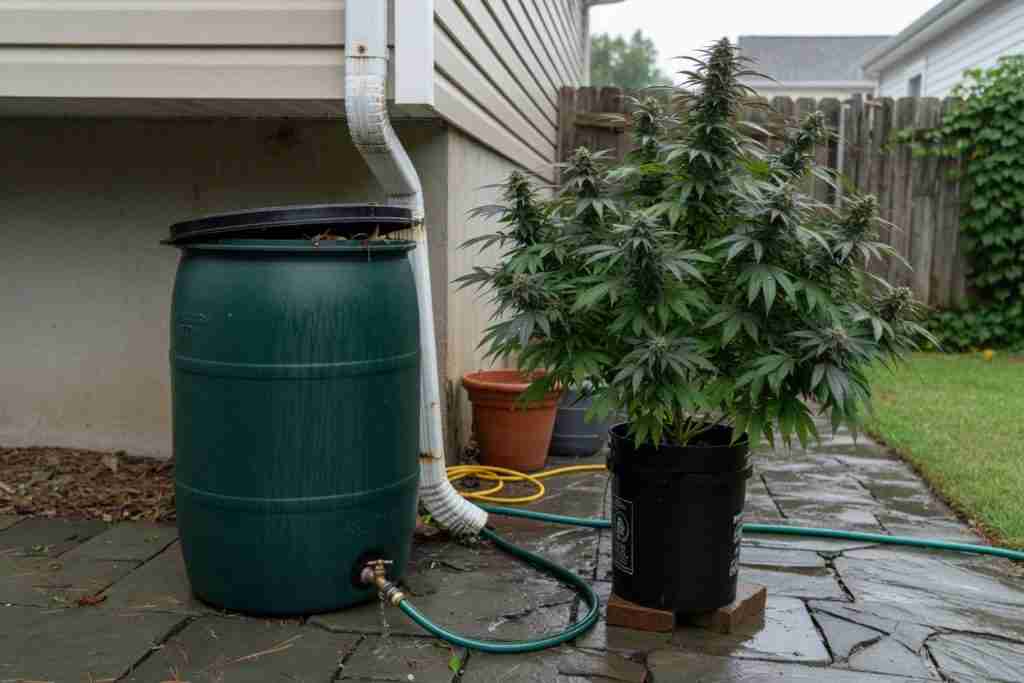
Wind hardens stems. You do not buy a clip fan for a backyard plant. You do stake a tall one before a storm. Rain is free water if it is not a week of bud-rot weather. A food-grade barrel on a downspout with a lid and a screen beats filling jugs from the tap. Rain is usually soft and chlorine-free. Roof grit still wants a screen. Do not drink it. Do water with it.
Greywater from a sink with dish soap is not a free win. Soaps and boron-heavy detergents burn roots. If you reuse wash water, it has to be soap-free and you still want soil life to buffer it. Most free grows should stick to rain and tap. Watering habits: water cannabis plants. Late-season rain: rain shelters that don’t trap humidity.
You Barely Need Equipment

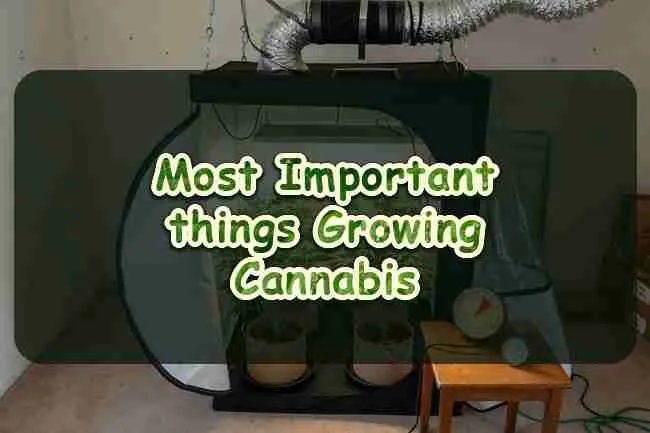
A shovel or a board, a jug with holes, gloves if you want them. Borrow the shovel. Start seeds in a tray you already have, then move them out after last frost. The tray photo on this page is a cheap start — those sprouts are stretched, which is what happens when you germ in a dim room. They still make a plant if you get them into sun fast. Do not keep them on a counter for two weeks “to be safe.” Germ: cannabis seed germination. Seedling stage: seedling stage. Best start: 15 steps for the best start.
Free Containers: Drill the Bottom
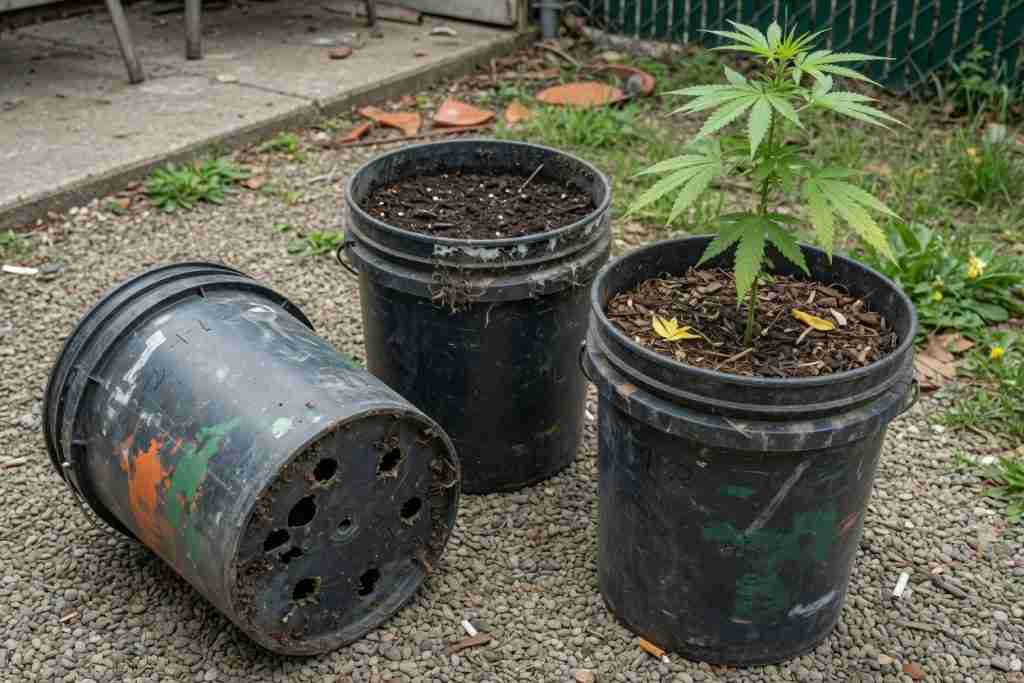
Old buckets, totes, ice-cream pails, nursery pots from last year’s tomatoes. Dark plastic is better than a clear jug that lights the side roots. Drill a ring of holes in the bottom. Raise the pot on bricks so it does not sit in a puddle. A five-gallon bucket is enough for an auto. A photoperiod that will be a bush wants 10–20 gallons or the ground. Do not start a seedling in 20 gallons of wet mix. Cup, then the finish pot. Containers: growing cannabis in containers.
Food-grade if you can. Do not use a solvent bucket. Paint buckets that held paint are not pots. Rinse a soap bucket until it does not foam. Fabric bags are a few dollars and they air-prune; they are not required. Cheap medium: cheapest grow medium for cannabis.
Free Soil: Compost, Not Mystery Dirt
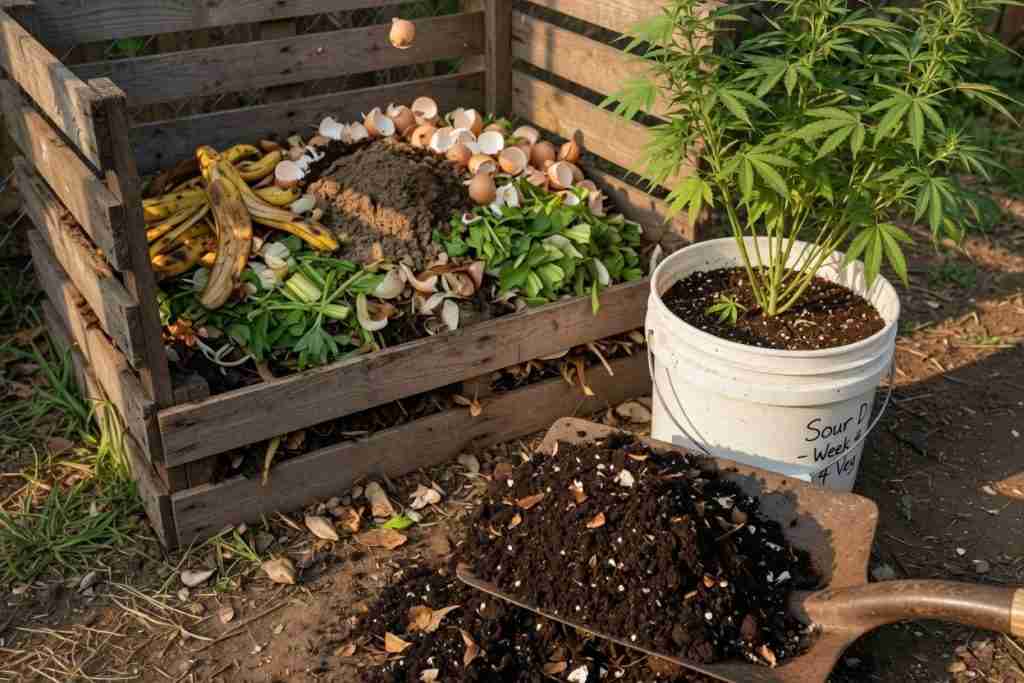
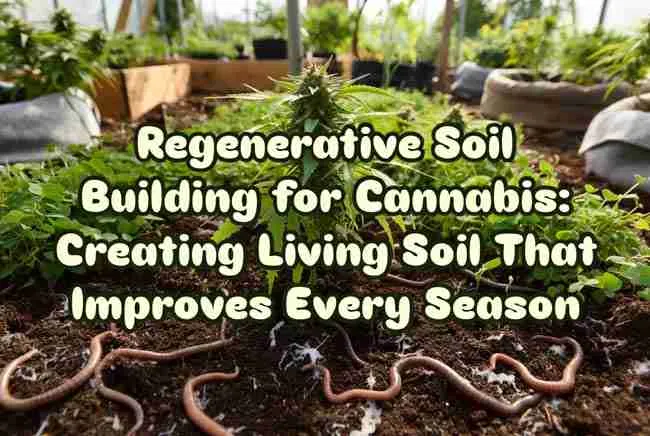
Kitchen scraps, leaves, grass, coffee grounds, chopped stalks. Browns (leaves, cardboard, dry stems) and greens (scraps, grass, coffee). Keep it damp, not a swamp. Turn it. Finished compost is dark, crumbly, and smells like dirt, not garbage. That mix, plus aeration (old perlite, coarse sand, or shredded twigs), is a grow medium. It is not a bag of FoxFarm. It does not need to be.
Do not dump raw kitchen waste in the pot and call it soil. It heats, it stinks, it invites fungus gnats. Compost first, then mix. Yard soil that is clay needs compost and something chunky or the bucket becomes a brick. Lawn soil that was sprayed with persistent herbicide (some “weed and feed” and clopyralid stories) can twist new growth for a season. If the tomatoes in that dirt look like claws, do not put cannabis in it. Compost how-to: composting for cannabis growers. Soil: best soil for growing cannabis. Organics: organic cannabis soil.
Native ground vs a bucket
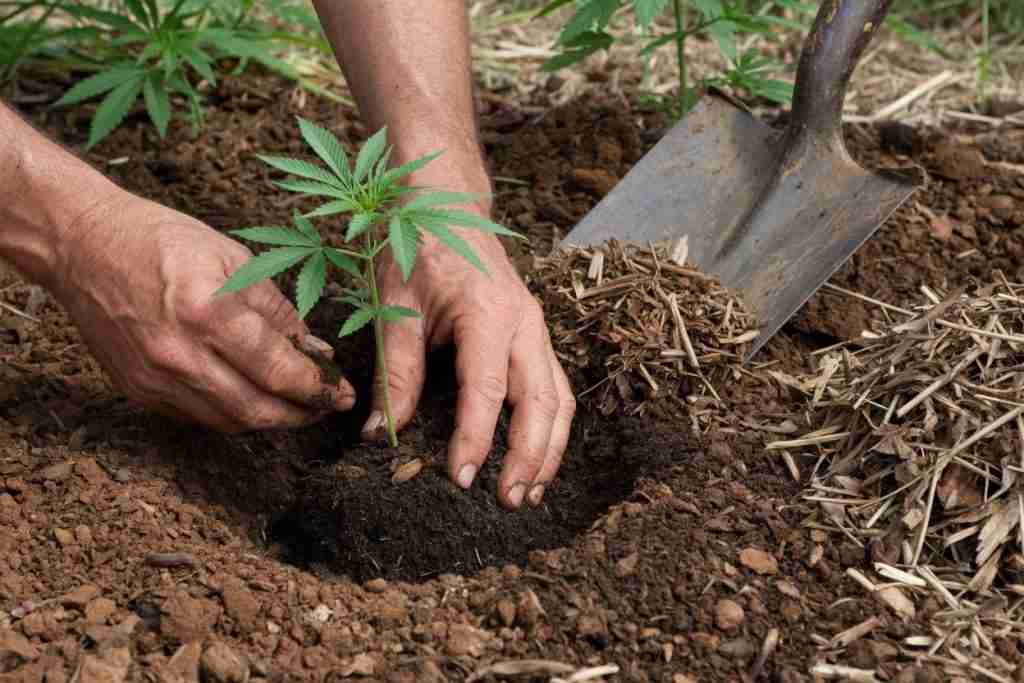
In-ground is the cheapest root run. Dig a hole, mix compost into the native dirt, plant, mulch. You get a plant the size of a shrub if the season is long. You also get groundhogs, dogs, and a hole you cannot move. A bucket on bricks you can hide or drag under a tarp. Mix: compost, some native soil or old potting mix, and aeration. Worm castings if you have a bin: worm castings. Amendments: organic growing amendments.
Free Nutrients — and Their Limits
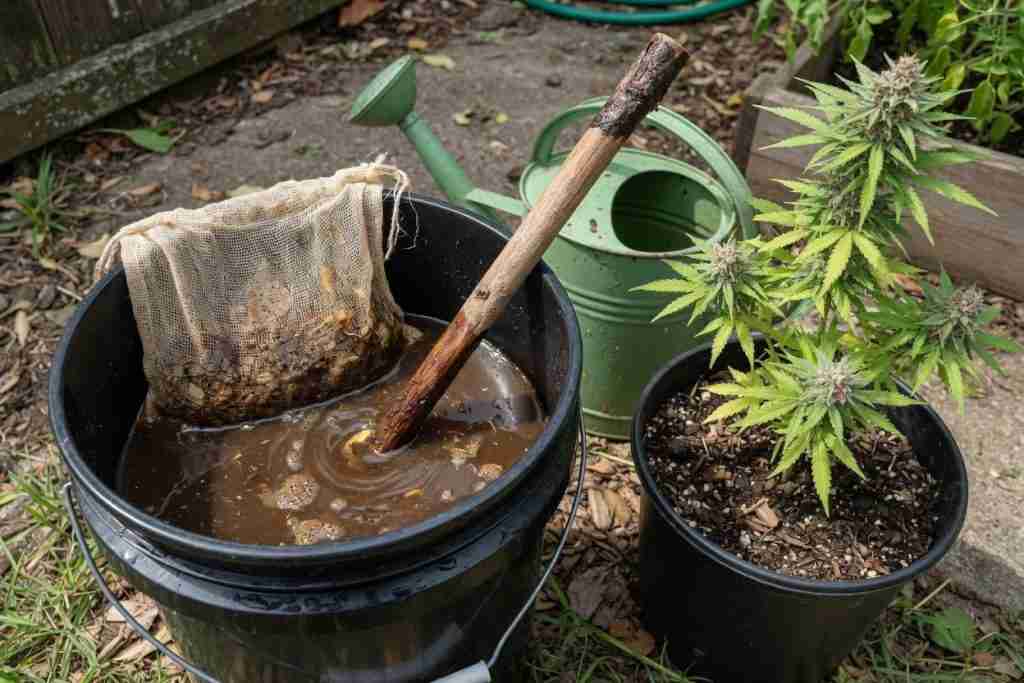
Finished compost in the mix is the feed. Top-dress a handful mid-season. A compost tea is compost in a mesh bag, rainwater or dechlorinated water, 24–48 hours if you bubble it, or a few days if you just steep. Use it as a drench, not a weekly bleach. It is biology and a light NPK, not a bottled bloom chart. Banana peels in a jar are potassium folklore — bury chopped peels in the compost, do not expect a peel soak to replace a flower feed. Unconventional list: unconventional nutrient sources.
Grass tea and eggshells
Grass, weeds, or fan leaves in a bucket of water for a couple of weeks. It stinks. Keep it outside. Dilute until it looks like weak tea, then water veg plants. That is free nitrogen. It is not a complete fertilizer. If leaves claw and go dark, you overdid N. In flower, ease off the grass juice so you are not growing leaves instead of buds.
Eggshells are calcium if you dissolve them. Dry, crush, cover with vinegar, wait a few days, strain. A pinch of Epsom salt in a gallon is magnesium. A tablespoon of that vinegar mix per gallon is a budget cal-mag, not a lab bottle. Do not pour straight vinegar on roots. Deficiency page if the plant is actually hungry: cannabis nutrient deficiency. Alfalfa if you have meal or a patch: alfalfa for cannabis.
Reuse the soil. Pull the root ball, shake it, mix compost and aeration back in. Organic soil gets better if you keep feeding the pile. Salt-fed peat that you drowned does not. Do not buy a new $30 bag every run because a YouTube ad said so.
Free Seeds This Year
A friend with a keeper is the best free seed. A club giveaway is next. Making seed means you ran a male, or reversed a female, and you accepted seeded buds. That is a plan, not an accident. A feminized pack from a bank is not free. It is the cheapest way to not waste a summer on males and mystery herms. Feminized: why choose feminized cannabis seeds. Shelf: feminized cannabis seeds. Canada: buy cannabis seeds in Canada.
Bagseed is a gamble
Seeds in purchased flower are often there because a plant hermed under stress. Some are viable. Some are male. Some throw nanners in week six and seed your whole patio. Pale, cracked, or tiny seeds are weak. Dark, firm, tiger-striped seeds from a pack that was stored cold are what you want. If bagseed is all you have, pop extras, sex them early, and kill males. Do not fill four legal plants with unknown regulars and then cry when two are boys. Regulars vs fems is a space decision, not a morality play.
After Year One: Clones Are the Free Plant
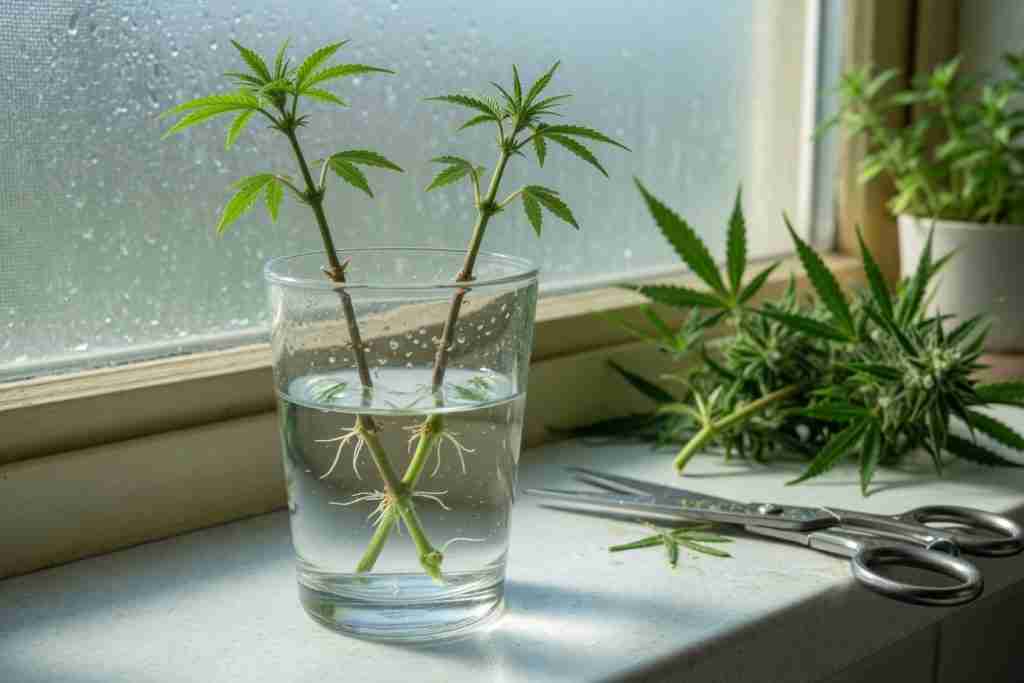
A cutting from your own healthy female is the actual free plant. Four to six inches, cut under a node, strip the lower leaves, glass of water or a moist cube, bright not blasting, roots in one to three weeks. Water-cup method: clone cannabis in a cup of water. Seeds vs clones: cannabis seeds vs cannabis clones.
Take cuts before you flip a photoperiod, or off a plant you are keeping in veg. If the harvest is good, you already have next year. If the harvest is hay, you throw the cuts. A stranger’s clone in a baggie is how mites and powdery mildew move house to house. Quarantine or do not take it. A mother under 18 hours of light is only “free” if you already have that light. Outdoors, the free version is: cut in late summer, root on a windowsill, overwinter the small plant in a cool bright room, or take cuts in spring off a plant you started from last year’s seed. Clones do not replace a seed if you have no plant yet.
When to Start Outdoors

After last frost. Nights that stay above about 10 °C. Photoperiods want the whole summer so they can veg while days are long and flower when days drop. Start indoors in a tray if your spring is late, then harden off — an hour of shade the first day, more sun each day, not a blast from a basement to July noon. Flowering: flowering stage. Veg: vegetative stage.
Autos if frost comes early
True north and short summers: a photoperiod may not finish. Autos flower on age. Start them inside three to four weeks, then park them out when nights are safe. You need roughly two warm months, not a California calendar. Keep an auto in its finish pot from the start. Transplanting late stalls a clock that does not wait. One auto in a five-gallon bucket is a plant. Three in one bucket is a mess.
Why Outdoor Beats Indoor on Cost

No LED. No ballast. No exhaust fan humming for twelve weeks. No carbon filter. Temperature is the season, not a controller. The plant can get as big as the hole and the sun allow. Quality is a different argument — indoor can be denser and cleaner if you run it well. Cost is not a different argument. Sun wins. Ventilation you skip outdoors: ventilation for cannabis grow. Room build you skip: building the grow room.
Free Yield Tricks: String, Not Gadgets
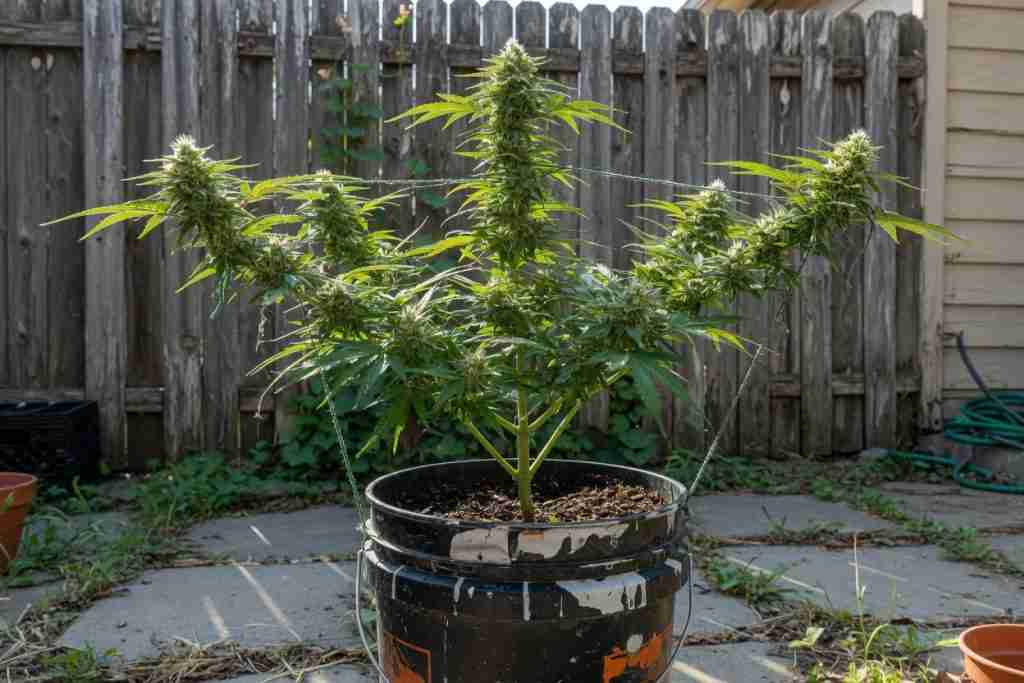
Twine. Tie laterals out so the sun hits eight tops instead of one spear. That is LST. It costs nothing and it is how a bucket plant earns weight. Do not buy a “training kit.” Do not buy CO2 for a backyard. Top a photoperiod after the fifth node if you want a bush. Go easy on autos — they do not get a second veg. LST: low stress training cannabis. Yield: increase cannabis yields.
Sugar leaves are not trash. Freeze them and wash ice water hash. Fan leaves go in the compost. Popcorn that is not worth the jar still washes. Harvest and dry still decide whether any of it tastes like anything: harvest and cure cannabis.
What Still Costs Money
The seed, unless someone hands you one. Scissors if you do not own them. A cheap pH strip if your water is liquid rock. A tarp if September is a monsoon. Time. Four legal plants. You cannot clone your way around a household cap. You cannot compost your way around a frost date. You cannot bagseed your way into a guaranteed female.
Pay for genetics once if free seed keeps failing. One dead summer is more expensive than a five-pack. Environment still matters even when the sun is free: best growing environment.
What Makes “Free” Expensive
- Indoor “free grow” with a stolen closet and a 600-watt light.
- Bagseed that herms and seeds the only four plants you are allowed.
- A clone from a stranger that brings mites.
- Raw kitchen scraps in the pot.
- A bucket with no drainage.
- North-wall shade sold as “full sun.”
- Lawn herbicide compost.
- Leaving a photoperiod out until November in a short season.
- Greywater full of soap.
- Skipping the law and losing the plants.
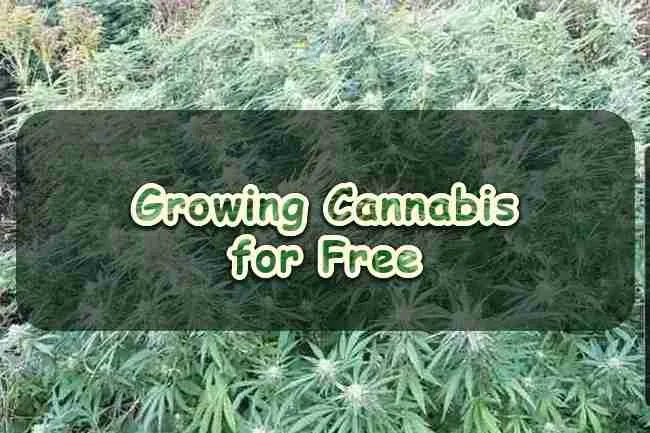
Those are how people spend a season and harvest nothing, then say growing is a scam. The original outdoor photos on this page are what a free-light plant looks like when the hole, the sun, and the calendar line up.
A Worked Season for Four Plants
March — compost pile already going from winter scraps. April — germ four feminized seeds in a tray on a bright window, or pop extras if you are using bagseed and will cull. After last frost — harden off, plant two in 5–10 gallon buckets, two in amended holes if you have the yard. Mulch. Rain barrel on the downspout. Tie laterals in June. Grass tea in veg only. Compost top-dress once. Watch for males if the pack was regular. August — tarp ready. September — harvest on trichomes, not on a date you saw online. Hang in a dark spare room. Stems, leaves, and root balls back in the pile. October — two cuts in a glass if you had a keeper. That is a free-leaning year. Next year the seed line can be those cuts.
FAQs
Can I really grow cannabis for free? Close, outdoors, after you have a seed or a cut and a pot with holes. Not indoors. Not day one if you still have to buy the pack.
What’s the best way to get free cannabis seeds? A trusted grower’s extra pack or a cut from a plant you already like. Bagseed last. A cheap feminized pack is cheaper than a wasted summer.
Do I need special skills? If you can keep a tomato alive, you can keep a cannabis plant alive. Timing, drainage, and sun matter more than gadgets. Germinating: germinating cannabis seeds.
How much do I save outdoors? The light bill, the tent, the filter, and most of the bottled feed. One outdoor plant can replace months of store flower if it finishes. That is hundreds to thousands a year depending on what you used to buy.
Is it legal? Depends where you stand. In Canada, adults can grow up to four plants per household unless a province tightens it. Check your own rules before you dig. Seeds are sold as souvenirs in many places; growing the plant is the part the law cares about.
Can I skip nutrients entirely? In a living mix with compost, often through veg. Flowering plants that fade hard still want a top-dress or a light tea. Pale new growth is hunger or lockout, not a personality.
Should I grow in the ground or a bucket? Ground for size. Bucket to move it. Drill holes either way if it is a container.
Homegrown Is the Point

Free cannabis is not automatically the best cannabis. Sun-grown can be loud and a little leafy. Indoor can be tight and expensive. The point of this page is that you can eat the light bill, the bottled cart, and the next seed pack if you stay outside, compost, clone what worked, and stop buying gear you will use once. You grew it. You know what went on it. That is the part the old copy got right.
Start with a seed that will finish in your season, a pot that drains, and a patch of sun. Store: cannabis seeds store. Outdoor: growing cannabis outdoors. Budget indoor if you have no yard: grow cannabis on a budget.