Green Future: Best Tech for Cannabis Growers in 2026


Best tech for cannabis growers in 2026 is not a $4,000 robot. It is a tent that holds VPD, a light that actually hits 800 µmol on the canopy, a fan sized for the box, and a meter you trust. Walking into a 4×4 in week six, humidity hits you first. Gear that keeps that air honest is the whole game.
Look, the best tech for marijuana growers this year is the stuff that saves a crop while you sleep. LEDs got cheaper and smarter. Controllers finally talk to fans, lights, and CO2. Phone apps nags you when the tent cooks. However, none of that replaces decent cannabis seeds or a plant count you can finish. Canada is usually four plants. A lot of U.S. states cap you too. Buy gear for the plants you can keep, not the warehouse in your head. Beginners: how to buy cannabis seeds for beginners.
What Changed for Home Grows in 2026
Five years ago you bought a blurple panel, a clip fan, and a $12 hygrometer that lied. In 2026 the tent stack looks like a small farm. Quality LEDs sit around 2.7 to 3.0 µmol/J. Controllers hold VPD, not just “too hot.” Cheap WiFi sensors graph the night spike. AI leaf photos catch mites before you see webbing. Commercial rooms run gantry cameras and hyperspectral scans. You do not need that circus. You need the home version of the same idea: measure, then move air, light, and water on purpose.
Honestly, the ranking pages all sell one “best” box. Skip that. Match the tool to the job. A 2×2 closet wants an all-in-one controller. A 4×4 wants a 6-inch mixed-flow fan and a 50-pint dehumidifier. A sealed room wants TrolMaster-class modules. The indoor basics still apply: indoor cannabis growers guide.
Grow Tents: The Box That Makes the Rest Work
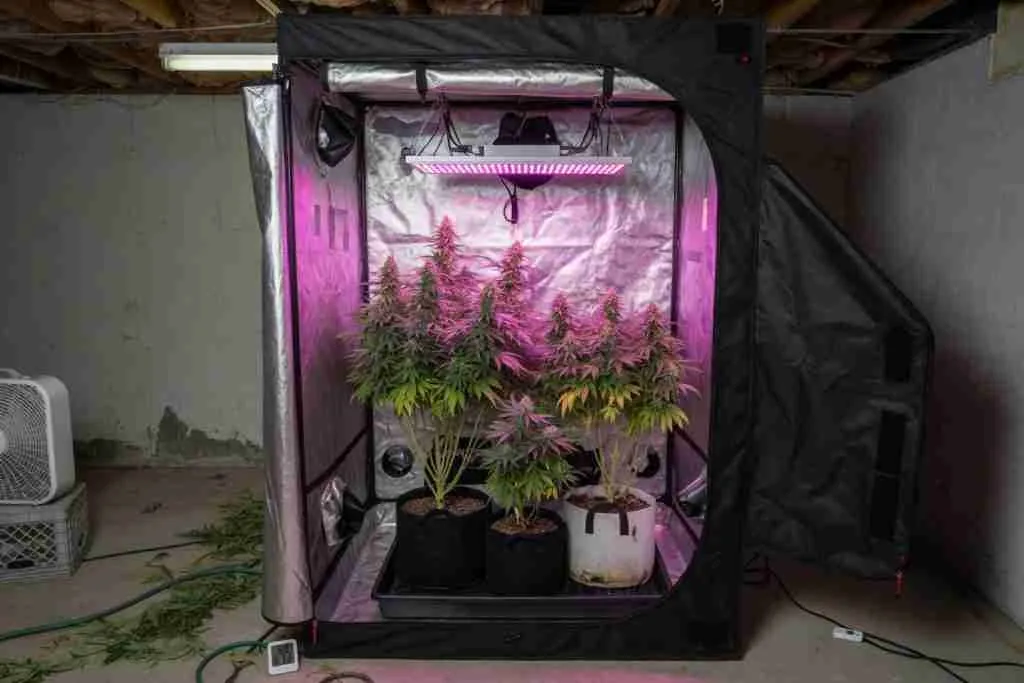
A tent is still the cheapest climate room you can buy. Thick canvas, a steel frame, and mylar that actually reflects. Cheap 600D tents leak light, sag, and chew zippers. In 2026 the sweet spot is 1680D to 2000D canvas, metal poles that do not banana, and ports that fit a real 6-inch duct.
Pick a size you can fill, not a size that looks cool
Sized for a closet, a 2×2 still needs a real exhaust. A 4×4 is the home-grow default because four plants in 5-gallon pots fill it without turning into a jungle. Count plants before you count square feet: how many cannabis seeds.
| Tent | Floor | Typical plants | Light draw | Exhaust |
|---|---|---|---|---|
| 2×2 x 4–5 ft | 4 sq ft | 1 plant | 100–150 W LED | 4-inch, 80–150 CFM |
| 2×4 x 5–6 ft | 8 sq ft | 2 plants | 200–300 W | 4-inch, 120–200 CFM |
| 3×3 x 6 ft | 9 sq ft | 2–3 plants | 250–350 W | 4-inch, 150–220 CFM |
| 4×4 x 6.5–7 ft | 16 sq ft | 4 plants | 480–650 W | 6-inch, 250–400 CFM rated |
| 5×5 x 6.5–8 ft | 25 sq ft | 4–6 plants | 650–800 W | 6-inch, 350–500 CFM rated |
Height matters more than people admit. A 4-foot tent fights stretch on photoperiods. Go 6.5 to 8 feet if you veg more than three weeks. Observation windows are nice. Light-proof zippers are nicer. Gorilla-style height extensions help if your room is tall. AC Infinity Cloudlab-style kits win if you want fans and lights on one app. Spider Farmer and Mars tents are fine if the poles are steel and the corners do not fold.
Tent specs that actually matter
- Canvas: 1680D or thicker. Thin stuff pinholes in one season.
- Frame: 16–22 mm steel, corner pieces that lock.
- Floor tray: waterproof, or you will meet the downstairs ceiling.
- Ports: at least two 6-inch duct ports plus cable flaps on a 4×4.
- Light leak: zip it, lights off, look for glowing seams.
Pros: cheap sealed space, odor control with a carbon filter, easy to move. Cons: heat builds, humidity spikes at lights-off, cheap tents fail zippers. Do not skip a catch tray. Overflow from fabric pots is a personality test you will fail at 2 a.m.
LED Lighting: The Best Tech for Cannabis Growers Right Now
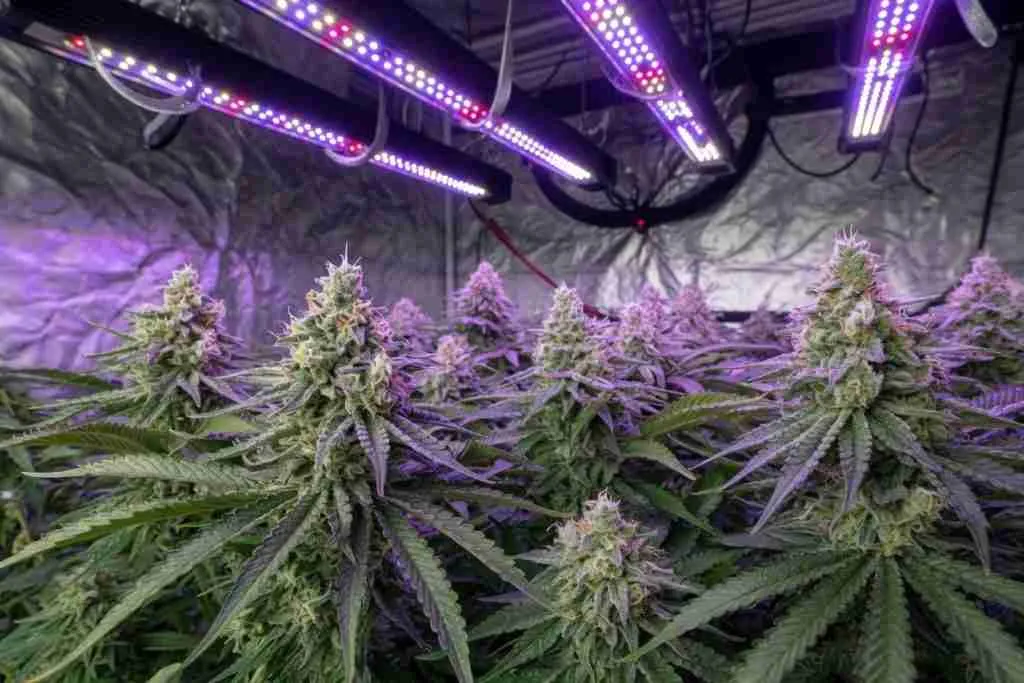
LED won. Quality bars in 2026 put out about twice the usable photons per watt versus old HPS. That is PPE, photosynthetic photon efficacy, in µmol/J. Good boards land 2.7 to 3.0. HPS sits near 1.5 to 1.7. You pay more up front. You pay less every month, and the tent runs cooler, which is half the climate battle. Fluffy buds are usually a light problem first: cannabis buds light and fluffy.
Hung too close, even a fancy bar will taco the tops. Hung too high, you grow Christmas trees with airy bottoms. You size by canopy, not by the number on the Amazon title. A “1000 W” blurple that draws 120 W is a sticker, not a sun.
PPFD, DLI, and the numbers that pay rent
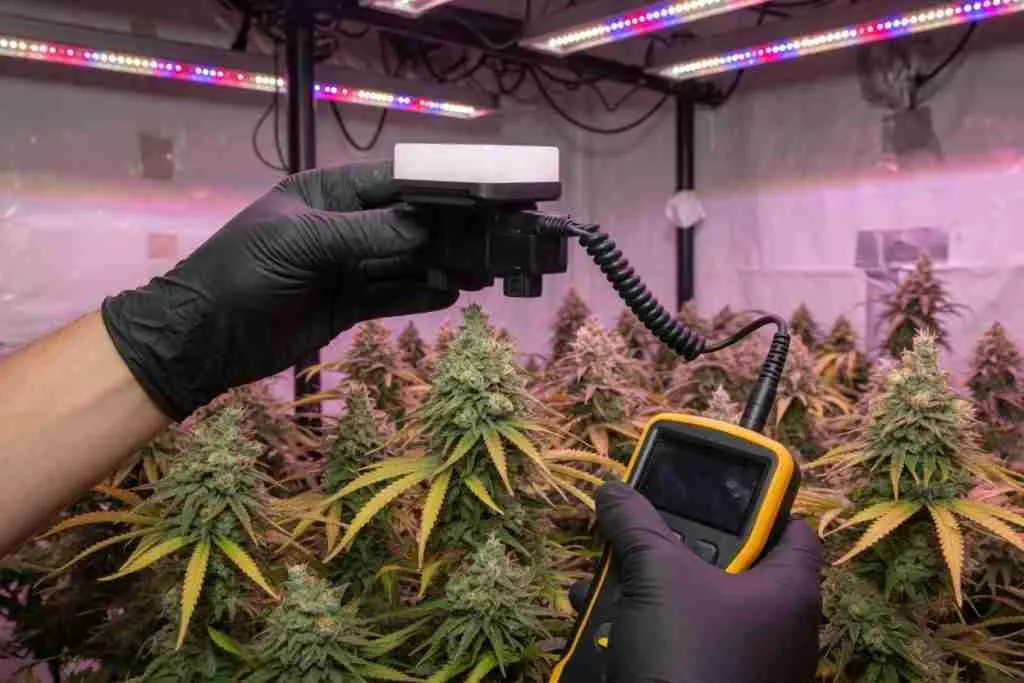
PPFD is how many photosynthetic photons hit a square meter each second. DLI is that number added up over the day. Phone lux apps measure human brightness. They are not PAR meters. Yeah, they are fun. They are also how people cook seedlings.
| Stage | PPFD (µmol/m²/s) | Hours | DLI (mol/m²/day) |
|---|---|---|---|
| Seedling / clone | 100–300 | 18 | 6–20 |
| Veg | 400–600 | 18 | 26–39 |
| Early flower | 700–900 | 12 | 30–39 |
| Bulk flower, no extra CO2 | 800–1,000 | 12 | 35–43 |
| High light + CO2 | 1,000–1,200 | 12 | 43–52 |
Map a 9-point grid: corners, edges, center. You want the hot spot and the dim corner within about 20 percent. Dim the fixture before you raise it into the attic. Most 2026 bars dim from the controller. That is the feature worth paying for, not RGB party modes.
Rule of thumb for true LED wall draw in flower: about 30 to 40 watts per square foot of canopy. A 4×4 wants roughly 480 to 650 W at the plug, not a fake 2,000 W label. Spider Farmer G-series, AC Infinity IONFRAME, HLG-style quantum boards, and similar bars in that wattage band are the workhorses. Budget 2×2: a 100–150 W Samsung-diode bar. Do not run 24/0 unless you like papery leaves. 18/6 veg and 12/12 flower still win for photoperiods. Autos like 18/6 or 20/4 the whole run: grow autoflowering cannabis plants.
Spectrum, far-red, and the UV myth
Blue (about 440–470 nm) keeps internodes tight in veg. Red (620–680 nm) drives bulk. Green punches deeper into a thick canopy than Instagram says. Far-red (700–730 nm) is the 2026–2028 toy people argue about. A short end-of-day far-red pulse can speed the flip signal. Emerson-effect talk is real in papers and easy to overdo in a tent. Use it as a dimmable channel, not a religion.
UV bars that “boost THC”? Controlled work has not shown a reliable THC jump, and high UV burns tissue. Skip the tanning booth unless you like crispy sugar leaves. Full-spectrum white plus a bit of 660 nm red is still the boring winner. Under-canopy bars help in a packed 4×4 if the bottoms stay fluffy. They also add heat and watts. Try them after the top PPFD is even.
LED specs: PPE 2.7+ µmol/J, real wattage on a kill-a-watt, dimmer, hanging kit, mean time north of 50,000 hours. Pros: less heat, less power, spectrum you can dim. Cons: up-front cost, cheap diodes sag in two years, drivers fail if you cook them in a sealed attic.
Cooling, Heating, and Dehumidifiers
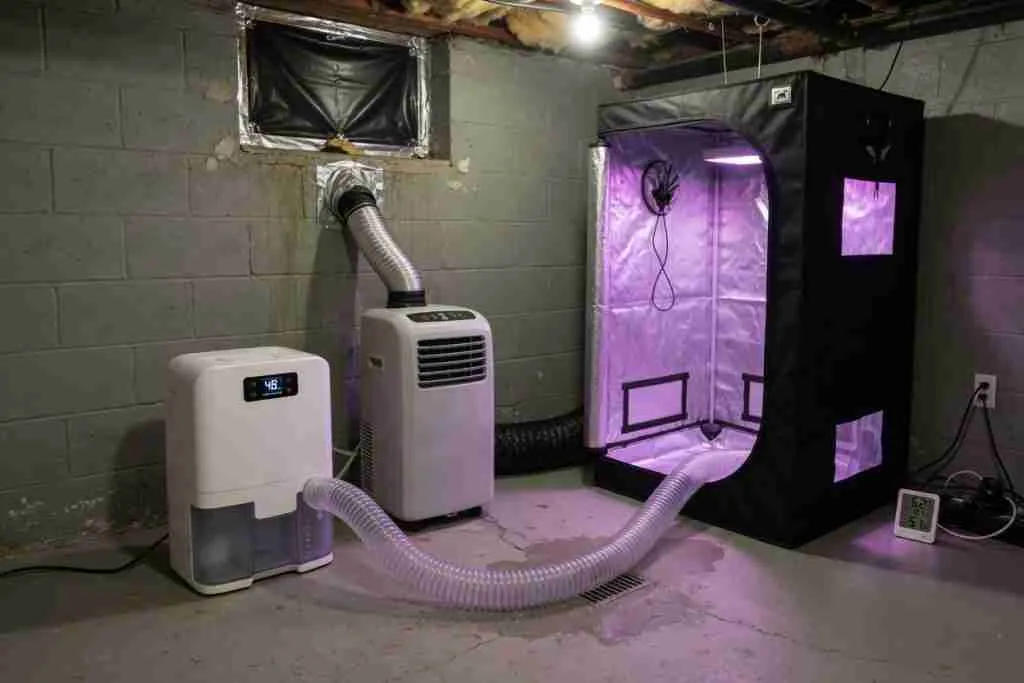
Lights make photons. They also make heat. Plants drink water and dump it into the air. That is why a flower tent feels like a locker room at lights-off. Exhaust helps. It does not replace a dehumidifier. HVAC is the unsexy best tech for cannabis growers, and it is the piece people cheap out on until buds rot.
Cooling without turning the tent into a wind tunnel
Target leaf-zone temps, not the hallway. Veg likes about 75–82°F (24–28°C). Flower likes 72–78°F (22–26°C) without extra CO2, a couple degrees warmer if you dose CO2 and the VPD still holds. A 4×4 LED at 500–600 W often needs more than “cracked the door.” Options, cheap to spendy:
- More exhaust and a cooler intake room. Free if the basement is already 68°F.
- Portable AC ducted to a window, 8,000–12,000 BTU for a hot 4×4 room, not just the tent.
- Mini-split on the grow room. Best long-term if you own the space.
- Water-cooled lights. Niche, leaky, skip unless you like plumbing.
Do not blast AC air straight on colas. You will get windburn and weird foxtails. Cool the room, then let the tent exchange. A controller that ramps the inline fan beats an on/off death rattle.
Heating for winter basements and seedling trays
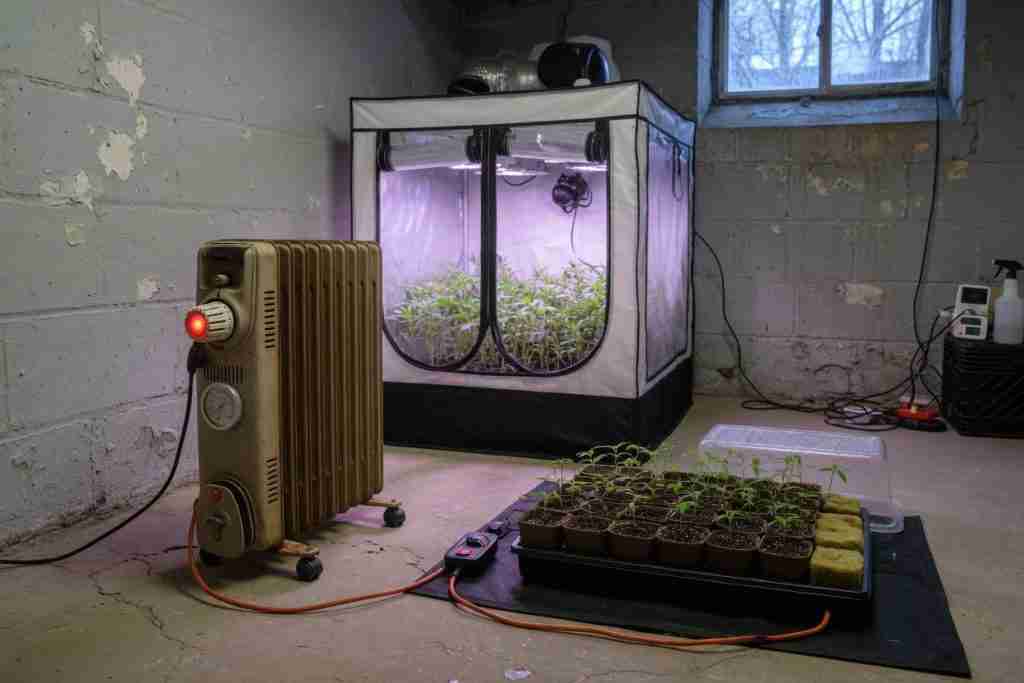
Canadian winters and prairie houses will drop a tent 10°F when lights go off. Roots hate that. Root zone 68–72°F (20–22°C) is the happy band. Air can sit a bit cooler at night. Oil-filled radiators on a thermostat are slow and safe. Ceramic heaters are faster and drier. Heat mats under seedling trays help germ: cannabis seed germination. Keep mats on a probe, not full blast, or you cook the cubes.
Space heaters inside a fabric tent are a bad sitcom. Put heat in the room. Let the tent breathe it in. Cold climate notes: growing cannabis in colder climates.
Dehumidifiers: the flower-room hero
Size by water, not by floor tile. Plants transpire most of what you pour. A 4×4 in late flower often wants 50–70 pints/day of capacity. A 2×2 might ride on exhaust alone. Hydro and coco dump more moisture than soil. Residential basement units work if they drain 24/7 and still pull water at grow temps. Cheap 20-pint toys quit when the room is 78°F. Quest and Anden-class units are overkill for one tent and perfect if you run rooms.
| Space | Flower moisture load | Starting dehumidifier |
|---|---|---|
| 2×2 / 2×4 | light | 30–50 pint, or strong exhaust |
| 4×4, 4 plants | medium-heavy | 50–70 pint with hose drain |
| 5×5 / two tents | heavy | 70–90 pint or small commercial |
Lights-off is when RH jumps. Set the dehumidifier to hold flower at 45–50% late, 50–55% early. Pair it with VPD, not a vibes check: cannabis VPD explained.
Fans and Airflow: CFM, Filters, and Leaf Flutter
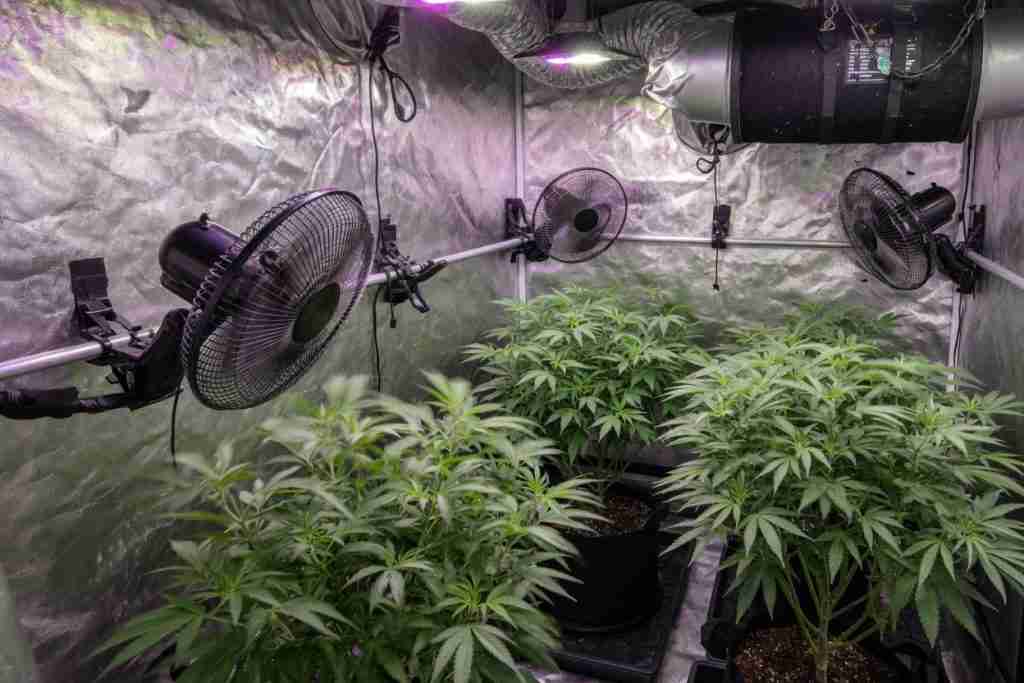
You need two kinds of air. Exhaust swaps the box. Circulation stops dead pockets so mold does not throw a house party. Leaves should flutter, not flag like a parade.
Base CFM is tent volume in cubic feet, once per minute. A 4x4x6.5 is about 104 cubic feet, so about 104 CFM before losses. A carbon filter eats 20–30%. Duct bends eat more. Lights add heat. Buy a fan with headroom and run it at 40–70% on a controller. That is why a Cloudline T6 rated around 400 CFM is the 4×4 workhorse, not a 4-inch toy. 2×2 and 3×3: 4-inch. 4×8 and up: 8-inch starts to make sense.
A simple CFM cheat
- Volume = L × W × H in feet.
- Base = volume (one exchange per minute).
- Times 1.25 for the carbon filter.
- Times 1.10 per hot light if the room is already warm.
- Times 1.25 so you can run quieter, not pinned at 10.
Carbon filter CFM should match or beat the fan. Put the filter inside the tent, fan pulling through it, duct out. Intake can be a passive port or a slower intake fan. Negative pressure (tent walls sucking in a bit) keeps smell inside. Clip fans: one oscillating in a 2×2, two or three in a 4×4, aimed across the canopy and under it, never straight at one cola for 12 hours. EC fans with 0–10 V or UIS control beat cheap AC fans that only know on and off.
Pros of a real mixed-flow inline: quiet, PWM speed, less stall on a filter. Cons: cost, extra ducting, you still need a dehumidifier in flower. Airflow does not dry a swamp. It just moves the swamp around.
Meters and Controllers: The Brain of the Tent
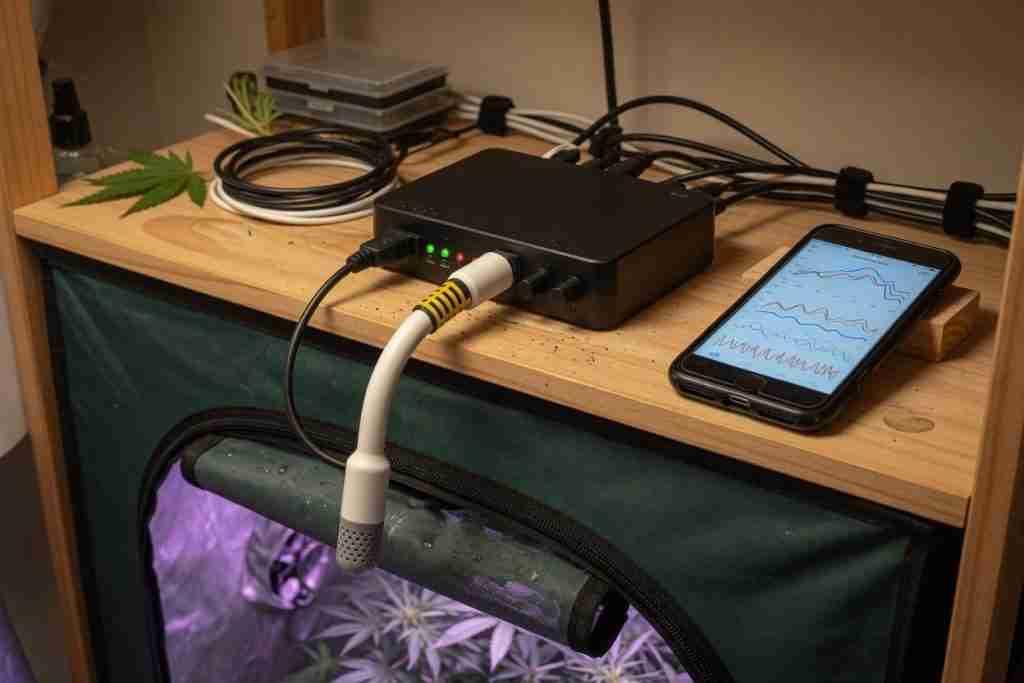
A controller is a thermostat that grew up. In 2026 the split is simple. Tent kits: AC Infinity Controller AI+ and similar all-in-one hubs. Rooms that will grow: TrolMaster Hydro-X. Budget mixed brands: Inkbird, Vivosun GrowHub, Mars iControl if you already live in that family. The best tech for marijuana growers here is the box that ramps fans on VPD instead of slamming 100% every time the tent ticks one degree.
Which controller fits your space
AC Infinity AI+ is the tent pick if your fans and lights already speak UIS. One app, temp, humidity, VPD, optional CO2, sunrise dimming. It will not run a warehouse. TrolMaster Hydro-X (HCS-1) is modular RJ12: add CO2, irrigation, lighting adapters, extra sensors without junking the brain. Hydro-X Pro is the room version. Vivosun GrowHub is the value four-port hub. Mars iControl is fine inside a Mars-only stack and annoying the day you buy a different light.
Put the probe at canopy height, in the shade of a leaf, not on the LED heatsink and not on the floor. Two probes beat one in a 4×4 if the back corner always runs hotter. For the full cheap-sensor ladder, the existing IoT write-up still holds: IoT automation for cannabis grow rooms.
pH, EC, and hygrometers you can trust
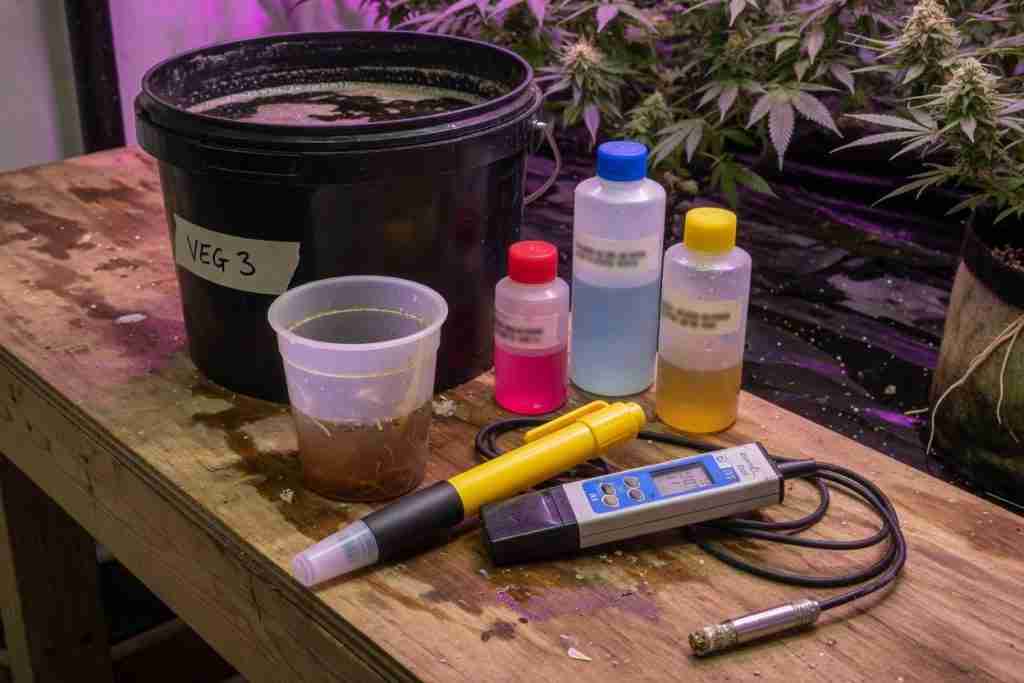
A $12 pH pen that never sees calibration fluid is how you get lockout with a full bottle of nutes. Soil likes about 6.2–6.8. Coco and hydro like 5.6–6.2. EC (mS/cm) is feed strength. Seedlings 0.2–0.6. Veg often 1.0–1.6 in coco. Flower often 1.4–2.0 depending on the cultivar. Charts: dialing EC by phase and pH for growing cannabis.
- pH pen plus 4.01 / 7.00 buffers plus storage solution. Calibrate weekly in hydro, every couple of weeks in soil.
- EC/TDS meter. Know if yours is 500 or 700 scale. Mixing those numbers is how people burn tips.
- Hygrometer: Govee-class WiFi for history, AC Infinity or Pulse for the tent. ±2–3% RH is acceptable. The $8 egg is not.
- PAR meter: Apogee-class if you can. A decent quantum sensor once in your life beats guessing forever.
- Runoff cup. If runoff EC climbs 0.4+ above input, you are salting the pot.
Pulse One / Pro, AC Infinity Cloudcom, and TrolMaster 4-in-1 probes cover temp, RH, VPD, and sometimes CO2 or light. That bundle is worth more than a fourth clip fan. Beginner money leaks live here: beginner mistakes that waste money.
Pots and Containers: Where Roots Live
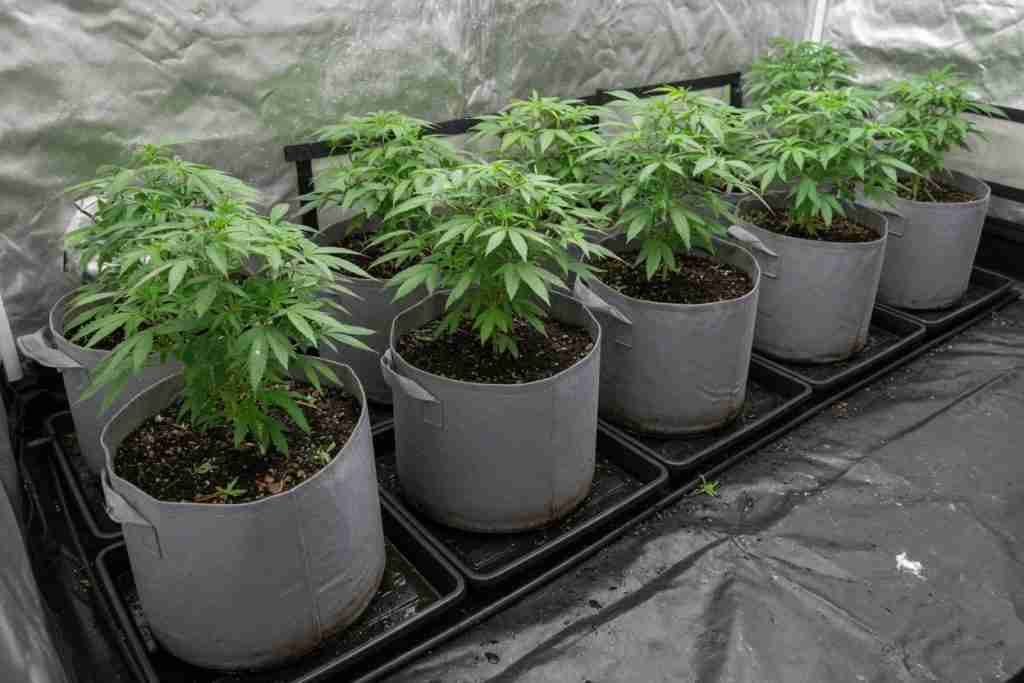
Fabric pots are the 2026 default for soil and coco. They air-prune circling roots, dump extra water through the walls, and forgive a heavy hand. They also dry faster, which is a feature in a swamp basement and a pain in a desert house. Plastic nursery pots hold water longer and circle roots if you leave plants in them for months. Air pots and slim hydro buckets are the loud options.
| Container | Best use | Typical size | Watch-out |
|---|---|---|---|
| Fabric (felt) | soil, coco, most tents | 3 gal autos, 5 gal photos, 7 gal long veg | dries fast; needs a tray |
| Plastic nursery | cheap starts, outdoor | 1–5 gal | root circling, overwater risk |
| Air pot | max air prune | 5–7 gal | dries very fast, pricey |
| DWC net pot + bucket | hydro | 5 gal bucket, 6–8 in net | root temp, pump fails |
| AutoPot tray / XL | hands-off coco | 3.9–6.6 gal pots | needs a level floor |
One seed, one final pot. Do not drop two beans in a 5-gallon and “pick a winner” unless you like tangled roots. Start extras in cubes, then pick: that is in the seed-count guide. Trays under fabric are not optional. Saucers that stay flooded are swamp coolers for fungus gnats. Elevate pots on risers so the bottoms breathe. Root oxygen is yield: cannabis root oxygenation.
Soils, Coco, and Mixes You Can Repeat
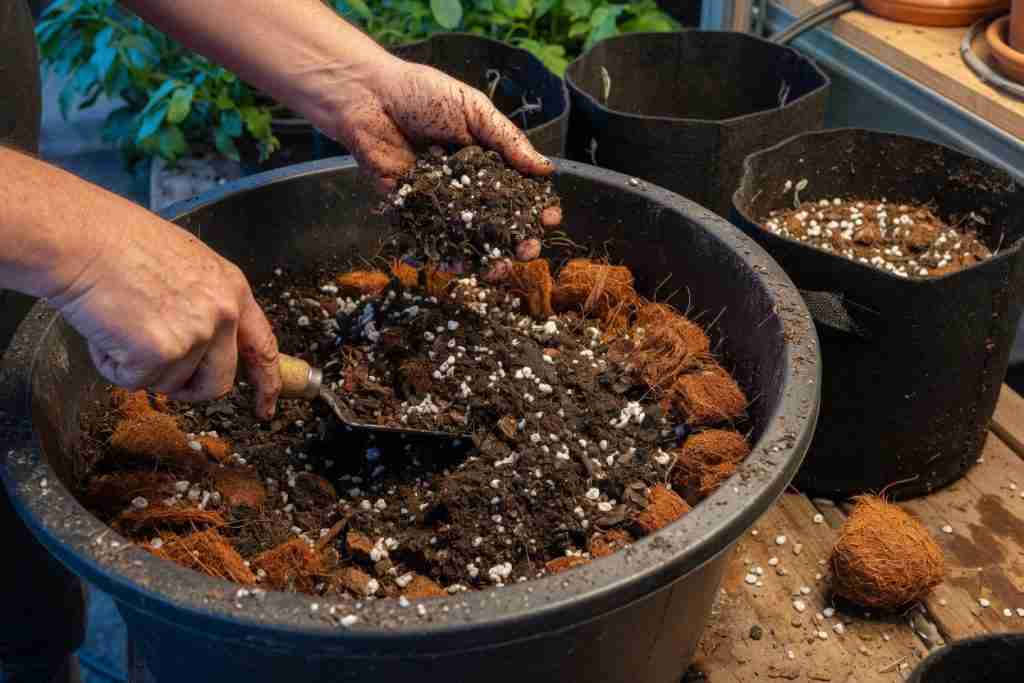
Medium is tech too. It is the slow computer your roots run on. Bag soil is the easy button. Coco is the fast button. Living soil is the lazy-after-you-build-it button. Hydro is the sports car. Pick one lane for the run. Mixing all four in a 3×3 is how you write a sad diary.
A mix that does not drown seedlings
For bag soil in fabric: 70% quality potting soil, 30% perlite or rice hulls, pH 6.2–6.8. Water when the pot is light, not when the calendar nags. For coco: buffered coco plus 30–50% perlite, feed every irrigation, 10–20% runoff, pH 5.7–6.2, cal-mag from day one if your water is soft. Living soil: bigger pot (7–15 gal if the tent allows), top dress, teas if you want, less bottled salt. Seed starting recipes: peat vs coco vs plugs.
Coco in 2026 still beats soil for even tents because you can steer EC daily. Soil still beats coco if you travel or you overwater like a nervous parent. Living soil shines when you hate mixing bottles and you can give the biology a big container. None of them fix a 95°F tent. Environment first, then dirt.
Strain shape still matters in a small box. Short, bushy plants are easier under a 2×2 bar. Stretchy plants need height or a screen: cannabis indica vs cannabis sativa. Feminized photoperiods are the usual tent pack. Regulars if you are hunting: feminized and regular cannabis seeds.
Hydroponics and Irrigation Tech
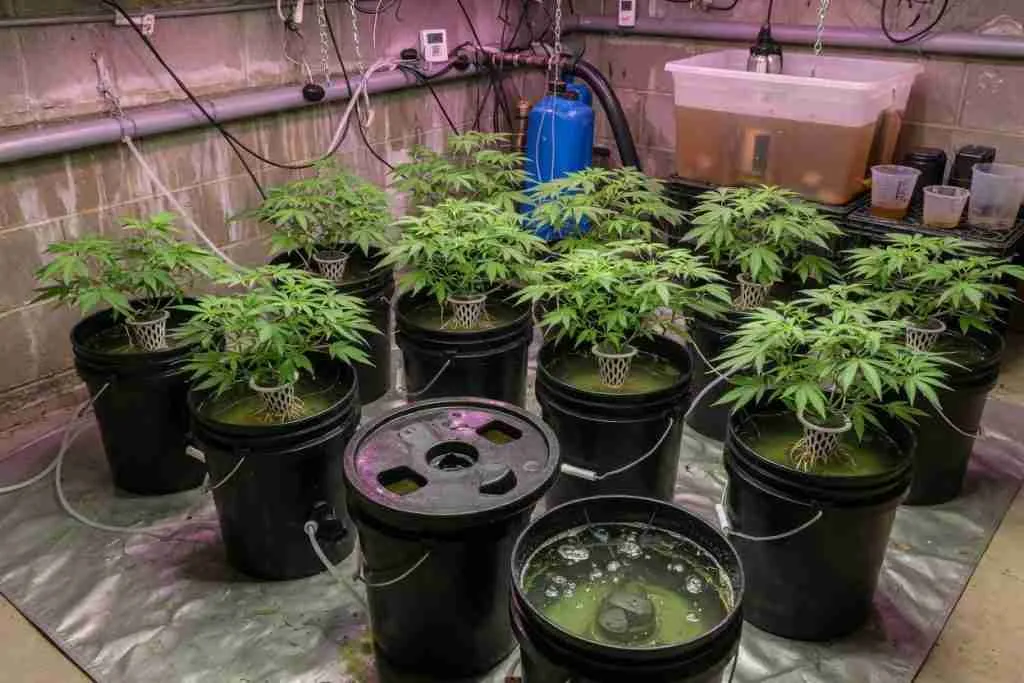
Hydro is not magic. It is roots in oxygenated water with a known EC. Done right, plants run faster. Done wrong, a pump dies at midnight and you own soup. Home winners in 2026: single-bucket DWC, recirculating DWC if you want even buckets, AutoPot-style trays if you want gravity to do the night shift, drip on coco if you like control. NFT is for lettuce. Aeroponics is for people who like misters clogging.
DWC, AutoPot, and drip without the drama
DWC: 5-gallon bucket, 6–8 inch net pot, clay pebbles, air pump rated for the stone, water temp 62–68°F, dissolved oxygen 6–8 ppm if you measure it. Chiller or frozen bottles if the tent is hot. Backup air pump if you like sleeping. RDWC links buckets so EC stays even. AutoPot: once roots hit the bottom, the valve waters on demand. Great for coco, terrible if the tray is not level. Drip: cheap once you own a reservoir, a pump, and a timer or a moisture-based controller. Bluelab, Growee, and TrolMaster irrigation modules dose pH and EC if you outgrow the turkey baster. Full hydro walkthrough: hydroponic cannabis growers guide.
DWC specs: air 1+ L/min per bucket, EC by stage, pH 5.6–6.1, reservoir change every 5–7 days or top off with lower EC. Pros: speed, clean roots you can see. Cons: root rot if warm, pythium, leaks, more meters. If this is grow one, coco in fabric is the kinder teacher.
IT Tech: Apps, WiFi, Cameras, and CO2
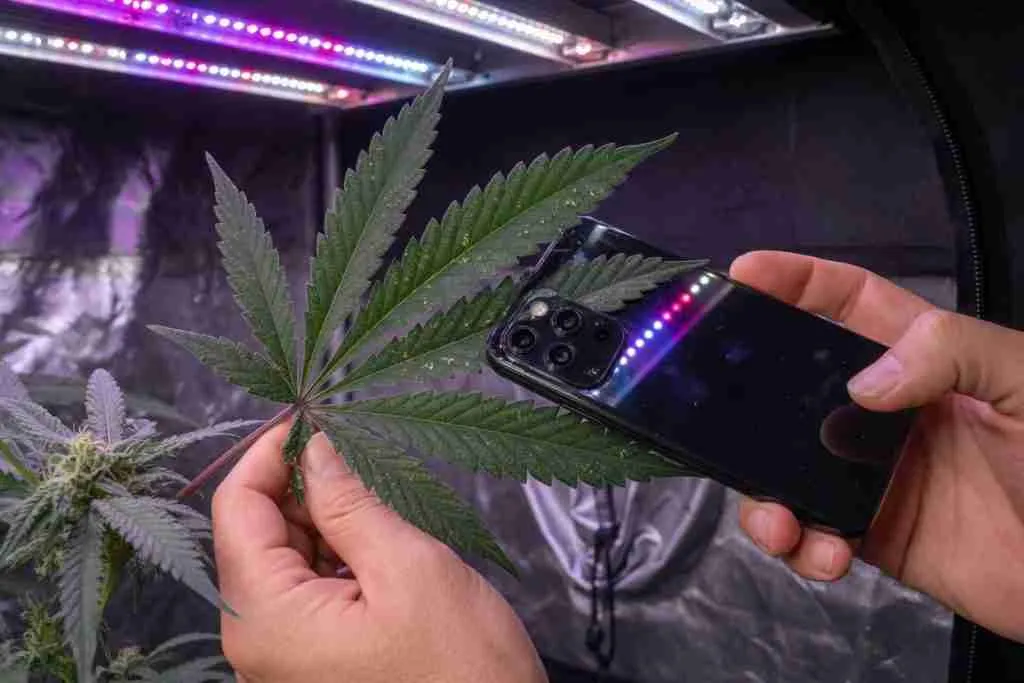
IT in a home tent means three jobs. Log the room so you see the 3 a.m. humidity spike. Alert you when a fan dies. Help you look at leaves when you are at work. That is it. You do not need a commercial ERP to grow four plants.
Apps and cameras that help, not nag
Pulse Grow, AC Infinity, TrolMaster TM+, Govee, and Grow with Jane-style journals cover 95% of home needs. Take the same leaf photo every few days. 2026 phone models flag mite stipple and powdery mildew better than they did in 2023. They still guess. You still confirm with your eyes. Commercial rooms use Neatleaf-style gantries and hyperspectral scans that estimate cannabinoids before chop. Cool. Not your 4×4. A $20 WiFi camera aimed at the canopy is enough to catch a dropped scrog net.
WiFi in a basement is the silent failure. Mesh node near the tent, 2.4 GHz for most gadgets, unique passwords, and a plan if the app is down. Controllers should still run local setpoints when the internet naps. If the box bricks without cloud, that is a toy, not a controller.
CO2: only after light and climate are already good
Ambient air is about 400–450 ppm. Sealed rooms with strong PPFD (900+) can use 1,000–1,300 ppm lights-on. Bags (Exhale-style) are “better than nothing” in a small tent. Tanks with an NDIR controller are real dosing. Generators add heat. Never dump CO2 in a bedroom you sleep in. Shut it off in the dark. Exhaust and CO2 fight each other, so you need a sealed or semi-sealed strategy. Yield math and safety: high-CO2 home grows. If your PPFD is 500, spend the CO2 money on a better light.
Three Real Stacks: Starter, Mid, and “I Live in This Tent”
Gear lists without prices go stale by lunch. These are jobs, not brands you must marry. Costs bounce. The mix does not.
Starter 2×2 or 2×4 (first harvest)
- Decent 1680D tent, 4-inch inline + carbon filter, one clip fan.
- 100–300 W true LED with a dimmer.
- Controller that at least ramps the fan on temp/RH.
- Govee or similar logger plus a calibrated pH pen.
- Two 3-gallon fabric pots, coco or airy soil, seedling cubes.
- A 5-pack of easy feminized or autos, not a 20-pack of unicorns. Shop: the cannabis seeds store.
Mid 4×4 (the Canadian four-plant box)
- 6-inch mixed-flow fan, filter, 2–3 clip fans, 480–650 W LED.
- AI or Hydro-X-class controller, canopy probe, 50–70 pint dehumidifier with a hose.
- PAR meter once, pH/EC pens, fabric 5-gals, coco or soil.
- Optional: AutoPot or drip, small CO2 bag only if PPFD is already high.
Prosumer room (2026–2028 direction)
- Mini-split or dedicated AC, commercial dehumidifier, sealed strategy.
- TrolMaster or Growlink-class brain, irrigation dosing, NDIR CO2.
- Mapped LED with dimming and a far-red channel, under-canopy if the floor is dark.
- Camera scouting, backup power for air pumps if you are in DWC.
Canada four-plant homes: buy cannabis seeds in Canada. U.S. shoppers should check plant counts first: USA 2026 seed guide. Cost of the pack is still a line item: cost buying cannabis seeds.
New Grow Gear From Late 2025 Into 2026
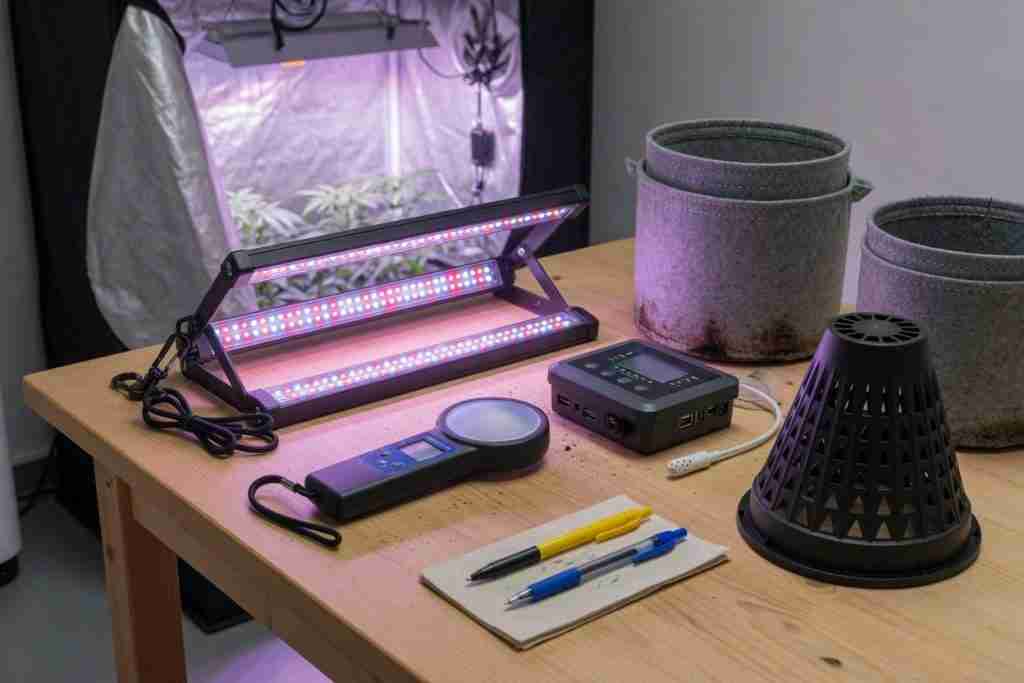
The last 12 to 18 months did not invent photosynthesis. They did make the boring jobs easier: even bars, a brain that ramps instead of slamming on, a meter that logs the 3 a.m. spike, and pots that actually hold the gallons on the label. Walking through a 2026 grow shop, the new pile is foldable LED frames, tent-sized AC, VPD humidifiers, and fabric bags with real rims. However, a lot of “AI” is still a schedule with better marketing. Buy the spec, not the slogan.
New LED bars, EVO diodes, and under-canopy lights
Foldable bar fixtures ate the old single quantum board. AC Infinity IONFRAME EVO6 (about 500 W true, 4×4 flower) and the bigger EVO10 (about 1,000 W, 5×5 to 6×6) use Samsung LM301H EVO diodes and talk to the UIS controller for sunrise dimming. Maker claims sit around 2.85 to 3.14 µmol/J. Treat the 3.14 number like a fish story until you map it. Spider Farmer’s 2026 G-series (G5000 and the rest of the G3000–G1000W line) added Osram 660 nm hyper-red, WiFi/Bluetooth dimming, and 8-bar foldable frames on the big ones. Mars Hydro FC-E foldable bars did the same job with extra 660 nm red. The real upgrade versus a 2023 board is edge PPFD, not a magic color.
Under-canopy bars are the 2025–2026 trick people actually notice. Hang a pair of 20–60 W bars under the screen so the floor is not a cave. You get more lower sites. You also add heat and watts, so dim the top light if the tops taco. UV and IR add-on bars (Spider Farmer UV30 / IR16 class) are optional seasoning. UV still does not reliably jack THC. Far-red at lights-off can help the flip signal. Map first: cannabis buds light and fluffy.
LED specs to demand in 2026: true wall watts, PPE 2.7+, 0–10 V or app dim, a published PPFD map, daisy-chain or UIS, 5-year warranty if you can get it. Pros: even canopy, less hot-spot burn, one app with the fans. Cons: brand lock-in, fake “1000 W” labels still exist, extra bars mean extra heat.
New meters: PAR, Pulse, and WiFi pH
Phone lux apps still are not PAR meters. Yeah, Photone is better than a guess. It is not an Apogee. The last year’s useful meter stack looks like this:
- Apogee MQ-500 class (~$500+) if you want a lab-ish quantum sensor. The original quantum meters are the cheaper cousins. ePAR sensors (about 400–750 nm) catch far-red the old 400–700 PAR meters miss.
- SpotOn Quantum PAR (~$300) or PHOTOBIO Advanced Quantum PAR (~$150) if you will map once and mark the dimmer.
- Pulse One for wireless temp/RH/VPD. Pulse Pro (~$450) adds CO2 plus PAR snapshots. Pulse Zero (~$100) is the cheap extra logger. Honest catch: Pulse Pro’s PAR window is side-mounted, so treat PPFD as a spot check, not a 24/7 DLI lab.
- Bluelab Combo for the reservoir. Bluelab Pulse probes the medium for EC, moisture, and temp. Guardian Wi-Fi (~$500) sits on the wall and nags your phone when DWC pH drifts while you are at work.
Calibrate pH weekly in hydro. Store the probe wet. Know if your EC pen is 500 or 700 scale. Charts: dialing EC by phase and pH for growing cannabis.
New controllers and tent climate boxes
AC Infinity Controller AI+ is the tent brain that showed up and stayed. Dual-zone VPD, WiFi, learning ramps, mix of UIS gear plus outlet modules, claimed up to 32 devices. The older 69 Pro / Pro+ still work if they already hold your tent. TrolMaster Tent-X TCS-1 is the 2026 tent-sized Hydro-X: 3-in-1 temp/RH/light sensor, optional CO2, PAR, and moisture probes, and it can graduate into a full Hydro-X room later. Vivosun GrowHub E42A+ is the budget four-port hub. Mars iControl is fine if you already live in Mars lights and annoying the day you buy something else.
The new climate boxes are the loud 2026 toys. Terraform 8 is a 12,000 BTU one-duct tent AC that auto-switches cool and heat, listed around $600. Terraform 7 (8,000 BTU) and 12 (16,000 BTU) fill the other tent sizes. Hydrone 5 and Hydrone 7 are VPD-aware tent dehumidifiers (~$200–$260) that beat a basement 20-pint toy in a hot flower room. Thermoforge T7 is a 1,000 W PTC tent heater with 10 heat levels or fresh-air intake. Cloudforge T5/T7 humidifiers add warm or cool mist and a hose so you are not fogging the light. SPECTRON 7 tent cameras add thermal and under-canopy views. Useful. Not a replacement for sticking your head in the tent. More on cheap sensors: IoT automation for cannabis grow rooms.
Pros: one app, VPD targets, less 2 a.m. fan slamming. Cons: WiFi dropouts, you still need a drain hose, a $600 tent AC is overkill if the basement is already 68°F. Keep local setpoints so the box still runs when the internet naps.
New pots: thick fabric, rigid rims, and Air-Pot 7
Fabric is still the home default. What changed is quality spread. Cheap 5-packs can be 2-gallon bags wearing a 5-gallon sticker. Look for 300–500 g fabric, true volume below the grommet line, and handles that do not rip. AC Infinity heavy-duty 500 g bags are the mass-market thick ones. Rigid-rim bags with aluminum LST grommets (BudPots-style) hold their shape so you can tie down without collapsing the wall. Smart Pots remain the old name that actually invented the category.
Hard air-pruning pots got a 2025 refresh. Air-Pot 7 uses new angled cones that fill cleaner and air-prune more evenly than the older generations. You get a dense fibrous root mass. You also water more often, because the walls are a wind tunnel. Great in coco. Mean in a dry prairie house if you skip a day. Plastic nursery pots still circle roots. 3 gal for autos, 5 gal for most photoperiods, 7 gal if you veg long in a tall tent. One seed, one final pot: how many cannabis seeds. Roots need air: cannabis root oxygenation.
2025–2026 gear cheat sheet
| New-ish kit | Job | Home spec | Skip it if |
|---|---|---|---|
| Foldable bar LED (EVO / G / FC-E) | even flower PPFD | true watts, 2.7+ µmol/J, dimmer | your current map is already even |
| Under-canopy bars | light the floor | 20–60 W, dimmable | you run one plant in a 2×2 |
| Controller AI+ or Tent-X | VPD ramps | local setpoints, canopy probe | a 69 Pro already holds the tent |
| Pulse Pro / Guardian Wi-Fi | log and nag | VPD + CO2 or 24/7 pH/EC | you never leave the house |
| Hydrone / 50–70 pint dehu | late flower RH | hose drain, works at 78°F | exhaust already holds 45% RH |
| Terraform tent AC | heat dump | 8k–12k BTU, one duct | the room is already cool |
| 500 g fabric or Air-Pot 7 | root air | true 5 gal, tray under it | your bags already hold volume |
What is actually worth buying first
Do not rip out a working 2023 light because a YouTube thumbnail said EVO. Map it. If the corners are 30% dim, a foldable bar or a dimmer schedule pays. If the tent is a swamp at lights-off, a Hydrone-class or 50-pint dehumidifier pays faster than a new LED. If you drown plants, thick fabric or Air-Pot 7 plus a tray pays. If you travel, Pulse or Guardian Wi-Fi pays. New cameras are dessert. Genetics still sit under all of it. Shop packs that fit the box you already have: the cannabis seeds store and seeds for beginners.
What Is Coming in 2027 and 2028
The next two years are not flying trimmers in your closet. They are tighter loops. Controllers will treat VPD, PPFD, and irrigation as one recipe instead of three apps. Phone AI will get better at early powdery mildew and russet mites, which still hide from beginners. Edge boxes (think a hardened Pi-class brain) will keep running if the cloud coughs. Greenhouse DLI controls already show huge lighting-energy cuts in field work. Home tents will steal the dim-when-the-plant-is-done trick.
Hyperspectral “potency on the plant” is landing in licensed rooms. You will not get 94% lab accuracy from a $40 webcam. You might get a better harvest window than “cloudy trichomes on Tuesday.” Hop latent viroid screening is moving from labs toward faster tissue tests. If you take clones, that matters: cannabis seeds vs cannabis clones. Far-red and dynamic spectrum will keep selling. Use them after the basics. UVC as a pesticide replacement is being pushed hard in trade talks. It can damage tissue and people. Treat it like a tool with a manual, not a vibe.
Water recycling and sealed rooms will matter more where utilities are nasty. For a home tent, that still means: catch runoff, do not dump nutes in the alley, size the dehumidifier, and stop watering like you are filling a pool. The green future is less waste per gram, not more blinking lights.
Specs, Pros, and Cons at a Glance
| Tool | Home spec that matters | Pros | Cons |
|---|---|---|---|
| LED | 2.7+ µmol/J, 30–40 W/sq ft flower | cool, efficient, dimmable | up-front cost, fake watt labels |
| Tent | 1680D+, 6.5 ft+ for photos | cheap room, odor control | heat and RH spikes |
| Inline fan | headroom CFM, speed control | quiet, smell, heat | filter loss, not a dehumidifier |
| Dehumidifier | 50–70 pint on a 4×4 flower | saves buds | heat, drain hose, power |
| Controller | VPD, ramp, local setpoints | sleep, graphs | WiFi drama, brand lock-in |
| pH/EC pens | calibrate, know the ppm scale | stops lockout | probes die if you store them dry |
| Fabric pots | 3–7 gal by plant size | air prune, hard to drown | dry out, need trays |
| Coco | 30%+ perlite, feed every time | steer daily | cal-mag, more watering |
| DWC | 62–68°F water, backup air | speed | pumps, pathogens |
| CO2 | 1,000–1,300 ppm lights-on | more photosynthesis if light is high | waste, safety, leaks |
If leaves canoe, the light or VPD is yelling: when marijuana leaves canoe. If tips burn, check EC and pH before you buy another bottle.
FAQ: Best Tech for Cannabis Growers
Do you still need HPS in 2026?
Almost never in a home tent. LED is better on heat and watts for most people. HPS still has a following for greenhouse bump lighting. If you already own a working HPS and the room can dump heat, finish the run, then switch.
What is the one upgrade that pays back first?
A truthful environment. That is a controller plus a sensor at the canopy, then a fan that can slow down, then a dehumidifier in flower. A fancier light on a swamp tent still grows popcorn.
Can a phone replace a PAR meter?
No. It can replace a paper journal. It cannot tell you 850 µmol versus 400. Borrow or buy a quantum sensor once, map the tent, mark the dimmer, then you are done for that fixture.
Is an all-in-one grow box worth it?
For a closet and one or two plants, maybe. You pay for the cabinet. You still need genetics, pH, and a dry room at harvest. A 2×2 tent kit is usually more plant per dollar and easier to repair when one part dies.
How many plants should this gear run?
However many you can flower without stacking wet colas. Four in a 4×4 is the classic. One well-trained plant in a 2×2 beats four sticks. Legal caps come first. Then tent. Then seed type.
What should you buy before CO2 or UV?
A better light map, a dehumidifier, a calibrated pH pen, and seeds you actually want to smoke. UV is a maybe. CO2 is a maybe. Dry, even, well-lit plants are not a maybe.
Start with the tent you can hide, the light you can hang, and the fan you can hear at 3. Then add the meter that tells the truth. Best tech for cannabis growers in 2026 is the stack that keeps VPD, PPFD, and roots in range while you go to work. Grab a pack that fits that box, pop them clean, and let the gear do the night shift. If you want a first-run checklist, use the new cannabis growers checklist and keep spare beans stored right: seed stash storage.