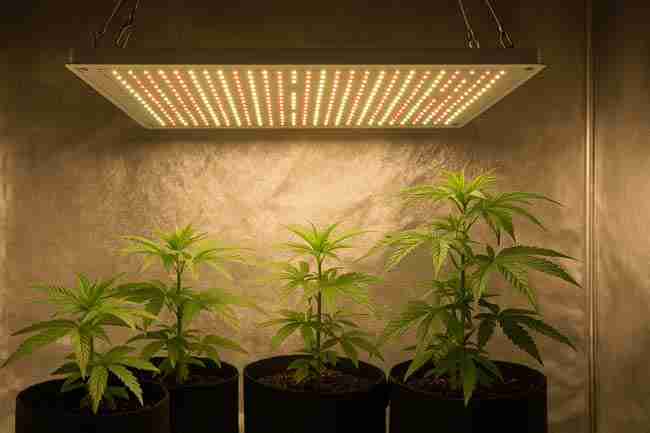
Future Tech for Cannabis Growers

Future tech for cannabis growers is a small loop that keeps telling the truth while you are at work. A sensor sits with the leaves. The light can be turned down. The fan can be slowed, not only switched off. A marijuana plant will ride that loop. A weed plant will not be saved by a robot, a drone, or a second app. The room is still the crop. The gadget is only useful when it changes what the room does at two in the morning.
Most of what gets called future gear is a facility tool wearing a home-grow price. A rail camera, a hyperspectral scan, and a ledger for a licensed warehouse do not belong in a closet with a handful of plants. What belongs there is quieter. You want one honest reading at the canopy, a fixture whose real draw you can read on the driver, air that keeps moving after the lights go out, and a way to pull water out of that air when flower gets wet. Buy those in that order. A dashboard on top of a bad room only graphs the failure.
The tent, the first-run list, and the indoor layout already have their own pages. Start there if the room is still a pile of parts: the grow tent, the new growers checklist, and the indoor growers guide. This page is the layer you add once a plant can live in the space. A dated short list of tent gear sits on the best tech for cannabis growers in 2026 page. Use that when you are comparing hardware. Use this page when you are deciding what the hardware is supposed to do, and what to ignore.
In Canada a plant under a sensor still counts toward four plants per household, not per adult. Quebec prohibits recreational home growing. Manitoba allows indoor growing only, for adults 19 and older, since 1 May 2025. Outside Canada, follow the rule where you live.
Future Tech for Cannabis Growers
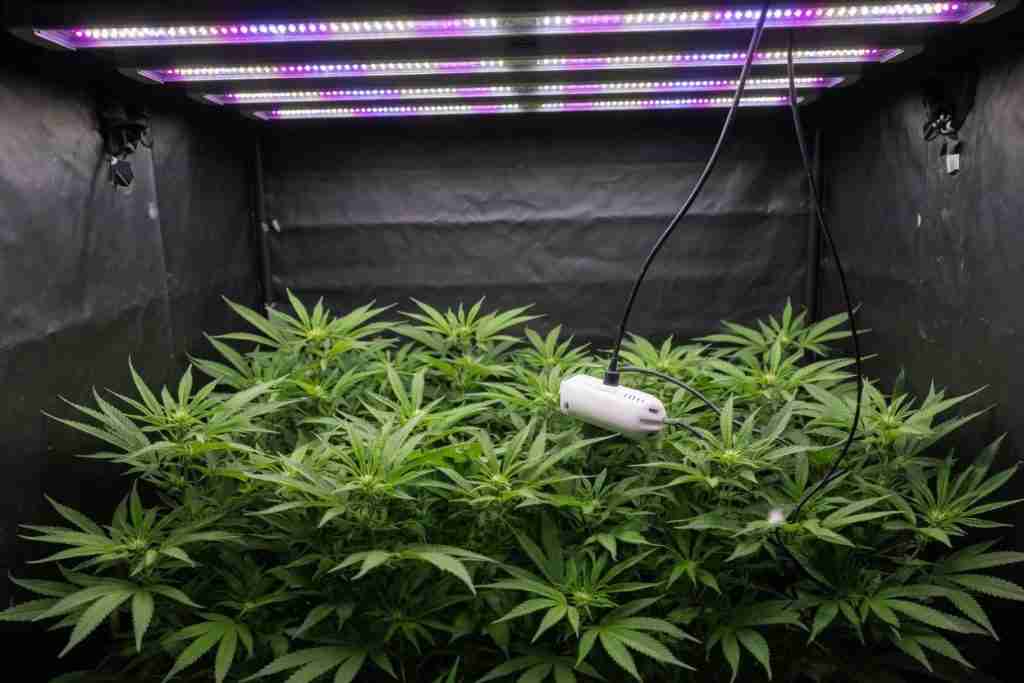
Look at a working tent before you look at a catalog. The light is over the plants. A probe hangs in the leaves, not on a shelf in the lung room. Cables are tied so they do not fall into a cola. That picture is the whole stack a home grow needs to copy. Everything else is a refinement of those three objects: light, air, and a number taken where the plant actually is. If a product does not change one of those, it can wait.
Commercial rooms add cameras on rails, substrate sensors in every slab, and a climate computer that stages heat, dehumidification, and vents together. That is a building. It pays for itself when labor and crop value are both large. It does not pay for itself because a video said the future had arrived. Your job at home is narrower. Catch the night the humidity climbed, the afternoon the canopy got hotter than the hallway, and the week the fan was loud because the filter was full. A phone can store that. It cannot invent it.
Two apps that do not share a login are fine. The dimmer can live on the fixture. The fan speed can live on its own dial. The dehumidifier can have a hose and a humidistat. A single controller is worth it when it holds the last setpoint with the network down, and when it can slow the fan instead of only killing power to it. If the brain is only a remote that goes silent when the router blinks, you bought a notification, not control. Test that on purpose one afternoon. Unplug the router. See what the tent still does.
Where the sensor actually sits
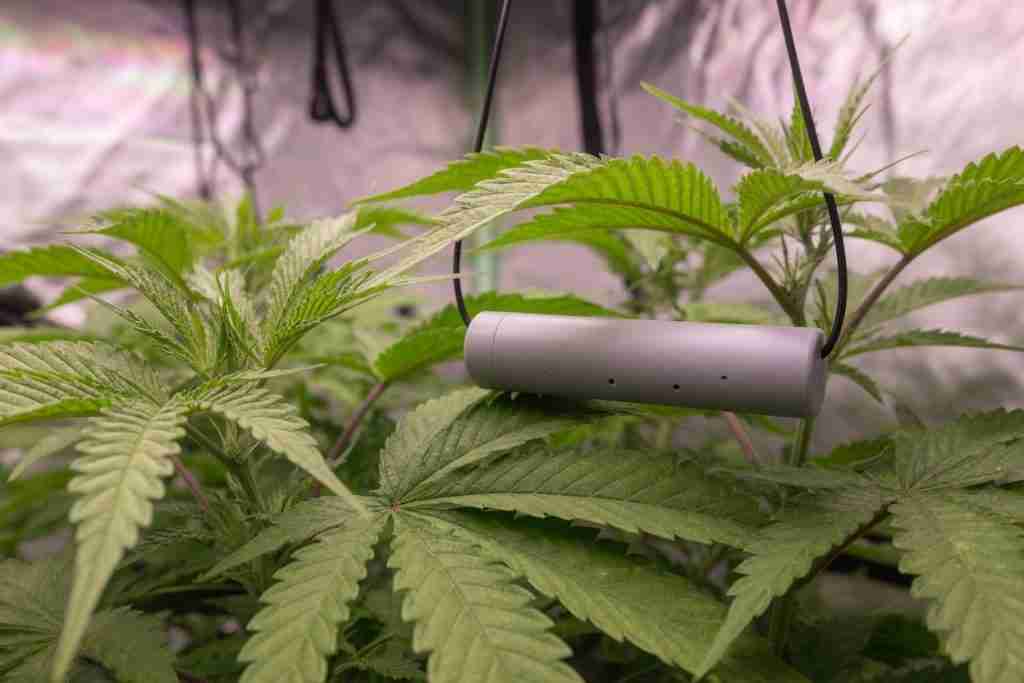
Hang the probe level with the top leaves, in air that is moving, and out of the light’s direct blast. A sensor on the tent floor reads the cold pocket under the pots and tells you the canopy is fine while the tops are cooking. A sensor in the lung room, or taped to the outside of the tent, reads the room you walk through. The plants do not live there. A probe lying on the driver, or clipped to a hot bar, reads the fixture. Shade the probe from the diodes. If the number jumps the moment you aim a light at it, you are measuring the lamp.
One probe is enough until you have a dead corner you can feel with your hand. A second probe earns its place in that corner, or just above a thick cola that traps wet air. Ten probes and a colored map are how a small tent starts to look like a job. Dust and mist coat the sensing face, and then the humidity number drifts wet. Wipe it when you wipe the leaves. Replace a probe that disagrees with a second trusted meter after you have let both sit in the same air for a few minutes. Do not “correct” the tent to match a dying sensor.
Read it at the time that matters. Lights-on, the canopy is often the warmest, driest spot. Lights-off, the lamps stop adding heat, the air cools, and the same water in that air becomes a higher humidity. That swing is when flower gets into trouble, and it is exactly the hour a sensor parked in the hallway will miss. The environment page holds the bands for the stage you are in. This page only insists that the number you act on was taken at the leaves, including once after the lights have been off long enough for the tent to settle.
The order that pays you back
Spend the first money on the thing that is already hurting the plant. A pale, stretched seedling under a weak light does not need a smarter pump. A tent that smells in the hallway does not need a camera. A flower room that drips at lights-off does not need a new nutrient brand. Match the tool to the failure you can already name. If you cannot name the failure, you are shopping. Write down canopy temperature, humidity, and whether the fan was actually turning, for three days, before you add a box.
The sequence that holds up in a normal tent is simple. Get a light you can dim, and learn what the driver really draws. Get air you can slow down, with a filter that still has life in it. Learn to water by lifting the pot. Then, if flower air stays wet after the exhaust is already doing its job, add a dehumidifier with a hose that leaves the tent. A pH pen comes in when you are mixing bottles, not when you are still in a living soil you do not intend to dose. Carbon dioxide gear is last, and only after the light and the climate are already steady. Reversing that order is how people gas a dim, hot tent and call it advanced.
Real watts, then a dimmer
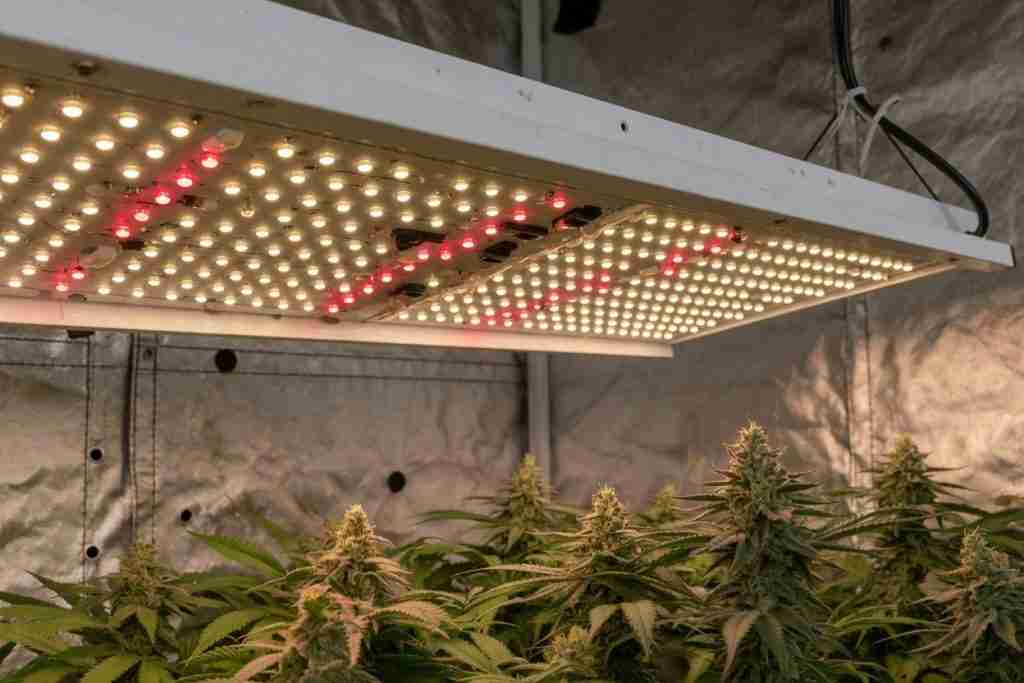
Read the watts on the driver, or on a plug meter, and ignore the giant number on the box. That giant number is an old comparison to a different kind of lamp, and it does not tell you what the canopy receives. A dimmer is the feature that matters day to day. Seedlings and a tall flower do not want the same output. A fixture you cannot turn down has to be raised until the tops stop praying and bleaching, and in a short tent you run out of height. The lighting page is where the photon targets and the hang distances live. Use those. Do not invent a second chart from a sticker.
Even coverage beats a hotspot in the middle and a cave in the corners. Bars or a broad board, hung flat, usually beat one intense point source in a square tent. Look at the plants, not only at the spec sheet. Tops that taco, or that stay pale while the lower growth is fine, are getting more light than they can use at that climate. Dim or raise before you decide the cultivar is weak. If the whole canopy is stretched and dark green, you are under the target, and the dimmer should come up a step, not a leap. Change one thing, then give the plant a day. Stacking a higher dimmer setting and a closer hang and a new feed on the same afternoon makes the next reading useless.
Automation on the light is a sunrise and a sunset, and a dimmer preset for veg versus flower. That is worth having. A fixture that chases a camera and rewrites its spectrum every hour is not the home priority. Spectrum recipes are a deep topic, and the lighting page already owns them. Here the rule is plainer. Full power is not a moral good. The dimmer exists so the plant, at this height, in this tent, gets the lighting page’s target without cooking the room. If the only way to hit that target is a tent you cannot cool, the light is too much for the air system, and the air system is the next purchase.
Air you can slow down
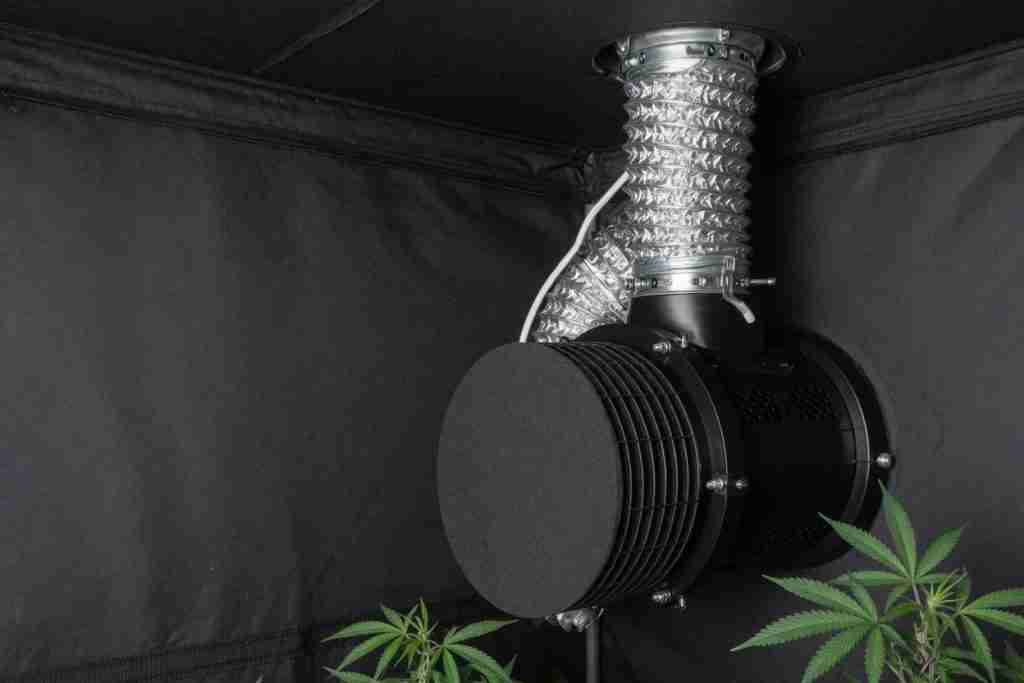
The exhaust fan removes heat and, with a carbon filter, smell. It also pulls dry hallway air in and wet tent air out, which helps, until the hallway itself is wet or the fan is so strong that the tent never settles. A fan with only two states, screaming or off, is a blunt tool. You want a speed you can drop when the lights are on and the tent is already in range, and a speed that stays on, quieter, when the lights go out. Tying the fan to the light timer is the common miss. The lamps click off, the fan stops, and the wettest hour of the day has no air exchange. Leave the fan running overnight at a lower speed.
Duct math, filter size, and how much air a tent actually needs are on the ventilation page. The tech point here is control and maintenance. A packed filter makes the fan loud and weak, and the hallway starts to smell before the app shows a temperature problem. Change the filter when the door no longer pulls in as you close it, or when odor creeps, not when a calendar you copied says so. Keep the intake path clear. A tent that can only exhale through pinholes will overheat no matter how smart the controller is. Negative pressure should be gentle. Walls sucked flat mean the fan is winning a fight against a choked intake.
Exhaust is not a dehumidifier. In flower, plants pour water into a closed tent, and lights-off is when that water stops being held as happily by warmer air. If the canopy probe climbs into the wet band after the fan is already exchanging air, you need a machine that condenses water, with a hose that leaves the tent or a reservoir you empty before it shuts the unit off. A drain hose dumped into a tray you forget is just a puddle with a pump. Size and placement belong with the environment page, not with a slogan on the box. The bud rot page is what wet flower becomes if you skip this and keep the rh high through week after week of bloom.
Cold rooms are a different purchase. If the night low is the problem, fix the space the way the warm-space page describes, with the heater outside the tent and on a thermostat. Do not drop a fuel burner in the tent to “add heat and carbon dioxide” in one gadget. That is how a small room gets fumes. Heat and gas are separate decisions. Most home tents need less heat than the catalog implies, once the light is the right size, and they need more water removed in flower than a fan alone will do.
Logs, apps, and a dead WiFi night
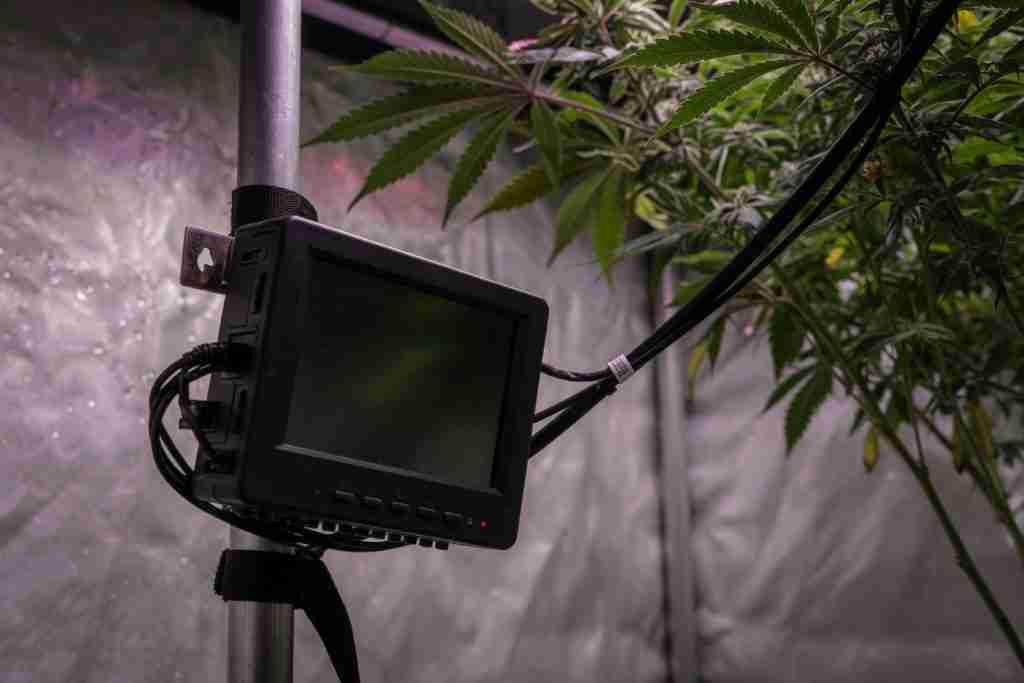
A useful log is three lines. Canopy temperature. Canopy humidity. What the fan and the dehumidifier were doing. Add the light’s dimmer setting on the days you change it, and the pH and strength on the days you mix a reservoir or a feed. That is enough to see a pattern a week later. A graph with forty channels is the same log if you never open it. Open it the morning after a night you were away. If the humidity spiked when the lights went off, you have the answer. If the app was offline for that entire night, the controller failed the only test that matters.
Set the alarms where you will still act. A ping every time the tent moves half a degree trains you to swipe. Alarm the real misses: fan stopped, humidity stuck high for an hour in flower, temperature running away, reservoir pump running dry if you have one. Then answer the alarm by looking at the plant, not by buying the next module. Controllers that keep a local setpoint will hold a dull, correct tent through an internet outage. Controllers that only work while the cloud is up should be treated as optional displays. The fan and the dehumidifier need a way to run without that account.
Watering automation is the same test. A timer that irrigates at lights-on, whether the pot is heavy or light, will drown a cool week and underwater a hot one. Lift the pots, or learn the dry-back on the medium you actually use, before a valve does it for you. The watering page is that skill. A hydro reservoir is a different machine. Do not put a doser on a bucket you do not already check by hand for pH, strength, and temperature. Those checks are the hydro pages’ job, including the pH page and the EC by phase page. A pump that adds base whenever a dirty pen twitches will chase itself in circles.
Carbon dioxide is the upgrade people buy too early. In a tent that already exchanges air, you are dumping gas into a fan. Fresh air is the method that works there, and the natural CO2 page explains why bags and yeast do not fill a vented tent. A sealed room with a tank is a different project, with a meter at the canopy and a shutoff when people are in the room. Limits and the point of diminishing return are on the home CO2 page. Extra gas only earns its keep under a light that is already strong, with the climate held. It does not repair a dim fixture, a hot canopy, or a wet flower.
A leaf photo is a second look
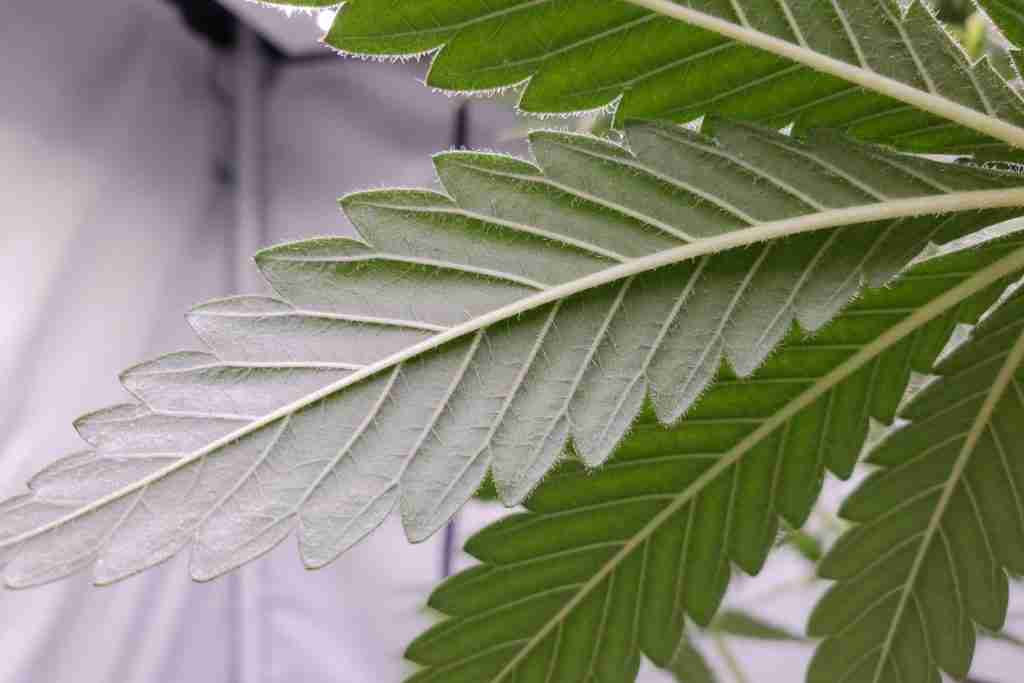
A camera on the canopy, or a snapshot on your phone, is a reminder. It is not a diagnosis. The useful picture is the one you would have missed on a Tuesday: a leaf that changed color since last week, a top that started to canoe, a cola that tightened up. Take it in the same light each time so you are not comparing a blue blur to a warm blur. Then put the phone down and look. Flip the fan leaf. Mites and the start of a mildew colony prefer the underside, and a top-down snapshot of a pretty canopy will hide both. The pest management page is the scout-first routine. The fungi page sorts a leaf film from a root problem.
Treat the app’s label as a hint, then confirm with your eye and with the room log. A model that says “deficiency” on a day the pH was wild, or the pot was bone dry, is describing the symptom and missing the cause. Correct the cause. If the numbers have been steady for a week and the pattern is still there, then you are in deficiency territory, and that page can wait until the climate and the root zone are already honest. Do not spray a flower because a notification sounded confident. If you spray at all, keep it off open flowers. A soft, brown pocket inside a cola is not a lighting preset. Open it. That is bud rot until you prove otherwise, and the photo of the outside of the bud will look almost fine.
Facility vision systems scan thousands of plants and flag the bay a person should walk. That is a labor tool. In a tent you can reach every plant in a minute. Use that minute. The photo is how you remember what “yesterday” looked like, and how you show a sharper grower a leaf without digging the plant up. It is not a reason to stop touching the pots, smelling the tent when you open it, and checking the probe after lights-out. An autoflower will not pause its clock while you wait for a better model. The gear does not change the plant’s calendar. A photoperiod still flowers when you change the light, not when the app suggests a recipe.
What a home room can skip
Skip the warehouse layer until you are running a warehouse. A camera on a rail, a drone, a blockchain record, and an extraction machine do not fix a tent. Extraction is a processing business with its own rules, not a light upgrade, and it does not belong in the same shopping list as a fan. Traceability software matters when you are selling into a licensed system. At home, the plant count is the legal question, and a sensor does not change that count. A robot that trims, scouts, or mows is a company product. Your hands still defoliate, still lift the pot, and still cut the plant when the flower page says it is time.
Skip duplicate brains. If the fan, the light, and the dehumidifier each have a working control, a fourth hub that only mirrors them is clutter, unless it adds the fail-safe you tested with the router unplugged. Skip spectrum gadgets you will not actually schedule. Skip a second dehumidifier because the first one has no hose and you refuse to empty it. Skip carbon dioxide until the lighting page’s normal indoor target is already met and the tent holds temperature and humidity with the fan and the dehumidifier you have. Gas on a weak light is a hobby within a hobby.
Keep the gear you can explain to yourself in one sentence. The probe is at the leaves so the night spike is real. The dimmer is so the tops match the lighting target without cooking the tent. The fan speed stays on after lights-out so the wet hour still exchanges air. The hose on the dehumidifier leaves the tent so flower can finish drier than veg. The log is three lines you will still read on Sunday. Anything that does not earn a sentence like that can stay in the box. Pick the seed for the room this stack can actually hold. A dense, long flower in a hot tent with no way to pull water out is a fight the controller will only document.
Before bed, look at the canopy probe, not the hallway thermometer. Confirm the fan is turning. Confirm the dehumidifier is not sitting in a full tank with its compressor idle. That minute is the future-tech routine. The rest is a catalog. The 2026 gear notes are there when a part actually needs replacing. The plant does not read them. It reads the air on its leaves.