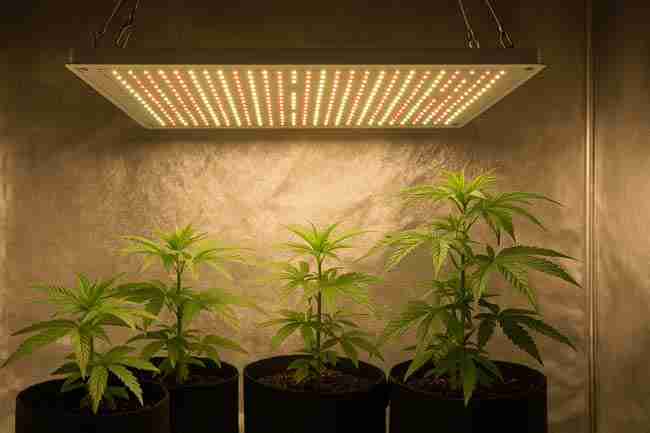
Grasshoppers Eating Marijuana

Grasshoppers eating marijuana is a chewing problem, and it is easy to name the wrong insect. A grasshopper bites a piece out of the leaf. A leafhopper does not. The leafhopper is a tiny wedge on the underside, and the mark it leaves is a pale fleck, not a hole you can see the sky through. Treat those flecks like bite marks and you will chase the wrong bug while something with jaws is still on the seedling.
You can sort this with one plant and one morning. Jagged holes, missing leaflet tips, and small brown pellets are a chewer. A leaf that is still whole, only sanded pale between the veins, is a sap feeder. A shine on the leaf at night is a slug. Dark crumbs packed into a flower are often a caterpillar. Those are four different jobs. This page is the grasshopper job on weed you are growing outdoors, and the rare hopper that rides a plant indoors. A full plant can lose a few fans and keep going. A seedling cannot. Where home growing is legal, one hopper on one small plant is a large share of a small crop.
Grasshoppers Chew. Leafhoppers Don’t.
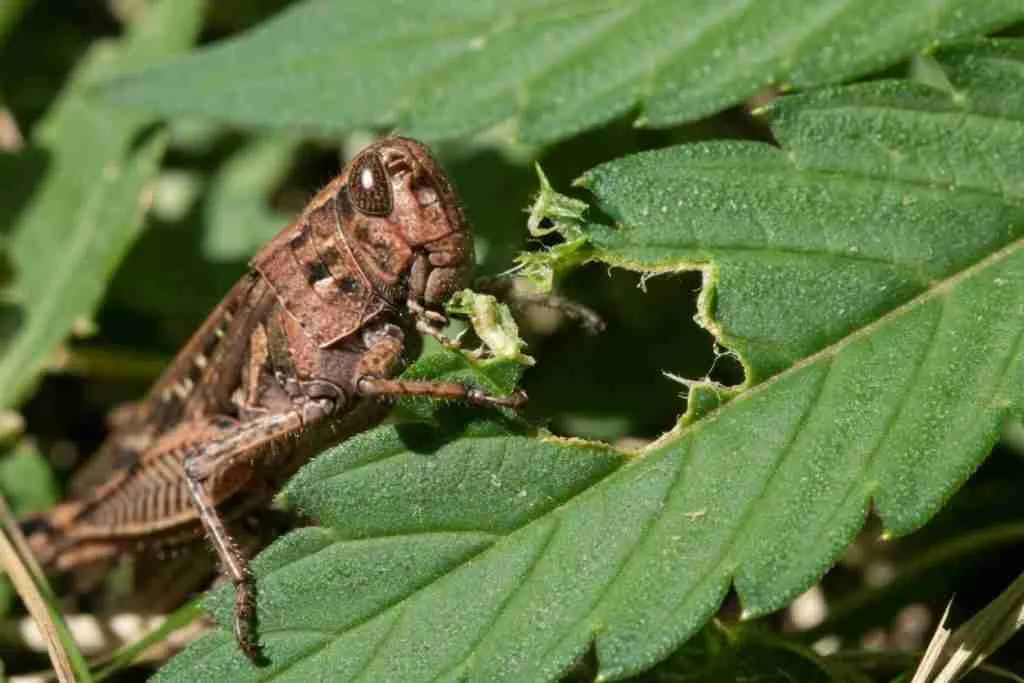
A grasshopper is large enough to see as an animal. Long hind legs, a saddle-shaped body, wings or wing pads, and antennae that are not the thread-like whips of a cricket. It bites. The mouthparts cut a notch and keep cutting. It does not live by sucking sap the way a spider mite or a leafhopper does, and it does not spin web. If a guide told you grasshoppers speckle a leaf and leave the tissue in place, that guide mixed up two insects that both hop.
The ones that show up in a garden are short-horned grasshoppers. The exact species changes with the region. Two-striped and red-legged grasshoppers are the ones people recognize across a lot of North America, including much of Canada. You do not need the Latin name to act. You need the body and the damage. A speck that vanishes when you brush the leaf is not this insect. A hopper you can pinch, sitting on a fan or on the stem, is.
What the chewed leaf looks like

The hole is irregular. Edges are jagged, sometimes browned where the tissue dried. A leaflet can be half gone. A fan can be reduced to the midrib and a few strips. On the leaf, or on the soil under the plant, you get small brown pellets. That is frass, the droppings. Fresh chewing plus pellets means something fed here recently, not last month’s scar.
Leaf chewing on an established plant is ugly and often survivable. Hemp notes from extension work, including the Colorado State University hemp insect note, treat missing leaf on a plant that already has a canopy as damage the plant can often outgrow. The injury that costs you a branch is different. The largest grasshoppers gnaw the petiole, the little stem that holds the fan, or they gnaw the branch itself. The leaf hangs by a thread, then drops. A growing tip that is notched off does not get replaced by wishing. That is the cut you walk the plants to find.
What a leafhopper actually does

A leafhopper is usually well under a centimetre, wedge-shaped, and quick. Brush the leaf and it flicks off. It feeds on sap. The mark is stippling: many tiny pale dots, sometimes a general silvering, sometimes a yellowed tip that growers call hopperburn. The leaf is still there. You are not looking through a hole. Honeydew can show up and make the surface tacky. None of that is a grasshopper meal.

The two leaves above are that second problem. Pale specks, then brown dead patches following the veins. The blade was not bitten out. Calling this grasshopper damage sends you to a net and a hand-pick while a sap feeder keeps working the underside. It also sends people to mite sprays for a hole that a mite never made. Spider mites on cannabis stipple too, and they add fine webbing when the colony is established. Leafhoppers do not web the bud. If you see silk, you are in the mite page, not this one.
Ladybugs and lacewings take aphids and other small sap feeders. They do not clear adult grasshoppers. Birds, plus the ground beetles and fly larvae that eat eggs in the soil, matter more here. Beneficial insects in the cannabis garden is the page for aphids and mites.
Slugs, caterpillars, and the other hole-makers
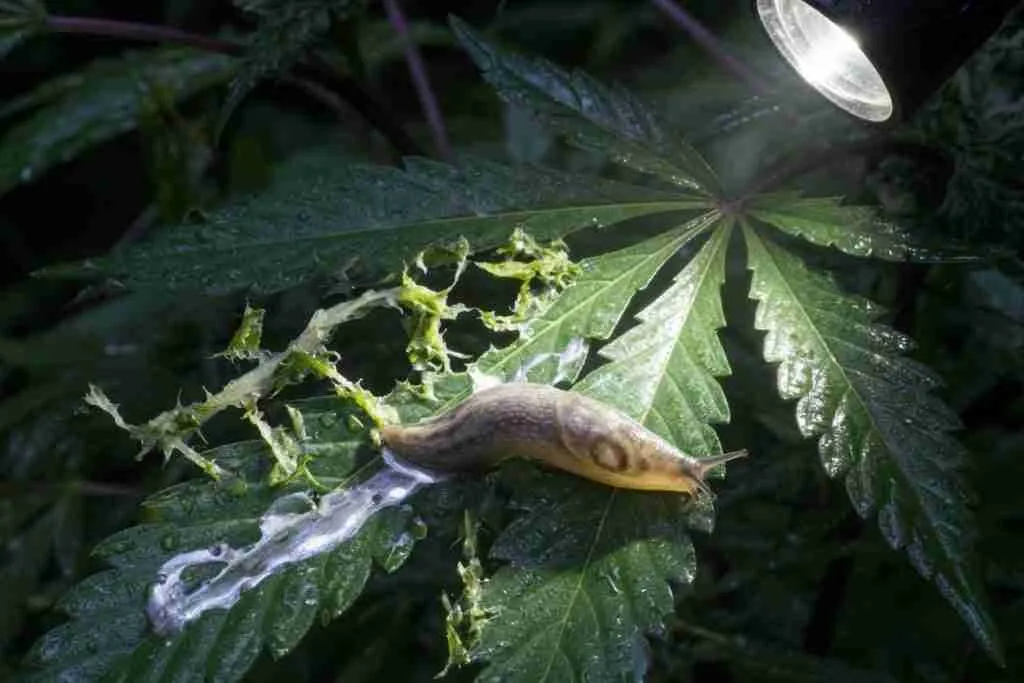
Slugs feed at night and in wet weather. The damage is shredded and often between the veins, and the clue is the slime trail, which dries to a silver shine by morning. A grasshopper does not leave that shine. If the patch is damp and the holes appear overnight with no hopper in sight at noon, walk with a light after dark. Slugs and snails on cannabis is a different cleanup. Beer traps and copper do nothing for an insect that spends the day on the leaf.
Caterpillars also chew, often later in the day, and the serious ones crawl into the flower. Their frass collects in the bud. Bt products aimed at caterpillars can fit that larva when the label allows it. Bt does not stop a grasshopper. Crickets are the other mix-up: longer antennae, more active at night, and happy to chew a seedling. Look for who is actually on the plant.
When They Show Up on Outdoor Weed

Outdoor weed gets grasshoppers because the plant is green, soft, and standing in the open. They are not a tent pest that breeds on the leaf the way mites do. Eggs go into the soil in late summer and fall, often in sod and undisturbed grass, and they sit through winter. Nymphs hatch in spring. They are smaller copies without full wings, and they already chew. Adults are the mid and late summer problem, which is when a lot of outdoor plants are finally big enough to notice.
You will not see the egg pods. The first honest sign is a nymph on a leaf, or a notch that was not there yesterday. Growing cannabis outdoors puts the plants where these insects already live. The hopper does not care that the crop is marijuana.
Hot, dry weeks and tall grass
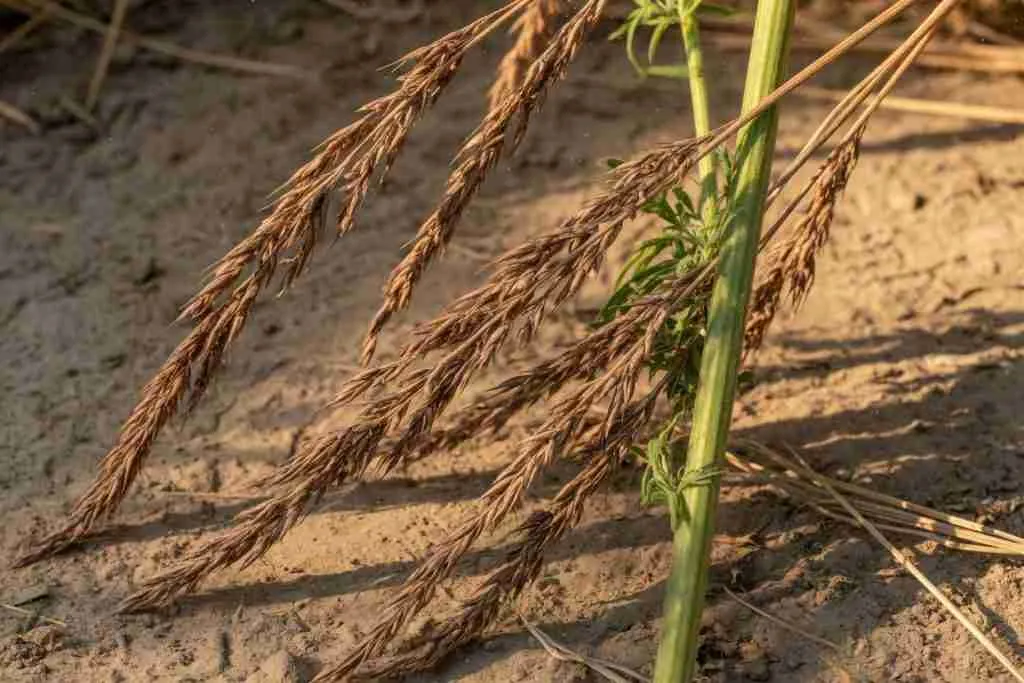
Pressure jumps when the weather turns hot and the grass and weeds dry down. The cannabis stays watered, so it becomes the green food left in the yard. A strip of tall, brown grass against the plants is both cover and a road. Nymphs walk through it unseen. Adults hop from the seed heads onto the nearest fan. That is the week people say the hoppers “came from nowhere.” They were in the grass. The grass ran out.
Watering the pots harder does not send them away. They are not there because the cannabis is thirsty. They are there because everything else dried. Water the plants the way the roots need, and deal with the insect on the leaf. Flooding a bed to “drown hoppers” just stresses the crop and makes a slug week more likely.
Seedlings versus a plant that can spare a fan leaf
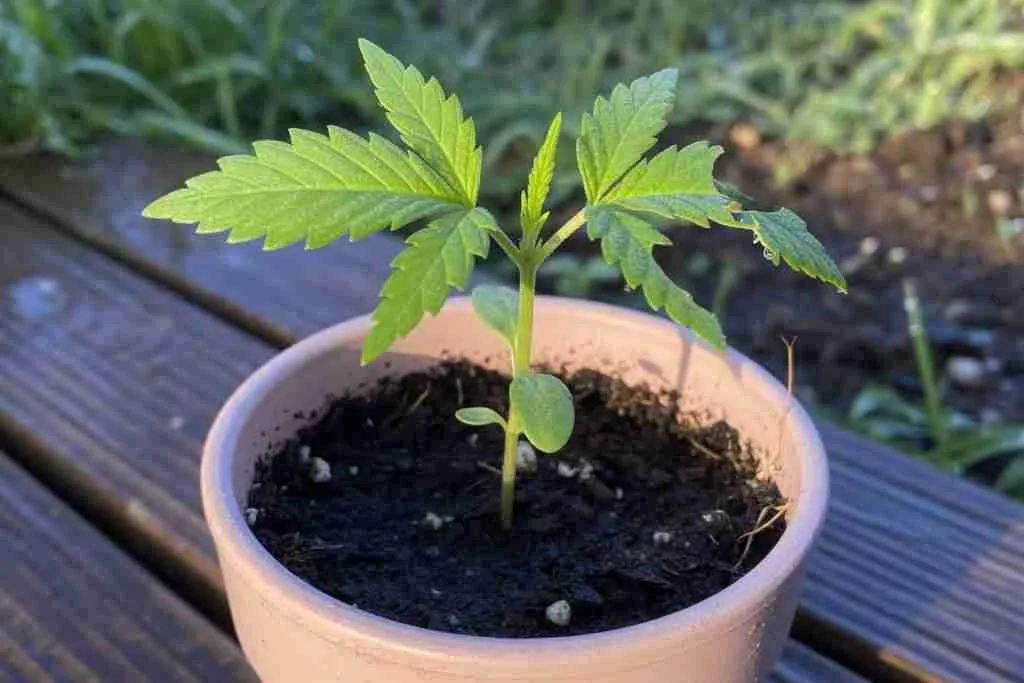
A seedling has a stem and a handful of leaves. One adult can take the growing tip in a sitting, or notch the stem and end the plant. That is the stage to cover, every time, even if you have not seen a hopper yet and the grass still looks green. Waiting for the first hole means waiting until the plant has already paid.
A plant with a full set of fans is a different case. Holes low on the plant are a record of a visit. The top is what you protect. Tips are softer than an old sun leaf. Lose a lower fan and the plant keeps going. Lose the tip and the leader stalls. If a seedling is already a stump and the season is late, a replacement may not finish outdoors. Net the plants you still have.
Walk the Plants and Pick Them Off
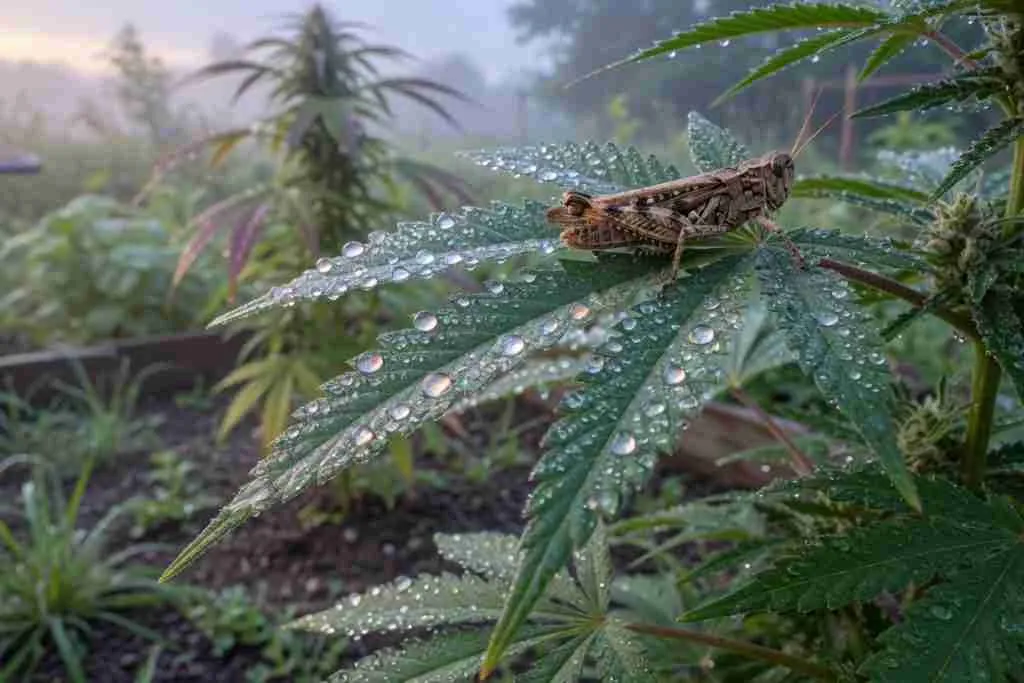
Once a day in hopper season, look on the upper fans, under the leaves, along the stem, and at the soil line. New notches and pellets mean something fed recently. One lap after dark, with a light, catches the slug or caterpillar that will not be there at noon.
Morning, when they are slow

Cold grasshoppers are clumsy. Early morning, while the plants are still wet and the insect has not warmed up, is when you can knock one into a bucket. By afternoon they see you coming and they are gone into the grass, then back on the plant when you leave. People who “checked and found nothing” at 4 p.m. often have a full plant of them at 7 a.m.
Cup a hand under the leaf and bump the stem. They often jump down, not away. A dry jar lets them climb out. A bucket of water holds them. Empty it away from the bed. Picking keeps a few insects off a few plants. If the notches still increase every morning, you need a barrier.
Frass, stripped tips, and notched stems

The insect on the stem is the one to take seriously. Leaf edge is food. The stem and the petiole are structure. A hopper sitting there is often feeding on the part that holds the leaf up. Check the joint where the fan meets the branch. A wet, pale notch in that joint means the leaf will wilt even though the blade still looks mostly whole. Take the insect, and if the leaf is already hanging, take the leaf too so it does not lay on a bud and rot later.

Tips are the other place. Soft new growth and, later, the little flowers are easy chewing. A hopper on the top of the plant is not a spectator. Move it. While you are there, look for pellets caught in the nodes. Pellets without an insect means it left, or it is on the next branch. Keep going until you have walked every plant, not just the one that looked bad from the path.
A Net Beats a Spray
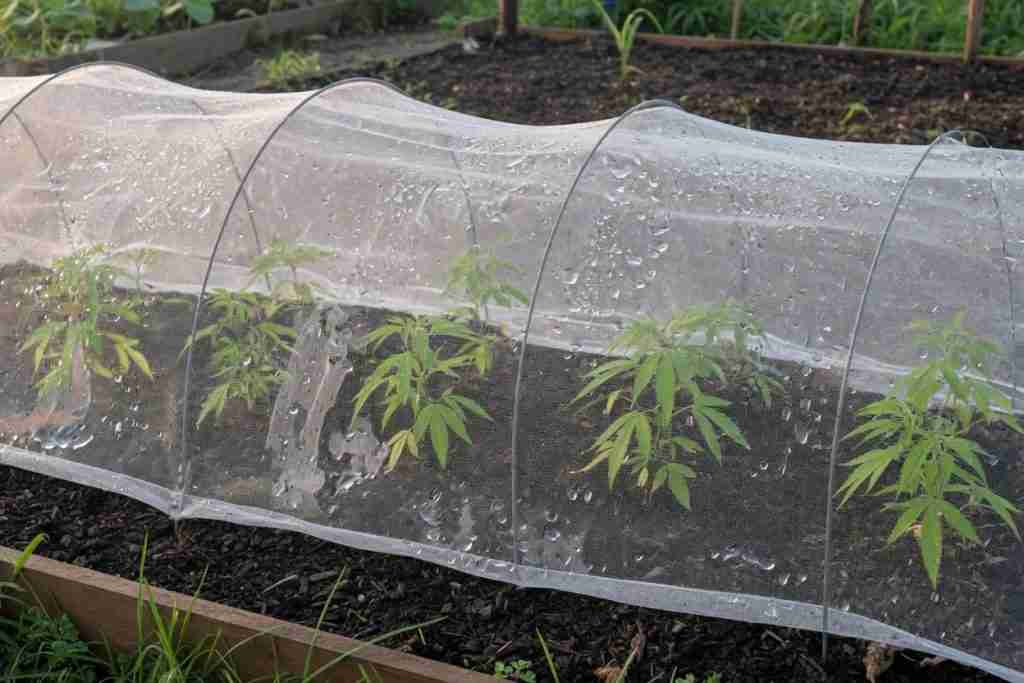
The control that actually changes the outcome is a physical cover. Fine insect mesh over the young plants, closed over the top, with the edges buried, pinned, or weighted so a nymph cannot walk underneath. Grasshoppers do not chew through a proper row cover the way a determined mouse might. They sit on it, or they leave. That is the result you want. A spray asks them to eat poison and then die later. A net asks them to fail at arriving.
Hoops keep the fabric off the tips. Mesh lying on a growing point will rub it, and in flower it will bruise pistils. For seedlings and short vegetative plants, low hoops are enough. Build the cover before the pressure starts if you already know your yard gets hoppers every dry spell. Taking it off for a minute to look, water, or pick, then putting it back, is the whole maintenance.
Cover the young plants
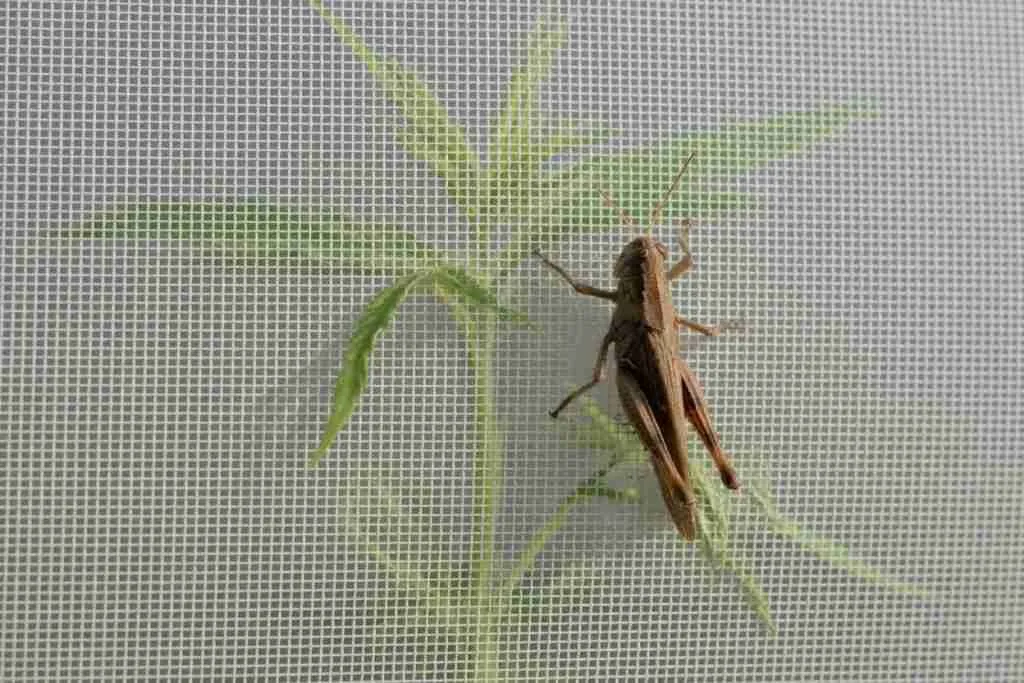
The holes have to be smaller than a nymph. Bird net stops a pigeon. If you can push a matchstick through the weave, a young grasshopper can walk through it. Pin the skirt with soil, bricks, or staples so wind cannot lift a door. A hopper on the outside of an intact cover is a success. A hopper inside means a gap, or a plant you covered too late. A plant already in full flower is a poor time to start. The frame catches wind, and fabric on the colas costs more than a few leaf holes.
What a spray can and cannot do
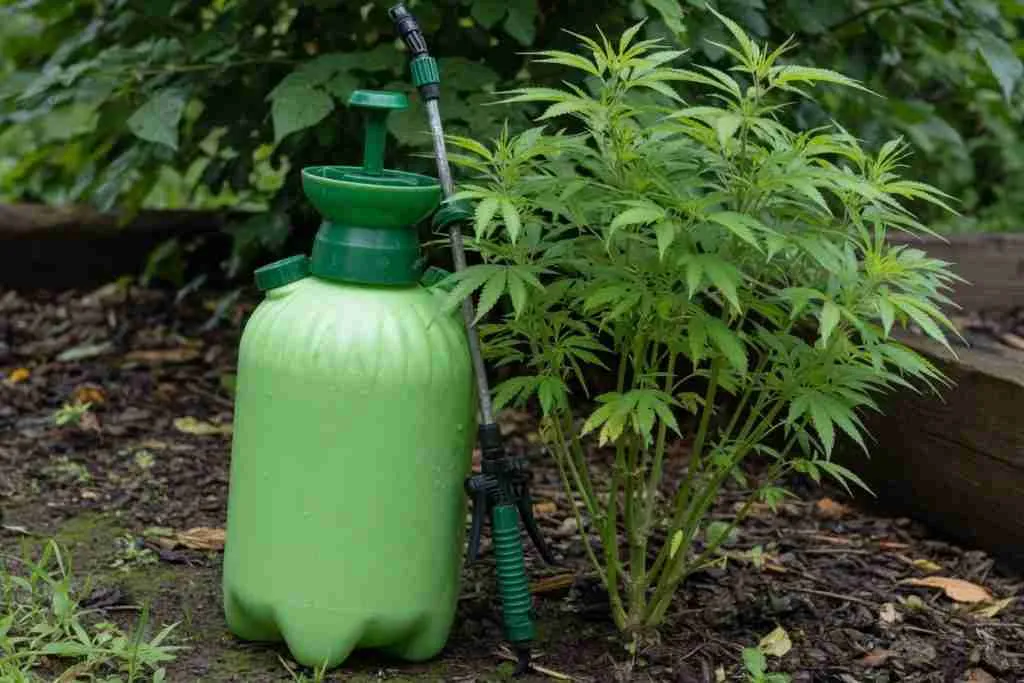
Spray is a backup for a vegetative plant you cannot cover, not the plan. Use a product whose label you can read, at the rate the label prints, on a crop the label allows. Do not invent a kitchen mix. Do not combine three bottles because a forum said the blend was stronger. Do not use carbaryl products just because vegetable pages recommend them for hoppers. That chemistry does not belong on weed you intend to smoke.
Neem, and products built on azadirachtin, can make grasshoppers stop feeding while the plant is still in vegetative growth. Rain washes it off, so a storm means it is gone. Hot sun on a fresh coating burns leaves, so if you use it, do it in the evening and test one fan first. It is hard on bees if you hit open flowers, including the clover and herbs around the bed, not only the cannabis. The longer notes on burns, timing, and what neem does not fix are on the neem oil pests page. Neem is not a late-flower rinse.
Insecticidal soap kills by contact. The insect has to be wet with it. A big adult is a bad target, and the residue is not a fence that stops the next hopper tomorrow. Dish soap from the kitchen is not a labeled insecticide. Skip the homemade soap recipe.
Spinosad is a fermentation product. Grasshoppers have to eat the treated leaf. It is rough on bees while the residue is still wet, so evening, and not onto plants that bees are working. A jug you mixed last week is not the same strength. Mix what you will spray, and do not store a leftover bottle as the hopper cure. Follow the label, including the wait before you handle the plant again.
Pyrethrin breaks down in sunlight, which is why some labels sound gentle, and it is still toxic to cats and to bees. If you share the garden with a cat, do not use it. If a label allows it on the crop and you are still in vegetative growth, evening is the less-bad window, and you still keep it off open blooms. It is not a flower-week product.
Diatomaceous earth only works dry. Dew and rain end it. Dust on a fan you will later harvest is dust in the cure. If you use it at all, keep it on the soil edge during a dry spell, not on buds. A bait that carries Nosema locustae is an early-nymph tool for the grass, applied while the insects are small and still off the plant. It is not a rescue the week adults are on the colas. Garlic sprays and chili sprays are garden folklore. The evidence that they stop a hungry adult is weak. They are not a substitute for a net.
Skipping spray is a real plan when the net and the morning walk are real. Pesticide-free cannabis growing and integrated pest management both start with the insect, then the conditions, then a barrier. A bottle first is how hoppers outlast you.
Stop before the flowers stack
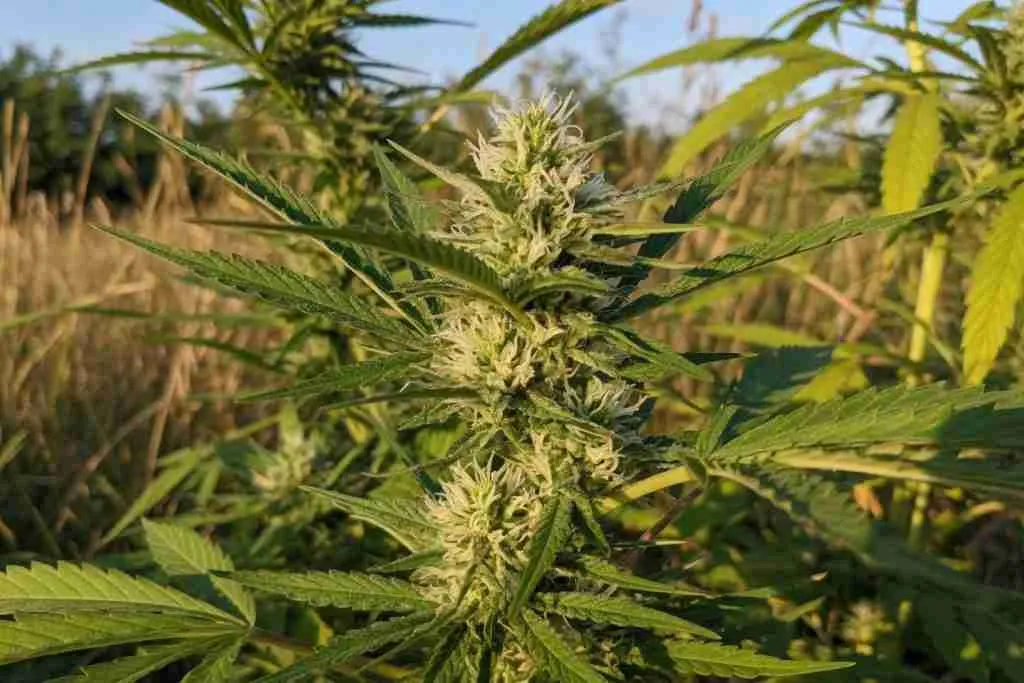
Once flowers start to stack, you are done spraying for hoppers. Pistils catch droplets. Residue that was acceptable on a fan leaf is residue you plan to inhale. The flowering stage is when you pick, net if the plant is still small enough, and live with a few leaf holes. A notch in a cola gets the insect removed and the damaged sugar leaf taken if it is dying. It does not get a fog.
Read the pre-harvest interval on any product you already used in vegetative growth, and believe the longer number. “It says natural on the jug” is not an interval. If you are inside that window, you do not spray again to feel busy.
The Yard Around the Patch
The plants are only half the problem. The other half is the metre of ground around them. Tall weeds and uncut grass are food, shade, and a path. A hopper does not need a long flight if it can walk from a seed head onto a fan. You are not trying to sterilize the property. You are trying to see the ground between the lawn and the stems, and to stop growing a nursery against the crop.
Short grass next to the plants
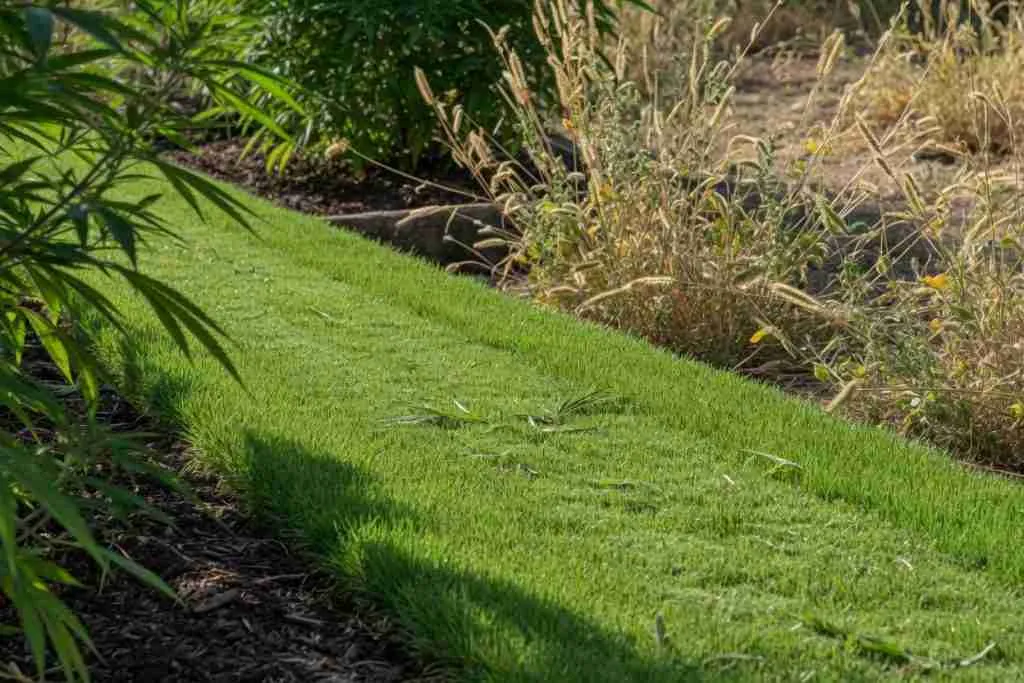
Mow a strip beside the bed and keep it short through the hot weeks. Tall cover touching the pots is the part to remove. Short grass does not dig up eggs. It takes away the hiding place, so a nymph has to cross open ground. You do not need bare dirt from fence to fence. If the cannabis is the only green plant left in a brown yard, visitors will keep coming, and the net still has a job.
Birds, and why chickens are a maybe
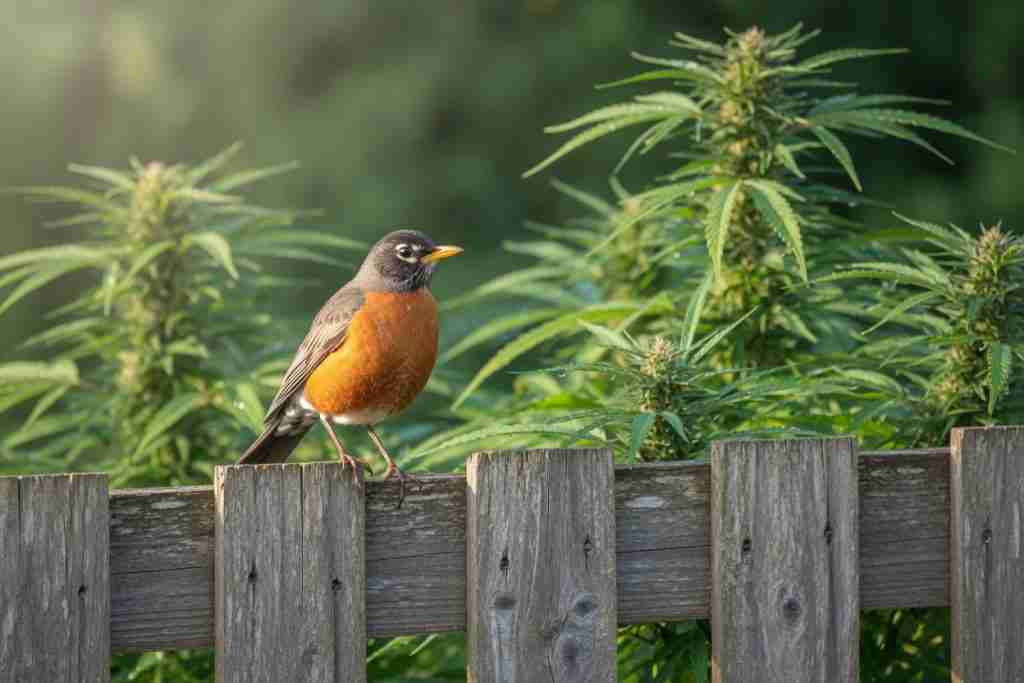
Robins, sparrows, and a lot of ordinary yard birds eat nymphs. A perch near the garden, a shrub that is not smothering the plants, and open ground they can hunt all help. They will not sign a contract to clear a swarm. They lower the pressure if you stop making the bed a hiding place. A praying mantis will also take a hopper, and it will take bees and anything else it can hold. An egg case is optional, not a strategy.
Chickens are the popular answer, and they do eat grasshoppers. They also scratch roots, dust themselves in the mulch, and leave manure on leaves. Manure on a fan you might later juice is one thing. Manure on a flower you are going to smoke is contamination. Keep birds out of the flowering plants. A run beside the garden, fenced off the bed, is the only version that makes sense. Turning a flock loose in the colas to “solve hoppers” trades one mess for a worse one.
If the Damage Is Already There
Grasshoppers eating marijuana do not ruin every plant they touch. Look at what is missing before you cut the plant back or reach for a jug. A hole in an old fan is a scar. A tip that is gone is a setback. A stem that has been gnawed through is a lost branch. Those three outcomes ask for three different responses, and only the seedling that was eaten to the soil is a candidate for starting over.
A few holes on a big plant
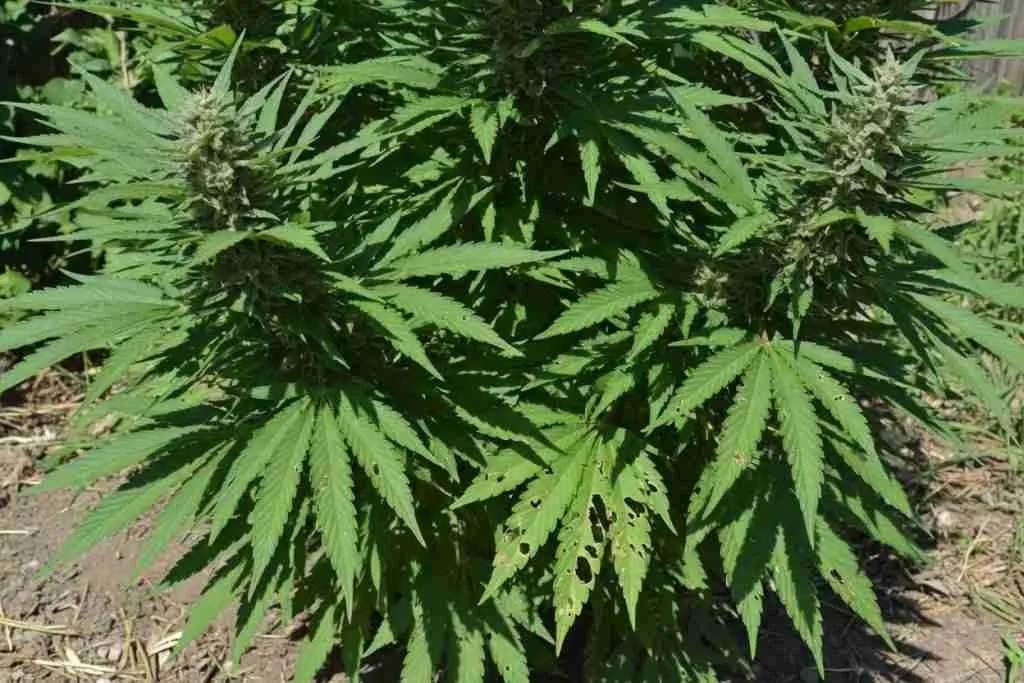
Lower fans with a handful of holes, and a top that is still intact, are a plant you leave alone. That leaf is still working. Stripping every scarred fan removes more than the hopper did. Pick the insect if it is still there. New growth will bury a hole. You do not heal it. If the same plant also shows pale stippling, you have two pests, and one product chosen for the wrong one will miss both.
A stem cut through
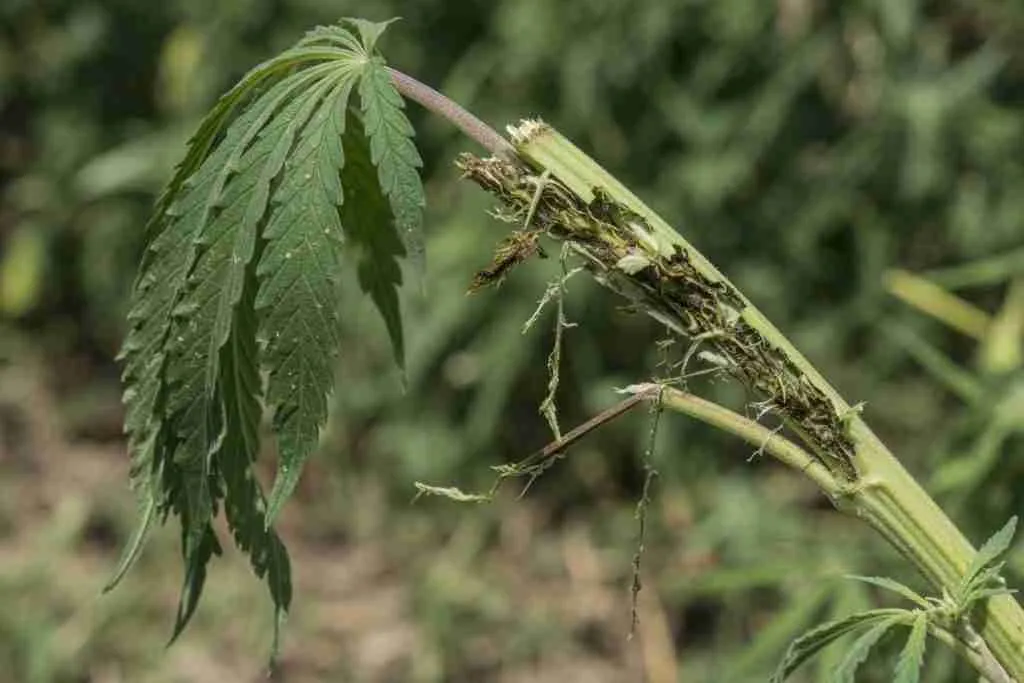
A fan hanging from a chewed petiole is finished, even when the blade is still green. Cut it off so the dead leaf does not sit in a flower. If a side branch is notched most of the way through, take the broken part and leave the rest of the plant. A seedling cut off at the soil sometimes reshoots from a lower node, and often does not. Spare seedlings under a cover are worth more than a week of watching a stump.
Indoors, one hopper is a visitor
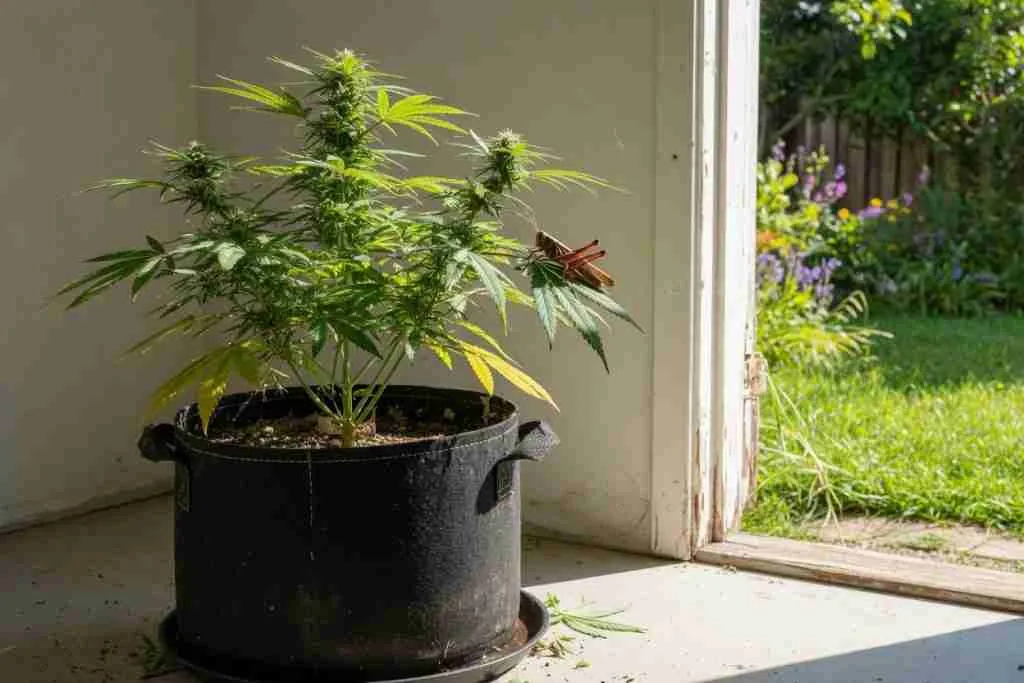
An indoor grasshopper almost always arrived. It came on a plant you carried in, on your clothes, or through a door left open to the yard. It is not starting a colony in the tent the way mites will. Find it and remove it. Then check every plant that shared the trip, including the undersides and the rim of the pot, where a nymph rides in with the soil. One insect does not justify fogging a flower room.
If notches continue indoors and you cannot find a hopper, look for a caterpillar or a cricket. Sticky traps will not catch a grasshopper. Do not keep a vegetative spray going through flower because one hopper came in on a Tuesday.