Foliar Feeding Cannabis


Foliar feeding cannabis is spraying a weak, clean mix on the leaves so the plant can take a little food through the leaf instead of waiting on the roots. It is a patch, not a meal plan. Ranking pages still sell it as a magic 95 percent uptake trick. That number is a leftover from old agronomy talk. Leaves are fast at grabbing tiny amounts of mobile stuff. They are terrible at replacing a root zone that is locked, soaked, or starved.
If you came here from the old version of this page, ignore the “spray every day until it drips” advice. That is how you burn tissue and invite mildew. A fine mist, lights down, undersides of the fans, then air until dry. That is the job. Root feed still pays the bills. Foliar feeding cannabis just buys you time while you fix pH, water, and the bottle.
A grower in a 4×4 in Dartmouth learned it the hard way. Yellow stripes on the old fans, so he soaked the tent at noon under a hot LED. By lights-off the tops looked fried. Same plant, next week: 1 teaspoon of Epsom in a gallon, pH 6.0, mist at lights-out, fan on. New growth greened. The burnt leaves never came back. That is foliar feeding cannabis when you do it like a grown-up.
What Foliar Feeding Cannabis Actually Is

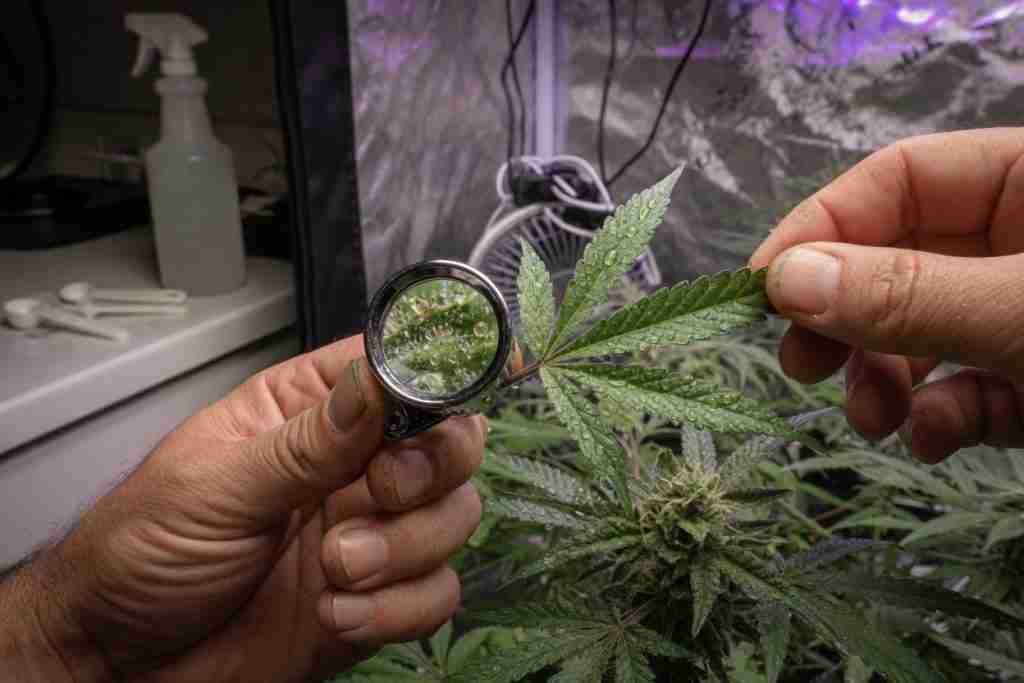
You mix water and a soluble nutrient, pour it in a sprayer, and put a light coat on leaf tissue. The plant drinks a bit through stomata and through the waxy cuticle. Stomata are the tiny pores, mostly on the underside. You cannot see them without a loupe. They open and close with light, humidity, and heat. Spray when they are open and the room is cool, and more of the mix actually enters. Spray when the canopy is a frying pan, and you get droplets that act like lenses.
Foliar feeding cannabis is not washing the plant. It is not a compost tea party on the buds. It is not a way to skip soil, coco, or hydro. It shines when the roots cannot keep up for a few days: transplant shock, a pH swing, cold media, a magnesium fade on RO water, iron that will not move in high pH. You spray a targeted ion. You also fix the pot. If you only spray, the same yellow comes back.
People search “foliar spray cannabis” and “leaf feeding weed” for the same act. Feeding is nutrients. Spraying can also mean soap, oil, or a bio for bugs. Do not mix those jobs in one bottle unless the labels say they tank-mix. Soap plus salt nutes is how you spot-burn a fan. Keep the nutrient bottle and the pest bottle apart. Pest work lives with preventing fungi and pests outdoors and cannabis and spider mites.
Foliar feed is not a replacement for the root zone
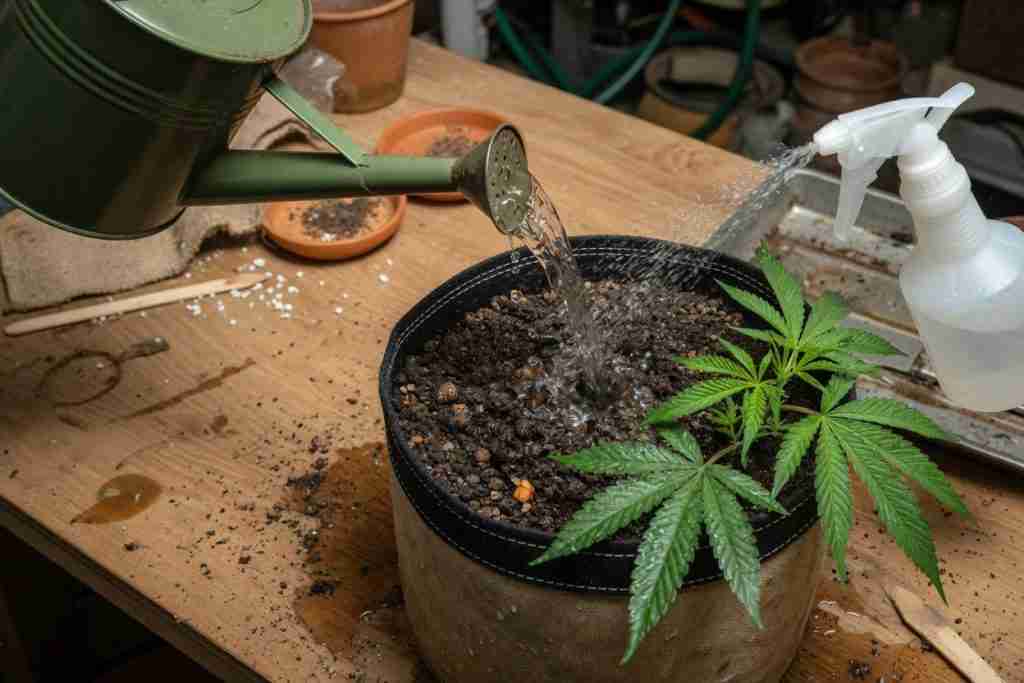
Roots move grams of nitrogen, potassium, and water. Leaves move milligrams. That is why a foliar cannot replace a feed chart. Michigan State work from the 1950s gets quoted as “leaves absorb 95 percent.” What growers skip: the total mass is small, and a lot of what you spray never enters. Independent write-ups that actually read the uptake work put absorbed fractions closer to the teens or twenties, not a full meal. Use foliar feeding cannabis as a shot of micros or a magnesium bump, then water the pot like a normal plant. Watering is how to water cannabis plants. Nutrition across the run is the ABCs of cannabis nutrition.
If runoff pH is a mess, foliar is a bandage. Check the pot. Soil likes about 6.0 to 6.5. Coco and hydro sit a hair lower. The meter walk-through is pH for growing cannabis. Yellow bottoms can be nitrogen, magnesium, water, or light. Diagnose before you invent a new spray. Charts: dying from the bottom up and dying from the top down.
How Cannabis Leaves Take In a Spray
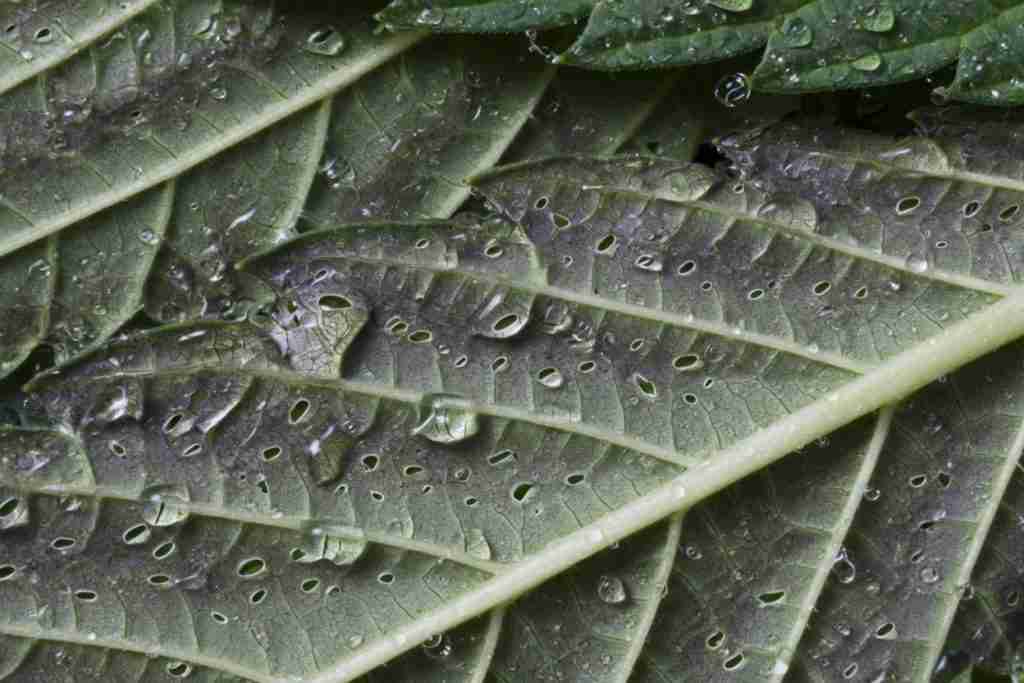
Two doors. Stomata, mostly underneath, take gas and a little liquid when they are open. The cuticle, the wax on top, lets some dissolved ions sneak through, especially if you add a drop of non-ionic wetter so the mix sheets instead of beading. That is why you flip leaves and mist the pale underside. Spraying only the shiny top is mostly runoff and evaporation.
Open stomata like moderate light, decent humidity, and temps around 20 to 26 C. They slam shut in a desert tent or when VPD is so high the plant is in panic. They also misbehave when the leaf is dripping wet in a still, hot box. VPD context: cannabis VPD explained. You do not need a lab. You need a room that is not 32 C with dead air.
Small, charged ions move. Magnesium, potassium, and some chelated micros are the usual winners. Calcium is stubborn. It does not commute well inside the plant, so a foliar calcium spray helps new tissue near the spray, not the whole bush overnight. Iron foliar can green a pale top faster than a drench when pH in the pot is high. Nitrogen foliar can green a plant and also stretch it if you overdo urea or a hot grow formula. Match the ion to the symptom, not to a forum cocktail.
When Foliar Feeding Helps
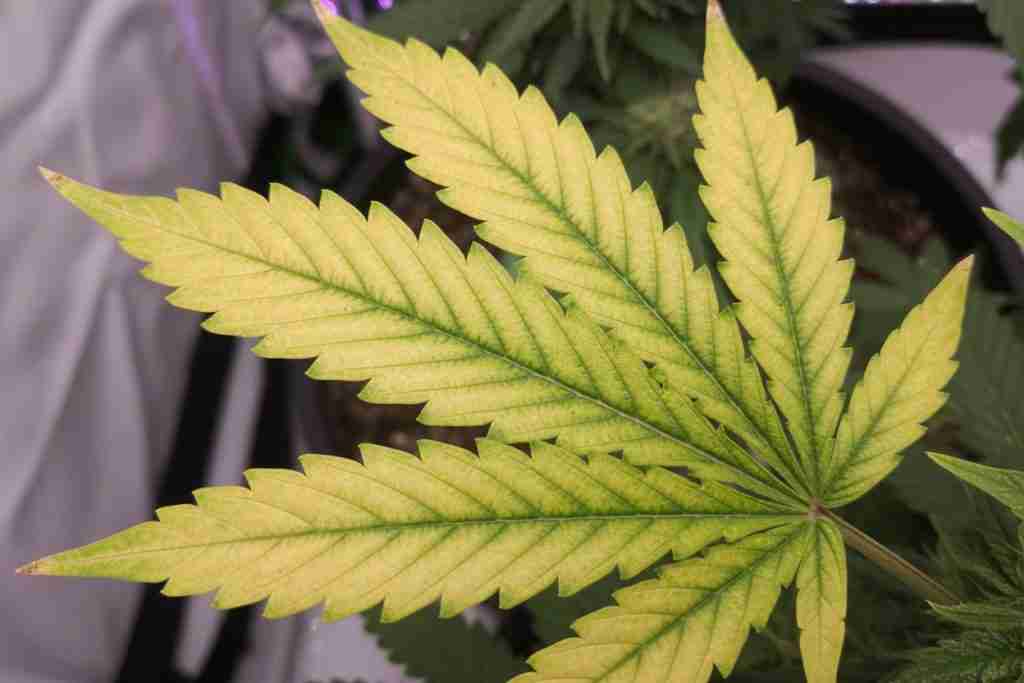
Use it when you can name the problem. Interveinal yellow on old fans, veins still green: magnesium is a suspect, especially in coco or RO water. Pale new tops with green veins: iron or other immobile micros, often a pH story. Slow clones with no roots yet: a mild kelp or micro mist can keep tissue alive until roots catch. Heat wave coming: silica foliar is a stress shield, not a fertilizer. Those jobs have numbers later in this page.
Do not use foliar feeding cannabis because a schedule said Wednesday. Healthy green plants in living soil with runoff in range do not need a weekly salt shower on the leaves. Extra film blocks light, clogs stomata, and feeds powdery mildew if the canopy stays wet. If the plant looks fine, water the pot and leave the sprayer on the shelf.
Name the fade before you mix. Nitrogen fade is even yellow on older fans, the whole leaf paling, plant looking hungry, stretchy if it also wants light. Magnesium is yellow between the veins on those same old fans, veins holding green, sometimes rust specks. Iron and other immobile micros hit the new tops first: pale young leaves, green veins, the bottom still decent. Calcium looks like twisted new growth, rusty pits, tips that burn even when EC is not crazy. Potassium burns margins. Lockout copies all of the above while the bottle is already strong. That is why you measure runoff before you foliar feeding cannabis with a bigger mix.
Hard water with a pile of bicarbonates will lock calcium in the jug and in the pot. If your tap crusts a kettle, foliar cal-mag is a band-aid on a hose problem. Blend RO or acidify the tap, then set Ca and Mg like a grown-up. Hard water notes: water hardness and bicarbonates. Cold roots slow calcium too. Foliar will not fix a 12 C basement slab. Warm the pot.
Corrective sprays vs weekly “just because” sprays
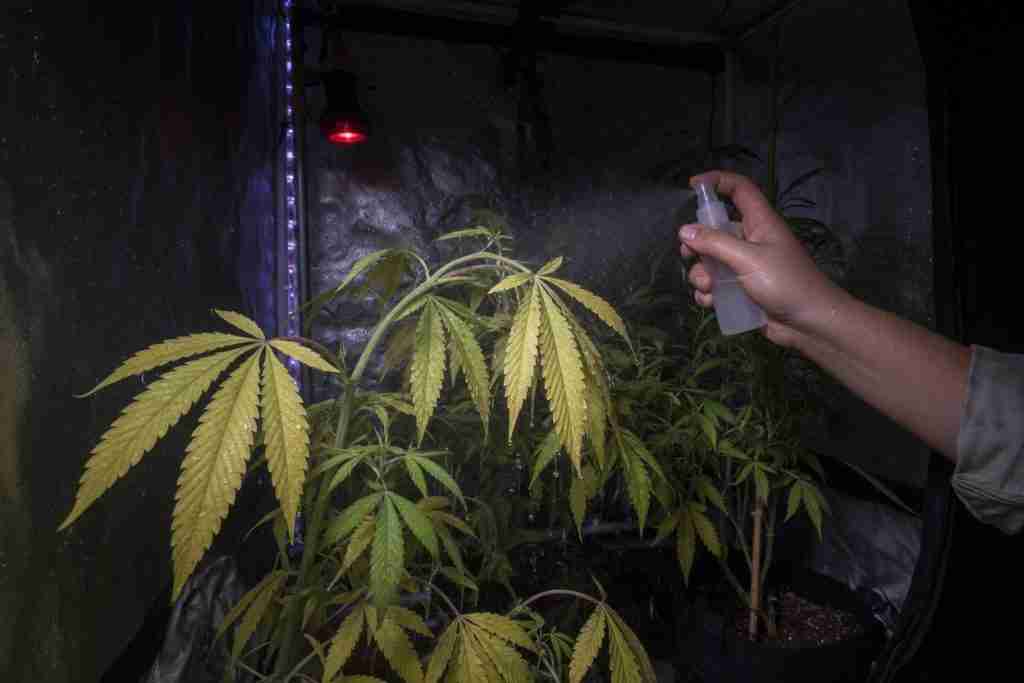
Corrective: you see a deficiency, you confirm pH, you mix a weak targeted spray, you hit the plant two or three times a few days apart, you stop and watch new growth. Old damaged leaves will not turn perfect. You are trying to stop the slide. Magnesium foliar specs that match our Epsom page: about 1 teaspoon per gallon, lights off, 2 to 3 sprays, then reassess. Full write-up: what Epsom salt does for cannabis plants.
Supplemental: once a week in veg with a very mild kelp or micro mix if your water is empty and your plants are running hard under a strong LED. That is optional. It is not a religion. Clones and seedlings get even weaker mix, or just pH’d water if they are happy. Seedling yellowing is often water and light, not a missing foliar: cannabis seedling yellowing.
Best Time to Foliar Feed Cannabis
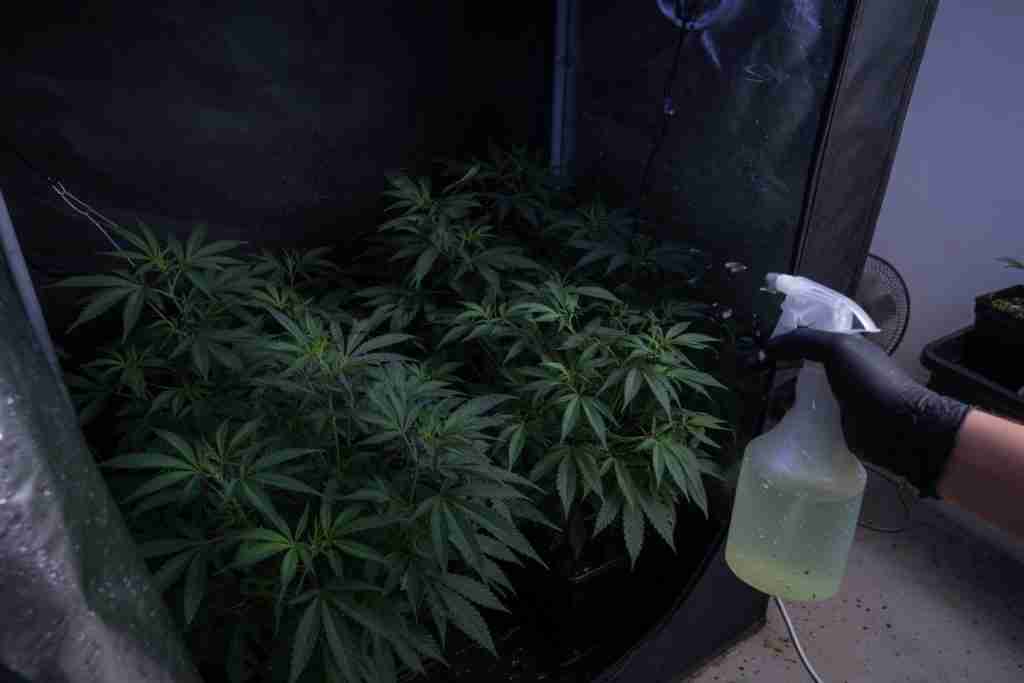
Indoor: spray 30 to 90 minutes before lights off, or right as they come on at low intensity if you can dim. Ranking guides split on morning versus night. Both work if the canopy dries before full photon blast. Night spray with a fan is the safer default in a hot tent. You do not want droplets sitting under a 2.5 µmol/J bar at 100 percent. Lens burn is real. Raise the light or dim it if you must spray at the start of the day.
Keep leaf temps under about 24 C while they are wet. Over 26 C with wet fans is how you get speckle. Humidity in the 55 to 70 percent range helps stomata stay open without turning the tent into a swamp. Run the oscillating fan the whole time. Leaves should be dry to the touch in 15 to 45 minutes. If they are still shiny an hour later, you sprayed too heavy or the air is dead. Tent airflow: grow tent for cannabis seeds.
Indoor lights-off and outdoor dawn
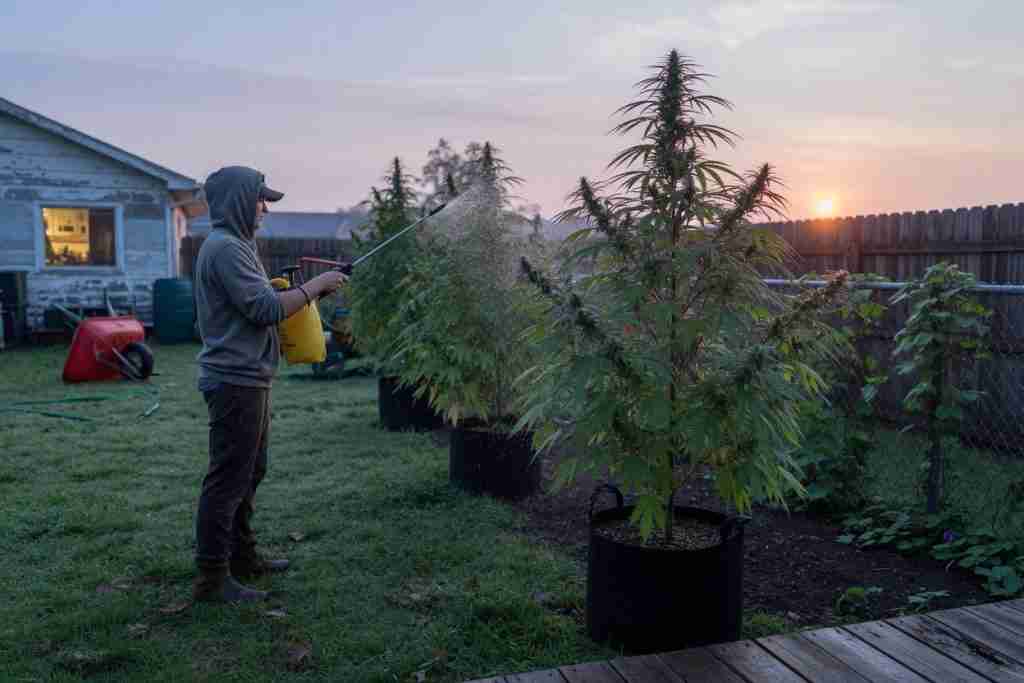
Outdoor: early morning after the dew starts to lift, or evening when the sun is off the plants. Never midday. Full sun plus droplets is a magnifying glass. Wind helps dry. A still, humid August night plus a drench is a mildew invitation, especially once flowers stack. Outdoor plants already get rain. You do not need to fake a storm. Outdoor culture: growing cannabis outdoors.
Autos run the same clock as photos for spray safety. The difference is they do not wait. A wet, cold night in week five of an auto’s life is still a wet flower. Treat the calendar as seed-to-harvest, not “I have not flipped yet.” Autos: grow autoflowering cannabis plants.
How to Mix a Foliar Spray
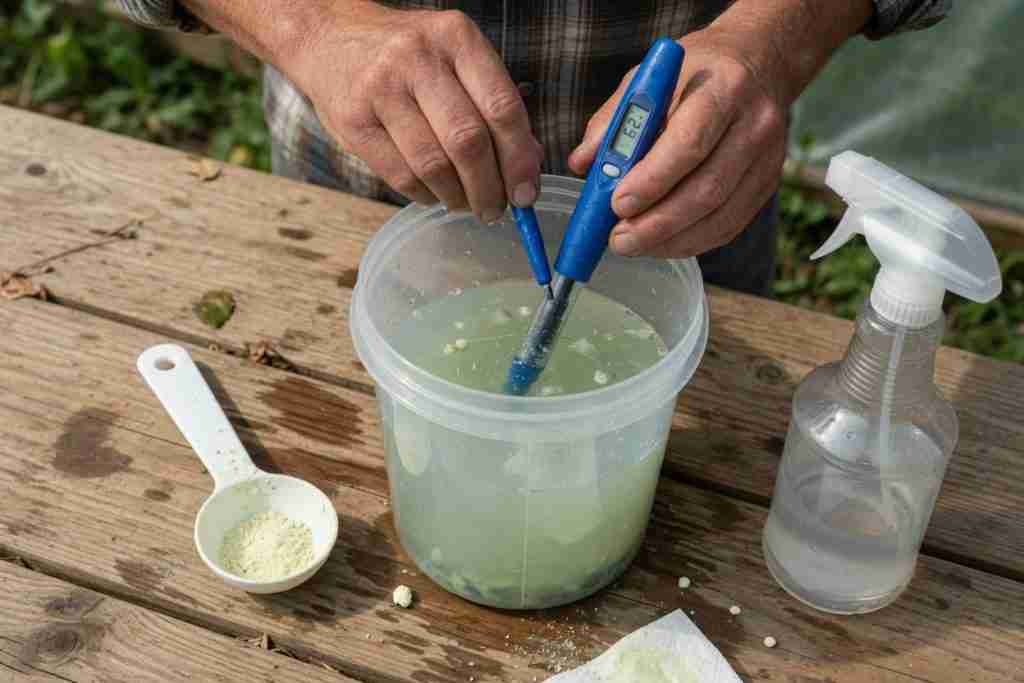
Start with clean water. RO or distilled is easiest because you know what is in it. Tap is fine if you know hardness and chlorine. If the tap smells like a pool, let it sit or run a carbon filter. Chlorine kills foliar microbes if you are spraying a tea. For salt mixes it mostly just makes pH twitchy.
Mix order if you use more than one bottle: water, then silica if you use it, stir, wait, then cal-mag, then the rest, pH last. Silica wants to fight calcium in the jug and throw sludge. That is the same rule as a reservoir. Silica foliar rates we already publish: about 50 to 100 ppm Si, pH 5.8 to 6.2, a drop of wetter, stop once pistils are everywhere. Long version: using silica for marijuana cultivation.
EC of a foliar mix should look shy, not like a bloom reservoir. Many rooms land around 0.2 to 0.6 mS/cm for a micro or Epsom spray, depending on the source water. If your “foliar” reads like a 1.8 feed, you are about to speckle. You do not need a lab. If the mix smells sharp, looks cloudy after silica plus cal, or leaves a white crust on the funnel, dump it and start over. Cloudy is precipitate. Precipitate does not enter a stomata. It sits on the leaf and burns.
One liter of mix treats a 2×2 or a small 3×3 if you mist, not bathe. Two liters for a packed 4×4. Mix what you will spray tonight. Kelp left in a warm sprayer grows a science fair. Salt mix left in a brass nozzle eats the spring. After you spray, dump the rest, rinse the bottle, squirt clean water through the nozzle, cap it open so it dries. That five-minute chore is how the same sprayer lasts a season.
Strength: quarter to half of the root-feed rate on the bottle unless the label has a foliar line. If it does not mention foliar, assume it is hot and start at quarter. You can always spray again in three days. You cannot un-burn a leaf. Mix fresh. Do not park a kelp jug in the sprayer for a week. It ferments and clogs the nozzle.
pH, dilution, and wetting agents
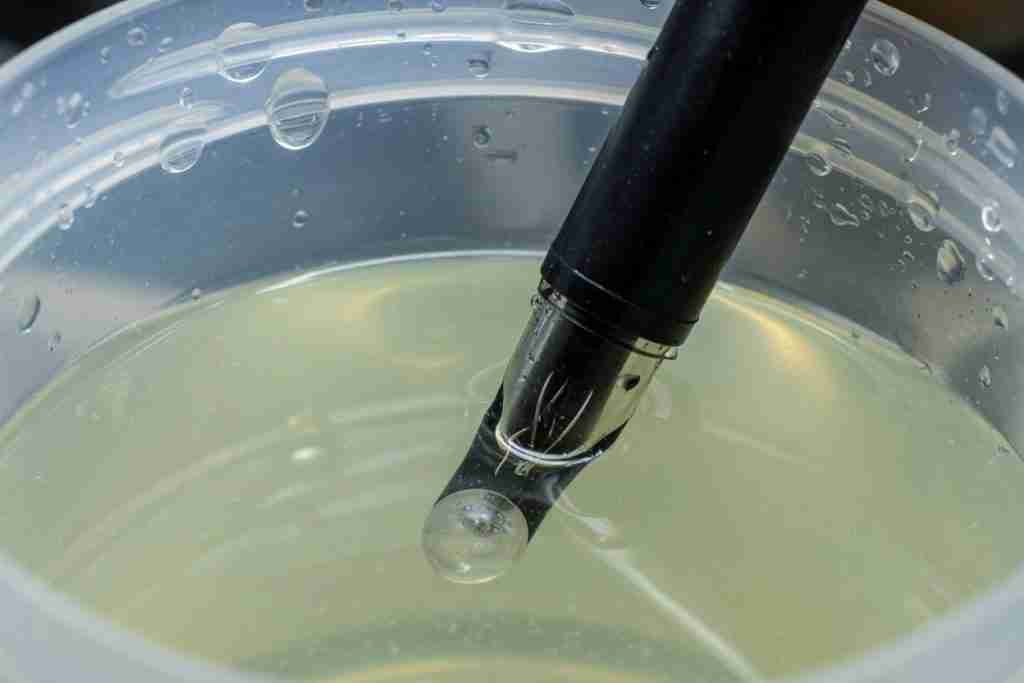
Aim the mix at 5.8 to 6.2 for most salt and chelate sprays. That window keeps ions dissolved and friendly to leaf tissue. Soil growers sometimes run closer to 6.2 to 6.5. Do not spray pH 4 “to drive it in.” You will pit the cuticle. Do not spray pH 8 tap sludge and call it organic.
A non-ionic wetting agent, or a tiny drop of a mild spreader, makes the mix sheet. One drop in a liter is often enough. Too much soap and you strip wax. Aloe juice gets used as a mild wetter in organic circles. If you use it, keep it light and keep it in veg. Oils and thick molasses on leaves are sticky. Sticky plus humidity is powdery mildew’s favorite couch. Skip kitchen molasses, yeast, coffee, and vinegar as foliar recipes. They belong in a compost pile, not on a cola. Organic root feeding is a different tool: organic marijuana fertilizer.
How to Spray Without Soaking the Plant

Fine mist. Six to twelve inches from the leaf. Coat until the surface looks dewy, not until it rains off the tips. Hit the undersides. Move leaves that shade each other. Stems can take a light pass. Growing tips of seedlings get less, not more. Do not drown the crown in the cup.
The old line on this URL said the plant should be dripping when you finish. That is a wash, not a feed. Runoff from a foliar is wasted mix on the floor and wet media you did not mean to water. In flower it is moisture in the cola. Stop when the leaf is evenly sheened. Then fan. Then wait until dry before you crank the light.
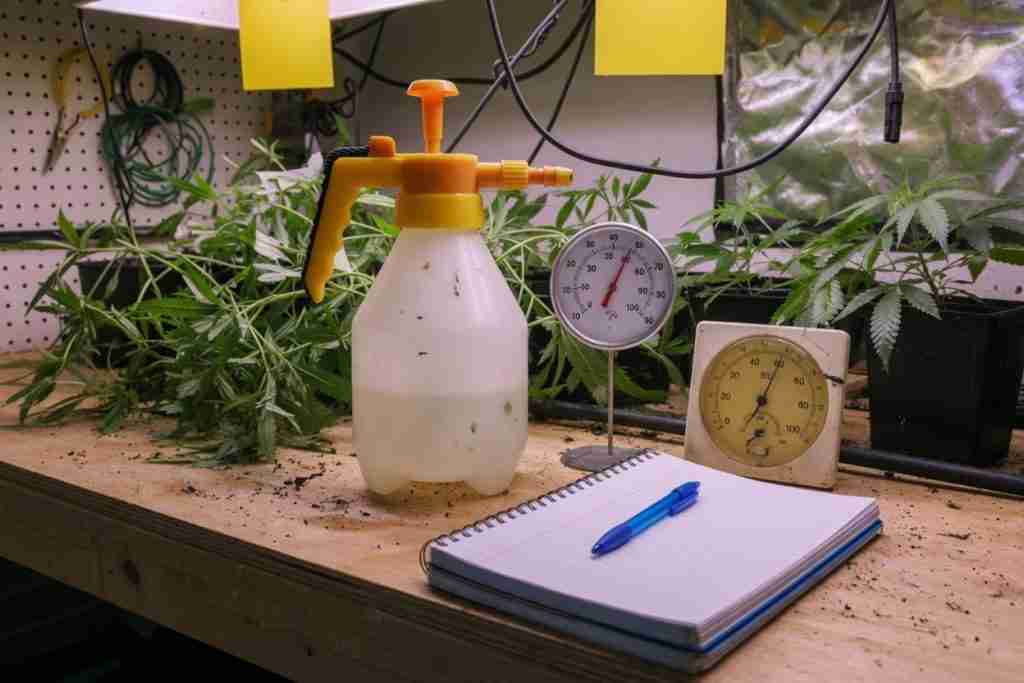
Cover or move HID bulbs and LED drivers. Water on a hot bulb is a bad night. Keep spray off electrical strips. A 1-liter hand mister is enough for a 2×4. A 2-liter pump sprayer covers a 4×4 if you walk slowly. Clean the nozzle after kelp or tea. A clogged nozzle spits blobs, and blobs burn.
Walk the plant, do not stand in one spot and hose it. Start at the back of the tent, lift a fan, mist the pale underside, flip, light pass on the top, move to the next branch. Same for the far side. The inner shade leaves are where deficiency often shows and where air is worst, so they need a mist and then extra fan. Do not soak the media while you are “foliar feeding.” If the pot is already wet, you just added a humidity bomb for no food reason.
Night-of checklist, short enough to stick on the tent pole: lights dim or off, mix mixed and pH’d, nozzle set to mist, floor dry, fan on, electrical covered, phone timer for 30 minutes later to confirm the canopy is dry. If at minute 30 the fans still shine, you overdid it. Next time, half the trigger pulls. If leaf edges taco up by morning, the mix was hot or the light came on too hard. Rinse with pH’d water the next lights-off and back off.
Foliar Feeding by Growth Stage

Stage decides whether foliar feeding cannabis is useful or reckless. Seedling and clone tissue is thin. Veg leaves are the sweet spot. Early flower still has mostly leaf. Once pistils pile into clusters, you are spraying a future jar. Stop.
Seedlings and clones
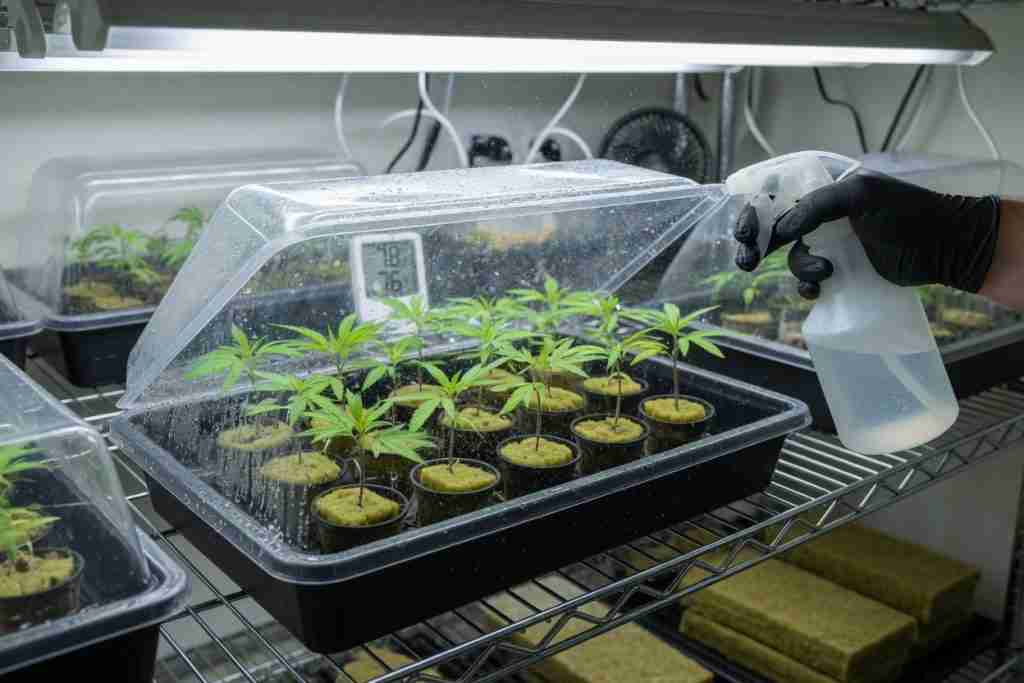
Clones with no roots cannot drink from the cube yet. A light mist of pH’d water, or a whisper of kelp, keeps the leaf from collapsing while callus forms. Do not hit unrooted cuts with a full cal-mag salt mix. You will cook a petiole. Dome on, then crack it so the mist dries. Seedlings in soil usually need less foliar, not more. They die from wet feet. Stage guide: seedling stage and seedlings day by day. First two weeks: 15 steps to give cannabis plants the best start.
Vegetative plants, then early flower, then you stop
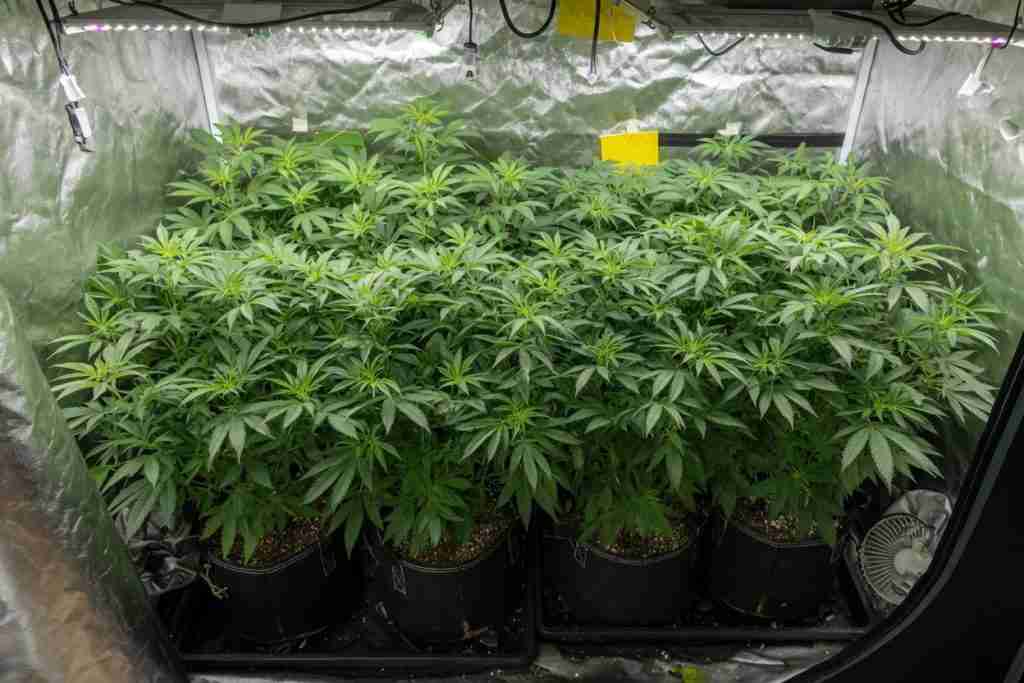
Veg is where foliar feeding cannabis earns its keep. Plants are all leaf. You can correct magnesium, iron, and a light nitrogen fade without soaking the medium. Once a week is plenty for a supplemental kelp. Corrective Epsom or chelate: every 3 to 5 days, two or three times, then quit. Veg training and feed: cannabis vegetative stage.
Week 1 to 2 after the flip, some growers still mist undersides if a fade is running. Keep mix off pistils as much as you can. After week 2 to 3 of 12/12, put the sprayer away unless you are fighting a pest with a product labeled for flower, and even then you are gambling. Flower stage: flowering stage of growth. Sibling page on spraying in bloom: foliar feeding cannabis plants in flowering.
What to Put in the Bottle

Water-soluble only. If it does not dissolve, it clogs and it sits on the leaf like dust. Hydro liquids at foliar rates work. Dry salts that fully dissolve work. Thick organics, sludge teas, and oily kitchen mixes do not belong in a mist nozzle aimed at a cola.
Epsom, cal-mag, kelp, and silica
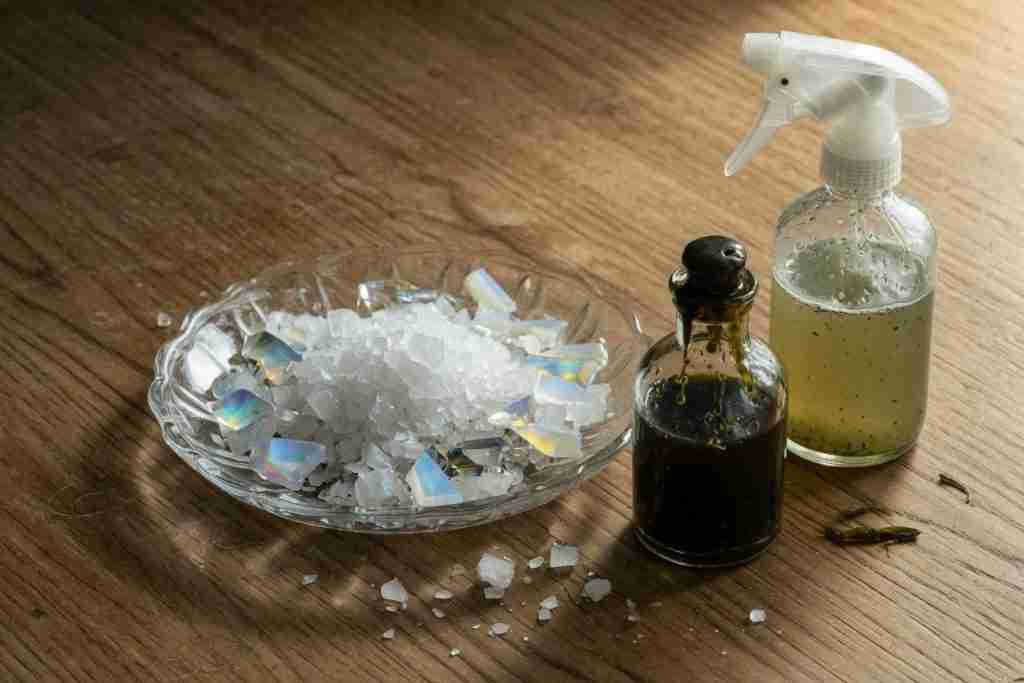
Epsom salt is magnesium sulfate. Foliar dose we stand behind: 1 teaspoon per gallon, about 5 grams in 3.8 liters, fully dissolved, strained, pH’d. Use it for a real magnesium fade, not as a weekly cologne. Cal-mag products add calcium and often nitrogen and iron. Foliar cal-mag at quarter label if the new growth is twisted and you already fixed pH. Magnesium notes: magnesium for growing cannabis.
Kelp or seaweed extract is a biostimulant with traces and natural growth regulators. Mild veg foliar, not a bloom drench on flowers. Liquid kelp at the low end of the foliar rate on the bottle. Alfalfa tea is an old organic trick for triacontanol. If you brew it, spray in veg, strain it fine, and do not store it warm. Brew notes: alfalfa for cannabis.
Chelated iron, manganese, and zinc are the micros that foliar actually shines at. Use a horticultural chelate, not a handful of rusty nails. Follow the foliar ppm on the packet. EDTA and DTPA chelates stay dissolved across a wider pH than a raw sulfate. That is why a pale-top iron fade often answers a chelate mist faster than dumping more Fe in a high-pH pot. Still fix the pot. Foliar iron does not change media pH. Silica we already covered: add first, pH down, do not cocktail it with a calcium bomb in the same liter. Microbial foliar is a separate page: cannabis and foliar probiotics. Hydro root systems still eat from the bucket: DWC hydroponics.
Potassium foliar exists and it is easy to overdo. A half-strength sulfate or MKP mist can help a cold, hungry veg plant. Too much K locks magnesium and calcium and you will spray yourself into a new fade. If the margins are already burnt, you do not need more K on the leaf. You need to back off the bloom bottle in the pot. Potassium basics: what potassium is used for when growing cannabis.
Foliar Feeding Cannabis During Flowering
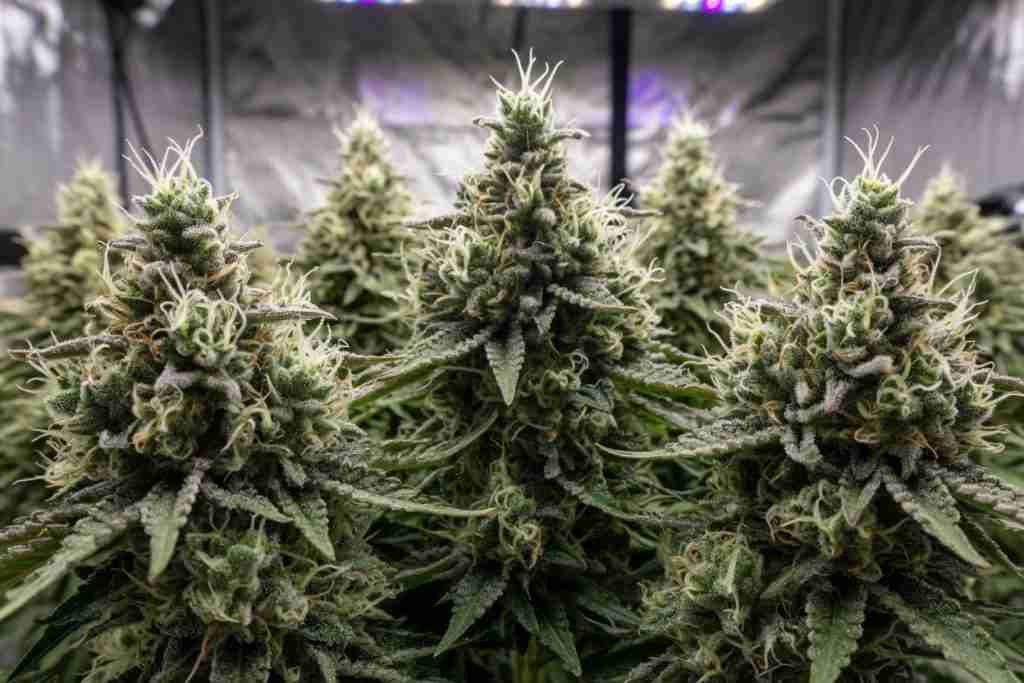
You can foliar feeding cannabis in early flower. You should not once buds are stacking. Water in the cola is botrytis weather. Residue on trichomes is how a clean cure tastes like a vitamin shop. Stop two to three weeks after the flip for nutrient sprays. Stop sooner if the strain packs on flowers fast. Late flower nutrition belongs in the pot, then you taper. Harvest and dry: harvest and cure cannabis plants.
If powdery mildew shows in week six, that is a disease fight, not a kelp day. Use a product meant for edible flowers, follow the label, and know you may still lose the top. Prevention is airflow, VPD, and not misting colas for fun. Bud rot is its own disaster: keep foliar water away from dense indoor flowers.
Specs, Pros, and Cons
| Spec | Target | Why it matters |
|---|---|---|
| Mix pH | 5.8–6.2 (up to 6.5 in soil rooms) | Keeps ions dissolved, kinder on tissue |
| Strength | 1/4–1/2 of root rate, or the foliar line on the label | Leaves burn easier than roots |
| Epsom foliar | 1 tsp/gal (about 5 g / 3.8 L), 2–3 sprays | Fast magnesium bump, then stop |
| Silica foliar | 50–100 ppm Si, silica first in the jug | Stress shield; sludge if mixed wrong |
| Distance | 15–30 cm, fine mist | Blobs burn, mist coats |
| Coverage | Dewy, not dripping; undersides first | Stomata live underneath |
| Dry time | 15–45 min with a fan | Wet plus light equals speckle |
| Leaf temp while wet | Under about 24–26 C | Hot wet tissue cooks |
| Veg frequency | Weekly max if healthy; 3–5 days if correcting | Daily drenches are how you get mildew |
| Stop date | Once pistils cluster, about week 2–3 of 12/12 | Residue and rot are not worth a fade |
Pros. Fast visible help on magnesium and some micros. Bypasses a locked pot for a few days. Cheap. You already own a bottle. Clones can ride a mist until roots show. You use less fertilizer than a panic drench.
Cons. Cannot replace roots. Easy to burn. Easy to over-wet a tent. Residue in flower. Sticky organics clog stomata. The 95 percent story makes people spray instead of measuring runoff. If you foliar feeding cannabis every day “because more is better,” you are not feeding. You are bathing the plant in salt.
What You Should See After You Spray
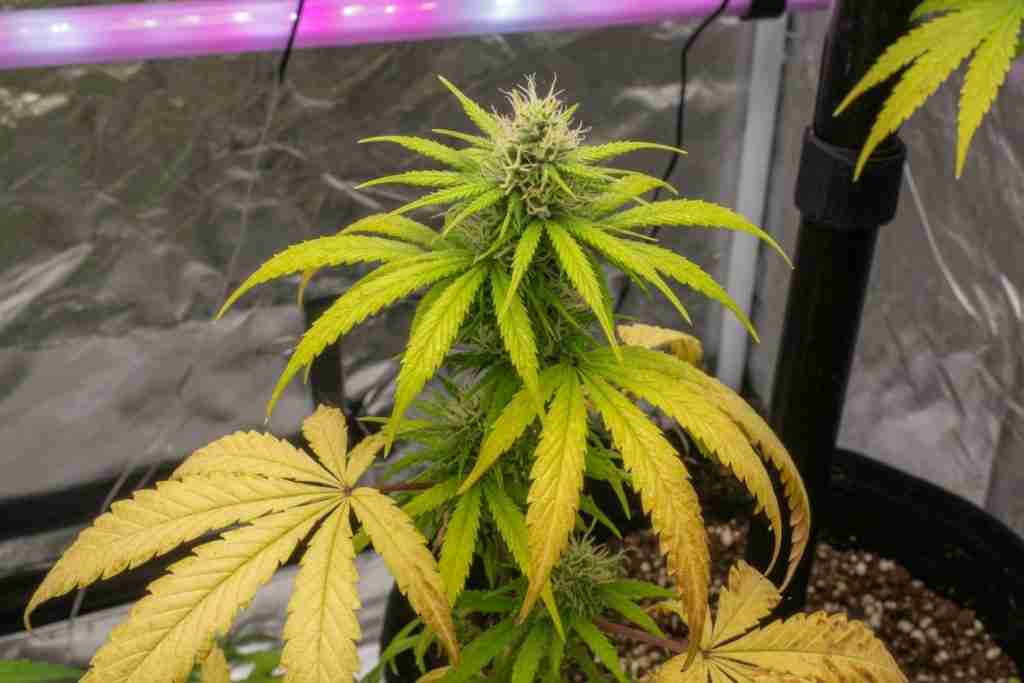
Hour one: the leaf should look dry, not glassy. If it is still wet, keep the fan. Day one: no miracle green-up. Magnesium and iron do not paint old tissue overnight. You may see the plant a little perkier if it was thirsty on the leaf, which is water, not NPK. Day three to five: new growth at the top should look a richer green if the ion you picked was the right one. Day seven: if the fade is still marching up the plant, the pot is still wrong. Measure again. Do not just spray a hotter mix.
Old yellow fans stay yellow. That is not failure. Those cells already broke chlorophyll. Your scoreboard is the next set of leaves and whether the fade stopped climbing. Take a photo before you spray, same angle, same light. Guessing from memory is how people “see improvement” that is not there. If day seven looks the same and runoff pH is still 5.2 or 7.4, go back to the meter, not the kelp.
A real magnesium save looks like this. You had stripes on fans 4 through 7. You pH’d the coco to 5.8 to 6.0, added a sane cal-mag in the root feed, and ran two Epsom foliars three days apart. Fans 4 through 7 stayed ugly. Fans 8 and 9 came in green. That is a win. A fake save is spraying nitrogen on a lockout and watching the plant go darker and clawed. Darker is not healthier. Claw is too much N or water. Put the sprayer down.
First spray tonight, if the plant actually needs it. Write the symptom in a notebook. Check runoff pH. Mix one liter at quarter strength or the Epsom rate above. pH 6.0. Lights off. Fan on. Mist undersides until dewy. Walk away. Thirty minutes later, leaves should be dry. Three days later, look at the newest growth only. If it is better, one more mild spray, then stop. If it is worse, you sprayed the wrong ion or the pot is still locked. Do not invent a third bottle. Foliar feeding cannabis is a short course, not a personality.
IPM sprays are not foliar feeding. Soap, oil, sulfur, and biologicals have their own labels and their own dry times. Do not tank-mix a pest product with a salt fertilizer unless both labels say so. Oil plus light is a burn. Sulfur plus oil is a worse burn. If mites are the problem, foliar nutes will not evict them. Treat the pest, then feed the roots. If you are in late veg and you want a probiotic leaf spray, that is the probiotics page, not a handful of kitchen yogurt on a cola.
You will smoke this plant. Anything you spray after week two of flower can still be there in the jar. That is the simple reason to stop. Nutrient salts on a dried flower taste like a penny. Oils taste like a salad. Even water in a dense indoor cola can become grey mold you do not see until trim day. Keep foliar feeding cannabis in the leaf weeks. Keep flower weeks for air, light, and the pot. If a fade hits in week six, correct the reservoir or the soil drench. Do not panic-mist the colas. The grams you save from a late spray are not worth the jar you ruin.
Mistakes That Burn Leaves and Invite Mold
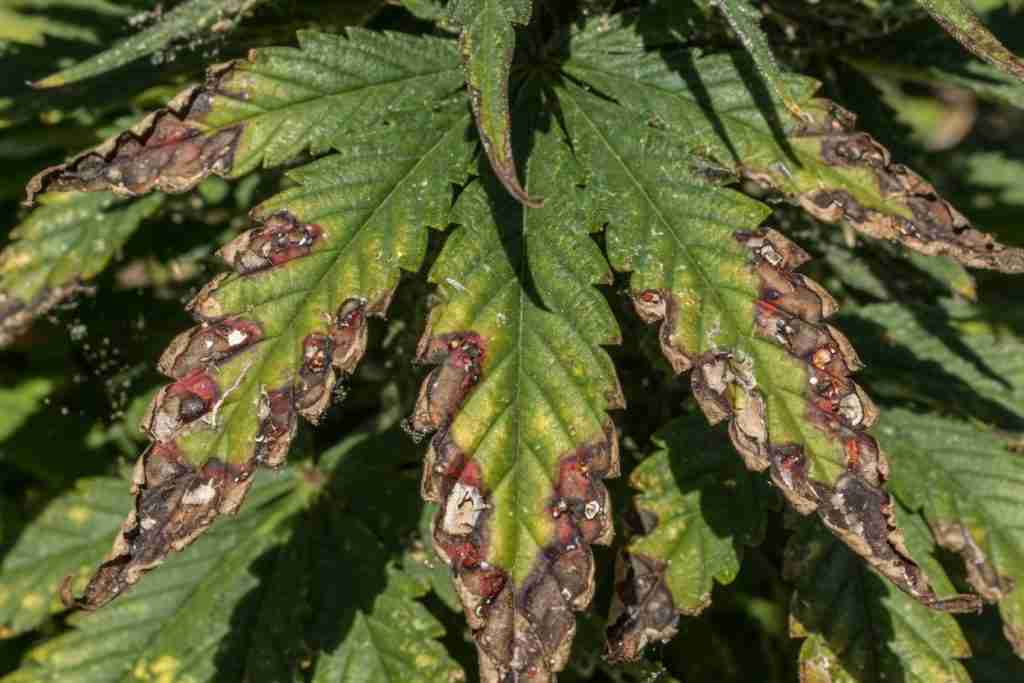
Spraying under full light. Mixing at root strength. Drenching until runoff. Hitting stacked flowers. Combining silica and cal-mag in one shot. Using molasses or milk on the canopy. Spraying a hot, still tent at 30 C. Leaving the mix in the bottle until it smells. Hitting the same plant every morning because the old blog said daily was fine. That last one was on this URL. It is wrong. Correct it in your notebook.
If you already burnt a leaf, rinse with pH’d water at lights-off, then leave it alone. Do not stack a new cocktail. Fix the pot. Wait for new growth. Burnt tissue is dead. You are growing the next set of fans, not resurrecting the last ones.
Outdoor rain the morning after a spray is mostly wasted mix, not a disaster. You do not re-spray the same day to “make up for it.” Wait. Indoor growers who foliar then crank a dehumidifier to 30 percent RH will dry the mix on the leaf before it enters. Give it a half hour of normal room air first. Then dry. Foliar feeding cannabis is a wet-then-dry event, not a sauna and not a desert.
Photoperiods in a long veg can take a weekly mild kelp if you like. Autos in a 10-week life get two or three useful spray windows, then flowers. Do not copy a 16-week photo schedule onto an auto. If you flipped to 12/12 yesterday, you still have a short leaf-only window. If the plant already shows pistils in a cluster the size of a grape, you are late. Shop and veg notes stay on the same site as the bottle: veg and the store.
Salt crust on older fans: a plain water foliar the next lights-off can wash some of it. Then go back to roots. Organic teas that were not strained will speckle and smell. Strain through a paint strainer bag. If you want microbes on the leaf, use a product meant for foliar, not last night’s bucket. Hydro growers: foliar does not fix a swamp reservoir. Clean the bucket.
Frequently Asked Questions
Can foliar feeding replace soil or hydro feed?
No. Foliar feeding cannabis moves a small dose fast. Roots move the harvest. Use spray to patch a fade or a lockout while you correct pH, water, and the feed chart. If the pot is the problem, the leaf will yellow again after the mist wears off.
Can you foliar feed in flower?
Early flower only, undersides, light mix, then stop when buds cluster. Late flower sprays risk mold and leftover taste. If you must treat a pest in week six, that is a labeled IPM call, not kelp night. Details on the flowering foliar page linked above.
How often should you spray?
Healthy veg: at most weekly, and many runs need zero. Correcting a named deficiency: every 3 to 5 days, two or three times, then stop. Daily dripping is how you get burnt tips and mildew. Watch new growth, not the calendar.
What pH should the mix be?
Most rooms: 5.8 to 6.2. Do not skip the pen. Tap water plus Epsom is not automatically friendly. pH the jug, then spray. The same discipline you use on the reservoir belongs in the bottle. Shop beans when the canopy is actually green: cannabis seeds store. Questions on a pack: contact us.
Should you spray the tops or the bottoms of the leaves?
Bottoms first. That is where most stomata sit. A light pass on the tops is optional. If you only have time for one side, flip the fans and mist the pale underside. Tops-only sprays look busy and feed less.
Is distilled water required?
No, but it is simpler. Distilled or RO lets you know the starting EC. Clean tap works if you know hardness and you pH the mix. Skip water that already sits at 0.8 mS/cm of junk you cannot name. You cannot foliar feeding cannabis through a kettle crust.
Can you foliar feed every day?
You can. You should not. Daily dripping was the old advice on this page and it is a mildew-and-burn plan. Corrective sprays a few days apart, then stop. Healthy plants can go a whole veg with zero foliar and still fill a jar if the roots are honest.