Fermented Weed Mulch: Recycling Cannabis Waste into Living Mulch


Picture this: You’ve just trimmed a sticky harvest, and your floor’s covered in fan leaves, stems, and root balls. Instead of dragging all that “trash” to the curb, you can flip the script—turning yesterday’s leftovers into tomorrow’s turbo-charged soil booster. Welcome to the wonderful world of Cannabis Waste into Living Mulch—a closed-loop trick that saves cash, slashes waste, and whispers sweet nothings to the microbes beneath your feet.
What Is Cannabis Compost?
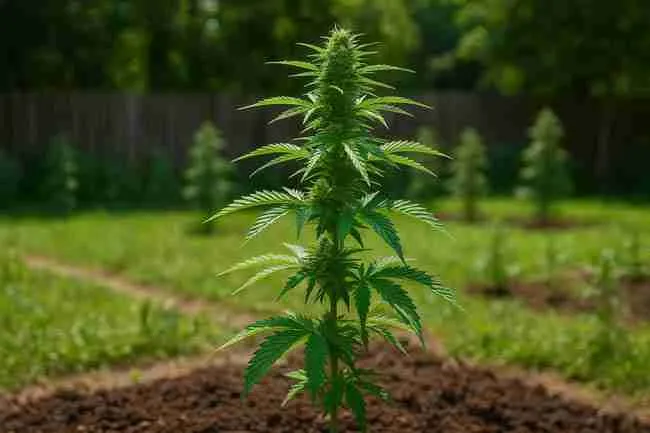
Cannabis compost is regular compost’s cooler, terpene-loving cousin. You take every plant part you’d normally toss—leaves, stems, stalks, even those stubborn roots—mix it with browns (think shredded cardboard or autumn leaves) and greens (fresh trim, veggie scraps), then let nature’s tiny janitors break it all down.
The Fermentation Twist (Bokashi-Style)
- Chop it fine: Smaller bits break down faster.
- Add IMO or EM: Indigenous or effective microorganisms kick-start fermentation.
- Seal it up: An airtight bucket keeps oxygen out and lactic acid bacteria in.
- Wait 2 weeks: Open the lid, inhale that sweet-sour funk, and you’re good to bury or top-dress.
However, if you’re in a hurry, sprinkle a handful of finished worm castings to speed things up.
Why Is It a Good Idea to Use Cannabis Compost?
- Closed Loop Magic – You recycle nutrients your plants already loved.
- Microbial Buffet – Trichome-coated leaves feed fungi and bacteria that, in turn, feed your roots.
- Big Savings – Skip the garden center; your mulch is free.
- Sustainability Win – Less waste means a lighter carbon footprint.
“I slashed my fertilizer bill by half last season just by top-dressing fermented fan leaves,” brags Eli, a small-scale grower in Nova Scotia.
How to Mulch Cannabis Beds with Old Cannabis Plants

Step-by-Step Walk-Through
- Harvest & Sort – Separate woody stalks from soft leaves.
- Shred or Mow – Aim for popcorn-size pieces.
- Pre-Ferment (Optional but Powerful) – See Bokashi steps above.
- Layer It On – Spread 2–3 inches thick around each base.
- Water Lightly – Moist but not swampy keeps microbes happy.
- Cover Crop or Straw Cap – A thin layer of straw prevents sun-scorch.
Quick-Start Recipe Table
| Ingredient | Amount per 10 sq ft | Why It Matters |
|---|---|---|
| Shredded cannabis leaves | 2 kg | High nitrogen, quick rot |
| Chopped stems | 1 kg | Adds structure & aeration |
| Rice hulls | 0.5 kg | Silica boost, drainage |
| Biochar | 0.2 kg | Microbe condo |
Why Using Cannabis Mulch Is So Good for Your Existing Cannabis

- Moisture Sponge – Mulch cuts evaporation by up to 70 %.
- Weed Blocker – A 3-inch layer stops light, snuffing out pesky weeds.
- Microbial Symphony – Decomposing cannabis releases sugars that wake up beneficial fungi.
- Temperature Blanket – Roots chill on scorching days and stay cozy on cool nights.
Dangling modifier alert: Sipping your morning coffee, the sight of perky, mulched plants will make you grin ear to ear.
Can I Use Cannabis Roots for My Cannabis Mulch?
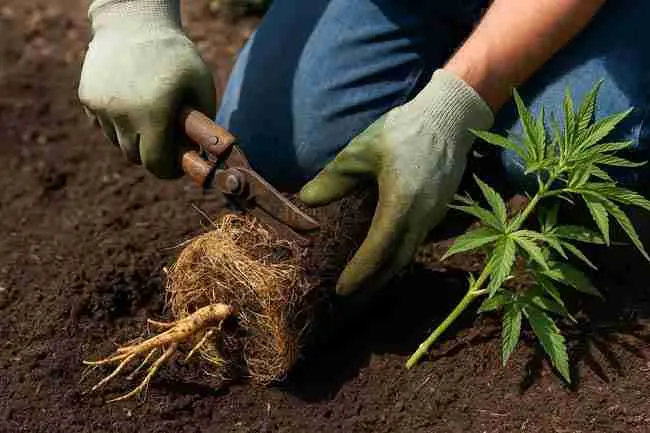
Absolutely! Those knotty root balls are rich in sugars, cellulose, and spent nutrients. Chop them up (loppers beat scissors here), dust with mycorrhizal powder, and tuck them back into the same pot or bed. The decaying roots create worm highways and air pockets—prime real estate for new root tips.
Pro tip: Leave a few root fragments intact; they inoculate the soil with strain-specific microbes.
What Parts of the Cannabis Plant Make Good Compost?

| Plant Part | Compost Speed | Special Perks |
|---|---|---|
| Fan leaves | Fast | Nitrogen burst |
| Sugar leaves | Fast | Sticky resins feed fungi |
| Stems < 1 cm | Medium | Lignin for structure |
| Main stalk | Slow | Long-term carbon |
| Root balls | Medium | Micro-colonies |
Avoid seeded buds if you fear volunteer plants, but otherwise, everything’s fair game.
Can You Compost Weed Trimmings?

You bet! Sugar leaves carry trace cannabinoids and terpenes that microbial communities treat like a five-star buffet. Toss them in your hot pile or Bokashi bucket, but remember: high-resin material can clump. Mix with shredded paper to keep airflow groovy.
Is Living Soil Good for Cannabis?

Living soil is like an underground city bustling with bacteria, fungi, protozoa, and earthworms. When you throw Cannabis Waste into Living Mulch, you’re basically sending free pizza to that city. Result?
- Faster nutrient cycling
- Thicker stems
- Fatter flowers
Once you taste living-soil terps, you’ll never crave bottled nutrients again! Trust us!
What Kind of Mulch Is Best for Cannabis?
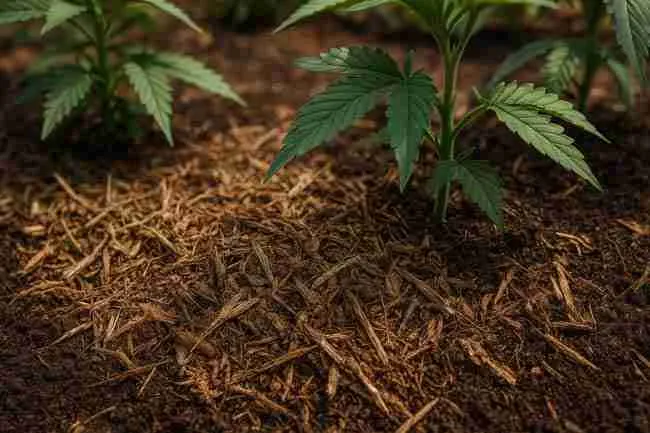
Mulch Showdown
| Mulch Type | Nutrient Value | Weed Suppression | Cost | Best Use Case |
|---|---|---|---|---|
| Fermented cannabis waste | ★★★★☆ | ★★★☆☆ | Free | Indoor & outdoor beds |
| Straw | ★★☆☆☆ | ★★★☆☆ | Low | Top cap over green mulch |
| Coco husk | ★★☆☆☆ | ★★☆☆☆ | Mid | Pot culture moisture control |
| Wood chips | ★☆☆☆☆ | ★★★★★ | Low | Perennial beds, paths |
Fermented weed mulch wins on nutrient density and zero cost, while wood chips rule long-term weed blocking.
Should You Use Weeds as Compost?
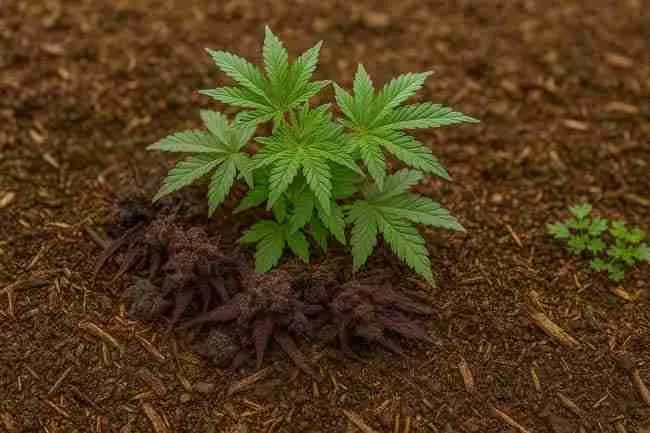
Weeds can be sneaky teachers. Chop-and-drop non-seeded weeds into your pile for free minerals pulled from deep soil layers. But—and it’s a big but—if they’ve set seed, solarize them first in a black trash bag for two weeks to dodge a weed-tornado later.
Does Cannabis Decompose?

Yes, sirree. Under warm, moist conditions, fan leaves vanish in 30 days, stems in 90, and thumb-thick stalks within a year. Speed depends on:
- Carbon-to-Nitrogen Ratio – Aim for 30 : 1 overall.
- Particle Size – Smaller = faster.
- Moisture & Aeration – Keep it “wrung-sponge” damp.
What Compost Do Professional Cannabis Growers Use for Plants?

Pros lean on worm castings, aerated compost teas, and cured green-waste compost blended with biochar and rock dust. Many topdress a fermented cannabis mulch layer every cycle for an in-house nutrient charge, then follow with a thin straw cap to lock in moisture.
However, outdoor farms chasing organic certification often document every scrap of on-farm cannabis waste they reincorporate—a slick move for compliance and marketing.
Pros and Cons of Turning Cannabis Waste into Living Mulch
| Pros | Why It Rocks |
|---|---|
| Zero waste | Keeps landfill clear of green goo |
| Free nutrients | Cuts fertilizer costs by up to 50 % |
| Boosts biology | Fuels bacterial & fungal diversity |
| Moisture savings | Less watering in dry spells |
| Carbon sequestration | Locks CO₂ in soil humus |
| Cons | Work-Arounds |
|---|---|
| Possible pests | Ferment or hot-compost to kill eggs |
| Strong odor | Bury or cap with straw |
| Time & labor | Shred with a cheap chipper to speed prep |
FAQ: Cannabis Waste into Living Mulch
Q: Will fermented cannabis mulch make my garden smell like a brewery?
A: Only for a day or two. Cover with straw, and the tangy scent fades fast.
Q: Can I sprinkle raw fan leaves straight on top?
A: You can, but fermentation jump-starts nutrient availability and curbs pathogens.
Q: Is there any THC left in the mulch?
A: Trace amounts, but microbes gobble cannabinoids quickly—no, your cannabis won’t get tipsy.
Q: How thick should I lay the mulch indoors?
A: Two inches tops; thicker layers may invite fungus gnats.
Q: Do I need special garden tools?
A: A pair of pruning shears, a five-gallon bucket with a lid, and maybe a $100 electric chipper if you’re feeling fancy.
Call-to-Action: Build Your Mulch Loop Today
Next harvest, don’t toss your so-called trash. Grab a bucket, shred those stems, sprinkle some rice bran, and let the microbes boogie. Your future buds will thank you with louder terps, thicker trichomes, and yields that make your neighbors’ jaws drop.