Environment, Media, Watering, Pot Sizes Effect Cannabis Growing

Environment, media, watering, and pot size are one job. The pot is the water tank. The mix is how fast that tank drains. The room is how fast the marijuana drinks. Watering is you reading the tank instead of the calendar. Get those four talking to each other and a weed plant will tell you when it is thirsty. Treat them as four separate checklists and you drown a seedling in a five-gallon, or you starve a cola in a cup.
The last version of this page listed temperature, then soil, then a finger test, then “use at least five gallons.” That is a brochure. Ranking growers are asking a tighter question: what size pot for an auto, a photo in a tent, a living-soil outdoor plant, and how does fabric change the drink. The honest answer is a range, not a lucky number. A three-gallon of coco on drip is a different animal from a seven-gallon of peat you lift twice a week.
Start from named cannabis seeds. Then match the container to the roots you have today, not the plant in a catalog photo. The pour itself lives on watering cannabis plants. Mix recipes sit on best medium to grow cannabis. Climate numbers sit on the best growing environment. This page is how those three collide inside a pot.
Match the Pot to the Roots You Have

A seedling has a root system the size of a matchstick. Put that plant in a five-gallon of wet mix and the outer volume never dries. Oxygen leaves. Gnats move in. The plant sits still and you think you underfed it. You overpotted it. The cells in that tray are the right size because the mix can cycle wet to dry while the root is still tiny. Notes for that window sit on the seedling stage and seedlings day by day.
Photoperiods can step up. Cup or small cell, then about a gallon once white roots hold the plug, then the final pot before you flip. The old “one to two nursery sizes larger” line is vague. Jumping from a cup straight into a seven-gallon is the bathtub. Roots should meet the wall of the current pot, then you move. You can see that as a white net at the holes, or as a plant that drinks the small pot dry in a day. Leave a circling root mass in a tiny pot too long and you get a bound ball that stalls in veg. Healthy roots have their own page, cannabis roots healthy.
Move a photo on a day the small pot is a little thirsty, not sopping. Water it an hour before so the root ball holds together when you slide it out. Set the stem at the same height it sat before, unless a lanky seedling needs a little extra mix for support. Fill around the ball, then water the new mix so roots chase moisture out. Do not flood the unused volume on day one. A plant that just moved is not drinking a full five-gallon yet. If you jumped too far, water a ring around the stem for a week and widen it as the pot starts to lighten. Do the last up-pot at least a week before the flip so the plant is drinking the new tank in flower, not sitting in wet unused peat while pistils show.
Shape matters less than volume and drainage. A tall skinny pot and a short wide pot of the same litres hold a similar drink. Drainage holes are not optional. A pretty ceramic with no holes is a bowl. Fabric, plastic, or an air pot can all work if water can leave and air can get back in. Container basics that are not this four-way story sit on growing cannabis in containers.
Autos Go in the Final Pot
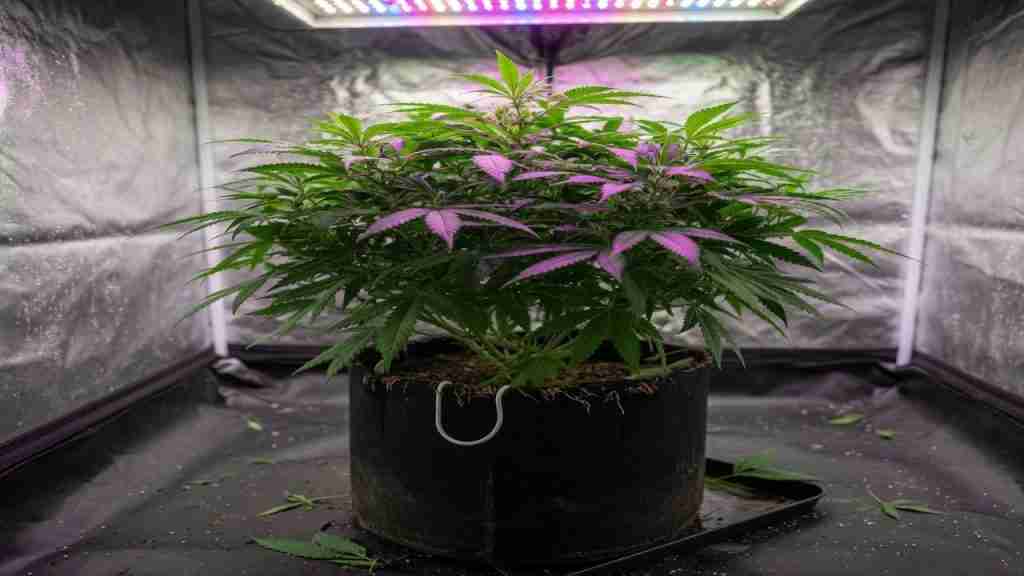
Autoflowers run their own clock. A transplant that costs three days of stall is a chunk of the whole life. Start the seed in the pot it will finish in, or in a cell you can drop in without tearing the root. Indoor hand-water autos are happy in about three to five gallons. Drip or high-frequency coco can run smaller, one to three gallons, because you refill the tank often. Outdoor autos that see wind and sun want about five to seven. Do not “pot up” an auto the week it shows pistils. You already missed the window.
A fifteen-gallon indoor auto is a wet brick for the first month. The plant is still the size of a cup and you have a tub of mix that cannot dry. Gnats and a stalled internodes story follow. Fabric three-gallon coco with a daily feed can finish a compact auto under a 2×2. Soil in plastic wants the extra buffer of five gallons because you water less often. Dropping a rooted cell into a pre-dug hole in the final pot is the only move that does not reset the clock. If you already started an auto in a cup and it is still a seedling, drop it now. If it already has pistils, leave it and water more often. Tearing week-five roots to “give it space” costs more than a small pot ever will.
How the Room Changes How Fast a Pot Dries

The same five-gallon is a daily drink under a packed LED canopy and a four-day drink in a cool, still closet. Heat, dry air, and moving air pull water out of the leaf and the pot. High humidity and a weak light leave the mix wet. That is why a calendar fails. You are not watering a gallon number. You are watering a room.
Working bands, then go to the climate page for the rest. Day temps most tents like sit around 21–27°C, about 70 to 79°F. Nights a bit cooler. Flower wants the air drier than veg so buds do not rot. A clip fan should flutter leaves, not blast them flat. Exhaust has to leave the tent. Those knobs live on the best growing environment, ventilation, and the indoor growers guide. A greenhouse and a basement are different rooms with the same pot math. Warm notes: keep the grow space warm. Greenhouse: cannabis greenhouse growing.
Winter heat dries fabric from the sidewall even when the canopy looks calm. A small heater in a dry basement can turn a five-gallon into a daily lift in veg. Summer is the other way: high humidity, weak exhaust, and a packed tent leave the same five-gallon wet for four days. Point a fan at the canopy so leaves move. Air that only hits the pots will dry fabric faster than you expect and you will chase wilt. A dehumidifier pulls water out of the room and out of the mix. If you add one mid-run, the calendar you had last week is wrong. Lift again. The pot is still the tank. The room is the leak rate.
Water at lights on, or right as they come on, so the canopy dries in the photoperiod. Wet flowers at lights off is how bud rot and powdery mildew get a vote. The old line that daytime watering “evaporates and wastes water” is a garden-hose myth. Indoors, the light is the dry cycle. Use it.
Media Changes the Drink
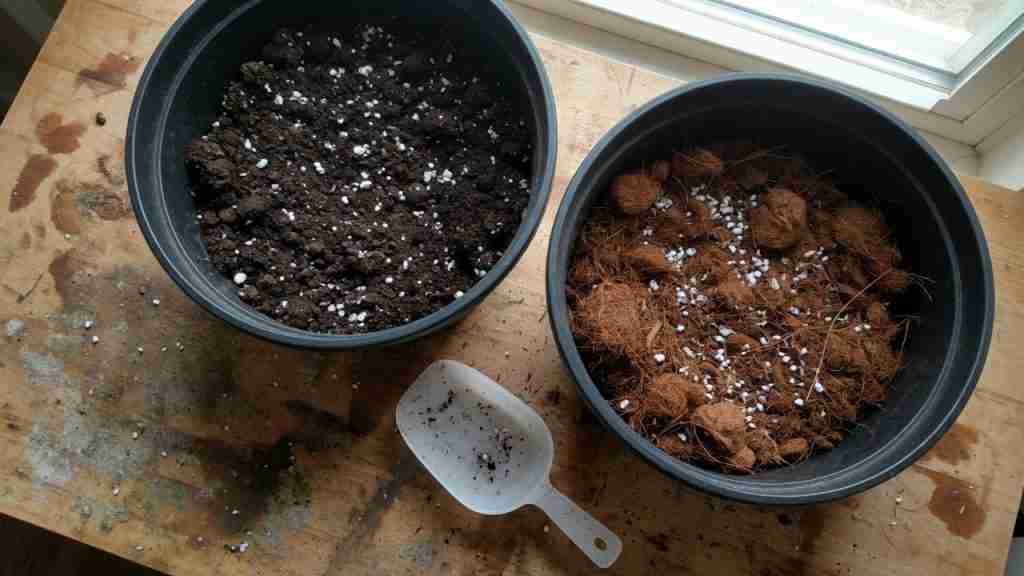
Soil holds. A decent peat or living mix in plastic can go two to four days once the plant is established. Add perlite and it speeds up. Coco holds less plant-available water and gives it up faster. That is the point of coco. Once roots fill a coco pot you feed every watering, often daily, sometimes twice in late flower under a hot light. Hydro has no pot of mix. The reservoir is the tank. Pick a lane for the run. Mixing soil habits into coco is the number one way people yellow a tent. The comparison is soil vs hydroponic cannabis.
A three-gallon of coco on daily feed with runoff can match a five- to seven-gallon of soil you lift twice a week. Same plant size. Different tank. Living soil indoor wants more volume, often seven to fifteen gallons, because the biology needs a home and you are not fertigating. You water that mix to field capacity and you wait. A hot salt bag in a three-gallon is a different job: you refill often and you watch EC. Thirty percent perlite in peat makes a five-gallon dry more like a smaller pot. That can be useful in a humid room. It is a problem if you already water on a clock. Read the mix, then pick the gallon sticker, not the other way around.
Soil, Coco, and Hydro Are Different Drinks
pH follows the medium. Soil about 6.2–6.8. Coco 5.8–6.2. Hydro 5.5–6.0. The pH page is pH for growing cannabis. Coco is not “pH neutral so you can ignore it.” It is a cation-exchange sponge that wants calcium and magnesium in the water, especially if the tap is soft. Seed cups want a light mix, not a hot bag that feeds for months. That cup recipe is on the soil guide. Organic living soil wants a bigger pot because the biology needs volume; organic cannabis soil and amendments are that lane. Salt feed in a small pot is the other lane, on synthetic fertilizers and EC by phase.
Hydro in a bucket is still a container problem: root temperature, dissolved oxygen, and a net pot that does not sit in swamp. DWC walkthrough: hydroponic growers guide and DWC hydroponics. Cheap media is a cost question, not a pot-size question: cheapest grow medium.
Water When the Pot Is Light
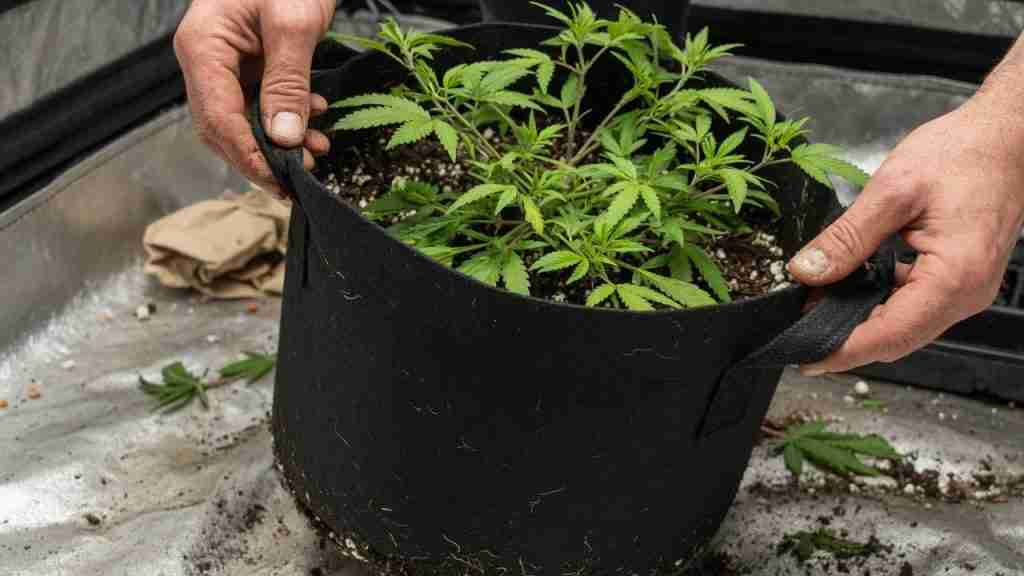
Pick the pot up. That is the method. After a full watering you know the wet weight. When it has lost a good share of that weight, water again. A finger in the top inch is a backup, not the whole story. The top of coco looks dry while the bottom is still a sponge. The top of peat can crust while the core is wet. Weight tells on both. The pour volumes and the “how much for a five-gallon” arithmetic live on watering cannabis plants. This page will not swallow that table. Ballpark only: a seedling cell wants millilitres around the stem. A one-gallon in veg is often a cup or two. A five-gallon in flower is often one to two litres when it is actually dry, more in a hot late-flower tent. Outdoor trees drink gallons. None of those numbers beat the lift.
After an up-pot the new container stays heavy for days even if the plant looks thirsty at noon. The unused mix is still wet. Wait. Wilting at lights-on with a light pot is a drink. Wilting at lights-off with a heavy pot is oxygen, heat, or a root that cannot breathe. Do not water because the calendar says Tuesday. Do not water because a meter in the top inch said dry while the pot still feels like a brick. Write the wet weight on a piece of tape on the rim if you are new. Two or three runs and your hands know. That is the whole skill this page is trying to teach: the tank, the leak, and your hands.
Hard tap, a sodium softener, and extra Cal-Mag on already-hard water change the salt load in that same pot. That chemistry is does water hardness affect cannabis crops. A drowned pot with three yellow patterns at once is oxygen first, then pH, then the bottle. That mix-up is a common one on common growing mistakes and nutrient deficiency.
Runoff, Trays, and Lights On
Coco and salt soilless want water all the way through, then about 10–20 percent runoff so salts leave. Catch it, read it if you have a pen, dump the tray. A saucer of leftover water overnight is a gnat pond and a re-wick. Bagged soil that is still feeding the plant often wants a full wet, then little or no runoff until you are actually leaching. Living soil is not a flush sport; you irrigate, you do not hose the biology out. When salts have stacked, flushing cannabis is the reset, not a weekly hobby.
Water the mix, not a shower on the colas. Wet fans in flower are a rot bet. A clone in a cup of water is a different job entirely: clone in a cup of water. Foliar in veg is optional and has its own rules on foliar feeding cannabis. Do not confuse a foliar mist with irrigating the pot.
What Size Pots Work for Cannabis

There is no single best gallon. A planning rule people still use is about two gallons of mix per foot of finished height, or roughly a gallon per month of growth. Those are brackets, not physics. Light, veg time, training, and how often you irrigate move the useful volume. A high-frequency coco plant can be large in less mix than a hand-watered living-soil plant because you refill the tank. The old “at least five gallons for everyone” line ignores autos, sea of green, and drip.
Indoor Photoperiods and a Packed Tent
Typical indoor photo, salt or soilless, hand water: seedling cell or cup, about one gallon in early veg, final pot three to seven gallons. Five to seven is the common tent finish for a plant you veg three to six weeks and train. A 2×2 often holds one plant in five gallons. A 3×3 holds three to four in three to five gallons, or one bigger plant in seven. A 4×4 holds four to six in five to seven, or a sea of smaller pots. SOG finishes in about two to three gallons with a short veg. Long veg, one tree under the light, can use ten to fifteen if you can still lift the pot and the tent is tall enough. Tent hardware: grow tent for cannabis seeds and the grow room.
Do not stuff nine five-gallons into a 2×2. The pots will touch, the mix will not dry, and the canopy will be a wet forest. Leave a hand of space around each bag so air hits fabric. If you cannot walk a watering can between plants, you overpacked. Organic indoor photos want the bigger end of that range, five to seven as a floor, because you water less often and the biology needs volume. Coco in the same tent can sit in three-gallon bags if you actually fertigate. Match plant count to the light, then match pot size to how often you will be in the room. A grower who is gone twelve hours at work should not run air pots in coco unless a drip line is doing the job.
Veg and flower still change the drink even when the pot stays the same. Early veg is a small plant in leftover mix. Late flower is a full canopy that can dry a five-gallon overnight in a hot tent. Stage notes: veg and flower. Training and a screen change how much leaf is drinking from that same root ball; defoliation is defoliate cannabis, not a pot-size trick.
Outdoor and Living Soil
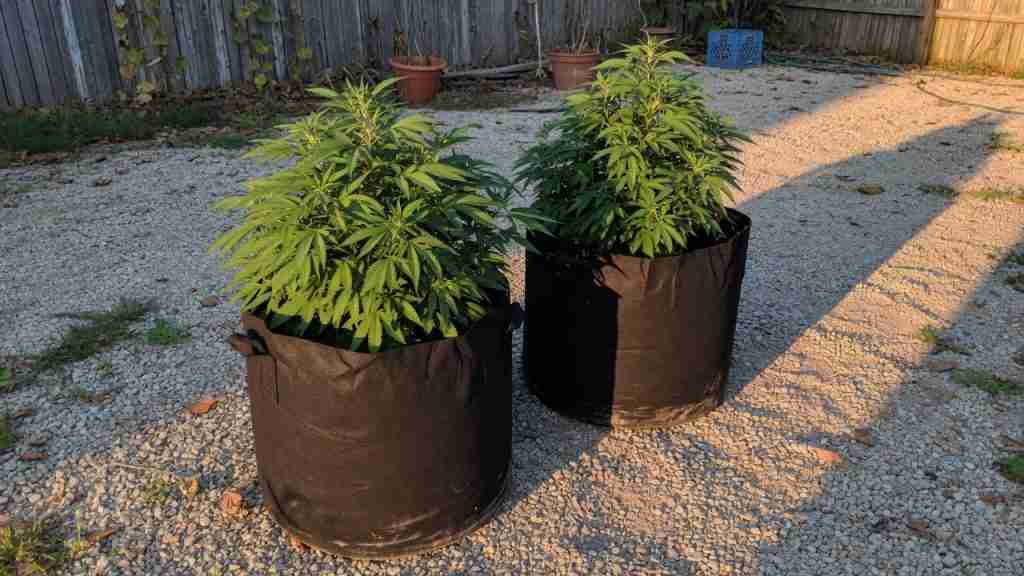
Outdoors the season is longer and the air is drier in the afternoon. Salt-based photos in containers often land at ten to fifteen gallons. Organic and living soil want more, fifteen to twenty-five as a working minimum, twenty-five to forty-five or a fabric bed for a full-season plant you actually intend to let get tall. A seven-gallon on a hot patio in August is a twice-a-day hose job. Seed and season notes: outdoor cannabis seeds. Where home growing is legal in Canada, recreational plants still cap at four per household. Four plants in four honest pots beat four plants stuffed in one tub they cannot dry.
Rain plus a saucer is a drowning. Dump trays after a storm. Fabric on gravel or pavers drains. Fabric in a kiddie pool does not. A dark plastic pot in full sun cooks the root zone on the south wall; fabric breathes, but it also dries and a heat wave will wilt a small bag by afternoon. Mulch on living soil outdoor slows that. Move bags into afternoon shade if the sidewall is hot to the touch. In-ground is a different article. This page is the container, and the container is still a tank you can lift or at least tip.
Fabric, Plastic, and Air Pots
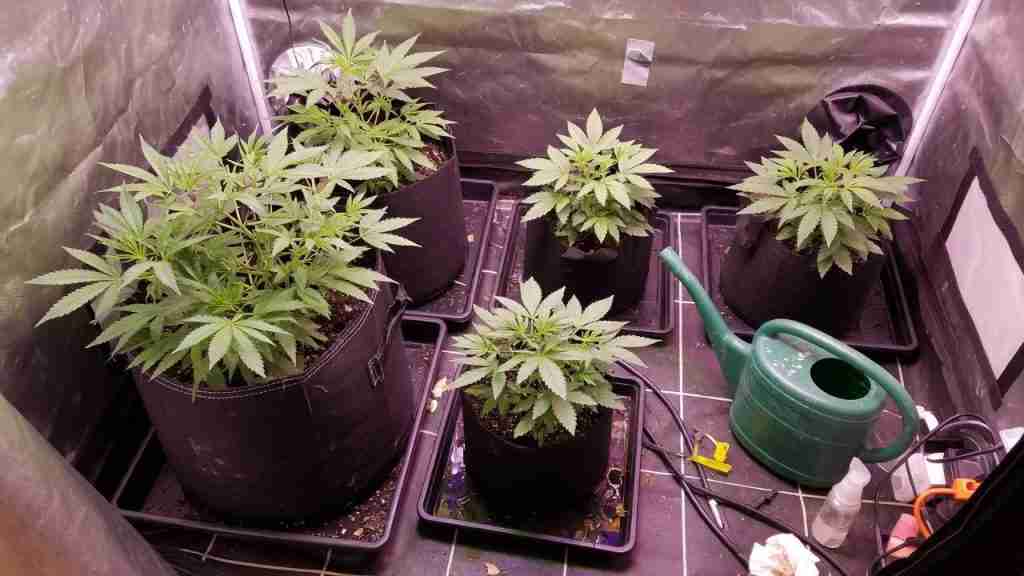
Fabric lets air hit the sidewall. Root tips prune instead of circling. You get a denser ball in the same gallons, and the pot dries from the sides as well as the top. That is why fabric forgives a heavy hand and punishes a skipped day in a hot room. Plastic holds water longer and is cheaper. Roots will circle if you leave a plant in plastic for months. Air pots prune harder and dry faster still. The air-pruning walk is understanding air pruning. Fabric is the default for most soil and coco tents. Plastic is fine for starts and for growers who cannot water daily. Match the material to your schedule before you match the gallon sticker.
Cheap thin felt can stay wet at the bottom while the top looks dusty. Quality fabric still dries as a column if you water all the way through. Do not drop a plastic nursery pot inside a fabric bag and call it air pruning. You just built a bowl with a sock on it. Double-bagging a ripped fabric pot is fine for the last weeks of flower. Starting a run that way hides a drain problem. Square fabric packs a tent a little tighter than round. The drink does not change. Handles help you lift. If a seven-gallon wet is more than you want to pick up, that is a reason to run two smaller plants, not a reason to stop lifting.
US nursery “gallons” are often short of a true US gallon of mix. A “five-gallon” fabric bag may take closer to four gallons of media once it sits. Buy a little extra mix. Set fabric on a tray. The floor of a tent is not a drain. A rigid pot needs holes you have not sealed with a saucer of standing water.
Are Bigger Pots Better for Cannabis?
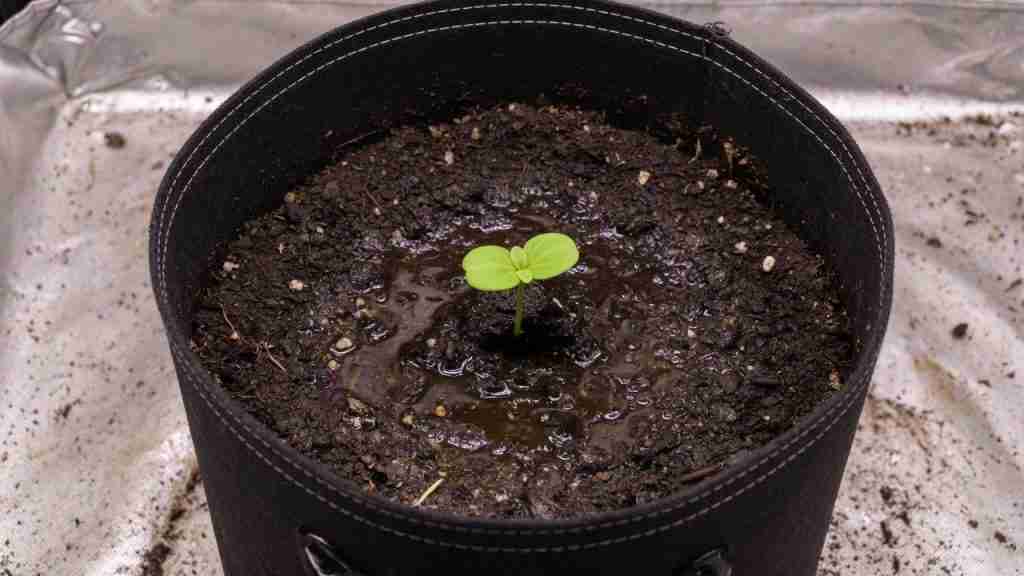
Bigger is better only when the plant can drink the extra volume down between waterings, and when the light can fill the extra canopy that extra root can support. A ten-gallon in a dim closet is a wet brick. A one-gallon under a strong LED is a daily panic. Pot size sets a ceiling. It does not set potency, and it does not replace genetics, light, or a grower who lifts the pot. Yield from one plant is a different article: how much cannabis from one plant and increase yields.
Rootbound and overpotted look like two different sick plants. Rootbound drinks every day, yellows lower fans, shows a white net at the holes, and stalls height even under a strong light. Overpotted stays wet, grows slow, brings fungus gnats, and then shows lockout because the root has no oxygen and pH in the wet zone drifts. People feed the overpotted plant. That makes it worse. Dry the outer mix. Water the ring. Wait. If you already have a circling ball in a tiny pot, a photo can still move before flip. Soak, slide, tease only the outer mat, set it in the new mix, and do not pack the sides like concrete. An auto that is already bound in a gallon in week six stays in the gallon. Water more often. Do not do surgery on a plant that has already started packing flower.

If you already went too big, stop watering the whole volume. Water a ring around the stem until roots chase the moisture out, then widen the ring. Do not keep soaking the unused mix. If you went too small, transplant a photoperiod before the flip, or live with a thirsty auto and water more often. Do not tear an auto apart in week five to “give it space.”

First-crop planning still helps: planning your first cannabis crop, new growers checklist, and growing quality buds. Canadian buyers who want the pack at the door start at buy cannabis seeds in Canada. Then pick a pot you can lift, a mix you will actually water on time, and a room that dries it. That is the whole method.