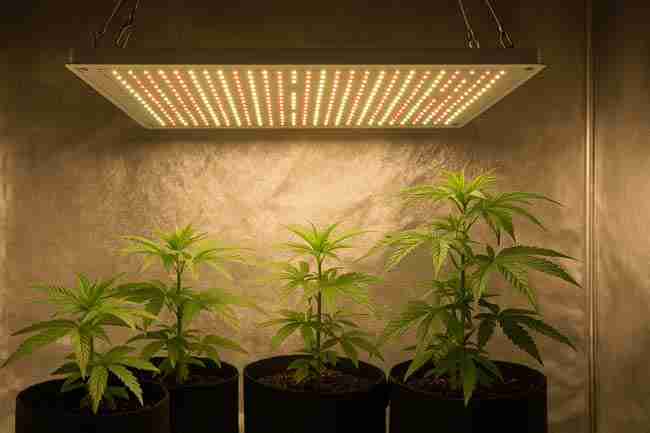
Do you Need a Dark Cycle for Growing Cannabis?

Yes, photoperiod cannabis needs a dark cycle. The plant is a long-night crop. It measures how long the night stays dark, then it either keeps stacking leaves or it starts making flowers. Indoor growers copy that with a timer: 18 hours of light and 6 hours of dark in veg, then 12 and 12 when you want buds. Autoflowering plants skip that flip. They flower by age. They still do better with a nightly rest than with lights on around the clock. Shop seed in the cannabis seeds store. The rest of the grow library is on the cannabis cultivation blog.
This page is the clock. How long the night has to be. Why a zipper leak matters more than moonlight. Why 12/12 is the indoor default even though some cultivars will start flower under a slightly longer day. Spectrum, PPFD, and hang height belong on lighting pages. Seed shopping for photos versus autos belongs on the comparison page. Seed-to-harvest: growing weed. Photo vs auto: photoperiod vs autoflower.
Photoperiod Cannabis Is a Long-Night Plant
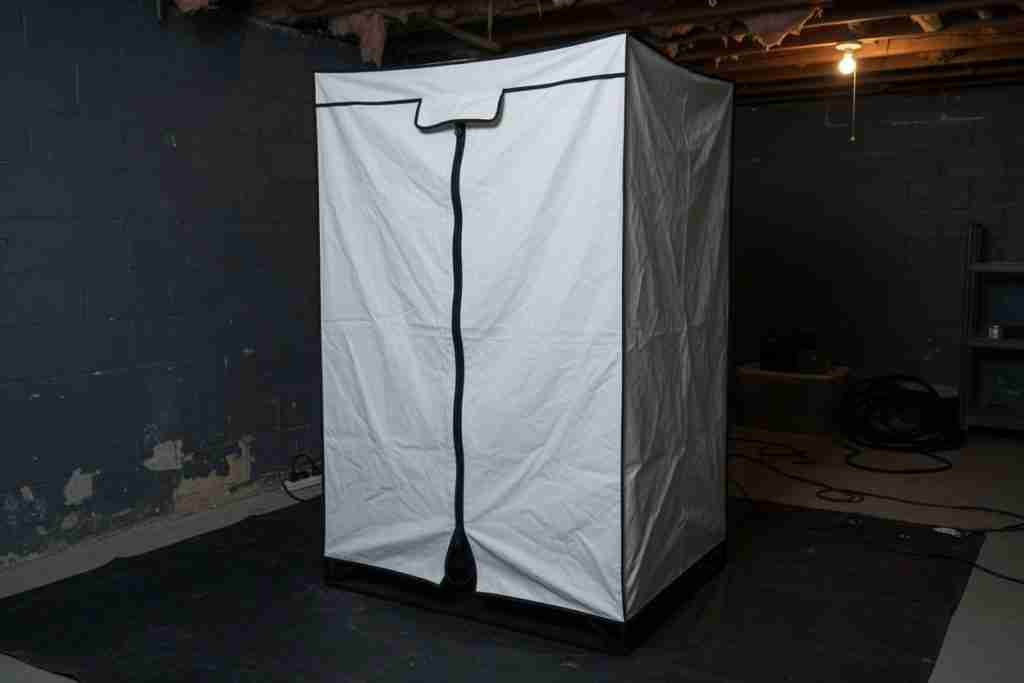
People say short-day plant. The useful way to say it is long-night plant. A marijuana plant in the photoperiod group does not count the hours the lamp is on and then decide to bloom. It counts how long the dark stretch lasts without a real light break. If that night is short, the plant stays vegetative. If that night is long enough, and it stays long enough for several days in a row, the plant commits to flower. Indoor rooms fake autumn by giving you a zipper and a timer. A tent in a lit basement can still be night-dark inside if the fabric is closed. That is the whole job of a dark cycle for growing cannabis.
The pigment that does the counting is phytochrome. You do not need the lab name on a sticky note. You need the behavior. During the day the plant sits in the “day” form of that pigment. In uninterrupted dark, that form slowly converts. When enough of it has converted, and it stays converted for hours, flowering hormones get the go-ahead. A bright leak in the middle of the night resets the count. The plant treats that leak as dawn. That is why a 12-hour dark period with a 20-minute hallway blast in the middle is not a 12-hour night. It is two short nights with a fake sunrise in between. Photoperiod seed basics: photoperiod cannabis seeds explained. Indoor box: indoor cannabis growers guide.
Critical Night Length Is a Range
Grow forums treat 12 hours as a law. It is a reliable indoor trigger, not a sacred number. Most commercial photoperiod cultivars start flower when nights run about 10 to 14 hours, depending on the line. Equatorial landrace types often want a longer night. Fast northern hybrids often start earlier. Controlled work on indoor drug-type cultivars has shown flowering can still initiate under day lengths up to about 14 hours of light, with some delay and a weaker harvest index as the day stretches. Past that, many plants stall at pistils and never pack a cola. 12/12 is the schedule you run because it works on almost every pack you will buy, it is easy to remember, and it leaves you a clean 12-hour work window. If you want the yield-steering version of the flip, that is already written on how to control flowering with photoperiod seeds.
What the Plant Does When the Lights Go Out
Dark is not idle time. During the day the leaf makes sugars. At night the plant spends those sugars. Respiration keeps running. Roots keep exploring. Stems lignify. In flower, the plant moves carbon into calyxes and resin heads. A weed plant that never gets a dark stretch is not “growing faster.” It is running photosynthesis without a full reset of the night clock. Some rooms still veg 24 hours on because clones root under constant light and because a long day raises daily light integral at the same PPFD. That is a power and heat trade, not proof that night is useless. Lighting math stays on grow lighting for cannabis. Color of the diodes is a separate file: LED color spectrum.
The sleep metaphor is only half true. You do not “tuck the plant in.” You give it an uninterrupted skotoperiod, the dark half of the 24-hour cycle. Hormones that keep a photoperiod vegetative drop when nights get long. Hormones that push floral meristems rise. If you keep interrupting that, you get stretchy, indecisive tops, delayed pistils, or a plant that tries to veg and flower at once. That last look is how a lot of people first meet nanners. Stress plus a broken night is a classic path to pollen on a female. Herm notes: hermaphroditism risk in feminized seeds.
Vegetative Stage: 18/6 Is the Baseline
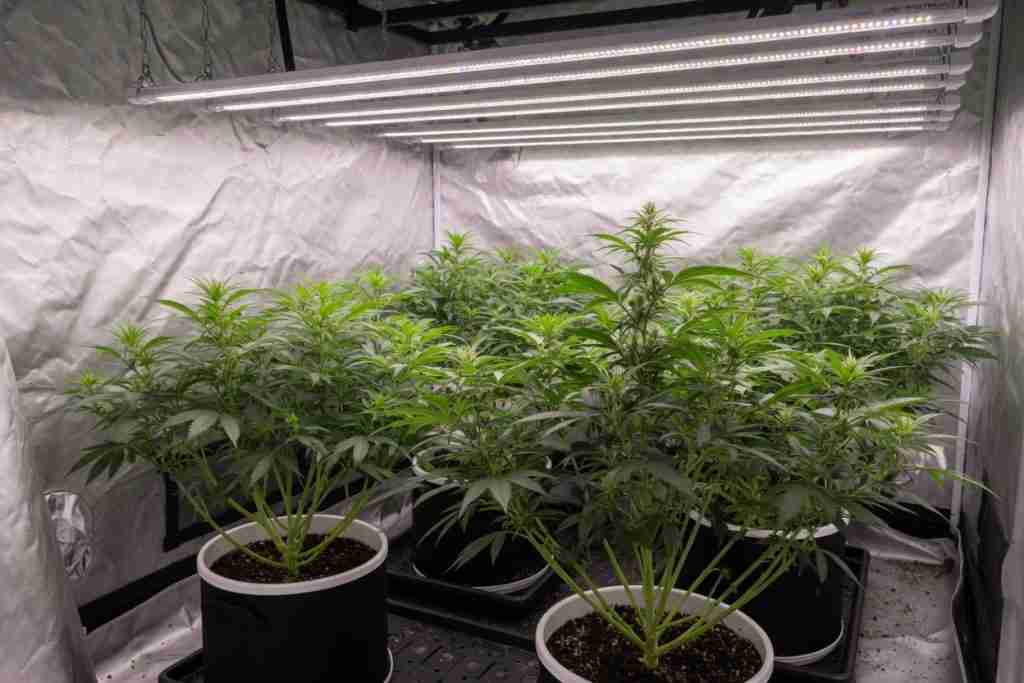
From seedling through veg, most home tents run 18 hours on and 6 hours off. That long day keeps nights shorter than the critical length, so a photoperiod stays leafy. The six-hour dark stretch still gives you a defined night. You can water, train, and scout in the light window and leave the room alone after lights-out. Seedlings want the same clock, dimmer and higher. Do not start a baby on 12/12 unless you are forcing a tiny plant into flower on purpose. Seedling stage: cannabis seedling stage. Veg habits: cannabis vegetative stage.
18/6 is not the only veg clock. 20/4 is common. 16/8 still holds most modern hybrids in veg because 8 hours of dark is usually still shorter than the night that triggers bloom. Drop veg to 14/10 on a sensitive cultivar and you can get early pistils you did not ask for. Stay at 18/6 unless you have a reason. A reason is heat: six hours of lamp-off lets the tent dump heat so the night is cooler than the day, which is what outdoor plants expect. Another reason is the power bill. Another is your sleep. Put the dark period over your own night so you are not opening the tent at 3 a.m. to water. First-run shopping: new cannabis growers checklist. Cheap room: grow cannabis on a budget.
24/0 in Veg
Some clone rooms and some veg rooms never shut the lamp off. At the same PPFD, 24 hours on gives you more daily photons than 18. Plants can veg hard under that. The costs are heat, electricity, and no dark for you to work without the bars in your eyes. Roots do not “require darkness” in the folklore sense. They sit in a pot. What they need is oxygen, moisture, and carbon from the shoot. Constant light can still make a tired, lime canopy if intensity is high and you never give the room a temperature drop. If you veg 24/0, dim a notch or raise the hang so you are not cooking the tops for a full day. Flip to 12/12 when you want flower. Do not try to flower a photoperiod under 24-hour light. It will not pack buds. Mothers you keep for cuts stay on a long day so they never flower. Cloning: how to clone cannabis.
Flowering Stage: Flip to 12/12 and Hold It
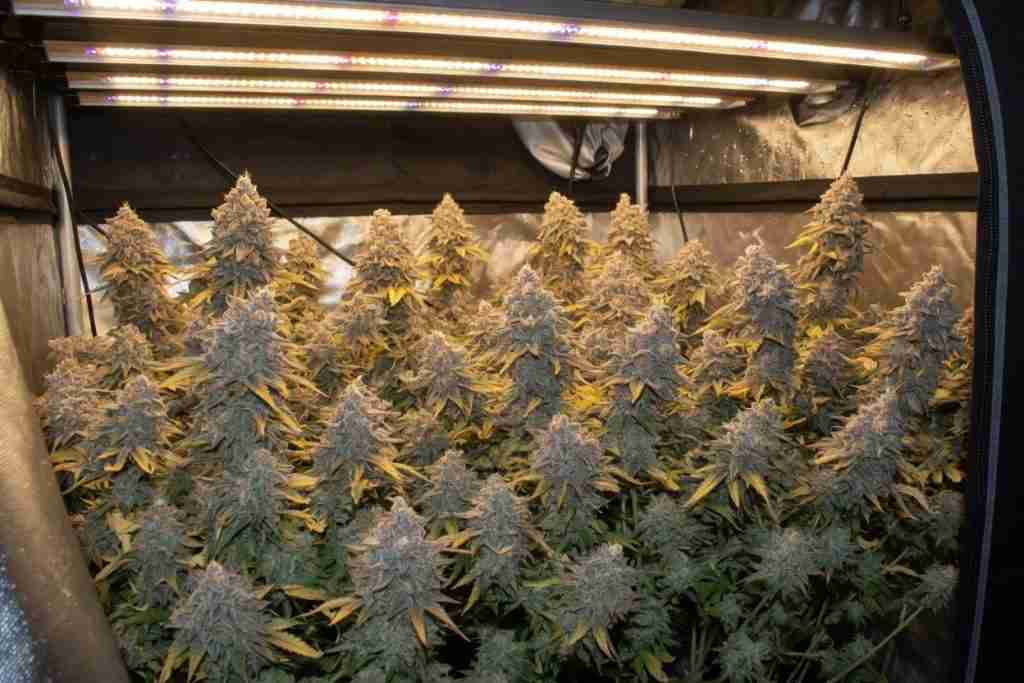
When the plant is the size you can finish in the tent, you change the timer to 12 hours on and 12 hours off. Same fixture. Same hang, then you manage stretch. Pistils usually show in the first one to two weeks. After that you keep the same 12/12 until chop. Do not creep the clock around because a forum said 11/13 “bulks the buds.” Evidence for extra yield from longer nights is thin. What you do get from a sloppy clock is delayed flower, foxtails from stress, or a plant that tries to reveg. Flower stage walk-through: cannabis flowering stage.
Stretch in the first two to three weeks after flip is normal. A plant that doubles is not a dark-cycle failure. It is genetics plus the sudden long night. If the tent is short, flip earlier, or train in veg so the canopy is already flat. Yield still comes from photons in the 12-hour day, not from making the night 14 hours and starving the lamp. Canada’s rec plant cap is still four plants. One airy cola from a confused clock is a large share of that jar. One-plant context: how much cannabis from one plant. Canopy packing: increase cannabis yields.
12/12 Is Reliable, Not Magic
If a cultivar will initiate under 13 hours of light, you could in theory run 13/11 and bank extra photons. Home rooms should not. You will not know your pack’s exact critical night without a trial, and a mixed tent of two cultivars can have two different thresholds. 12/12 clears both. Commercial rooms with one clone, a meter, and a reason to chase grams per watt can test 12.5 or 13. You with a 2×4 and a pack of five should flip to 12/12 and leave it. If you ever test a longer day in flower, watch for stalled pistils and leafy tops. At the first sign of reveg, drop back to 12 hours of dark and hold it.
Put the Clock on a Timer
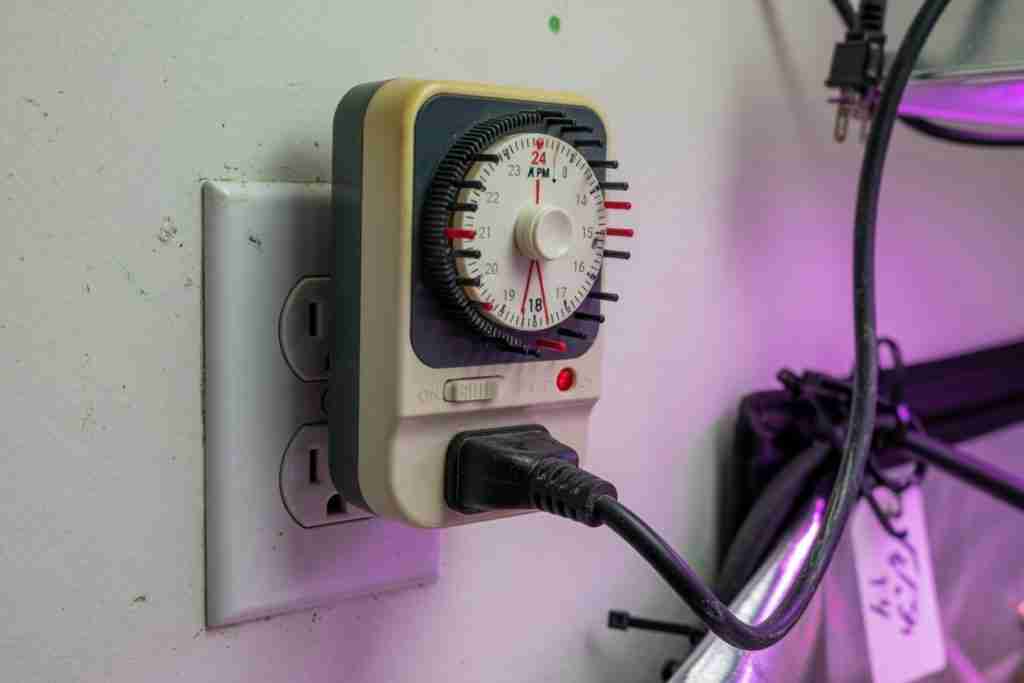
Do not eyeball lights-on. A mechanical pin timer or a cheap digital one is part of the grow, same as the pot. Set it once. Check it after a power blip. The plant does not care whether dark is 8 p.m. to 8 a.m. or noon to midnight. You care, because you have to water and you have to live in the house. Pick a 12-hour night that matches when the room can stay closed. If the tent sits in a hallway people walk at 10 p.m., put dark over the hours the house is quiet, or move the tent. Tent setup: grow tent for cannabis seeds.
Two clocks in one space do not work. A photoperiod in flower wants 12/12. An auto in the same tent wants 18/6 or 20/4. If you flower the photo, the auto gets a short day it does not need and you lose yield on the auto. If you keep 18/6 for the auto, the photo never flowers. Separate tents, or run one clock. Same rule for a mother and a flower room. The mother stays on long days. The flower room gets the long night. One timer feeding both lights is how people accidentally flip a keeper. Room habits: cannabis grow room clean.
Work in the Light Window
Water, train, and take clones while the bars are on. If you must open the tent in the dark period, use a dim green headlamp, be fast, and do not turn on the room overhead. A 30-second peek with a phone flashlight on the canopy is a real interrupt. A sealed tent you do not open is better. Put a cheap outlet timer on the light, not on the exhaust, unless your fan plan needs it. Exhaust can run at night. The lamp cannot. After a blackout, check that the timer did not shift. A digital timer that forgot its program and now runs 18/6 in week five of flower will stretch pistils back into leaves. That is reveg. You fix it by restoring 12/12 and waiting. You do not “catch up” by running extra dark the next day.
Light Leaks: What Actually Breaks the Night
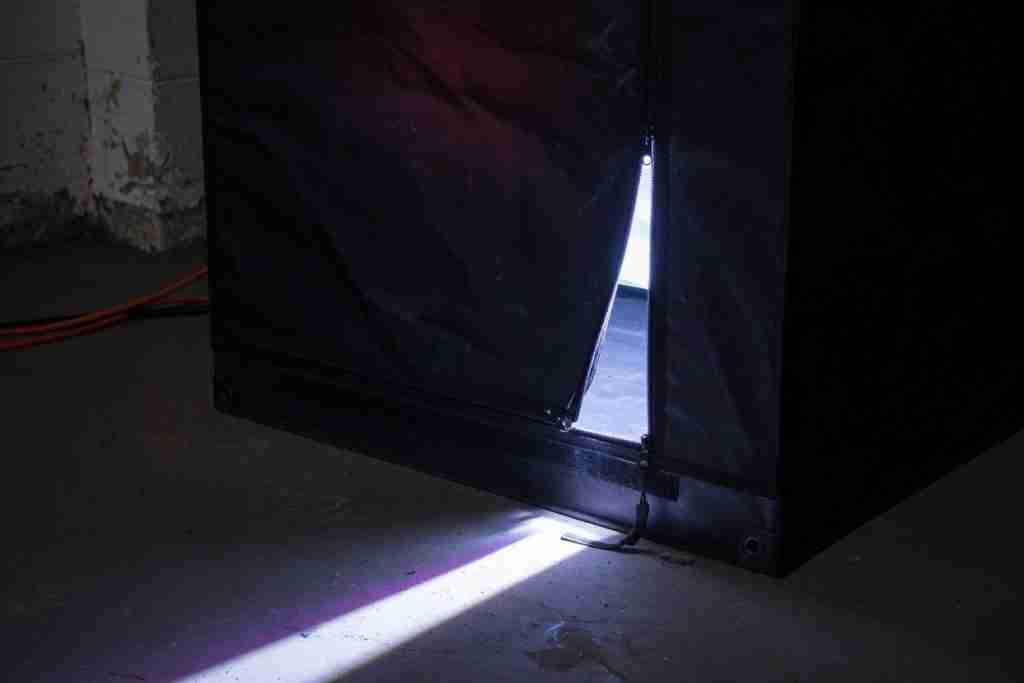
The leak that ruins a run is sustained canopy light during the dark period. An unzipped door with the grow bars still on, or a tent in a bright room with a zipper that never seats, is that leak. You can see the beam on the floor. That is not a pinhole. That is dawn in the middle of the night. Sit in the room with the house lights on and the tent dark. If the tent glows, close it. If a seam dumps white light onto leaves, tape it. If you grow in a closet, weather-strip the door. The plant reads photons at the leaf, not your intention.
Moonlight panic is overstated. Full moon is a tiny PPFD compared with a grow bar. Work on short-day crops has put the practical perception floor well above moonlight. A pinhole across the room is not the same as a status LED two inches from a cola. Be honest about which leak you have. A glowing zipper at the canopy is a problem. A streetlight through a window onto an outdoor plant can be a problem. A green speck on a far wall usually is not. Fix the real ones first. Outdoor versus indoor night is a different argument: indoor vs outdoor.
Status LEDs, Zippers, and Windows
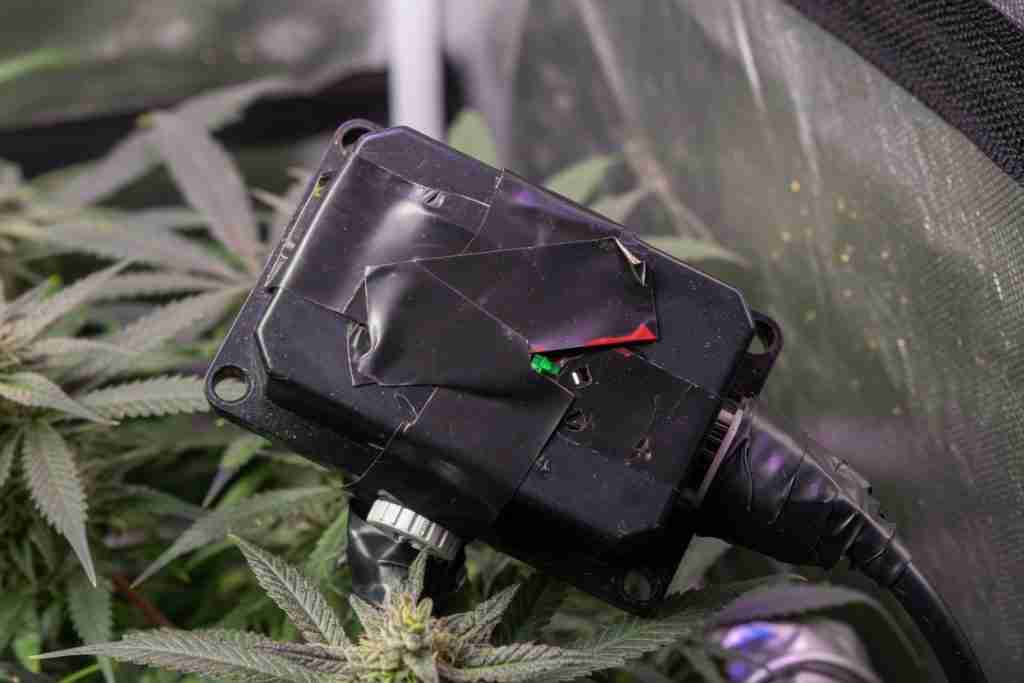
Tape the little lights. Fans, humidifiers, power strips, and controllers love a green or red jewel. One LED jammed against a top is more light than moonlight. Electrical tape is the fix. Cover the jewel, not the vents. Zip the door all the way, including the floor flap. Duct ports should have the sock cinched. A window in a spare-room grow needs a blackout curtain if that room is the dark period and the street is bright. Do the leak test after lights-out: sit two minutes until your eyes adjust. If you can read a label by stray light on the canopy, you still have a leak. If the tent is a black void and the only glow is a taped controller, you are fine.
What a Broken Night Looks Like
Delayed pistils after a flip. New shoots that look like veg in week four. Single bananas in the cola on a plant that was otherwise female. Uneven stretch on the side that faces a door leak. None of those prove a leak by themselves. Heat, a hungry feed, and twitchy genetics can throw nanners too. Check the clock and the zipper before you blame the pack. If you find a leak, seal it and keep 12/12. Do not chop the plant the same day unless it is already throwing pollen all over the tent. One nanner you pluck is a watch. A shower of pollen is a seed crop. Pale or burnt leaves after a leak are usually the lamp or the feed, not the dark itself. Lockout can look like a hungry plant under a perfect clock: cannabis nutrient lockout.
Autoflowers Do Not Need a 12/12 Flip
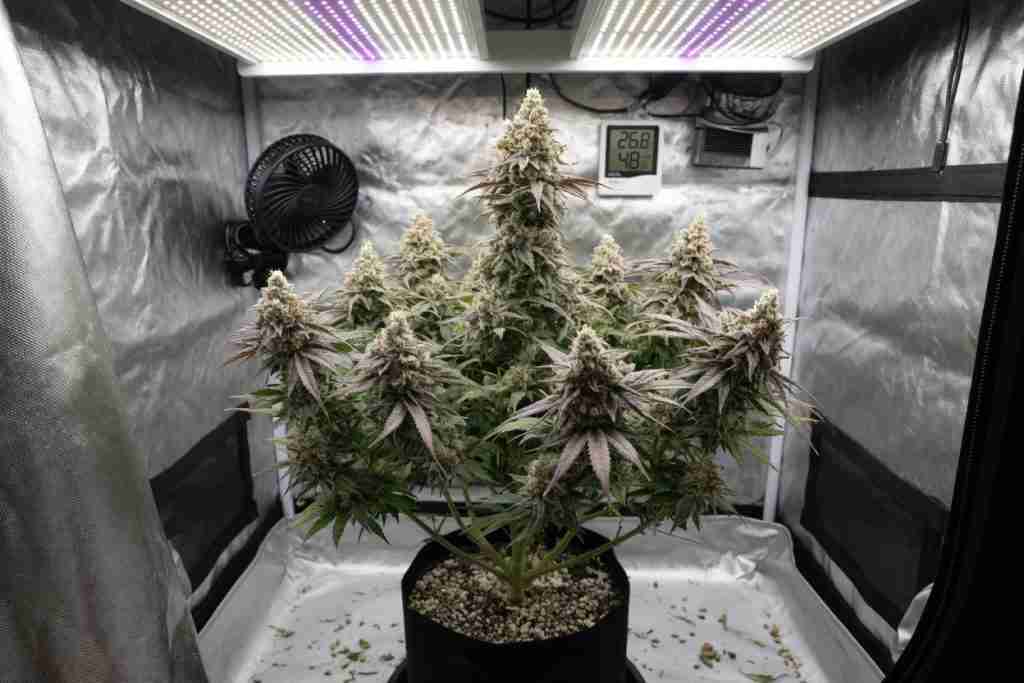
Autoflowering cannabis inherited the day-neutral habit from Cannabis ruderalis. Age starts the flower, not night length. You do not flip an auto. You run 18/6 or 20/4 from sprout to chop. Some people run 24/0 on autos. Plants will flower. You pay more for power and you lose the night temperature drop. 18/6 is the home default. 20/4 is fine if the tent stays cool. Do not switch an auto to 12/12 “because it is blooming.” You cut the daily photons in half in the weeks the plant is packing weight. Ruderalis background: what is ruderalis cannabis. How the seed is made: how autoflower seeds work. Growing them: grow autoflowering cannabis plants.
Autos still like a dark stretch. Not because they need it to flower. Because the plant still respires, and because you still need a window where the tent is cooler and you are not staring into 600 µmol at midnight. A leak in an auto tent will not usually stop flower the way it stops a photoperiod. It can still stress a sensitive plant. Tape the LEDs anyway. Keep one clock. Do not park a flowering photoperiod in the auto tent “just for a week.”
Outdoor Nights, Streetlights, and Light Dep
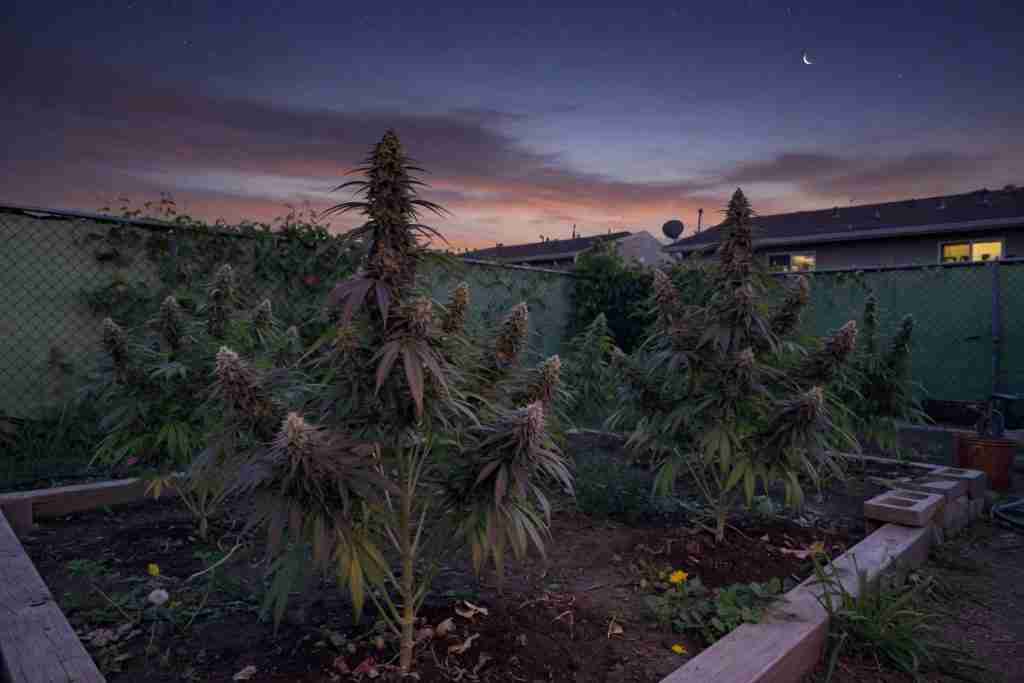
Outside, the sun is the timer. At mid and high latitudes, days get shorter after the summer solstice. When nights pass the cultivar’s critical length, the plant flowers. You do not flip a backyard photoperiod. You pick a finish date that beats your frost. A porch light or a security flood aimed at the bed can keep a plant vegetative or make it herm. Walk the yard at 10 p.m. If the plant is lit like a driveway, move it or shield it. The moon can hang over a finished cola and that is still not a grow lamp. A neighbor’s barn light every night is.
Light deprivation is the outdoor version of 12/12. You pull a blackout cover over a greenhouse or a hoop for 12 hours a day so you can flower in summer. The cover has to be dark enough that the canopy is night. Holes you could crawl through are a meme. Holes that dump noon sun onto tops are a leak. Pull the tarp on a schedule, same as a timer. Miss a day of pull and you just gave the plants a long day in the middle of flower. Greenhouse growers who have done this for years worry about the sun, not about starlight. If you are in a legal outdoor garden, plan the night the same way you plan water.
Folklore You Can Skip
A 48-hour dark period before you flip does not unlock extra yield in any reliable way. Some growers still do it. The plant gets two days of dark, then 12/12. You lose two days of photons and you gain a ritual. Skip it. A 24- to 48-hour blackout right before harvest is the same class of story. The claim is that resin or smell jumps because the plant “panics.” What you actually get is a wetter, darker room and a slower dry if you then chop into a closet. Harvest on trichomes, then dry in a controlled space. Do not sit a ripe plant in a sealed tent with no light and no airflow for two days as a potency trick.
Gas lantern routine, or a one-hour light bump in the middle of veg night, is an old power-saving idea. It is extra moving parts. 18/6 already works. Do not interrupt a flower night on purpose. Do not run 12/12 from seed on a photoperiod unless you want a tiny plant. Do not change the clock every few days “to keep them guessing.” Consistency is the skill. Spectrum tricks do not replace the night. A “bloom” setting on an LED with nights still at 6 hours will not flower a photoperiod. Flip the timer. Then leave the diodes alone unless the hang is wrong.
Dark Cycle for Growing Cannabis FAQ
Do you need a dark cycle for growing cannabis?
Photoperiod plants need a long, uninterrupted night to flower. Indoor that is 12 hours of dark. Veg uses a shorter night, usually 6 hours, so the plant stays leafy. Autoflowers flower by age and do not need the 12/12 flip. A nightly rest is still useful for heat and for you.
How many hours of darkness does cannabis need to flower?
Give photoperiods 12 hours of unbroken dark every day after you flip. That covers almost every pack sold for indoor use. Some cultivars can initiate with a shorter night. 12 hours is the schedule that does not make you guess. Keep it until harvest.
Can cannabis flower with 24 hours of light?
A photoperiod will not. Constant light keeps nights at zero, so the flowering signal never lands. An auto can flower under 24/0 because it is not waiting on night length. You still pay for the extra hours in heat and power.
Will a brief light leak herm my plants?
A zipper that dumps the grow bars onto the canopy during lights-off can delay flower, reveg, or stress a sensitive female into nanners. A pinhole or the moon is a much smaller dose. Tape status LEDs near the tops. Seal the door. Do not treat every speck as a crop failure.
Should I run 18/6 or 24/0 in veg?
18/6 is the baseline. 24/0 can veg clones and plants if you can cool the tent. It does not replace a real night when you flip. Pick 18/6 unless you have a clone rack and a reason.
Do autoflowers need darkness?
They do not need 12 hours of it to start buds. They still grow well on 18/6 or 20/4 with a defined off period. Leave 12/12 for photoperiods.
Can I keep photos and autos in the same tent?
Only while both are on a long day, and only until you need to flip the photoperiod. After that you need two rooms or you short-change one crop. The comparison page is photoperiod vs autoflower.
Does flipping the spectrum flower a photoperiod?
No. Red-heavy “bloom” diodes do not replace a long night. Change the timer to 12/12. Keep the same white fixture unless the hang or intensity is wrong. Spectrum detail: LED grow lights and color spectrum.