Dialing EC by Phase: Seedling, Veg, Flower, Flush—No Guesswork


You don’t need to guess feed strength ever again. When you use a cannabis EC chart the right way, you’ll match nutrient strength to plant age, light intensity, and medium—so your plants cruise from seedling to sticky flowers without bumps, burns, or stalls. In this guide you’ll learn exactly what to mix, when to increase or back off, and how to read runoff so your plants “talk” to you in numbers you can trust.
What EC Actually Measures (And Why You Should Care)
EC stands for electrical conductivity—how easily your water carries electricity. The more dissolved salts (nutrients), the higher the number.
- Units: mS/cm (millisiemens per centimeter). 1.0 mS/cm is the same as 1000 µS/cm (microsiemens).
- TDS/PPM: Some meters show ppm (parts per million). That’s an estimate, not a true count of particles. Two popular conversion scales:
- 500 scale (NaCl): ppm ≈ EC × 500
- 700 scale (KCl): ppm ≈ EC × 700
Example: 1.6 mS/cm = 800 ppm (500 scale) or 1120 ppm (700 scale). This is why your buddy’s “900 ppm” might not match yours unless you both use the same scale.
Why EC beats ppm: EC is universal and scale-free. Always set targets in EC, then share ppm in both scales if needed.
Tools You Need for No-Guesswork Feeding
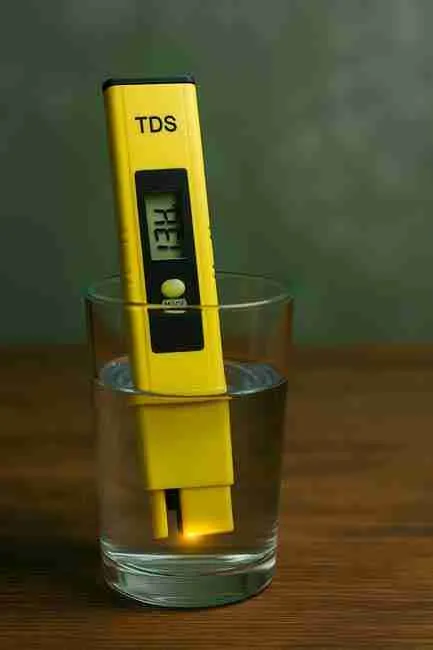
- A reliable EC/TDS meter with automatic temperature compensation (ATC).
- pH pen (you can’t separate EC and pH success).
- Calibration solutions (1413 µS/cm / 2.76 mS/cm for EC; 4.01 / 7.00 for pH).
- Storage solution for pH pen (don’t store in plain water).
- Clean mixing jug, measuring syringes, and a notebook/app to log readings.
- RO system (optional but nice) if your tap water is hard.
Pro tip: Calibrate meters every 2–3 weeks, or sooner if readings seem “off.” A meter that drifts 0.2–0.3 mS/cm will wreck a schedule faster than any “bad nutrient line.”
Water Starting Point: Tap, Well, RO
- RO (reverse osmosis) water: ~0.0–0.1 mS/cm. Blank canvas. You’ll likely add cal-mag first for coco/hydro.
- Soft tap: ~0.1–0.3 mS/cm. Usually fine; may still want a little cal-mag in coco/hydro.
- Hard tap/well: ~0.4–0.8 mS/cm (or more). Know what’s in it (calcium carbonate, sodium). With hard water, you’ll often feed lower EC because your base EC is already high.
Rule of thumb: Your final feed EC = source EC + nutrients. If your tap is 0.6 and you aim for 1.6, you only add +1.0 mS/cm worth of nutrients.
The Core Cannabis EC Chart (By Phase & Medium)
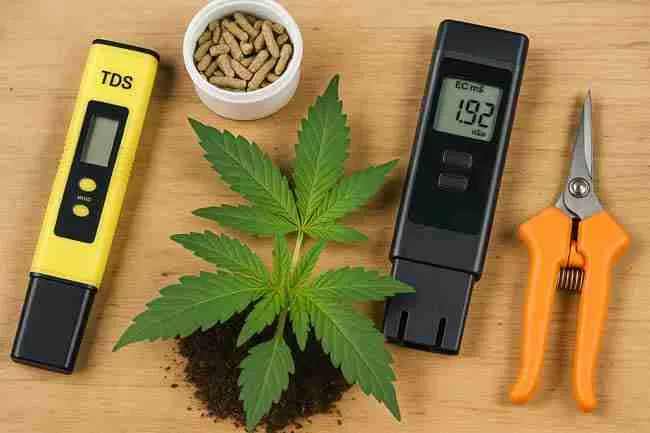
Here’s your cannabis EC chart for the main media. Use it as your anchor, then fine-tune with runoff and plant behavior.
A. Coco & Hydro (DWC/NFT/Drip)
| Growth Phase | Target EC (mS/cm) | ppm 500 | ppm 700 | Notes |
|---|---|---|---|---|
| Seed/Seedling (days 1–14) | 0.2–0.6 | 100–300 | 140–420 | Many run 0.3–0.4 plus cal-mag; gentle start |
| Early Veg (wk 2–3) | 0.6–1.0 | 300–500 | 420–700 | Increase as leaves darken and growth speeds up |
| Mid Veg (wk 3–5) | 1.0–1.4 | 500–700 | 700–980 | Add silica, keep pH tight (5.7–6.0) |
| Late Veg / Pre-flip | 1.2–1.6 | 600–800 | 840–1120 | Stack N/Ca/Mg; watch runoff trends |
| Early Flower (wk 1–3) | 1.4–1.8 | 700–900 | 980–1260 | Slight bump; watch stretch and leaf tips |
| Mid Flower (wk 4–6) | 1.6–2.0 | 800–1000 | 1120–1400 | Peak uptake; steady environment pays off |
| Late Flower (wk 7–8+) | 1.4–1.8 | 700–900 | 980–1260 | Ease back if tips burn or runoff climbs |
| Flush / Ripen (final 5–10 days) | 0.1–0.3 | 50–150 | 70–210 | RO or low-EC water; aim for clean runoff |
Coco/Hydro pH window: 5.7–6.1.
Runoff goal: similar to feed (±0.2 mS/cm). Drift tells you action (details below).
B. Soilless Peat Mix / “Soil-Lite” (Drain-to-Waste)
| Growth Phase | Target EC (mS/cm) | ppm 500 | ppm 700 | Notes |
|---|---|---|---|---|
| Seed/Seedling | 0.2–0.5 | 100–250 | 140–350 | Many mixes are pre-charged; don’t overdo it |
| Early–Mid Veg | 0.6–1.0 | 300–500 | 420–700 | Gentle ramp; look for happy light green |
| Late Veg / Pre-flip | 0.9–1.3 | 450–650 | 630–910 | Slightly lower than coco/hydro |
| Early Flower | 1.1–1.5 | 550–750 | 770–1050 | Add P/K slowly, watch for leaf “shine” |
| Mid Flower | 1.2–1.6 | 600–800 | 840–1120 | Hold steady; correct if runoff spikes |
| Late Flower | 1.0–1.4 | 500–700 | 700–980 | Ease back; quality > raw EC |
| Flush (5–10 days) | 0.1–0.3 | 50–150 | 70–210 | Clear the media gradually |
pH: 5.9–6.3 often works best (manufacturer specific).
Runoff: less critical than coco, but still a great early-warning tool.
C. Living Soil / Organic Beds
| Growth Phase | Target “Feed” EC | Notes |
|---|---|---|
| Seed/Seedling | 0.1–0.3 mS/cm | Mostly dechlorinated water; light compost tea if needed |
| Veg | 0.2–0.6 mS/cm | Rely on soil biology; top-dress, not high-EC salts |
| Flower | 0.3–0.8 mS/cm | Mild soluble bloom inputs only if the bed is lagging |
| Flush | 0.1–0.2 mS/cm | Usually not a formal “flush”; normal irrigation to harvest |
pH: 6.2–6.8.
With living soil, EC is more about not throwing biology off than hitting a number. Your cannabis EC chart still helps you avoid accidental over-salting.
Your Week-by-Week Playbook (Coco/Hydro Example)
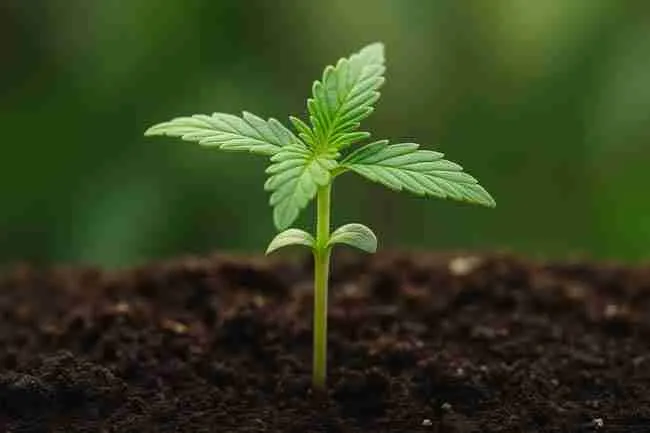
Week 0–1 (sprout): 0.3–0.4 mS/cm total, mostly cal-mag. Gentle light, warm root zone (72–75°F / 22–24°C).
Week 2: 0.6–0.8. New growth should look minty green and perky.
Week 3–4: 1.0–1.2. Add silica first, then cal-mag, then base, then additives. pH 5.8–6.0.
Pre-flip (week 5+): 1.3–1.6. Strong stems, dark but not blue-green.
Early flower: 1.5–1.7. Bud sites stack; tips may “kiss” but shouldn’t burn.
Mid flower: 1.7–2.0 if plants demand it (high PPFD/CO₂).
Late flower: 1.4–1.8. Ease off as swell ends; chase quality and clean burn.
Flush: 0.1–0.3 for 5–10 days with solid runoff. Watch EC fall toward your input.
How to Mix Nutrients (Order Matters)

- Start with water. Aim for 68–70°F (20–21°C).
- Silica (if using). Mix fully, wait 2–3 min.
- Cal-Mag. Especially with RO or coco.
- Base nutrients. Part A, stir; then Part B. Never combine concentrates.
- Additives. Enzymes, microbes, sweeteners last.
- Check EC. Add base nutrients a little at a time until you hit target.
- Set pH. 5.7–6.1 (coco/hydro) or 6.2–6.6 (soil/soilless).
- Record. Log EC in, pH in, temperature, and any notes.
Tip: If you overshoot EC, dilute with plain water. Don’t try to “pH down” your way out of high EC.
Reading Runoff Like a Pro
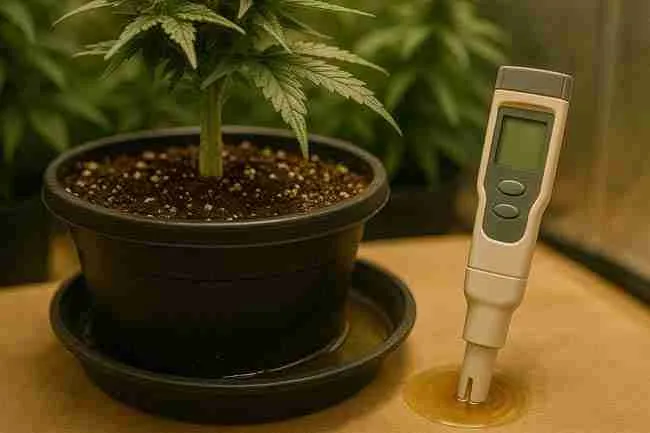
Runoff EC shows what’s happening in the root zone.
- Runoff ≈ Feed (±0.2): You’re dialed. Maintain.
- Runoff > Feed by 0.3–0.6: Salts are building up. Action: Decrease feed EC by 0.2–0.3, give 15–25% runoff for 1–2 feeds, or do a light reset (see below).
- Runoff < Feed by 0.2–0.4: Plant/habitat is using nutrients faster than you supply. Action: Increase EC by 0.1–0.2 and recheck next irrigation.
Reset rinse (coco/hydro bags):
Run 2–3× container volume of 0.3–0.5 mS/cm water through the media, then finish with your target feed (e.g., 1.4 mS/cm). This clears “crust” without starving the plant afterward.
Environment Changes EC Targets
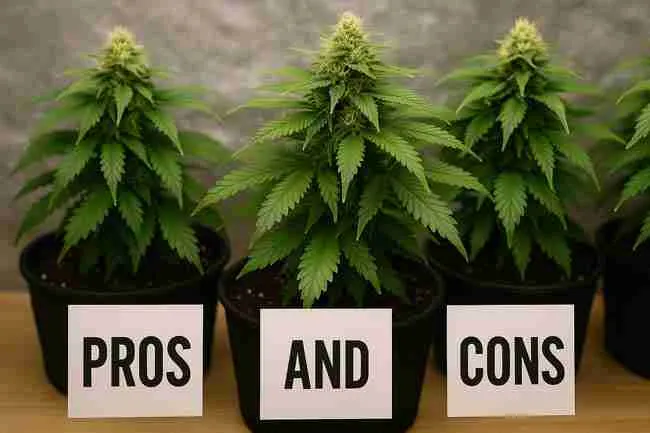
More light and more CO₂ = more food demand.
- PPFD < 500: Stay toward the low end of the chart.
- PPFD 600–900: Middle of the chart.
- PPFD 900–1200 + CO₂ (1000–1200 ppm): Plants can handle the top of the chart—if VPD, airflow, and roots are perfect.
VPD: Keep leaf temperature and humidity in the sweet spot so nutrients actually move. Cold roots + high EC = tip burn city.
Autoflowers vs Photoperiods
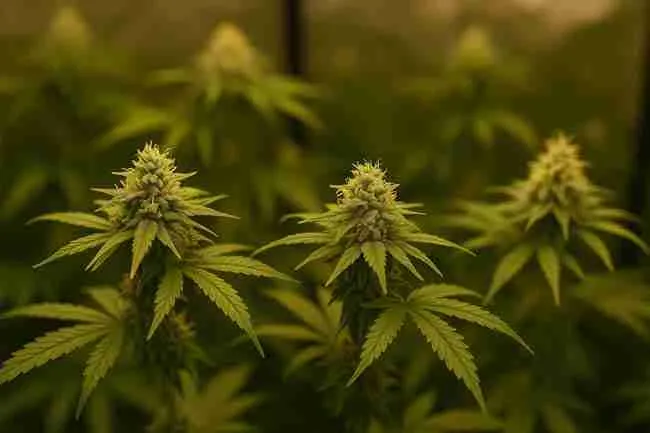
Autos are usually lighter feeders:
- Run ~0.1–0.3 mS/cm lower than the photoperiod chart at the same stage.
- Increase in smaller steps (0.1–0.2 mS/cm).
- Be extra gentle in the first 3 weeks (their veg “window” is short).
The “No-Burn” Ramp Method
Instead of big jumps, climb EC slow and steady:
- Seedling → Early Veg: +0.2 every 3–4 days if growth is quick and leaves are reaching.
- Veg → Pre-flip: +0.1–0.2 per feed until you hit your pre-flip target.
- Early → Mid Flower: +0.1 only if runoff is stable and tips are clean.
If tips crisp or runoff spikes, step back by 0.2–0.3.
Overfeeding vs Underfeeding: How It Looks
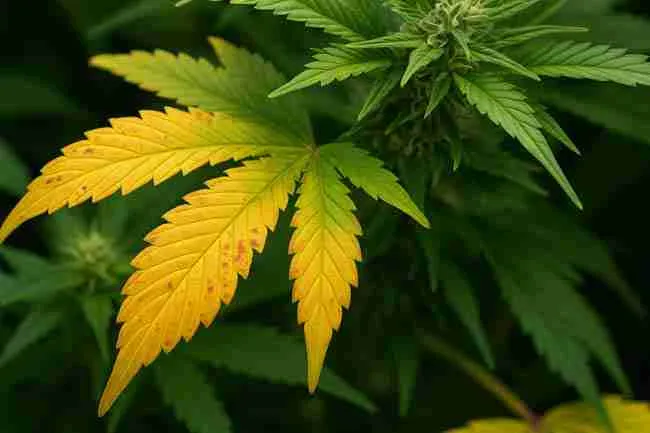
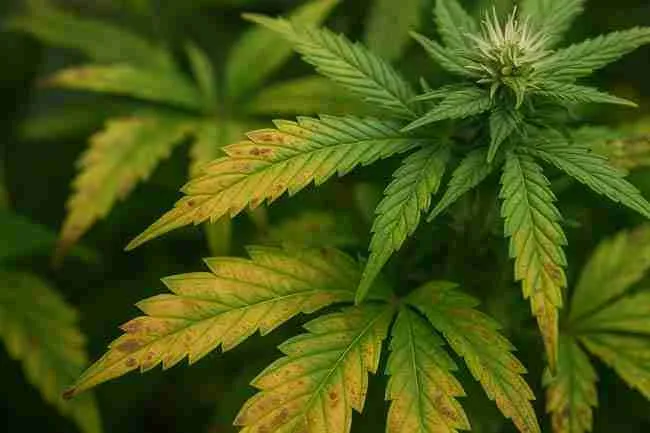
Overfeeding signs (salt stress):
- Burnt leaf tips that progress up the edges (margins).
- Deep, shiny, overly dark leaves (nitrogen toxicity “claw”).
- Runoff EC higher than input by 0.4+ consistently.
- Slow drinking; pots stay wet; pH drifts oddly.
Underfeeding signs (deficiency or low EC):
- Pale new growth, weak stems.
- Faster-than-usual drinking, runoff below input.
- Early yellowing in mid-veg (if not a pH lockout).
- Flower stalls—buds look “paused.”
Action plan: Check pH first, then choose:
- High runoff vs feed? Lower EC and rinse lightly.
- Low runoff vs feed? Increase EC 0.1–0.2; verify environment.
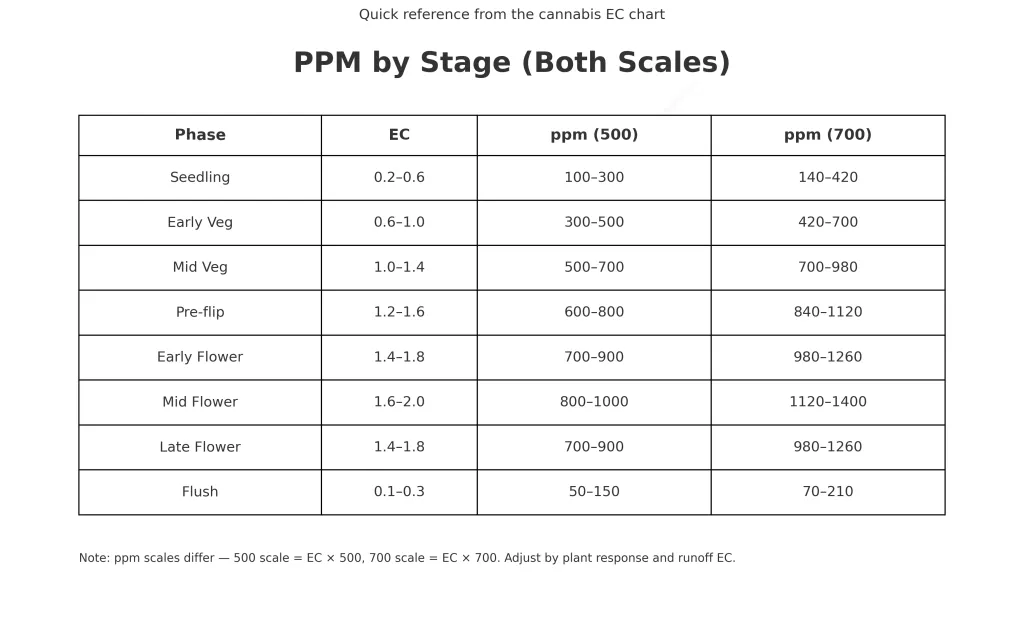
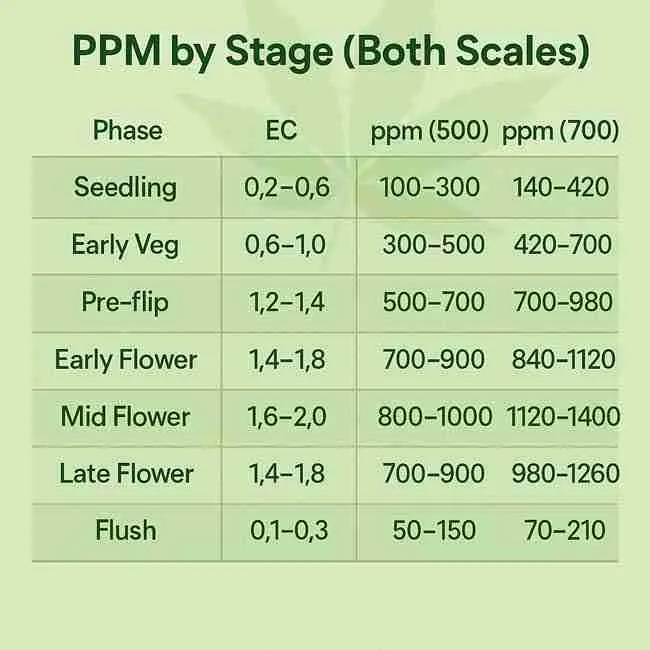
PPM by Stage (Both Scales)
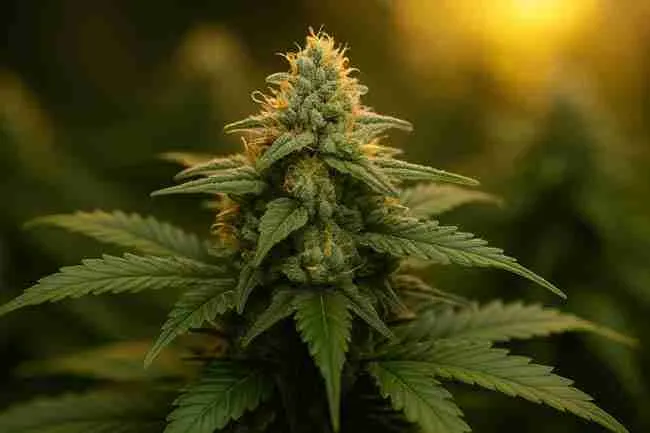
For quick reference from the cannabis EC chart:
| Phase | EC | ppm (500) | ppm (700) |
|---|---|---|---|
| Seedling | 0.2–0.6 | 100–300 | 140–420 |
| Early Veg | 0.6–1.0 | 300–500 | 420–700 |
| Mid Veg | 1.0–1.4 | 500–700 | 700–980 |
| Pre-flip | 1.2–1.6 | 600–800 | 840–1120 |
| Early Flower | 1.4–1.8 | 700–900 | 980–1260 |
| Mid Flower | 1.6–2.0 | 800–1000 | 1120–1400 |
| Late Flower | 1.4–1.8 | 700–900 | 980–1260 |
| Flush | 0.1–0.3 | 50–150 | 70–210 |
Always confirm which ppm scale your meter uses.
pH + EC = Best Friends
- Coco/Hydro: pH 5.7–6.1 (drift is okay: 5.7 one day, 6.1 the next).
- Soilless/Soil-lite: pH 5.9–6.3 (brand instructions dominate).
- Living soil: pH 6.2–6.8.
A perfect EC with a bad pH still locks out nutrients. If you see deficiency symptoms at “good EC,” check pH and root health first.
Drain-to-Waste vs Recirculating Reservoirs
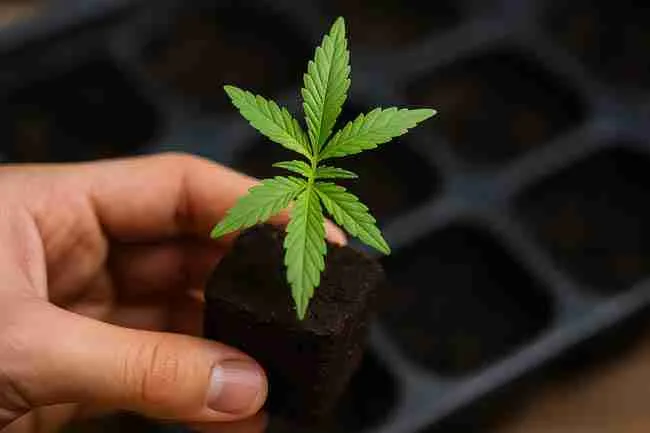
Drain-to-Waste (DTW): You mix a fresh batch, feed, and toss runoff. Easier to keep EC on target.
Recirculating: Your reservoir EC drifts as plants drink water faster than salts. Track daily:
- If res EC rises: Plants drink more water than nutrients. Top up with plain water to target.
- If res EC falls: Plants eat nutrients faster than water. Top up with a slightly stronger nutrient mix.
Keep res around 65–68°F (18–20°C) with airflow. Warm res = root stress; cold res = slow uptake.
Regional Water Notes (Canada & U.S.)
- Prairies/Midwest: Often harder water; sodium or bicarbonates can fake a “high EC” but don’t feed the plant well. Consider RO or blending 50/50.
- Pacific Northwest/Northeast: Softer water; coco/hydro growers nearly always need cal-mag.
- Well water: Test for iron and sulfur; both can mess with meters and roots.
Specifications (At-a-Glance)
- Seedling EC: 0.2–0.6 mS/cm
- Veg EC: 0.8–1.4 mS/cm (coco/hydro); 0.6–1.0 (soilless)
- Flower EC: 1.4–2.0 mS/cm peak (coco/hydro); 1.1–1.6 (soilless)
- Flush EC: 0.1–0.3 mS/cm
- Coco/Hydro pH: 5.7–6.1
- Soilless pH: 5.9–6.3
- Soil pH: 6.2–6.8
- Res temp: 65–68°F (18–20°C)
- Runoff target: Feed EC ±0.2 mS/cm
- PPM scales: 500 = EC×500; 700 = EC×700
Pros and Cons of Running “Higher” vs “Lower” EC
Running Higher EC
- Pros: Denser flowers when environment is perfect; fewer deficiency hiccups under strong light/CO₂; less frequent mixing in heavy-feeding cultivars.
- Cons: Narrow margin; tip burn and salt buildup happen faster; more sensitive to root temperature dips.
Running Lower EC
- Pros: Safer for beginners and autos; less salt crust; easier pH control; better flavor outcomes for many growers.
- Cons: If too low, you’ll see pale leaves and slowed growth; can underperform under high PPFD/CO₂.
Best path: Start in the middle of the cannabis EC chart, then adjust based on runoff direction and leaf tips.
Troubleshooting Playbook (When Things Get Weird)
- Tip burn with high runoff EC: Drop feed EC by 0.3, perform a light reset rinse, resume at safer level.
- Pale plants but runoff < feed: Bump EC +0.1–0.2, confirm pH and root temp.
- Leaves “claw” dark green: Too much N or total EC. Reduce EC and avoid adding N-heavy boosters.
- Random deficiency patterns at decent EC: pH is off or roots are cold/oxygen-poor. Fix environment first.
- Stalled plants mid flower: Check res temp, oxygenation, and VPD; then consider increasing EC 0.1–0.2 if runoff says they’re hungry.
Worked Example: Hitting 1.6 mS/cm From Hard Tap
- Tap water: 0.6 mS/cm
- Target: 1.6 mS/cm (coco mid flower)
- Fill bucket with 10 L water (20–21°C).
- Add silica (if used), mix.
- Add cal-mag modestly (you already have Ca/Mg in tap).
- Add base nutrients until EC reads 1.6 mS/cm total.
- pH to 5.8–6.0.
- Feed to 10–20% runoff.
- If runoff shows 1.9–2.0 mS/cm, back next feed down to 1.4–1.5 until it equalizes.
Another Example: Building From RO
- RO: 0.0–0.1 mS/cm
- Seedling target: 0.4 mS/cm
- Add cal-mag until EC hits 0.2–0.25.
- Add base nutrients until EC reaches 0.4.
- pH to 5.8–6.0.
- If leaves darken too fast or tips kiss, drop to 0.3.
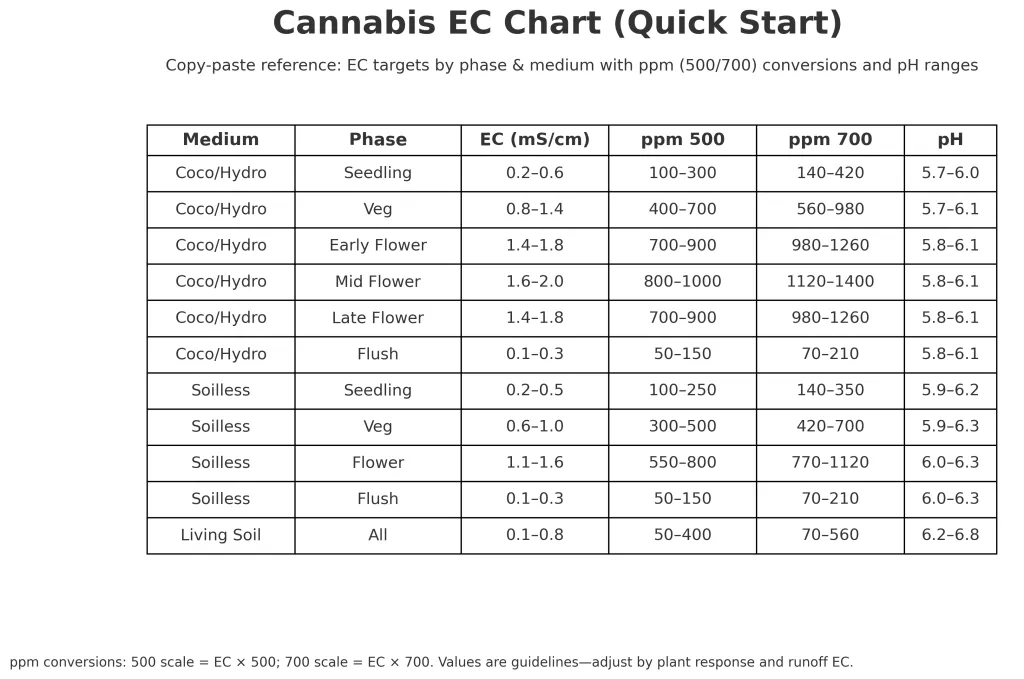
Your Copy-Paste Cannabis EC Chart (Quick Start)
Use this as your fridge magnet. It’s tight, clean, and works.
| Medium | Phase | EC (mS/cm) | ppm 500 | ppm 700 | pH |
|---|---|---|---|---|---|
| Coco/Hydro | Seedling | 0.2–0.6 | 100–300 | 140–420 | 5.7–6.0 |
| Coco/Hydro | Veg | 0.8–1.4 | 400–700 | 560–980 | 5.7–6.1 |
| Coco/Hydro | Early Flower | 1.4–1.8 | 700–900 | 980–1260 | 5.8–6.1 |
| Coco/Hydro | Mid Flower | 1.6–2.0 | 800–1000 | 1120–1400 | 5.8–6.1 |
| Coco/Hydro | Late Flower | 1.4–1.8 | 700–900 | 980–1260 | 5.8–6.1 |
| Coco/Hydro | Flush | 0.1–0.3 | 50–150 | 70–210 | 5.8–6.1 |
| Soilless | Seedling | 0.2–0.5 | 100–250 | 140–350 | 5.9–6.2 |
| Soilless | Veg | 0.6–1.0 | 300–500 | 420–700 | 5.9–6.3 |
| Soilless | Flower | 1.1–1.6 | 550–800 | 770–1120 | 6.0–6.3 |
| Soilless | Flush | 0.1–0.3 | 50–150 | 70–210 | 6.0–6.3 |
| Living Soil | All | 0.1–0.8 | 50–400 | 70–560 | 6.2–6.8 |
Nutrient Strength Schedule (How Often to Feed)
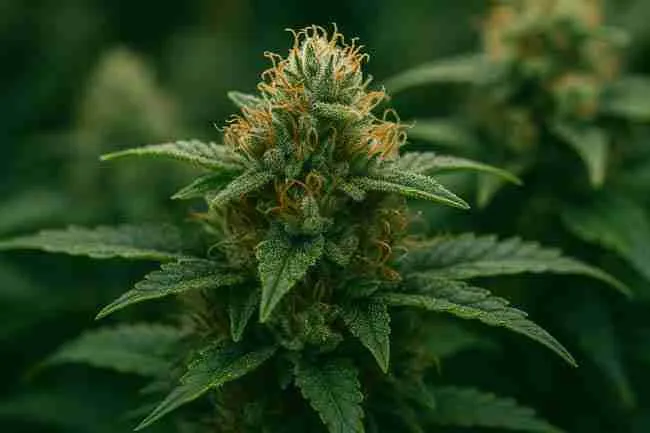
Coco (DTW):
- Feed every watering at target EC once roots fill the pot (daily in late veg/flower).
- Always aim for 10–20% runoff to prevent salt buildup.
Soilless/Soil-lite:
- Alternate feed / water / feed or feed / feed / water depending on runoff and pot dryback.
- If runoff EC creeps up, insert a plain-water day at 0.2–0.4 EC (just cal-mag if needed).
Living Soil:
- Water as needed; top-dress or light teas based on plant color and vigor, not high EC.
- Avoid frequent salty inputs that spike EC.
Flush, Fade, and Finish (Without Starving)
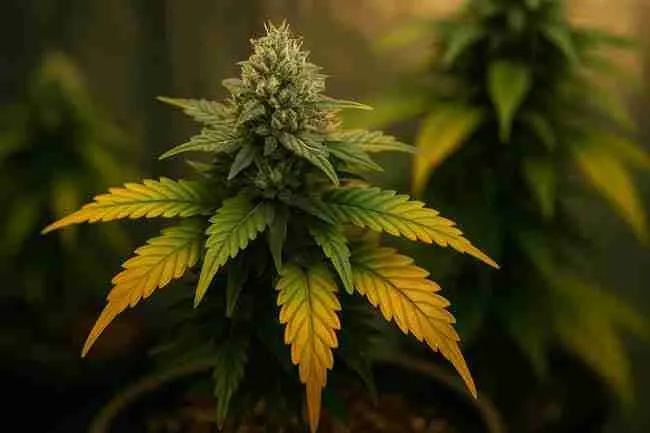
- Coco/Hydro: 5–10 days at 0.1–0.3 EC. You’re clearing media and letting the plant finish what it stored.
- Soilless: 5–10 days, same EC range.
- Living Soil: No hard flush; just normal irrigation and time.
Aim for steady yellowing in the final week, not crash-diet starvation at week 3. If the fade starts too early, bump EC slightly and shorten the flush.
Frequently Asked Questions
What’s the right ppm by stage?
Use EC first, then convert:
- Seedling: 0.2–0.6 EC → 100–300 ppm (500) / 140–420 ppm (700)
- Veg: 0.8–1.4 EC → 400–700 ppm (500) / 560–980 ppm (700)
- Flower: 1.4–2.0 EC → 700–1000 ppm (500) / 980–1400 ppm (700)
- Flush: 0.1–0.3 EC → 50–150 ppm (500) / 70–210 ppm (700)
Confirm your meter’s scale so you’re not chasing ghosts.
How do I build a nutrient strength schedule that works every time?
- Start at the low-middle of the cannabis EC chart.
- Increase in 0.1–0.2 EC steps as growth speeds up.
- Track runoff EC: if it climbs above input by 0.3–0.6, back off and reset lightly.
- Match EC to light and CO₂: more photons = more food.
What are classic overfeeding signs?
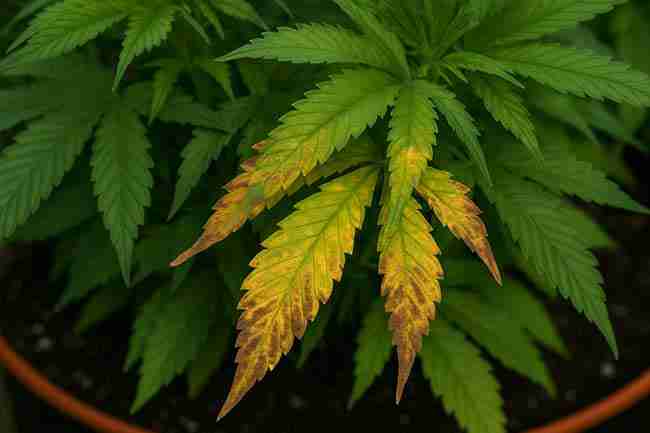
- Brown, crispy leaf tips and shiny dark leaves.
- Runoff EC > feed by 0.4 or more for multiple irrigations.
- Plants drink slower and droop even when pots aren’t wet.
- pH gets wobbly.
Fix: Lower EC, light reset rinse, and ensure root temperature and oxygen are on point.
Do I need to flush every run?
It depends on medium and goals. In coco/soilless, a short, clean finish (low EC and good runoff) helps remove excess salts and smooths the final product. In living soil, just water normally; the soil food web handles the handoff.
Is RO water mandatory?
No, but it’s helpful if your tap EC is high or variable. With RO, you control everything (add cal-mag back as needed). With hard tap, you must account for source EC and may need to feed lower overall.
Why does my friend’s ppm not match mine?
They probably use a different ppm scale (500 vs 700). Use EC to stay aligned across growers and brands.
Mini-Checklist Before Every Feed
- Calibrated EC and pH pens?
- Water temp 68–70°F (20–21°C)?
- Silica → cal-mag → base A → base B → additives?
- EC at target for the phase and your light?
- pH in range for your medium?
- Note the runoff EC after the feed and compare tomorrow.
Stick to that checklist and your cannabis EC chart becomes a simple steering wheel, not a mystery map.
Final Take: You’ve Got This
When you understand EC, you stop guessing and start guiding. You’ll feed seedlings just enough to feel safe, ramp veg without burning, fuel flower right when buds want it most, and glide into a clean, tasty finish. Log your numbers, watch your runoff, and nudge EC in small steps. That’s it. No magic, no myths—just plants telling you what they need in a language you can measure.