Dew Point vs. Bud Rot: A Grower’s Guide to Nighttime Safety


The quick answer (so you don’t lose a single cola)
When the air temperature falls at night, relative humidity (RH) rises. If the dew point (the temp where air hits 100% RH) gets too close to your bud or leaf temperature, moisture condenses on the plant surface. Wet flowers + still air = botrytis (bud rot). Your job is to keep a safe buffer between air temp and dew point—ideally 6–8°C (10–14°F)—and to move enough air so water can’t sit on your buds. That’s the core of dew point cannabis safety at night.
Dew point 101: why your buds care
Think of air like a sponge. Warm sponge? It can hold more water. Cool sponge? It dumps water. Dew point is the moment your sponge can’t hold another drop and starts leaking onto your flowers.
- Air temp falls → RH rises → dew point gets closer to leaf temp.
- If leaf temp ≈ dew point, surfaces get wet.
- Wet calyxes + tight bracts + no airflow = perfect botrytis party.
Two numbers you’ll watch every night:
- Room/Canopy Temperature (T)
- Dew Point (DP)
The difference (T − DP) is your buffer (a.k.a. dew point depression). Bigger buffer = safer buds.
Rule of thumb: In flower, keep T − DP ≥ 6–8°C (10–14°F) for safer nights. Yes, you can run slightly warmer nights if it helps you keep that buffer.
How bud rot starts (and why it loves the night)
Botrytis cinerea is everywhere—on your clothes, in the room, floating around harmlessly… until conditions line up:
- Dense, shaded interior buds with a tight microclimate
- Free water (condensation or trapped transpiration)
- Minimal movement (stagnant air pockets in the canopy)
- Long, cool, humid dark period
You usually don’t see it right away. It starts inside the tightest part of a cola where petals (bracts) stack. By the time outer sugar leaves wilt, the core is already mushy gray.
Night is risky because:
- Leaves cool by radiation faster than air.
- Transpiration keeps adding moisture to small spaces.
- Fans turn down (or off), and dehumidifiers work harder in cooler air.
Nighttime microclimates: the danger you can’t see
Your tent can read “50% RH” while the center of a dense cola is effectively 90–100% because airflow can’t reach it. That hidden pocket is your true risk.
Where microclimates form:
- Inside fat colas on indica-leaning plants
- Under big fan leaves shading interior buds
- Corners and dead zones where oscillating fans miss
- Between wall and canopy if tents are crammed
Your mission: break microclimates with consistent, gentle movement that actually reaches those zones.
“Dew point cannabis” made simple: how to keep a safe buffer
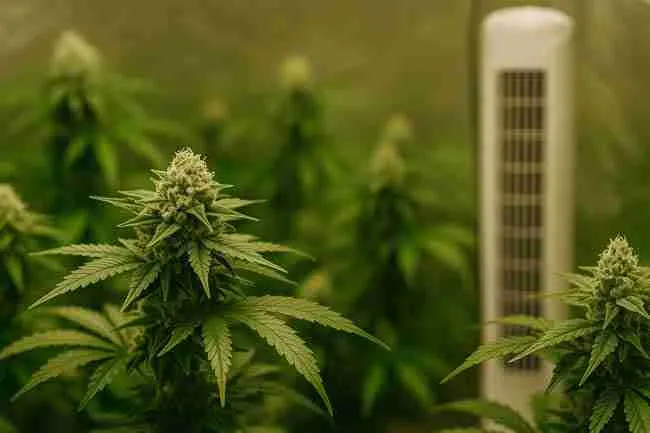
You don’t need fancy math to run a safe room—though it helps. Here’s the simple play:
- In veg, keep RH higher (60–70%), but don’t let night RH spike over the top.
- In early flower, aim 50–55% RH nights.
- In mid–late flower, aim 45–50% RH nights (tighter for very dense buds).
- If night temps drop, lower RH more or raise temp slightly to keep T − DP ≥ 6–8°C.
A friendly back-of-napkin formula (close enough for growers)
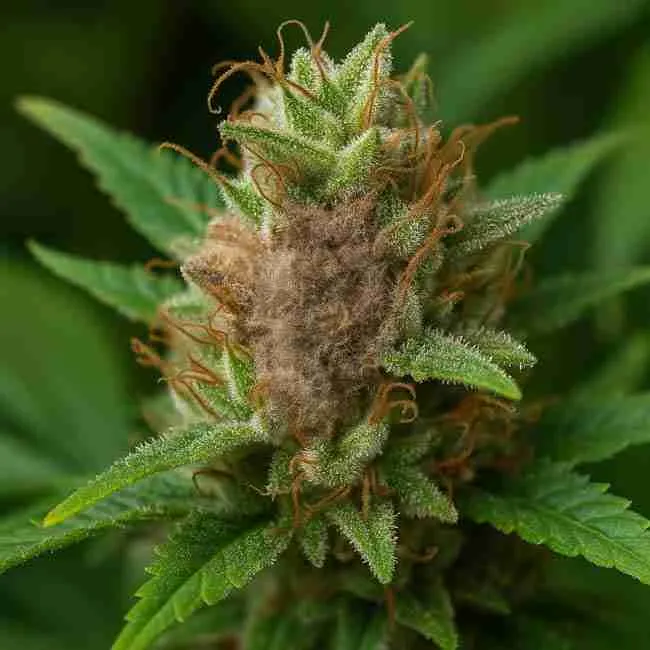
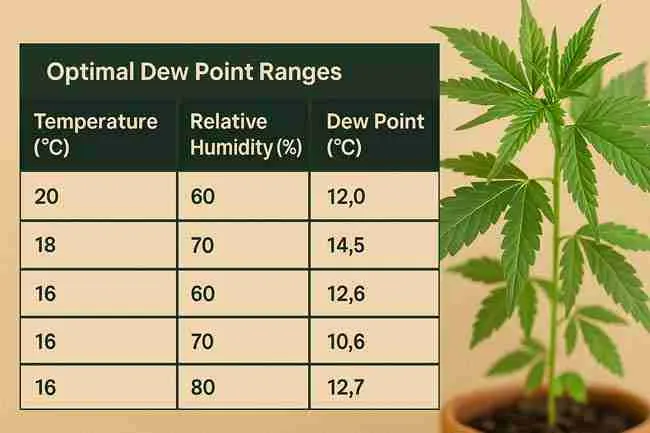
A handy approximation for dew point (°C):
DP ≈ T − ((100 − RH) / 5)
- Example: T = 20°C (68°F), RH = 60%
DP ≈ 20 − ((100 − 60)/5) = 20 − 8 = 12°C → buffer = 8°C (great!) - Example: T = 20°C, RH = 75%
DP ≈ 20 − ((100 − 75)/5) = 20 − 5 = 15°C → buffer = 5°C (risky in dense flower)
You’ll use this logic to read any RH temp chart, app, or controller.
RH temp chart (night targets by temp & buffer)
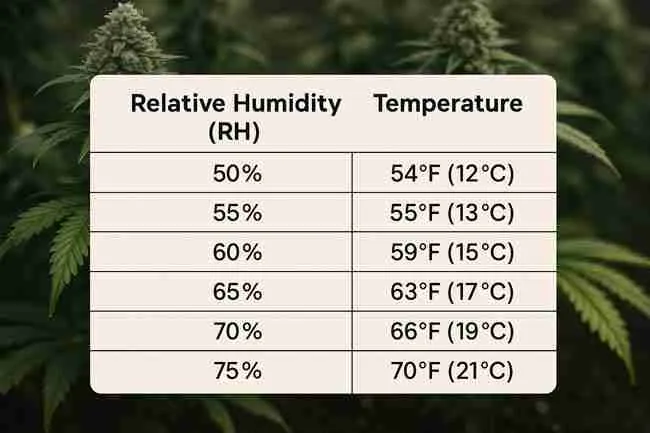
Use this as a practical guide. Choose your night temp, then keep RH at or below the target to maintain the buffer. Stage-specific caps still apply (e.g., 45–50% in late flower even if the math says you can go higher).
RH Temp Chart—Max RH for 6–8°C (10–14°F) buffer
| Night Temp | Night Temp | Max RH for ~6°C Buffer | Example Dew Point | Max RH for ~8°C Buffer | Example Dew Point |
|---|---|---|---|---|---|
| 18°C | 65°F | 70% | 12°C (54°F) | 60% | 10°C (50°F) |
| 20°C | 68°F | 70% | 14°C (57°F) | 60% | 12°C (54°F) |
| 22°C | 72°F | 70% | 16°C (61°F) | 60% | 14°C (57°F) |
| 24°C | 75°F | 70% | 18°C (64°F) | 60% | 16°C (61°F) |
How to use it:
- Pick your actual night temp.
- For dense flowers, use the 8°C column (safer).
- If your strain stacks huge colas or your fans are borderline, go even lower on RH.
Stage-based “dew point cannabis” targets
Vegetative
- Night temp: 22–24°C (72–75°F)
- Night RH: 60–70% (still keep T − DP ≥ 6°C)
- Goal: Vigorous growth without leaf wetness.
Early flower (weeks 1–3)
- Night temp: 20–22°C (68–72°F)
- Night RH: 50–55%
- Goal: Prevent early botrytis priming; keep airflow in forming sites.
Mid flower (weeks 4–6)
- Night temp: 19–21°C (66–70°F)
- Night RH: 45–50%
- Goal: Tighten RH as colas bulk up.
Late flower (finish)
- Night temp: 18–20°C (65–68°F)
- Night RH: 42–48%
- Goal: Keep the buffer big; dry surfaces every night.
Canopy shape matters: your buds’ armor (or weakness)
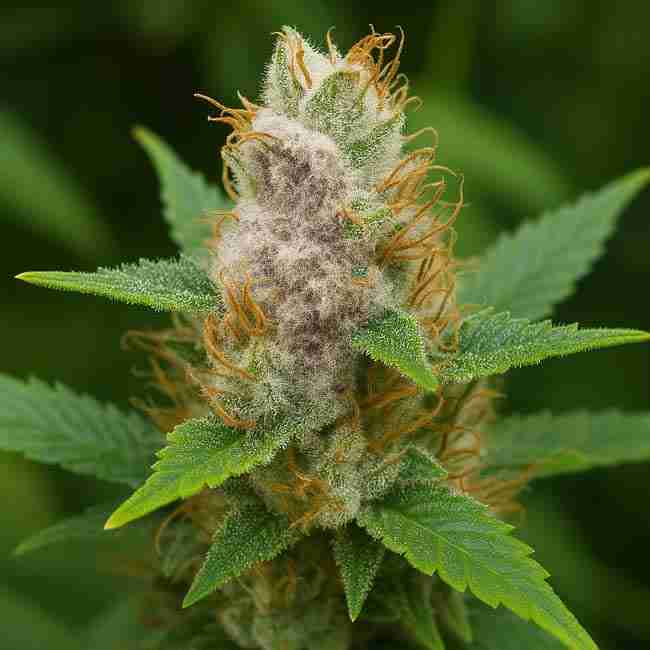
Dense architecture increases risk. Here’s how you tip the odds:
Techniques that help
- Lollipopping: Strip lower fluff to reduce humidity load under the canopy.
- Selective defoliation: Remove some large fans that block airflow into cola centers (don’t scalp the plant).
- Even spacing: Give each plant a “breathing lane.”
- Staggered heights: Avoid flat, packed hedges that trap air.
- Trellising (SCROG): Spread tops thinly so air can thread through.
Techniques to avoid overdoing
- Aggressive defoliation late flower: Can stress plants and cause odd transpiration swings.
- Stacking too many plants: Crowding is a humidity machine.
- Cold floor, warm air: Creates condensation near pots and lowers leaf temps.
Your 60-minute lights-out routine
Do this every single night and your “night humidity buds” problem shrinks fast.
60 minutes before lights off
- Drop RH 5–10% below your day target (pre-dry the room).
- Nudge temp 1–2°C up if needed to extend the buffer.
- Check canopy fans—aim gentle flow into cola middles, not just over the top.
- Stop heavy irrigation—no big watering right before dark.
- Empty dehumidifier bucket (if not plumbed).
At lights off
- Keep fans at night—not blasting, but constant.
- Dehumidifier on until RH stabilizes below your target.
- Controller alarm: set a high-RH alert (text/phone).
- Check T − DP buffer on your app; you want ≥ 6–8°C.
Two hours into dark
- Walk the room. Smell for that faint “sweet-musty” signal.
- Feel inner colas. If they feel cool/damp, you need more movement.
- Log readings. Notes catch patterns.
Tools that win the night
- A sensor that shows dew point (and ideally leaf surface temp). You can’t manage what you can’t see.
- Two oscillating fans per 4×4—one high, one low, both sweeping the canopy.
- A right-sized dehumidifier (aim for removing at least 1–2 pints/hr in a 4×4 during mid/late flower).
- A small space heater on a thermostat, for when you need to raise night temp to widen the dew point buffer without over-drying.
- Ducting discipline: pull in air from a dry room, not a damp basement corner.
Pro tip: Sometimes raising night temp 1–2°C is the fastest way to widen the buffer when your dehumidifier is maxed out.
Outdoor growers: dew point happens on the lawn too
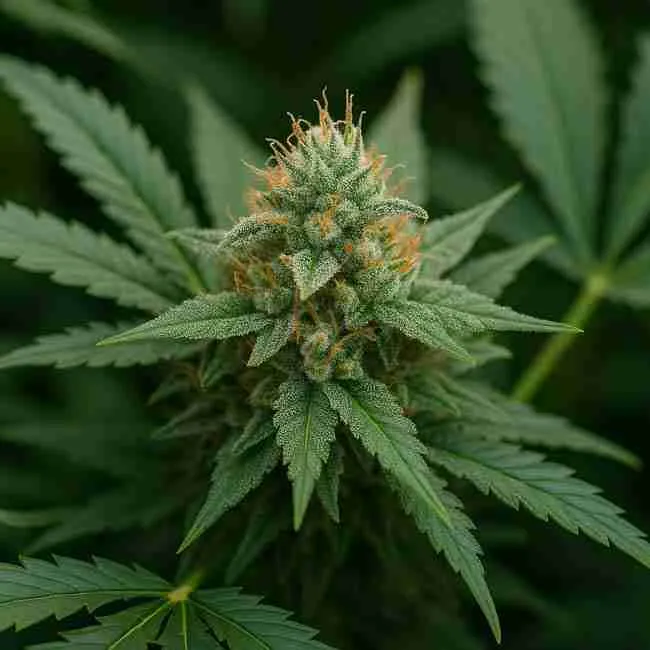
Outdoors, radiative cooling makes leaves colder than air on clear nights. That’s why you see literal dew on grass at dawn.
What you can do:
- Choose airy phenotypes for humid regions (Atlantic Canada, PNW, upper Midwest).
- Stake and spread branches to open the interior.
- Harvest timing: If you’re staring down a week of foggy nights, consider taking the densest tops early.
- A.M. sunshine: Site plants where they get early morning light to dry faster.
- Shake wet plants gently after fog/drizzle to knock water off colas.
- Even a cheap box fan in a sheltered corner of a backyard greenhouse can save a crop.
Troubleshooting: early signals of botrytis
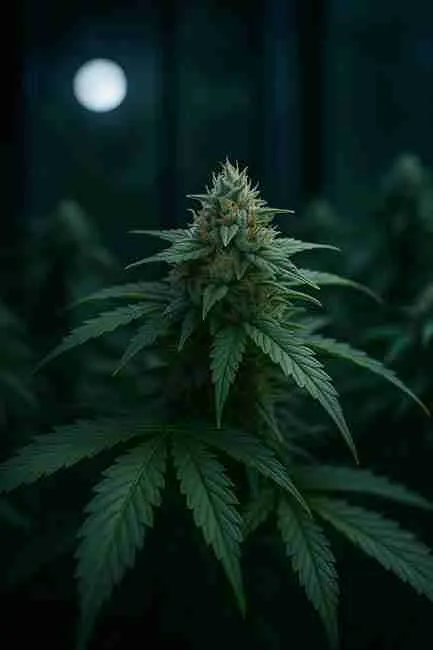
- Sugar leaves droop inward on a single cola while the rest looks fine.
- Musty fruit smell that isn’t your normal terp profile.
- Brown calyx core if you gently open the cola.
- Ashy gray fuzz in advanced spots.
If you see one, assume there are more starting.
Botrytis triage (no panic, just action)
- Isolate the plant or at least that branch.
- Cut deep into healthy tissue (sterilize scissors between cuts).
- Discard infected material—don’t wash and keep.
- Lower RH 5–10% immediately and raise night temp 1–2°C to widen buffer.
- Increase airflow right into cola midlines.
- Audit microclimates (corners, walls, canopy middle).
- Log the event so your next run starts with stronger prevention.
Pros and cons of common “dew point cannabis” strategies
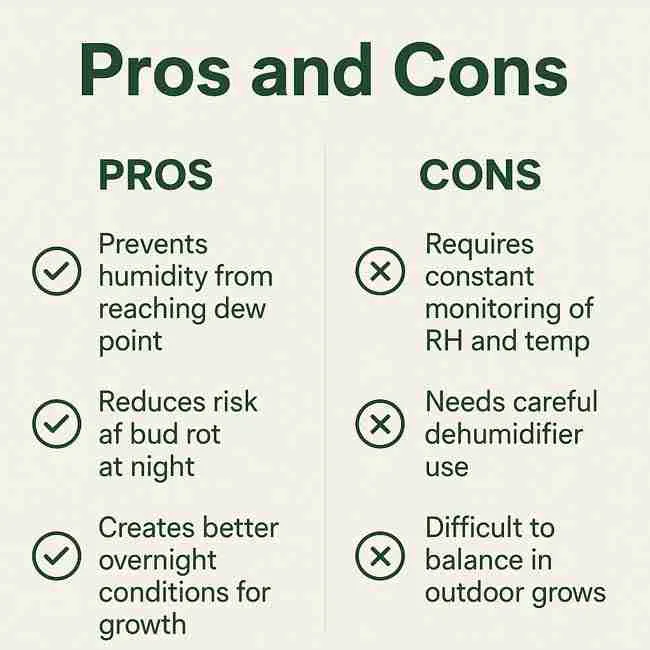
Overnight dehumidification
Pros
- Directly lowers RH.
- Works even with lights off.
- Immediate buffer improvement.
Cons
- Heat output can change VPD; may require small heater/AC balancing.
- Needs drain or daily bucket emptying.
Warmer nights (small bump)
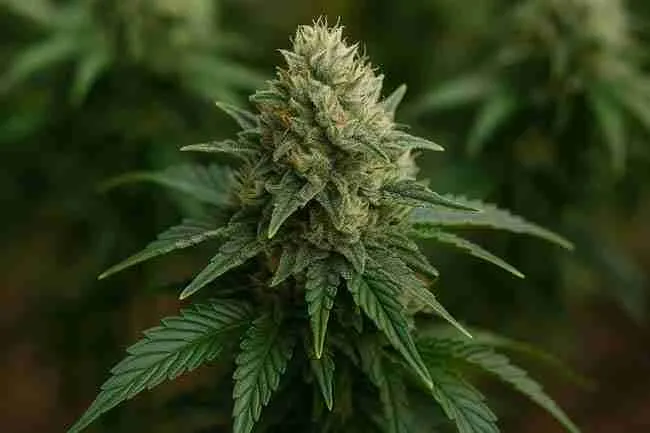
Pros
- Easily increases T − DP without more drying.
- Comforts some genetics prone to purple/anthocyanins from cold.
Cons
- Too warm can slow resin maturation in some cultivars.
- Extra power cost.
Selective defoliation & lollipopping
Pros
- Opens cola centers; reduces microclimates.
- Easier fan coverage.
Cons
- Overdoing it stresses plants.
- Timing matters (better early/mid flower, light touch late).
More fans, better fan placement
Pros
- Cheap, instant microclimate fix.
- Reduces leaf wetness without altering RH.
Cons
- Noise, cord clutter.
- Can cause wind burn if aimed too hard/too close.
Irrigation timing (no late soaks)
Pros
- Keeps night transpiration moderate.
- Improves root oxygen and stability.
Cons
- Requires planning around your work schedule.
- Coco/hydro might need careful EC management with altered timing.
Specifications: your nighttime safety cheat sheet
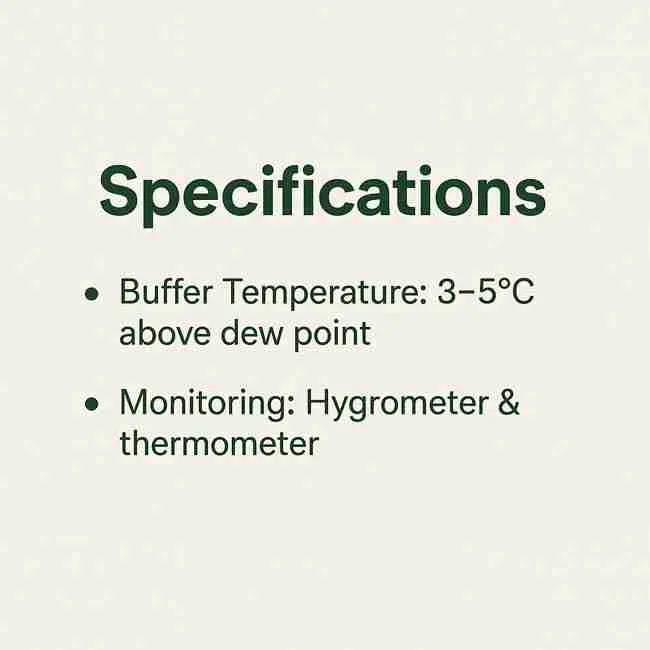
- Flower night temp: 18–21°C (65–70°F)
- Flower night RH: 45–50% (late flower as low as 42–48%)
- Dew point buffer (T − DP): ≥ 6–8°C (10–14°F)
- Air movement: 2+ oscillating fans per 4×4; ensure sweep hits cola middles
- Dehumidification rate: ~1–2 pints/hr for a packed 4×4 in mid/late flower
- Irrigation cut-off: 2–3 hours before lights out
- Night audit: 2 hours into dark—sniff, feel, log
- Emergency moves: raise temp 1–2°C, drop RH 5–10%, add another fan
Real-world mini case studies

Case 1: The “perfect day, scary night” tent
You run 24°C/55% day in a 4×4, 20°C/65% night. Buds look great… then a single cola sags.
Fix: Lower night RH to 50%, add a clip fan aimed through the canopy, and bump night temp to 21°C. T − DP widens; no more saggy colas.
Case 2: Coastal fall finish
Outdoor plant in a foggy week. Air reads 90% RH at dawn, leaves soaked.
Fix: Stake branches open, prune interior leaves lightly, shake at daybreak, and move a portable fan to the porch edge for early airflow. Remove any questionable tops early.
Case 3: Dehumidifier at max
Room sits at 52% RH all day, but nights creep to 60–62% because the dehu runs hot, then idles.
Fix: Add a small thermostatic heater to hold night temp +1.5°C. That alone widens the buffer and cuts condensation without buying a bigger dehu.
Botrytis prevention (your permanent checklist)
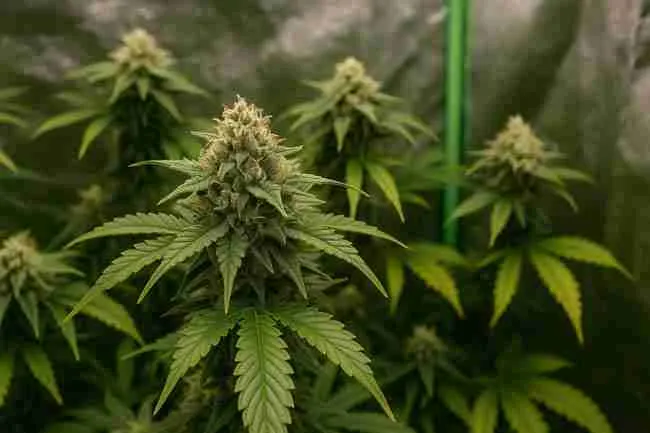
- Keep T − DP ≥ 6–8°C at night in flower.
- Use two RH targets: one for day, one smaller for night.
- Aim airflow into cola centers, not just across the top.
- Stop late irrigations that spike night humidity.
- Thin only what blocks airflow; don’t over-defoliate late.
- Audit corners & walls for dead air.
- Log your nights—trends beat guesses.
FAQ (covering your most-searched questions)
What does “dew point cannabis” mean in plain English?
It means you’re watching the dew point number to keep your cannabis flowers dry at night. If the dew point sits too close to your leaf temperature, water will condense on buds and encourage botrytis. Your goal is a big buffer (6–8°C/10–14°F) so nothing gets wet.
What should night humidity be for buds?
For flowering cannabis, keep night RH around 45–50%, dropping toward 42–48% in the last two weeks for very dense colas. That pairs well with a dew point buffer of ≥ 6–8°C. (People call this “night humidity buds” tuning.)
How do I do botrytis prevention without new gear?
- Raise night temp 1–2°C (widens buffer fast).
- Add a cheap clip fan aimed into the canopy core.
- Stop late watering.
- Remove a few big fans that block airflow (don’t strip).
- Open plant spacing so air can weave through.
Do I need a fancy RH temp chart?
Not required, but handy. Any “RH temp chart” or app that shows dew point is useful. You want to see T − DP. If it’s < 6°C in flower, reduce RH or raise temp a smidge.
Can I just run colder nights to be safe?
Careful. Colder air holds less water, so RH rises and the dew point often gets closer, not farther. If you drop night temp, drop RH too—or hold temp a little higher and keep RH steady to widen the buffer.
Is 60% RH at night OK in flower?
Usually too high in late flower, especially with dense colas. Even if the math says your buffer is 6°C, play it safer: 45–50% RH is a better target for finishing plants.
My dehumidifier can’t keep up. What now?
- Raise night temp 1–2°C (widens buffer immediately).
- Add a second small dehu or dehu the lung room feeding your tent.
- Improve airflow to break microclimates (cheapest win).
- Reduce plant count or biomass next run in the same space.
Do oscillating fans really stop bud rot?
Fans don’t kill botrytis spores, but they dry surfaces and destroy microclimates. No still, wet spots = no rot.
What’s a safe dew point at 20°C (68°F) at night?
Aim for 12–14°C (54–57°F) dew point in flower. That gives a 6–8°C buffer at 20°C night temp.
Is a “warmer night” bad for terpenes?
A small bump (1–2°C) is fine and often safer for moisture. Keep nights below 21°C (70°F) late flower and you’ll be good.
Your nightly action plan (print and tape to the tent)
- Set night RH to 45–50% (42–48% in final two weeks).
- Hold night temp 18–21°C (65–70°F).
- Confirm T − DP ≥ 6–8°C two hours after lights out.
- Keep fans moving through the canopy.
- No big watering before dark.
- Walk, smell, feel—catch trouble before it blooms.
- Log readings; fix patterns, not symptoms.
Specifications at a glance (for “dew point cannabis” control)

- Target buffer (T − DP): 6–8°C (10–14°F) in flower
- Late flower night RH: 42–48%
- Night temp window: 18–21°C (65–70°F)
- Airflow: top + mid-canopy oscillation, zero dead zones
- Irrigation: finish 2–3 hr pre-dark
- Emergency: +1–2°C temp, −5–10% RH, add a fan