


Dew Collection Systems for Outdoor Cannabis


Growing cannabis outdoors comes with its own set of challenges—one of the biggest being water supply. You might not always have access to a consistent water source, especially if your grow is located far from civilization or you’re aiming for an eco-friendly grow. That’s where Dew Collection Systems step in, providing a sustainable and effective way to gather water straight from nature.
Why Would You Use a Dew Collection System for Cannabis?
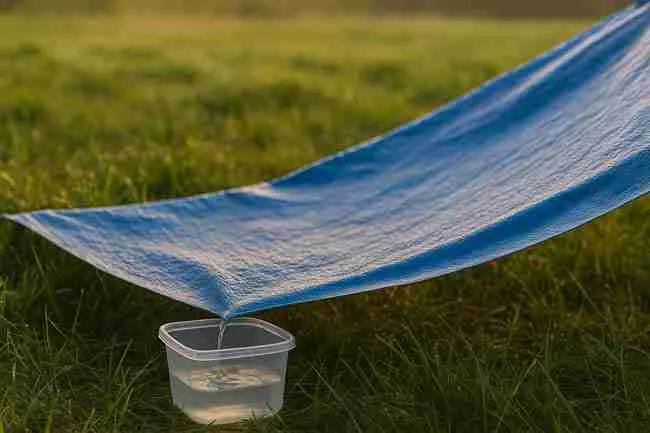
First things first, you might wonder, “Why even bother with dew collection?” Well, water scarcity is a big problem in many outdoor grows, especially in dry regions. Dew collection systems let you gather clean, free water without lifting a finger—well, maybe a little lifting. Plus, this water is naturally distilled, free of harmful minerals, and gentle on your cannabis plants. It’s perfect for promoting healthy plant growth without breaking the bank.
Pros of Dew Collection Systems:
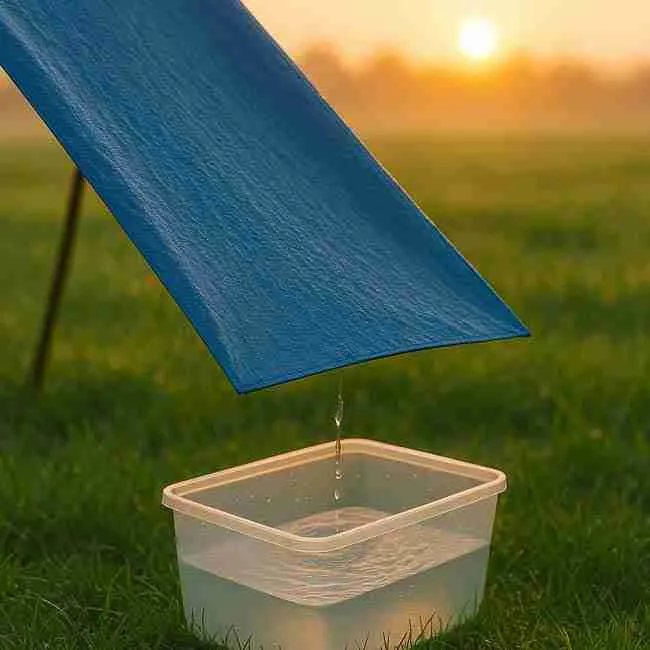
- Free and sustainable water source
- Eco-friendly (reduces water waste)
- Naturally purified water
- Low setup and maintenance costs
Cons of Dew Collection Systems:

- Depends heavily on climate (less effective in dry, hot areas)
- Collection rates can be unpredictable
What is a Dew Collection System?
So, what’s this mysterious system we’re talking about? Simply put, dew collection systems catch and store water droplets that naturally form overnight when the air cools. Think of dew collectors like giant spider webs—only instead of catching bugs, they catch water droplets.
How to Collect Dew Water?
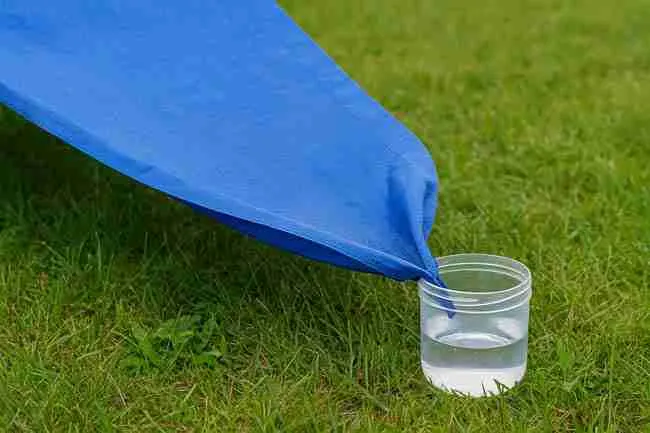
To collect dew water, you’ll set up materials that cool down quickly overnight, causing moisture in the air to turn into tiny water droplets. When the sun rises, you’ll have water ready to collect!
Here’s a basic step-by-step guide:
- Choose a cool, open area.
- Set up your collection material at dusk.
- Position it so collected dew runs into a container.
- Gather the water first thing in the morning.
How to Collect Condensation from the Air?
Another nifty trick is catching condensation straight from the air. This is like capturing the fog or mist. For this, use a mesh or fabric that helps air pass through and water droplets form easily on its surface.
Quick tips:
- Use large mesh nets stretched tightly.
- Place them perpendicular to prevailing winds.
- Ensure nets funnel water directly into storage tanks.
What Material is Used for Dew Harvesting?

The right material makes all the difference in dew harvesting. You need something that cools fast and has a surface that droplets stick to.
Best materials:
- Polypropylene mesh
- Metal sheets (like aluminum)
- Plastic tarps
- Special dew-harvesting fabrics
How Much Water Can You Collect from Condensation?
The amount can vary dramatically. Typically, you might collect between 0.1 and 2 liters per square meter each night, depending on humidity, temperature changes, and material used.
| Conditions | Water Collected per m²/night |
|---|---|
| Humid climates | 1–2 liters |
| Moderate climate | 0.5–1 liter |
| Dry climates | 0.1–0.5 liter |
How to Collect Dew with a Tarp?
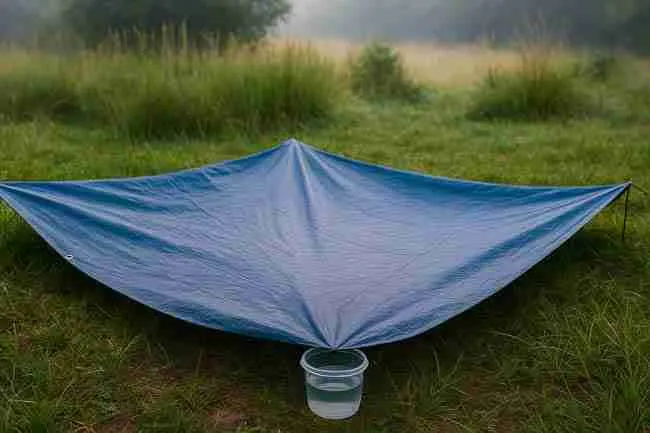
Tarps are fantastic for quick setups:
- Spread your tarp at dusk, slightly angled.
- Place a container at the lowest point.
- Morning dew will run down and collect neatly in your bucket.
How to Build a Dew Trap?

Dew traps use special netting and simple frames:
- Build a sturdy frame from wood or PVC pipes.
- Stretch polypropylene mesh tightly across the frame.
- Place collection channels at the bottom to funnel water into containers.
How to Make a Dew Collector?

Creating a simple dew collector:
- Set up an aluminum or plastic sheet tilted toward one corner.
- Attach a pipe or gutter at the bottom edge.
- Place a storage tank at the end to collect dripping dew.
How Much Water Can Be Collected from Dew?

Typically, a good dew collection system can yield between 0.2 to 1 liter per square meter per night. In optimal conditions, this adds up quickly, providing ample water for your plants.
How Do You Collect Water from a Tarp?

Collecting water from a tarp is easy:
- Ensure the tarp is angled, directing water to one spot.
- Place a bucket or barrel at the lowest point.
- Check each morning and empty the collected dew.
Specifications of a Typical Dew Collection System:
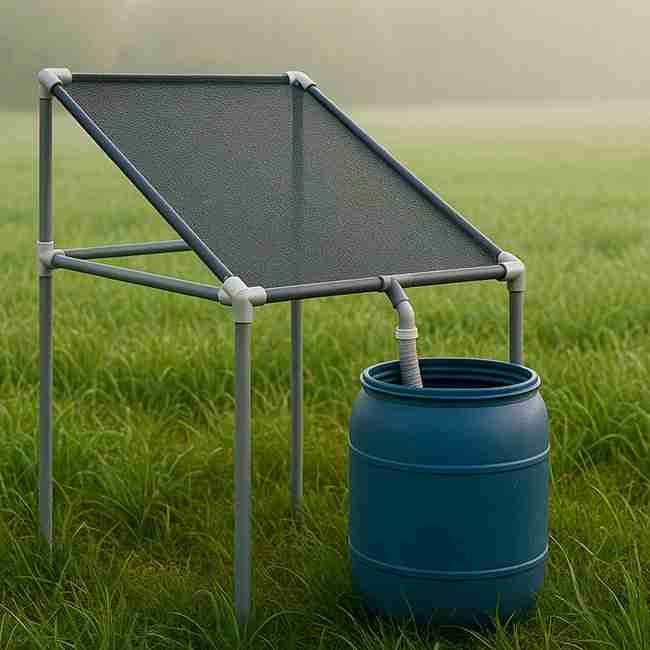
- Material: Polypropylene mesh or metal
- Frame: PVC pipes, wood
- Collection: Gutters, pipes
- Storage: Plastic barrels, buckets
- Efficiency: 0.2–2 liters per m²/night
Additional Useful Tips:
- Always clean your collection surfaces regularly to avoid contamination.
- Combine dew collection with rainwater harvesting for maximum efficiency.
- Check your dew collector at dawn to prevent evaporation loss.
FAQ Section:
Q: Can dew water harm my cannabis plants?
A: Nope! Dew water is pure, distilled naturally, and super beneficial for cannabis plants.
Q: Do dew collection systems require much maintenance?
A: Just basic cleaning and occasional checks to ensure smooth collection.
Q: Are dew collection systems expensive?
A: Not at all! You can set one up cheaply with common materials.
Final Thoughts

Dew Collection Systems offer a brilliant, cost-effective, and eco-friendly way to keep your cannabis plants thriving. Whether you’re growing in a backyard, on a remote hillside, or going off-grid entirely, harnessing the power of dew is a game-changer for sustainable cannabis cultivation.











This was a very interesting read. Thank you