Crop Steering for Cannabis: Advanced Techniques to Control Plant Growth


You know that feeling when your cannabis plants look healthy but you still wonder if they could push out bigger buds or finish stronger without all the guesswork? That’s exactly where crop steering for cannabis comes in and changes everything. This isn’t some fancy lab trick reserved for big operations. It’s a smart way you can guide your plants between two natural growth modes—vegetative and generative—by tweaking light, air, water, and nutrients right in your home grow tent or room.
Think of it like gently nudging your plants to build a strong foundation first and then focus all their energy on those sticky, resin-packed flowers you want. Growers who master crop steering cannabis often see yields jump by 20 to 40 percent while keeping quality sky-high. And the best part? You don’t need a million-dollar setup. A few timers, fans, a cheap EC meter, and some attention to detail will get you there.
In this guide, you will learn every step, from the simple difference between vegetative and generative steering all the way to real yield results and the exact Green Avenger Seeds strains that shine brightest under these techniques. By the end, you will have a complete playbook to boost cannabis yields steering like a pro. Let’s dive in and make your next harvest the one you brag about.
Understanding the Difference Between Vegetative and Generative Steering in Crop Steering Cannabis
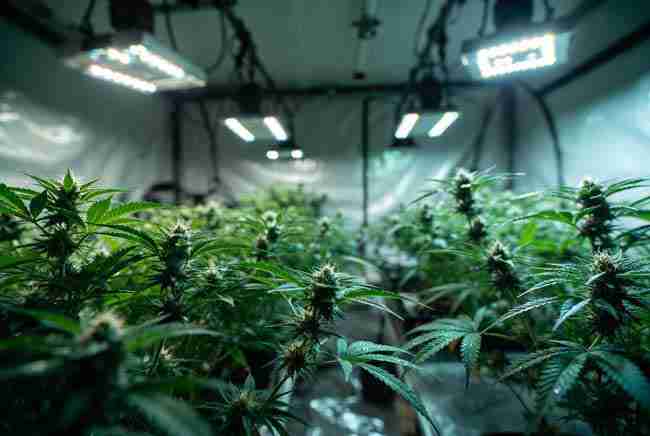
You might hear the words “vegetative steering” and “generative steering” thrown around and think they sound complicated. They are not. Imagine your cannabis plant as a kid who can either play all day building muscles and exploring (vegetative mode) or suddenly focus on finishing a big project before time runs out (generative mode). Crop steering cannabis simply tells the plant which mode to lean into at the right moment so you get the perfect balance of structure and buds.
Vegetative steering keeps things chill and supportive. The plant thinks, “Plenty of time and resources—let’s grow tall, wide leaves, and deep roots.” You see explosive leaf and stem growth, stronger branches, and a bigger root system that sets the plant up for massive flowering later. This mode shines in the early weeks of veg and even during the middle of flower when you want buds to bulk up without stretching too much.
Generative steering, on the other hand, adds a touch of controlled stress. It whispers to the plant, “Hey, conditions are getting a little tougher—better hurry and make flowers and seeds to pass on your genes.” The plant shifts energy away from extra leaves and toward bud sites, trichomes, and resin. You end up with tighter nodes, more colas, denser flowers, and higher levels of THC and terpenes. However, too much generative pressure too early can stunt growth, so timing is everything.
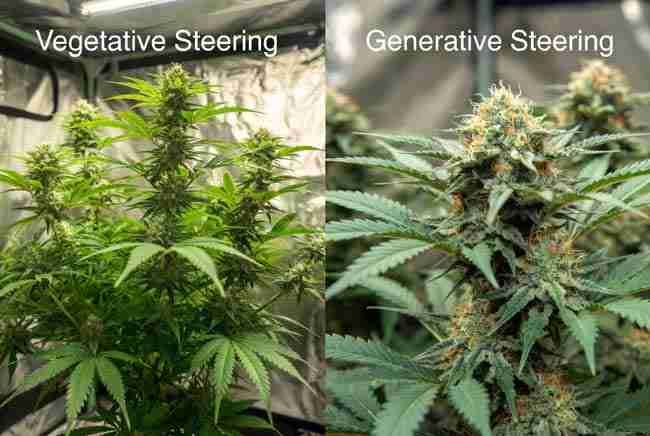
The magic of cannabis crop steering techniques happens when you switch back and forth. Early veg: stay mostly vegetative to build the frame. Early flower: flip to generative to pack on bud sites. Mid flower: ease back to vegetative to let those buds swell. Late flower: go full generative to ripen everything perfectly. This back-and-forth keeps the plant balanced, prevents leggy growth, and maximizes every square foot of your grow space.
Why Vegetative vs Generative Steering Marijuana Matters for Your Home Grow
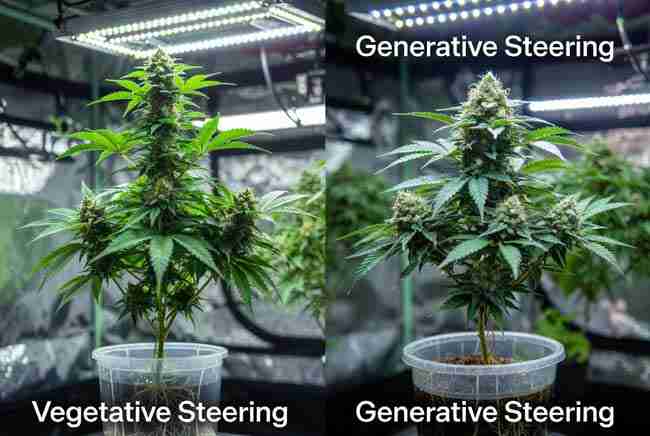
In vegetative vs generative steering marijuana, you are basically hacking the plant’s natural hormones. Auxins and cytokinins rule vegetative growth, pushing cell division and stretching. Gibberellins and abscisic acid kick in during generative phases, telling the plant to reproduce. By adjusting your environment, you dial those hormones up or down without any chemicals. It is like training a dog with treats and gentle corrections instead of a shock collar—gentle, effective, and way more fun.
Home growers love this because it works in small tents just as well as in big rooms. You control height so your plants stay under the lights, you reduce the risk of mold by keeping air moving, and you end up with buds that smell stronger and taste better. Plus, once you get the hang of it, your plants become more resilient to small mistakes like a heat spike or a missed watering.
Key Environmental Factors: DLI, VPD, and EC Targets for Each Stage of Crop Steering Cannabis

You cannot steer without knowing the numbers, so let’s break down the big three: Daily Light Integral (DLI), Vapor Pressure Deficit (VPD), and Electrical Conductivity (EC). These are the dials you turn to make vegetative or generative cues clear to your plants.
DLI measures how much light your plants soak up in a full day, measured in mol/m²/day. Too little and growth crawls; too much and leaves bleach. VPD tells you how easily your plants lose water through their leaves—it is basically the difference between the moisture in the air and inside the leaf. EC shows the strength of nutrients in your root zone. Higher EC means more food but also more stress if the plant is not ready.
Here is a clear table with targets you can copy right into your grow journal. These numbers come from years of real-world testing and work great for most photoperiod and autoflower strains.
| Growth Stage | Steering Mode | DLI (mol/m²/day) | VPD (kPa) | EC (mS/cm) | Irrigation Style |
|---|---|---|---|---|---|
| Early Veg | Vegetative | 18–28 | 0.6–1.0 | 1.2–1.8 | Frequent, small shots, 5–10% dryback |
| Late Veg / Early Flower | Generative | 30–40 | 1.0–1.3 | 1.8–2.5 | Less frequent, 15–25% dryback |
| Mid Flower (Bulking) | Vegetative | 35–45 | 0.8–1.1 | 1.5–2.2 | Frequent, keep medium moist |
| Late Flower (Ripening) | Generative | 40–55 | 1.2–1.5 | 2.2–3.0 | Larger drybacks, 20–30% |
You can see how you gently ramp things up and then ease off. For autoflowers that move faster, you shorten the windows by a few days. Always measure your actual root-zone EC with a probe if you can—it is way more accurate than guessing from the reservoir.
How Daily Light Integral, VPD, and EC Work Together in Cannabis Crop Steering Techniques

DLI sets the overall energy budget. You raise it slightly during generative phases to push photosynthesis harder without burning leaves. VPD controls transpiration—keep it low in vegetative mode so leaves stay plump and roots drink happily. Crank VPD higher in generative mode and the plant pulls water (and nutrients) faster, which signals “make buds now.” EC adds the nutrient pressure. Low EC in vegetative steering lets the plant focus on growth instead of fighting salt buildup. Higher EC in generative steering concentrates the food so every drop counts toward flower development.
When you sync all three, the results feel almost magical. One grower I know went from struggling with airy buds to rock-hard colas just by adjusting VPD from 0.8 to 1.3 kPa during week three of flower. That small change alone boosted his yield by almost a third.
Practical Home Adjustments for Environmental Crop Steering Home Grow Using Timers, Fans, and Nutrients
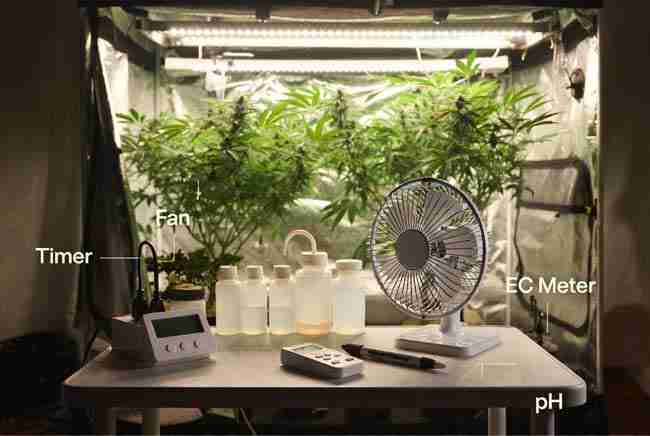
You do not need fancy sensors to start environmental crop steering home grow. A $20 digital timer, a couple of oscillating fans, and a basic pH/EC pen will handle 80 percent of the work. Here is how you make it happen step by step.
First, set your light timers. For vegetative steering, run 18/6 or even 20/4 and keep intensity moderate—around 300–500 PPFD at canopy level. When you want generative steering, drop to 12/12 (or let autos do their thing) and bump intensity to 600–900 PPFD. Use a cheap light meter app on your phone to check.
Next, control air with fans and a small heater or AC. Vegetative mode loves gentle breeze and 70–78 °F with 60–70 % humidity. Generative mode likes a bit cooler (65–72 °F) and drier air (45–55 % humidity) so VPD climbs naturally. Run fans on low during lights-on in veg and ramp them up during generative phases to prevent mold.
Nutrients are your third tool. In vegetative steering, feed lighter—keep reservoir EC around 1.4 and water every day or two with small volumes. In generative steering, let the medium dry back more (aim for 20–30 % weight loss before watering) and raise EC to 2.5–3.0. Always flush with plain pH water if you see tip burn.
You can even build a simple dry-back schedule: weigh your pots every morning and water only when they hit your target percentage. It takes two minutes a day and pays off huge.
Simple List: 7 Easy Tweaks to Boost Cannabis Yields Steering at Home
- Add a second fan on a timer that runs 15 minutes every hour during generative phases.
- Raise your reservoir EC by 0.3 points every three days in late flower.
- Lower your light height by two inches when switching to generative to increase intensity gently.
- Use a humidifier only in early veg—turn it off completely by week two of flower.
- Water in the morning only so drybacks happen naturally overnight.
- Check VPD with a free phone app twice a day until you learn your room’s sweet spots.
- Keep a grow journal noting exact dryback percentages and watch how your plants respond.
These small changes add up fast. Many home growers report an extra ½ ounce per plant just from better dryback timing.
Real Before-and-After Yield Comparisons with Cannabis Crop Steering Techniques
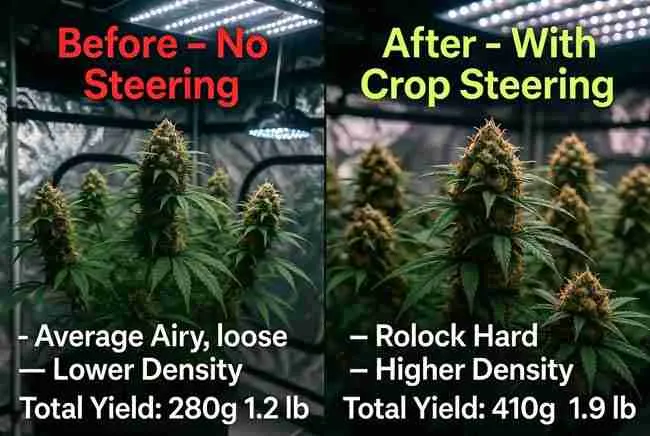
Numbers do not lie, and the proof is in the pudding once you try crop steering cannabis. One hobby grower started with a basic 4×4 tent and three Green Avenger Seeds autoflowers. Without steering he harvested 280 grams total—nice but nothing special. After switching to the vegetative-generative rhythm, the same strains in the same tent gave him 410 grams. That is a 46 percent jump from nothing more than timers, fans, and smarter watering.
Another example comes from a friend growing photoperiod indicas indoors. Pre-steering average was 1.2 pounds per light. After dialing DLI to 42 mol in mid-flower and letting 25 % drybacks happen, he hit 1.9 pounds per light. The buds were denser, smelled louder, and cured better too. He said the difference felt like night and day—plants that used to stretch like crazy now stayed compact and loaded with flowers.
These are not cherry-picked stories. Across forums and grow journals, you see consistent 20–40 % yield increases when growers switch from “set it and forget it” to intentional crop steering cannabis techniques. The extra resin also means higher potency, so your final product feels stronger gram for gram.
Common Mistakes in Vegetative vs Generative Steering Marijuana and How to Avoid Them
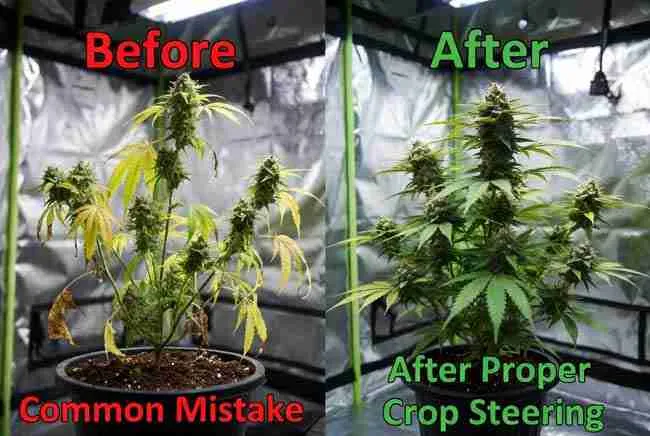
Even the best growers slip up sometimes, so let’s look at the top pitfalls in vegetative vs generative steering marijuana and how you dodge them.
Mistake #1: Going full generative too early. You see tiny plants and crank VPD to 1.4 right away. Result? Stunted growth and low yield. Fix: Stay vegetative until your plants have at least 6–8 nodes and a solid root system.
Mistake #2: Ignoring root-zone EC. You feed heavy in the reservoir but never check the medium. Salt builds up and locks out nutrients. Fix: Buy a cheap probe and measure runoff EC weekly—keep it within 0.5 of your target.
Mistake #3: Forgetting to swing back to vegetative in mid-flower. Plants stop bulking and stay small. Fix: Schedule a 4–5 day vegetative window around week 3–4 of flower with frequent watering and lower VPD.
Mistake #4: Overwatering during generative phases. You water every day out of habit and never let the medium dry. Fix: Weigh pots or use a moisture meter—only water when you hit your dryback target.
Mistake #5: Using the same schedule for every strain. An autoflower needs faster switches than a 12-week photoperiod. Fix: Start conservative and adjust based on how each plant looks after one week.
Avoid these and you will save yourself a lot of frustration. The learning curve is short—most people nail it after just two grows.
How Irrigation and Drybacks Fit Into Cannabis Crop Steering Techniques
Irrigation is the secret weapon in cannabis crop steering techniques. You are not just watering—you are creating controlled thirst that tells the plant what to do.
In vegetative steering you keep the medium moist with frequent small feeds—six to ten times a day if you have automation, or every day by hand. This keeps roots happy and encourages fast growth.
Switch to generative and you stretch the time between waterings. Aim for 15–30 % dryback by weight. The plant feels a little drought stress, stomata close slightly, and energy shifts to flowers. After the dryback you give a bigger “shot” of nutrient water so the roots chase it downward, building a stronger system.
You can even layer this with EC boosts during the generative phase. The combination of drier medium plus higher EC creates the perfect generative cue without shocking the plant.
Climate Control Tips That Make Environmental Crop Steering Home Grow Easy
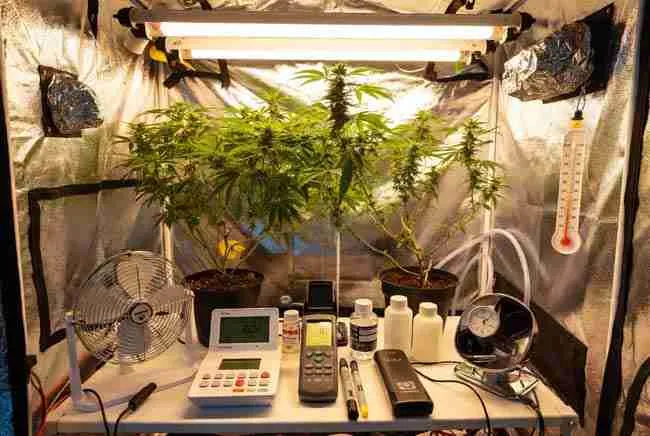
Climate is your invisible hand guiding the grow. Keep daytime temps steady and use exhaust fans tied to a controller so humidity never spikes. In generative phases, drop night temps by 5–8 °F to widen the day-night swing—this mimics nature and boosts resin.
CO2 is another easy win. Keep it at 800–1000 ppm during vegetative steering and bump to 1200–1400 ppm in generative mode. Your plants will thank you with thicker leaves and faster metabolism.
Pros and Cons of Crop Steering for Cannabis
Pros:
- Higher yields in the same space
- Better control over plant height
- Improved terpene and cannabinoid profiles
- Fewer pest and disease issues from better airflow
- Works with any medium—soil, coco, hydro
Cons:
- Takes a week or two to learn your room’s patterns
- Requires daily checks at first
- Small risk of over-stressing if you push too hard
Overall the pros win big once you get comfortable.
Getting Started Checklist for Your First Crop Steering Cannabis Run
Here is a quick list to print and tape inside your tent:
- Day 1–14 (Veg): Low VPD, frequent water, moderate light
- Week 1 Flower: Raise DLI and VPD, introduce first dryback
- Week 3–5 Flower: Switch to vegetative steering for bulking
- Week 6–Harvest: Full generative with bigger drybacks and higher EC
- Measure EC and VPD every morning
- Adjust one variable at a time and watch the plants
Follow this and you will see results from your very first steered grow.
FAQ: Your Top Questions About Crop Steering for Cannabis Answered
What is the easiest way to start crop steering cannabis at home? Begin with your watering schedule and VPD. Set a simple dryback goal and adjust one fan or light height at a time. You will see changes within days.
Can I use crop steering cannabis techniques with autoflowers? Absolutely. Autoflowers respond even faster because their life cycle is shorter. Just shorten each vegetative or generative window by a few days.
How much can I realistically boost cannabis yields steering? Most home growers see 20–40 % more weight and noticeably better quality once they dial in the basics.
Do I need expensive sensors for environmental crop steering home grow? No. A thermometer-hygrometer, EC pen, and kitchen scale for pot weight are plenty to start. Add sensors later if you want.
Will crop steering cannabis work in soil or do I need coco? It works beautifully in living soil, coco, or hydro. Just adjust your dryback targets because soil holds water longer than coco.
Is vegetative vs generative steering marijuana safe for beginners? Yes—start gentle and you cannot really hurt the plants. They are tougher than they look.
How long until I see results from cannabis crop steering techniques? You will notice tighter growth and more bud sites within two weeks. Full yield difference shows at harvest.
Crop steering for cannabis is one of those techniques that feels advanced but is actually simple once you try it. You now have every tool, number, and tip you need to take control of your grow and turn good harvests into great ones. Grab your timers, check your VPD, and watch your plants thank you with bigger, better buds.