Creating Your Own Cannabis Fertilizers from Scratch


Cannabis Fertilizers from a kitchen bucket are finished compost and a weak tea, not a jar of yesterday’s food. A marijuana plant with crisp leaf tips usually got a pour that was too thick. A weed seedling still wants plain water. The bucket helps once the plant is established and the mix under it is running out of food. Before that, a proud pour is a good way to burn a small pot.
Scraps are seasoning. They are not the feed by themselves. A banana peel, a spoon of coffee, and a crushed eggshell do not become a balanced meal because they came from your kitchen. The pile has to break them down first. If you can still name the food, it is not ready for the roots. Use what is finished, keep the liquid pale, and look at the leaves the next morning before you mix another batch.
This page is only the bucket. Building and turning a full pile sits on the composting guide. A bag with a printed scoop is the Gaia Green method. A bottle with a label is either organic fertilizer or synthetic fertilizer. Pick one lane for the run. Stacking a jar, a scoop, and a bottle in the same week is how a fine plant grows tan tips.
Build Cannabis Fertilizers from finished compost
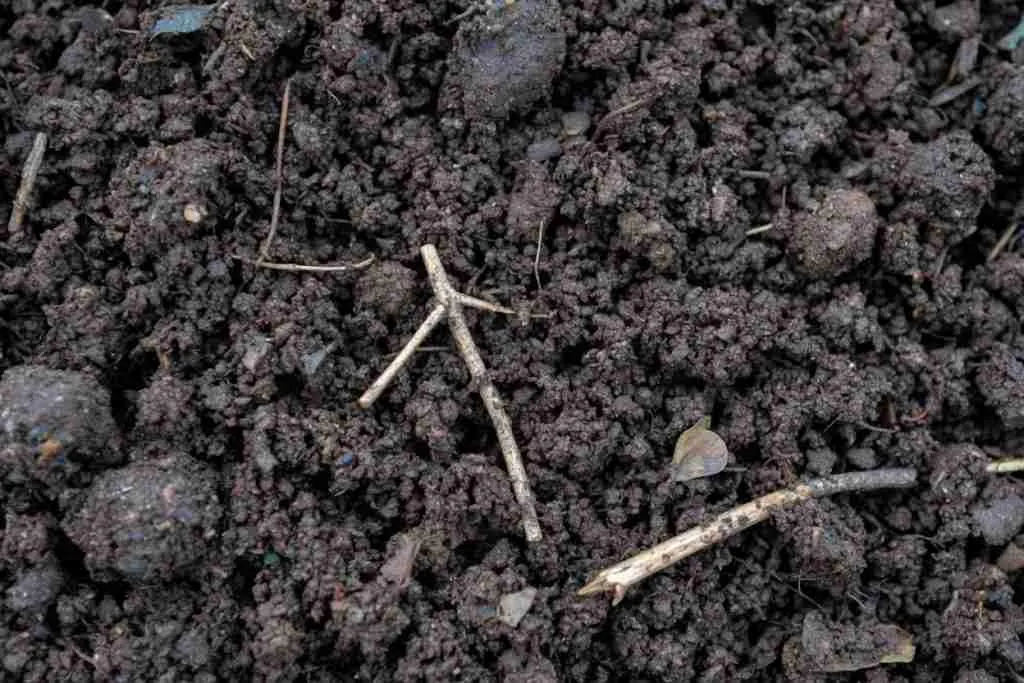
The backbone is compost you would not mind smelling. About two handfuls of dry browns for every handful of kitchen scraps keeps the pile from turning to sludge. Browns are fallen leaves, torn plain cardboard, shredded paper, or straw. The kitchen half is vegetable peels, spent flowers, and coffee. If the pile is wet and smells like a forgotten lunch, add browns until the shine goes away. If it is a dry brick, sprinkle water until a squeezed handful feels like a wrung-out sponge, then stop. A pile that drips when you lift a handful is already too wet.
You are done when it smells like a forest floor and you cannot name the food. A peel that is still a peel is not compost. Grounds that still sit as a felt mat are not compost. Finished material is dark, crumbly, and cool in your hand. It should not steam when you open the bin, and it should not smell of ammonia. Hot, unfinished compost in a three-gallon pot can cook roots even when you meant to be gentle. Leave that batch on the outdoor pile and wait. The pot can have plain water while you wait. Hunger for a week is cheaper than cooked roots.
Leave meat, oil, dairy, and pet waste out of the bin. They rot into a smell that brings animals, and they do not make a cleaner tea. Leave wood ash out of any pot. Ash pushes pH up, and a small container has nowhere to absorb that swing. If the water or the mix is the real question, that belongs on the pH page, not in a scoop of fireplace dust. Leave urine out entirely. In a tent it smells, and in a small pot it is a salt load the saucer cannot hide. No mixing ratio makes that a good idea indoors.
In Canada the limit is four plants per household, and a seedling counts as one of them. Quebec prohibits recreational home growing. Manitoba has been indoor-only since 1 May 2025. A bucket on the porch does not add a fifth legal plant, and it does not turn a banned outdoor garden into a legal one.
What you get from the bucket, and what you do not:
- You can name every scrap that went in, which a mystery jug cannot claim.
- Weak tea is forgiving when you stop at the color of weak tea and then wait a day.
- Scraps that would have been trash become the next cup, after the pile finishes them.
- You can skip a week and only water. The plant will not collapse because the calendar moved.
- Two buckets from the same kitchen will not match. There is no printed strength on a cup of compost.
- A sour batch is trash. Smell beats the hours you already waited.
- The bucket will not name a blotchy leaf, and it will not feed a reservoir.
- A bed that already feeds itself does not need a bonus pour on top.
That last limit matters. A reservoir is a different system, covered on soil versus hydroponic cannabis. A bed that already feeds itself is the no-till living soil guide. Extra tea there is just more food on top of food. Which bag you start with, before any of this, is the growing medium page.
Steep a cup of castings overnight
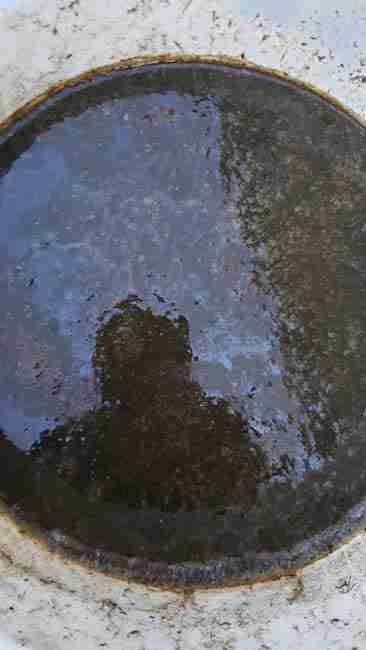
Fill a clean bucket with about a gallon of water. Stir in about one cup of finished compost or worm castings. Castings have already been through a worm, so they count as finished. Compost has to have passed the forest-floor test first. Fresh manure is neither, and it does not belong in a tea you will pour on a plant you plan to smoke. Stir until the cup is wetted, then stop. A loose lid or a cloth lets the bucket breathe. Leave it overnight. In the morning, smell it before you walk to the tent.
A soil smell means you can use it. Rotten, sour, or slimy means you dump it back on the outdoor pile and wash the bucket. A foamy skin is the same answer. The dark bucket in the photo is what an overnight steep often looks like before you add water, and it is already too strong to pour. Do not talk yourself into using a bad batch because you waited all night. The plant would rather have plain water than a rescue story.
If the good batch looks like dark coffee, add water until it looks like weak tea. That color is the dose. There is no second number hiding behind it. Use the bucket the same day. A jug left in the corner until next weekend is how a fine tea becomes the batch you should have dumped. Pour the liquid in a ring on the soil, away from the stem, and keep it off the leaves and off the flowers. If you steeped the compost loose, let the sludge settle and pour the liquid only. The sludge goes back on the pile. Do not seal it in a jar.
Worm castings and finished compost can share this cup. You do not need a bin lesson to use a bag of castings you already have. You do need the smell test if the material is your own pile. One cup is enough for that gallon. A heavier cup does not make a stronger plant. It makes the dark liquid you then have to thin, or the tan tips you will see tomorrow.
Season the bucket with scraps you can name
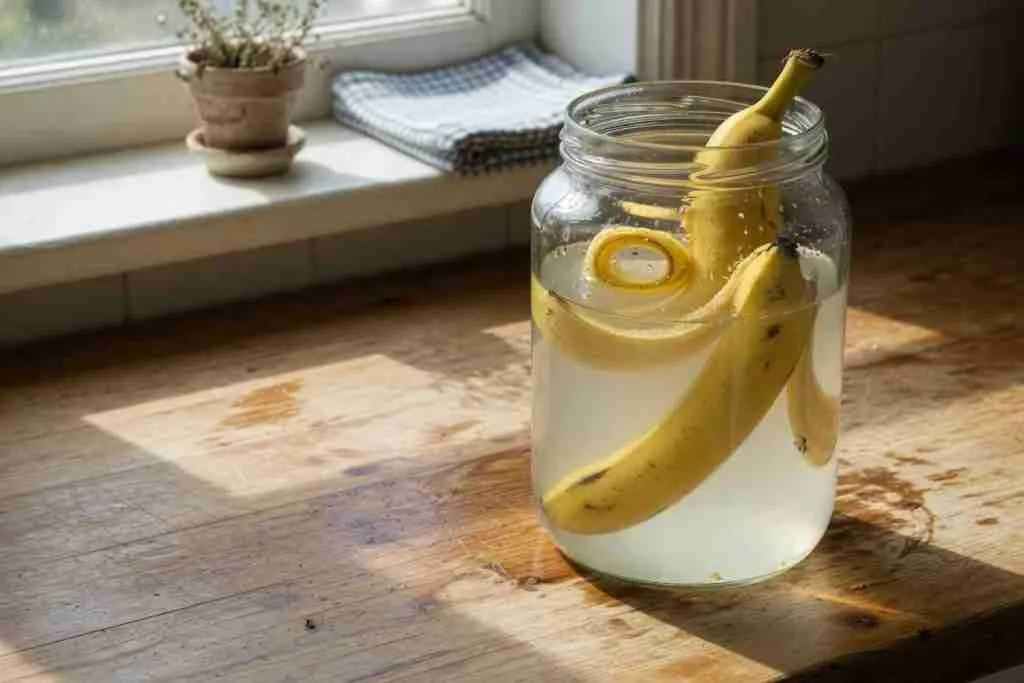
Once the compost exists, a few scraps can season one watering. Name them out loud. If you cannot say what is in the jar, do not pour the jar. Mystery mixes are how growers invent a problem and then spend two weeks guessing which scrap caused it.
A banana-peel soak is flower seasoning, not a project. Drop a peel or two into a jar of water in the morning. By the time the rest of the tent is checked, the water has taken on a little color. Pour that pale water the same day, at the soil, and put the peel in the compost. That is the whole method. Do not add sugar, molasses, or juice. Do not cap the jar and leave it for days. A sweet jar becomes a ferment, and a ferment in a pot is how you grow the sour bucket from the last section. The peel is a light extra. It is not a bloom bottle.
Use that soak only when the plant is actually in flower, and only if the leaves are not already dark green and hooked. When flower starts, and what the plant is doing then, is the flowering-stage page. Grass clippings and coffee belong earlier, while the plant is still building leaves. Ease off both once white pistils show. A pale, even color in vegetative growth has its own write-up on the vegetative stage. Do not answer that page with a thicker kitchen jar on the same afternoon.
Keep the seasoning short on purpose. One pale jar, one light pot, then you look tomorrow. If the new growth stays the color it was, you can repeat a similar jar the next time the pot is light. If the tips tan, that seasoning is retired for the rest of the run. You do not get a prize for emptying the fruit bowl into the reservoir of a fabric pot.
Coffee grounds and eggshells stay in the compost
Used coffee grounds are a slow nitrogen scrap. They go in the pile, mixed through browns, in a thin layer. They do not go on as a crust across the top of the pot. A crust mats, sheds the next watering down the outside of the fabric, and grows a white film that has nothing to do with the roots. The plant never asked for a lid. If you already dumped a mat on the soil, scratch it off into the compost bin and water as usual once the surface is soil again.
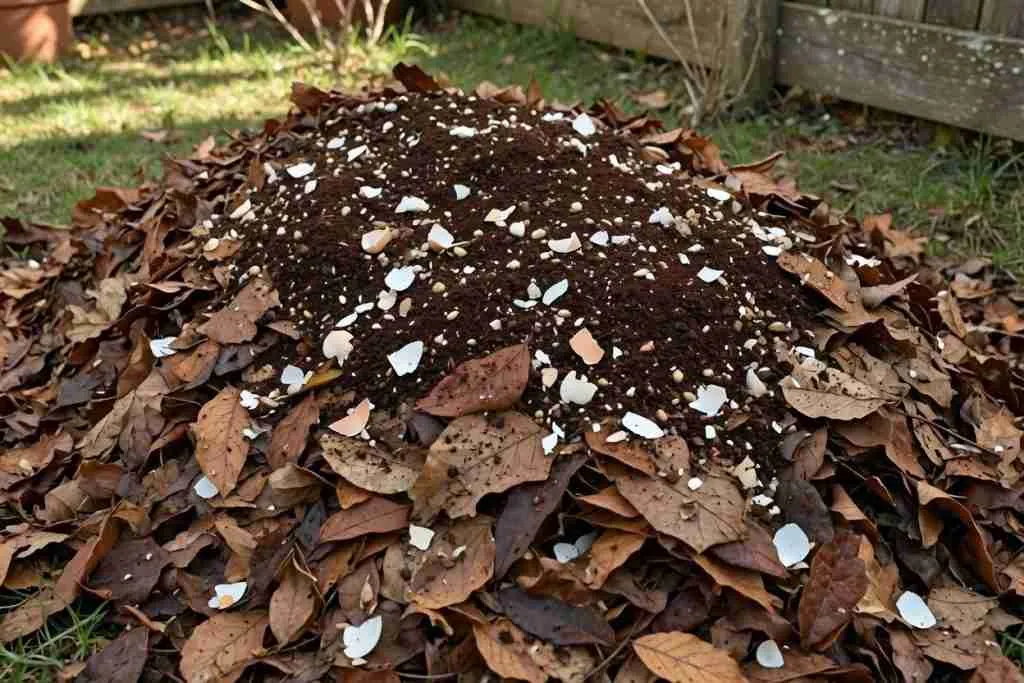
Crushed eggshells are a slow calcium scrap. Crush them to flakes, not half shells, and mix those flakes into the compost the way the pile in the photo is starting to show. A white layer on the pot looks busy and does almost nothing this run. Shells need time and a living pile. They are not a Friday rescue for a leaf you noticed on Thursday. If you can already name a calcium problem from the leaf pattern, this bucket will not close it. Shells in the compost are how you feed next month’s cup, not how you top-dress a hungry plant tonight.
The cup you pour today should still be finished compost or castings, diluted until it looks like weak tea. Grounds and shells are the raw material for the batch after this one. Mixing them into today’s water, or laying them on the stem, skips the only step that makes them useful. A pot is a small place. Undigested scraps in that small place go anaerobic, and anaerobic is the rotten smell you already agreed to dump.
Pour it weak and read the leaves tomorrow
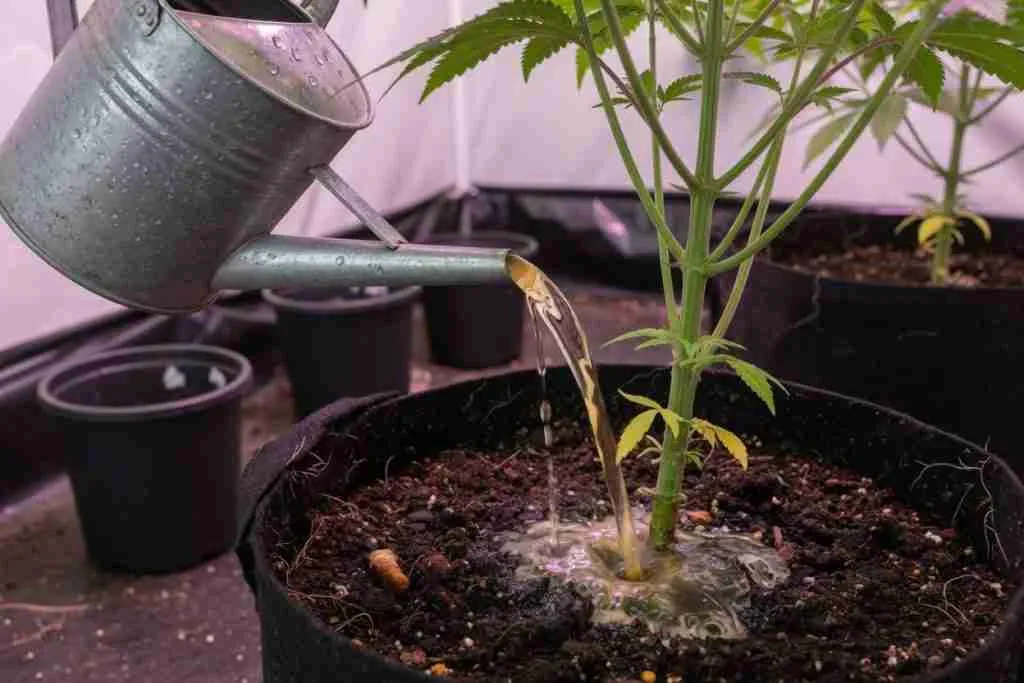
Pick the pot up first. If it is heavy, you do not pour tea and you do not pour water. How often a pot actually needs a drink is the watering page. Tea is a watering that happens to carry a little food. It goes in only when the pot is light and the plant is due. A heavy pot plus a “nutrient day” on the calendar is how growers drown a plant that was not hungry.
One weak pour. Then stop and look the next day. Leaves do not rewrite themselves in an hour. A tip that was green at lights-on and crisp the next lights-on is the bucket talking. A tip that was already crisp last week is an older mistake. Do not answer an old scar with a stronger jar. The new leaf is the only report card that counts.
If the bag of mix was plain and the plant is in veg with a pale, even color, a weak tea on a light pot is reasonable. If the color is blotchy, striped, or only on the oldest fans while the top is fine, you are looking at a pattern this bucket cannot diagnose. Change nothing else that day. Moving the lamp, repotting, and pouring tea on the same afternoon make a mess you cannot read on Thursday. Write down the one thing you did. Tomorrow you will not remember whether the jar was pale or dark unless you wrote the color down.
Indoors, stay on the weak side every time. A garden row can swallow a thicker drench because the ground under it is large. A pot on a saucer cannot. Whatever runs out the bottom is extra you did not need. Empty the saucer. Do not pour that runoff back in, and do not let it sit against the fabric overnight. Outdoors in real soil you still start pale. You can repeat sooner in a bed than in a pot, but you still wait for the next set of leaves before you decide the first pour was too shy.
Crisp tips mean the bucket was too strong
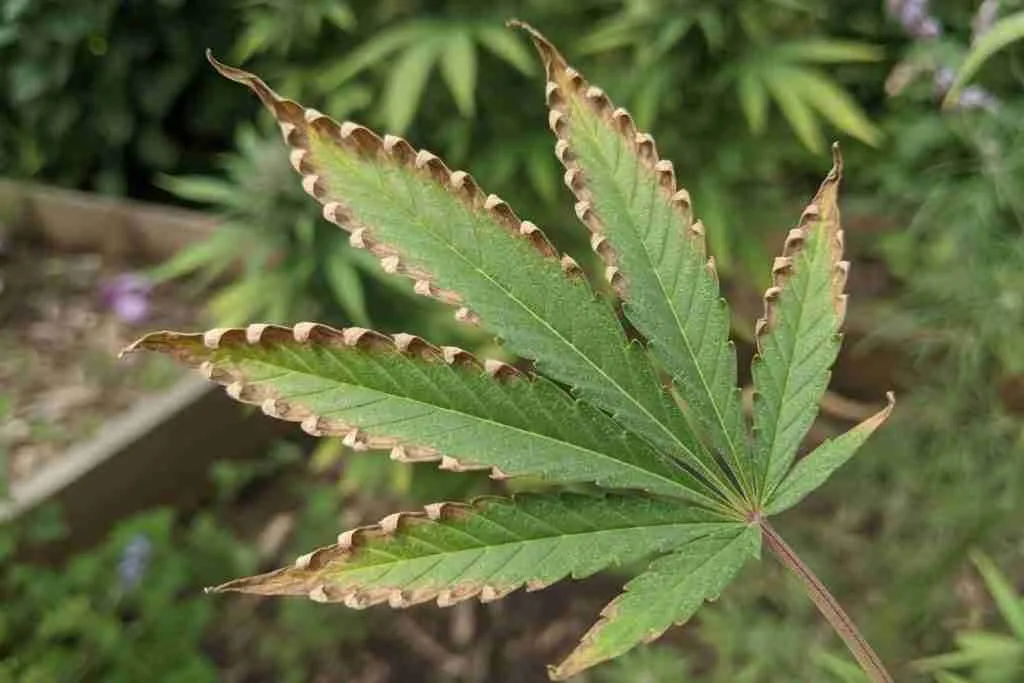
The usual burn shows up as dry tan tips on the newer leaves, sometimes with a brown edge, while the middle of the leaf is still green. That pattern the morning after a dark pour means the tea was too thick, or the pot was already holding food and you added more. Stop. The next time the pot is light, use plain water. Do not balance the burn with another scrap, another peel, or a “lighter” coffee crust. You already learned the bucket was ahead of the plant.
The brown tip will not turn green. Judge the next leaf that grows after you stopped. If that new tip stays green, you found the ceiling and you stay under it. If the new tip burns and you have only given plain water since, the pot is still loaded and you wait longer. A rescue bottle on top of a loaded pot is how a small burn becomes a plant that cannot eat at all. Time and plain water are the whole repair this page is willing to give you.
Read the other pictures so you do not treat them as hunger. A heavy pot plus limp leaves is water, not a request for tea. A dark green leaf that hooks downward is too much nitrogen, and a coffee-heavy bucket will make that worse. Back off the jar. Wood ash will not fix either picture. It can shove pH to a place where the plant cannot use what is already in the pot, which looks like hunger and is not. When the new growth is green and the pot dries on a normal rhythm again, you may return to a weak tea. Not before.
A fed bag of soil may not want your tea
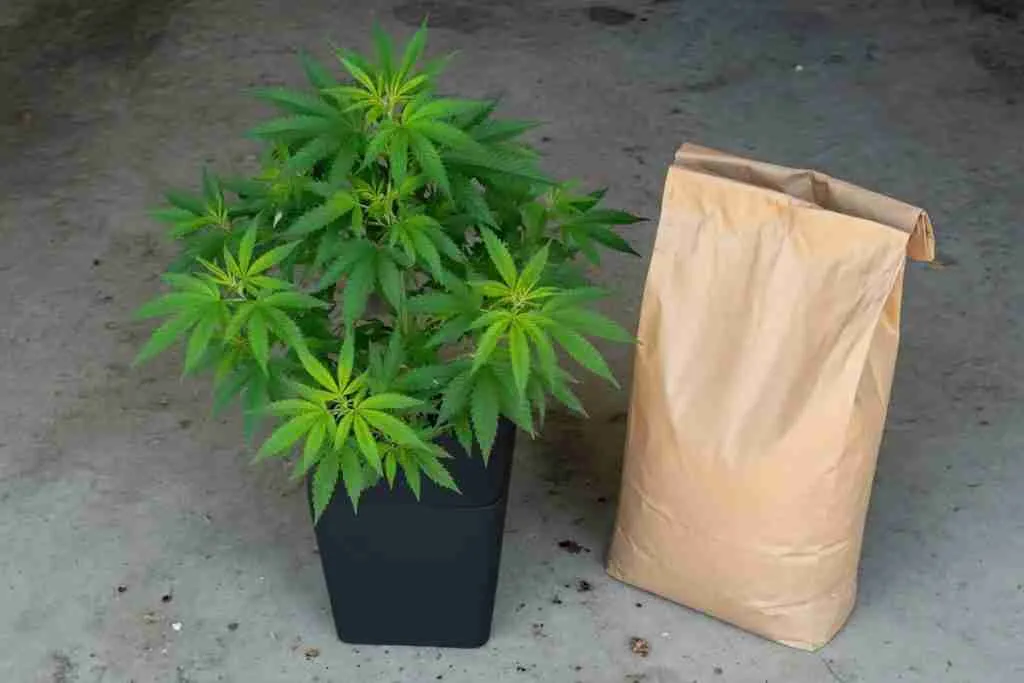
Read the bag before you mix a bucket. A lot of potting soil already carries enough food for the first weeks, sometimes longer. On those bags the plant may need water only. If the leaves are a steady green and the pot dries on a rhythm you can predict, you do not have a fertilizer problem. You have a plant that is fine. Pouring tea because a forum said “feed every watering” is how a fine plant earns crisp tips it did not need.
If you already mixed a dry amendment into the soil, or you are following a two-bag scoop method, stay on that method. The scoop page tells you when the surface gets another scratch. This tea waits until the leaves actually ask, and even then it is a pale drink, not a second menu. Two feeding systems in one pot are the same mistake as two clocks on one timer. You will not know which one the plant is answering.
A labeled organic bottle is the lane where you want the same strength every week. A synthetic bottle is that same idea with salts and a printed rate. Both are easier to overdose than weak tea, and both are easier to repeat when you have to leave town. Pick one lane and finish the run on it. The bucket is the lane where you accept that Tuesday is not Thursday. Switching from tea to a full bottle, or from a bottle to a dark bucket, in the same week doubles the food without looking like a decision.
A living bed is its own lane too. The soil is the fertilizer. Water it when the top is dry and the plant is light in your hand if it is in a container inside that bed. Calendar tea on a bed that was built to feed itself just stacks food the microbes were already handling. If the bed is new and still looks like plain dirt, it is not that system yet, and a weak cup of finished compost is a fairer start than a closet full of bottles.
Leave the sprout on plain water
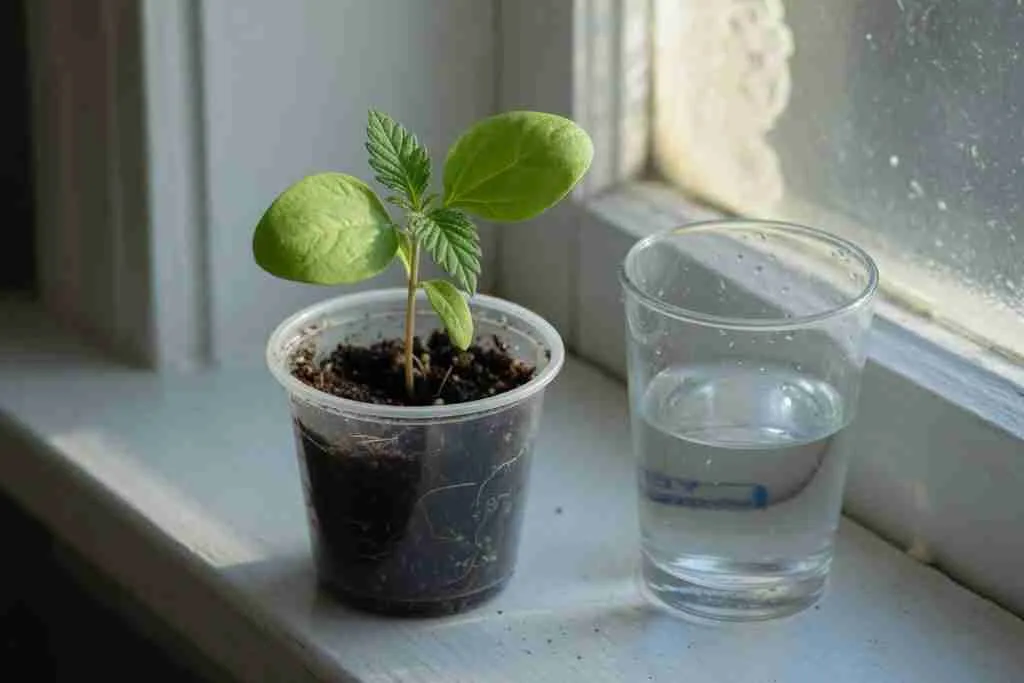
A sprout is living on the seed. The round first leaves do not need your bucket. The first serrated leaves still do not need it when the mix was a normal potting soil. Plain water, a pot that dries, and time. Those early days belong to the seedling stage. This page starts when that plant is established and the mix is no longer carrying it. If the sprout is pale in week one, the answer is almost never a darker jar. It is light, water, or a mix that is staying wet.
If you sowed into a mix with no food in it at all, you still wait until the plant has several sets of real leaves and the color is easing off. Then one weak tea, on a light pot, and you watch the next morning. A seedling in a small cup has almost no soil to buffer a mistake. The same cup of compost that a large plant in veg shrugs off will burn a sprout before lunch. Small container, weaker color, longer wait. That is the whole adjustment.
Skip the banana jar, the coffee crust, and the eggshell confetti on a seedling pot. They do not speed the start. They make a wet mat on a tiny surface, and they invite the fungus you were trying not to grow. When the plant is big enough that you are watering a real pot on a rhythm, come back to the bucket. Until then the glass beside the sprout is the whole program: clear water, when the pot is light, and nothing else in it.
Keep the bucket boring on purpose. Finished compost or castings, about one cup in about a gallon, overnight, then water until the liquid looks like weak tea, used the same day. Scraps you can name go back to the pile. Anything that smells rotten goes there too. If a bag was already fed, water it and leave the jar in the kitchen. The next morning’s new growth is the only score that matters.