Creating a Solar-Powered Cannabis Grow: Sustainable Energy Solutions

Why Go Solar for Your Cannabis Grow?
Solar power can feel like a magical concept: harnessing the sun’s rays to power your lights, fans, and other grow gear. By opting for a Solar-Powered Cannabis Grow, you’re not just aiming for a smaller electric bill—you’re also taking a big leap toward a healthier environment. You’re reducing your carbon footprint, promoting renewable energy, and walking the talk when it comes to sustainability.
Imagine a scenario where you’re no longer dreading monthly power bills. If you have consistent sunlight in your area, you could even enjoy long-term savings once you recover your initial investment. And guess what? Watching your plants thrive on green energy can make you feel pretty proud.
What Is Solar Power?

Solar power is energy from the sun that’s captured using solar panels, which are also known as photovoltaic (PV) panels. When the sunlight hits those panels, it causes an electrical reaction inside tiny cells. This reaction produces direct current (DC) electricity. Through an inverter, that DC gets converted into alternating current (AC), which is what most household appliances need to function.
At its core, solar power offers:
- Renewable energy: The sun isn’t running out anytime soon (phew!).
- Low maintenance: Solar panels don’t have a bunch of moving parts that break down easily.
- Clean source of electricity: Solar power doesn’t produce harmful byproducts that pollute the air.
Interjection: Holy moly, this means you can power your cannabis plants without burning fossil fuels! That’s a big plus for the planet.
Is Solar Power Worth It for a Cannabis Grow Room?
You might wonder if solar power is worth it. In many cases, the answer is a big yes. However, the real question is whether you have enough sunlight in your location to produce the electricity you need.
If you have a medium-sized indoor grow, a properly sized solar system can absolutely offset or even cover your energy demands. Over time, the savings on your electric bills could make your wallet do a happy dance. Sure, the initial costs might be higher than setting up a standard grow, but the long-term benefits are tough to ignore.
Factors that determine the worthiness of solar:

- Amount of sunlight in your region.
- Size of your grow room and how much electricity it uses.
- Cost of local electricity (higher utility prices often mean faster payback).
- Available space for solar panels (rooftop, ground-mounted, or other).
It might feel daunting at first to consider the investment, but if you’re committed to a sustainable operation, solar power can be your ticket to greener cannabis cultivation.
Why Would You Use Solar Power in Your Cannabis Grow Room?
You might think, “Sure, solar sounds nice, but do I really need it?” Let me tell you, there are plenty of good reasons:
- Lower utility bills: Once your system pays for itself, you could see some sweet reductions in your monthly expenses.
- Environmental benefits: Solar means clean energy, fewer carbon emissions, and a future-friendly approach.
- Energy independence: If there’s a blackout in your area, guess whose grow lights can still run (especially if you have battery storage)? Yours!
- Increased property value: A home or facility with an installed solar setup might sell for more down the road.
Dangling modifier aside, solar power lifts your cannabis operation into a more modern, eco-friendly realm.
Understanding Basic Electricity Needs for Cannabis Grows
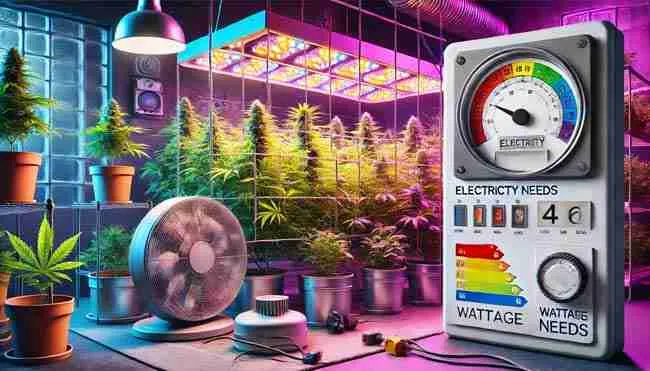
Before diving deeper, you’ll want to know how electricity usage in a grow room adds up. Here’s a rough breakdown:
- Grow lights: These are usually the largest energy hogs.
- Ventilation: Fans, intake vents, and exhaust systems run constantly.
- Climate control: Heaters, air conditioners, and dehumidifiers can make your meter spin.
- Pumps and other small devices: If you’re growing hydroponically, you might use water pumps, timers, and sensors.
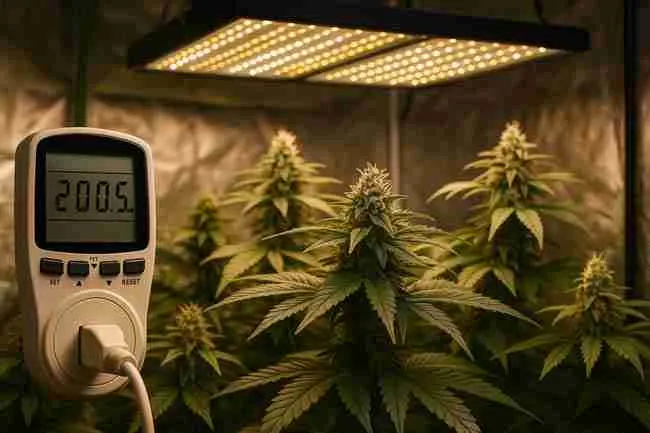
Everything in your grow depends on power, so it helps to measure how many watts each piece of gear demands. That figure directly impacts how many solar panels you’ll need.
What Grow Room Equipment Can Be Run from Solar Power?
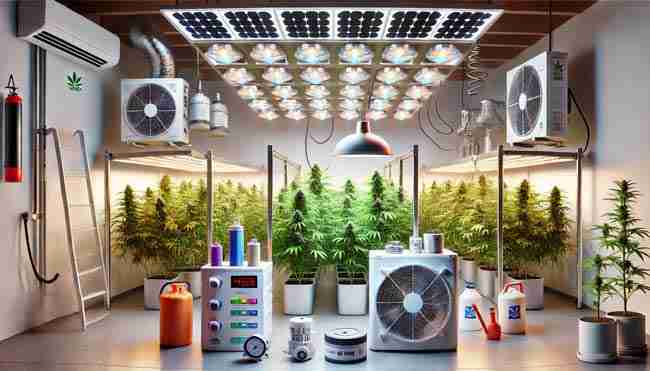
Short answer: Most (if not all) of your grow gear can be solar-powered if your system is sized correctly. This includes:
- LED grow lights: Modern LED lights are more efficient than older HID or fluorescent models.
- Fans: Circulation fans or exhaust fans can absolutely run on solar.
- Air conditioners: Although these can be heavy on electricity, a robust solar setup can handle them.
- Pumps and timers: Typically low-wattage devices, so they’re easy-peasy for solar.
- Dehumidifiers: Another relatively power-hungry piece, but still workable with the right system size.
Colloquialism alert: Don’t sweat it—if you plan properly, you can run everything from your budding lights to your fancy ventilation system off solar.
How Many Watts Does It Take to Run a Grow Light?
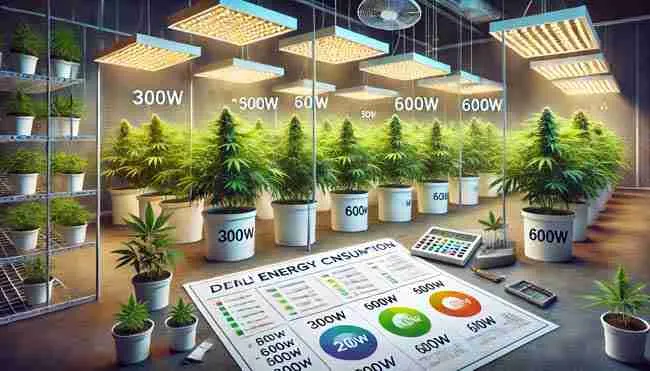
Grow light wattage can range wildly depending on the type and power level. Traditional HID (High-Intensity Discharge) lights can pull anywhere from 150W to 1000W or more. Meanwhile, many LED lights draw around 100W to 600W, though you’ll find some that go beyond that.
To get a sense of your needs, you should:
- Check the wattage label on your chosen grow light.
- Multiply that wattage by the number of hours you’ll run it each day.
- Consider the plant’s growth stage—seedlings don’t need as much intensity or light duration as flowering plants do.
Example: If you use a 300W LED light for 18 hours a day, that’s 5,400 watt-hours (Wh) or 5.4 kilowatt-hours (kWh) daily. Once you add your other equipment, you’ll see just how much solar power you need to produce.
How Do You Set Up a Solar System for a Cannabis Grow Room or Tent?
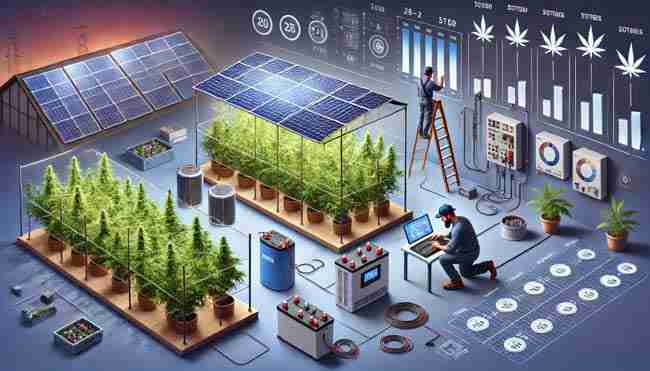
Setting up a solar system for your cannabis grow room might feel like climbing a mountain, but it can be broken down into manageable steps:
- Calculate your power needs: Tally up the wattage for all your equipment.
- Choose the right solar panels: Panels come in different wattage ratings. The total wattage of your panels should meet or exceed your power requirements.
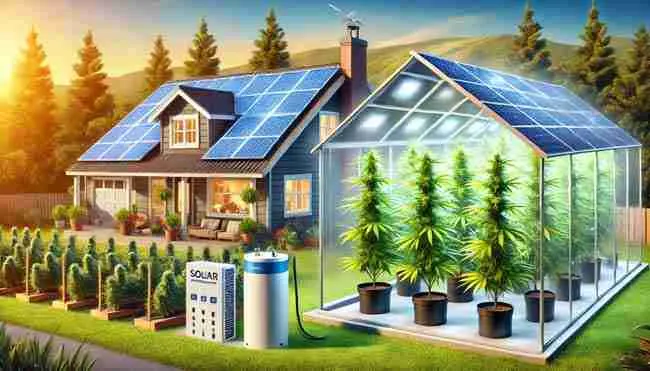
- Select an inverter: You’ll need an inverter to convert the direct current (DC) from your panels into alternating current (AC) for your grow equipment.
- Consider battery storage: If you don’t want to rely on grid electricity when it’s cloudy or nighttime, batteries can store energy produced during sunny periods.
- Install: Typically, you’ll place panels on your roof or on ground mounts. Make sure they’re positioned to get maximum direct sunlight throughout the day.
- Wire everything properly: Connect the panels to the charge controller (if you have a battery system), then to your inverter, and finally to your circuit that powers your grow room.
Interjection: Whew, that might sound like a whole lot of steps, but once it’s up and running, you’ll see the benefits in real time.
What Equipment Will You Need to Set Up a Solar Powered Grow Room?
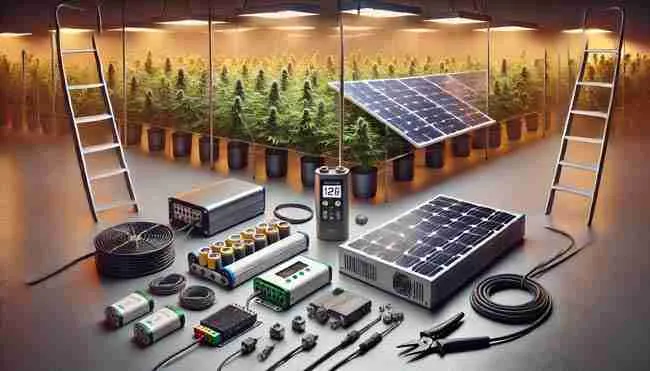
You can’t just throw some solar panels onto your roof and call it a day. You’ll need a few key pieces of gear:
- Solar panels: Monocrystalline panels are popular because they’re efficient, long-lasting, and easy to find.
- Mounting hardware: These brackets and rails secure your panels to a roof or a ground-based setup.
- Charge controller: This device manages the voltage and current from your solar panels to your batteries (if you use a battery storage system).
- Batteries (optional but recommended): Deep-cycle batteries (like lithium-ion or lead-acid) let you store excess energy for later use.
- Inverter: A must-have to convert DC (from the panels or batteries) to AC (for your grow lights, fans, etc.).
- Cables, connectors, and fuses: These keep everything linked together and safe.
Pro tip: You might want to have a professional electrician either check your work or handle the wiring. Getting it right from the start prevents big headaches and potential hazards.
Can You Run Fans on Solar Power?
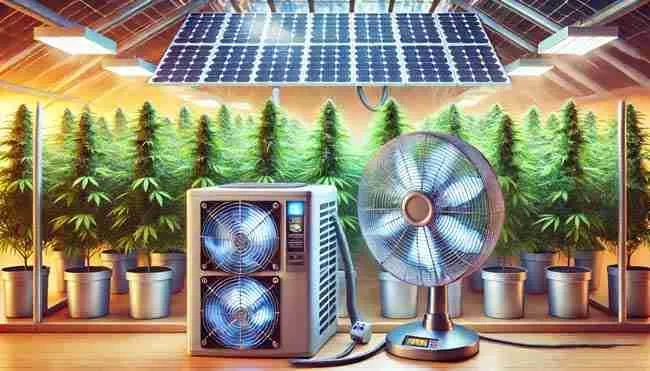
Absolutely. Fans don’t usually draw as much power as grow lights or air conditioners, so they’re fairly easy to include in your solar-powered setup. If you have a large exhaust fan that runs 24/7, you’ll want to factor that continuous use into your energy calculations. But don’t worry—once you size your system correctly, fans can be seamlessly integrated.
How Many Solar Panels Do You Need to Run a Grow Light?
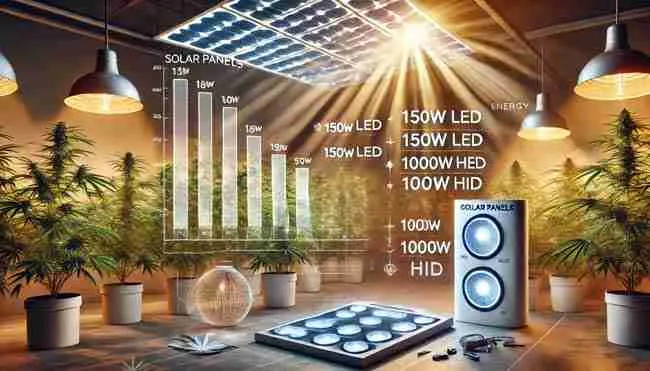
This question doesn’t have a one-size-fits-all answer. It depends on:
- Grow light wattage: Are you using a 150W LED or a 1000W HID?
- Hours of operation: More daily hours = more energy required.
- Sunlight availability: Do you live in a sunny desert or a cloudy climate?
Let’s say you need 5 kWh per day for your entire system. If one solar panel produces about 300W in peak sunlight and you get 5 hours of strong sun daily, that’s roughly 1.5 kWh per panel per day. You’d need around four panels (1.5 kWh x 4 = 6 kWh daily) to cover 5 kWh with a small safety margin.
However, you still have to account for inefficiencies, cloudy days, battery losses, and so on. Always plan for a bit more capacity than you think you’ll need. Better safe than sorry!
Can You Run a Grow Light on Solar Power?
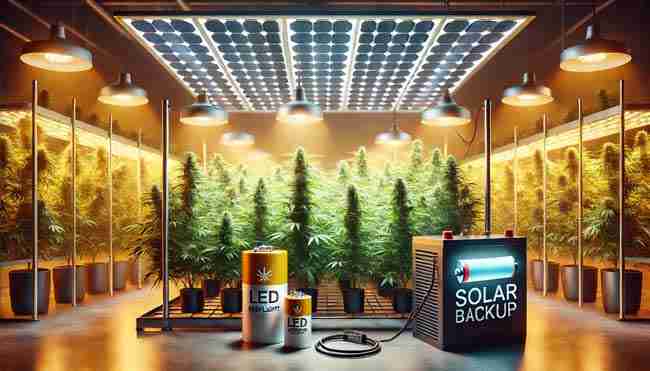
You bet you can. The key is having enough solar panels and possibly batteries if you plan to run lights at night or when it’s cloudy. If you time your light cycles to match daytime sun exposure, you can cut down on your reliance on battery storage. But if your plants need 18 hours of light a day, a battery backup might be essential unless your panels can supply all that energy directly.
Solar-Powered Grow Light Recommendations
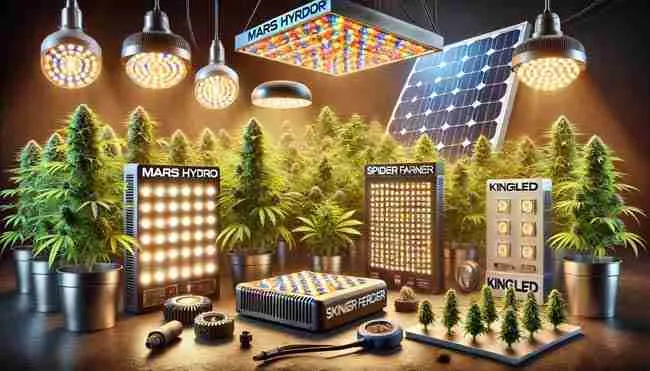
When you’re choosing a grow light for a Solar-Powered Cannabis Grow, efficiency is king. Look for lights that deliver high lumens per watt so you get the most bang for your solar buck. Here are a few solid picks:
- Mars Hydro TS Series LED: Known for energy efficiency, full-spectrum lighting, and lower heat output.
- Spider Farmer LED: Popular for their Samsung diodes, high PAR output, and solid coverage area.
- KingLED Grow Lights: A budget-friendly option with decent efficiency.
I recommend going for LED models that emphasize power efficiency and balanced spectrums for all stages of plant growth. With that, you’ll get hearty cannabis plants without skyrocketing your energy demands.
Sample Table: Comparing Grow Light Power Usage
| Grow Light Brand/Model | Power Draw (Watts) | Recommended Coverage | Efficiency (umol/J) | Approx. Price |
|---|---|---|---|---|
| Mars Hydro TS 1000 | 150 | 2’ x 2’ | ~2.3 | $150 – $170 |
| Spider Farmer SF-2000 | 200 | 2’ x 4’ | ~2.7 | $250 – $270 |
| KingLED 1000W (LED) | 180 | 2’ x 2’ | ~2.0 | $80 – $100 |
(Note: Specs and prices can vary, so always double-check before buying.)
Tips for Maximizing Your Solar-Powered Setup
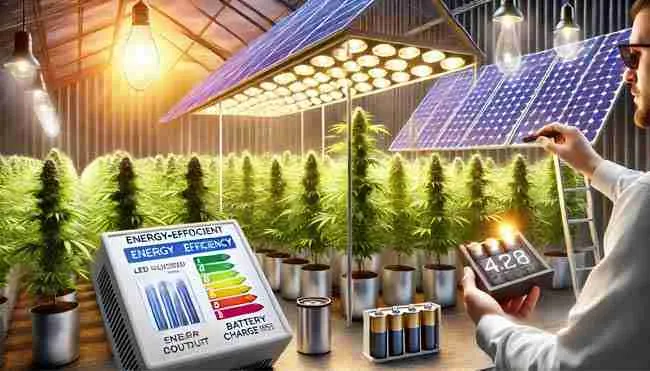
- Use energy-efficient grow lights: This reduces the number of panels needed.
- Manage heat: A well-insulated grow room means you won’t need to blast AC as much.
- Monitor your system: Keep an eye on battery charge levels, panel output, and equipment usage.
- Plan for expansion: You might want to grow more plants later, so think about future-proofing your system.
- Check local incentives: Some areas offer tax credits or rebates for installing solar.
Pros and Cons of a Solar-Powered Cannabis Grow
Pros
- Energy cost savings: Reduced or eliminated electricity bills.
- Eco-friendly: You’re contributing to a cleaner environment.
- Energy independence: Potentially run your grow during power outages.
- Long-term investment: Panels can last 20+ years with minimal maintenance.
Cons
- High upfront cost: Panels, inverters, and batteries aren’t cheap.
- Space requirement: You need enough roof or ground area for panels.
- Dependence on sunlight: Cloudy climates may need larger systems or more battery capacity.
- Maintenance: While minimal, you’ll still need to occasionally clean or inspect panels and batteries.
Frequently Asked Questions (FAQ) for Solar-Powered Cannabis Grow
- Do I need a battery for my solar-powered cannabis grow?
A battery isn’t strictly required if you’re only running equipment during sunny hours, but it’s recommended to store excess power for nighttime or cloudy periods. - How long do solar panels last?
Most high-quality panels last 20 to 25 years, with their output slowly decreasing over time. You can typically expect around 80% efficiency after 25 years. - Can I power a large-scale commercial cannabis grow with solar?
Yes, but you’ll need a considerably larger system, more panels, and robust battery storage (or grid tie-in) to handle the power demands. - What if I have limited space for panels?
You might opt for higher-wattage panels with a smaller footprint. You can also consider mounting panels on a garage, greenhouse, or other structures. - Is it possible to go completely off-grid with a cannabis grow?
It is possible, but you’ll need enough battery capacity to handle extended cloudy periods. Proper planning and possibly a backup generator are also wise. - How do I finance my solar setup?
Some banks offer loans specifically for renewable energy installations. You can also look into leasing or power purchase agreements (PPAs) if they’re available in your region. - Do I need a special permit for solar panels?
It depends on your local rules. In many places, you’ll need to follow building codes and secure permits before installing solar equipment. - What’s the biggest mistake people make when going solar?
Underestimating their actual power usage. Always measure or estimate your energy consumption carefully and plan for a buffer.
Conclusion
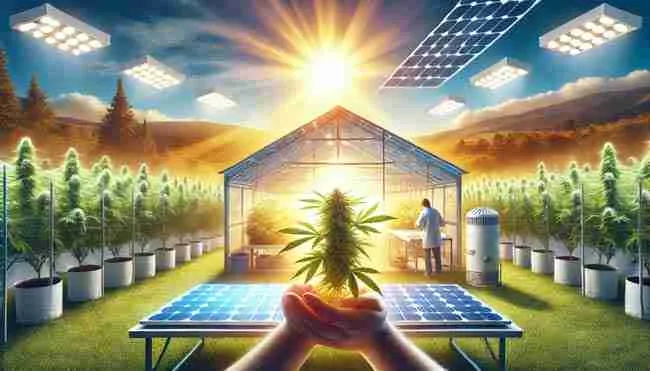
When you embrace a Solar-Powered Cannabis Grow, you stand at the forefront of eco-friendly cultivation. You’ll significantly reduce your electricity bills while taking part in a cleaner, more sustainable method of growing. The setup requires some homework—calculating power needs, choosing reliable equipment, and possibly getting professional assistance. But once you’re up and running, you’ll enjoy the long-term rewards of producing premium cannabis with energy straight from the sun.
So, are you ready to soak up the sunshine in your cannabis grow? By now, you probably feel confident you can do it. With the right planning, the right tools, and a dash of perseverance, you can harness solar power for a greener, brighter future in cannabis cultivation.
List: Essential Steps to Kickstart Your Solar-Powered Cannabis Grow
- Calculate your total wattage (Lights, fans, AC, etc.).
- Select efficient LED grow lights to minimize power consumption.
- Choose the right solar panels (monocrystalline or polycrystalline).
- Plan for batteries if you want power around the clock.
- Pick a quality inverter to convert DC to AC smoothly.
- Install and test your system (hire a pro for safety).
- Monitor and maintain your panels, inverters, and batteries.
Following these steps ensures you’ll have a well-rounded approach to a truly sustainable, solar-powered cannabis experience.