Cool Things You Can Do With Cannabis Trimmings

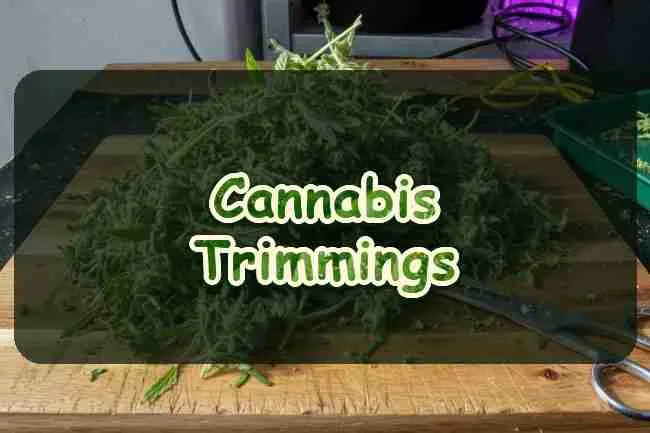
Every harvest leaves a pile. Fan leaves from veg. Sugar leaves from the trim tray. Stems, small popcorn, and the dust on the scissors. That pile is cannabis trimmings. Ranking growers in 2026 still treat it as two jobs, not one bucket. Sugar leaf goes to kief, hash, cannabutter, oil, or tincture. Fan leaf goes to mulch, leaf tea, a worm bin, or compost. Mix those jobs and you water down the edible and you put resin in the compost where it does not belong.
This URL always said you do not need to throw marijuana trimmings in the trash. That is still true. What ranking pages added, and this rewrite keeps, is the order. Sort first. Dry if you are cooking. Decarb if you want THC. Skip the oven if the trim is going into ice water or a dry sift screen. Do not smoke harsh weed trim as the default. Raw leaf in a salad or a juicer will not get you high. Bugs on the pile means destroy it. Do not mulch mites back onto the next run.
You will get this pile if you grow. Indoor, outdoor, auto, photoperiod. The harvest walkthrough is how to harvest and cure cannabis plants. Drying the actual flower is dry, cure, and store cannabis buds. Hang method is whole plant hang vs branch hang vs rack drying. Shop packs in the cannabis seeds store if you still need seed. The rest of this page is what to do with the trim once the jars are filled.
Sort Sugar Leaves From Fan Leaves First
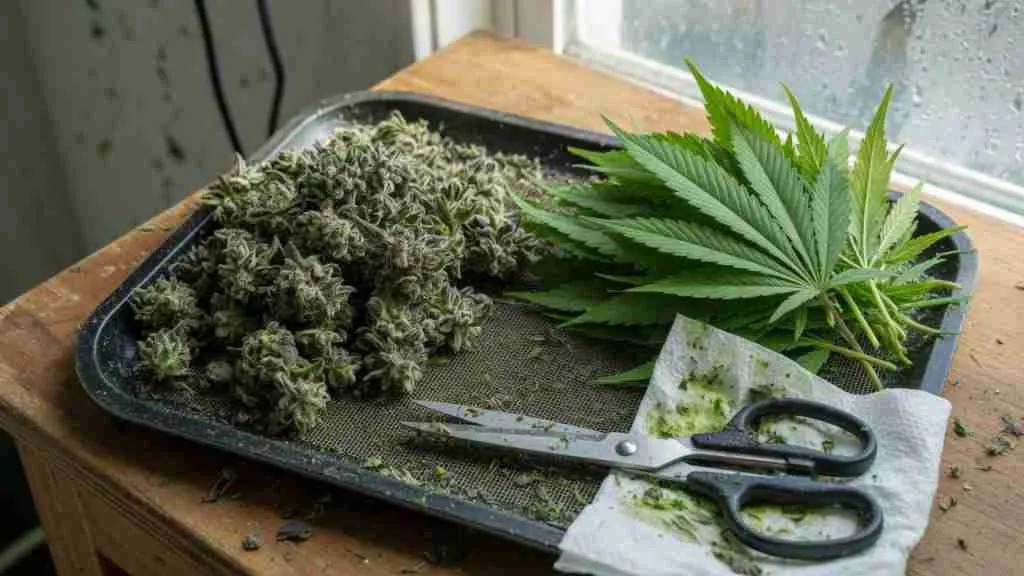
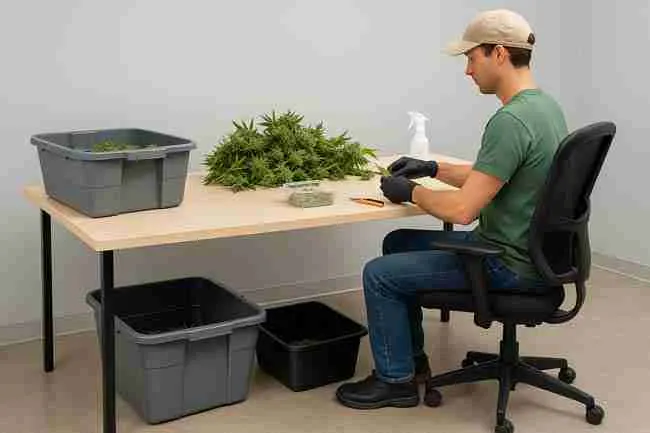
Do this on the trim day, while the scissors are still in your hand. Two trays. One for frost. One for leaf. If you dump everything into one grocery bag you will spend an hour later picking stems out of butter. You will also cook chlorophyll into a batch that should have been kief.
Fan Leaves
Fan leaves are the big solar panels. They run the plant through veg and early flower. They hold almost no trichomes once you are at harvest. You pull them during cannabis vegetative stage work, and again when you clear the plant before chop. They are nitrogen-heavy green waste. That is mulch, fermented leaf tea, worms, or a hot pile. They are a weak edible. If you insist on cooking fan leaf, you need two to three times the weight you would use of sugar leaf, and the taste will still be grassy.
Fresh fan leaf can go in a salad or a juicer if the plant was never sprayed. Strip the woody petiole. The leaf itself is just a bitter green. You get raw cannabinoid acids, not a high. More on that below. Yellow, mildewed, or mite-stippled fans are not food and they are not mulch for the same pots. Those go in a bag and leave the property, or they go in a hot compost that actually cooks.
Sugar Leaves
Sugar leaves are the small leaves that sit in the bud. They are coated. That frost is the same gland heads you wanted on the flower, just on a leaf that is too papery to jar as bud. Ranking pages still call this the trim that pays. It is the material for dry sift, ice water hash, cannabutter, oil, and tincture. A typical sugar leaf tests well under half of the flower on the same plant. Treat it as a concentrate feedstock, not as a joint filler, unless you like a harsh smoke.
Popcorn buds that you would not put in a jar belong with the sugar leaf, not with the fans. Stems belong with the fans unless they are tiny sugar-coated tips. Roots belong in compost, never in butter. Keep the trays labeled. Frozen sugar leaf holds trichomes better for ice hash than room-temp leaf that sat in a paper bag for a week.
Dry and Store Cannabis Trim Before You Cook
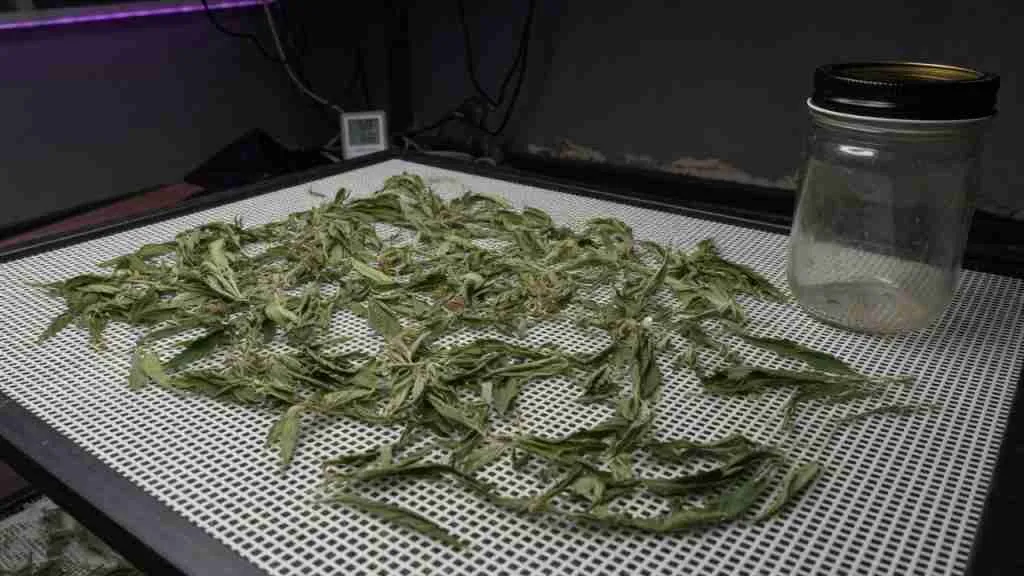
Wet trim in a sealed jar molds. Wet trim in a slow cooker steams and tastes like lawn. Spread sugar leaf one layer deep on a mesh rack in the same room you dry flower. Dark. Moving air. About 18 to 21 C (65 to 70 F) and 50 to 60 percent RH. Most home piles are ready in three to seven days. The leaf should snap, not bend. Stems on the fans take longer. That is fine. You are not curing this like a cola. You are getting the water out so you can sift it or cook it.
Jar the dry sugar leaf with a hygrometer if you have one. Target around 58 to 62 percent in the jar for storage. Too wet and you get mold. Bone dry and the trichomes get brittle and you lose smell. Freeze a portion the same day you trim if ice hash is the plan. Frozen trichomes snap off cleaner in ice water. Do not freeze wet leaf in a clump. Flash-spread it on a tray first so you are not making a green ice brick.
Fan leaf for mulch or worms can dry in a paper bag in a shed. Chop it once it is crisp. The original instruction on this page still holds: cool, dry location, then cut the dried trimmings into small pieces with scissors. You can use stems and leaves for mulch. You do not need to leave anything out of the garden pile. You do need to keep that garden pile out of the butter pot.
Kief and Dry Sift
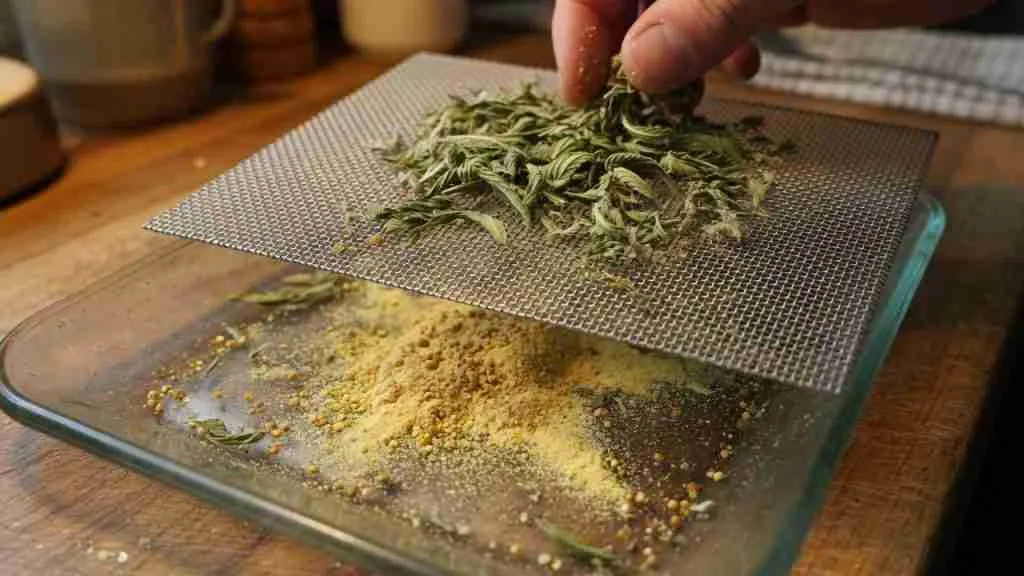
Kief is the gland heads that fall off when you agitate dry sugar leaf over a screen. It is the first thing ranking “uses for cannabis trim” pages still put near the top, and it is the least gear. You need dry leaf, a fine mesh, and a tray. A 70 to 120 micron screen is the usual home range. Too coarse and you get leaf dust. Too fine and you leave the heads on the leaf.
Work cold. A garage in winter, or a tray you chilled in the freezer for twenty minutes. Cold trichomes break cleaner. Rub the trim gently. Do not grind it into the mesh like you are making flour. You want gold powder, not green powder. Green means you shredded the leaf. Collect what falls. A second, finer pass on that first sift is how you clean it if you have two screens.
That powder is already decarboxylated only if you heat it later. Raw kief is mostly THCA. You can press it into a hash coin with palm heat, or you can sprinkle it into a joint, or you can cook with it. If the destination is ice hash, skip the sift and go straight to ice. You only get to knock the heads off once. The leftover leaf after a good sift still has chlorophyll and a little resin. That leftover is mulch or compost, not a second gourmet butter.
Ice Water Hash From Trim
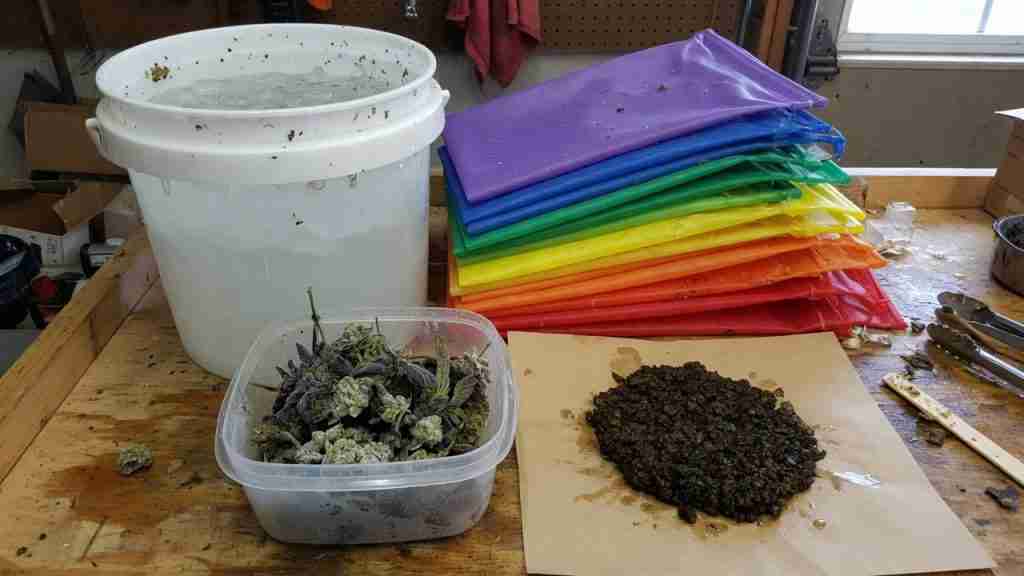
Bubble hash is the same heads, washed off in ice water and caught in micron bags. Frozen sugar leaf, ice, water, and a set of bags. The bags are the product. Common home stacks run 220, 160, 73, and 25 micron. The 73-ish bag is the one most people keep. The 25 is sandy. The 220 is mostly junk leaf. Work in short, gentle stirs. Long blender runs smash the leaf and turn the whole bucket green.
Do not decarboxylate trim you plan to wash. Heat collapses the heads and you lose the snap that makes them fall off in ice. Wash, collect, freeze-dry or air-dry the paste in the cold, dark, and thin. Wet hash in a jar is how you grow mold in a week. Once it is dry you can smoke it, press it, or cook with it. Cooking hash is a different dose than cooking whole leaf. Start low. A gram of decent hash is not a gram of sugar leaf.
If you only have a kitchen sieve and a bucket, you can still do a crude wash. You will get a darker paste. Call it what it is. It still beats throwing frosty trim in the garbage. The spent leaf after a wash is spent. Compost it. Do not recook it into butter and pretend you pulled a second crop.
Decarboxylate Trim When You Cook
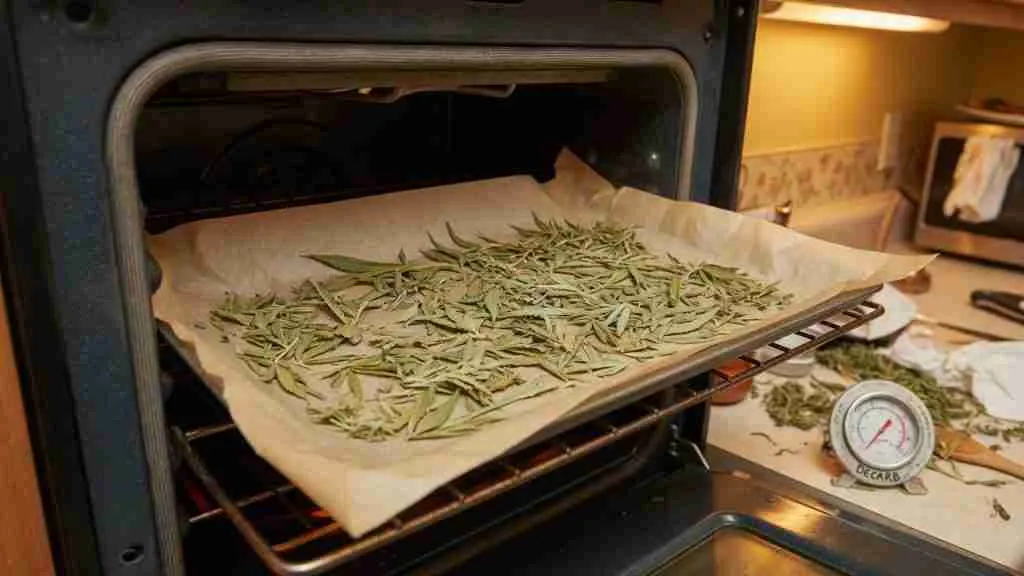
Raw cannabis is mostly THCA and CBDA. Heat knocks the extra carboxyl group off and you get THC and CBD. That is decarboxylation. If you skip it, cannabutter and oil stay weak even after a long simmer. Ranking kitchen pages in 2026 still land around 115 to 120 C (240 F) for about 30 to 40 minutes on a thin layer of dry, broken-up sugar leaf. Cover the tray with foil so terpenes do not paint the oven. Stir once at the halfway mark. You want toasted, not black.
A dedicated decarboxylator is what the original recipe on this URL called for. An oven works if you actually measure the rack temperature. Home ovens lie. An oven thermometer on the tray is worth more than a fancy recipe. Lower and slower, 105 to 110 C (220 to 230 F) for closer to 45 minutes, is safer if your oven runs hot. If the leaf smells like burnt popcorn you went too far. You converted, then you destroyed.
Decarb only the trim you will infuse this week. You can store decarbed leaf in a jar, but it stales faster than raw dry trim. Never decarb the pile you earmarked for ice hash or dry sift. Never decarb wet trim. Water on the tray steams the leaf and you get a swampy edible.
Cannabutter From Sugar Leaves

This is the original recipe on this page, tightened to numbers that actually cook. Use decarboxylated sugar leaves. Fan-heavy trim needs more weight. A working home ratio is about 28 g (1 oz) of decent sugar trim per 454 g (1 lb) of butter. If the tray is mostly fans, use 56 to 85 g (2 to 3 oz) for the same pound, and expect a grassier taste. You can cut those numbers in half for a milder batch. You cannot guess. Weigh it.
Add the butter, water, and the decarbed leaf to a pan. The water is not optional. It keeps the butter from scorching and it grabs some of the chlorophyll so the fat stays cleaner. Simmer on low. Do not boil. Target 70 to 90 C (160 to 195 F) in the pot. The original walkthrough said 4 to 5 hours. That still works on a back burner if you stay under a simmer. Many kitchens now run 2 to 3 hours at that temperature and get enough extraction without cooking the leaf into sludge. Stir now and then. If it boils, you are burning terpenes and you are making a harsh edible.
Cool for an hour. Strain through cheesecloth into a bowl. Squeeze with a spatula. Do not wring green juice into the butter like you are milking a rag. That extra squeeze is chlorophyll. Fridge the bowl until the fat cap is hard. Lift the butter off the leftover water. Dump the water. The original said airtight in the fridge. Do that. Use it anywhere a recipe calls for butter. Label the jar with the date and a rough dose note. Homemade cannabutter is not a dispensary chocolate. Eat a small piece, wait two hours, then decide if you want more. THC on an empty stomach is how people have a bad night.
Infused Oil
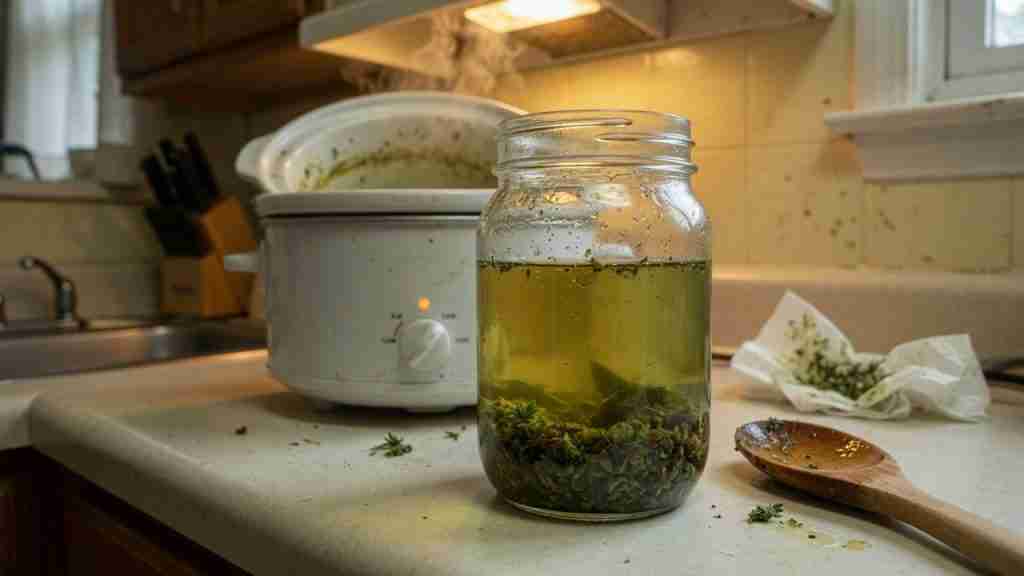
Same chemistry, different fat. Coconut oil and butter both carry cannabinoids. Coconut oil is what you want for vegan baking and for topicals. Olive oil works for a dressing if you keep the infusion temperature low. Decarb first. Then infuse at 70 to 90 C (160 to 195 F) for 2 to 3 hours. A slow cooker on warm, with a thermometer in the oil, is easier than a pan you forget. Water is less necessary in oil than in butter, but a little water still helps if you are using a lot of leaf.
Strain. Bottle. Dark glass. Fridge if you used a fat that goes rancid. Coconut oil can sit cooler in a cupboard if the kitchen is not a sauna. Dose the same way as butter. A tablespoon of strong oil is not a tablespoon of grocery coconut oil. If you plan to turn this oil into a salve, keep a portion unsalted and unscented. Cooking oil with garlic in it does not belong on a knee.
Tincture
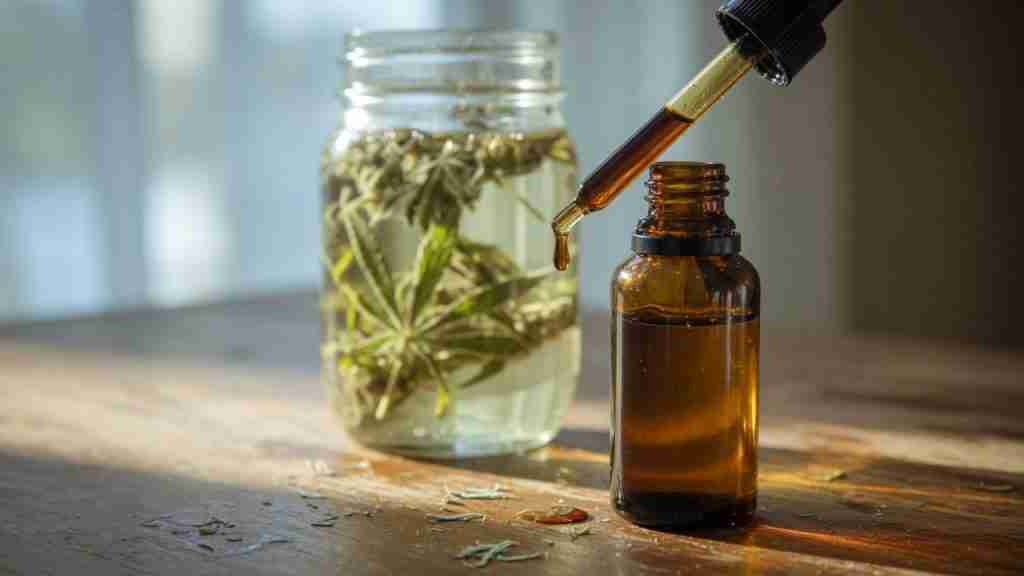
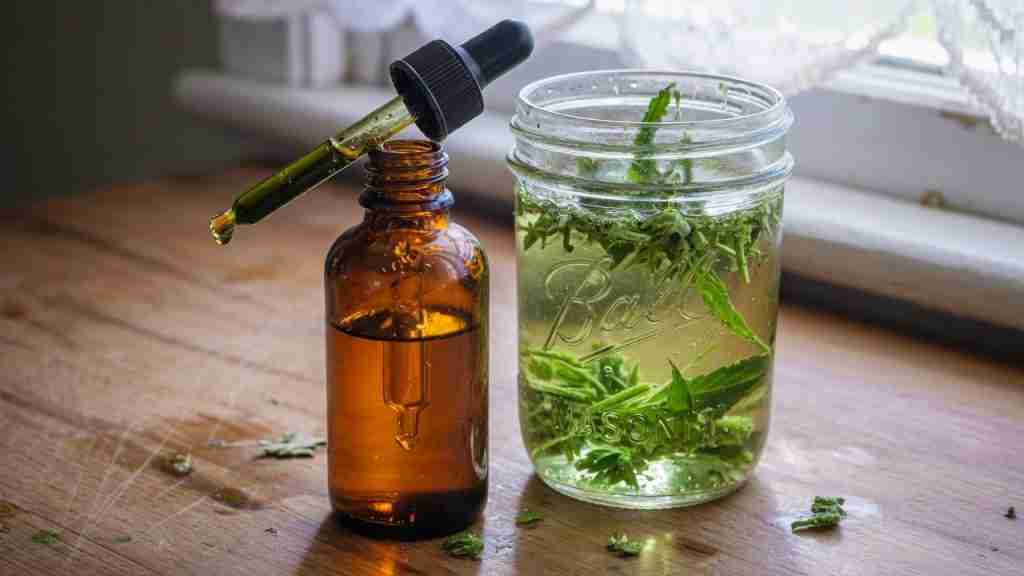
Alcohol pulls cannabinoids without a fat. Everclear or another high-proof ethanol is the usual home solvent. Cover decarboxylated sugar leaf with enough alcohol to submerge it. Jar it. Shake it. A warm two-hour soak is enough for a working tincture. A cold two-week soak is cleaner. Strain. A long reduction on very low heat concentrates it, and it also concentrates the taste. Stop before you boil off the room.
Dropper bottle. Dark glass. This is how you dose under the tongue or spike a drink without baking. Start with one dropper, not a shot glass. Alcohol tincture is shelf-stable in a cool cupboard. Glycerin tinctures exist for people who do not want ethanol. They extract weaker and they spoil faster. Keep those in the fridge and use them sooner.
Topicals
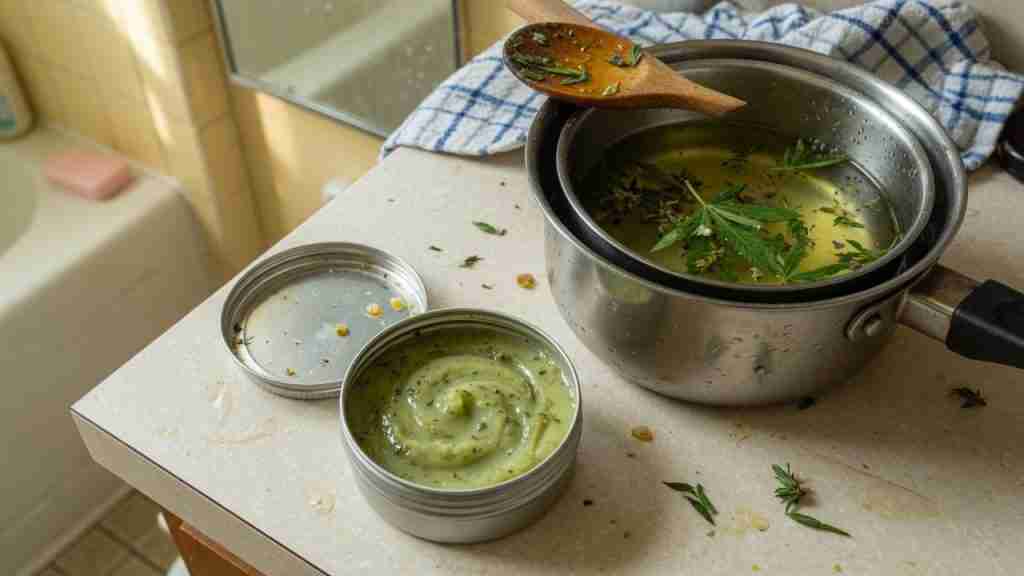
A topical is infused oil plus a hardener. Beeswax or candelilla, melted into cannabis coconut oil, poured into a tin. That is a salve. Ranking pages still list sore muscle rubs as a trim use because the skin can take cannabinoids without a head high if you are not using a carrier that drives them through. This is not a miracle. It is a greasy herbal balm. Keep it off broken skin unless you know the batch is clean. Keep it out of eyes.
Do not add essential oils until you know the base does not burn you. Do not use trim that was sprayed in late flower. Pesticide plus skin is a different hobby. Label the tin. Homemade salve in an old lip-balm tube looks like lip balm at 2 a.m. That is how you eat a topical.
Tea, Juice, and Salads
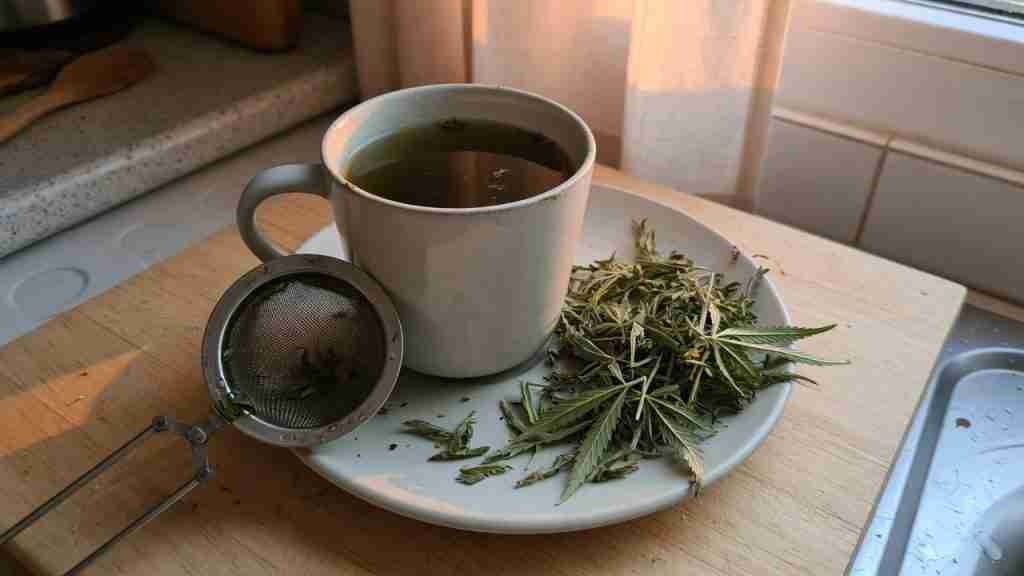
The original page put cannabis leaves in smoothies, salads, and teas. Keep that. Change the promise. Fresh marijuana leaves are a bitter green. They are food. They are not a shortcut to getting stoned. THCA in raw leaf does not behave like THC in a brownie. People juice fan leaves for the acidic cannabinoids and the plant nutrients. If that is the goal, use unsprayed, clean fans, strip the stems, and add fruit because the leaf tastes like it grew in a field.
Raw Juice and Salads Do Not Get You High
A salad of sugar leaf will not replace a joint. A smoothie of stems will not either. If you want a high from a drink, you need decarboxylated material and a fat or alcohol to carry it, or you need to simmer the leaf long enough to convert some THCA and then accept a weak, grassy cup. Do not tell a guest the salad is “edible” in the brownie sense. That is how people overeat later when the real cannabutter comes out.
A Cup of Cannabis Tea That Actually Works
For a psychoactive tea, use decarboxylated sugar leaf, not a raw fan. Add a fat. A pat of butter, a splash of milk, or coconut oil in the cup. Cannabinoids ride fat. Plain water plus raw leaf is a herbal tea with a weed smell. Steep 10 to 15 minutes. Strain. The original warning still stands for garden teas you brew as fertilizer: do not get that stinky nitrogen water on buds you plan to bake. Kitchen tea is a different pot. Keep the pots separate.
Use Dried Trimmings as Mulch
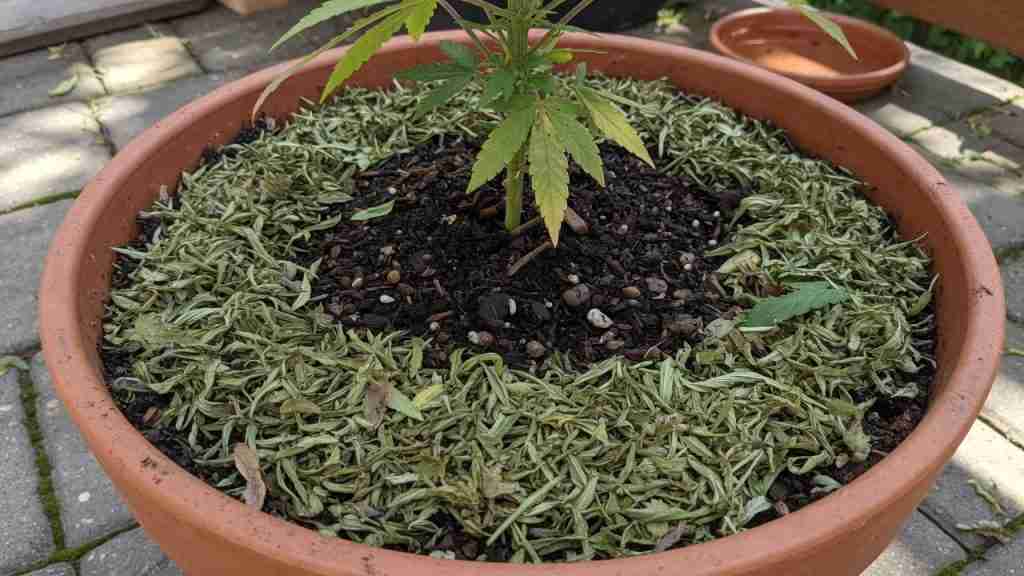
This is the backbone that was already on this URL, and it is still the right home for fan leaves and stems. Dry the trimmings. Chop them small. Lay them around plants in pots or in the ground as a layer about 2.5 to 4 cm (1 to 1.5 inches) thick. That is your mulch. The longer how-to is mulching cannabis plants. Outdoor beds are growing cannabis outdoors. A fermented version of the same idea is fermented weed mulch.
Those chopped leaves hold the same minerals the plant pulled while it grew. As they break down on the soil surface they feed the top layer. They also shade the soil, slow evaporation, and give microbes a place to work. Keep the mulch off the main stem. A wet collar of leaf against a stalk is how you get stem rot in a pot. Keep diseased leaf out of this layer. You are not recycling powdery mildew on purpose.
Fresh, wet, salty trim in a 1-gallon pot is a mess. Dry it. Chop it. Mix it. If the pile is huge, compost first and mulch with the finished compost. If the plant still has flowers, do not bury a pile of wet fan leaf against the cola line. Mulch is for the soil, not for the bud.
High-Nitrogen Leaf Tea Fertilizer

The original nitrogen tea on this page is the same method as grass-clipping tea. Put the marijuana trimmings in a bucket with no drain holes. You can use them fresh. Fill the bucket with dechlorinated water. Tap water left to sit, or rain water. Let it stand about two weeks. Bacteria break the leaf down and the water goes green and smells like a ditch. That smell is the point. Strain. You have a high-nitrogen organic feed. Water it into the soil. Watch new growth. The organic fertilizer walkthrough is organic marijuana fertilizer. Broader compost nutrient work is composting for optimal cannabis nutrients.
Do not splash this tea on flowers. Do not use it as a foliar in bloom. Do not brew it in the kitchen you use for cannabutter. Dilute if it is inky. A 1:4 to 1:10 tea-to-water range is a sane start on vegging plants. Outdoor pots take it better than a tiny indoor cup. If the tea went anaerobic and smells like death, you can still pour it on a compost pile. You do not have to pour a rotten bucket into a flowering tent.
Feed Dried Trim to a Worm Bin
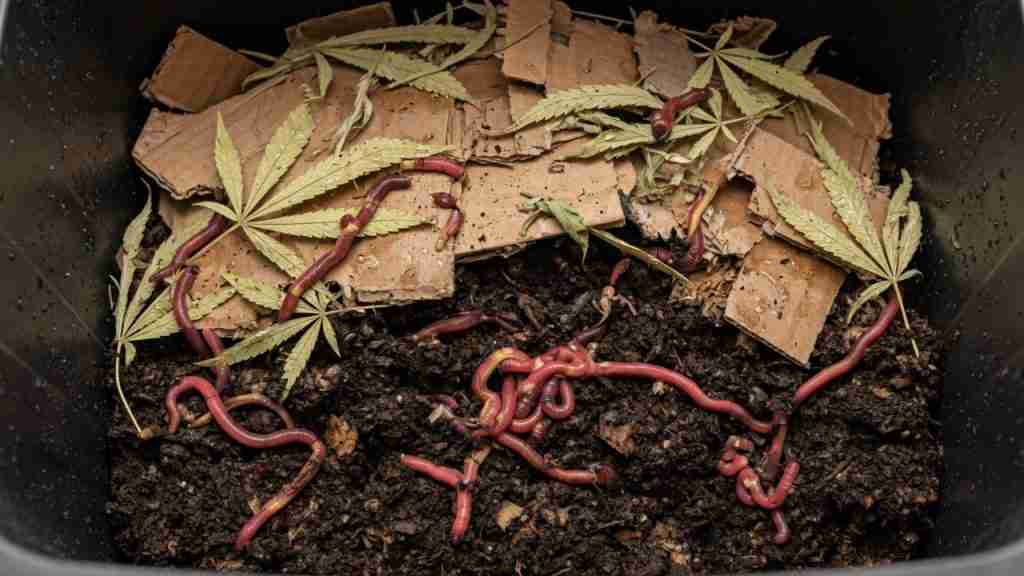
Worms will eat dried cannabis trimmings and turn them into castings. That is still one of the fastest ways to get the pile back into the next pots. The original line stands: worms eat the trim, the castings smell like soil, and you can use them right away. Read worm castings and the longer bin walkthrough, worm bin composting for cannabis.
Do not dump a wet, salty, fresh harvest into a tiny bin and wonder why the worms climbed the walls. Mix the trim with dry cardboard. Bury it in a corner of the bin. Feed a little, wait, feed more. Fresh fan leaf heats and sours. Dried, chopped leaf mixed with browns is what a bin wants. Keep citrus, onion, and meat out of the same bin. Keep mite-infested leaf out too. You are not farming spider mites in the basement.
Compost and Dispose of Cannabis Trim
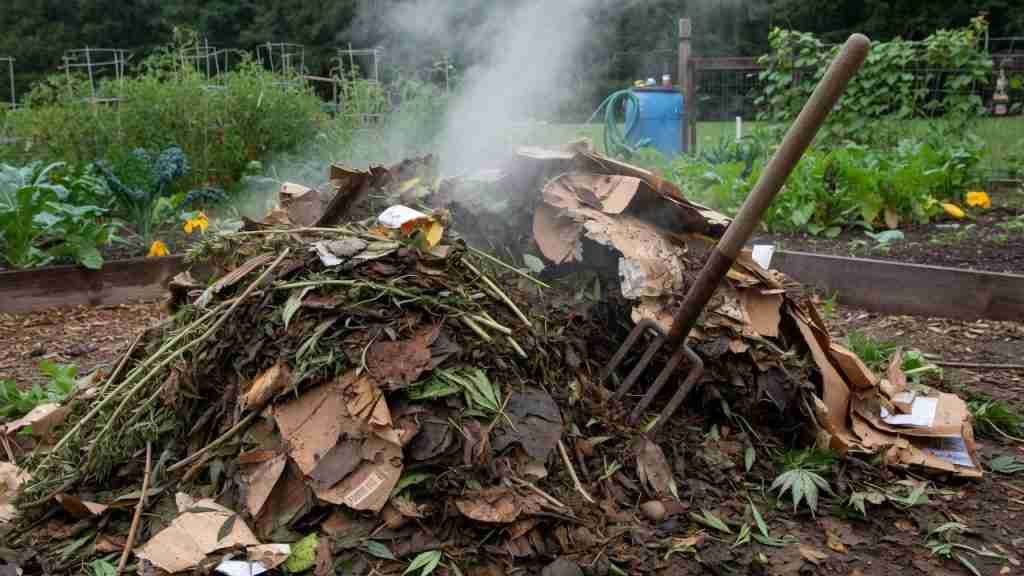
If you cannot wash it, cook it, mulch it, or feed it to worms, compost it. Do not send clean plant waste to the landfill as the first choice. A hot pile of cannabis stems, fans, and cardboard will cook down in a few months if you turn it and keep it damp like a wrung sponge. Home growers can do this in a corner of the yard. The grower-facing compost page is composting for cannabis growers.
Commercial volumes are a different problem. You will not bury a warehouse of veg waste in a backyard. Compost what you can. Follow local rules for the rest. A hot pile that never gets hot is a rat hotel, not compost. If the material had bud rot, powdery mildew, or a chemical spray, hot compost or bag it. Do not spread that back as mulch in the same flower room. The cultivation library for the rest of the grow sits on the cannabis cultivation blog. Flower timing is growing cannabis flowering stage of growth.
What Not To Do With Weed Trimmings
Do not smoke a bowl of raw fan leaf and call it a strain. It is harsh, it is weak, and it is a waste of lungs. Sugar leaf can go in a joint if you already sifted the kief off and you still want to use the leaf. Most people are happier putting that leaf in butter.
Do not reuse trim that has bugs. The original warning on this page is the one that matters. If the trimming has mites, thrips, or aphids, destroy it. Do not mulch it. Do not tea it. Do not feed the worm bin. You are moving a farm of pests into the next pots. Same rule for visible mildew. Heat in a real hot compost can kill a lot of that. A cold pile under a pot cannot.
Do not cook with trim that was sprayed in late flower. Do not make pet treats from a homegrown pile unless a vet is in the conversation, and even then you are guessing at CBD content. Ranking listicles still tack jewelry and dog biscuits onto trim articles. You do not need either to get value out of the plant. Sort the leaf. Pull the resin. Feed the soil with the rest. That is the whole job.