Clone vs. Seed in Small Tents: Yield Math & Risk Profiles

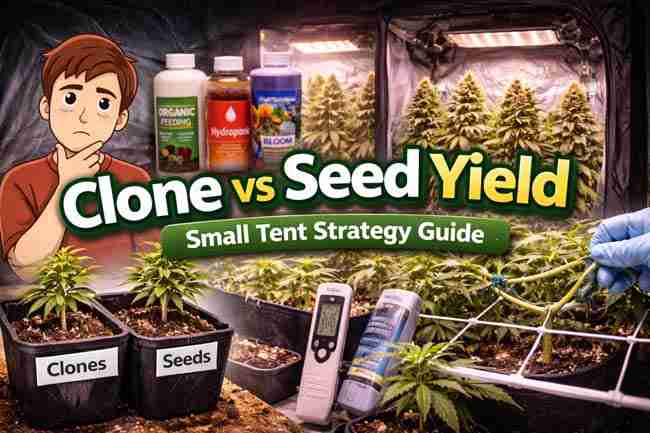
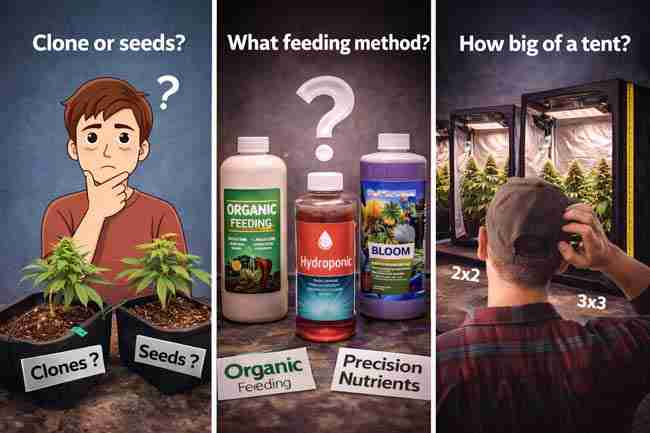
You’ve got a small tent. Maybe it’s a 2×2, maybe a 2×4, maybe a 3×3 jammed into a spare room. Either way, space feels tight, time feels expensive, and every mistake feels louder. That’s why the clone vs seed yield question matters so much in small tents. In a big room, you can “make up” for a dud plant. In a small tent, one dud can be the whole run.
So let’s talk like real growers talk—plain and simple. You’re going to see the yield math, the risk profiles, and the small-tent strategy that keeps you from stepping on rakes.
What “Yield” Really Means in a Small Tent

Before you pick clones or seeds, you need to know what you’re actually chasing. Most growers say “yield” and mean “big jars.” Fair. But in a small tent, yield has three faces:
Yield #1: Total Dry Weight (Per Harvest)
This is the classic number: how many grams you pull when you chop and dry.
- You harvest once.
- You dry and trim.
- You weigh the bud.
Easy.
Yield #2: Yield Per Day (The Sneaky King)
This one decides who wins in small tents. If you pull 200g but it took 140 days, that’s a different story than 200g in 100 days.
A simple way to think about it:
- Yield per day = dry grams ÷ total days (veg + flower + dry time buffer)
Even if you don’t do perfect math, just thinking this way stops you from getting fooled by “one big harvest” that took forever.
Yield #3: Yield Reliability (How Often You Hit Your Number)
This is the part most people ignore until they get burned.
- If you hit 150g almost every run, that’s reliable.
- If you hit 250g once and 80g the next time, that’s chaos.
In small tents, reliability often beats “best case” yield. Not always, but often. And yes—this is where phenotype risk small grows becomes a real problem.
Clone vs Seed Yield: The Honest Differences (No Fairy Tales)
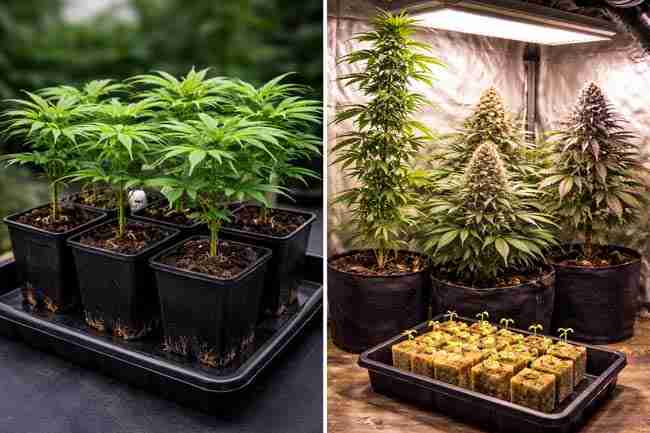
Let’s stop pretending clones and seeds are “basically the same.” They aren’t. They can both crush it, but they do it in different ways.
Clones: The Copy-Paste Plant
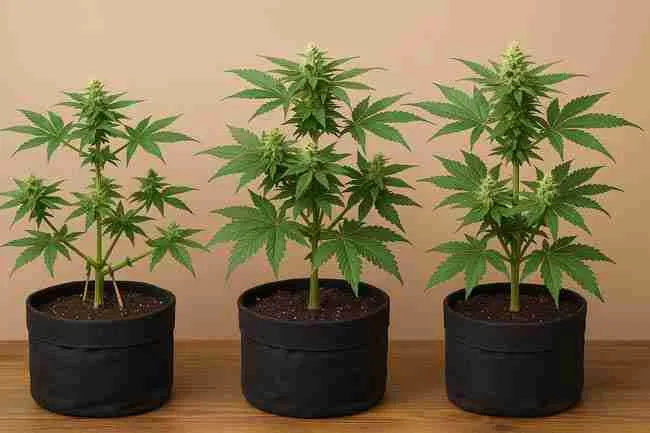
A clone is a cutting from a known plant. Same genetics. Same general behavior.
- If the mother stacks buds and finishes fast, the clone usually does too.
- If the mother hates heat and throws a fit, the clone usually does too.
In plain terms: clones help you predict the run.
Seeds: The Lottery Ticket With a Brain
Cannabis Seeds give you variety. Even seeds from the same pack can act different.
- One plant might stretch like a giraffe.
- Another might stay short and chunky.
- One might smell like candy.
- Another might smell like lawn clippings.
That variety can be a blessing—if you have room to test and select. In a small tent, it’s also how growers accidentally waste 8–12 weeks learning that a plant just isn’t “the one.”
That’s why clone vs seed yield isn’t just about grams. It’s about time, risk, and how much unpredictability you can afford.
The Small Tent Yield Math That Actually Helps You Decide

You don’t need fancy spreadsheets to get this right. You just need to compare like with like.
Step 1: Pick Your Tent Size and Light Reality
A small tent usually falls into one of these common setups:
- 2×2 (60×60 cm / 24×24 in): typically ~100–200W LED
- 2×4 (60×120 cm / 24×48 in): typically ~200–350W LED
- 3×3 (90×90 cm / 36×36 in): typically ~250–450W LED
Lights vary a lot, but here’s the point: your light sets your ceiling. Training helps, genetics help, skill helps—but the light still draws the line in the sand.
Step 2: Use a Simple Output Range
Most small-tent growers land somewhere in these broad ranges once they get the basics right:
- 0.5 g per watt = you’re learning, but you’re on the board
- 0.8 g per watt = solid grower territory
- 1.0 g per watt = very efficient, canopy and environment dialed
- 1.2+ g per watt = possible, but you usually earn it the hard way
Now here’s the kicker: clones tend to make your range tighter. Seeds tend to make your range wider because plants vary more.
Step 3: Add the Time Factor (This is Where Seeds Often Lose)
A typical timeline difference looks like this:
- Clone run: shorter veg because the plant starts “older”
- Seed run: longer veg because you start as a baby seedling
Even if both flower 8–10 weeks, seeds often tack on extra time.
So your real comparison becomes:
- “How many grams do I get per day with clones?”
- “How many grams do I get per day with seeds?”
That’s the heart of clone vs seed yield in small tents.
Example Scenarios: Clone vs Seed Yield in Real Small-Tent Runs
Below is a practical comparison table. These numbers won’t match every grow, but they show the logic clearly.
Comparison Table: Small Tent Runs (Yield + Time + Risk)
| Setup Style | Start Type | Tent Size | Plant Count | Veg Time | Flower Time | Typical Outcome | Main Risk Profile |
|---|---|---|---|---|---|---|---|
| Fast Sea of Green | Clones | 2×4 | 6–12 small | 7–14 days | 56–70 days | Steady, repeatable jars | Pest/clone health, uniformity depends on source |
| Single SCROG | Clone | 2×2 | 1 | 21–35 days | 56–70 days | Great canopy, predictable finish | One-plant failure hurts a lot |
| Seed “One & Done” | Seed | 2×2 | 1 | 28–45 days | 56–77 days | Could be great… could be meh | Phenotype risk small grows is high |
| Seed Mini-Selection | Seed | 2×4 | 2–4 | 28–45 days | 56–77 days | Better odds of a winner | More stretch/shape variation to manage |
| Keeper Clone Plan | Seed → Clone | 2×4 | 2–4 then keep best | Extra time upfront | 56–77 days | Long-term best of both | Needs planning + extra run time |
If you only read one thing from this whole article, read this:
Seeds can win long-term. Clones often win short-term. Small tents usually reward short-term efficiency.
Risk Profiles: What Can Go Wrong (And How It Hits Your Yield)
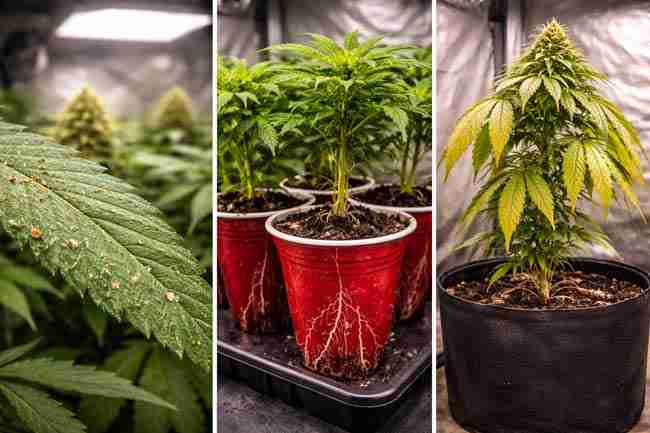
This is the part that separates “fun hobby grow” from “why do I always end up with sad popcorn buds?” Let’s break down the risks like a mechanic looking under the hood.
Clone Risks (What Bites You With Clones)
Hidden Pests and Dirty Cuts
A clone can bring problems into your tent like a kid bringing home a cold from school.
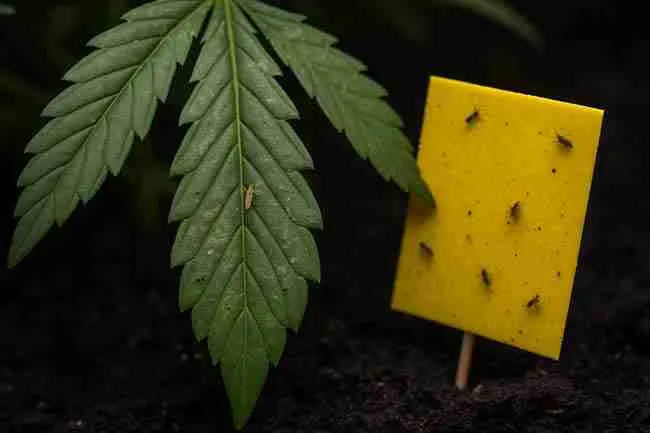
- Spider mites
- Thrips
- Powdery mildew
- Root issues already brewing
In a small tent, pests spread fast because plants sit close. If clones come from a sketchy source, your yield math can collapse overnight.
Weak Roots If You Rush
Clones need roots before they can “eat” properly. If you transplant too early, growth stalls.
A stalled veg in a small tent wastes your most valuable currency: time.
One Genetic Basket
If you run one clone and something about that genotype doesn’t fit your environment—too stretchy, too hungry, too sensitive—then the whole run fights you.
Clones give predictability, yes, but they also lock you into the plant’s personality.
Seed Risks (What Bites You With Seeds)
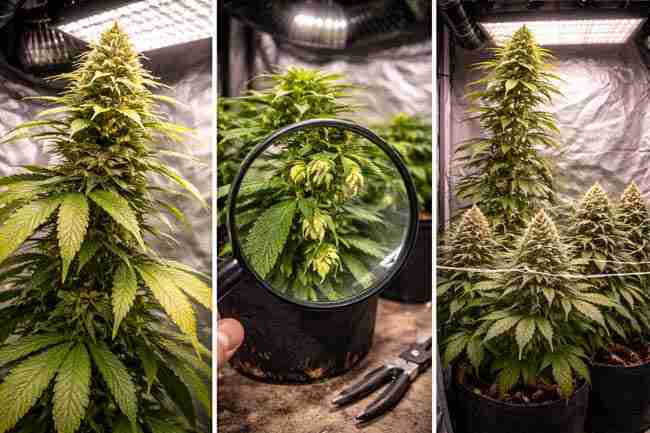
Phenotype Risk Small Grows
This is the big one. In a small tent, you don’t have room for “maybe.”
A seed plant might:
- stretch too tall and burn into the light,
- grow too wide and choke airflow,
- finish slow and drag your timeline,
- yield light even though it looks healthy.
That variability makes clone vs seed yield a real decision, not a preference.
Sex Risk (If You Aren’t Running Fem Seeds)
If you run regular seeds, you might pop plants that end up male. If you only have room for one or two plants, that hurts.
Even with feminized seeds, stress can sometimes trigger problems like intersex traits. It doesn’t happen every time, but it happens enough to matter.
Training Surprise
Seeds don’t always respond the same way to topping, bending, or heavy pruning.
In a small tent, you need plants that behave predictably when you shape them.
Small Tent Strategy: You Don’t Grow Plants—You Manage Shape
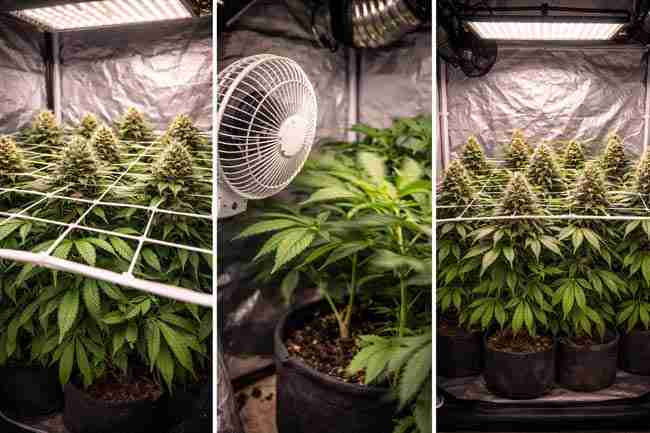
Small tents don’t forgive chaos. You don’t have “extra ceiling.” You don’t have “a second corner.” You’ve got a box.
So whether you run clones or seeds, the winning move stays the same:
Keep the Canopy Flat and Even
A flat canopy does three things:
- it keeps buds the same distance from the light,
- it boosts yield consistency,
- it reduces hot spots and crispy tops.
Clones often make this easier because plants grow more uniformly. Seeds often make this harder because one plant can stretch more than the next.
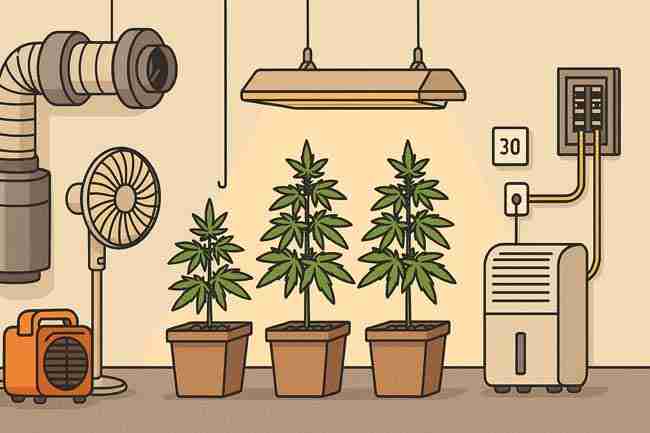
Keep Air Moving Like a Lazy River
Small tents trap humidity. Humidity invites mold. Mold ruins harvests.
You want:
- gentle airflow under the canopy,
- airflow across the canopy,
- a clean exhaust path.
A packed tent with big seed phenos can turn into a swamp fast. Clones sized consistently can keep the airflow plan simple.
Pick One “Main Style” Per Tent
In a small tent, mixing styles is asking for trouble.
Choose one:
- SOG (Sea of Green): many small plants, fast veg, lots of tops
- SCROG (Screen of Green): fewer plants, longer veg, trained wide
- Hybrid: a small number of plants, trained moderately, not extreme
Clones often shine in SOG because uniformity matters. Seeds often shine in SCROG only if you get a pheno that loves training.
Clone vs Seed Yield: Pros and Cons That Actually Matter
Here’s the straight talk. Not marketing. Not forum flexing.
Clones — Pros
- Predictable growth pattern and finish time
- More consistent clone vs seed yield results run to run
- Faster start (you skip the seedling baby stage)
- Easier to build a repeatable small tent strategy
- Great for perpetual harvest planning
Clones — Cons
- Pest/disease risk if the source is dirty
- You rely on someone else’s mother plant quality
- Less variety and less chance of discovering a unicorn
- If you only run one clone, one failure hurts badly
Seeds — Pros
- Clean start (especially if you germinate carefully and keep things sanitary)
- Variety: you can find a perfect plant for your tent
- Better long-term plan if you want “your own” keeper genetics
- Easier to avoid clone-borne pests
Seeds — Cons
- Phenotype risk small grows can wreck the run
- Longer veg time on average
- Harder canopy management when plants grow differently
- More guesswork on feeding and training response
The Yield Stability Game: Why Clones Often Win in Small Tents
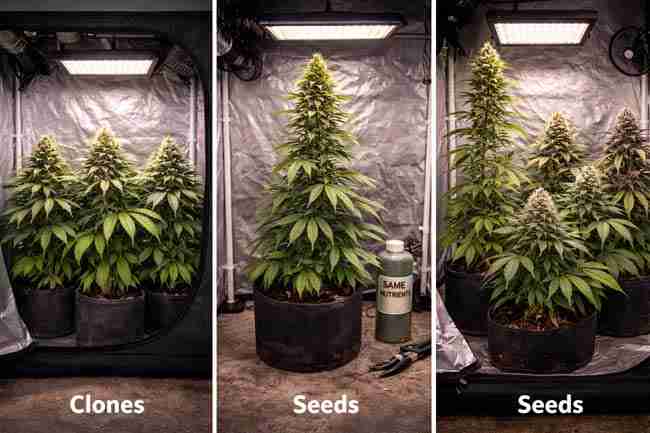
Here’s a simple truth: small tents reward boring consistency.
If clones help you hit:
- 140–180g every run in a 2×4,
that may beat seeds that sometimes hit:
- 220g, but sometimes hit 90g, and sometimes take two extra weeks.
So when you think clone vs seed yield, don’t just picture the best run you’ve ever seen. Picture the average of your next five runs.
That average is where your real results live.
When Seeds Beat Clones (Yes, It Happens)
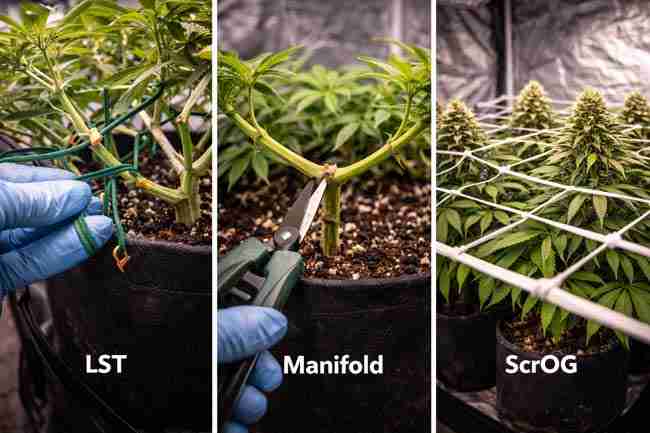
Seeds can absolutely win, especially when you play them smart instead of gambling.
When You Need a Plant That Fits Your Exact Tent
Maybe your tent runs warm. Maybe your humidity stays high. Maybe your light sits closer than you’d like.
If you hunt a little (even with just a few seeds over time), you can find a plant that:
- stays squat,
- stacks hard,
- finishes fast,
- doesn’t freak out in your environment.
That plant becomes your “small tent cheat code.”
When You Want a Keeper Clone (Seed → Clone Pipeline)
This is how growers stop losing to phenotype risk:
- Pop seeds.
- Take a small clone from each plant early.
- Flower the original plants.
- Keep the clone of the winner.
- Run that winner as clones going forward.
Now you get variety and consistency. It takes more time upfront, but it turns seeds into a long-term advantage instead of a repeated gamble.
Specifications That Make or Break Clone vs Seed Yield in Small Tents

This is the nuts-and-bolts stuff—simple, but powerful.
2×2 Tent (Small Box, Big Consequences)
- Best plant count: 1 (maybe 2 if you keep them small)
- Best style: SCROG or a single trained plant
- Clone advantage: predictable height control
- Seed risk: one stretchy pheno can ruin the canopy
A 2×2 punishes mistakes. If you want steady results fast, clones usually treat you better here.
2×4 Tent (The Sweet Spot for Small Tent Strategy)
- Best plant count: 2–6 depending on style
- Best style: SOG with clones, or 2–4 trained plants
- Clone advantage: uniform canopy = easy efficiency
- Seed advantage: room for 2–4 plants reduces phenotype risk
If you want to learn fast and improve quickly, a 2×4 gives you room to breathe without turning into a jungle.
3×3 Tent (More Width, More Temptation)
- Best plant count: 1–4
- Best style: SCROG or moderate training
- Clone advantage: easier to keep canopy even
- Seed risk: uneven growth can turn into a lumpy canopy
A 3×3 makes you want to overfill it. Don’t. Overfilling is how airflow dies and humidity wins.
Feeding and Training: Clones Like Routines, Seeds Like Listening
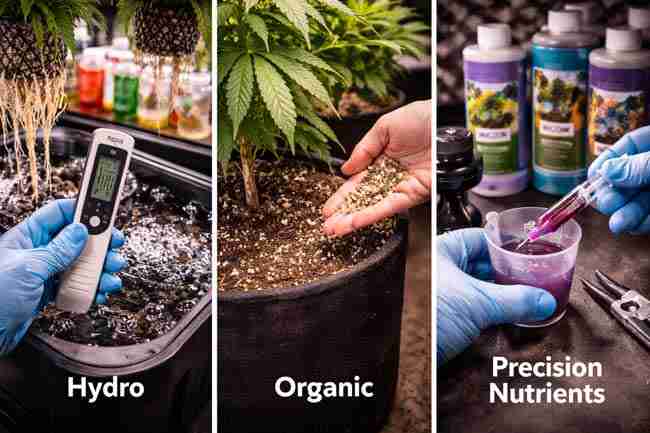
Clones: “Same Plant, Same Plan”
Clones usually respond well to a repeatable routine:
- same pot size,
- same training schedule,
- same general feeding approach.
That repeatability supports consistent clone vs seed yield outcomes.
Seeds: “Watch the Plant, Not the Calendar”
Seeds make you pay attention:
- one might eat heavier,
- another might burn easily,
- one might love topping,
- another might sulk for days.
If you enjoy reading plants and adjusting, seeds can be fun. If you want a smooth, predictable run, clones often feel like driving on paved roads instead of gravel.
A Practical Decision Guide (Pick Your Path Without Overthinking)
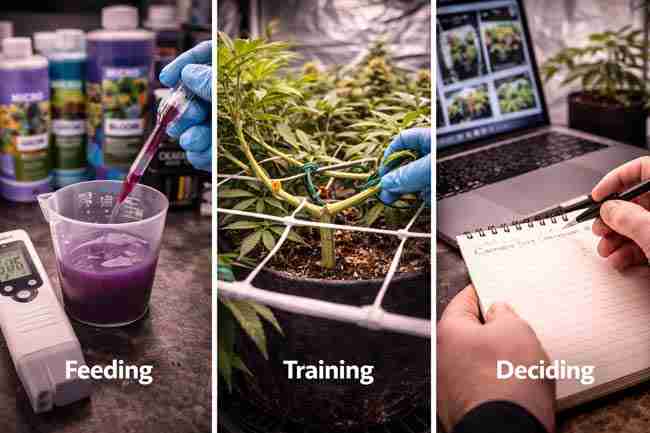
If your goal is fast, repeatable harvests…
Pick clones, especially if:
- your tent is 2×2,
- you hate surprises,
- you want to dial in one method and repeat it.
If your goal is finding “the perfect plant” for your tent…
Pick seeds, especially if:
- you can run at least 2–4 plants over time,
- you’re okay with variability,
- you want to keep a winner and clone it later.
If your goal is the best long-term outcome…
Run seeds now, then keep the best as a clone line later.
That’s the classic “work smarter, not harder” move.
FAQ: Clone vs Seed Yield, Small Tent Strategy, and Phenotype Risk Small Grows
What’s better for clone vs seed yield in a 2×2 tent?
Most of the time, clones win for consistency because one seed pheno can stretch too much and mess up the whole canopy. A known clone behaves more predictably.
Do seeds always yield less than clones?
Nope. A great seed pheno can out-yield a clone. The problem is you don’t know if you got a great pheno until you’ve already spent weeks growing it.
Why does phenotype risk small grows matter so much?
Because you don’t have backup space. In a bigger grow, you can still fill the canopy if one plant underperforms. In a small tent, one underperformer can cut your total yield hard.
Is a SOG better with clones or seeds?
Usually clones. SOG depends on uniform size and uniform timing. Seeds love variety, and variety fights uniformity.
Can you make seeds more predictable?
You can’t make them identical, but you can reduce risk by running more than one plant and by keeping clones of each seed plant until you choose a winner.
What gives better yield per day: clones or seeds?
Often clones, because you usually veg less time. Even if total harvest weight matches, clones can finish the cycle faster.
If you only have room for one plant, should you run seed or clone?
If you want the safest bet for clone vs seed yield, run a clone from a trusted, clean source. One seed can be amazing, but it can also be a headache.
What’s the biggest mistake growers make in small tents with seeds?
They underestimate stretch. One tall, stretchy seed pheno can turn your tent into a light-burn disaster.
What’s the biggest mistake growers make in small tents with clones?
They bring in dirty clones without any caution and end up fighting pests. A small tent turns that into a fast-moving mess.
Your Next Run Plan (A Simple, No-Nonsense Setup)
Option A: The “I Want Reliable Jars” Clone Plan
- Pick one proven clone cultivar that stays manageable in height.
- Decide your tent style (SOG or SCROG) and stick to it.
- Keep the canopy flat early so you don’t fight stretch later.
- Keep airflow steady and humidity controlled so mold doesn’t sneak in.
- Run the same plan again and only change one thing at a time.
Option B: The “I Want My Own Keeper” Seed Plan
- Run 2–4 seeds if your tent allows it (a 2×4 makes this easier).
- Train early so stretch doesn’t steal your ceiling space.
- Track which plant grows best in your exact environment.
- Keep a clone of each plant until you pick the winner.
- Turn that winner into your future clone run and tighten up your clone vs seed yield consistency.