Cataloging Cannabis Phenotypes: A Breeder’s Notebook Template


You pop a seed, it sprouts, and you think you know what you’re getting. Then—bam—two “same” seeds grow up like totally different kids in the same family. One smells like sweet candy and stacks thick buds. The other stretches like a giraffe and acts picky about food. That’s where cannabis pheno hunting notes save your sanity.
If you don’t write things down, you’ll forget the little details that actually matter. You’ll remember, “It was kinda gassy,” but you won’t remember when it started smelling, how it handled heat, or which one stayed mold-free when humidity got rude. And when it’s time to pick a keeper mother? Oof. You’ll be guessing.
This guide gives you a breeder log template you can copy into a notebook or a doc and use right away. You’ll learn phenotype tracking the simple way—like “coloring-book simple,” but still smart enough to make real breeding decisions.
What Are Phenotypes in Cannabis?
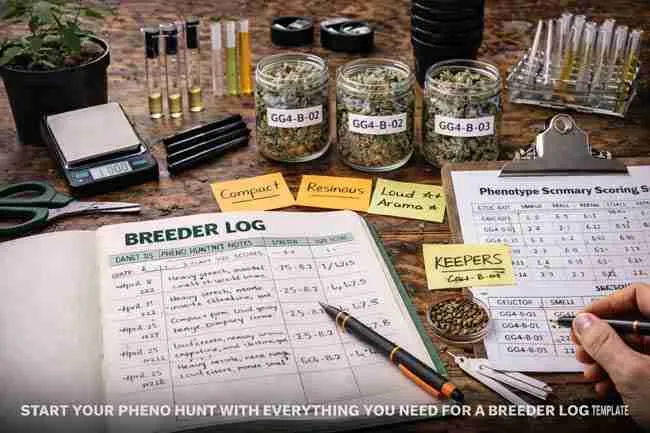
A phenotype is what you can actually see, smell, and measure in a plant.
Think of genetics like a recipe book, and the phenotype like the cookie you pull out of the oven. Same recipe style, but the oven heat, the pan, and the cook can change the final cookie. Same seeds can still show different traits because genetics mix and match, and the grow environment pushes traits around.
Genotype vs phenotype (keep it easy)
- Genotype: the genetic blueprint (the hidden code).
- Phenotype: the real-life result (the plant in front of you).
Why phenotypes show up so different
Even with the same strain name, different plants can:
- Stretch more or less
- Finish faster or slower
- Smell totally different
- Handle stress better or worse
- Yield bigger or smaller
- Make denser buds or airier buds
And here’s the kicker: the best plant isn’t always the prettiest one. Sometimes the ugly duckling smokes like gold.
Phenotype tracking is your “memory”
Your brain lies. Not on purpose, but it does. That’s why phenotype tracking matters:
- You compare plants fairly.
- You spot patterns across runs.
- You choose keepers with proof, not vibes.
- You build stable lines faster.
That’s the whole point of cannabis pheno hunting notes: turning “I think” into “I know.”
Are Some Cannabis Phenos More Desirable?
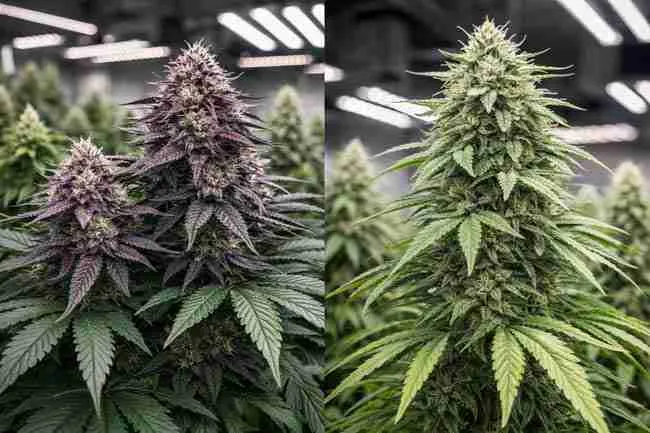
Yep. Some phenos are just better for your goals.
If you want fast, easy plants that finish on time, you’ll pick differently than someone chasing loud terpenes for hash. Desire depends on the mission.
What “desirable” really means (real-world breeder talk)
A desirable pheno usually does more of these:
- Grows strong without drama
- Roots fast
- Stays healthy under normal mistakes (because everyone makes them)
- Smells great and keeps that smell after drying
- Finishes on time
- Produces a good yield for the space
- Resists mold and pests better than the others
- Has a strong, clean effect (not muddy, not weak)
The classic trap: chasing looks only
Some plants look like a magazine cover but:
- Don’t yield much
- Taste flat after cure
- Stress easily
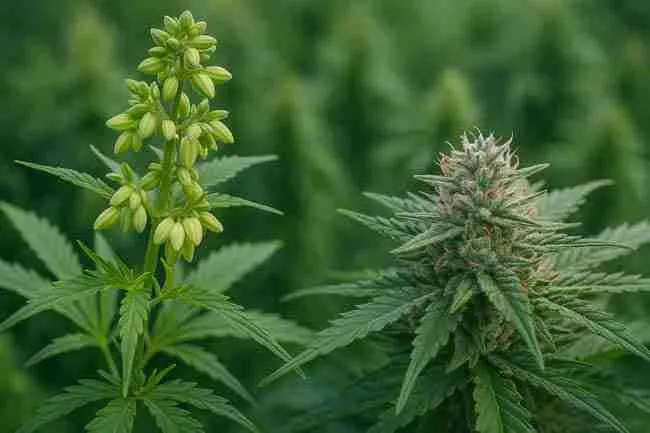
- Herm when you blink wrong
So when you’re deciding what’s desirable, you need specs—actual traits you track the same way every time.
Desirable depends on the use-case
Here are common “keeper” goals:
- Home grow keeper: easy, stable, forgiving, great smoke
- Commercial flower: consistent structure, strong yield, bag appeal, fast trim
- Wash/hash keeper: resin volume, head size, wash return, terp strength
- Outdoor keeper: mold resistance, wind strength, early finish, pest toughness
- Breeding keeper: strong traits that pass on, not a one-time fluke
This is why your breeder log template needs a place to write your goal at the top. If you don’t pick a goal, you’ll pick the wrong winner.
What Are 5 Examples of Phenotypes?
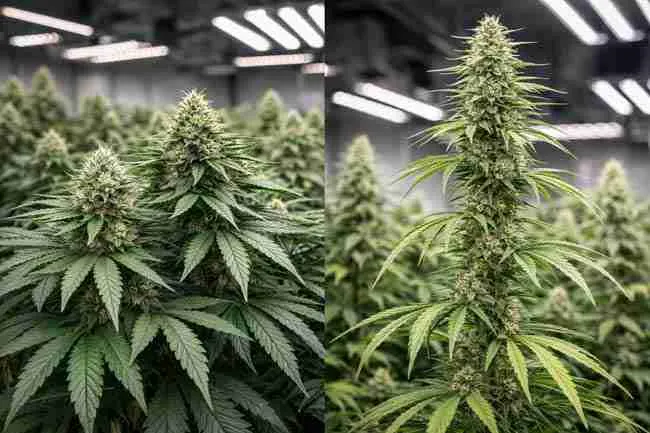
Here are five simple examples you’ll actually see while hunting:
- Short, bushy “indica-leaning” pheno
- Tight nodes, thick stems, broad leaves
- Usually easier to manage indoors
- Often finishes quicker
- Tall, stretchy “sativa-leaning” pheno
- Longer internodes, thinner leaves
- Can yield big if you train it
- Can take longer to finish
- Purple/color-expression pheno
- Shows purple/red/black tones (buds, leaves, stems)
- Color can come from genetics, cold temps, or both
- Doesn’t automatically mean stronger—track the real traits
- Terp-dominant “loud nose” pheno
- Strong smell early in flower
- Often stays aromatic after cure (if it’s truly good)
- Great for flower quality chasing
- Resin-dump “frost monster” pheno
- Heavy trichome coverage, even on sugar leaves
- Often good for extracts
- Can still be weak smoke if terps/effect don’t match—so you record both
When you write cannabis pheno hunting notes, you’re basically catching these differences like a butterfly net—before they fly away in your memory.
Why You Need a Breeder’s Notebook (Even If You “Never Forget”)
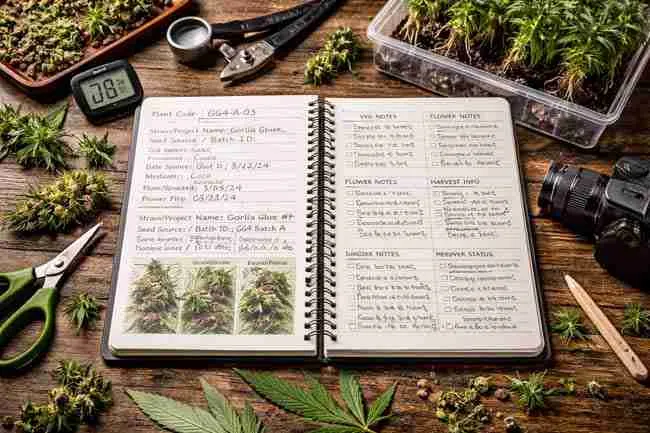
You’ll forget. Everyone forgets. Even sharp growers forget. It happens because:
- You’re busy
- The grow changes fast
- Multiple plants blur together
- Drying and curing change smell and feel
A notebook stops that.
Your notebook does three big jobs
- It organizes the chaos of multiple plants.
- It proves which plant actually performed best.
- It repeats success by letting you dial in the same keeper again.
And no—your camera roll isn’t enough. Photos help, but photos don’t record:
- “This one clawed at 1.6 EC”
- “This one hated wet feet”
- “This one stayed clean in high humidity”
- “This one smelled like chocolate gas at day 35”
You need written notes.
The Golden Rule Before You Start: Label Like Your Harvest Depends On It
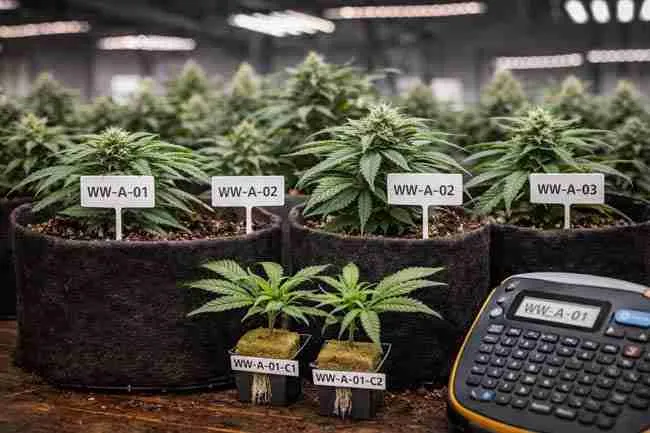
Because it does.
If you mix plants up, your whole hunt becomes useless. So you label everything, every time.
Minimum labeling system (simple and solid)
Pick a code like this:
[Strain/Project] – [Seed Batch] – [Plant #]
Example:
- WW–A–01
- WW–A–02
- WW–A–03
Now match that code on:
- The pot
- The notebook page
- The photo file name (or album name)
- Any clones you take
If you take clones, label them like:
- WW–A–01–C1
- WW–A–01–C2
That’s not “extra.” That’s how you stop heartbreak later.
Your Breeder Log Template (Copy-Paste This)
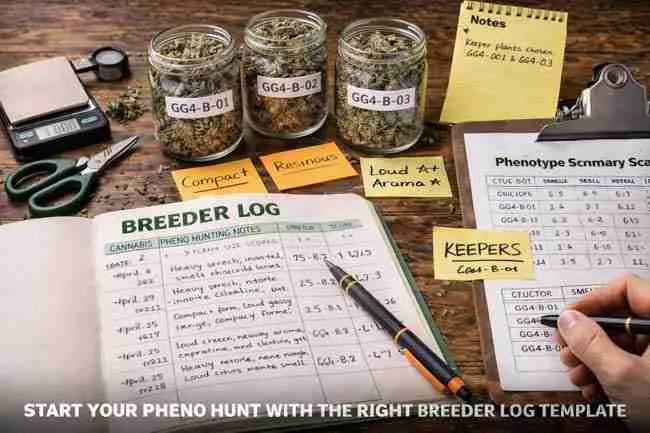
Use this as your main breeder log template. You can write it in a paper notebook, a spreadsheet, or a doc. The key is consistency.
Page 1: Plant Identity + Setup
Plant Code:
Strain/Project Name:
Seed Source / Batch ID:
Date Sprouted:
Date Transplanted (each time):
Medium (soil/coco/hydro):
Pot Size:
Veg Light Schedule:
Flower Flip Date:
Flower Light Schedule:
Nutrients Used:
Environment Targets (temp/RH/VPD if you track it):
Training Style (topping/LST/SCROG/etc.):
Grow Notes Goal (what you want most):
Page 2: Veg Notes (write short, but often)
Veg Day #:
- Growth speed (slow/medium/fast):
- Node spacing (tight/medium/long):
- Stem strength (weak/ok/strong):
- Leaf shape (broad/medium/narrow):
- Color (pale/green/dark):
- Any problems (burn/claw/droop/spots):
- Recovery speed after stress (slow/fast):
- Smell when rubbed (none/mild/strong + describe):
Page 3: Flower Notes (the money pages)
Flower Day #:
- Stretch amount (low/medium/high):
- Bud structure (airy/medium/dense):
- Trichomes (low/medium/heavy):
- Aroma strength (low/medium/high):
- Aroma type (write real words):
- Pest/mold resistance notes:
- Feed tolerance (sensitive/normal/heavy eater):
- Branch support needed? (yes/no):
- Any herm signs? (none/early/late + where):
Page 4: Harvest + Dry + Cure Notes
Harvest Date:
Days in Flower:
Wet Trim or Dry Trim:
Drying Method:
Dry Time:
Cure Method:
- Jar/bag/bin:
- Burp schedule:
- Humidity target:
Final Aroma After Cure:
Final Taste:
Ash / Burn Quality (if you test it):
Effect (fast/slow, head/body, duration):
Yield (wet):
Yield (dry):
Bag appeal score (1–10):
Would you keep it? Why or why not?
Page 5: Keeper Decision + Clone Notes
Keeper Status: (YES / NO / MAYBE)
Reason (one sentence, no fluff):
Clone Performance:
- Root time:
- Growth match to mom?:
- Any weird traits?:
This template makes your cannabis pheno hunting notes usable even months later.
The Scoring System That Keeps You Honest
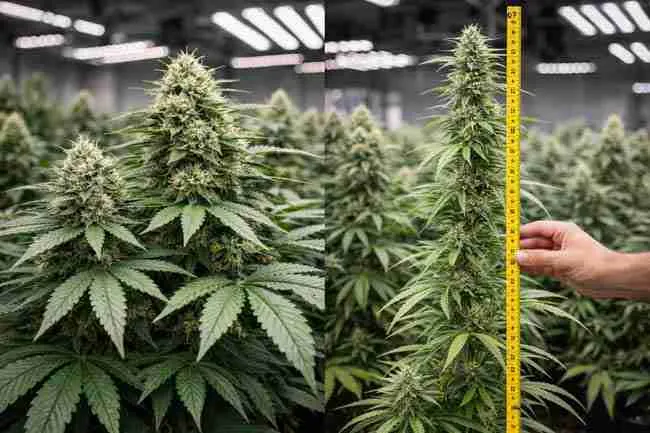
Here’s a simple scoring method that works even if you’re brand new: score each trait 1–5.
- 1 = bad
- 3 = okay
- 5 = excellent
You don’t need fancy math. You need consistency.
Phenotype tracking score table (use this every run)
| Trait to Track | What You’re Looking For | Score 1–5 Notes |
|---|---|---|
| Vigor | Fast healthy growth | 1=slow/weak, 5=fast/strong |
| Node spacing | Manageable structure | 1=too long, 5=nice and tight |
| Stress tolerance | Handles mistakes | 1=falls apart, 5=bounces back |
| Feed tolerance | Easy nutrition window | 1=super sensitive, 5=forgiving |
| Stretch control | Doesn’t outgrow space | 1=wild stretch, 5=controlled |
| Bud density | Solid flower build | 1=airy, 5=dense |
| Trichome coverage | Resin production | 1=low, 5=heavy |
| Aroma strength | Nose power | 1=weak, 5=loud |
| Aroma quality | Pleasant + complex | 1=flat, 5=rich/unique |
| Mold/pest resistance | Stays clean | 1=problem magnet, 5=tough |
| Yield potential | Output for space/time | 1=low, 5=high |
| Smoke/effect | The final truth | 1=meh, 5=excellent |
If you’re serious, you fill this table at:
- Late veg
- Mid flower
- Harvest
- After cure
That’s how cannabis pheno hunting notes become real evidence.
How to Write Better Notes (So Future-You Says “Thanks”)
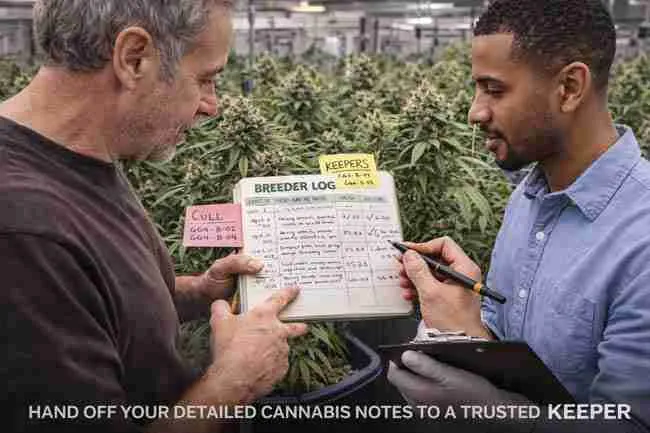
Bad notes look like this:
- “Smells good”
- “Nice buds”
- “Kinda tall”
Good notes look like this:
- “Smelled like grape candy + rubber at day 35, got louder at day 49”
- “Dense buds, but needed stakes by day 42”
- “Stretch doubled height in first 14 days of flower”
Use “compare words”
Try these:
- louder / quieter
- tighter / looser
- faster / slower
- stronger / weaker
- earlier / later
- cleaner / dirtier
Use real smell words (not fancy words)
Try:
- lemon, orange peel, pine, mint
- chocolate, coffee, dough, sugar
- gas, rubber, skunk, onion
- earth, wood, spice, pepper
Don’t worry about sounding poetic. Your notes must be useful, not pretty.
The “One-Plant Story” Method (So Notes Don’t Get Boring)
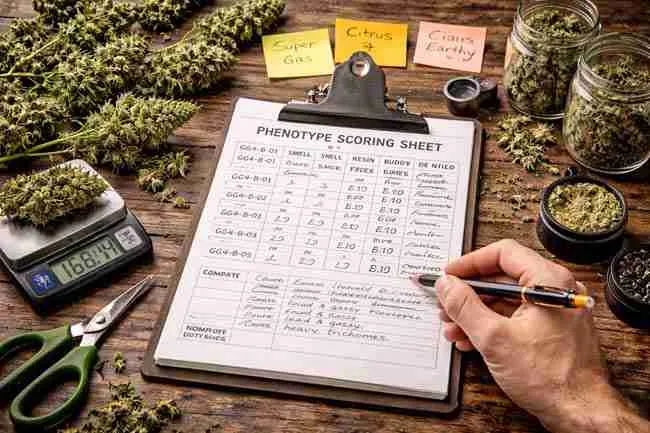
Here’s a trick: write like each plant is a character in a little story.
Example vibe:
- “Plant 02 acted tough from day one.”
- “Plant 04 stayed short but stacked fast.”
- “Plant 07 looked pretty, but it complained about every feeding.”
This keeps you engaged, and it makes your breeder log template feel alive instead of homework.
What to Track in Veg (The Early Clues People Miss)
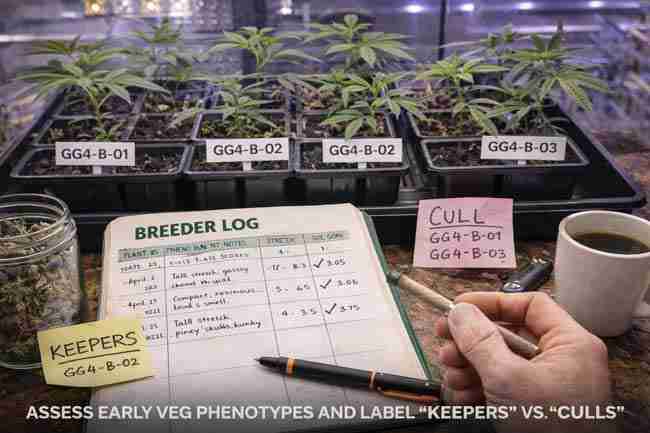
Veg tells you who’s strong before flower even starts.
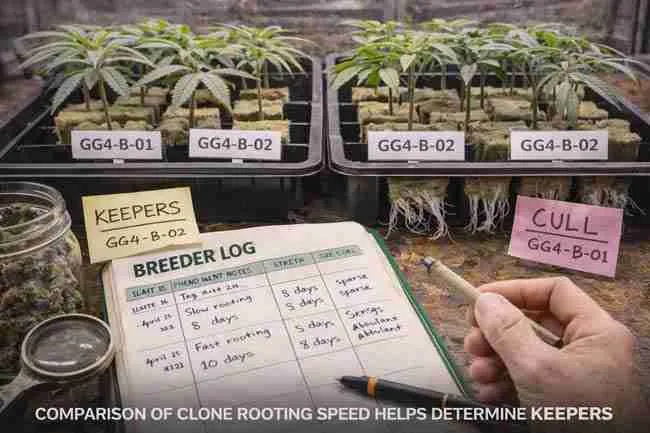
Root speed (quiet winner trait)
If you clone, root speed matters a lot. A keeper that won’t root is a pain.
Track:
- Days to show roots
- Root mass (thin vs thick)
- Clone survival rate
Structure (your future workload)
A plant with good structure:
- Trains easier
- Breaks less
- Trims faster
- Buds get better light
Track:
- internode spacing
- branching angle
- stem thickness
Leaf talk (the plant’s “mood”)
Leaves show stress early.
Track:
- clawing
- canoeing/taco
- spotting
- pale or too dark green
Write what caused it if you know:
- too much feed
- too much light
- too wet
- too cold
That’s phenotype tracking that actually saves grows.
What to Track in Flower (Where Most Keepers Reveal Themselves)
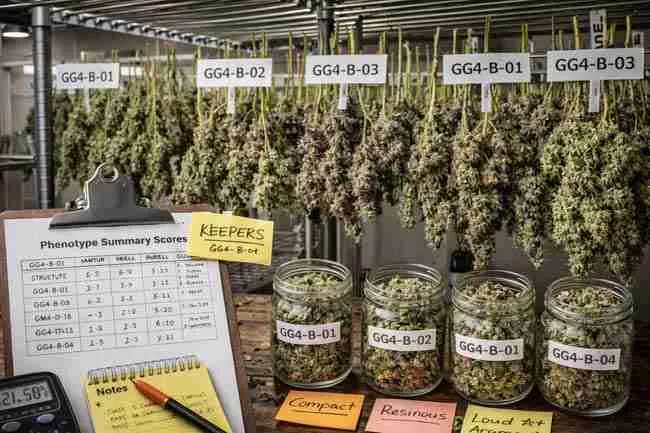
Flower is where the truth comes out.
Stretch window (first 2–3 weeks after flip)
Some plants stretch a little. Some stretch like they’re trying to touch the moon.
Track:
- Height at flip
- Height at day 7
- Height at day 14
- Height at day 21
This is a huge “keeper” factor for small tents.
Bud build pattern
Different phenos build buds differently:
- some stack spears
- some form golf balls
- some make long foxtails
Track:
- density
- shape
- how early buds “set” (start stacking)
Resin timing (not just resin amount)
Some plants frost early then fade. Others frost late but end up caked.
Track:
- first visible frost day
- peak frost window
- resin on sugar leaves vs calyx
Herm risk (say it plainly)
Don’t whisper about it. Write it.
Track:
- Did it herm?
- When?
- Where?
- How bad?
If a plant throws bananas easily, it can wreck your whole room. Your cannabis pheno hunting notes should treat this like a red alert.
Harvest Notes That Matter (Not Just “Chopped It”)
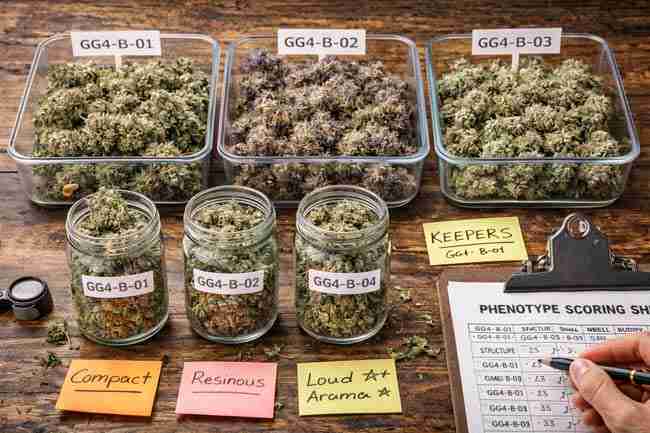
Harvest is not the end. It’s the start of the real test.
Yield that actually means something
Track yield in a way you can compare:
- dry grams per plant
- grams per square foot (if you track area)
- how many days it took
A “big yielder” that takes forever might not be better than a medium yielder that finishes earlier.
Trim time (hidden business trait)
Some plants trim easy. Some are hairy nightmares.
Track:
- easy / medium / hard trim
- sugar leaf amount
- bud-to-leaf ratio
Smoke test notes (the final boss)
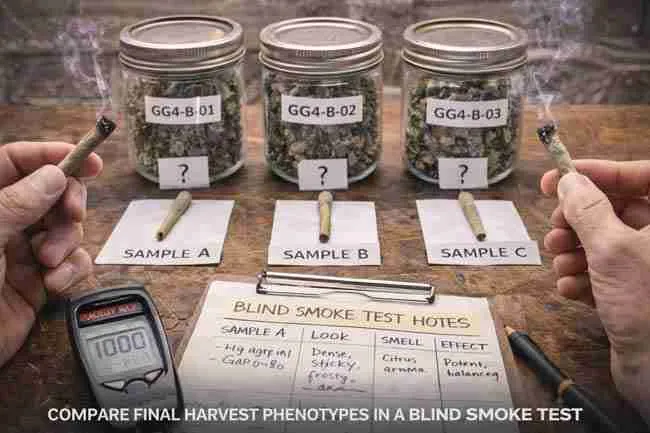
You don’t need fancy lab gear to know if it’s good.
Track:
- smoothness
- taste
- strength
- how long it lasts
- how you feel after (clear, sleepy, hungry, anxious, calm)
This is where your keeper decision becomes real.
Pros and Cons of Keeping Detailed Cannabis Pheno Hunting Notes
Pros
- You pick keepers with proof, not guessing
- You repeat success in future runs
- You spot patterns across seeds and batches
- You avoid keeping “pretty but weak” plants
- You get better at breeding faster
- You waste less time chasing the wrong plant
Cons
- It takes discipline (yep, it’s work)
- You can overthink if you track too much
- If you don’t label well, notes become useless
- You might need a second run to confirm a “winner”
Still, the pros crush the cons. Good cannabis pheno hunting notes turn a messy hunt into a clean decision.
Specifications: Your “Minimum Viable” Notebook Setup
If you want a simple setup that works every time, use this:
Notebook specs
- One page per plant (minimum), five pages per plant (ideal)
- A pen that doesn’t smear
- A label maker or waterproof marker
- A basic scale (for dry yield)
- A way to store photos with plant codes
Note-taking frequency specs
- Veg: 2 notes per week
- Flower: 2–3 notes per week
- Harvest week: 1 detailed entry
- After cure: 1 detailed entry
Data consistency specs
- Same scoring scale every run (1–5)
- Same measurement days in flower (like day 14, 28, 42, harvest)
- Same dry/cure method (when possible) so you compare fairly
That’s a clean breeder log template system without turning into a robot.
Common Mistakes That Ruin Pheno Hunts (And How You Avoid Them)
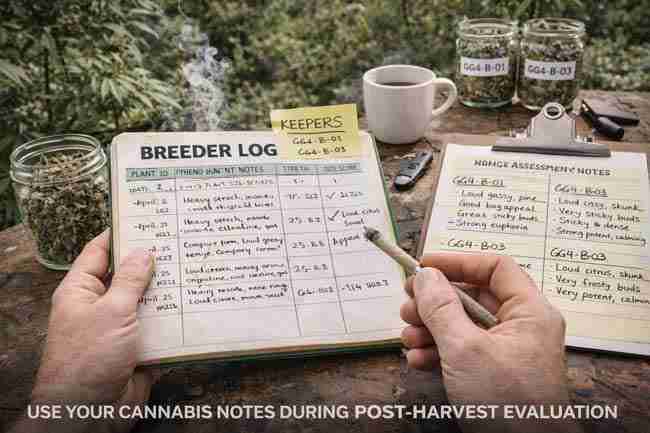
Not taking clones before flower
If you wait too long, you can lose the keeper. Take clones before flip or early into flower if you know how to re-veg clones.
Write in your notes:
- clone date
- clone count
- clone success rate
Changing too many things mid-run
If you change light, feed, and temps constantly, you can’t tell what’s genetics and what’s chaos.
Keep it steady, and write changes down when you must do them.
Comparing plants grown in totally different conditions
A plant in the corner with bad airflow might look worse than it really is.
Note plant location:
- front left / back right
- near fan / far from fan
- closest to humidifier / dehu
Phenotype tracking stays honest when you note the environment.
FAQ: Cannabis Pheno Hunting Notes, Phenotype Tracking, and Breeder Log Template
What are cannabis pheno hunting notes?
They’re your written records of how each plant behaved. They include growth, smell, bud structure, yield, and final smoke results so you can pick keepers.
How many plants should you pheno hunt at once?
Start with what you can handle without cutting corners. For most growers, 6–12 plants is manageable. More than that gets sloppy fast.
When should you start phenotype tracking?
Start the day the seed pops. Early vigor, structure, and stress response matter, and you’ll forget them later if you don’t write them down.
Do you need a breeder log template if you’re not breeding?
Yes. Even if you only want great smoke, a breeder log template helps you find the best plant to keep as a mother (or to run again from seed).
What’s the most important trait to track?
It depends on your goal, but most growers should prioritize:
- stability (no herms)
- health and stress tolerance
- aroma that survives the cure
- effect quality
Can two seeds from the same pack have different phenotypes?
Absolutely. That’s normal. That’s why cannabis pheno hunting notes exist in the first place.
How do you decide a “keeper” fairly?
Use your scoring table, then confirm in a second run if possible. A true keeper performs well more than once, not just on a lucky run.
Should you track smell during flower or only after cure?
Both. Flower smell tells you intensity and development, and cure smell tells you what actually lasts.