Cannabis Yield Deficiencies: How to Identify and Correct Common Issues


Introduction to Cannabis Plant Nutrition
Hey there! So, you’re diving into the world of growing cannabis, huh? That’s awesome! Growing cannabis is like nurturing a little green baby—it needs the right care, love, and especially the right nutrition. Without the proper nutrients, your plants might not grow up to be the big, bountiful beauties you hope for. But don’t worry, we’re here to help you figure it all out! At Green Avenger Seeds we know how important it is to our growers that they get a great cannabis harvest after all the work, money and time that goes into growing out your new cannabis seeds.
Essential Nutrients for Cannabis Growth
First things first, let’s chat about what your cannabis plants need to thrive. Think of nutrients as the food that fuels their growth. Just like how we need a balanced diet, so do your plants. Without the nutrients that your cannabis plants need they will die in the end, no matter how much time, water and light you give them.
Macronutrients and Micronutrients

- Macronutrients: These are needed in large amounts.
- Nitrogen (N): Helps with leaf growth and that vibrant green color.
- Phosphorus (P): Important for root development and flowering.
- Potassium (K): Aids in overall plant health and disease resistance.
- Micronutrients: Needed in smaller amounts but still super important.
- Calcium, Magnesium, Iron, Zinc, and others.
Without these nutrients, your plants might show signs of what’s called Cannabis Yield Deficiencies, which can hurt your harvest.
Identifying and Treating Cannabis Yield Deficiencies

Now, you might be thinking, “How do I know if my plant is missing something?” Great question! Your plant will actually show you through its leaves and overall appearance.
Signs to Look For
- Yellowing Leaves: Often a sign of nitrogen deficiency.
- Brown Spots: Could indicate a lack of potassium or calcium.
- Leaf Curling: Might mean a magnesium deficiency.
- Stunted Growth: A general sign that something’s off.
By paying close attention, you can catch these issues early and take action.
Nutrient Deficiency Identification and Correction Strategies
Alright, so you’ve spotted some strange signs. What now? Time to play plant detective!
Steps to Fix Nutrient Deficiencies
- Observe and Note: Write down the symptoms you see.
- Check pH Levels: Nutrient uptake is highly dependent on the soil’s pH.
- Research Symptoms: Match what you see with known deficiencies.
- Adjust Nutrients: Add the missing nutrients to your feeding schedule.
- Monitor Progress: Keep an eye on your plant to see if it improves.
Remember, it’s like tweaking a recipe—you might need to adjust a little here and there to get it just right.
How to Identify Cannabis Nutrient Deficiencies at an Early Stage

Catching problems early is key to keeping your plants healthy.
Early Warning Signs
- Discoloration in New Leaves: New growth shows deficiencies first.
- Slower Growth Rate: If your plant isn’t growing as fast as before.
- Leaf Deformities: Leaves might look twisted or misshapen.
By checking your plants daily, you’ll spot these subtle changes before they become big problems.
Common Symptoms and Solutions for Nutrient Deficiencies
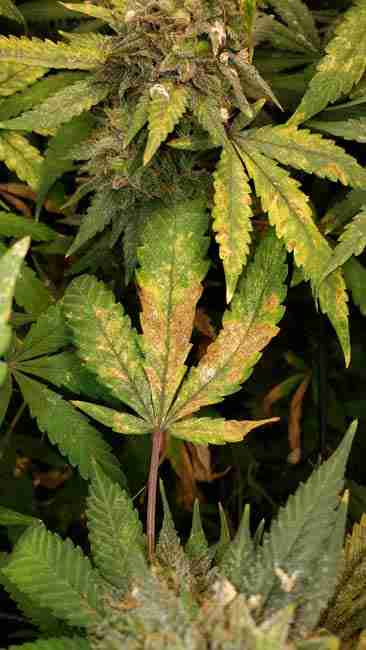
Let’s break it down further with a handy table:
| Deficiency | Symptoms | Solution |
|---|---|---|
| Nitrogen | Yellowing lower leaves | Increase nitrogen fertilizer |
| Phosphorus | Dark green leaves with purple stems | Add phosphorus-rich nutrients |
| Potassium | Yellowing at leaf edges, brown spots | Supplement with potassium fertilizer |
| Magnesium | Yellowing between leaf veins | Use a magnesium supplement like Epsom salt |
| Calcium | New leaves are distorted or spotty | Add calcium through lime or calcium-rich feeds |
Nutrient Availability and the Importance of Soil pH

Hold on a sec! Before you go adding more nutrients, let’s talk about soil pH.
Why pH Matters
- Nutrient Uptake: If the pH is too high or too low, plants can’t absorb nutrients properly.
- Optimal pH Range:
- Soil: 6.0 to 7.0
- Hydroponics: 5.5 to 6.5
Adjusting Soil pH
- To Raise pH: Add lime.
- To Lower pH: Use sulfur or aluminum sulfate.
By keeping your soil in the right pH range, you ensure your plants can access all the nutrients you’re providing.
Preventing Nutrient Deficiencies and Imbalances

An ounce of prevention is worth a pound of cure, right?
Tips to Prevent Deficiencies
- Use Quality Soil: Start with nutrient-rich soil designed for cannabis or research soil that is used by other growers and follow their directions.
- Balanced Nutrient Schedule: Follow a feeding schedule that provides all essential nutrients.
- Regular Testing: Check soil pH and nutrient levels periodically.
- Avoid Overwatering: Too much water can wash away nutrients.
By staying proactive, you’ll keep your plants happy and healthy.
3 Common Vegetative Stage Nutrient Deficiencies in Cannabis
During the vegetative stage, your plants are focused on growing big and strong.
1. Nitrogen Deficiency
- Symptoms: Yellowing of older leaves, slow growth.
- Solution: Increase nitrogen in your feeding schedule.
2. Magnesium Deficiency
- Symptoms: Yellowing between leaf veins.
- Solution: Add magnesium supplements like Epsom salt.
3. Calcium Deficiency
- Symptoms: Crinkled leaves, brown spots.
- Solution: Incorporate calcium into your feeding.
3 Common Flowering Stage Nutrient Deficiencies in Cannabis
When flowering, plants shift their nutrient needs.
1. Phosphorus Deficiency
- Symptoms: Darkening leaves, delayed flowering.
- Solution: Increase phosphorus intake.
2. Potassium Deficiency
- Symptoms: Yellow or brown leaf edges, weak stems.
- Solution: Add potassium-rich fertilizers.
3. Iron Deficiency
- Symptoms: Yellowing of new leaves.
- Solution: Use iron chelate supplements.
The Role of Macro and Micronutrients in Cannabis Plant Growth
Both macro and micronutrients are crucial.
Macronutrients
- Nitrogen (N): Leaf growth.
- Phosphorus (P): Root and flower development.
- Potassium (K): Overall health.
Micronutrients
- Iron: Chlorophyll production.
- Zinc: Stem growth.
- Copper: Flowering and reproduction.
Balancing these nutrients leads to healthier plants and better yields.
The Role of Plant Genetics in Nutrient Uptake and Deficiencies

Did you know that your plant’s genetics play a role too?
Genetic Factors
- Strain Sensitivity: Some strains need more or less of certain nutrients.
- Uptake Efficiency: Genetics can affect how well nutrients are absorbed.
Tips
- Research Your Strain: Know its specific needs. You can do this by asking other growers or even the breeder of the strain if possible.
- Adjust Accordingly: Tailor your feeding schedule to suit. Sometimes you will need to experiment with your plants to get their needs just right.
By understanding genetics, you can fine-tune your approach for optimal growth.
Nutrient Deficiency Recovery and the Importance of Timely Intervention

Time is of the essence!
Why Act Fast?
- Prevent Further Damage: The longer a deficiency goes untreated, the worse it gets.
- Maximize Yields: Healthy plants produce more and better-quality buds, this is what every grower likes.
Recovery Tips
- Correct the Issue: Add missing nutrients or adjust pH immediately.
- Monitor Closely: Watch for signs of improvement or further issues.
- Avoid Overcompensating: Don’t overload with nutrients—balance is key.
The Impact of Nutrient Deficiencies on Cannabis Yield and Quality

At the end of the day, nutrient deficiencies can really hurt your harvest.
Negative Effects
- Reduced Yields: Smaller plants produce less.
- Lower Potency: Deficiencies can affect THC and CBD levels.
- Poor Taste and Aroma: Nutrient imbalances can alter terpene profiles.
By keeping your plants well-nourished, you’ll enjoy bigger, better buds.
Frequently Asked Questions

Q: How often should I feed my cannabis plants nutrients?
A: It depends on the growth stage and the nutrients used. Generally, feed every other watering during the vegetative stage and adjust as needed during flowering.
Q: Can I fix a nutrient deficiency overnight?
A: Improvements can take a few days to a week to show. Be patient and avoid overloading nutrients.
Q: Is it possible to give my plants too many nutrients?
A: Yes! Overfeeding can cause nutrient burn, which is harmful. Always follow recommended dosages.
Q: How do I test my soil’s pH?
A: Use a soil pH testing kit or a digital pH meter for accurate readings.
Q: What’s the best way to prevent nutrient lockout?
A: Maintain proper soil pH and avoid excessive nutrient buildup by flushing the soil occasionally.
Final Thoughts
Growing cannabis is a rewarding journey, filled with learning experiences. By understanding and managing nutrient deficiencies, you’re well on your way to achieving impressive cannabis yields. So keep an eye on those leaves, adjust as needed, and happy growing!