Cannabis Trim Room Ergonomics: Faster, Cleaner, Happier

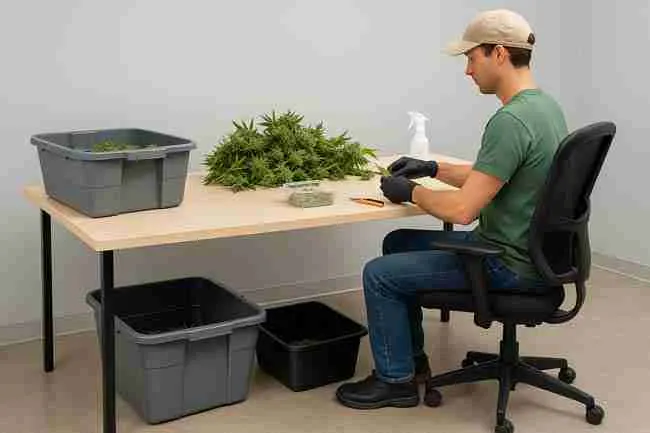
You can grow the prettiest plants on the block… then ruin your mood (and your back) in the trim room. Trimming doesn’t have to feel like a medieval punishment. With the right trim setup, you move faster, you stay cleaner, and you finish the day without claw hands and a cranky spine.
This guide gives you cannabis trim tips you can actually use—simple stuff that works even if you’re new. You’ll set up your room like a smooth little assembly line, keep your tools sharp, and protect your hands with real hand cramp prevention strategies. No fluff. No fancy talk. Just the way trimming should’ve been taught in the first place.
Why Ergonomics Beats “Toughing It Out” Every Time

You can’t “tough-guy” your way through tendon pain. Ergonomics means you place your body in positions that don’t grind your joints down like sandpaper.
When you ignore ergonomics, you pay for it:
- Your wrists bend at weird angles all day
- Your shoulders creep up toward your ears
- Your neck cranes forward like a turtle
- Your lower back takes the whole load
- Your hands clamp down harder and harder as you get tired
When you respect ergonomics, you win:
- You keep a steady pace for hours
- You make cleaner cuts and tighter buds
- You drop fewer trichomes
- You keep morale up (yes, that matters)
- You cut down on mess, mistakes, and rework
Here’s the truth: trimming rewards consistency, not hero moments. You want a room that lets you work the same way at hour four as you did at minute ten. That’s the heart of good cannabis trim tips.
The Trim Room Workflow You Want: Clean In, Clean Out
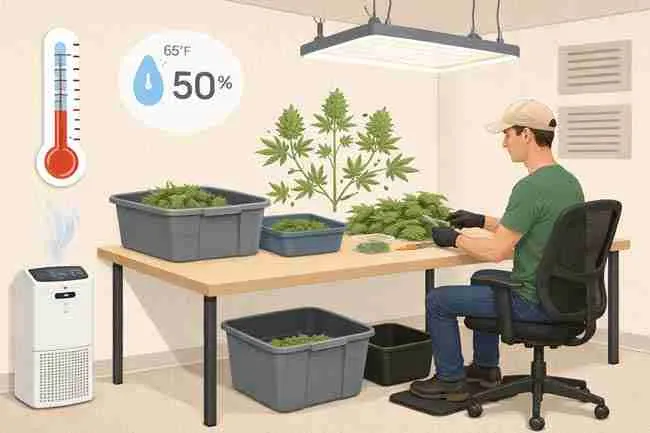
Before you buy gadgets, fix your flow. A good workflow feels like walking downhill. A bad workflow feels like stepping on rakes.
Build a Simple “One-Way” Path
Set your room so material moves in one direction:
- Intake zone (fresh branches arrive)
- Prep zone (you buck, sort, and stage)
- Trim zone (you trim with comfort)
- Finish zone (you weigh, bin, and label)
- Cleanup zone (you reset tools and surfaces)
You don’t want trimmed buds crossing paths with sticky waste. You don’t want dirty gloves touching “finished” bins. Keep it one-way and you’ll stay cleaner without even trying.
The “Two-Bin Rule” That Saves Your Sanity
At every station, keep two bins:
- Keep bin (buds you finish)
- Waste bin (leaf, stems, fluff)
You’ll stop making piles all over the table. You’ll also stop losing buds to the floor because you ran out of space.
Trim Setup Basics: Your Station Should Fit Your Body, Not the Other Way Around
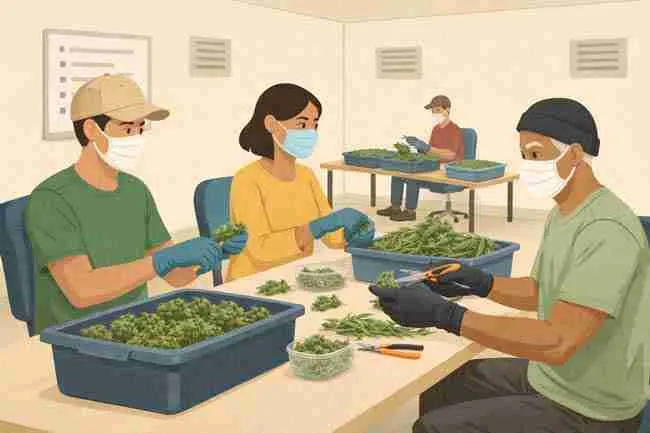
A trim station should feel like a well-worn hammer: it just works. If you fight it, you’ll slow down and hurt yourself.
Start With Chair + Table Height That Makes Sense
You want your elbows near a relaxed 90-degree bend while you work. That’s the sweet spot.
Quick setup target:
- Sit down
- Let your shoulders relax
- Bring your forearms forward
- You want your work surface right where your hands naturally land
If your table sits too high, your shoulders tense up. If your table sits too low, your back hunches. Either way, you’ll feel it later.
Sitting vs Standing (Pick One, Then Add the Other)
Some people love standing. Some people work better sitting. You don’t need a religion here—you need results.
Sitting wins when:
- You trim for long stretches
- You want precise hand control
- You deal with hand fatigue easily
Standing wins when:
- You move between tasks a lot
- You buck branches and shift bins often
- Your back hates long sitting
Best move: set up a station that lets you switch. Trim an hour sitting, then stand for 10 minutes while you reset, stretch, and tidy. Those small switches feel like magic.
Foot Support Stops Back Pain Before It Starts
If your feet dangle, your hips tilt. Then your back complains. Simple fix:
- Use a footrest, a sturdy box, or a low step
- Keep feet flat and stable
- Don’t cross your legs all day (your hips will grumble)
Place Everything in the “Easy Reach Zone”
If you keep reaching far, you keep twisting. If you keep twisting, you keep aching.
Put your most-used items within an arm’s reach:
- Scissors
- Brush or pick (if you use one)
- Alcohol wipe jar or rag container
- Gloves
- Keep bin + waste bin
Make the station boring and predictable. Boring equals fast.
Trim Room Specs That Actually Matter
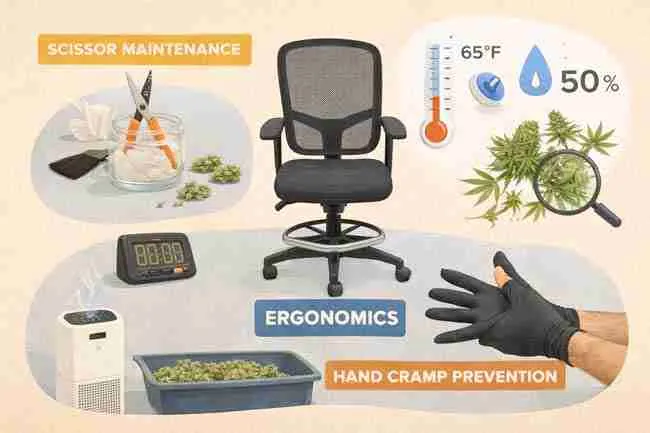
You don’t need a laboratory. You do need control. The trim room should protect trichomes and protect your lungs.
Specifications Table: Practical Targets for a Better Trim Room
| Trim Room Spec | Practical Target | Why It Matters |
|---|---|---|
| Temperature | 60–70°F (16–21°C) | Cooler rooms reduce stickiness and help trichomes stay intact |
| Relative Humidity | 45–55% | Too dry makes leaf brittle; too wet raises mold risk |
| Lighting at table | Bright, even light (no harsh glare) | You see sugar leaves clearly and trim cleaner |
| Air movement | Gentle, not windy | Strong airflow dries product and stirs debris |
| Table height (typical) | 28–36 in (adjust to your body) | Keeps shoulders down and wrists neutral |
| Chair support | Lumbar support + stable seat | Saves your lower back during long sessions |
| Break schedule | 5 minutes each 30–45 minutes | Prevents hand cramps and sloppy trimming |
These targets make trimming feel smoother. You’ll also keep your final product looking consistent—which always wins, whether you trim for yourself or for customers.
Lighting: Your Eyes Don’t Need to Suffer
Bad lighting turns trimming into guesswork. Then you over-trim, under-trim, and get annoyed.
What Good Trim Lighting Looks Like
You want:
- Bright, even coverage
- Minimal shadows on the bud
- No harsh glare bouncing into your eyes
A simple overhead light plus a diffused task lamp works great. Aim the lamp so it lights the bud, not your face.
Pro tip: If you squint, you need better lighting. Your body tells the truth.
Cleanliness Without Drama: Faster Trimming Starts With Fewer Sticky Surprises

Trimming gets messy. That’s normal. What’s not normal: letting that mess slow you down.
Set a “Clean Hands” Habit
Anytime you switch from waste handling to finished buds:
- Change gloves or
- Wipe gloves clean (if you do light handling)
Sticky gloves grab trichomes and smear resin onto everything. Clean gloves keep your buds looking sharp.
Choose Surfaces You Can Actually Wipe
Skip fuzzy table covers and cloth that traps gunk. You want a surface that wipes clean fast. If it holds resin like a sponge, it will steal your time.
The 60-Second Reset Trick
Every time you finish a batch (or a bin):
- Clear scraps
- Wipe the work area
- Dump waste
- Reset tools in the same spot
You’ll start every batch fresh instead of working in chaos.
Scissor Maintenance: The Secret Weapon Behind Smooth Trimming
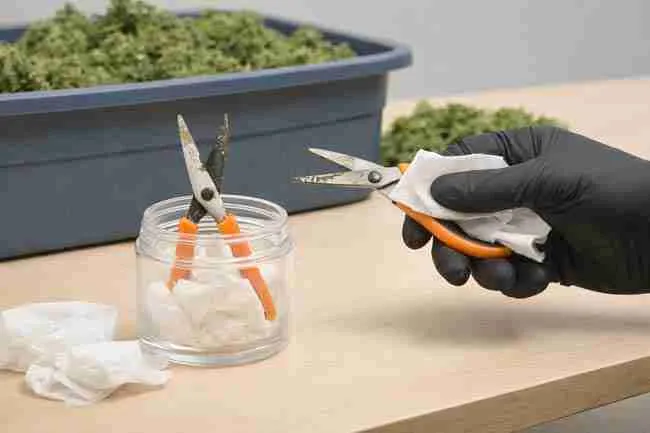
Blunt scissors force you to squeeze harder. Then your hands cramp. Then you hate trimming. Sharp scissors cut clean and keep your grip light.
If you want real cannabis trim tips, start here: scissor maintenance pays off faster than almost anything else.
Pick the Right Scissors for Your Hands
You want:
- Comfortable finger loops (not tiny torture rings)
- A spring that opens smoothly
- A tip shape that matches your trim style (fine tip for detail, sturdier tip for speed)
If scissors pinch your fingers, you’ll tense up. If they feel “off,” you’ll fight them all day. Don’t do that to yourself.
Keep Scissors Clean While You Work (Not After You Quit)
Resin builds up fast. Then the blades start chewing instead of slicing.
Simple cleaning routine:
- Keep a small jar of alcohol wipes or a rag dampened with isopropyl alcohol
- Every 10–20 minutes, wipe blades and pivot
- Open and close scissors a few times after wiping
You’ll feel the difference immediately. Your cuts will sound crisp again.
Don’t Ignore the Pivot Point
The pivot (where the blades join) collects sticky resin like a magnet.
Do this:
- Wipe pivot area often
- Add a tiny drop of food-safe lubricant if needed (use very little)
- Open/close scissors to spread it thin
A smooth pivot reduces hand strain. That’s free speed.
Sharpening Basics Without Getting Fancy
You don’t need to become a blade wizard. You just need “sharp enough.”
Rules that work:
- Sharpen lightly, more often, instead of grinding hard once in a while
- Keep a consistent angle
- Test on a small leaf, not on your patience
If you don’t want to sharpen, rotate multiple pairs of scissors and keep them clean. Clean scissors stay sharp longer.
Hand Cramp Prevention: Save Your Grip Before It Fails
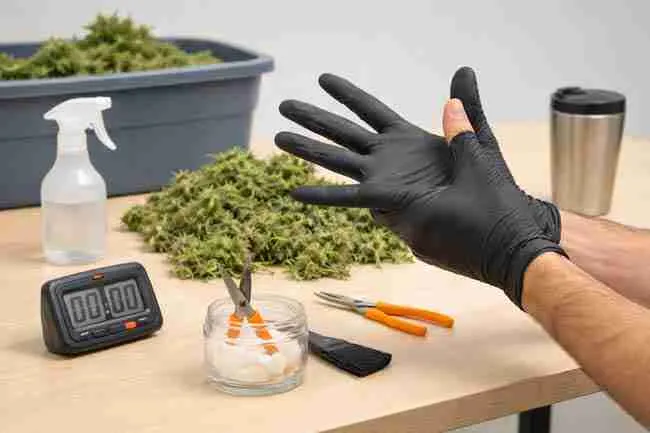
Hand cramps sneak up on you. One minute you trim fine. Next minute your fingers curl like a stuck claw machine.
You prevent cramps by reducing squeeze force and giving your tissues little breaks. That’s it. No magic.
The “Light Grip” Rule
If you crush the scissor loops, you burn your hands out early. Let the blades do the work.
Try this:
- Hold scissors like you hold a pencil, not like you hold pliers
- Keep your wrist straight
- Move the bud into the scissors more than you move scissors around the bud
You’ll trim smoother and cramp less.
Micro-Break Routine (Takes 45 Seconds)

Every 30–45 minutes:
- Open and close your hands 20 times
- Shake your hands loose for 10 seconds
- Stretch fingers back gently (don’t yank)
- Roll your shoulders twice
- Stand up and reset posture
It feels almost too simple. However, simple works.
Warm Hands Trim Better Than Cold Hands
Cold hands cramp faster. Warm hands stay flexible.
Easy wins:
- Keep the room comfortable (not freezing)
- Wear gloves that don’t restrict movement
- Take a short warm-up break if your fingers stiffen
Rotate Tasks So One Muscle Group Doesn’t Eat Everything
If you trim nonstop for three hours, your hands will revolt. Rotate:
- Bucking
- Sorting
- Trimming
- Weighing/binning
- Cleanup reset
Even a 10-minute switch helps.
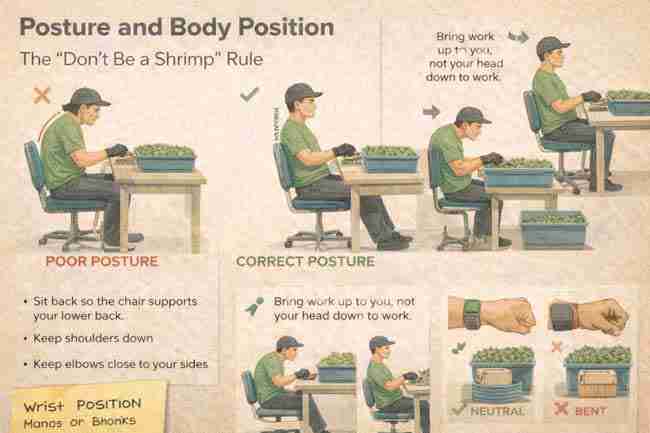
Posture and Body Position: The “Don’t Be a Shrimp” Rule
You’ve seen it: head forward, shoulders up, back rounded, elbows floating. That posture kills trimming speed.
Set Your Spine Like a Stack of Blocks
Think “tall but relaxed.” You don’t need to sit like a statue. You just need alignment.
Do this:
- Sit back so the chair supports your lower back
- Keep shoulders down
- Keep elbows close to your sides
- Bring work up to you, not your head down to work
Wrist Position Makes or Breaks the Day
Bent wrists lead to pain. Neutral wrists lead to endurance.
Quick check:
- If your wrist bends sideways while trimming, change your station angle
- If you reach too far forward, move bins closer
- If your table sits too high, lower it or raise your seat and add a footrest
Small adjustments save big aches.
Cannabis Trim Tips That Speed You Up Without Butchering Buds

Speed doesn’t mean hacking. Speed means fewer wasted motions.
Stage Your Material Like a Pro
Before you start trimming:
- Sort by bud size
- Remove obvious fan leaves fast
- Make small piles you can finish in 10–15 minutes
You’ll keep momentum instead of drowning in a mountain of branches.
Use a Simple Cut Pattern
Pick a repeatable approach:
- Snip protruding leaf tips
- Rotate bud
- Clean the silhouette
- Drop into keep bin
Repeat. Repeat. Repeat. You’ll fly.
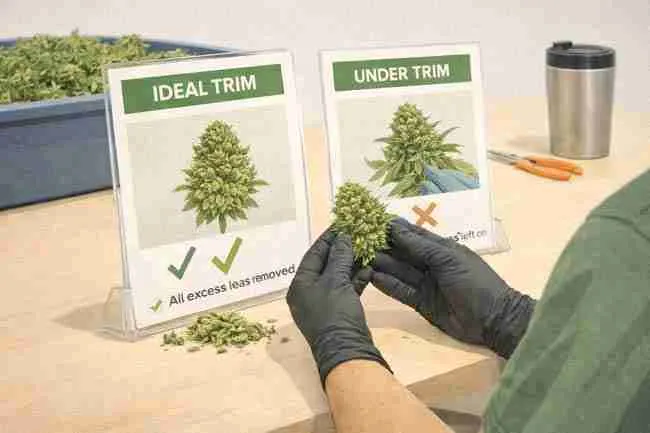
Don’t Chase Every Last Hair of Leaf
If you chase perfection, you’ll slow down and bruise buds. Aim for “clean and consistent.” A smooth trim beats a fussy trim that damages trichomes.
Keep the Bud Supported
When you pinch buds too hard, you flatten them. Support the stem or a thicker part, and let the bud sit in your fingers lightly.
Waste, Kief, and Sticky Debris: Keep It Managed So It Doesn’t Manage You

Trim rooms generate scraps nonstop. If you don’t control scraps, scraps control your table.
Use Dedicated Containers (Not Random Bags)
Use bins that don’t tip and don’t collapse. Keep lids nearby. Label containers if you run multiple batches.
Control Loose Debris
Loose debris lands on finished buds and makes them look messy. Keep waste bins close and clear them often.
Clean Tools Before They Turn Into Glue Sticks
Sticky tools slow everything down. If you feel drag, clean right then. Don’t wait for “later.” Later never shows up.
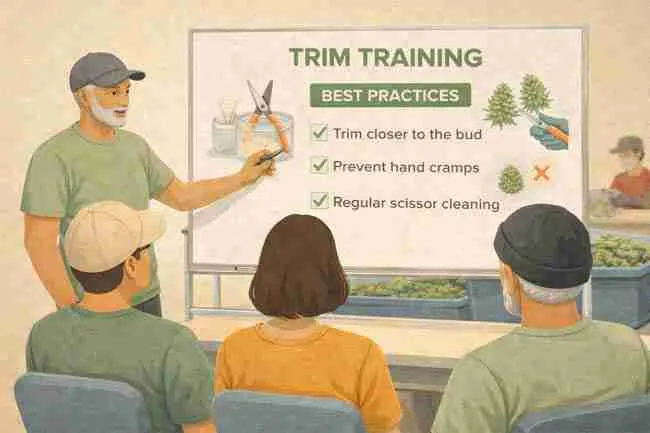
Pros and Cons of Dialing In Trim Room Ergonomics
Pros
- You trim faster with less effort
- You reduce hand cramps and wrist pain
- You make cleaner, more consistent buds
- You keep your room cleaner with fewer mistakes
- You improve mood and focus during long sessions
Cons
- You’ll spend time setting up the station first
- You may buy a better chair, better scissors, or better lighting
- You’ll need discipline to take short breaks (even when you feel “in the zone”)
The cons feel small once you finish a trim day without feeling wrecked.
The Trim Room Checklist You’ll Actually Use

Use this as a practical list you can follow every trim day:
- Chair supports your lower back
- Feet rest flat (or on a footrest)
- Table height keeps elbows relaxed
- Bright, even light hits your work surface
- Keep bin + waste bin sit within easy reach
- Scissors feel smooth and sharp
- Alcohol wipes sit at the station
- Gloves fit well and don’t bind fingers
- Room sits near 60–70°F (16–21°C) and 45–55% RH
- You take a 45-second micro-break every 30–45 minutes
That’s the backbone of a strong trim setup and the kind of cannabis trim tips that make trimming feel almost… pleasant. Almost.
FAQ: Cannabis Trim Tips, Trim Setup, Scissor Maintenance, and Hand Cramp Prevention
What’s the best trim setup for a small home grow?
You want a simple table, a supportive chair, bright lighting, and two bins (keep/waste). Keep scissors clean and take micro-breaks for hand cramp prevention.
How often should you do scissor maintenance during trimming?
Wipe blades and the pivot every 10–20 minutes, or anytime you feel drag. Clean scissors cut faster and reduce the squeeze that causes cramps.
Why do your hands cramp so fast when trimming?
You likely squeeze too hard, use sticky scissors, bend wrists, or skip breaks. Fix grip pressure, clean tools, and follow a short hand cramp prevention routine.
Should you sit or stand while trimming cannabis?
You should do whichever keeps you relaxed and steady. Many growers work best when they switch: sit for detail work, stand for resets and task rotation.
What room temperature helps trimming go smoother?
Many growers like cooler temps (around 60–70°F / 16–21°C). Cooler air reduces stickiness and helps you keep control while trimming.
How do you trim faster without damaging trichomes?
Use consistent motions, keep buds supported, avoid crushing, keep tools clean, and stage small batches. Fast trimming comes from fewer wasted motions, not aggressive cutting.
What scissors work best for preventing hand fatigue?
Pick scissors that fit your fingers, open smoothly with a spring, and stay sharp. Scissor maintenance matters as much as scissor brand.