Cannabis Seeds in the USA: 2026 State-by-State Buyer’s Guide


How to Use This Cannabis Seeds USA Guide
Use it like a checklist, not like a novel.
- Find your state in the state-by-state section.
- Use the climate notes to decide which seed type fits your season.
- Pick genetics from our seeds store based on your constraints (heat, humidity, short season, altitude).
- Shop on your country’s seeds page when you know what you want.
If you want a simple rule: climate decides the structure, and goals decide the strain.
Seed Types That Match USA Climates

People overcomplicate this. Climate and season length drive the decision.
Feminized Photoperiod Seeds (best when you control timing)
You choose these when:
- you want full-season potential, bigger plants, and more control
- your region gives you a stable season window
- you can manage light exposure and timing without surprises
When these shine: many temperate states, controlled environments, and growers who value predictability.
Helpful supporting read:
Autoflower Seeds (best when the season is short or unpredictable)
You choose these when:
- you face short summers, early fall weather, or unreliable season transitions
- you want fast cycles and simpler timing decisions
- you want to reduce risk in challenging climates
When these shine: high-latitude states, mountain regions, storm-prone areas, and anyone who wants speed and simplicity.
Regular Seeds (best for breeders and phenotype hunters)
You choose these when:
- you want full selection control and long-term genetics work
- you don’t mind extra sorting and selection
If your are a breeders, regular seeds deserve a clear mention.
The 60-Second Seed-Picking Framework (American Edition)
Here is your cannabis seeds USA guide practical.
Step 1: Define your climate pain (pick one)
- Short season (early cold / late warmth)
- High humidity (mold pressure)
- High heat (stress, stalled growth)
- Big temperature swings (day/night drops)
- Wind and storms (physical stress)
- High altitude (intense sun, rapid shifts)
Step 2: Match seed type to the pain
| Your constraint | Seed type that usually fits | Why it helps |
|---|---|---|
| Short season | Autoflower (often) | Faster completion, less seasonal exposure |
| High humidity | Photoperiod or auto with humidity-resistant traits | You can plan structure and airflow traits |
| High heat | Heat-tolerant genetics (either type) | Genetics matter more than marketing |
| Big swings | Hardy genetics, avoid finicky lines | Stability wins over hype |
| Storms/wind | Sturdy structure traits | Less breakage and stress |
| High altitude | Avoid ultra-sensitive lines | Consistency matters most |
Step 3: Pick your goal (be honest)
- Flavor/terpenes first
- Potency first
- Yield first
- Ease first (beginner-proof)
Then you shop with intent instead of guessing.
Seed Shipping Basics USA Buyers Should Know

1) Heat and cold ruin seeds faster than most people admit
Seeds handle a lot, but extreme heat swings and moisture do real damage.
Simple buyer habits that help:
- avoid leaving packages in a hot mailbox for hours
- bring deliveries inside quickly
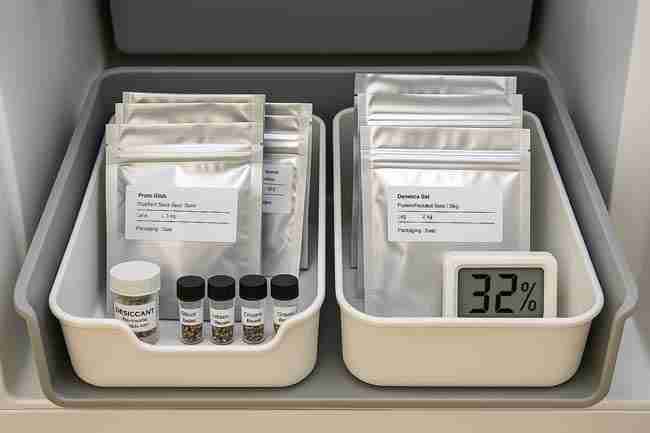
- store seeds cool, dry, and dark after arrival
Storage deep-dive placeholder:
2) Packaging matters more than hype
Good packaging prevents:
- crushing
- moisture exposure
- temperature shock
We shipping professional packaging, say so—briefly. Hard crush proof casing keep your novelty seeds are good upon arrival.
3) Make “first 48 hours” a standard practice
If a buyer wants high success odds, the first 48 hours after delivery matter.
What to do immediately:
- inspect the package
- store seeds properly
- plan before starting anything
Germination support placeholder:
- Plant Cannabis Seeds Directly in Soil: Your No-Fuss Germination Adventure
- Why Cannabis Seeds Die Shortly After Germination: A Grower’s Survival Guide
State-by-State Cannabis Seeds Pointers (All 50 States)

Northeast
- Connecticut (CT): Humidity and coastal weather swings. Prioritize mold resistance and stable genetics.
- Maine (ME): Shorter season inland, cool nights. Autos often fit well; hardy photoperiods can work with planning.
- Massachusetts (MA): Humid summers, variable falls. Choose genetics that tolerate moisture and shifting weather.
- New Hampshire (NH): Cooler nights, shorter season. Favor faster-finishing options and resilient lines.
- New Jersey (NJ): Humidity and storms. Mold-resistance traits matter.
- New York (NY): Big state, mixed zones. Upstate gets shorter seasons; coastal areas lean humid.
- Pennsylvania (PA): Humid summers, unpredictable transitions. Stable genetics win.
- Rhode Island (RI): Coastal humidity. Focus on moisture tolerance and structure.
- Vermont (VT): Short season and cool nights. Fast finishes and hardy lines help.
Southeast
- Alabama (AL): Heat + humidity. Choose genetics known for humidity tolerance; avoid finicky lines.
- Arkansas (AR): Humid summers. Mold pressure can rise fast; pick resistant traits.
- Florida (FL): Humidity is the headline. Select genetics built for moisture and heat tolerance.
- Georgia (GA): Hot and humid. Reliability matters more than “exotic.”
- Kentucky (KY): Mixed humidity and weather swings. Look for stable performance traits.
- Louisiana (LA): Heavy humidity and heat. Mold resistance and vigor matter most.
- Mississippi (MS): Hot/humid. Choose tough genetics and avoid overly delicate lines.
- North Carolina (NC): Coastal humidity vs. mountain shifts. Match genetics to region.
- South Carolina (SC): Heat and humidity. Mold resistance and strong structure help.
- Tennessee (TN): Mixed conditions. Prioritize hardy lines that handle swings.
- Virginia (VA): Humid summers, variable falls. Pick genetics with resilience traits.
Midwest
- Illinois (IL): Humidity and storms. Stable genetics and mold resistance help.
- Indiana (IN): Humid summers, variable transitions. Avoid slow finishes if fall turns early.
- Iowa (IA): Storms, humidity, and seasonal shifts. Consider faster cycles for risk reduction.
- Kansas (KS): Wind and heat swings. Look for sturdy structure traits.
- Michigan (MI): Lake-effect humidity and shorter windows in many areas. Mold resistance and timing matter.
- Minnesota (MN): Short season and cool nights. Autoflower options often fit the timeline.
- Missouri (MO): Humidity and storm cycles. Choose resilient genetics.
- Nebraska (NE): Wind and hot/cold swings. Toughness beats trendiness.
- North Dakota (ND): Short season and big swings. Favor faster-finishing, hardy genetics.
- Ohio (OH): Humidity and variable fall weather. Mold resistance helps.
- South Dakota (SD): Wind and temperature shifts. Pick stable, resilient lines.
- Wisconsin (WI): Shorter season and humidity pockets. Timing and mold resistance matter.
Southwest
- Arizona (AZ): Heat and arid stress. Heat tolerance becomes priority #1.
- New Mexico (NM): High elevation areas bring big swings. Pick genetics with stability.
- Oklahoma (OK): Heat, storms, and humidity in parts. Choose resilient, vigorous lines.
- Texas (TX): Massive climate range. Gulf humidity differs from west Texas aridity—match genetics to region.
West Coast
- California (CA): Climate variety from coastal to inland heat. Choose by microclimate, not state label.
- Oregon (OR): Cooler coastal moisture vs inland differences. Mold resistance helps in damp zones.
- Washington (WA): Moisture and cooler conditions. Favor genetics with mold resistance traits.
Mountain West
- Colorado (CO): Altitude, intense sun, big day/night shifts. Choose hardy genetics and avoid fragile lines.
- Idaho (ID): Shorter seasons in many areas; cold nights. Fast finishes can reduce risk.
- Montana (MT): Short season and wide swings. Autoflower cycles often fit better.
- Nevada (NV): Heat and arid conditions. Heat tolerance and resilience matter.
- Utah (UT): Altitude and swings. Pick stable lines that handle stress.
- Wyoming (WY): Short season, wind, cold nights. Favor hardy, faster cycles.
Mid-Atlantic / Capital region
- Delaware (DE): Humidity and coastal weather. Mold resistance helps.
- Maryland (MD): Humid summers, storms. Choose resilient genetics.
- Washington, D.C.: Similar to MD/VA humidity patterns. Focus on resilient, mold-tolerant traits.
- West Virginia (WV): Mountains and variable weather. Hardiness matters.
Pacific / Non-contiguous
- Alaska (AK): Short season and low temps. Fast cycles and hardy lines fit the reality.
- Hawaii (HI): Tropical humidity in many zones. Genetics need humidity tolerance and vigor.
New England wrap-up reminder
If you sell into humid and cooler states, you win by emphasizing:
- storage discipline
- resilient genetics
- climate-matched seed type selection
And you funnel to the money page cleanly:
USA Climate “Buckets” (Fast Navigation)

This is the OSO-friendly section that helps featured snippets and jump-to-intent behavior.
Bucket 1: Hot + Humid
Common in: FL, LA, MS, AL, GA, SC, parts of TX
Buyer focus: humidity tolerance, mold-resistance traits, vigorous genetics
Bucket 2: Short Season + Cool Nights
Common in: MN, ND, SD, MT, WY, VT, ME, AK
Buyer focus: faster cycles, hardy genetics, reduced risk timing
Bucket 3: High Heat + Dry
Common in: AZ, NV, inland CA, west TX
Buyer focus: heat tolerance, resilience, stability under stress
Bucket 4: Big Temperature Swings / Altitude
Common in: CO, NM, UT, ID
Buyer focus: stable genetics, avoid fragile lines, consistency
Climate deep-dive placeholder:
FAQs: Cannabis Seeds USA (2026)
What does “cannabis seeds USA” usually mean in search?
Most people mean one of two things: they want a reliable place to buy, or they want to know what fits their state climate. This page handles the climate and decision side. Your money page handles buying.
What seed type fits the widest range of USA climates?
It depends on season length and stability. Autoflowers often fit short seasons. Photoperiod feminized often fits longer, predictable windows. Genetics matter more than labels.
What’s the biggest mistake USA buyers make?
They pick genetics for hype instead of climate. Heat, humidity, and short seasons punish bad matches.
How should seeds get stored after delivery?
Cool, dry, and dark. That single habit protects viability more than most “tricks.”
Where should beginners start?
Start with resilient genetics and simple methods, then expand.