Building a Seed Stash: Rotation, Storage, and Aging Strategy

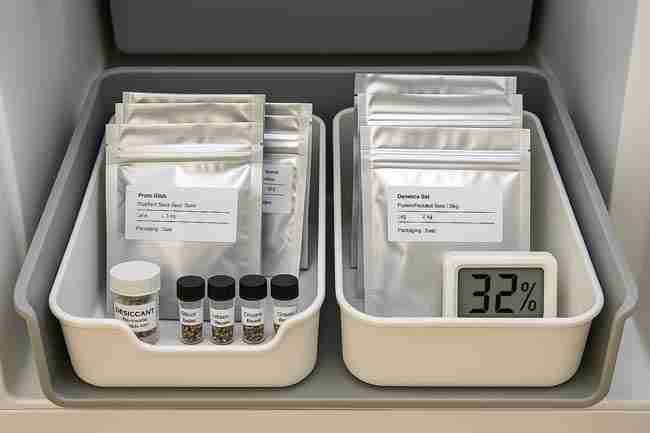
A smart cannabis seed stash lasts 2–3 years with minimal losses when you rotate first-in/first-out, package seeds in airtight mylar with desiccant, and keep them cold, dark, and dry (ideally fridge or deep-freeze). Label lots, test germination every 6–12 months, and plant aging packs first
Intro
A cannabis seed stash should feel like confidence on a shelf—reliable packs ready for your next grow in Canada or the United States. You’ll plan what to buy, what to plant first, and how to store the rest so germ rates barely budge over 2–3 years. We’ll use simple rotation, airtight packaging, and cold, dry storage to lock in vigor. If you’re brand-new to long-term storage, start with our quick refresher on keeping seeds viable for the long haul: How to Store Cannabis Seeds for 10+ Years Without Losing Viability.
Your 2–3 Year Plan at a Glance
Goal: Build a stash that keeps ≥85–95% germination for 24–36 months.
What you’ll do:
- Buy in waves: 3 smaller purchases per year beat one giant haul.
- Split each lot: Working pack (for the next 6–12 months) + reserve pack (deep storage).
- Package right: Airtight mylar + silica/desiccant; label date, breeder, strain, lot number.
- Store cold & dry: Fridge (3–5 °C / 37–41 °F) or freezer (−18 °C / 0 °F).
- Rotate FIFO: First in, first out—oldest lots get planted first.
- Test routinely: 10-seed germ test every 6–12 months; log results.
- Adjust: If a lot drops below your target germ %, schedule it for the next run.
Checklist (first 30 days):
- Week 1: Inventory current seeds; label gaps (photo, auto, indica-leaning, etc.).
- Week 2: Buy wave #1; split, package, and store.
- Week 3: Create a simple spreadsheet or notebook for tracking.
- Week 4: Run a quick 10-seed test on your oldest pack; record % and vigor notes.
Seed Rotation: FIFO for Growers
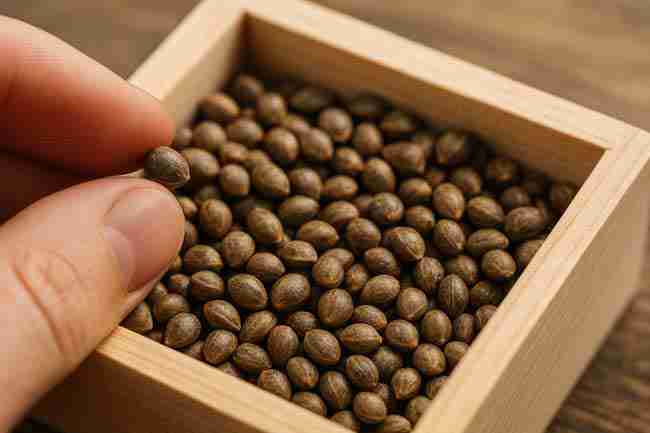
Why it matters: Rotation prevents “museum packs” that die on you.
The FIFO Framework (simple & ruthless)
- Front row = oldest lots. When you plan a grow, pick from the front.
- Back row = newest lots. New purchases go to the back after packaging.
- Quarterly audit: Move any lot >18 months to a “Priority Plant” bin.
Pro tip: Put a tiny colored dot on each pack (green = <12 months, yellow = 12–24, red = 24–36). One glance tells you what to run next.
Internal read to sharpen your eye when choosing keepers: What Makes a High-Quality Marijuana Seed? A Breeder’s Checklist.
Storage That Protects Viability
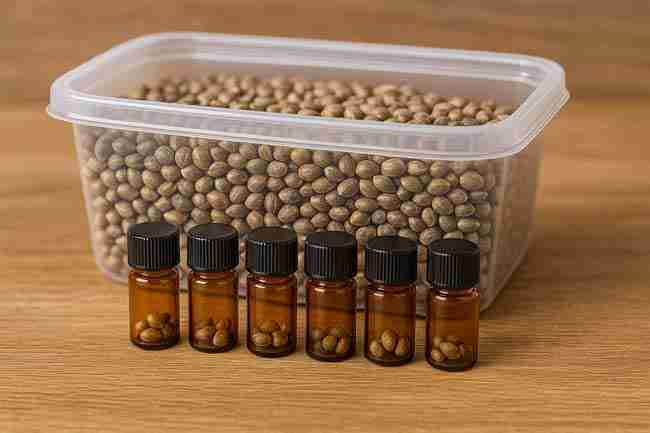
The Big Three
- Dry: Target 25–35% equilibrium RH inside the pack (use 1–2 g silica per small mylar).
- Cold: Fridge (3–5 °C / 37–41 °F) or Freezer (−18 °C / 0 °F).
- Dark: Opaque mylar and closed bins beat “pretty jars in window light.”
Comparison Table: Storage Methods (2–3 Year Horizon)
| Method | Typical Temp | Pack RH Target | Pros | Cons | Best For |
|---|---|---|---|---|---|
| Closet/Ambient | 18–24 °C (64–75 °F) | 35–45% | Easy, no appliances | Risky swings, light exposure, faster aging | Short holds <6 months |
| Refrigerator | 3–5 °C (37–41 °F) | 25–35% | Excellent longevity, easy access | Door-opening humidity pulses; needs airtight packs | Main stash 2–3 yrs |
| Freezer | −18 °C (0 °F) | 20–30% | Max longevity; stable | Must pre-dry; careful thawing; risk if power fails | Long reserve packs |
Pros/Cons of Freezer Storage
- Pros: Best slowing of metabolic aging; viability often holds well past 3 years.
- Cons: If seeds aren’t dried first, ice micro-damage can occur; you must thaw sealed at room temp for 24 h before opening to avoid condensation.
Outbound resource on climate baselines and planning: USDA Plant Hardiness Zone Map.
Aging Strategy: What to Plant First vs Save
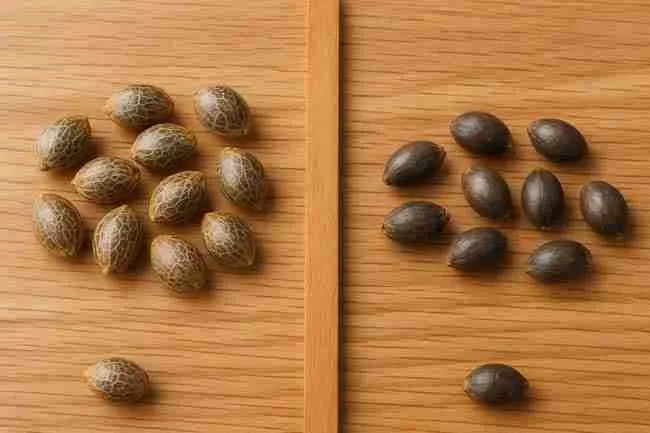
Think in tiers:
- Tier A (18–36 months): Schedule next 1–2 runs.
- Tier B (6–18 months): Keep as backups for unexpected losses.
- Tier C (0–6 months): Deep storage; don’t touch unless needed.
Risk Pooling
Don’t over-depend on a single lot. Keep at least two different lots (or strains) that fit your season and tent. If one underperforms, the other saves your harvest plan.
For background on how lots are made and why lot-to-lot differences happen, see How Are Cannabis Seeds Made? From Breeding to Packaging.
Moisture & Temperature: The “Rule of 100”
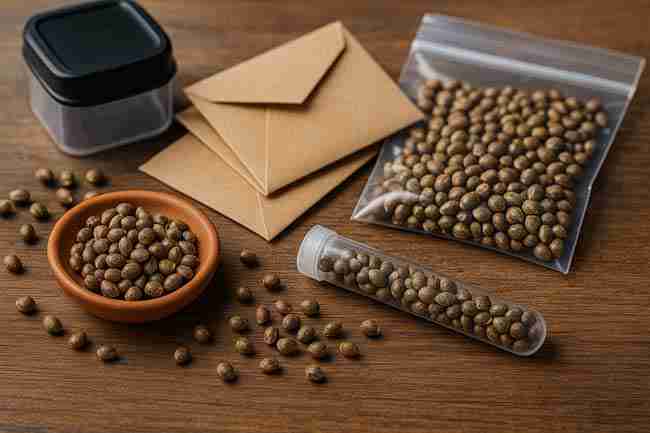
A classic seed-storage heuristic: temperature (°F) + relative humidity (%) ≈ 100 or less for longevity. Example: 41 °F (5 °C) + 30% RH = 71—excellent. This rule keeps you honest when seasons swing.
How to hit it:
- Dry first: Pre-condition seeds with silica in a small airtight jar for 7–14 days.
- Seal: Move to mylar with fresh desiccant and heat-seal.
- Chill: Store in fridge/freezer.
- Warm sealed before opening: 24 h at room temp so condensation forms outside the pack, not on your seeds.
If you want to push ultra-long storage for special projects, consider techniques in How to Freeze-dry Marijuana Seeds (So They Last for Years).
Labeling & Inventory That Never Lies
Minimum label fields
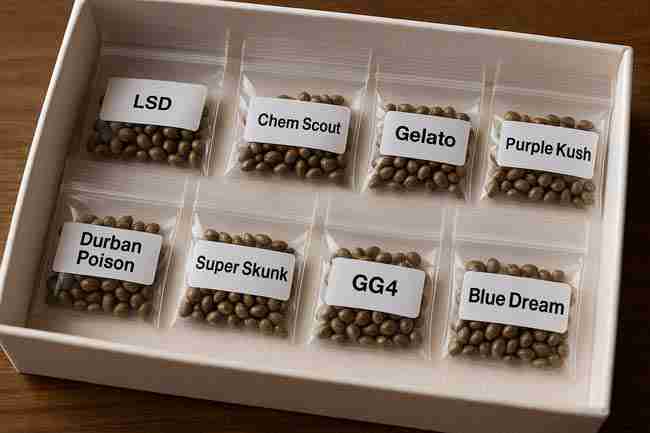
- Breeder & strain
- Lot or batch code
- Date sealed & storage state (fridge or freezer)
- Germ test % & date (update after each test)
- Notes (e.g., “Nova Scotia outdoor keeper,” “SW desert-tolerant”)
Simple Inventory Rhythm
- Quarterly: Audit colors (green/yellow/red), schedule “yellow” lots.
- Every 6–12 months: 10-seed germ test; update % and vigor notes (taproot speed, helmet-head incidence).
- Before each grow: Confirm you’re pulling from the front row (FIFO).
Germination Insurance: Testing, Priming & Backups
Routine 10-Seed Test (every 6–12 months)
- Warm the sealed pack to room temp 24 h before opening.
- Hydrate gently: 12–18 h soak in clean water (18–22 °C / 65–72 °F).
- Paper-towel method: Two damp towels in a zip bag with air gap; 22–26 °C (72–79 °F).
- Score at 48h, 72h, and 96h: Count radicles ≥2 mm as germinated.
- Log vigor: Fast, uniform pops = healthier lot.
Priming Options (when lots age)
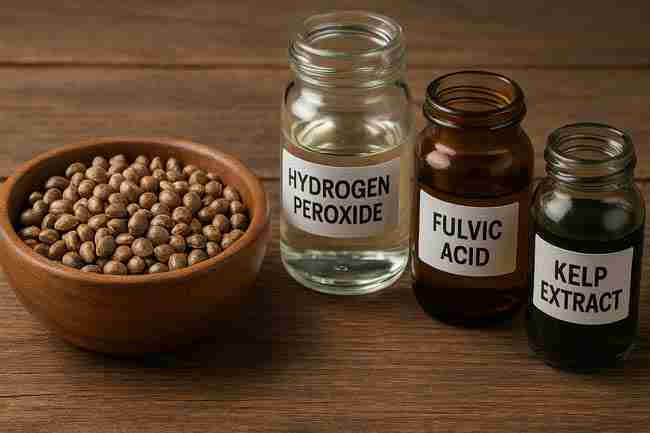
- H2O2 rinse (0.5–1% for 10 minutes) before soak to reduce surface issues.
- Kelp/fulvic tea (very mild) for a 15-minute dip (avoid overdoing).
- Scarify lightly with a nail file for very hard shells (rarely needed).
If you prefer soil simplicity next run, skim Plant Cannabis Seeds Directly in Soil: Your No-Fuss Germination Adventure.
Canada & USA Notes: Climate & Shipping
- Climate snapshots:
- Canada – Atlantic (Nova Scotia/Atlantic): Fog and humidity push mold risk; keep storage airtight and cold; plan earlier finishes.
- Canada – Prairies: Sudden spring/fall frosts; pick earlier strains and keep backup autos.
- BC Coast: Long, wet fall; hedge with mold-resistant lines.
- USA – Upper Midwest: Watch late frosts; stash autos/fast photos as plan B.
- USA – Pacific NW: Persistent rain = botrytis pressure; prioritize dense-calyx but airy structure.
- USA – Southwest: Heat/drought; stash heat-tolerant genetics and consider earlier sowing before peak heat.
- Shipping & handling: On arrival, let sealed packs acclimate to room temp before opening, especially in winter (Canada) or during heat waves (U.S.). Store cold and dry right away.
- Neutral legal note: Cannabis laws vary by province/state and municipality. Seeds are for adult audiences; always verify local regulations before purchasing or germinating.
Authoritative climate resources:
- Environment & Climate Change Canada – Climate Normals: https://climate.weather.gc.ca/climate_normals/
- NOAA Climate Data (U.S.): https://www.ncei.noaa.gov/
Buyer’s Guide: Choosing Lots That Age Well
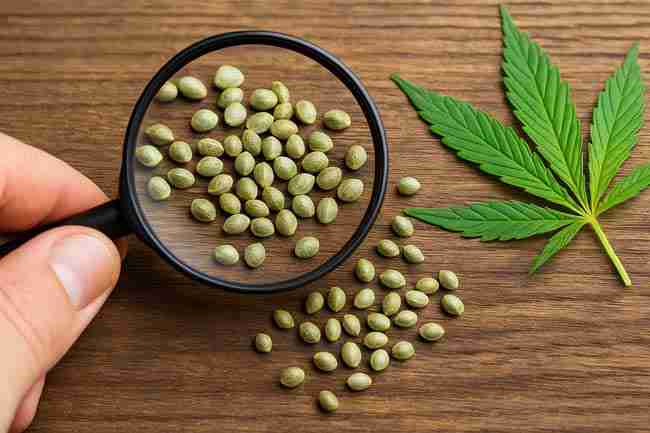
When you’re building a 2–3 year stash, shop for consistency and maturity:
- Uniform size and color (mottling is fine; avoid obviously immature, pale seeds).
- Reputable breeder lots with recent pack dates.
- Clear lot codes and storage recommendations.
- Strain fit for your climate and tent (don’t stash what you won’t grow).
If you want a refresher on seed quality cues, read What Makes a High-Quality Marijuana Seed? A Breeder’s Checklist. When you’re ready to explore genetics, browse the Cannabis Seeds catalog on Green Avenger Seeds for region-friendly options and fresh lots: [/cannabis-seeds/].
Common Myths & Big Mistakes
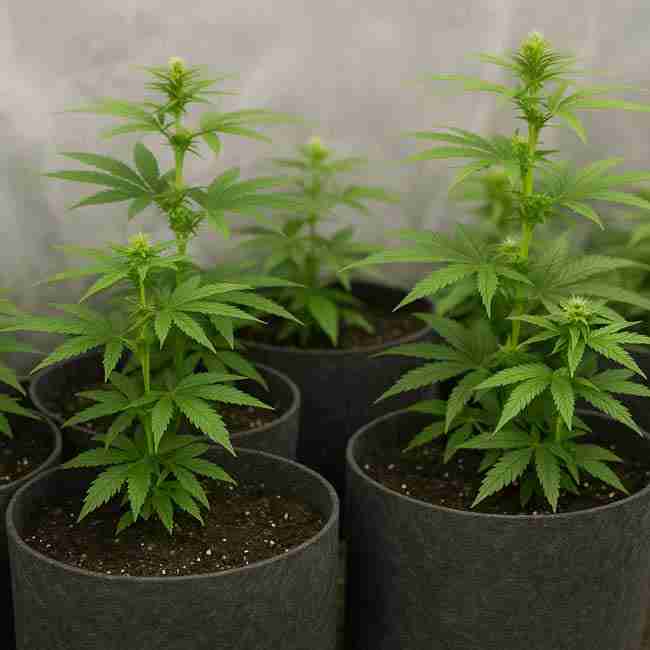
Myths
- “Freezer always kills seeds.”
Reality: Poor pre-drying and sloppy thawing kill seeds—not the temperature itself. - “Glass jar on a sunny sill is fine.”
Reality: Light + heat + humidity swings = silent viability drain. - “Bigger seeds = better seed.”
Reality: Size varies by variety; germ vigor matters more than size.
Mistakes
- Opening frozen packs before they’ve warmed sealed to room temp.
- Storing seeds in kitchen fridges without airtight packaging (humidity pulses).
- Never testing; discovering a problem after your only start window.
- Hoarding strains you’ll never plant (clogs rotation; increases losses).
Troubleshooting Ladder: If This, Then That
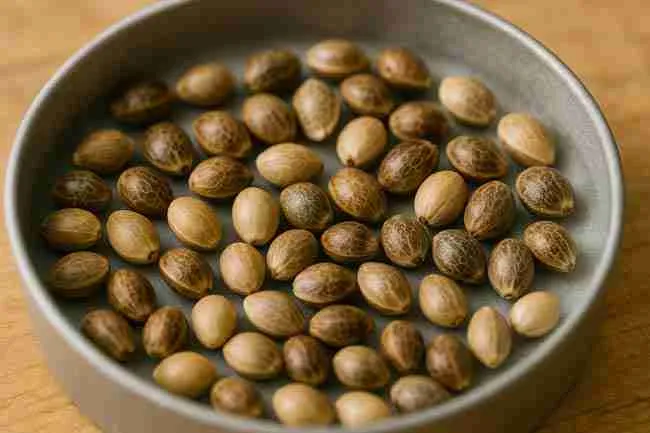
- Low germ (60–80%) on a 24-month lot?
→ Re-test after a gentle pre-dry (fresh desiccant 7 days).
→ Then soak + paper towel with slightly warmer temps (26 °C / 79 °F).
→ If still low, plant extra to hit target plant count and retire the lot. - Condensation on packs after delivery in winter?
→ Don’t open. Warm sealed to room temp 24 h, then store. - Seeds crack but stall (helmet heads)?
→ Add humidity bump (domed environment), and gently ease the cap with tweezers. - Mold in a working pack?
→ Discard contaminated seeds; sanitize container; re-pack survivors with fresh silica and consider a mild H2O2 rinse before germination. - You keep forgetting FIFO?
→ Color-code and schedule a quarterly audit on your phone.
Sourcing & Methodology
Recommendations here come from grow-room trials (paper towel vs. direct sow), seed-storage best practices used by horticulture programs, and government climate datasets to plan around frost/heat windows:
- Environment & Climate Change Canada – Climate Normals
- NOAA/NCEI climate datasets
- General seed-bank practices (drying, airtight packaging, cold storage)
Conclusion & Next Steps
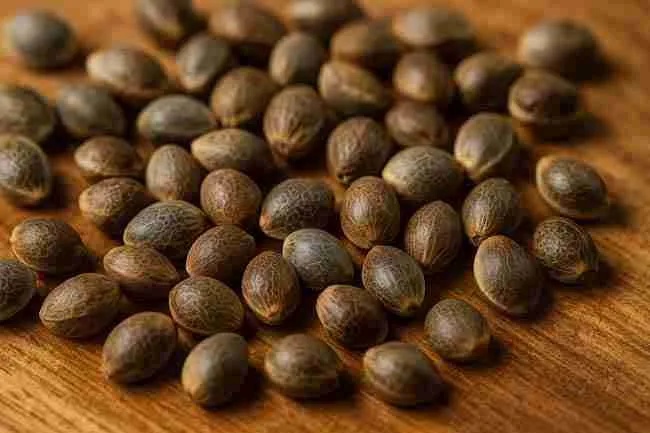
Building a cannabis seed stash is simple: dry + cold + dark, labeled to the nines, tested on schedule, and rotated ruthlessly. You’ll plant the oldest first, protect the rest, and keep options open for Canada’s foggy falls or the U.S. Southwest’s heat. When you’re ready to round out your rotation, start with reliable, fresh lots and a realistic plan for your next 2–3 years. Explore quality genetics here: Cannabis Seeds – Green Avenger Seeds, and, if you’re optimizing budgets, don’t miss How Much Does It Really Cost to Grow an Ounce of Cannabis?.
Additional Internal Reads (keep your rotation sharp)
- Indoor vs Outdoor Cannabis Seeds in Canada: Which One Should You Choose?
- Best Grow Light Spectrum for Trichome Production: Your Sticky-Resin Roadmap
FAQs
1) How big should my cannabis seed stash be for 2–3 years?
Plan for 2–3 runs worth of your main strain plus one backup per season. Split each lot into a working pack and a reserve pack.
2) Is the freezer better than the fridge for seeds?
Freezer gives max longevity if seeds are properly dried (≈20–30% RH) and thawed sealed before opening. The fridge is excellent and easier day-to-day.
3) What humidity should I target inside the pack?
Aim for 25–35% RH with fresh desiccant. Use airtight mylar or lab vials inside a sealed container.
4) How often should I test my stash?
Run a 10-seed germ test every 6–12 months per lot. Track speed and uniformity, not just the final %.
5) Can I store my cannabis seed stash in the garage or shed?
Usually no. Temperature and humidity swings are brutal. Choose a fridge or freezer indoors.
6) Do bigger seeds last longer?
Not necessarily. Maturity and storage matter more than seed size.
7) What’s the fastest way to ruin a stash?
Sunlight, humidity pulses (opening unsealed in a warm room), and opening frozen packs before they’re warmed sealed.
8) Should I vacuum-seal?
Vacuum can help but airtight + desiccant matters more. Avoid crushing seeds; use rigid vials inside mylar.
9) How do I recover a borderline lot?
Try pre-dry with silica for a week, then soak + paper towel at 22–26 °C (72–79 °F). Plant extra to hit your target count.
10) What’s the simplest starter kit for a long term seed plan?
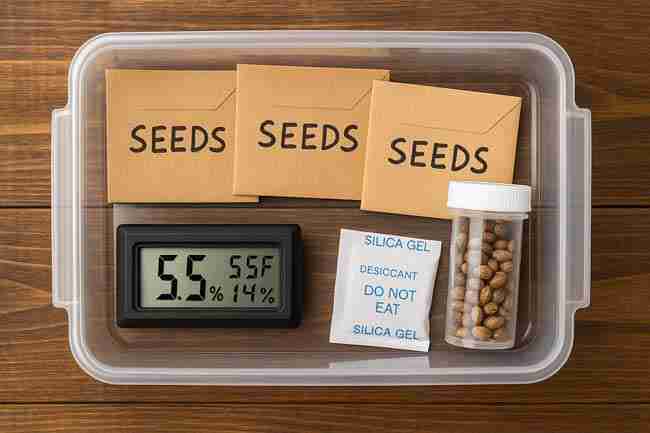
Mylar bags, heat sealer, silica gel, small rigid vials, labels, a mini-hygrometer, and a dedicated fridge/freezer bin.