Cannabis Seed Anatomy 101: What’s Inside the Shell?


You’re holding a tiny time capsule. Inside that hard little speck lives a full baby cannabis plant, already packed with its first leaves, first root, and enough stored food to launch life. When you understand Marijuana Seed Anatomy, you stop guessing and start growing with confidence. In this guide, you’ll peek under the shell, learn what each part does, and discover how to handle seeds so they pop fast, grow strong, and resist the usual rookie mistakes.
Quick Takeaways (so you can hit the ground running)
- A cannabis “seed” is technically an achene—a seed plus a thin fruit shell fused together.
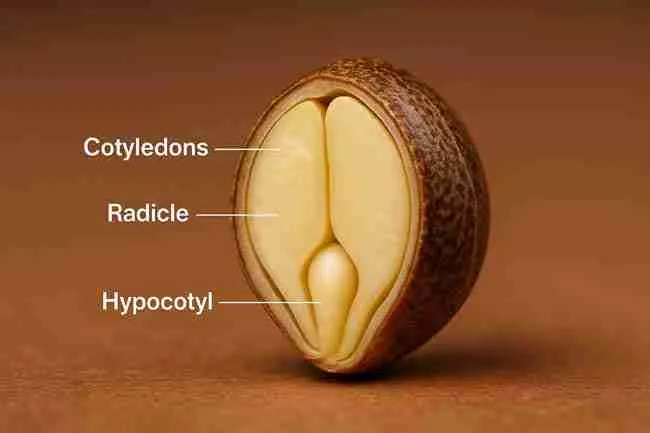
- The living plant inside is the embryo, with a taproot (radicle), cotyledons (first leaves), and a tiny shoot.
- Cannabis Seed Anatomy matters for germination: water enters mainly through a tiny pore (micropyle), then the taproot bursts out.
- Seeds contain oils and proteins, not THC. Potency lives on the bracts (often called “calyxes” by growers) and sugar leaves, in trichomes.
- Healthy, mature seeds are firm, darker, often mottled (“tiger stripes”), and they don’t squish when you squeeze gently.
What is inside a cannabis seed?

You asked what’s inside. Short answer: a complete baby plant. Longer answer: the parts below work like a pit crew to start life fast.
The Outer Shell: Testa + Pericarp (the “hull” of an achene)
- What it is: A tough coat that protects the embryo from drying out, infection, and bumps in the road. In cannabis, this coat is fused with a very thin fruit layer—why botanists call it an achene.
- What it does: Lets in water at the right time, keeps the embryo safe, and helps the seed survive storage and travel.
The Micropyle (the tiny doorway)
- What it is: A teeny pore near the seed’s pointed end.
- What it does: First entry point for water and oxygen. Once water sneaks in, the embryo wakes up, swells, and—bam—the taproot punches out.
The Embryo (the baby plant)
Inside, you’ve got three VIPs:
- Radicle (Taproot): The first root that pops. It anchors the plant and starts drinking water and nutrients.
- Hypocotyl + Plumule (Shoot): The short stem section and baby shoot that will lift the first leaves.
- Cotyledons (First Leaves): Two thick seed leaves loaded with energy. They unfold like a parachute to power early growth before “true leaves” show up.
Stored Food: Cotyledons > Endosperm
- What it is: Cannabis seeds often have little to no endosperm; most fuel sits inside the cotyledons.
- What it does: Feeds the seedling until roots and true leaves take over.
Table: Parts of a Cannabis Seed and Why You Care

| Seed Part | Where It Is | Job Description | Grower Tip | If Something’s Wrong |
|---|---|---|---|---|
| Testa (seed coat) + Pericarp | Outer shell | Shield vs. damage/drying | Don’t crush; avoid sanding | Soft, cracked, or mushy = low viability |
| Micropyle | Near pointed end | Gateway for water/oxygen | Pre-soak speeds water uptake | If overly damaged, germ rates drop |
| Radicle (taproot) | Inside embryo | First root; anchors/feeds | Plant taproot down after it emerges | Brown/black or mushy = rot |
| Hypocotyl/Plumule | Inside embryo | Lifts cotyledons | Gentle handling reduces “damping-off” | Thin, weak, or purple can mean stress |
| Cotyledons | Inside embryo | First leaves + fuel | Don’t force shells off; mist gently | Stuck shell (“helmet head”): soften with humidity |
How Cannabis Seed Anatomy affects germination
You’re not just “getting seeds wet.” You’re activating anatomy.
Water first, always
Seeds are dry on purpose. When you pre-soak (12–24 hours in clean, room-temp water), water slips through the micropyle and wakes the embryo. If you see a little taproot tail, move the seed to your starting medium.
Oxygen, not soggy socks
Roots need oxygen. Overly wet towels or puddled soil starve the embryo of air. Keep things moist, not waterlogged. Think “wrung-out sponge,” not “soaked sponge.”
Temperature sweet spot
Most seeds pop fast at 22–26°C (72–79°F). Too cold and you’ll wait forever; too hot and you’ll cook the embryo.
Gentle handling of the hull
Resist the urge to sand or nick cannabis seeds. Unlike super hard seeds (like some ornamentals), cannabis usually doesn’t need scarification. If the shell sticks (helmet head), raise humidity or dab a drop of warm water to soften it—don’t yank.
Orientation matters (a little)
Once the radicle is visible, plant with the taproot down and the pointy end slightly downward. This follows the seed’s anatomy and helps the shoot (plumule) reach up faster.
What is a cannabis calyx?
Here’s a fun twist: when growers say “calyx”, they usually mean the bract (also called the perigonal bract). Botanically, the calyx is the set of sepals. In cannabis lingo, though, the “calyx” is that little teardrop pod on female buds that holds the ovule and later swells when a seed forms.
Calyx (grower-speak) = The Bract
- What you see: Tiny, resinous, tear-shaped “pods.”
- What it does: Protects the ovule and, if pollinated, swells around the developing seed.
- Why it matters: These bract surfaces are loaded with capitate-stalked trichomes—aka the glitter factory where cannabinoids and terpenes are produced.
Seed formation in the “calyx”
- Before pollination: The bract protects the ovule and pistils (those white hairs).
- After pollination: The bract swells as the seed develops inside. When mature, the bract can split slightly and reveal a firm, fully formed seed.
Pro tip: For seed-making, monitor bract swelling, color, and firmness. Mature seeds are hard, often dark to mottled, and separate cleanly when rubbed.
(Internal link idea: connect this section to your “How Are Cannabis Seeds Made? From Breeding to Packaging” article.)
What is the content of cannabis seeds?

Let’s bust a myth: seeds don’t contain THC (beyond trace contamination on the shell). The psychoactive punch lives in trichomes on bracts and sugar leaves—not inside seeds.
Nutritional makeup (rough ballpark)
- Oils (lipids): ~30–35%
- Rich in linoleic (omega-6) and alpha-linolenic (omega-3) fatty acids.
- Protein: ~20–25%
- Carbohydrates & fiber: The rest
- Cannabinoids: Essentially none inside the seed
This rich oil/protein blend is why hempseed (food) is popular. But for growing, these reserves are fuel, not flavor—feeding the seedling until roots and leaves take over.
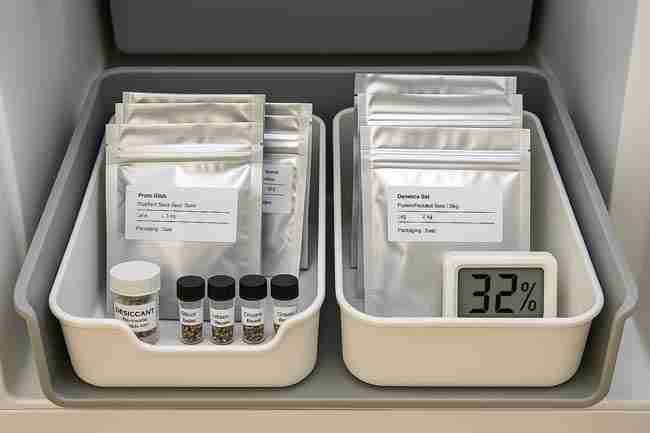
Moisture content and storage
- Long-term storage targets low seed moisture (commonly ~6–9% moisture) in cool, dark, dry conditions.
- Use airtight containers with desiccant; avoid temperature swings.
- For multi-year storage, read your “How to Store Cannabis Seeds for 10+ Years” guide.
Seed viability and vigor (your quick checks)
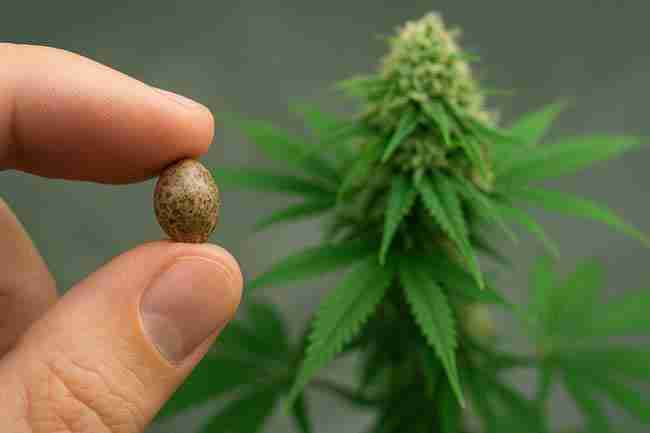
- Look: Hard shell, darker color, sometimes mottled stripes.
- Feel: Firm; doesn’t crush under gentle pressure.
- Test: Germinate a small sample batch (e.g., 10 seeds) and track % popped in 72–96 hours at 22–26°C.
(Internal link idea: from here, link to “How to Freeze-dry Marijuana Seeds (So They Last for Years).”)
What is the most potent part of a bud?
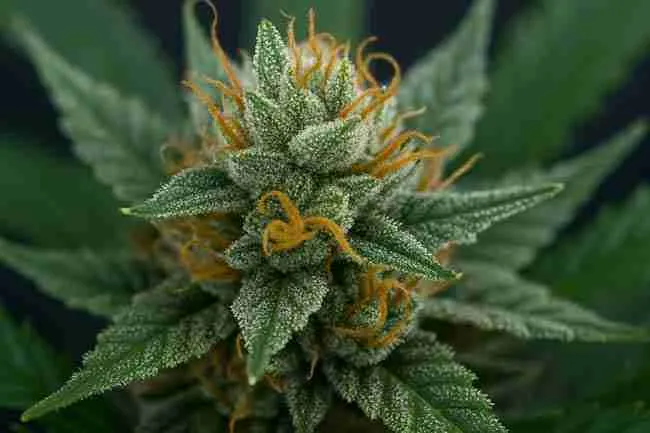
You guessed it: the trichome heads—those tiny, mushroom-shaped resin glands coating the bracts (your “calyxes”) and sugar leaves. The highest cannabinoid density is usually on the bract surfaces near the pistils.
Why bracts win
- Surface density: Bracts carry a thick carpet of capitate-stalked trichomes.
- Chemistry: These trichomes are the factories for THC, CBD, minor cannabinoids, and terpenes.
- Harvest timing: Trichome color (clear → milky → amber) is a better maturity signal than just pistil color.
(Internal link idea: point readers to “Best Grow Light Spectrum for Trichome Production” and “Debunking THC Potency Myths”.)
Practical inspection & handling guide (zero guesswork)

- Unpack gently. Avoid crushing pressure and temperature shocks.
- Visual check. You’re looking for firm, darker/mottled seeds without cracks.
- Pre-soak (optional but helpful). 12–24 hours in clean water at 22–26°C. Remove once you see a small tail or at 24 hours, whichever comes first.
- Plant promptly. Place taproot down, 0.5–1 cm deep in lightly moist, airy medium (seed-starting mix or buffered coco).
- Humidity dome. Keep RH ~70–90% around the seedling; vent daily to prevent mold.
- Light. After cotyledons open, give gentle 18/6 or 20/4 light. Keep LEDs high enough to avoid bleaching.
- Don’t feed yet. Seedlings live off cotyledon reserves. Start light nutrients once true leaves appear.
- Avoid overwatering. Let the top 1–2 cm dry slightly between waterings.
- Warm feet. Roots love 22–24°C at the root zone. Heat mats on thermostats help in cool rooms.
- Patience. If a shell sticks, raise humidity; don’t force it.
Specifications (for growers, at-a-glance)

| Spec | Typical Range | Why It Matters |
|---|---|---|
| Seed size | ~2.5–5.0 mm | Smaller/larger can both be viable; firmness > size |
| Seed color | Tan to dark brown, often mottled | Dark + mottled often indicates maturity (not a hard rule) |
| Shell hardness | Firm, resists gentle squeeze | Soft shells correlate with poor viability |
| Ideal germ temp | 22–26°C (72–79°F) | Fastest, cleanest germination |
| Start depth | 0.5–1 cm | Deep enough to anchor; shallow enough to reach light |
| Early RH | 70–90% around seedling | Prevents drying & “helmet head” |
| Storage moisture | ~6–9% | Longevity; lower mold risk |
| Storage environment | Cool, dark, dry, airtight + desiccant | Extends life; avoids oxidation |
| Time to pop | 24–96 hours (typical) | Strain & age vary |
(Internal link ideas: “Plant Cannabis Seeds Directly in Soil” and “Feminized vs. Autoflower Cannabis Seeds”.)
Pros and cons of common seed traits
Dark vs. light shells
- Pros (dark/mottled): Often indicates full maturity; tends to be tougher.
- Cons: Not a guarantee. Some genetics stay lighter even when fully viable.
Big vs. small seeds
- Pros (big): More stored food in cotyledons (sometimes), easy to handle.
- Cons: Size ≠ vigor; small seeds can be rockets.
Older vs. fresh seeds
- Pros (fresh): Higher vigor, quicker to pop.
- Cons (older): Germination slows; storage skill becomes critical. Consider pre-soaks and gentle warmth.
Feminized vs. regular
- Pros (fem): Grow all females; no male culling.
- Cons: Less male genetics for breeding.
- (Internal link idea: “Feminized vs. Autoflowering Cannabis Seeds: Which Should You Choose?”)
Common mistakes (and easy fixes)

- Over-soaking: More than 24 hours can drown the seed. Fix: Move to medium once you see a tail.
- Waterlogged medium: Starves roots of oxygen. Fix: Improve drainage; water less.
- Cold feet: Slow or stalled germination. Fix: 22–26°C, heat mat if needed.
- Shell stuck to cotyledons: Fix: Raise humidity, soften with a drop of water, wait.
- Yanking shells or stuck membranes: Tears cotyledons. Fix: Patience + humidity; gentle tweezers only as a last resort.
FAQs (People Also Ask style)
Q1: Does Cannabis Seed Anatomy affect yield?
Absolutely. Strong embryo vigor leads to sturdy seedlings, better root systems, and fewer early stalls. Good starts make good finishes.
Q2: Can I tell sex from seed shape or stripes?
Nope. Sex isn’t visible on the seed. Choose feminized seeds if you want nearly all females.
Q3: Do cannabis seeds contain THC?
Essentially no inside the seed. Any trace THC lives on trichomes outside on buds, not within seeds.
Q4: What’s the “calyx” again—bract or sepals?
Growers say calyx but mean the bract—the tear-shaped pod that swells around a seed. Botanically, the calyx is sepals.
Q5: How long do seeds last?
Stored cool, dark, dry (airtight + desiccant), many seeds remain viable for years. Lower moisture and steady temps are key.
Q6: Is scarification needed for cannabis seeds?
Usually no. The shell isn’t that hard. Focus on correct moisture, warmth, and oxygen.
Q7: What’s the most potent part of a bud?
The trichome heads on bract surfaces (and sugar leaves). That’s where cannabinoids and terpenes are made.
Q8: Why do some seeds pop in 24 hours and others take days?
Genetics, age, storage, and temperature. Old or poorly stored seeds often take longer.
Q9: Are striped seeds always better?
Stripes (“tiger mottling”) often appear on mature seeds, but some healthy seeds are plain. Firmness matters more than paint job.
Q10: What’s the best way to plant once the tail shows?
Place the seed taproot down, 0.5–1 cm deep, in a light, airy, moist medium. Gentle light, warm roots, no rush.