Cannabis Roots Healthy


Healthy cannabis roots are an oxygen problem first. Ranking pages in 2026 keep landing on the same test: white or cream, firm, earthy smell. Rot is brown and slimy and swampy, together. Brown alone is often nutrient stain. A marijuana plant that wilts in a wet pot is drowning, not thirsty. Shop seed in the cannabis seeds store. The rest of the grow library is on the cannabis cultivation blog.
Canada’s recreational cap is four plants per household. Quebec still bans rec home grow. Manitoba has been indoor-only since 1 May 2025. Four weed plants in fabric pots still rot if you water on a calendar. This page is the pot job: how to read a root, how to water so air returns, what Pythium needs, and when to up-pot. Indoor rooms: indoor cannabis growers guide. Tents: grow tent for cannabis seeds. Watering how-to: water cannabis plants.
What Healthy Cannabis Roots Look Like
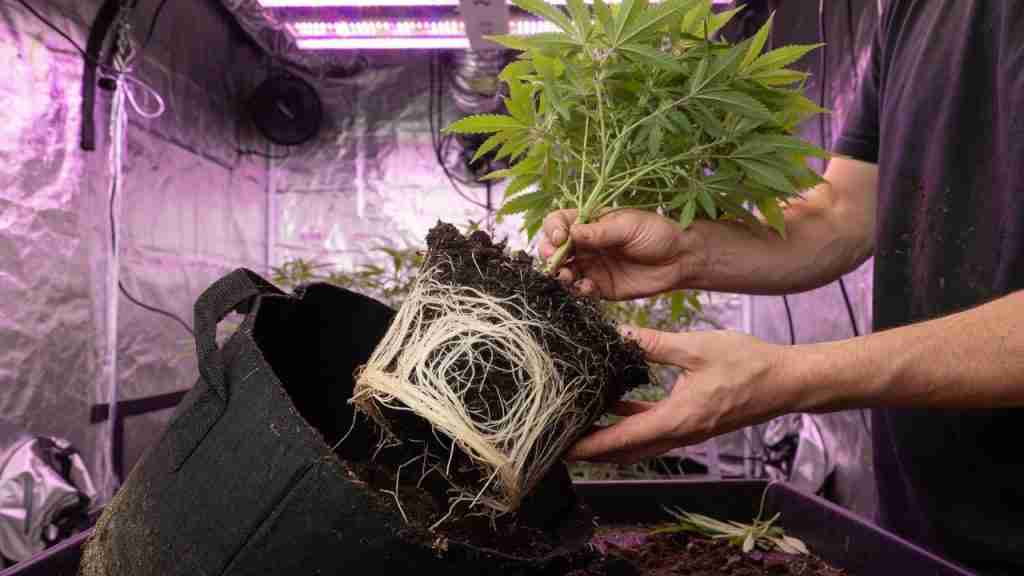
Lift a plant once in veg if you have to. Healthy roots are bright white to cream, they hold the mix, and they smell like soil, not a drain. Fine hairs cover the surface. The mass springs back when you squeeze it. That is the picture you want at transplant. Older woody roots can run tan and still be fine if they are firm. New tips should still be white. Hydro roots look the same in a bucket: white, separate, moving in the current. Hydro guide: hydroponic cannabis growers guide.

A wall of white roots on the outside of a fabric pot is air pruning working. Tips hit air, die back a millimetre, and branch. That is not rot. Rot is mush. If you never lift, you still have tells above ground. Fast new growth. Leaves that hold turgor in the light. A pot that is light when it is time to water and heavy when it is not. A plant that drinks on a rhythm you can learn. Seedling roots start as a tap and a few laterals: cannabis seedling stage. Veg is when the mass should fill the pot you chose: cannabis vegetative stage.
You do not need to unpot every week. In soil and coco, the honest check is weight plus smell at the drain hole. In a net pot, lift the lid and look. White threads in the hole of a fabric pot are a good sign. A sour hit when you water is a bad one. Clones coming out of a plug should show white tips at the bottom of the cube before you bury them in a bigger mix. If the cube is brown, slick, and smells like a pond, rinse and recut before you gift that slime to a five-gallon.
Colour is a weak test by itself
Molasses, compost teas, and some bottled organics stain roots brown. Coco tannins stain too. Firm brown roots that smell earthy are stained. Slimy brown roots that smell like a swamp are rotting. Squeeze a strand. Healthy tissue stays together. Rot slides off a stringy core between your fingers. That peel is the cortex coming off. Ranking write-ups hammer this because forum photos of “root rot” are often tea-stained hydro roots. Smell and slime decide. Colour is a hint.
Above the pot, rot and hunger look similar. Both yellow. Both droop. The split is the mix. A hungry plant in a light, dry pot perks up after a feed. A drowning plant in a heavy, wet pot droops harder after you water “to help it.” Do not chase magnesium on a swamp. Check the root first, then the bottle: magnesium for growing cannabis. Deficiency chart: cannabis nutrient deficiency.
Oxygen, Dry-Back, and a Pot That Can Breathe
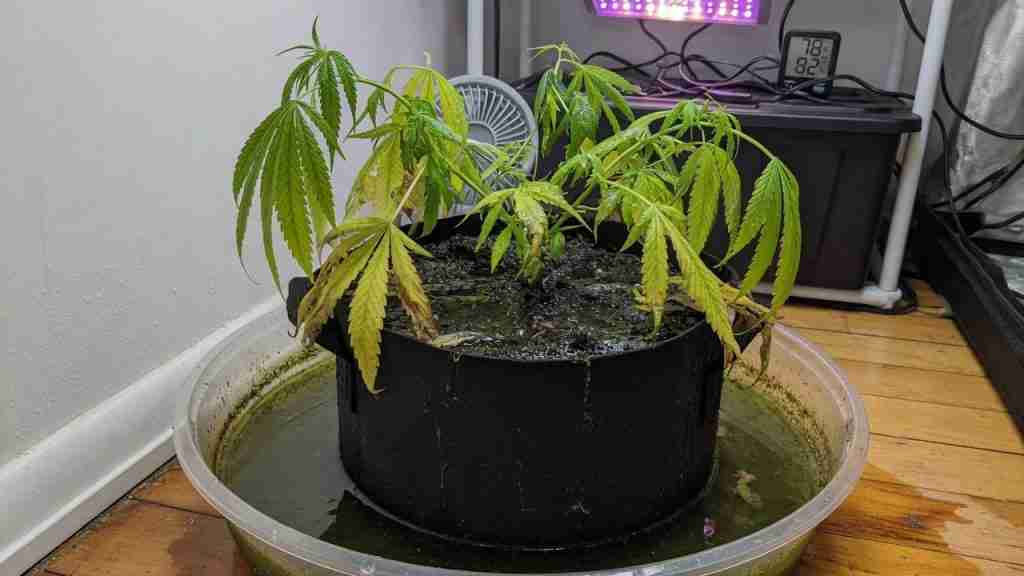
Roots burn sugar. That needs oxygen in the pore space of the mix. A pot that stays wet has water where air should be. The plant droops because it cannot drink, which is how people water again and finish the kill. Standing water in a saucer is a swamp. Dump it. Let the mix get lighter. Water again until you get runoff, then wait. The wait is the dry-back. That is the oxygen phase. Full watering page: water cannabis plants. Pot size and media: environment, media, watering, pot sizes.

A small plant in a huge wet pot is the classic home-grow rot. The mix stays cold and anaerobic for days. Match pot to plant. A seedling in a cup, then a 1-gallon, then a 3- or 5-gallon for a four-plant tent is enough. First crop planning: planning your first cannabis crop. Lift the pot. Heavy means wait. A cheap moisture meter lies in coco and in the dry pocket near the wall. Use it as a second opinion, not as a religion. The finger two knuckles down still works in soil. In coco you water more often because coco holds air and water together if you mixed it right.
Calendar watering is how cups die. Monday-Wednesday-Friday on a seedling in a 5-gallon of peat is a death sentence. The plant drinks a cup. You poured two litres. The extra sits. Seedlings want a small volume that can dry in a day or two under the light. Once the pot is light and the top looks dull, water until a little runoff, then stop. In flower the plant drinks more. You still wait for light. You do not keep the mix at field capacity all week because the cola looks thirsty at noon. Thirst at noon in a wet pot is heat and VPD, not a dry root: cannabis VPD explained.
Media and Pots That Keep Air in the Root Zone
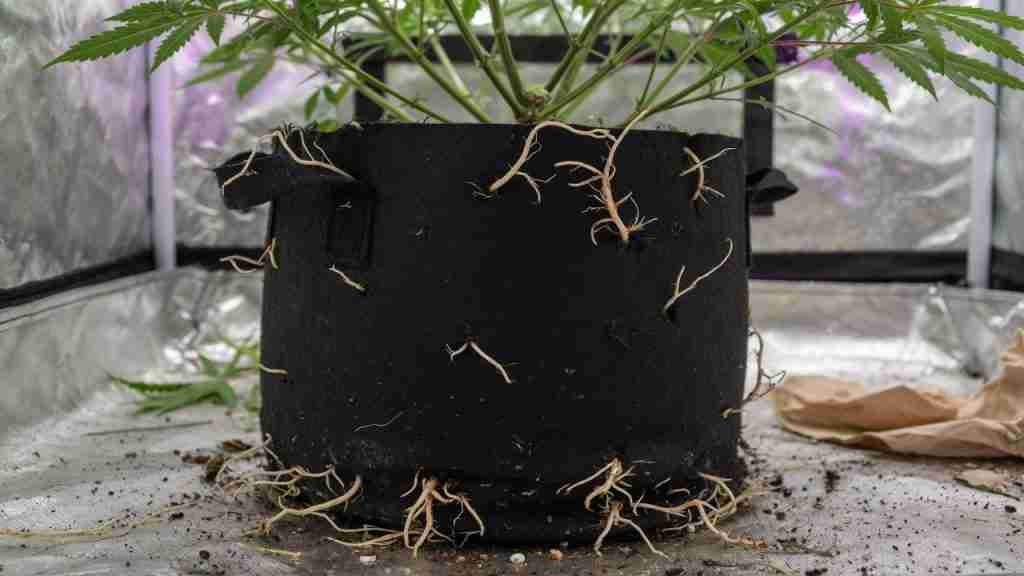
Fabric pots air-prune and dump heat. Plastic nursery pots circle roots and stay wet longer. If you use plastic, it needs drainage holes you did not cover with a saucer of sludge. Fabric on a grate or tray that can drain is the home default. Roots poking through the side are a feature until they mat on a wet floor. Keep the pot off standing water. Coco with perlite is the mix that forgives a heavy hand if you still let it dry back: growing cannabis in coco coir. Soil that is peat soup is a rot farm. Organic soil that actually drains: organic cannabis soil.
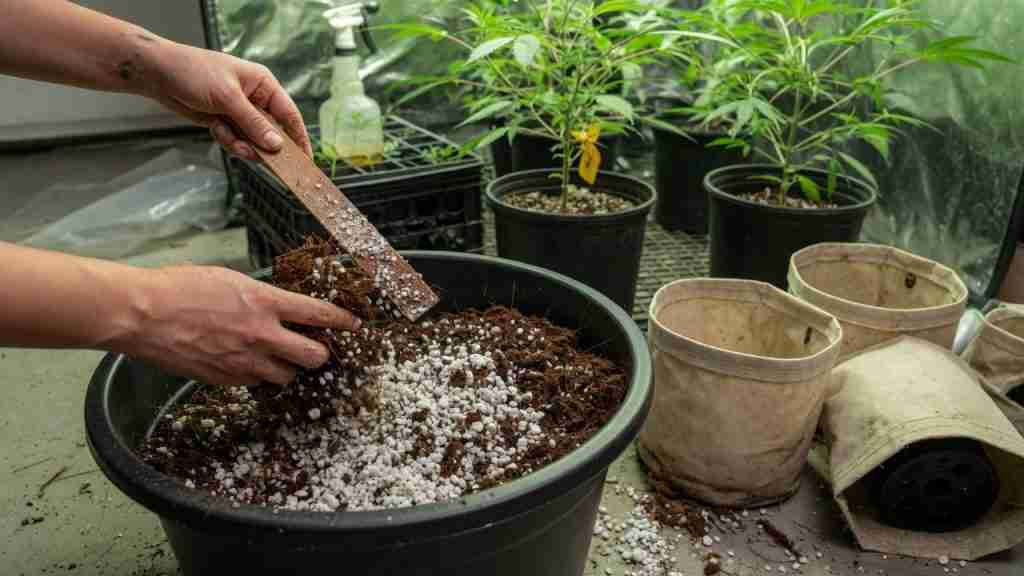
Perlite, pumice, or rice hulls are the air. A dense bag of “potting soil” from a hardware store packs down after three waterings. Mix in aeration before you transplant, not after the plant is gasping. Living soil and no-till want a food web and still need air: no-till living soil cannabis. Castings help biology; they do not fix a swamp: worm castings. Amendments: organic growing amendments for cannabis. Outdoor in heavy clay: raise the bed or grow in fabric, or you are growing Pythium with a view: growing cannabis outdoors.
Vermiculite holds water. That is useful in a small seedling mix. It is a problem if the whole five-gallon is vermiculite-heavy. Perlite and pumice hold shape. Coco holds both air and water if you buffered it and you do not sit it in a tray. A marijuana plant in straight peat with no grit will look fine for a week, then stall when the peat collapses. Mix once, at the start. You cannot fluff a packed root ball later without tearing it.
Water Temperature, Cold Shock, and a Warm Root Zone
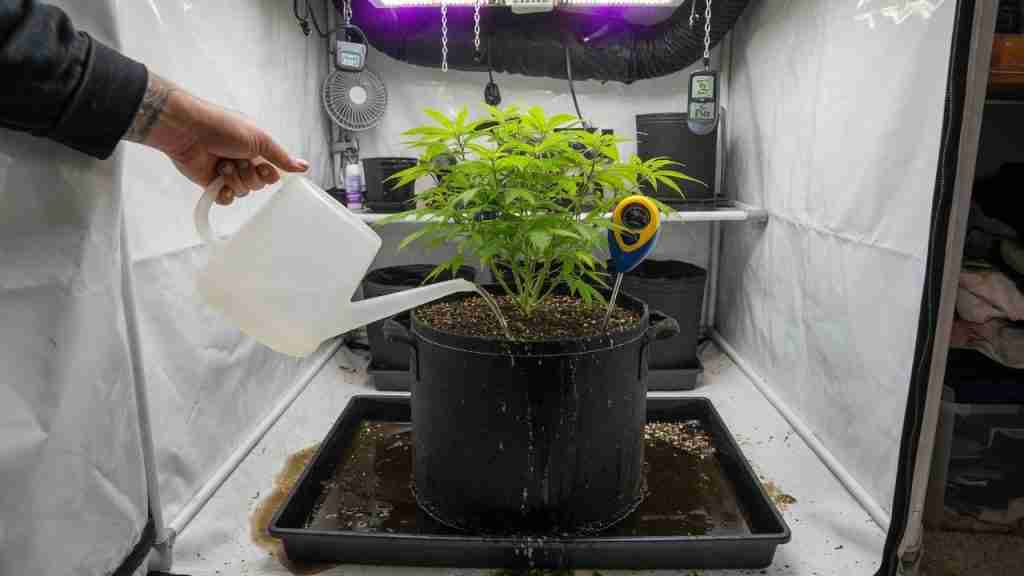
Ice-cold well water on a 26 °C tent is a slap. Roots slow. Uptake stalls. The plant looks hungry for a day. You do not need a kettle. You need water that is not fridge-cold. Room temperature in a jug overnight is enough for four plants. Hydro is stricter. Warm reservoir water holds less dissolved oxygen. Pathogens like that. Keep hydro solution in a band around 18–22 °C. Soil and coco in a tent follow the room. A pot on a cold concrete floor is a different climate than the canopy. Raise fabric pots off the slab in winter.
Do not ice the root zone the night before harvest hoping for a potency trick. Cold shock is still shock. The plant spends energy closing down instead of finishing resin. Keep the last drinks at the same temperature you used all flower. Heat mats under pots are for a floor that drops the mix toward 14 °C lights-off. They are not a licence to keep the mix wet. Warm and wet is Pythium weather. Warm and aerated is growth.
Hard water and odd pH lock nutrients at the root surface even when the roots look white. Test the tap. Hardness page: does water hardness affect cannabis crops. Feed that matches the stage: cannabis nutrition across all stages. A pale plant with white roots is a feed or pH problem. A pale plant with slimy roots is a rot problem you will not fix with a bottle. Organic bottles still salt a root if you pour daily: organic marijuana fertilizer. Synthetics: synthetic cannabis fertilizers.
Root Rot: Diagnose, Then Change the Water, Not the Bottle
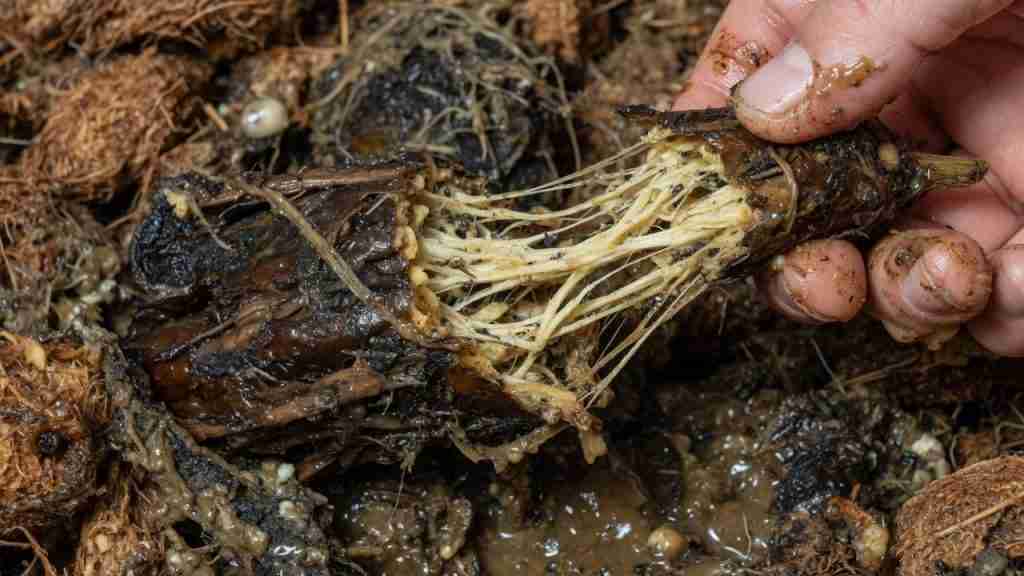
Pythium and friends are water moulds. They sit in wet, low-oxygen media and move when roots are weak. You do not catch them from a full moon. You catch them from a saucer, a warm bucket, or a seedling cup that never dries. Above ground: wilt in a wet pot, slow growth, yellow that looks like a deficiency you already “fixed.” Below: brown, slick, peeling, foul. If the mix smells sour when you water, believe your nose. Clean the room so you are not recycling slime: cannabis grow room clean.
Fix is oxygen, not a miracle drench on a swamp. Stop watering. Dump the saucer. Raise the pot. Add airflow across the media surface. If the plant is small, knock it out, rinse, cut the mush with clean scissors, and replant into a smaller, airier mix. A mature flowering plant in a 5-gallon that is rotting is a dry-back job. You will not rebuild a full root mass in week seven of bloom. Keep it alive, keep it drier, finish. Flower stage: cannabis flowering stage. Quality up top still needs roots that can drink: growing quality cannabis buds. Airy tops from a plant that never ate: light and fluffy cannabis buds.
Hydro: more air stones, cooler water, clean the bucket, trim slime, keep an air gap under the net pot. Products exist. They do not replace dissolved oxygen. Soil: hydrogen peroxide stories online are a band-aid. They also kill biology you wanted. Dry-back beats a peroxide panic on four legal plants. A flush does not oxygenate a saturated pot: flushing cannabis.
Hydro roots need dissolved oxygen, not a pretty lid
In deep water culture the roots live in solution. If the stone dies overnight, they drown by morning. Run two stones if you can. Keep the compressor above the water line so a power blip does not siphon the bucket into the pump. Leave a gap so the crown of the net pot sits in air, not in soup. When you lift a net pot, healthy hydro roots are white, they do not clump into a brown felt, and the water does not smell like a fish tank. Change the reservoir on a schedule you can keep. Do not top up warm, stale water for two weeks because the EC still “looks fine.”
A chiller is for a tent that cooks the bucket. A frozen bottle tossed in once a day swings temperature and shocks the same roots you were trying to save. Aim for a steady 18–22 °C. Cooler holds more oxygen. Iced is another stress. Keep lids on so light does not grow algae that steals oxygen and feeds slime. If one plant in a shared trough is rotting, isolate it. Runoff from a sick pot is a vector.
Root Bound: Circles, Stall, and When to Up-Pot
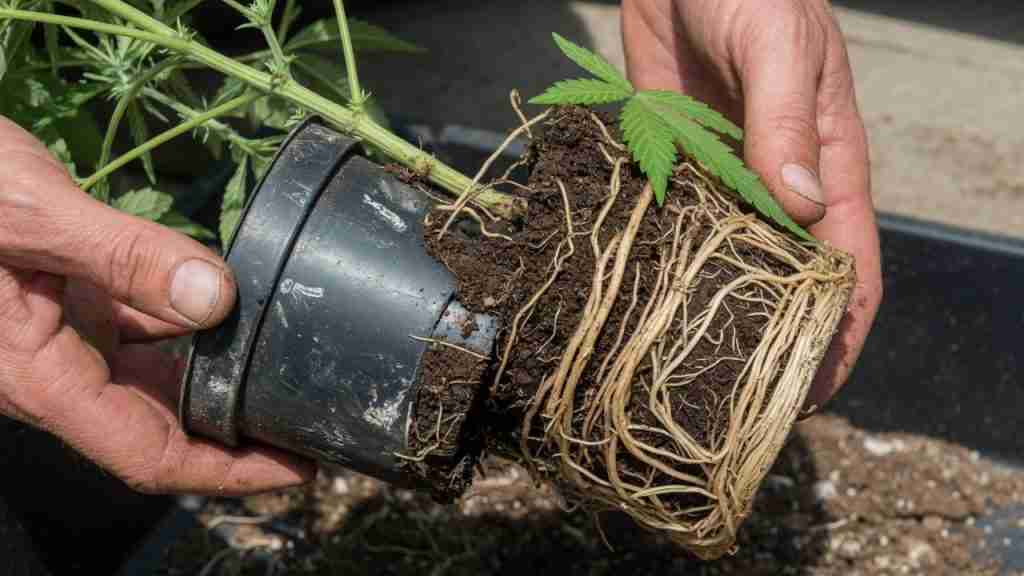
A plant that drinks every day, then wilts by lights-off, then drinks again, is often out of room. Roots circle the plastic wall and leave a hollow core. Water runs straight through and the inside stays hydrophobic. Lift. If you see a white or tan cage and no mix, up-pot. Tease the bottom. Slice a few circling bands with a clean knife if they will not unwind. Drop into a pot one size up, not a barrel. Flowering plants hate a huge wet transplant. Do the last up-pot before the flip if you can. Photoperiod timing: control flowering with photoperiod seeds.

A cube or a cup coming out as one piece is a transplant, not a death sentence. White tips at the bottom mean it is time. Brown slime at the bottom means you waited in a wet cup too long. Handle the mass. Do not shake it into a pile of naked roots unless you are rinsing rot. Seed to cup to pot is how you keep oxygen on a small plant. Canada seed FAQ: Canada cannabis seed FAQ. Buying in Canada: buy cannabis seeds in Canada.
Cutting circling roots at transplant is a prune of the cage, not a hobby. You cut the bands that would keep growing in a circle. You leave the inner mass. Hacking a quarter of a healthy white ball “to make more tips” costs a week of growth. Fabric already does the tip-cut at the wall. Plastic needs the knife only when the cage is tight. After the move, water once to settle, then wait until the pot is light. New mix that stays wet around a bound core will rot the outside while the inside stays dry. That is two problems in one pot.
Root-Zone Pests Ride the Wet Mix
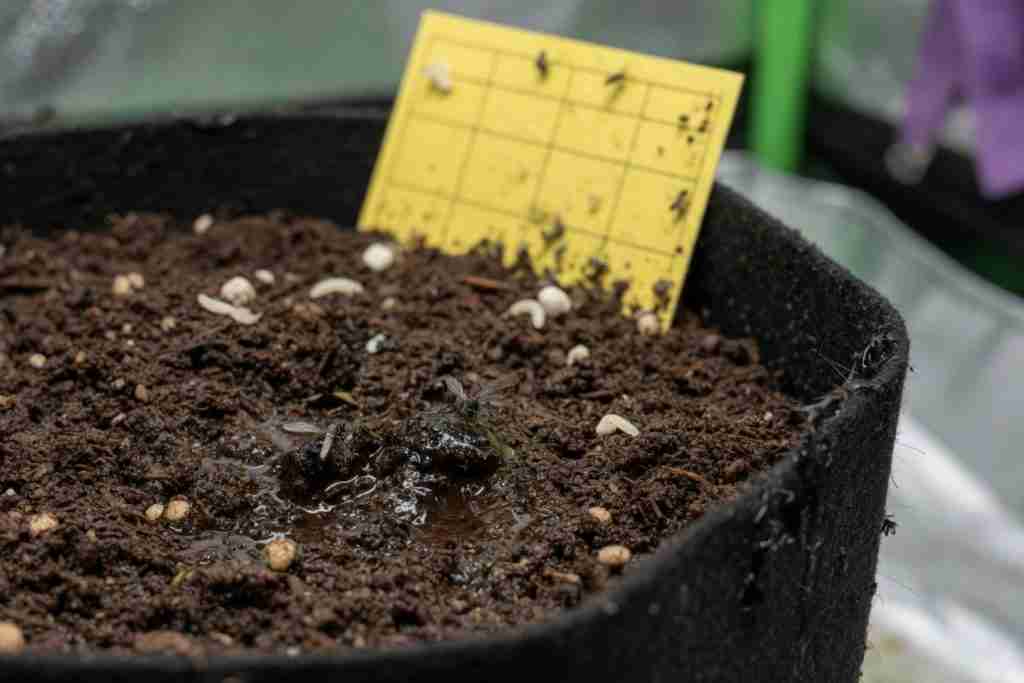
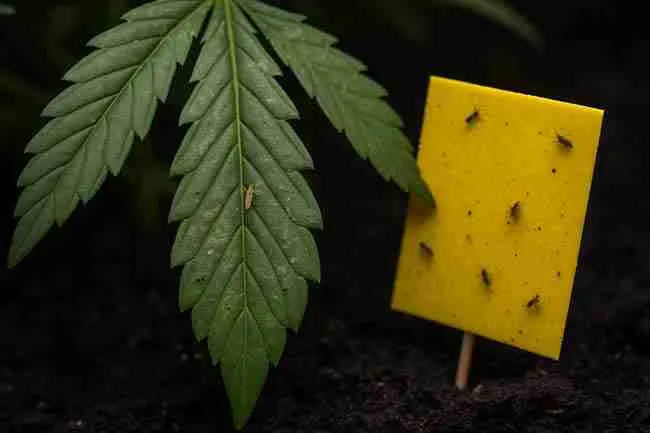
Fungus gnats breed in a wet surface. Yellow cards catch adults. The larvae chew fine roots and open doors for rot. Dry the top. Bottom-water if the surface never dries. Cards, nematodes, and soil predators beat a weekly spray on seedlings. Gnat page: fungus gnats on cannabis. Diatomaceous earth on a dry surface, not on buds: diatomaceous earth and cannabis. Whole-tent IPM: pesticide-free cannabis cultivation.
Root aphids are slower and meaner. Plants stall. Leaves twist. You find pale bugs on roots when you transplant. Quarantine incoming clones. Do not share runoff trays between a sick pot and a healthy one. Beneficials and a dry-back help. A soaked organic pot is a hotel. Powdery mildew is a canopy problem that still loves the same still, wet room: powdery mildew on cannabis. Foliar in flower is not a root fix: foliar feeding in flowering.
Adult gnats on a yellow card are a census, not the whole war. If the card fills in two days, the top of the mix is still a nursery. Let that surface dry until it looks dull. A constantly glistening coco top is an invitation. Do not drown larvae with more water. That is how you trade gnats for Pythium. In flower, keep cards out of the cola. A stuck fly in a trichome is a harvest you will pick out by hand.
Transplant Without Wrecking the Mass

Water the plant a few hours before you move it so the mass holds. Do not soak it into soup. Pre-wet the new mix so dry peat does not wick the old root ball into a brick. Set the crown at the same height. Firm the sides. Water in until a little runoff. Then leave it alone until the pot is light again. New white tips on a plug mean the plant is hunting. That is the time to pot up, not a week later when it is a knot. Cutting a few circling roots on a bound plant is a prune. Hacking a healthy white mass “for air” is vandalism. The plant spends a week replacing what you cut.
Heat at the cola is a different organ. Foxtails are a light and heat story up top: foxtailing cannabis. Harvest still needs a root system that can finish the last drink: harvest and cure cannabis. A camera will not smell a swamp. You still lift a pot: AI in cannabis cultivation.
After transplant, droop for a few hours is normal. Droop for three days in a wet new pot is overwatering the hole you just made. Lights a bit easier the first day helps. Do not foliar the plant “to help it drink.” The roots need to find the new mix. Keep the tent in the same range you already run. A transplant into a cold garage and a heat blast the next morning is two shocks. Same room, same water temperature, then wait.
Cannabis Roots Healthy FAQs
Should cannabis roots always be white?
New growing tips should be white or cream. Older roots can be tan and firm. Stain from organics is common. Panic when they are slimy and they smell like a swamp, not when they are a bit brown and they smell like soil.
How often should I water for healthy roots?
When the pot is light and the mix has air again. Calendar watering is how cups rot. Coco drinks more often than soil. A small plant in a big wet pot drinks slow. Lift. Do not watch the clock. In a tent of four, lift each pot. One plant is not a schedule for the other three.
Can I save a plant with root rot?
Early, yes. Stop the swamp, add air, cut mush if you can, replant into a smaller airy mix. Late in flower you keep it drier and finish. A plant with no white tips left is done. Do not keep a rotting hydro plant on a shared reservoir. Pull it so you do not share the mould.
Does cutting roots hurt cannabis?
Cutting circling bound roots at transplant is a reset. Cutting a healthy white mass for no reason costs time. Air pruning in fabric is the plant doing the cut at the pot wall. If you slice, sterilize the blade. Dirty scissors move Pythium from one weed plant to the next.
Do I need cold water or ice in the reservoir?
No. Avoid fridge-cold shock in soil. In hydro, keep the solution cool enough to hold oxygen, not iced. Warm still water is the rot invitation. Overnight jugs in the tent are enough for soil and coco.
Are fabric pots required?
No. They forgive overwatering better than cheap plastic. Plastic with real drainage and a real dry-back still grows white roots. A fabric pot sitting in a puddle does not. Raise fabric off a sealed tray so the bottom can breathe.
Why is my plant wilting when the pot is still wet?
The roots cannot take up water without oxygen. Wet wilt is drowning. Stop watering. Dump the saucer. Aim a fan across the media, not a gale on the leaves. When the pot is light again, water once and watch. If it still wilts wet after a dry-back, unpot and look for slime.
Do beneficials replace dry-back?
No. Inoculants and compost teas do not oxygenate a swamp. They can help a living mix that already drains. Pouring tea into a saucer of sludge feeds the wrong crowd. Get air first. Then biology has somewhere to live.