Cannabis Plants Are Dying: How to Tell Why and Save Them

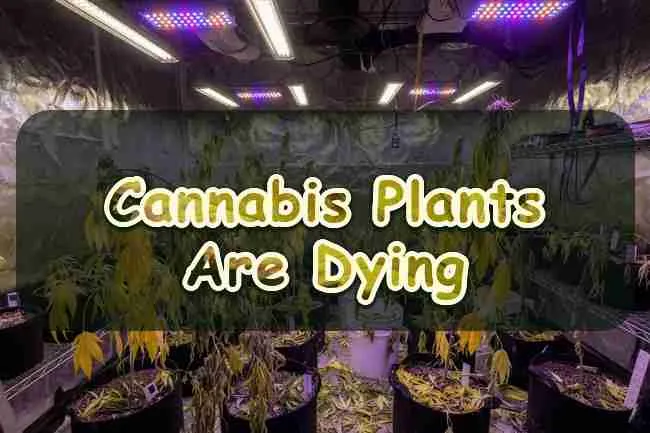
You walk into the tent and the plant looks cooked. Leaves hanging. Yellow. Maybe brown. Maybe the whole thing folded overnight. Cannabis plants are dying for a short list of reasons, not a hundred. Water. pH. Roots. Heat. Bugs. Medium. Light. You do not need a cabinet of bottles. You need to tell those problems apart before you “fix” the wrong one and finish the plant off.
The old version of this page named nine causes. They still hold: bad soil, too much water, not enough water, salt fertilizer, weak light, insects, wild temperatures, fungal pathogens, and not looking at the plant. Ranking growers keep adding the same missing step at the front: diagnose first. Wet pot or dry pot. Heavy droop or crispy wilt. Dying from the bottom up or from the top down. Then you change one thing. This page is that order, written so you can save a plant that still has a green growing tip.
First, Tell These Dying Problems Apart
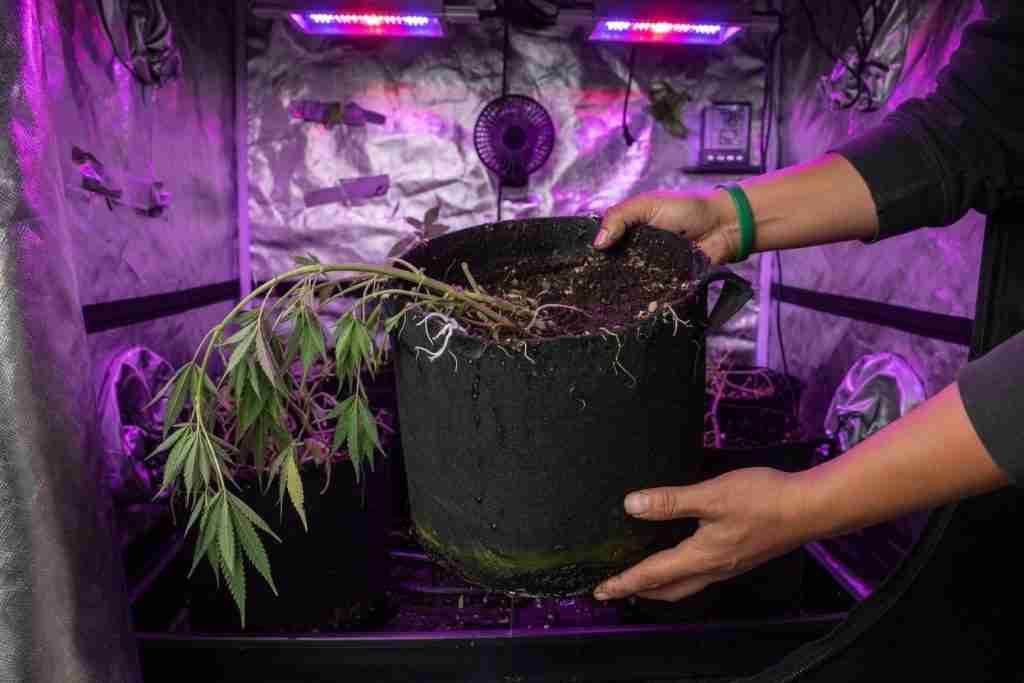
Do this before you mix a feed. Lift the pot. Stick a finger in to the first knuckle. Look at the newest growth, not just the ugly leaves. Dying leaves do not come back green. You are trying to stop the next ones.
- Pot heavy, soil wet, leaves fat and hanging: overwatering. Stop watering.
- Pot light, soil cracked, leaves limp and papery: underwatering. Water until you get runoff, then wait.
- Soil wet and the plant still wilted after a day: roots. Smell the pot. Pull one plant if you have to.
- Lowest fans yellow first, top still trying: nitrogen, overwater, or lockout. See dying from the bottom up.
- Tops bleach, twist, or die while the bottom looks fine: light, heat, or an immobile nutrient. See dying from the top down.
A buddy of mine “knew” he had a magnesium problem because the leaves were yellow. The pot weighed like a brick. He poured Epsom on drowned roots. Two days later the plant was mush. Yikes. The yellow was lockout from wet feet, not a missing bottle. Lift first. Then pH. Then feed.
Heavy droop vs crispy wilt
Overwatered leaves often feel firm and swollen. They hang because they are full of water and the roots cannot breathe. Underwatered leaves feel thin. They crisp. The plant perks within hours of a real drink. If it does not perk, and the soil is still wet, you are not looking at thirst. You are looking at dead roots pretending to be thirsty.
Poor Soil and Soilless Mix

One of the first reasons new growers fail is the medium they start seeds in. Lawn dirt, last year’s tomato bag, or a compacted backyard scoop will kill a seed before it breaks the surface. That soil is full of bacteria, fungus gnats, and a pH you did not measure. Cannabis wants air in the root zone. Yard soil packs. Water sits. The seed rots. If you already lost beans in mystery dirt, read why cannabis seeds die shortly after germination.
Why bad mediums fail
Start seed in a sterile, light mix. Something that drains. Something that does not come from the lawn. Once the plant is past the first true leaves, the mix still has to hold water without drowning roots, and it has to sit in a pH the plant can eat. Soil about 6.0 to 7.0. Coco and hydro about 5.5 to 6.5. Miss that window and every bottle you pour is a waste. Full soil notes: best soil for growing cannabis seeds and best medium to grow cannabis.
Cheap peat that stays wet for a week in a 5-gallon pot with a 4-inch seedling is a classic kill. The medium is not “rich.” It is a swamp. Use a smaller pot until the plant drinks, or mix in perlite so air can get in. Roots that never get oxygen look like a nutrient problem on the leaves. They are not. Fix the mix. Then feed. Healthy roots look white and smell like nothing much: healthy cannabis roots.
Overwatering Your Cannabis Plants
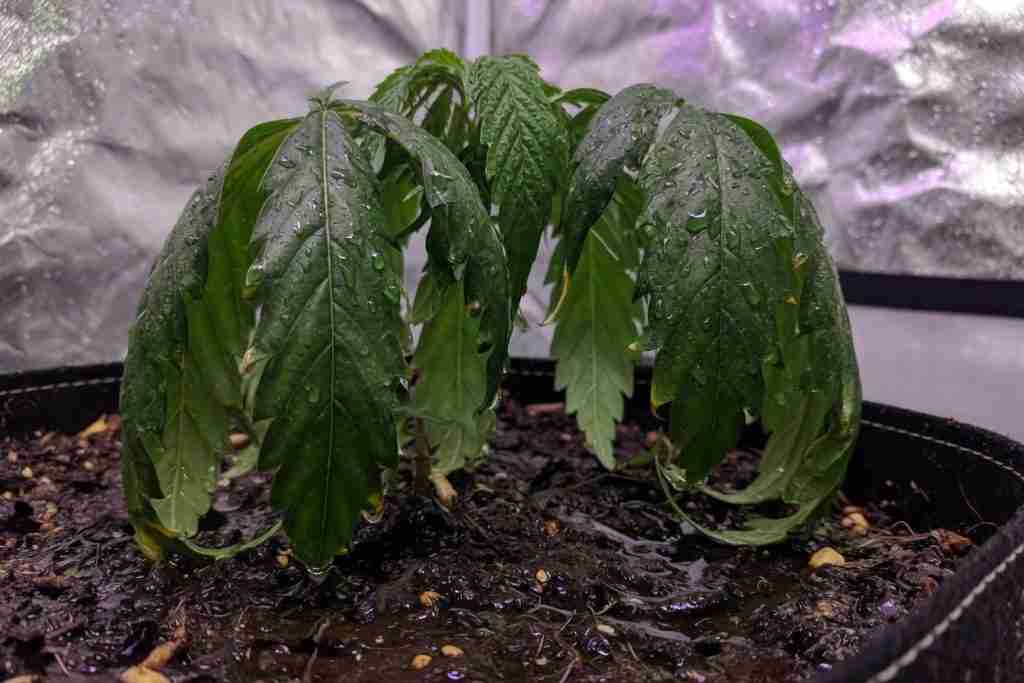
Cannabis likes the medium on the drier side, not wetter. Overwatering is the most common way plants die in a tent, especially a small plant in a big pot. You water “just to be safe.” The soil stays soggy. Roots cannot get oxygen. They stop taking up water even though they are sitting in it. The plant droops like it is thirsty. You water again. That is how you get mush.
Root rot follows. Roots go brown, slimy, and they smell like a swamp. Pythium loves that. The plant drinks less, yellows, then collapses. Stop watering until the top inch or two is dry and the pot feels light. Add a fan at the soil line. Do not sit the pot in a saucer of runoff. If the mix never dries in three days, the pot is too big or the mix is too heavy. Watering how-to: how to water cannabis plants.
Every real watering should wet the whole root ball and give you some runoff, then you wait. Finger test. Lift the pot. A schedule on the fridge is how beginners drown seedlings. Slow growth after a week of wet soil is not “the genetics.” It is roots holding their breath.
Recovery from overwater is boring. You wait. You do not “help” with a feed. You do not dunk the pot in a bucket of enzymes on day one unless the roots already stink. Give it two to five days. The leaves that are fully yellow will not green up. New growth will. If the plant is still wilted on day three with wet soil, slide it out of the pot and look. White and firm is salvageable. Brown and slimy is a restart, or a hard dry-out in a smaller pot with fresh mix.
Underwatering Your Cannabis Plants
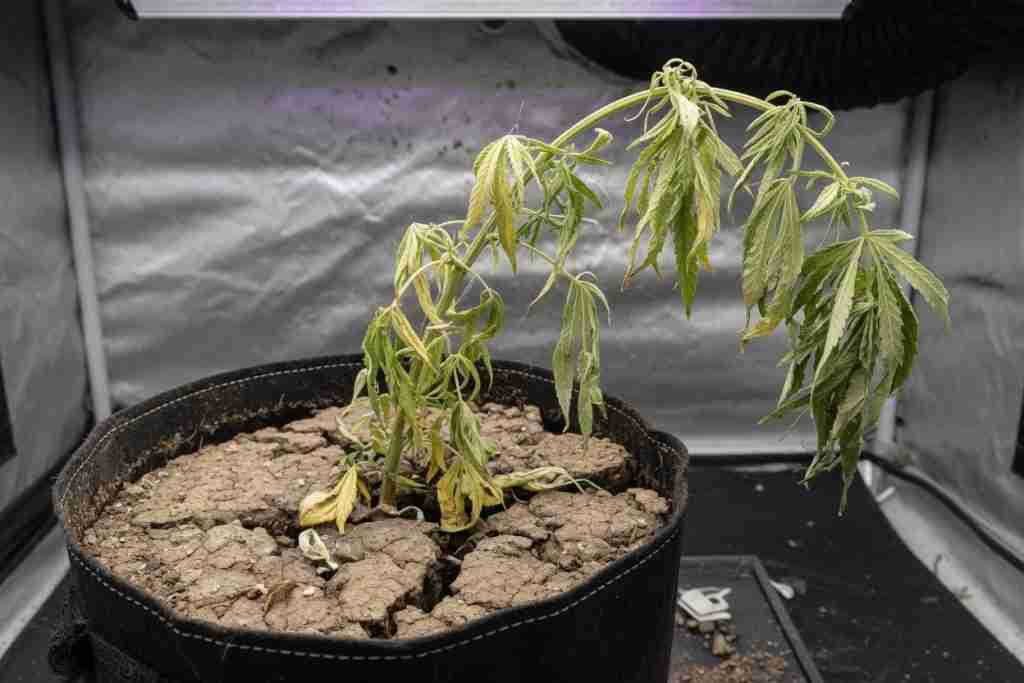
The flip side is a plant that droops every afternoon because the pot is bone dry. That slows growth. Do it long enough and the plant dies. Light, crispy leaves. Edges burn. The pot weighs nothing. Water until you get runoff so the whole root zone wets, not a sip on top that runs down the side of a hydrophobic mix. If water beads and vanishes down the edge, the mix has pulled off the pot wall. Bottom-water once, or break the surface with a fork and water slow until the middle takes it.
When the plant takes up water, that is also when it brings calcium in. Chronic underwatering shows up as weak new growth and odd spots people then treat as a Cal-Mag deficiency. Sometimes it is just that the plant never got a full drink. If coco dries to dust, soak it slowly until the block takes water again. Then go back to a wet-dry cycle, not a daily mist.
pH Lockout: Why the Leaves Die When You Already Fed
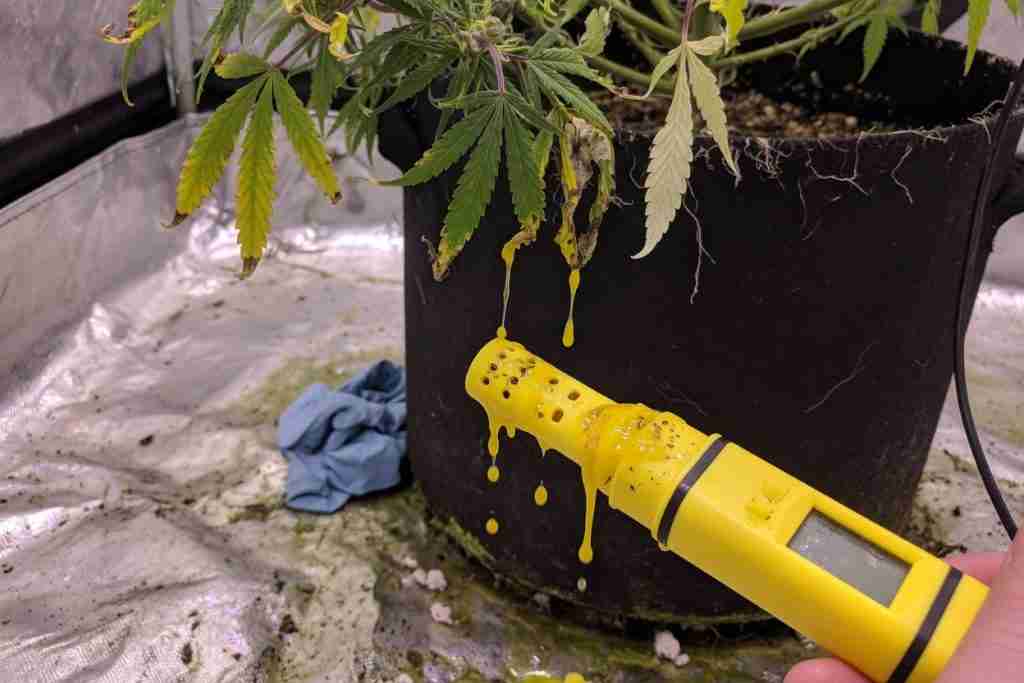
This is the piece the old page mentioned in the soil section and ranking pages put first. Roots only absorb nutrients in a pH window. Get outside it and the plant starves in a pot full of food. Growers call that lockout. It looks like a deficiency. It is not a reason to pour more salt. Measure the water going in after you mix feed. Then measure runoff. If runoff is 5.2 or 7.4 in soil, stop adding bottles. Fix the water. pH for growing cannabis is not optional homework.
Soil: stay roughly 6.0 to 7.0 and let it drift a bit inside that range. Coco and hydro: 5.5 to 6.5. If you have been feeding and the plant still yellows, flush with pH’d water, about three times the pot volume, then go back to a lighter feed. One good lockout week will look like nitrogen, magnesium, and iron all at once. That is the tell. Real single deficiencies are tidier. Tap water that sits at 7.8 will drag coco out of range in a few waterings. Know your source. Adjust after you mix nutrients, not before, because the bottles move pH too.
Too Much Salt-Based Fertilizer
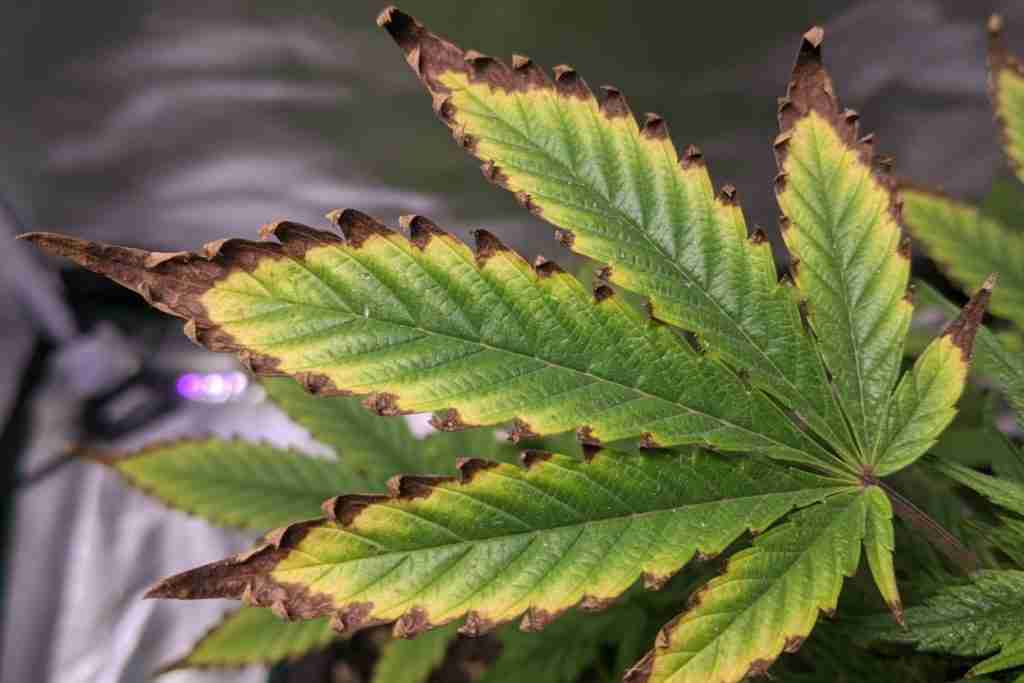
Too much of a good thing kills plants. Most bottled salt fertilizers call for more than cannabis wants, especially in soil. Tip burn, then clawed dark leaves, then lockout. One hard overfeed can cook a plant overnight. The bottle is written for hydro tomatoes, not a 3-gallon fabric pot of peat.
Start at half the label. Watch the tips. If they burn, you are already high. Flush, then feed lighter. We still recommend an organic marijuana fertilizer path when you can: you feed the soil, the soil feeds the plant, and it is harder to torch the roots in one watering. Salt feeds have a place. They also burn: synthetic cannabis fertilizers. Flower-stage yellowing that is not a planned fade: flowering-stage nutrient deficiencies.
Not Enough Light in the Grow Room

Outside and in a greenhouse this is rare. Indoors it is common. Cannabis is a light hog. If the canopy never gets enough, the plant stretches, grows slow, and the lower leaves yellow and drop. New growers call that nitrogen. Sometimes it is just a dark closet. Leaves that never see light are ballast. They die. That is not a deficiency chart. Raise the lamp? No. You needed more photons at the leaf, or fewer plants in the same footprint. A grow tent with a real LED beats a shop bulb in the spare room.
Bulbs die. Timers fail. Power goes out. LEDs quit. Have a backup or you lose a week of veg in the dark and the plant never catches up. Stretch plus yellow tips after a few dark days is how indoor plants die without a bug in sight. Too much light at the tops is the other side: bleached colas, taco leaves, burnt tips on the highest fans only. Raise the bar or dim it. Environment: best growing environment for cannabis.
Extreme Temperatures in the Grow Space

Freeze the plant and it dies. That is the simple cold version. High heat is sneakier. The medium dries too fast, the plant cannot keep up, leaves taco up to hide from the lamp, and the tops cook. Seedlings like about 68 to 77°F. Flower can sit up to the low 80s. Nights should not crash into the 50s indoors. Outdoors in a heat wave, shade cloth is not a fashion choice. It keeps the plant from dehydrating in the pot.
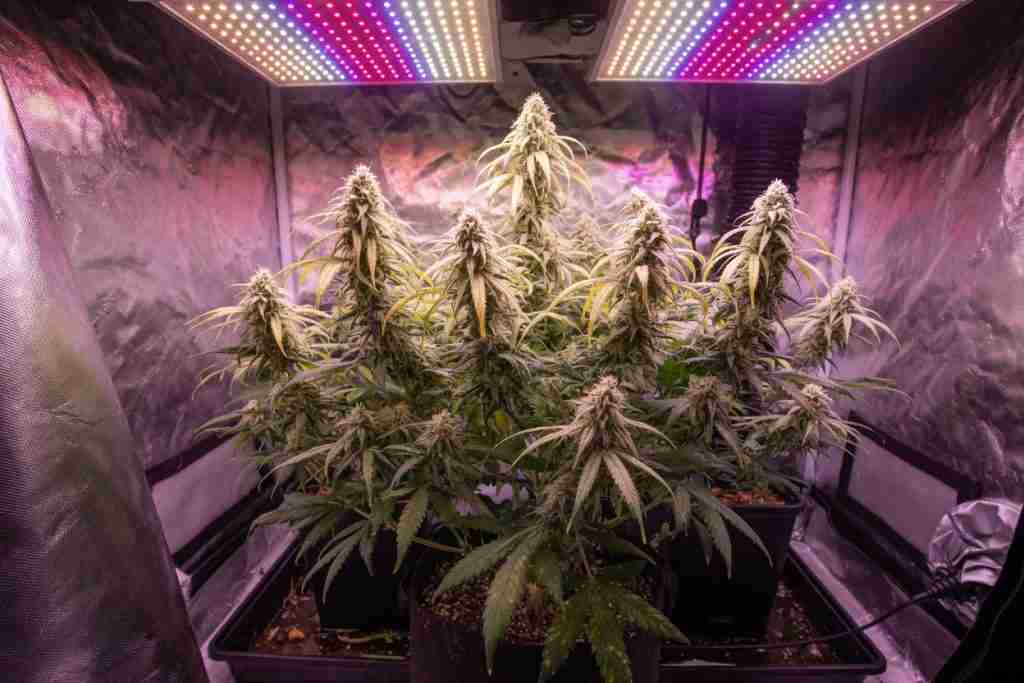
If the tent hits 90°F at the cola, dim the light, add exhaust, water when the pot is actually dry, and stop chasing deficiencies. Heat-stressed plants throw weird colors. They are not asking for bloom booster. They are asking for air. Cold-damaged leaves go dark, limp, and they do not recover. Keep what is still green and wait. Do not prune a frozen plant to the stem the same night.
Insect Infestation

Thousands of pests will eat a garden. The ones that actually kill plants in a hurry are spider mites, thrips, fungus gnats at the roots, stem borers, and slugs outdoors. Spider mites web a cola in days. You need a loupe. Speckled leaves and fine webbing on the tops is not “dust.” Flip the leaf. If it is moving, treat on a schedule, not once: spider mites in the garden. Thrips leave silver streaks and black specks: thrips on cannabis plants.
Once pests own the plant, it weakens and yield goes to zero. Isolate. Do not spray oil on ripe flower. Veg can take soap, spinosad, or predators. Flower is cards, predators, and patience. Whole-room IPM beats panic: integrated pest management. Neem belongs in veg, not on colas: neem oil on cannabis pests. Fungus gnats at the soil line are not cute. The larvae chew roots. Yellow sticky cards catch adults. Let the top of the mix dry. If the plant is already wilting in wet soil with gnats, you have two problems stacked.
Harmful Fungal Pathogens
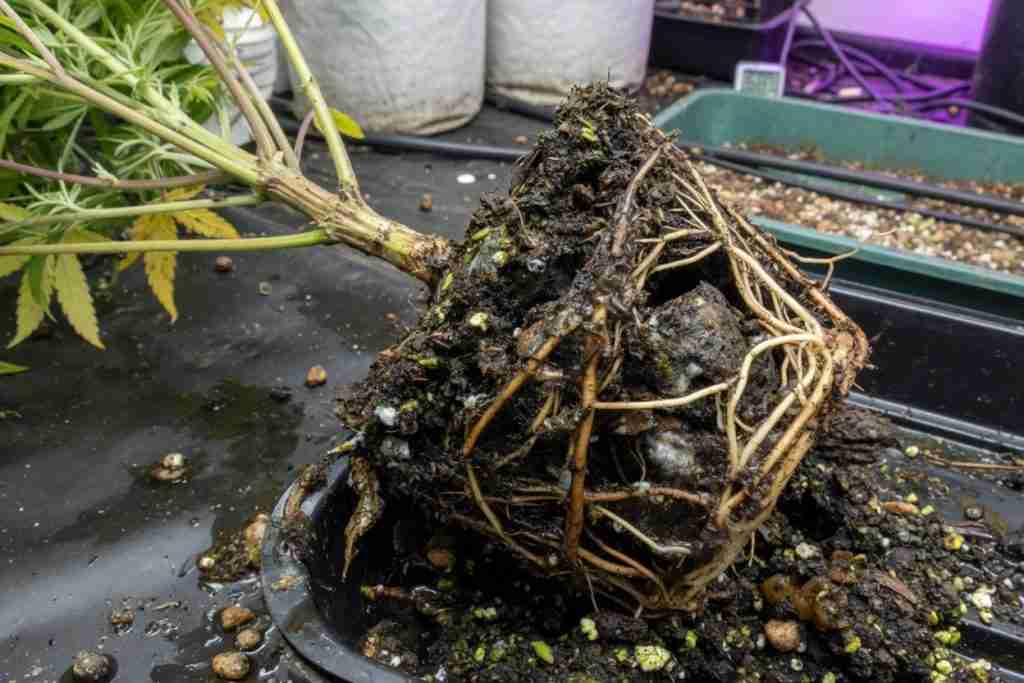
The three names that keep showing up when plants wilt in wet media are Phytophthora, Pythium, and Fusarium. They hit roots and the vascular system. The plant wilts on one side, or the whole plant folds while the soil is still wet. Cut a stem and you may see brown in the veins. That is not a Cal-Mag week. That is a pathogen. Pull the worst plant so it does not share the tray. Airflow, drainage, and beneficials in the mix (Trichoderma and a living soil, not a swamp) are how you keep them from taking the room. More on friend vs foe: fungi, friend or foe.
Powdery mildew on leaves is a different fungus. It rarely kills a plant in a day, but it will ruin flower. White flour on the leaf, then it jumps. Humidity, still air, and crowded tents. Powdery mildew on cannabis. Bud rot in late flower is the one that makes you trash colas. If the inside of a bud is brown and smells like a basement, cut it out. Do not dry it with the rest.
Seedlings That Die Overnight
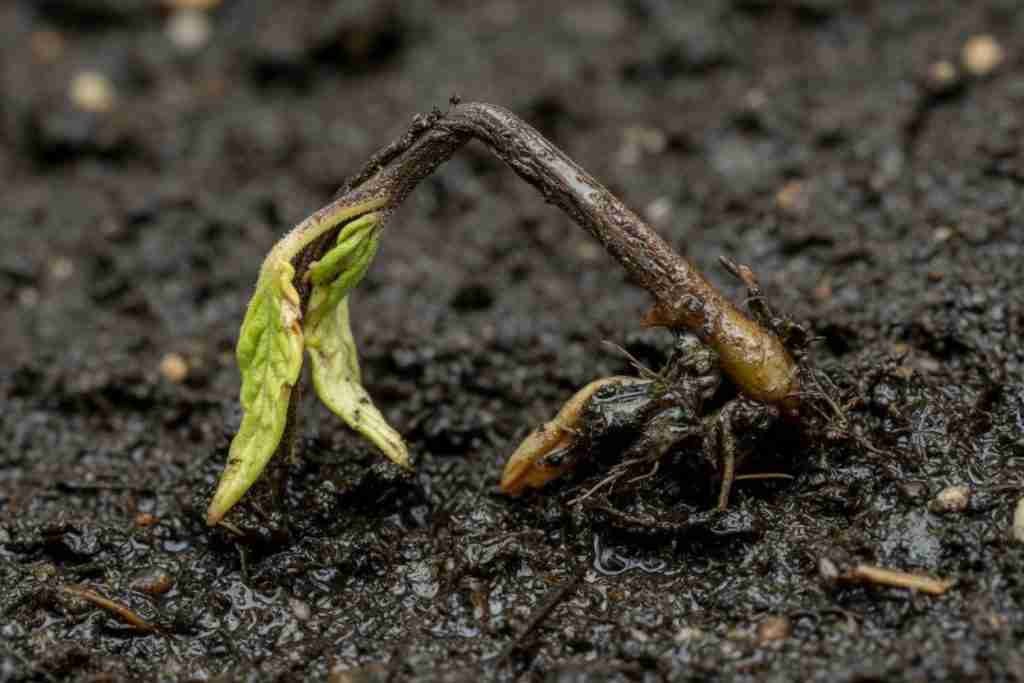
Damping off is a seedling that was fine at lights-on and a wet thread at the soil line by night. Too wet, too cold, no air, dirty mix. The stem pinches and the plant falls over. You cannot stand it back up. Start the next one drier, warmer, and in a sterile plug, not garden soil. Yellow seedlings that still have a stiff stem are a different problem: cannabis seedling yellowing. Slow plants after that are often still water and light, not a new nutrient line: why cannabis plants grow slow.
Lack of Attention
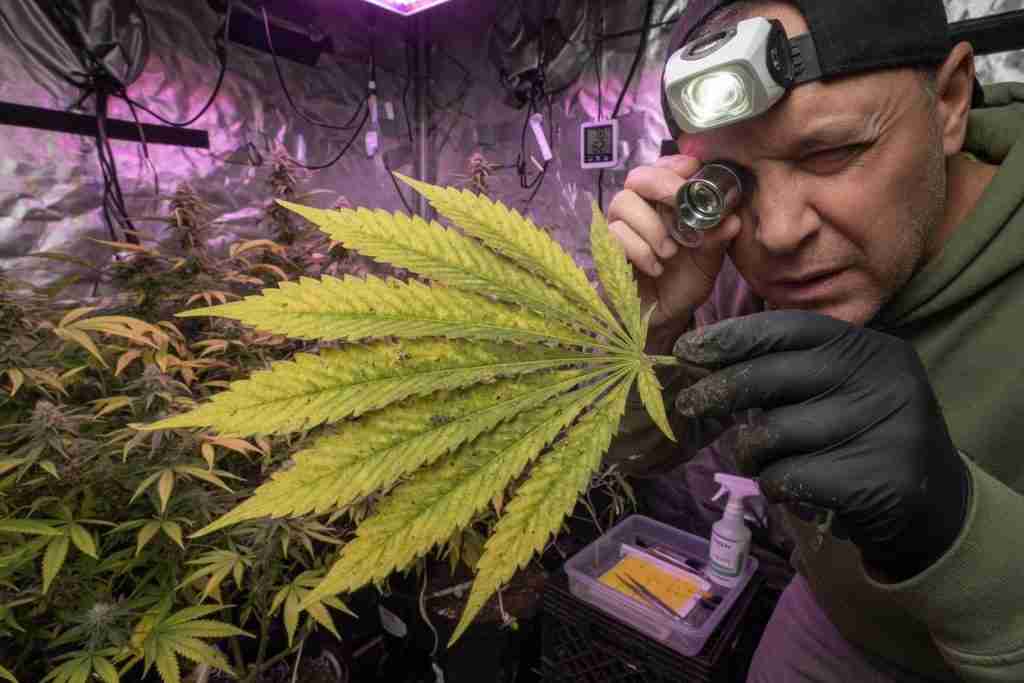
This is the combination of everything above, and it still kills more plants than any single bug. Look at the plants every day. Check water. Flip a leaf. Smell the pot. Catch mites on day two, not day twelve. Very few cannabis problems cannot be fixed if you see them early. Ignore them for a week and you are shopping for new seeds: cannabis seeds store.
Write down what you changed. A journal sounds precious until you cannot remember if you fed yesterday. Ranking revive guides all start the same way: symptoms, then water, then feed, then medium, then environment, then pests. Do not do all six in one night.
How to Save a Dying Cannabis Plant
Work this list in order. One change. Wait a day unless the plant is in standing water.
- Lift the pot. Wet and droopy: stop watering, add air, dump the saucer. Dry and crispy: water to runoff.
- Check pH in and out. Get it in range before you buy a deficiency bottle.
- Look under leaves with a loupe. Webbing, specks, or silver streaks mean pests, not Cal-Mag.
- Feel the tent. Over 85°F at the cola: dim, exhaust, shade. Near freezing: move it.
- If the stem is brown and slimy at the soil line, or roots are brown mush, isolate. Do not share trays.
- Cut dead leaves that are fully gone. Leave anything still green. The plant needs what is left.
- If the growing tip is dead, the roots stink, and pests are everywhere, throw the plant out so the rest of the room lives.
Transplant shock looks like dying and is not. You stuffed a root ball into a new pot, the plant drooped for 24 to 48 hours, then it drinks again. Do not water it twice in a panic. Do not feed. Shade it a day if it is outdoors. If it is still wilted on day four with wet soil, you buried the stem too deep, broke the tap, or the new mix is a swamp.
A plant with a live tip and some white roots can come back. It will not look pretty for a week. That is fine. Ugly recovery beats a funeral. The usual ways people get here: most common cannabis growing mistakes. Flower that survives but comes out mute is a different page: no potency or smell.
Quick answers
Why are my cannabis plants dying overnight? Seedlings: damping off, wet and cold. Bigger plants: heat, a dead light, a dry pot, or Pythium in a swamp tray. Check water and the stem at the soil line first.
Can I save a dying cannabis plant? If the growing tip is green and the stem is firm, yes, often. Stop the cause. Do not stack five fixes. If the stem is mush and the roots stink, start over.
Why are the leaves dying but the plant is still flowering? Lower leaves fade in late flower. That can be normal if the tops are still stacking and the fade is slow. Rapid die-off with wet soil, mites, or a sour pot is not fade. Treat the cause. A planned fade does not include webbing or a plant that wilted overnight. Late flower feed issues: flowering stage of growth.
Wet soil, droopy plant, no bugs. Now what? Stop watering. Empty the tray. Aim a fan at the pot, not the colas. Check pH of runoff tomorrow. If it is still a brick on day three, look at the roots. That is overwater until proven otherwise, and it is the most common reason cannabis plants are dying in a first tent.
Should I keep pouring nutrients? Not until pH and water are right. Dying leaves plus more salt is how lockout becomes a corpse.