Cannabis Pests with Neem Oil


Cannabis pests with neem oil is a veg job. The oil comes from the seeds of the neem tree, Azadirachta indica. The fraction that messes with insects is azadirachtin, plus a thin film that can smother a soft-bodied pest if you actually coat it. That is the useful part. The rest of the internet sells you a miracle in a dropper.
The last version of this page said you could spray cannabis, period, and that your taste buds would thank you. People followed that and smoked oil. You can use neem on marijuana while the plant is still in vegetative growth. You keep it off flowers. You mix it so the water turns milky. You spray at lights off, undersides first. You stop before you flip a photoperiod to 12/12, and you stop an auto at the first pistils. That is the whole method.
A bottle labeled Face, Body, Hair is a cosmetic. A jug labeled extract has often had the azadirachtin taken out in processing. Both of those bottles already live in this article as original photos. They are the wrong buy if you wanted a horticultural knockdown. Cold-pressed, 100 percent neem oil labeled for plants is the one that still holds the compound. Follow that jug. The ratios below are starting points for a test pass.
Where home growing is legal in Canada, the Cannabis Act still caps recreational plants at four per household. One infested plant is a large share of a small crop. Start from clean cannabis seeds, keep the room honest, and treat neem as a veg tool. It will not save a flower room you already let get away from you.
What Neem Oil Actually Is

Neem oil is pressed from the seeds. Growers talk about it like it is one product. The shelf is three products wearing the same name. Horticultural cold-pressed oil. Clarified hydrophobic extract. Cosmetic oil for skin and hair. Only the first one is the marijuana pest spray this page is about.
The dropper above is the bottle a lot of people actually buy, because the listing says organic and the price is friendly. Read the panel. Four fluid ounces. A rubber bulb. That format is for a face serum. It may still be real neem. It is rarely labeled for crop use, and it is rarely sold with a plant rate. If the only instructions are massage a few drops into your scalp, you are holding the wrong jug for a tent.
What you want on the label is 100 percent cold-pressed neem oil, Azadirachta indica, for plants or for horticultural use. A concentrate you emulsify yourself, or a ready-to-use already mixed for foliage. Ready-to-use is easier. Concentrate is cheaper per gallon and easier to get wrong. Either way, the oil should smell like garlic, onion, and old peanuts. Perfume, citrus, or “spa” on the nose means you bought a skin bottle.
Cold-pressed oil still carries azadirachtin plus fatty acids. Clarified hydrophobic extract is a different process. The azadirachtin is often stripped so the remaining oil is a smothering film with almost no insect growth regulator. That extract still has a job as a contact oil. It will not do the feeding-and-molting disruption people mean when they say neem. The Garden Safe jug later in this article is an extract. Keep that distinction in your head when a forum thread treats every brown bottle as the same chemistry.
Store the real stuff cool and dark, cap tight. It goes rancid. Buy a size you will finish in a season.
How Azadirachtin Works on a Pest
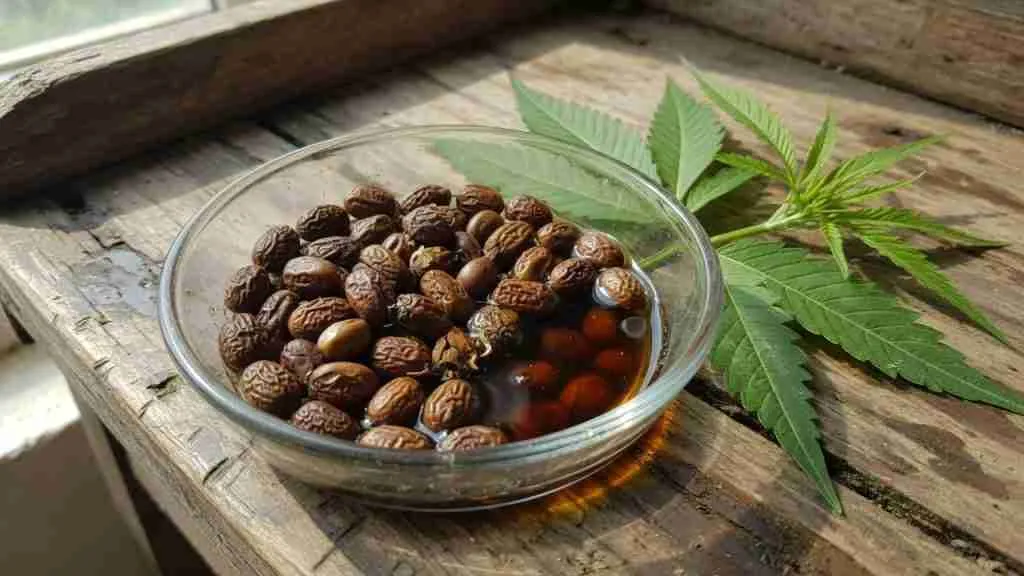
Azadirachtin is an antifeedant and an insect growth regulator. A pest that contacts it, or feeds through a film of it, loses interest in the leaf. Later molts go wrong. Eggs and young stages are the weak point. Adults you can still see on night one. That is normal. Neem is slow. If you needed the room empty by morning, you bought the wrong tool.
The oil itself is a second mode. A wet film can clog spiracles on a mite, an aphid, a whitefly nymph, a thrips larva. That only happens where the spray actually landed. Dry tops and wet undersides is the usual miss. The pest lives on the underside. You spray the pretty side of the fan because that is the side you look at.
This chemistry is built for soft-bodied sucking pests. Spider mites, aphids, thrips, whiteflies, mealybugs, some leaf miners. Grasshoppers in vegetative growth may slow their feeding on a fresh coat, and rain washes it off. That chew problem has its own page, grasshoppers eating marijuana. Slugs and snails ignore it. Hard-bodied beetles mostly ignore it. A caterpillar already in a bud is a scissors job.
Powdery mildew is a maybe. A light oil film can slow a fresh speckle on a veg leaf. It is a weak fungicide next to a product built for mildew, and it is a bad idea on flowers. The mildew page is powdery mildew on cannabis. Do not run neem as your only answer once the white is already on colas.
Bees and other pollinators take a hit from a wet spray. Apply in the evening so the film dries before morning traffic. Skip outdoor plants that are already blooming, including the clover and herbs around the bed. The old line that neem “does not harm bees” is how people spray at noon on open flowers. Wet oil on a bee is still wet oil.
Can You Spray Neem Oil on Cannabis?
Yes, on vegetative plants. That is the honest answer the old page buried under “Absolutely.” A weed plant in veg will take a correctly mixed, lights-off coat on the leaves. A plant with stacked flowers will hold that oil in the bud. You will taste it. You may burn the sugar leaves. You give rot a wet, fatty place to start.
Photoperiods: last foliar pass no later than the day you flip to 12/12. A week before the flip is kinder, because you still have time to rinse a heavy coat and let new growth come clean. Autos: stop at the first pistils. Those plants do not wait for your calendar. Once white hairs show, the oil stays off the tops.
Seedlings and fresh clones get a weaker mix and a test fan. Cuticle is thin. If the plant is still in a cup, rinse first, then a light pass, then wait a full day. Seedling notes sit on the seedling stage and seedlings day by day.
Hydro and coco: foliar only, and only in veg. Keep oil out of the reservoir. A soil drench has a narrow job for gnat larvae later on this page. Do not drench a plant that is already stretching into flower.
Outdoors, spray at dusk on a still evening so the leaf dries before morning light. If rain is coming before morning, wait.
Indoor tents follow the lights. Spray after dark, or in the last minutes before lights off so you can still see the undersides. Leaf temperature wants to sit under about 85°F / 29°C while the oil is wet. Fans off until the film is dry, then back on.
Mix It So It Stays Milky
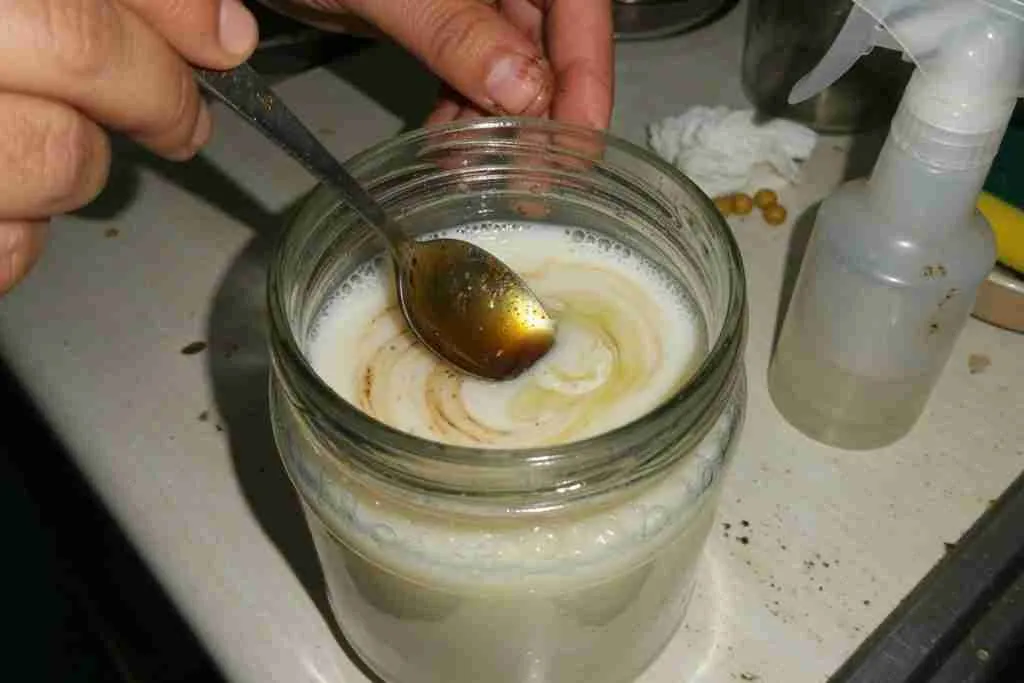
Neem oil will not dissolve in water. Pour it into a gallon and you get amber blobs that sit on top, then spit out of the nozzle in streaks. Those streaks burn. The fix is an emulsifier. Unsweetened Castile soap, a mild potassium soap, or a labeled insecticidal soap. A teaspoon-class amount of unscented dish soap can work in a pinch. Degreaser formulas and anything with bleach, ammonia, or a citrus solvent will do the plant a second injury on top of the oil.
The live mix on this URL used to say 1 to 2 teaspoons of oil per gallon plus a teaspoon of dish soap. That is a light pass. Use it on a seedling, on a first test fan, or when the label is missing and you would rather under-do it. Ranking horticultural rates for a typical foliar sit near half a percent. In plain kitchen numbers that is about 5 millilitres per litre, or 1 teaspoon per quart. Per US gallon you land near 1 to 2 tablespoons of oil plus about 1 teaspoon of soap. That is the neighborhood. The jug in your hand still wins. A 70 percent concentrate and a 100 percent oil are not the same spoon.
Stronger is not automatically better. Phytotoxicity is the word for cooked tissue from too much oil, too much soap, too much heat, or all three. You will see shiny dark patches, then tan or rust dead spots, often on the newest fans and on the tips. Test one leaf, wait a day, then do the plant. If that leaf crisps, cut the rate in half and check your lights-off timing before you blame the brand.
Mix only what you will spray tonight. The emulsion breaks. In half an hour to an hour you will see oil gathering at the rim again. Shake every couple of minutes. Lukewarm water helps. A mason jar to premix, then into a clean sprayer, is enough kit. Rinse the sprayer when you are done.
Emulsify the Oil First
Soap and oil first, in a small jar, until the mix turns opaque and milky. Then add that cream to the water, stirring as you pour. Dumping oil into a full gallon of water and hoping a squirt of soap will catch it later is how you get a slick on top and a weak, patchy spray. If the jar still shows a clear amber layer after a minute of stirring, you do not have an emulsion yet. More stirring. A drop more soap. Then water.
Ready-to-use products already did this step. Do not add more oil “for luck.” Do not add dish soap on top of a jug that is already emulsified. Read that label once, mix what it says, and spray it the same night.
Spray at Lights Off, Undersides First
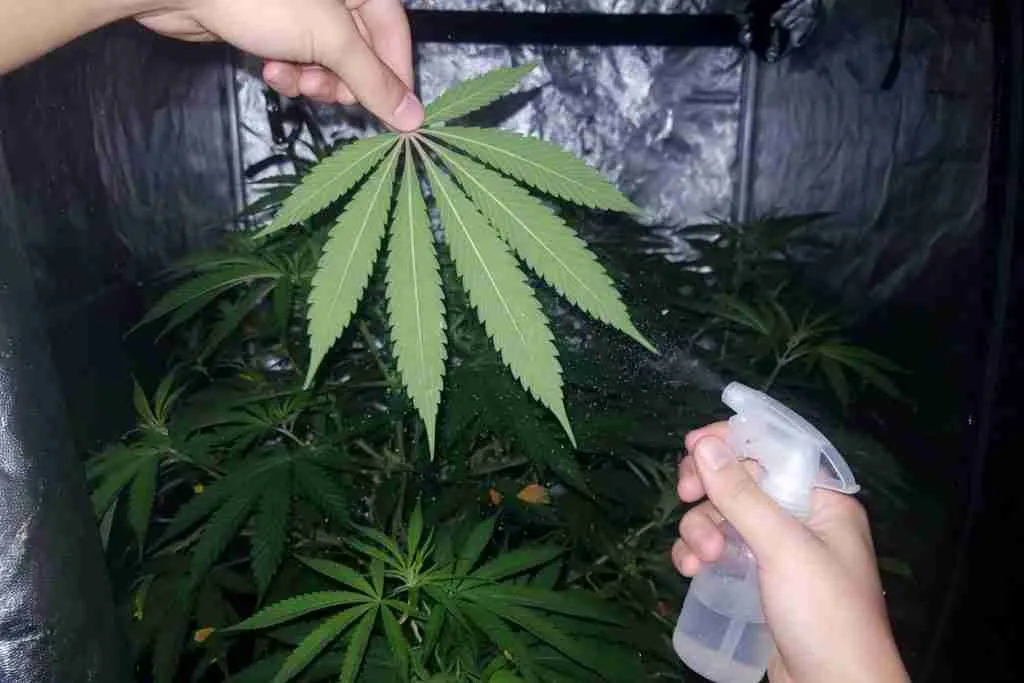
The pale side of the leaf is the job. Mites, thrips, and whiteflies sit there. Aphids pack the stem and the undersides of new growth. You lift each fan, spray until the underside is wet, then you do the top and the stem. Petioles count. The crown counts on a small plant. Flowers do not, because you already stopped before flowers.
Wet, not dripping. A bead that runs into the shoot tip and sits there under a light is a burn waiting for morning. Keep the nozzle moving. A cheap spray bottle is fine for two plants.
A heavy mite load gets a water rinse first. Warm, gentle, undersides, in the sink or with a hose on a soft setting, then let the plant drip, then neem after lights off. Oil on top of a thick web just sits on silk. The mite page is cannabis and spider mites in the garden. Neem can slow a light stipple in veg. A plant already tented in webbing needs rinse, isolation, and a tighter plan than one bottle.
Repeat on a 5 to 7 day clock for two or three passes. Eggs hatch on a delay. One heroic spray leaves the next generation. Prevention in veg, when pressure in your building is high, is a pass every 7 to 10 days while the plants are still all leaf. That is a season tool, not a personality. Once the room is clean, stop the weekly habit. Forever-weekly oil is how you bake leaves and select for pests that sat out the spray on a dry pocket.
Cover the mix if you do not want foliar landing in the pot. Resume circulation after the film is dry. Indoor notes sit on the indoor cannabis grower’s guide. Veg timing is on the cannabis vegetative stage.
Which Cannabis Pests Neem Actually Hits
Use neem on the pests it can reach. Name the insect first. A chew hole is a grasshopper or a caterpillar. A slime trail is a slug. Fine silk and stipple is a mite. A sticky stem with pear-shaped bodies is an aphid. Black specks and silvered scrapes are often thrips. A cloud when you brush the plant is whitefly. Those are different jobs, and only some of them belong on this page.
Spider Mites
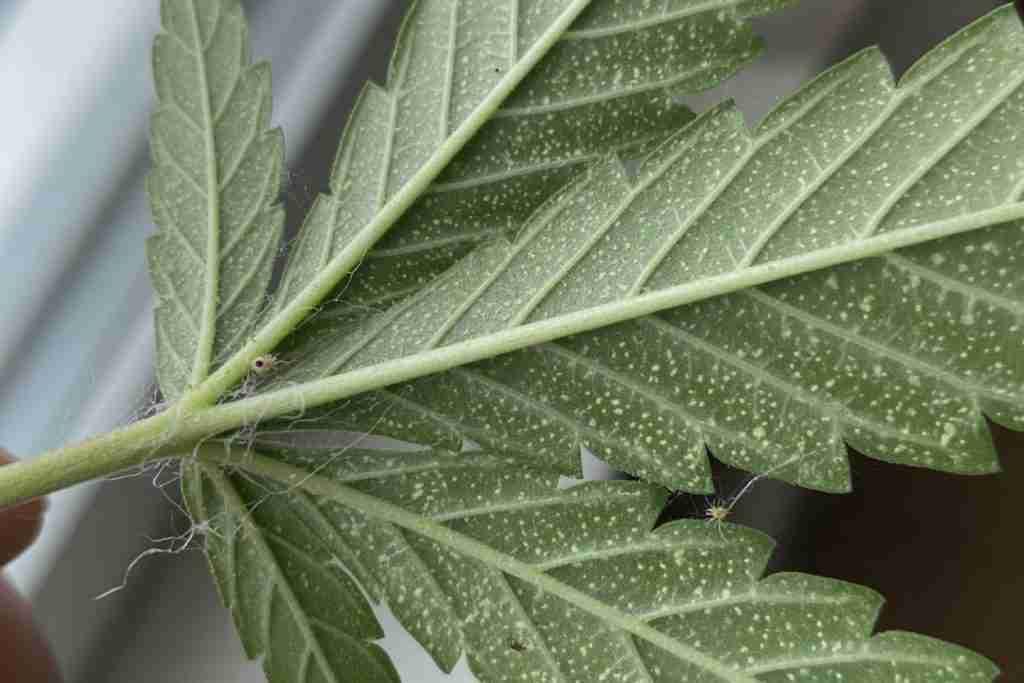
Two-spotted spider mites stipple a fan until it looks dusty, then they web the underside and the shoot tips. You will see the animals with a loupe: tiny, pale or spotted, slow on the silk. Neem in veg can knock feeding back and smear a light colony if you rinse first and coat the underside on a 5 to 7 day repeat. It will not teleport through a thick web. Isolate the plant if you can. Wipe the tent poles. Mites hitch on clothes and on fans.
After the oil residue has dried and you have waited the interval on the jug, predatory mites can finish a room that neem only slowed. Releasing Phytoseiulus persimilis onto a leaf you sprayed last night is how you pay for predators and then kill them. The beneficials page is using beneficial insects in your cannabis garden. Flower rooms with mites go there, and to scissors. Oil in a dense cola is a smell you cannot dry out.
Aphids, Thrips, and Whiteflies

That stem is the real thing. Aphids pack the nodes and the underside of new growth. They leave honeydew, which turns tacky and then grows sooty mold. The mold page is sooty mold in cannabis cultivation. A blast of water knocks a lot of aphids off before the oil. Then neem on the stem and the undersides, lights off, two or three passes. The longer aphid notes are on aphids on cannabis plants. Lady beetles and lacewings earn their keep here once the residue window is over.
Thrips rasp the leaf and leave silver scrapes plus tiny black specks of frass. They hide in the folds and in the new growth. Foliar neem in veg can suppress a light population. A heavy one needs a tighter room, sticky cards, and the thrips page, thwarting thrips on cannabis crops. Western flower thrips in a bloom room are past this bottle.
Whiteflies lift in a cloud when you bump the plant. Nymphs sit still on the underside like pale scales. Honeydew again. Coat the underside. Yellow sticky cards catch adults and tell you if the pass worked. Mealybugs are the slow cousins: white wax, in the nodes, pick them with alcohol on a swab and use neem on the surrounding veg growth. There is no live mealybug URL on this site worth sending you to. Do the picking. The oil is backup.
Soil Drench and Fungus Gnats
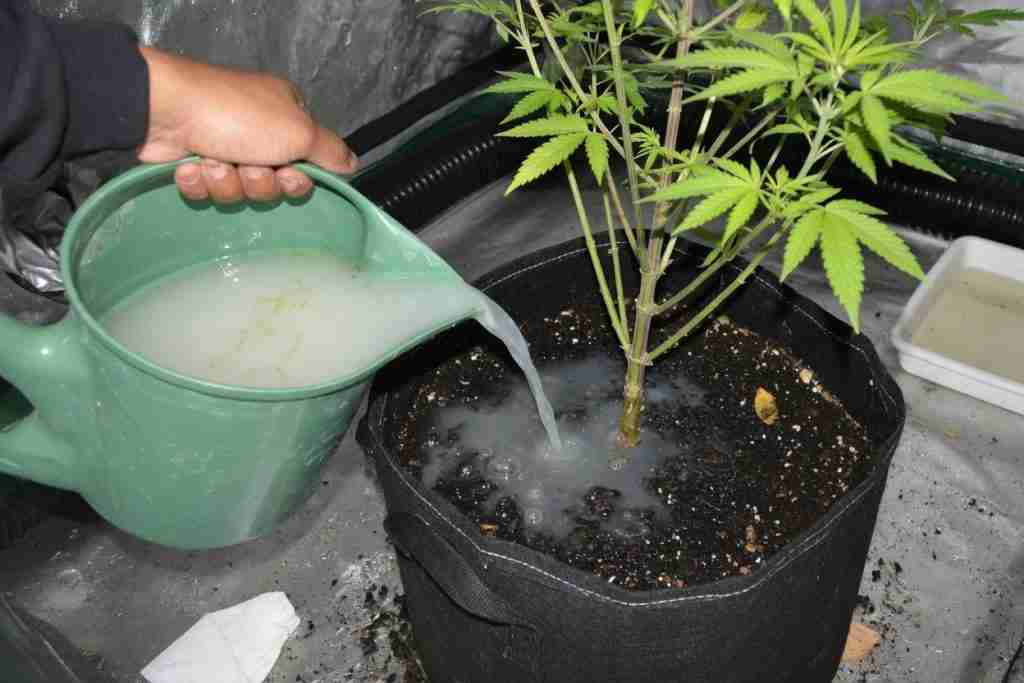
A soil drench is the same class of mix poured onto the medium so it wets the top inches, where gnat larvae live. You are not sterilizing the whole root ball. You are making the surface a poor nursery. Use it in veg, on a plant that can take a wetter pass, and let the pot drain. A seedling with a hot mix around baby roots is how you stall the only plant you have.
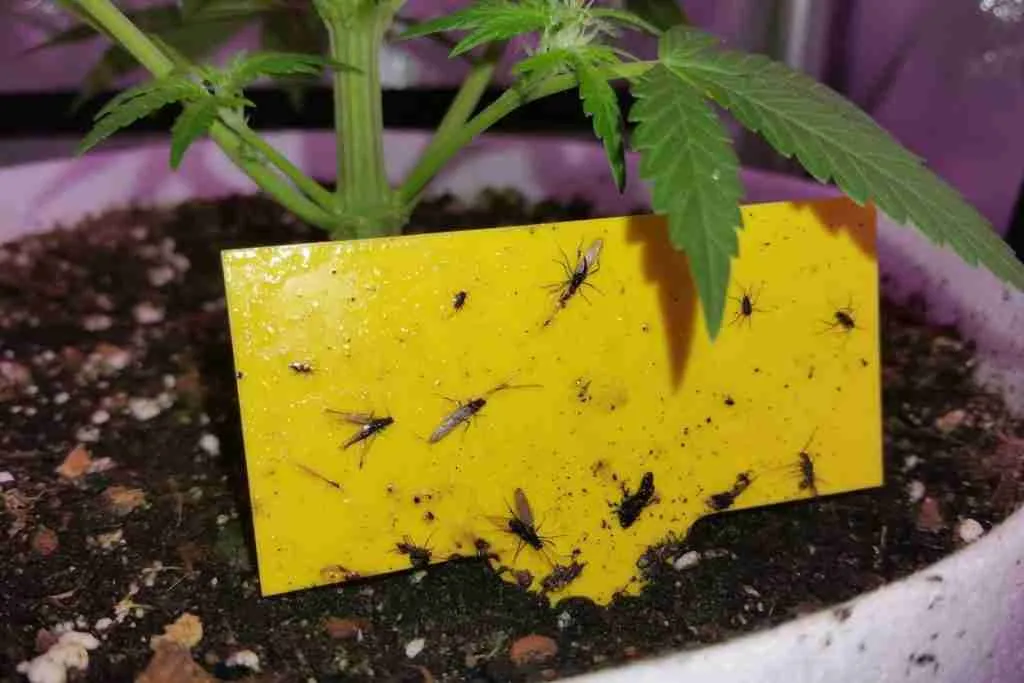
Fungus gnats are a wet-mix problem. Adults on a yellow card mean larvae are already in the pot, chewing root hairs. Let the surface dry between waters. That is the first fix, and it is on how to water cannabis plants. Bti, the strain sold as mosquito bits, is the cleaner larval kill in the top inches. Beneficial nematodes have their own page, beneficial nematodes for cannabis. Neem drench can help a light gnat load in veg. It is a supporting move. The gnat write-up is protecting cannabis crops from fungus gnats.
Do not drench in late flower. Oil in the medium can move into tissue you are about to dry and smoke. If gnats show up in week six of bloom, you dry the surface, you use Bti if the label allows it on that crop, and you live with sticky cards. You do not pour a garlic-smelling emulsion into a ripening pot.
Cold-Pressed Oil Versus Extract

The Amson bottle is here because it is an original photo on this post, and because it is the kind of jug people pour on cannabis after a late-night search. Face. Body. Hair. Eight fluid ounces. That panel is the whole review. Put it back in the bathroom cabinet.

Garden Safe’s jug says extract, concentrate, and three jobs in one. That is a clarified hydrophobic extract. Processing typically drops the azadirachtin and leaves a contact oil that can smother and can slow some leaf fungi. Follow that exact label. Mix it as the jug says, not as a cold-pressed spoon rate from a forum.
Those two bottles were already on this post, and they teach the shelf. For azadirachtin, look for cold-pressed Azadirachta indica oil sold for plants, or a horticultural label that lists azadirachtin. Ready-to-use saves the emulsifying step. Concentrate needs the milky mix above.
Check the date code. Old oil in a hot shed is a burn waiting to happen. Shake a concentrate. If it has separated into a hard plug and a watery layer that will not come back together, retire it. Do not microwave it. Do not thin it with rubbing alcohol and call that a recipe. Kitchen chemistry is how the garlic and chili sprays page stays a separate, weaker story. Those mixes are repellents with thin evidence. They are not a substitute for a labeled oil you mixed milky.
Stop Before Flower, and What a Burn Looks Like
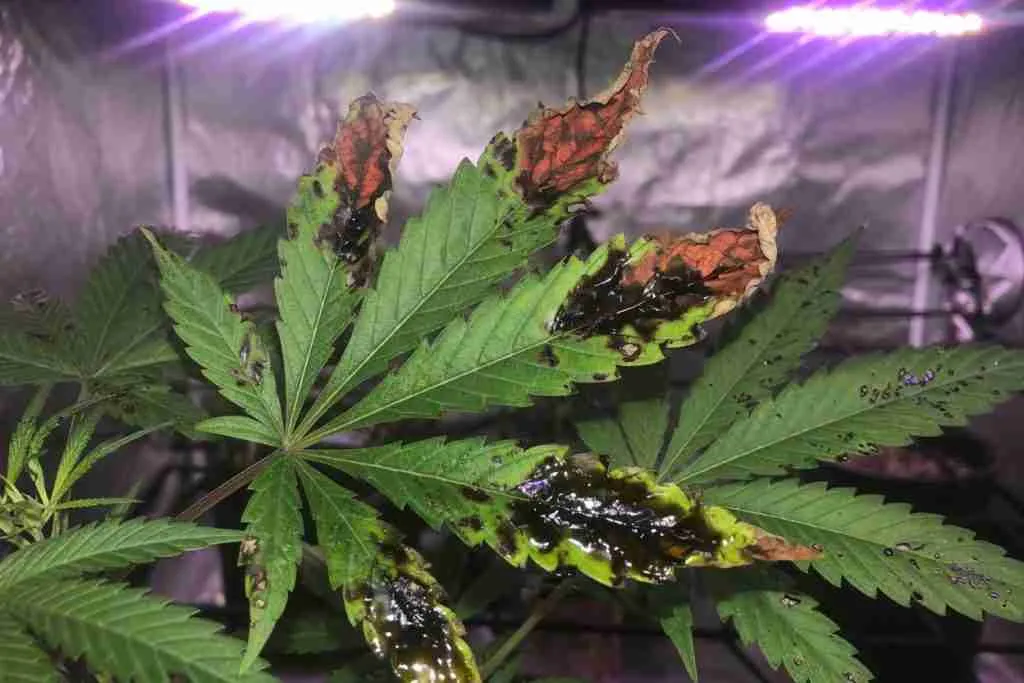
A neem burn is greasy and dark at first, then the tissue goes rust, tan, or necrotic in patches that follow where the spray sat. Tips crisp. The newest fans take it first. It shows up after the lights come back on, or after a sunny morning on an outdoor plant you sprayed too late at night and still caught with wet film. The hoppers page already said it: hot sun on a fresh coating burns leaves. Test one fan. Evening only.
Flower is the hard stop. Oil in dense weed buds tastes like the bottle. It does not dry out in a paper bag. It does not vanish in a two-week cure. Growers who “just misted the sugar leaves” still smoke it. Last spray on a photoperiod is the flip, and a week earlier is better. Autos stop at first pistils. If you already have pistils and a mite bloom, you are on the mite page, with predators and isolation, not with a fresh coat of oil on the colas. The flower stage notes are on growing cannabis in the flowering stage.
A light rinse in early veg is allowed if the plant looks varnished. In flower you do not rinse colas to wash oil off. Harvest notes sit on harvest and cure for potency and flavor.
Spinosad, soaps, and pyrethrin each have their own rules, and they belong in veg on a rotation if neem alone is not holding. Spinosad needs the pest to feed. It is hard on bees while it is wet. Soap is contact and weak on eggs. Pyrethrin is rough on cats and bees. None of those are a late-flower rinse either. If a product has a pre-harvest interval, believe the longer number. “It says natural” is not an interval.
What Neem Does Not Replace
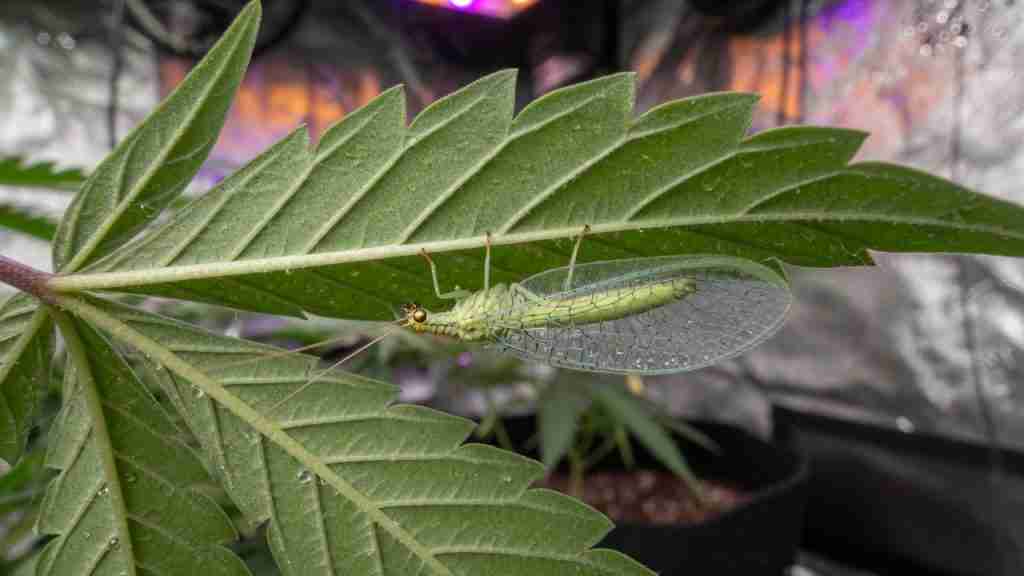
Neem is a veg knockdown and a veg prevent. It is not a roommate for the insects you paid for. Lacewings, lady beetles, persimilis, cucumeris, nematodes in the soil: give them the wait on the jug, and then some. Oil residue on a leaf is a poor hunting ground and a poor nursery. Spray, dry, wait, then release. The other direction works too. If the predators are already established and holding a light mite load, putting neem over the top is how you reset the room to zero allies.
Quarantine a new clone. Look at undersides twice a week with a loupe. Yellow cards in the pot. Dry the mix surface. Unforced errors sit on the most common cannabis growing mistakes. Organic mixes still get mites. Castings notes are on organic growing amendments for cannabis.
Rotate in veg if you are actually fighting something. Soap one pass, oil the next, spinosad if the label fits the pest and you can keep bees off the wet leaf. Using the same bottle every five days for two months is how a population sits in the dry pockets and comes back the week you flip. Flower is predators, sanitation, and scissors. That is the split this site already uses on the hoppers page, and it stays the split here.
Start with seed you trust, in a room you can actually walk. A four-plant household does not have spare plants to learn on after a mite bloom. Named packs from the shop are on the cannabis seeds store. Canadian orders start at buy cannabis seeds in Canada. Neem will not make a weak plant tough. It will buy a clean veg canopy some time, if you mix it milky, hit the undersides, and put the sprayer away before the first bud.