Cannabis Grow Room Clean

A cannabis grow room clean is a between-cycle reset, plus a short daily wipe while plants are in. Ranking grow pages in 2026 split those two jobs. The reset is strip, bag, vacuum, soap, then disinfectant with real wet contact time. The daily job is dead leaves, sticky cards, and dry floors. Mix those jobs and you fog a dirty tent, or you skip the deep clean because you “wipe every day.” Shop seed in the cannabis seeds store. The rest of the grow library is on the cannabis cultivation blog.
Canada’s recreational cap is four plants per household. Quebec still bans rec home grow. Manitoba has been indoor-only since 1 May 2025. Four marijuana plants in a tent do not need a commercial sanitation crew. They need you to bag last run’s dirt out of the house, and they need you to stop walking garden shoes into the weed tent. A 4×4 with a dirty liner will still carry mites into the next four plants. Indoor rooms: indoor cannabis growers guide. Tents: grow tent for cannabis seeds. Contaminants that are not insects: protecting your cannabis grow from contaminants.
What a Cannabis Grow Room Clean Actually Is

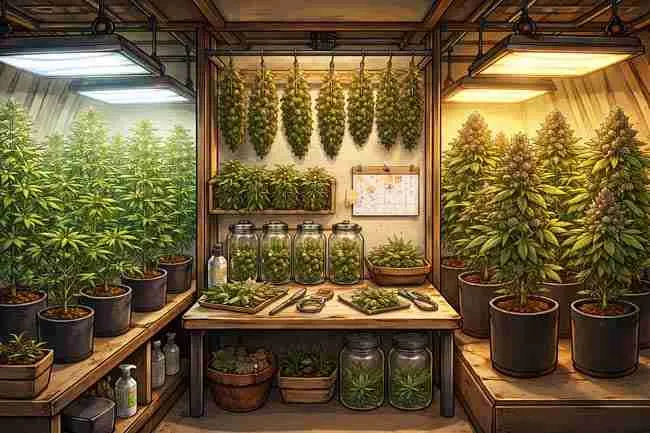
That canopy is why you clean after harvest, not during it. A packed flower tent holds leaf dust, spilled media, trellis lint, and whatever crawled in on your shirt. You cannot disinfect around live colas. You harvest, you hang the branches in a dry space, then you treat the grow space as a dirty box. Harvest and cure: harvest and cure cannabis. Dry room: dry, cure, and store cannabis buds. Quality flower: growing quality cannabis buds.
Sanitation is two chemistries. Cleaning is soap or detergent that lifts oils, sap, and dirt. Disinfection is a labeled product that needs a wet surface for the dwell time printed on the bottle. Dirt inactivates a lot of disinfectants. If you spray bleach on a dusty floor, you get bleach smell and the same mite eggs. Ranked lab and horticulture pages say the same order: remove organic load, wash, rinse if the label wants it, then disinfect, then dry. Do not invent a “sterile tent.” You want a room that does not carry last run’s powdery mildew and fungus gnats into the next pack of seed.
Daily hygiene is smaller. Pull yellow fans. Wipe the floor dry. Check cards. Wash shears with isopropyl after you cut. That is not a reset. A reset is empty hardware, HEPA vacuum, soap on walls, disinfectant with a timer, tools soaked, pots washed, lines flushed, filter covers washed, sensors wiped, shoes parked outside. If last run had mites, russets, or mildew, you do the long version and you wait until the tent is dry before you germinate. Powdery mildew: powdery mildew on cannabis. Harvest with mildew already on the plant: harvesting cannabis with powdery mildew. Bud rot: cannabis bud rot.
Strip the Room Before You Touch a Bottle
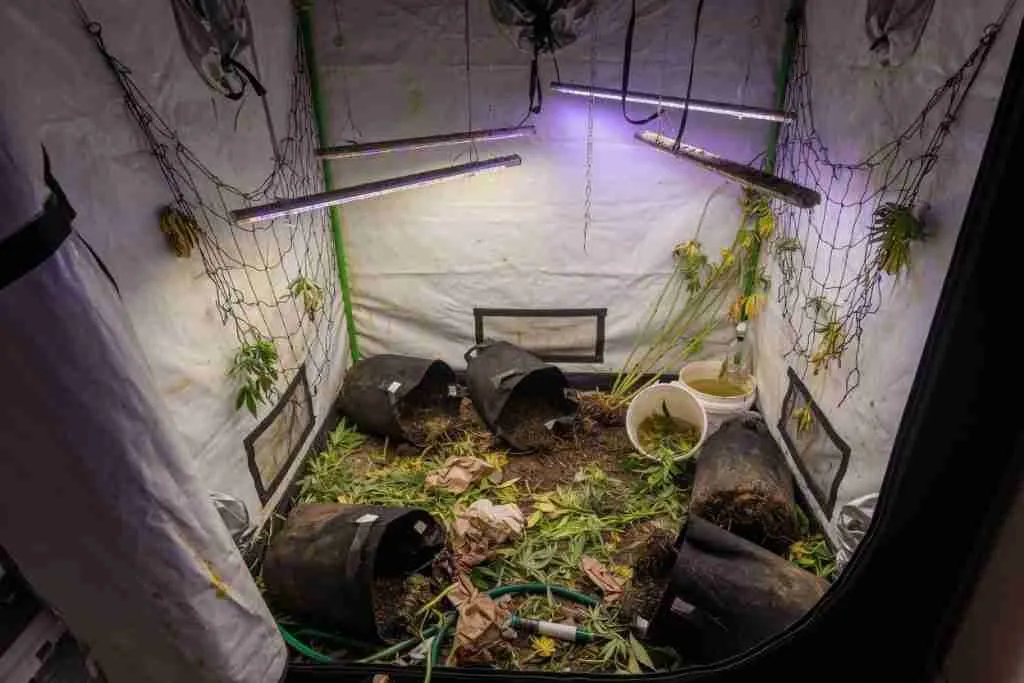
Plants out. Media out. Pots out. Trellis out. Stakes, yo-yos, clips, drip rings, humidity domes, leftover nutrient bottles. If it sat in the tent, it leaves. Work high to low so you are not raining dust onto a floor you already “cleaned.” Cut netting into a bag. Do not shake it in the hallway. Mite eggs and mildew spores ride that dust. Take the bags to the outdoor bin. Composting last run’s leaf pile next to the intake is how you reseed fungus gnats. First crop layout: planning your first cannabis crop.
Bag debris out of the building
Soil cakes, root balls, and trim waste go in sealed bags. Do not dump used mix in the backyard if that yard shares air with your intake, and do not store “pretty good” soil in the same closet as the tent. Reusing media is a separate decision. If last run had gnats, root disease, or mites, that mix is trash. If the run was clean and you still want to reuse coco, you wash it outside, you do not “bleach it in the tent.” Roots: healthy cannabis roots. Environment and pot size: environment, media, watering, pot sizes.
Unplug lights and fans before you drag hardware. Coil cords so they are not sitting in wash water. Pull the carbon filter if you can lift it; dust on the pre-filter is last run’s leaf meal. Hang the empty tent open so you can see stains. Brown rings on the floor liner are nutrient. White haze on mylar is mineral plus biofilm. Those spots are where you spend time, not where you fog and leave.
Vacuum Dry Dirt Before You Wet Anything
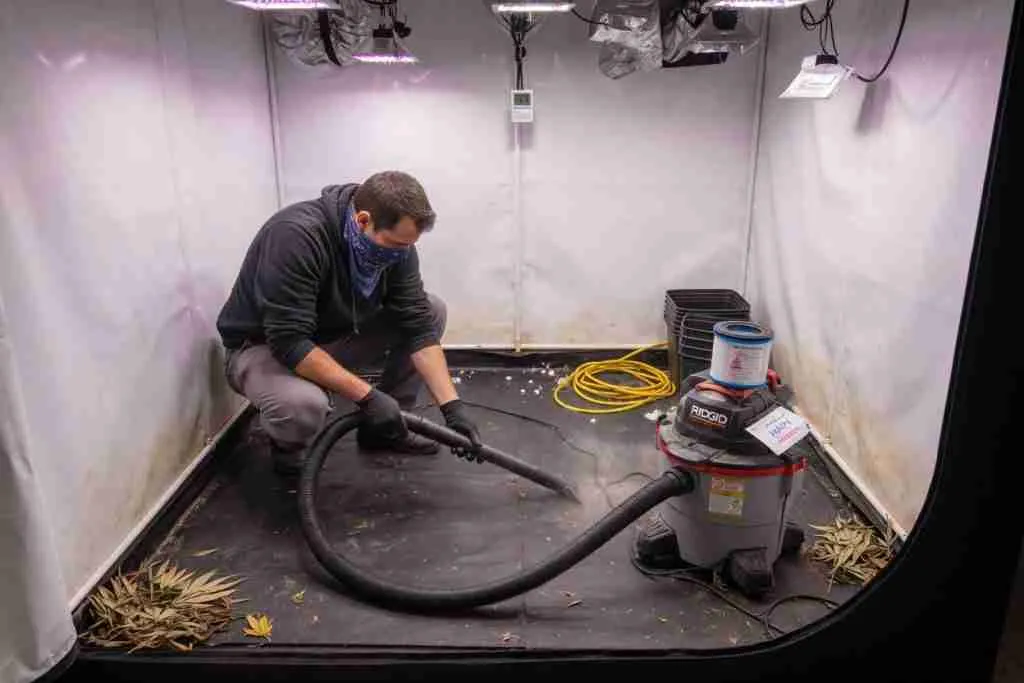
A shop vac with a HEPA filter, or a vac you only use for the tent, is the first tool after the bags leave. Dry vacuum the ceiling corners, pole sleeves, light bars, fan grills, then walls, then the floor. Wet mopping first turns dust into mud that dries in the zipper track. Pollen from a herm or a male does the same thing: it hides in fabric and in the intake sock until you suck it out. Compressed air on a fan blade just relocates the dust. Vacuum, then wipe.
Empty the vac outside. Dumping the canister in the bathroom sink puts mite eggs in the house drain and on your shoes. Wipe the vac hose with detergent after a dirty run. The hose is a reservoir. If you vacuumed a mildew tent, treat that hose as dirty until you wash it. Then you can wet-clean. Order is always dry mechanical removal, then soap, then disinfectant. Skip a step and the next product is theatre.
Soap First, Then Disinfectant, Then Dwell
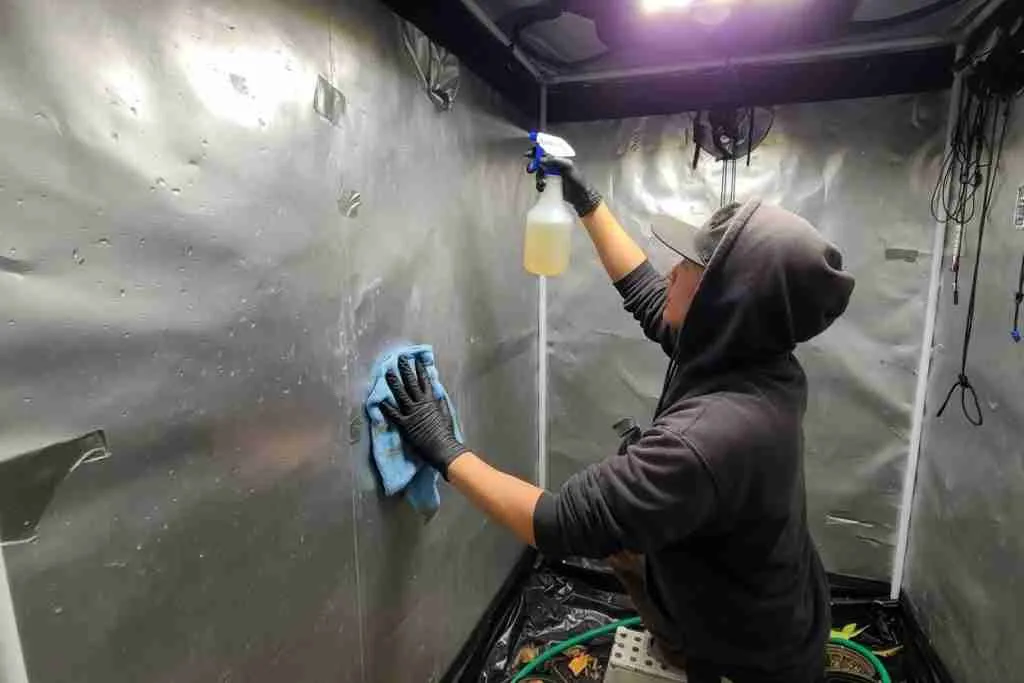
Use a mild detergent or a horticultural soap on mylar, poles, floor liner, and trays. Work top to bottom, clean to dirty. Rinse or wipe the soap off if the next product’s label wants a clean surface. Then apply the disinfectant you actually bought for that surface. Household options growers use: diluted bleach on hard non-porous floors, hydrogen peroxide on some hard surfaces, isopropyl on tools, and labeled horticultural disinfectants on tents. Read the contact time. If the bottle says ten minutes wet, a mist that dries in thirty seconds did nothing.
If you use household bleach on a hard floor, mix it fresh. Old bleach in an open jug is weaker than the label. A common hard-surface mix is one part bleach to nine parts water, then keep the floor wet for the time on that bottle. Rinse if you grow in the same space and you do not want chlorine smell in the next veg. Peroxide on a dirty wall is a fizz, not a clean. Isopropyl at seventy percent wets a blade better than ninety-nine percent, which flashes off before it works. Match the product to the job. Lights get a dry or barely damp wipe after they cool. Never dunk a driver or a socket.
Do not mix bleach, peroxide, and vinegar
Bleach plus vinegar makes chlorine gas. Bleach plus peroxide makes oxygen gas and heat, and you get a useless mess. Vinegar plus peroxide is not a secret sterilant you mix in one sprayer. Pick one disinfectant for the walls, finish, dry, then you can use a different chemistry on tools later. Never mix concentrates in a bucket “to be sure.” Ventilate. Gloves. Do not soak electrical cords or the driver on an LED. Wipe fixtures with a barely damp cloth after they are unplugged and cool.
Fabric pots and canvas tent walls are not stainless steel. Harsh bleach on tent fabric shortens the coating. Follow the tent maker if they print a cleaner. Many growers wash tent walls with soap, then a labeled peroxide or horticultural disinfectant, then they dry the tent fully open with a fan. Zippers hold grit; brush them, then a dry toothbrush, then a drop of zipper lube after everything is dry. A seized zipper is how people stop opening the tent and start ignoring the floor.
Tools, Trellis, and Anything That Held Sap
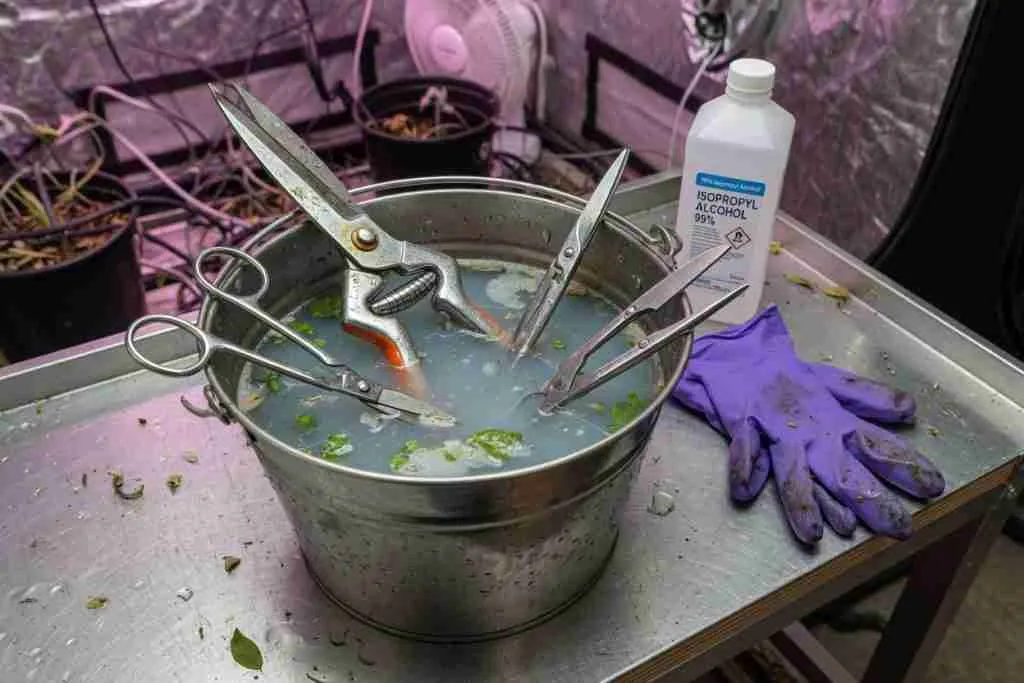
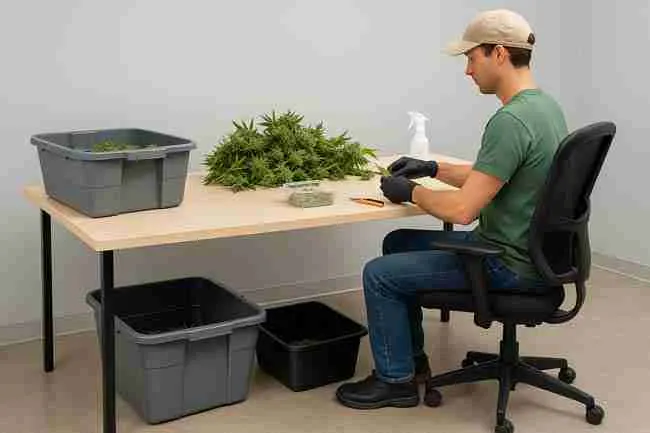
Shears, trimmers, stakes, clips, and trellis net carry sap and plant juice. Wash the sap off with detergent first. Alcohol on a gummy blade just smears resin. Soak metal in soapy water, scrub the pivot, rinse, dry, then wipe with isopropyl and let it evaporate. Rusted pivots go in the trash. You will crush stems with them. Dedicated tent scissors stay in the tent. The kitchen pair that trimmed tomatoes yesterday is a vector.
Netting is cheaper to replace than to wash after mites. If you wash it, do it in a tub outside, detergent, rinse, dry in sun, then inspect. If you still see webbing, bin it. Bamboo stakes split and hold moisture; bleach will not save a rotten stake. Plastic trellis poles wash. Yo-yo hangers collect leaf in the spool; pull them apart. A “clean” tent with last year’s net still clipped in the corners is not clean.
Pots, Trays, and Leftover Media
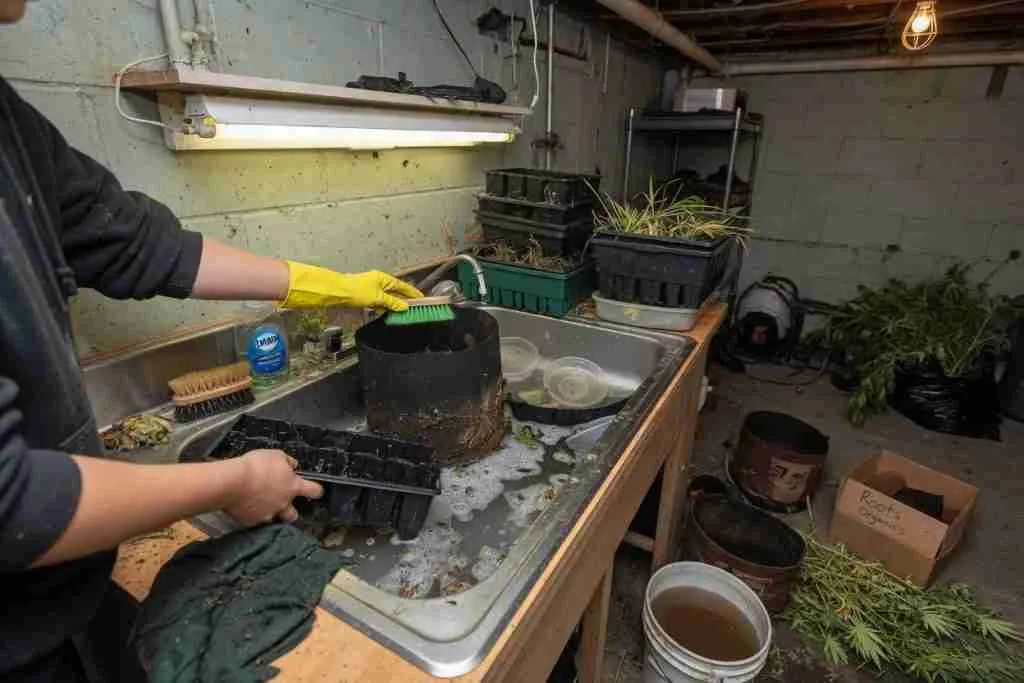
Dump media outside. Scrub rigid pots and trays with a brush and detergent until the white salt line is gone. Rinse. Then a disinfectant soak if the plastic can take it, then rinse again if the label says so, then dry upside down. Algae on a tray is a wet-floor problem you will meet again if you water like last run. Fabric pots: wash in a dedicated tub, not the house washing machine if the last run had pests. Air dry. If the fabric is slimy or torn, replace it. Watering habits: water cannabis plants.
Saucers hold the worst water in the room. Dump them every irrigation during the run. Between runs, they get the same soap-and-dwell treatment as trays. A wet saucer under a “clean” pot is a fungus gnat nursery. Gnats: fungus gnats on cannabis. Seedling trays and humidity domes grow biofilm fast. If you start the next pack in a scummy dome, you start dirty. Seedlings: cannabis seedling stage.
Irrigation Lines Hold Biofilm After the Walls Look Fine
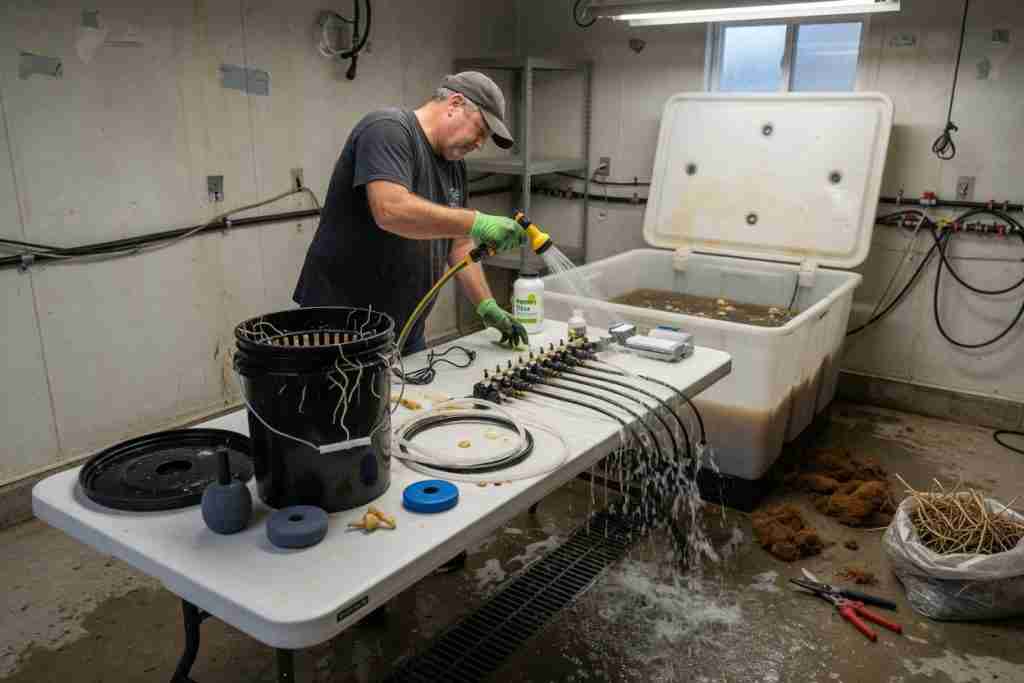
Wiping mylar does nothing for the slime inside a drip line. Flush reservoirs, manifolds, air stones, and tubing between runs. Drain the tank. Scrub the walls. Run clean water, then a cleaner the hydro gear maker accepts, then rinse until the smell is gone. Opaque lines hide algae. Clear lines show it and grow more of it in light. Replace cheap airline that stays brown after a flush. Hydro setup: hydroponic cannabis growers guide.
Hand-water growers still have a biofilm problem: the watering can, the pump in the tote, the pH pen sitting in old calibration fluid. Wash the can. Recalibrate the pen with fresh packets after you wipe the probe. A crusty probe lies, then you chase pH and overwater, then the floor is wet again. Do not store nutrient stock in the tent. Salt dust on the liner is food for films. Mix outside the tent, pour, leave.
Fans, Filters, and Sensors
Unplug clip fans. Wipe blades and grills. Dust on a blade is a thrower. Wash the pre-filter on the carbon can; a clogged pre-filter is how people cook a tent and then blame the light. Do not wash a carbon bed in the sink. Replace the filter on the maker’s hours, or sooner if the room still smells like last flower after a wash. Intake socks and furnace filters on the intake get replaced, not rinsed forever. Oscillating fans hide a felt of leaf on the rear grill. Pull the grill if it comes off. A cotton swab in the hub is worth the minute. Then run the fan in an empty room and watch what flies off before you call the reset done.
Hygrometers lie after a splash of nutrient. Wipe the housing. Recalibrate if the unit allows it, or park two cheap meters and believe the pair. A tent you “cleaned” with a wet floor and a 70 percent relative humidity hangover will grow mildew on week two of flower even if the walls shine. VPD without the headache: cannabis VPD explained. Flower stage: cannabis flowering stage. Veg: cannabis vegetative stage.
Shoes, Clothes, and the Door

Garden boots into the tent is the classic own-goal. Outdoor soil carries gnats, mildew, and mites. Keep a pair of indoor-only shoes on a mat. Change the shirt if you walked a greenhouse or a friend’s room. Pets stay out. Hands washed or gloved before you touch a meristem. This looks fussy until russets ride in once. After that you will keep a cheap hoodie on a hook that never leaves the grow space. IPM: integrated pest management for cannabis cultivation. Pesticide-free playbook: pesticide-free cannabis cultivation.
The door policy is the rest of hygiene. Intake through a filter. Exhaust that leaves the room so you are not recirculating gnats in a loop. Still air is how powdery mildew and mites both win, so a circulating fan that moves leaves without windburn stays on after the reset. A wet floor after watering is a daily fail; towels and a dry liner matter more than a new bottle of “sterilant.” Outdoor pressure is different, but the same leaf-on-the-ground rule applies: preventing fungi and pests outdoors. Outdoor grow: growing cannabis outdoors.
Daily Wipe While Plants Are in the Tent

Once the plants are back in, you stop bleaching walls. You pull dead fans into a bag, you keep the floor dry, you wipe spills, you look under leaves. A dense cola like the one above holds humidity in the interior. If you leave a pile of yellow fans on the liner, you built a mildew tray. Prune into a bag, not onto the floor. Flip undersides twice a week in veg, once a week in flower unless cards spike. A two-minute walk beats a Sunday panic spray. Write the card count on tape on the pole so you remember last week’s number.

Brown fans at the bottom of a healthy cola are often age and shade, not a reason to fog the room. Cut them. Do not foliar the flower to “clean” it. Moisture in a tight bud is how Botrytis starts. If the room smells like a basement, you have a humidity problem, not a soap problem. Dehumidify, add airflow through the cola, and stop spraying. Foliar in flower: foliar feeding cannabis plants in flowering.
Stop late-flower foliar

Early flower still has open pistils and room to dry. Late flower does not. If you need a pest tool after week three of flower, you missed the reset and the veg window. Mechanical removal, cards, and predators beat a wet spray on a closing cola. Beneficials: beneficial insects in your cannabis garden. Diatomaceous earth stays on dry media, off buds: diatomaceous earth and cannabis.
Sticky Cards, Clones, and Pests That Survive a Sloppy Reset
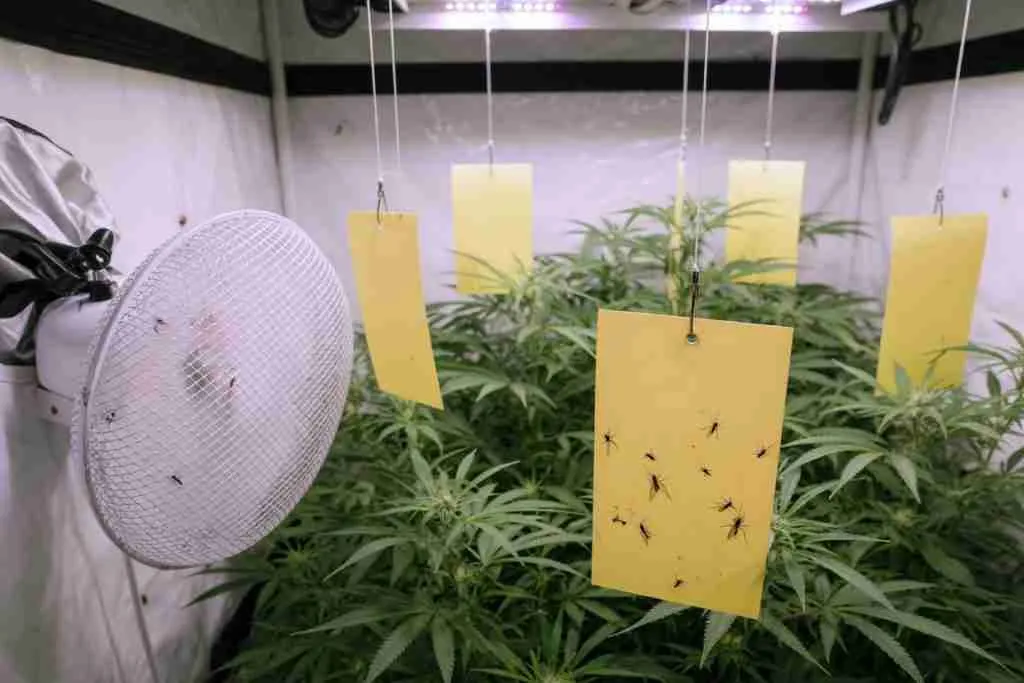
Hang yellow cards at canopy height before the new plants go in. A second card near the media catches gnats that never fly high. Date the card with a marker. Count specks once a week. Three gnats this week and thirty next week is a watering problem you will not soap away. Blue cards help on thrips. Replace cards when they are crusted; a full card is wallpaper. Thrips: thrips on cannabis. Mites: cannabis and spider mites in the garden.

Those are aphids on a wet stem. They did not appear because you forgot a motivational quote. They walked in on a plant, a tool, or a room that still had last run’s debris. A clean reset plus quarantine beats spraying a flower tent. A clone is guilty until you have watched it two to three weeks in a separate tub with its own card. Do not graduate it on day four because it “looks fine.” Russets and thrips eggs wait. Quarantine: quarantine like a pro for clones and seeds. Seed from a sealed pack skips that lottery. Buy in Canada: buy cannabis seeds in Canada. FAQ: Canada cannabis seed FAQ.
If last run was a pest blowout, the reset includes a longer dry-down. Wash, disinfect, dry, then leave the empty tent running fans for a few days while you watch a sticky card with nothing in it. If the card still loads, you missed a reservoir: a hose, a fabric pot, a filter, or the vac you dumped indoors. Do the hunt. Planting into a room that still catches gnats is how people decide “cleaning does not work.”
Four-Plant Rooms, Pollen, and What You Skip
A closet grow still gets the same order. You just have less surface. Strip, vacuum, soap, dwell, dry. Do not skip the vac because the closet “looks small.” Pollen from a male or a herm is a reset plus a filter change. Vacuum fabric, wipe, new intake filter, wash fans. You will not get every grain. You get the load down so the next run is not a seed farm. Keep males out of the flower tent if you wanted seedless weed. Pull every plant, including the ones you hoped were “only a little dusty.” Pollen sticks to mylar, to carbon pre-filters, and to the inside of ducting. Run the vac through the duct if you can reach it. Then wash, then a new filter. AI sensors and logging do not replace a bag of leaf on the floor: AI in cannabis cultivation.
Skip calendar “sterilize every Sunday” sprays on live plants. Skip mixing bleach and peroxide in one bottle. Skip vinegar as a percent-kill claim. Skip fogging a tent full of flower. Skip bringing a clone in on flip day. Skip wet leaves at lights-out. Do the unglamorous work: bags out of the building, dry vacuum, soap, labeled dwell, tools, pots, lines, shoes. Then germinate in a room that does not still smell like last October. If you share a basement with laundry, keep the tent closed while you transfer wet clothes. Lint and moisture are enough to undo a reset you just spent an afternoon on.