Cannabis Greenhouse Growing: Sun, Air, and a Real Blackout


Originally published 15 November 2022. Updated 1 October 2026.
Cannabis greenhouse growing is outdoor growing with a roof that holds heat and a door you can open. The pages that rank for it treat the house as a magic tent: free sun, automatic potency, and a tarp that flowers the plants whenever you feel like it. A hoop in the yard will do some of that. It will also cook a crop on a June afternoon, rot it in September, and sail across the fence in the first real wind if you never tied it down. The useful version is simpler. Use the sun. Move the air. Black the plants out only when you mean to, and only if the cover is actually dark.
A greenhouse is a sunroom with a job
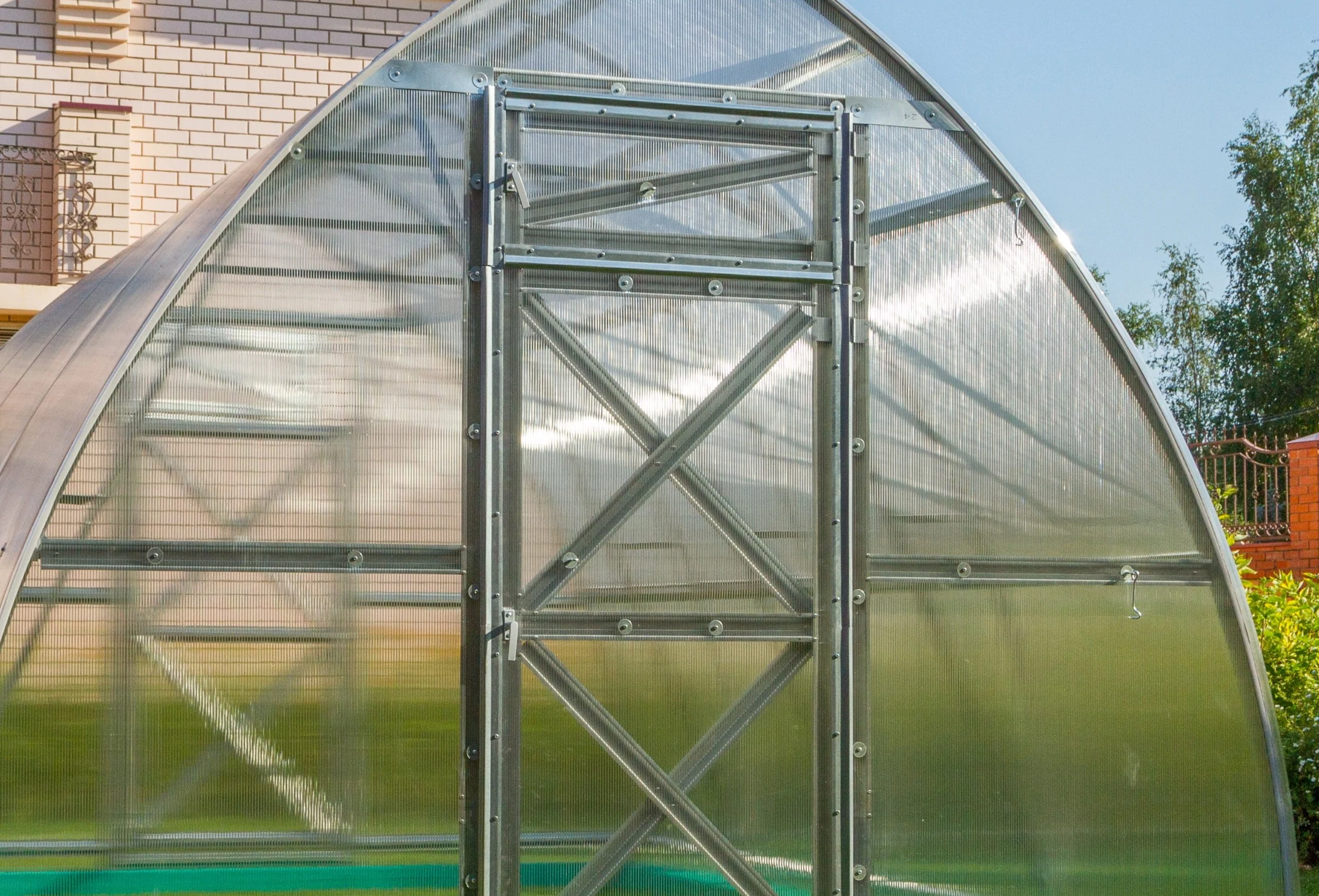
That door has been on this guide since the first version. Corrugated plastic, a metal frame, a latch, and a whole lot of sky on the other side of the panel. That is the tool. Sun comes through. Rain stays out. Heat builds because the plastic slows the air that would have carried the heat away. A greenhouse does not make a climate. It biases the one you already have, warmer by day and wetter whenever the plants are transpiring and the vents are shut.
For a home crop the usual shape is a hoop. Pipe or tube bent into arches, a ridge, and a skin of greenhouse film or polycarbonate sheet. Film is cheap and it fails at the ends, the door, and anywhere a branch rubs it. Polycarbonate costs more, holds heat better, and survives a season of hail that would lace a single sheet of poly. Either one needs to be clear enough that you are not growing in a green cave. A dirty, yellowed skin is a light tax you pay every day and never see on a meter.
Size it to the plants plus the aisle, not to the plants alone. A flowering cannabis plant that touches the plastic cooks on the sunny side and molds where the leaf stays wet. Leave headroom. Leave a path you can walk without swimming through cola. If the roof is two metres and the cultivar wants to be three, the roof wins. You top, you trellis, or you pick a shorter plant. The house will not grow upward because the seed pack was optimistic.
A green shade tunnel is a different tool
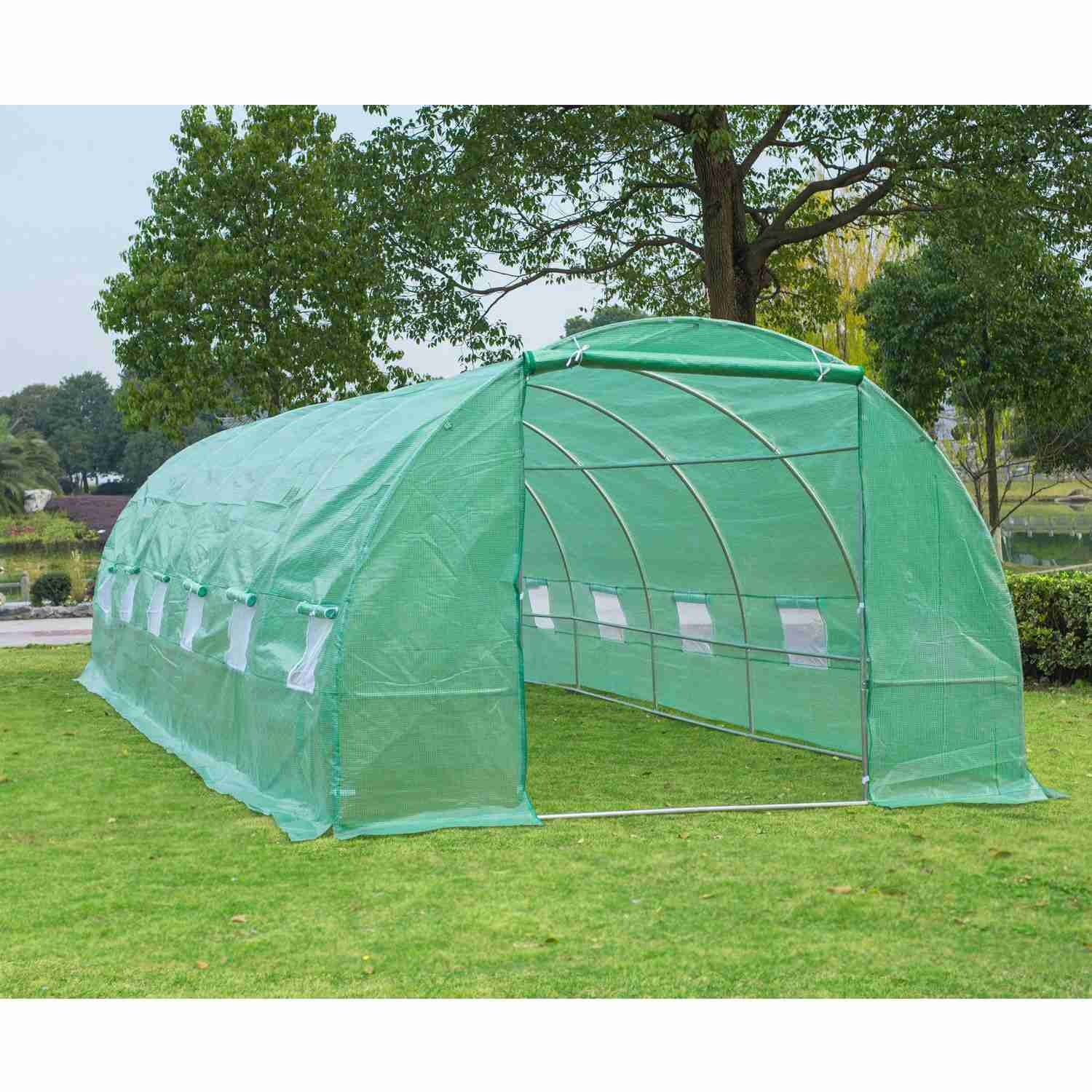
The green mesh tunnel in that photo shows up in every cheap greenhouse search. It is a shade house. The cloth cuts sun, takes the edge off hail, and lets wind and humidity pass. That is useful in a hot, bright summer when a clear box would sit at 35°C by noon. It is a bad purchase if you wanted spring heat, a dry flower room, or a night you can make dark. Mesh does not hold warmth after sunset. It does not give you light deprivation. Read the product as cloth over hoops, then decide if cloth is the problem you have.
It is not an indoor room with a free lamp
People ask whether greenhouse weed counts as indoor. It counts as greenhouse. You get the sun, which on a clear day is more light than most home LEDs, and you give up the sealed box. Temperature follows the weather with a lag. Humidity follows the plants and whatever you trapped. Bugs walk in when you open the door. A porch light, a streetlamp, or a gap at the end wall can reach the canopy at night. None of that happens in a tent you can zip.
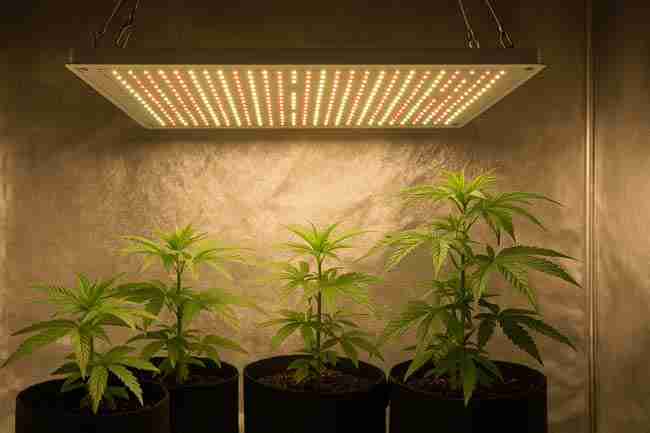
Supplemental light belongs in the weeks the sun is not doing the hours. Early spring and late fall days are short. A photoperiod plant that you want to hold in veg will start flowering on those short days unless you add hours after dusk, on a timer, enough to keep the night shorter than about twelve hours. Cloudy stretches in flower are the other use: a modest LED over the canopy keeps the day from collapsing, without trying to replace July. Running lights eighteen hours under a clear July sun is how you pay an electric bill to do a job the sky already did. The indoor growers guide is the sealed-room version, where the lamp is the sun and the carbon filter is the neighbour policy. Do not copy that parts list into a hoop and call it the same grow.
The old line on this page said sunlight makes higher-potency marijuana than an indoor lamp, and that a greenhouse inherits the trick. Sunlight is strong. Strength of light is not a potency dial you can read off the plastic. The THC in the jar was set by the genetics, by how much usable light the flowers actually got, by whether you chopped when the resin was ripe, and by whether the dry cooked the terpenes off. A weak blurple LED can lose to a bright hoop. A tent with a real fixture, a steady climate, and a proper dry does not lose because it lacked a view of the sky. Judge the weed you grew. The roof is not a lab result.
Air is the job, every day
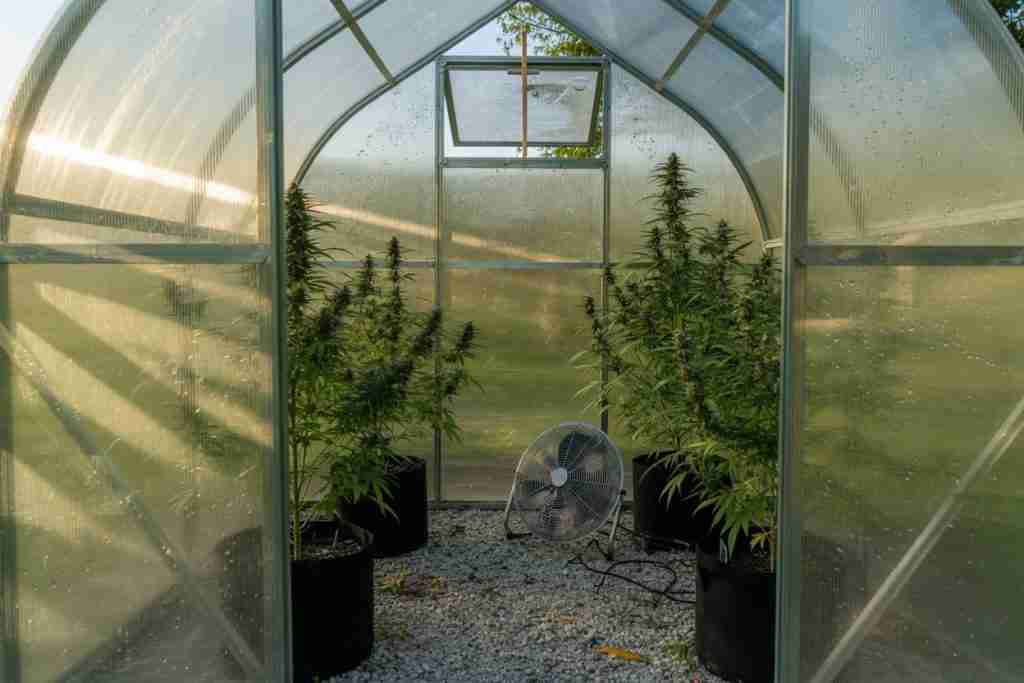
Look at the open vent and the fan before you look at the plants. A closed hoop on a sunny morning is a car with the windows up. Leaf temperature climbs past the air temperature you think you measured by the door. Above about 30°C the plant closes stomata to save water, and photosynthesis stalls while the light is at its best. You wanted that sun. You just made it unusable. Vent first. Roof vent, end door, a sidewall rolled up. Then a fan that actually moves air through the canopy, not a breeze that dies on the first row of fan leaves.
Daytime targets that growers can hit, and that match what the better climate guides keep repeating: vegetative days around 24 to 28°C, flower closer to 20 to 26°C, with the night about 5°C cooler than the day. A swing of 15°C is stress, not a colour trick. If you want purple, earn it with genetics and a gentle late-flower night, not a heater that dies at 2 a.m. Relative humidity can sit around 55 to 70 percent while the plants are leafy and drinking. In flower, walk it down toward 45 to 55 percent, and closer to 40 late, because dense buds hold water in the middle. Those bands are a map. Your hoop will miss them on a weather change. The miss you correct is the one that runs hot and wet together.
Droplets on the inside of the plastic in that photo are the morning report. The house was wetter overnight than the panels. In a greenhouse the first fix is outside air, as long as the air outdoors holds less water than the air inside. Opening up at dawn, while it is cool and before the sun drives the temperature through the roof, dumps that humidity. A dehumidifier is the second tool, for a tight house on a week when outside air is already soggy. Buying the machine and leaving the vents shut is how people dry the air they just reheated into a swamp. Hang a thermometer and a hygrometer at canopy height, not in the shade of the door where you like to stand. The number by your elbow is not the number in the flowers.
Light deprivation is a clock you have to keep
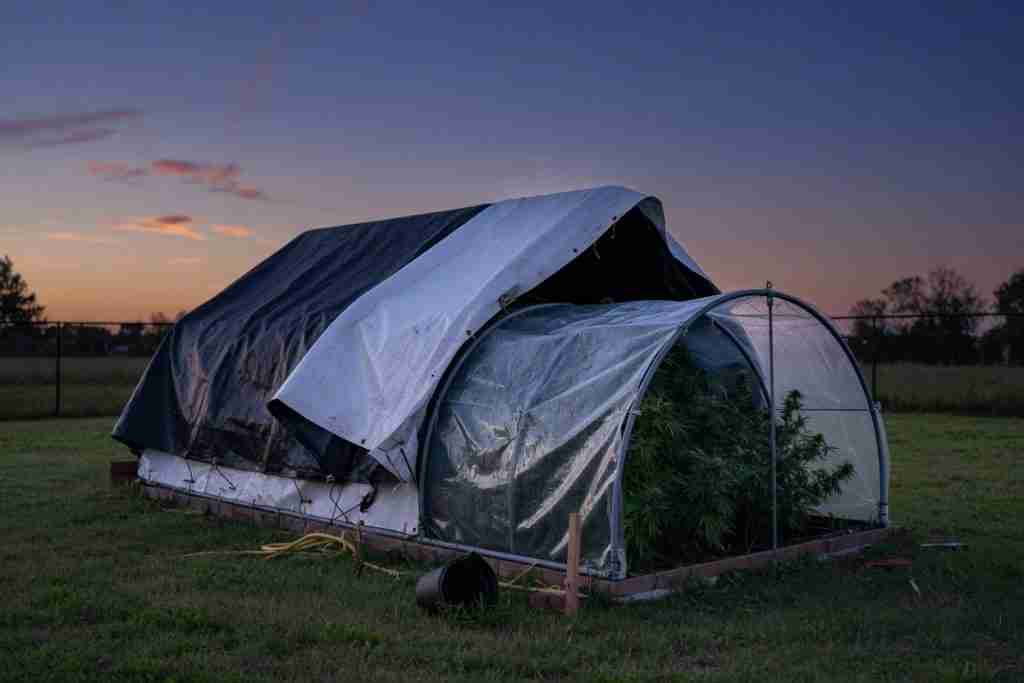
Photoperiod cannabis flowers when the nights get long enough. Outdoors that happens on the way to autumn. In a greenhouse you can move that night. A light-proof cover, on for twelve hours, off for twelve, tells the plant the season turned. The tarp in the photo is halfway there, which is the only honest way to show it. Halfway is not flower. The pull has to finish. Ends, door, and any gap where the neighbour’s sensor light can draw a white line across a cola. A leak does not have to look bright to you. Plants read it. Small leaks stall flower and can throw male flowers into a room that was supposed to be sinsemilla. Big leaks send plants back toward veg.
When you pull matters as much as whether you pull. Covering at 2 p.m. in July seals the hottest air of the day under a black skin. Flowers cook, terpenes cook, and the humidity spikes because the plants are still transpiring into a box you just closed. Pull as the air is already cooling. A common home schedule is cover around dusk-side of the evening and uncover early morning, twelve hours later, same time every day. If you have to cover earlier because of work, vent under the tarp. A fan and a light-trapped intake beat a sealed black oven. Check the timer or your own alarm every evening for the first two weeks. A missed night is a long day, and a long day in early flower is how a crop hesitates.
White side out, if the tarp has a white side. It reflects some of the sun that would otherwise turn the cover into a radiator. Black side toward the plants. Weight the edges. Wind under a loose tarp is a sail, and a sail at 1 a.m. is a revegetating crop plus a greenhouse in the ditch. After harvest, or on a week of storms, a light frame in a windy yard is safer with the skin off than with the skin on. That was true in the first version of this article and it is still the failure mode people skip because the sunny photo looked sturdy.
Autos do not use this clock. They flower on age, tarp or no tarp. Covering them for twelve hours only steals the sun they would have used to finish. If the cultivar is an autoflower, give it all the light the season offers and skip the blackout labour. How autoflowers work is that clock. Photoperiod plants are the ones you black out, and the photoperiod flowering guide is the indoor version of the same twelve hours. The greenhouse difference is that your dark period is a piece of cloth you can forget, tear, or light up from the end wall.
The season outside still picks the finish
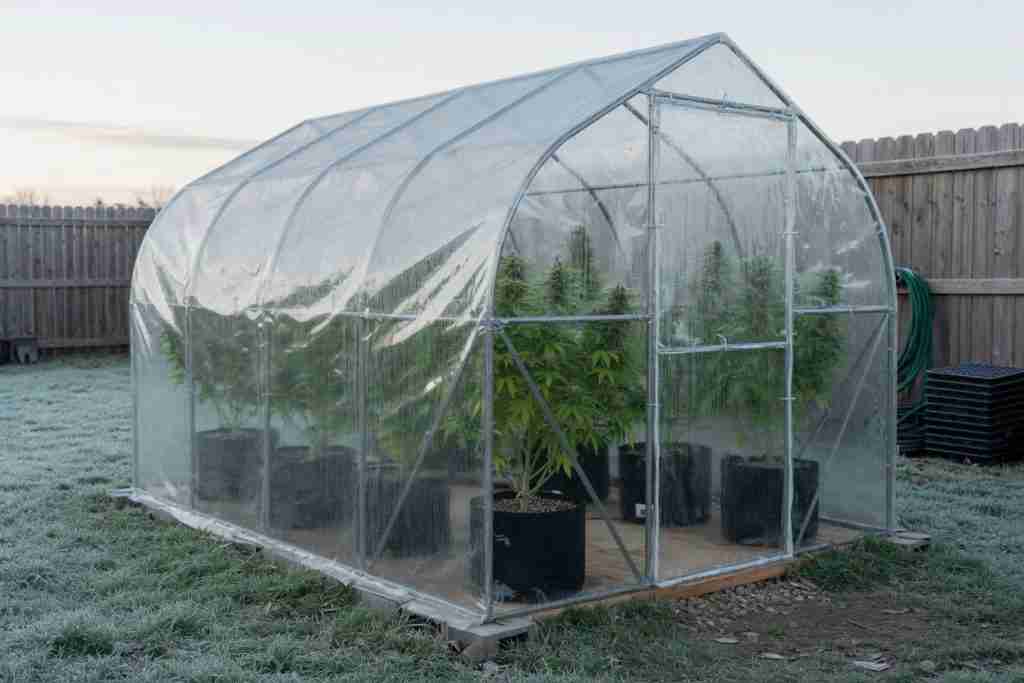
Frost on the grass and green plants under the plastic is the reason people buy the house. A light frost outside can sit above freezing inside, for a while, because the panels slow the heat leaving. That buys mornings in spring and nights in early fall. It does not buy July in November. A film hoop with no heat will follow a hard freeze. Buds against the plastic freeze first. If your nights are already dropping near 0°C and the flowers are not ready, you are late, and another week of hope is how you harvest ice.
Without a blackout, a photoperiod plant in a greenhouse flowers on the same shortening days as the plant in the garden beside it. The roof did not move the equinox. What it did was keep September rain off the flowers and hold a bit of heat so a cultivar that finishes in early October can actually finish. A sixteen-week tropical sativa still wants a season you may not have. Light deprivation is how you harvest that plant in late summer instead of in a wet October. Autos finish on their own age and fit a short northern run if the roof is tall enough for the stretch. Growing in the true north is the outdoor calendar this house has to live inside. Outdoor cannabis seeds is the sister choice when you do not want a structure at all.
Heat is the other end of the same year. A clear hoop in full sun can pass 35°C with the door cracked and still feel like you “ventilated.” Shade cloth over the roof, on the hottest weeks only, is the grown-up version of that green mesh tunnel. You want the cloth to cut the burn, not to live there from May to October and starve the plants of the light you built the house to catch. Roll it on when the canopy is stressing, roll it off when the week breaks. The flowering stage guide still applies under plastic. Weeks are weeks. The roof changes the weather around them.
Mold is the tax on a warm wet house

That bud is the failure this structure is good at. Grey-brown rot in the middle of the flower, sugar leaves still pretending the outside is fine. Botrytis likes dense cannabis, still air, and a wet night. A greenhouse manufactures the wet night if you seal it. Warmer air holds more water. The plants pour more water into that air all day. You shut the vents because the forecast scared you, and by morning the panels are dripping onto the colas. Outdoor plants get rain and wind. Greenhouse plants get a climate you forgot to empty.
The practical version is dull and it works. Water the pots in the morning so the surface is not soaked at sunset. Keep leaves off the plastic. Thin the interior of a bush that has become a closet. Point a fan under the canopy, not at a single cola from ten centimetres away. Walk the crop twice a week in late flower and look inside the buds, not at the pretty tops. One brown flower comes out of the house in a bag, and you do not shake it over the neighbour. The bud rot guide is the rest of that diagnosis. Catching it early saves the plant next to it. It does not resurrect the bud you already lost.
Bugs take the same opening. A warm, still hoop is a good address for spider mites, and the plastic keeps the rain from washing them off the way a storm sometimes does outdoors. Look at the undersides of the fans while you are looking for rot. The spider mite guide is that problem. Deer, hail, and a sideways rain are the threats the skin actually stops. Treat the house as weather armour with a door, not as a sterile room. You will still open that door every day. Whatever is on your sleeves comes in with you.
Height, pots, and how many plants belong in there

The flowers in that photo are what the roof is for, and they also show the spacing people forget when the plants are seedlings. Commercial charts often start around two to four plants per square metre in modest pots. That is a density for a managed canopy, not a dare to fill a hobby hoop until the door will not close. Your limit is the number of plants you are allowed where you live, plus the aisle you need to see rot before it spreads. A greenhouse does not add to that number. Plastic is not a license.
Pots beat a packed soil floor for a first house, because you can move a sick plant and you can feel the weight. A 15 to 20 litre fabric pot is a normal home size for a plant you will flower under this roof. Lift it. Water when it is light, the way the watering guide describes, and expect the hoop to change the dry-down. Plants under plastic often drink less on a humid week and more when you finally vent and the air goes dry. A meter in the soil beats a calendar. Do not water the flowers because the plastic looked sweaty. Sweat on the panels is air. Thirst is the pot.
Train for the roof you have. A plant headed for the panel gets topped or bent while it is still soft. Trellis net holds colas off each other so air can move, which is the mold control you can build in June. Support matters less than it does in an open wind, and more than it does in a tent, because a heavy cola plus a humid week will fold a stem that looked fine on Monday. If the cultivar is a stretcher, believe the stretch. Greenhouse sun will not keep it short.
What the sun does to the weed, and what it does not

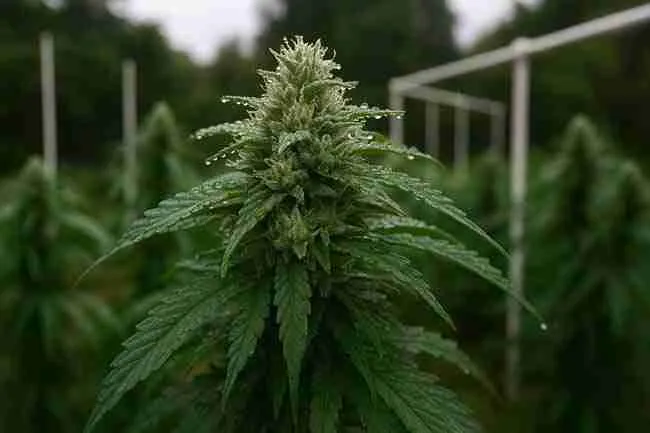
That cola is the argument for the sun, stated plainly. Solid flowers, frost, and a season of real light behind them. It is also not a potency certificate. Purple leaves, orange hairs, and a sparkle you can see without a loupe are not THC. Read the resin on the bracts when you are close to chop, the same way you would in a tent. Clear heads are early. Cloudy heads are the window. Amber is a choice about effect, not a sign the greenhouse “finished” the plant for you. The harvest timing guide is that decision. The roof does not make it.
Smell and harshness still come off the dry. A warm hoop is a bad drying room. Flowers that finished in beautiful sun and then hung at 28°C in the same house will smell like hay and smoke like it. Cut them and move them somewhere dark, cool, and slow, with air in the room and not a fan blasting the buds. If the only dry space you have is the greenhouse, you do not have a dry space yet. Fix that before you congratulate the plastic.
Seeds that can finish under this roof
The list on the first version of this page was four feminized packs this shop actually sells, and they are still the right kind of suggestion: plants that have been run in sun, not a fantasy catalogue of two-metre tropical trees for a two-metre hoop. Canadian Sunshine is the early finisher when the outdoor calendar is short and you would rather flip or plant with a harvest that beats the wet fall. OrangeTheory, Banana Dream, and Grape Punch are the other sun-grown picks from that list. Read them for height and finish, then look at your ridge. A cultivar that sounds perfect and arrives at the plastic in week three of flower was the wrong fit, however nice the jar was in someone else’s photo.
Match the seed to the clock you are willing to keep. If you will pull a blackout every day for the whole of flower, a photoperiod that needs those twelve hours is a fair plant, and you can start it early under the plastic. If you will not, choose an autoflower or a fast photoperiod and let the season run. Either way the house still needs the vent, the fan, and a path to walk. The structure saves weather. It does not save a crowded, sealed, forgotten canopy. Grow the marijuana you can inspect. The sun will do more for that crop than any sentence about potency on a seed page.
Tie the frame down before the first wind you respect. Open the house every morning you are not in a storm. Cover photoperiods only when the cover goes all the way dark, and uncover them on time. Keep the late flowers drier than your instinct in a warm box. Then harvest on the resin and dry them somewhere that is not a sunroom. That is cannabis greenhouse growing once the brochure is finished.