Cannabis Breeding

Cannabis Breeding is the decision to make seed on purpose. You pick a female for the flower you actually want, you pick a male because half the DNA in every seed is his, and you keep his pollen off every other plant in the room. The kids of that pair are a new generation. They are not a finished strain, and they are not a nickname you can print on a bag.
Most of the pages people find for this search describe the same job: write a goal, separate the male, collect pollen, paint a few branches, then grow the seeds out and keep notes. Where they get loud is the payoff. A cross does not hand you a heavier harvest or a higher THC number. It hands you variation. Marijuana you smoke came from a plant somebody already selected. Weed you grow from a fresh cross is still a question until you flower it.
If you have never taken a plant through flower, do that first. Breeding on top of a first grow is how a male opens in the same tent as the cola you meant to keep seedless. One honest cross, with the parents still alive as clones, teaches more than a tent full of mystery seed.
Cannabis Breeding Is a Chosen Cross

A seed from a pack already has two parents. Somebody else chose them. When you breed, you are the person making that choice. The female contributes the flower traits you can see and smell. The male contributes a set of traits you mostly cannot see until his daughters finish. Put those two plants side by side in your notes before you put pollen on anything.
Modern packs are usually mixes, not pure lines. Crossing two unstable plants gives you a wide scatter of kids. That scatter is useful if you have room to flower them and throw most of them away. It is a mess if you expected every seed to look like the photo on a menu. Start with parents you have already grown, not with a story you read once.
Write the Goal Before You Pick Parents
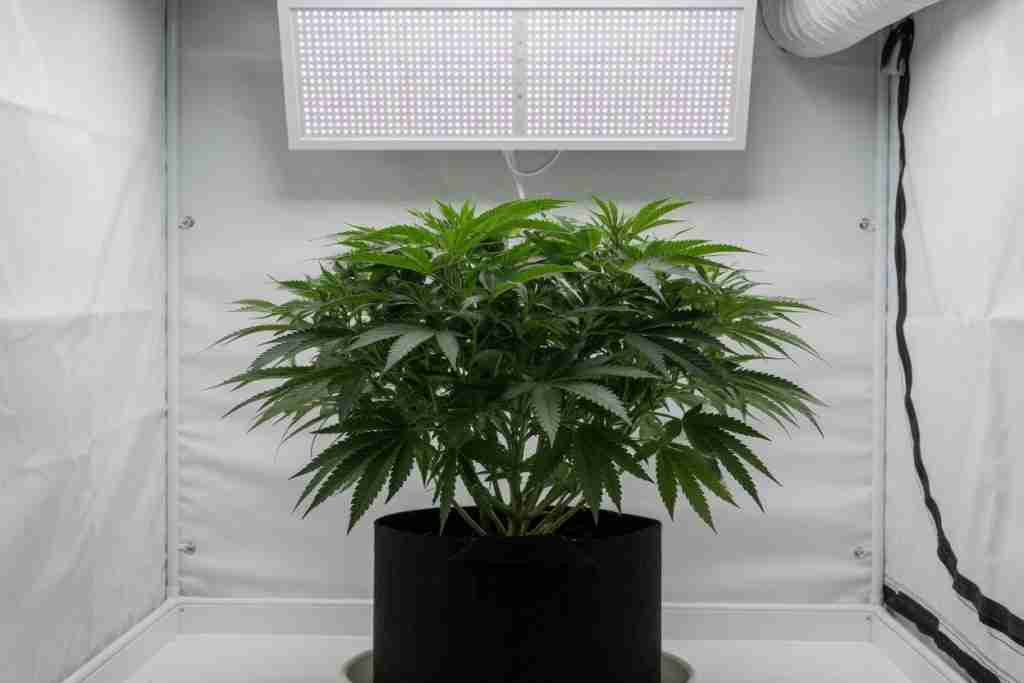
“Better weed” is not a goal. A goal you can select for sounds like this: finish in about nine weeks, stay short enough for the tent, smell like the female you already like, and do not throw mold when the room runs humid. Write it down before you fall in love with a plant that only wins on one of those points.
Grow the candidates the same way. Same light, same pot size, same feed. A plant that looks special because she got the bright corner is not a parent yet. Vigor, structure, finish time, bud density, smell, and whether she stays female under ordinary stress are the notes that matter. A lab number is optional. Your nose and the calendar are not.
Pheno Hunting Is Not Breeding

Pheno hunting is picking the best individual out of a pack and keeping her. You flower the seeds, choose the cola you want, and clone that plant. You did not make a new generation. You found one expression that was already in the pack.
Breeding starts when pollen from a chosen male, or from a deliberately reversed female, lands on a chosen female and you sow those seeds. Hunting is how you find a mother worth keeping. The cross is a separate decision you make after she has earned it. Plenty of growers should stop at the hunt. A keeper clone, run again next cycle, is a finished project.
Both Parents Have to Earn the Cross

People obsess over the female because she is the plant they smoke. She is half the cross. If you dust a keeper cola with pollen from a lanky, grassy male, you should expect lanky, grassy kids in the mix. The male does not get a free pass because you were in a hurry and he was the only one that showed sacs.
Reject parents that are weak, always hungry, or full of pests. A cross does not clean that up. It copies it. Health is part of the selection, the same way smell is. If you would not want to run the plant again, do not make a hundred seeds of her.
Pick the Female for the Flower You Want

Flower her before you decide. Structure in veg is a hint. The cola is the test. You are looking at finish time, how the buds stack, how she smells when you break a sugar leaf, and whether the flowers stay female. A pretty plant that foxtails into the diodes or molds in a normal room is a poor mother even if the bag she came from had a famous name.
Take the clone before you need pollen, not after the plant is tired. A mother kept in veg is how you repeat her. If the only copy is the flowering plant, one mistake and that parent is gone. Label the clone with the same name you will write on the seed bag.
A Male Carries Traits You Cannot Smoke
You cannot sex a seedling by leaf shape. Males and females show at the nodes, usually after you flip a photoperiod to twelve hours of light, sometimes as preflowers late in veg. A male builds clusters of small round sacs on short stalks. He does not grow white pistils. The day those sacs loosen, he is dangerous to every seedless flower in the building.
Choose him for vigor, internodes, stem strength, smell of the stem, and how long he took to show sex. Then accept the limit: you will not know his bud traits until you flower his daughters. A proven male, one whose kids you have already seen, is worth more than a random sac in the corner. Regular seed is how you get that male on purpose. A feminized pack is not a male-finding tool.
Skip a Plant That Herms on Her Own
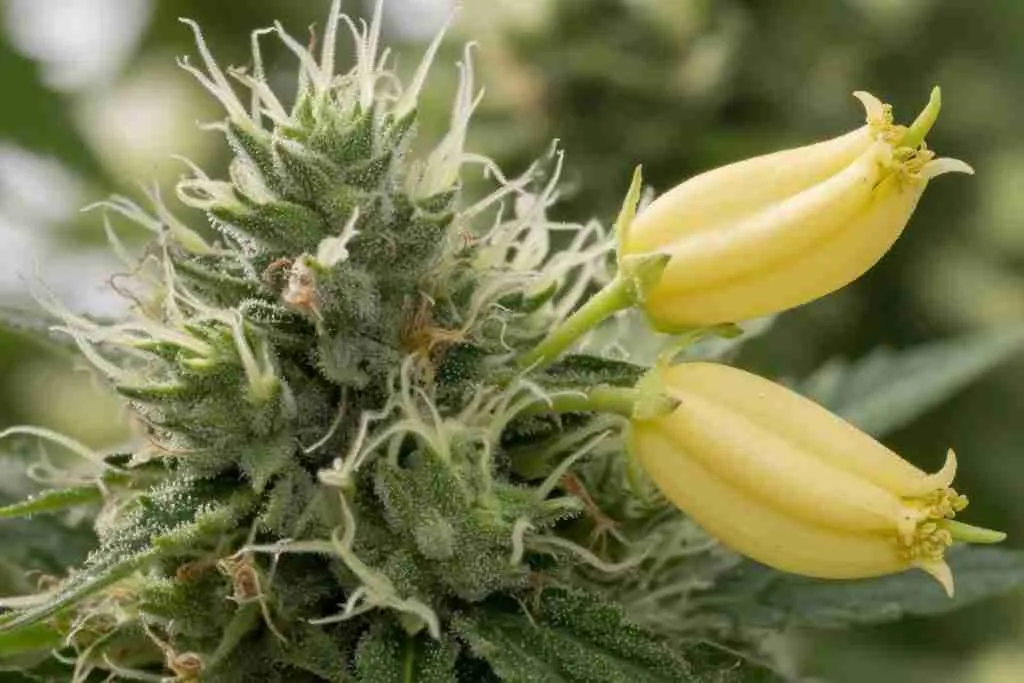
A female that grows male flowers under ordinary conditions is a hermaphrodite. Those flowers can look like small bananas tucked into the bud. Pollen from them will seed the room, and it can pass the tendency to throw male flowers again. Do not collect that pollen because it was convenient. Pull the branch, or pull the plant, and keep it out of the breeding tent.
Stress can push a plant to herm: a broken light timer, a bad heat spike, a harvest left too long. One banana after a disaster is a warning, not a parent. If you want feminized seed, that is a planned reversal of a stable female, done away from the flower you smoke. It is not “she hermed, so I used it.”
How to Make the First Cross
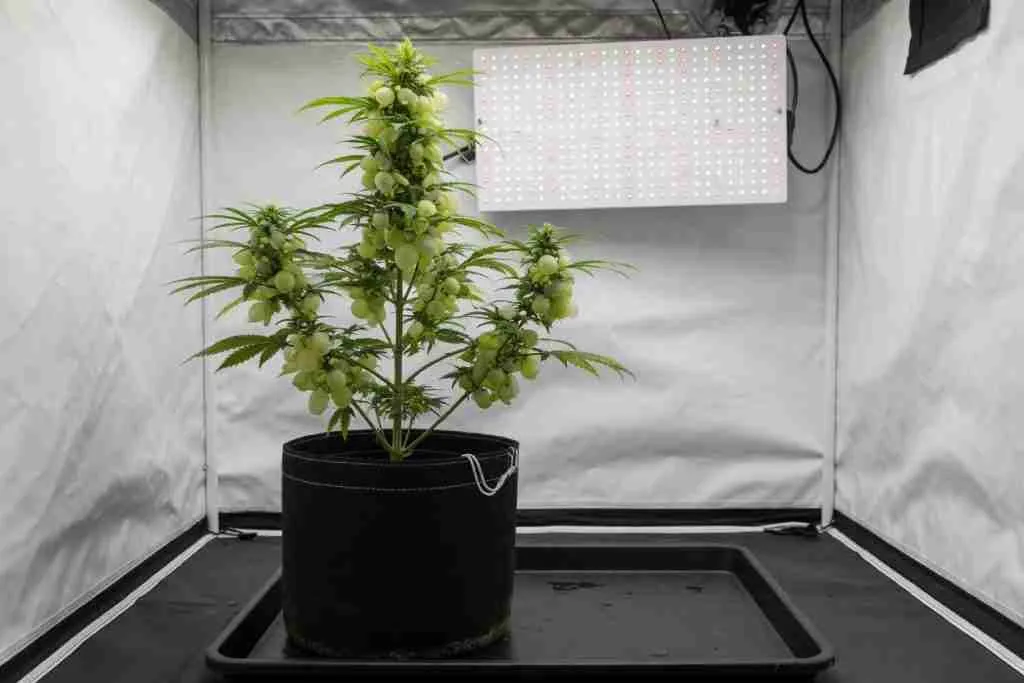
Move the male into his own tent, or his own room, before the sacs split. Pollen is a fine dust. Intake fans, oscillating fans, your sleeves, and the dog will carry it. A male flowering beside seedless females is not a breeding plan. It is an accident with a timer on it.
Flip him on the same clock you use for the female, or a little earlier, so he has open sacs while her pistils are still white. You do not need him huge. One healthy branch of open sacs is more pollen than a home cross needs. Turn his fans down when you collect, and shower and change your shirt before you walk back into the flower room.
Letting a male dump pollen into a room of females makes a lot of seed and almost no information. You will not know which branch caught which cloud if more than one male was open. Painting one branch is slower, and it is the method that still has a name next year. If you truly have one male and one female and you are willing to seed her entirely, do that in his tent or in an empty third space. Do not do it in the tent you use for seedless flower. Pollen sits on screens and fan blades. Clean that gear before the tent goes back to a seedless run.
Collect Pollen Away From the Flower Room

Wait until sacs are actually opening and you can see pale yellow dust. Tight green balls are not ready. Hold a clean sheet of paper under a branch, or bag the branch, and tap. Sift out the leaf bits. Let the powder dry before you seal it. The pollen guide covers drying and cold storage. A little dust goes a long way. Do not shake a whole male over an open tent.
Label the container the minute you collect it. Male name and the date. Unlabeled yellow powder is how two projects become one rumor. If you are not using it the same day, keep it dry and cold, and do not open the container in the flower room “just to look.”
Paint Pistils While They Are Still White

A female is ready for pollen once real flowers are up and the pistils are still white and fresh. That is often a couple of weeks after the flip to flower, sometimes a little later. Brown, receding pistils are a worse target. Work in the flowering stage on purpose, on a plant you already isolated from anything you want to keep seedless.
Use a small clean brush and paint one or two lower branches. Leave the top colas alone if you still want seedless flower from the same plant. Turn the fans off. Cover the painted branch with a paper bag for a day if you can, then mist the room surfaces and yourself. Write the male name and the date on that branch before you forget which cloud of dust it was.
Label the Bag the Same Day

The record is part of the cross. On the bag, on the branch tag, and in the notebook, write the female, the male, and the day you painted. Add which branch, if you only did one. If you run two males in a season, this is the only thing standing between a known cross and a jar of guesses.
Keep the notebook boring. Date of flip. Date sacs opened. Date of pollination. Date you cut the seeded branch. Anything you noticed: mold, bananas, a weak stem, a smell you want again. Future you will not remember which tent was which. The bag will not remember either unless you wrote on it.
Harvest Seeds That Have Gone Hard

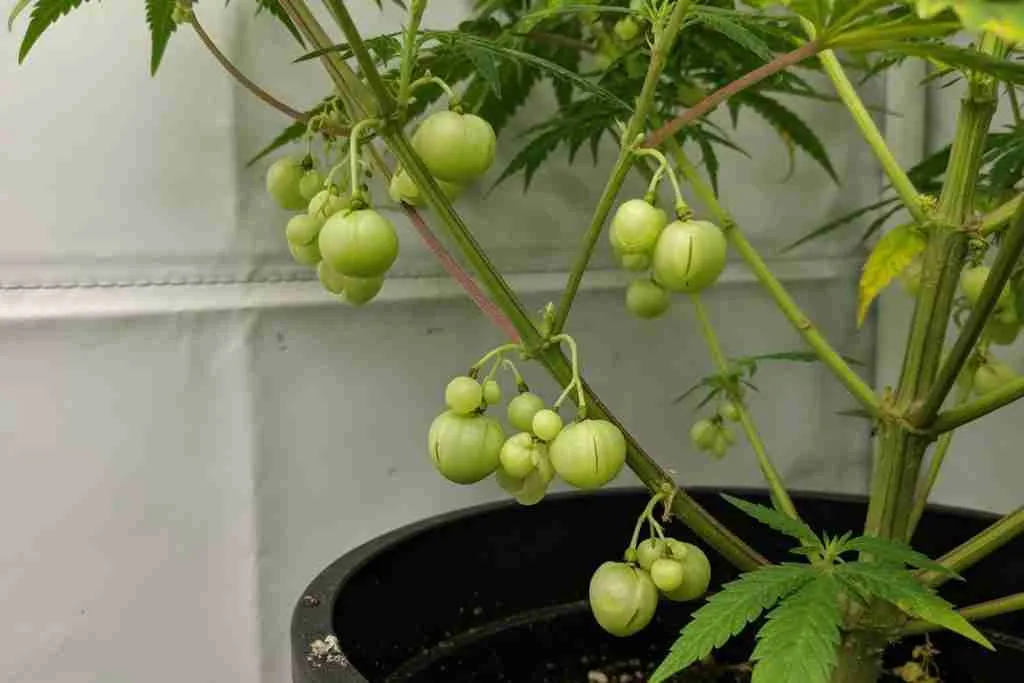
Seeds need several weeks after pollination, commonly a month and sometimes longer. Do not cut because the calendar page flipped. A ripe seed is dark, hard, and often mottled or striped. A pale green seed that crushes is not done. Swollen calyxes with seeds rattling inside are the cue. The seeded branch can finish while the unpollinated tops keep ripening, as long as you do not let that branch mold.
Dry the branch before you break it up. Pick the seeds out, let them dry further in a cool spot with air, and throw away the pale soft ones. Then store the keepers cool, dark, and dry, in the labeled container. A jar on a warm light ballast is how a year of work dies. Viable seed is the whole point of the cross. Flower you meant to smoke is a different branch.
When the flowers crumble, roll them over a clean tray and sort seed from chaff. A keeper is firm and shows a mottled coat. Flat green wafers and empty shells go out. Spread the keepers in one layer for a few more days of air before they go in the jar. Moisture left in the coat is what molds a sealed container. Put the names on the jar itself. A note stuck to the lid will fall off, and then the cross is anonymous again.
The Generation After the Cross

Sow more plants than you can fall in love with. Two pots will not show you the range of a cross. A tray will start to. You are going to discard most of them. That is the work. If you need every plant to be a keeper, buy a stable pack and hunt inside it instead of breeding.
Flower them under the same conditions you used on the parents. Select against the goal you wrote, not against a new goal you invented because one plant smells wild. Keep clones of the females that match before you cull the rest. Males in this generation are a second project. Do not let them open in the same room.
Sex those seedlings as soon as the nodes are clear, and move every male out of that room the day you are sure. One late male among the females you meant to compare will pollinate the test and end it. Score the females on the goal you wrote: finish time, the shape you asked for, and whether the flower smells like the parent you were chasing. A plant that only wins on a new idea you had mid-flower is a maybe. A maybe does not get the last clone pot.
F1 Means the Children of That Pair

F1 means the first generation from that cross. If both parents were relatively stable, the kids can look fairly alike and grow with some extra vigor. If both parents were already mixes, and most polyhybrids are, the F1 will wander. Sellers use “F1” as if it promised uniformity. On your bench it only means “these seeds have these two parents.”
Grow the F1 to flower before you name anything. A vigorous seedling is not a strain. Smell, finish, and structure show up late. Keep the female that matches the goal, clone her, and be willing to throw the rest out even if they were a lot of work to feed.
F2 Is the Generation You Select

An F2 is what you get when you cross within that first generation. A male and a female you both selected from the F1, paired again, make F2 seed. This generation usually spreads wider than the F1. Traits that were hiding show up. That spread is why breeders select here, and why a beginner with a few pots gets overwhelmed here.
You do not stabilize a line by naming the F2. You stabilize it by choosing the same traits again, generation after generation, and by not introducing a random male because he was pretty in veg. Most home projects should stop at a keeper clone from the F1. Another full generation is a multi-year hobby, not a weekend.
A Backcross Is a Return to One Parent

A backcross pairs an offspring with one of the original parents. People do it when they want to pull the kids back toward a flower they already trust. It can stack a trait. It does not lock a strain in one step, and it can also stack problems, including a tendency to herm if that parent had it.
Use it only when the parent you are returning to is still alive as a clone or as stored pollen you trust. Crossing “back” to a different plant that merely smells similar is a new cross with a hopeful name. Write the real parents on the bag.
Regular Seed Is the Beginner Path

Regular seed gives you males and females. That is the beginner path if the goal is a real male-female cross. You will kill or isolate about half the plants once they show sex. Plan for that before you fill the tent. A photoperiod is the parent you can park in veg, clone, and flower when you are ready. An autoflower runs on her own clock. You cannot hold her as a mother while you decide. Learn the cross on photoperiods.
Seed you found in a jar is an unnamed cross. The flower may have been fine. The male was whoever leaked pollen that season. Grow it if you want. Do not describe it as a line you bred. A bred seed has two names you chose and a date. If you cannot say both names, you are popping a found seed. That is a fair way to hunt one plant and a poor way to claim a strain.
Feminized seed is a different job. A grower reverses a female so she makes pollen, then paints a normal female. The sprayed plant is not for smoking. The doses and the warnings live on the feminized seed page. Do not invent a kitchen mix, and do not smoke anything you treated. Offspring are mostly female. They are not a promise, and pollen from a plant that herms without help is a bad shortcut into that project.
If you are growing at home in Canada, the federal baseline is four plants per household. Quebec still prohibits recreational home growing. Manitoba allows adults 19 and older up to four plants indoors under the rules that took effect in May 2025. Four plants is a flower tent. It is not a breeding population. You can still make one small, labeled cross and clone the keeper. You cannot flower dozens of kids and call it a selection program inside that cap. When the goal is smoke rather than seed, start from seed that already fits the tent.
Clone the Keeper Before You Flip Her

Take cuttings while the female is still in veg and growing hard. A clone is the same plant again. A cup of water will root a cutting if you want the simple version, and the cup method is enough to save a parent while you learn. Root her, label her, and keep her under long days. Then flip a copy, not your only copy.
The same rule applies to a male you might want later. Flower a clone of him when you need pollen. Do not bet the line on one plant that is about to open sacs in the wrong tent. If the clone dies and the notebook is blank, you do not have a project. You have a story. The next run starts with parents you can still point at.