Cannabis Bloom Boosters


Cannabis bloom boosters are extra phosphorus and potassium in a jug, a pouch, or a powder. That is the whole product class. Ranking pages in 2026 still split in two camps: hydro shops selling 0-50-30 as a density switch, and growers citing greenhouse trials where extra P past a moderate range left yield and cannabinoids unchanged while runoff P climbed. Both can be true in the same tent. A light bloom base can run short of P. A complete bloom base plus a scoop of 0-50-30 is salt on salt. The plant eats dissolved ions in range. It does not eat a label. Shop packs in the cannabis seeds store if you still need seed. The rest of the grow library is on the cannabis cultivation blog.
Canada’s recreational cap is four plants per household. Quebec still bans rec home grow. Manitoba has been indoor-only since 1 May 2025. Four marijuana plants in a tent do not need a fourth bottle because a chart had a PK column. Burned tips, locked magnesium, and a stalled stretch are the usual bill. This page is the booster job: what is in the bottle, when it can help, when it is fiction, and how to add it without wrecking the root zone. Stage-by-stage feeding lives on cannabis nutrition across all stages. Flower weeks: cannabis flowering stage.
What a Bloom Booster Actually Is
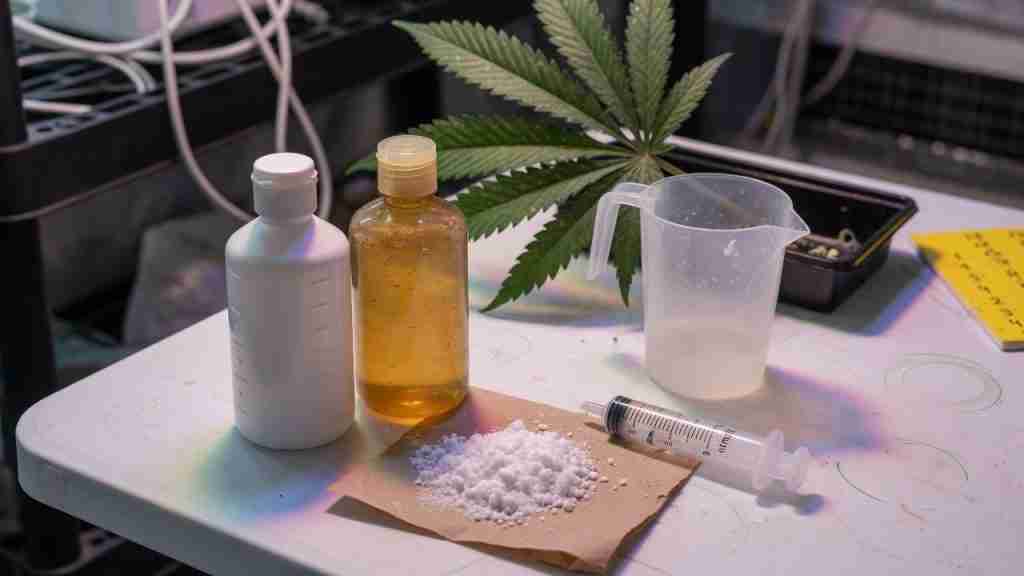
Most bottles sold as bloom boosters, bud boosters, or PK spikes are a concentrated phosphate plus potash mix, often with little or no nitrogen. Common labels look like 0-50-30, 0-52-34, 1-50-30, PK 13/14, or a milder 0-1-3. The powder on the table is often monopotassium phosphate. The liquid is the same ions in water. Some “complex” boosters add sugars, amino acids, kelp, or a mystery blend. Those extras are a different claim. The PK is the claim that ranks.
Phosphorus is part of ATP and membranes. The plant uses it. Potassium moves water, stomata, and sugars. The plant uses that too. Flowering cannabis does use more P and K than a seedling. That does not mean a 50 percent phosphate powder is the missing piece. A bloom base already carries P and K. You add a booster on top of that. If the base already sits in a moderate P range, the extra is runoff. If the base is light, a small add can fill a hole. Read both labels. Add the millilitres. Then measure EC. Guessing from a week number on a forum chart is how people burn week five.
PK 13/14 is a liquid spike with a milder ratio than a 0-50-30 powder. It still adds P and K on top of the base. Shops sell it as a mid-bloom week. Use it the same way: small, timed, measured. A 0-50-30 powder is more concentrated per gram. One extra gram in a small jug is a real dose. Weigh it. Do not “a pinch.” Liquid 13/14 is easier to syringe, and easier to forget you already added it twice. Write the millilitres on tape on the jug. If two people mix the tent, you will double it.
The three numbers are not a dose

That 2023 product shot is the kind of jar this URL used to treat as a harvest switch: 0-52-34 on a lid. Those three numbers are percent by weight in the concentrate, not milligrams per litre in your jug. Two teaspoons of a 0-50-30 powder can dump more phosphate than a full bloom feed. Charts print a ceiling. Start at a quarter to a half of what the pouch says, then watch new calyxes and the runoff. Phosphorus chemistry: what phosphorus is and phosphorus nutrition in cannabis. Potassium: what potassium is used for.
Greenhouse hydro work that ranks in 2026 keeps landing on a moderate phosphorus window, in the tens of milligrams per litre of solution, not a swamp. Extra P above that did not pack more flower in those trials. Potassium across a wide range often failed to move yield once the plant was already sufficient. That is not “potassium is optional.” It is “more K than enough is not a density lever.” Nitrogen in flower still mattered in the same kind of work. Do not zero N in week one of 12/12 because a PK pouch said bloom. Nitrogen: nitrogen for cannabis cultivation.
When Extra P and K Can Help
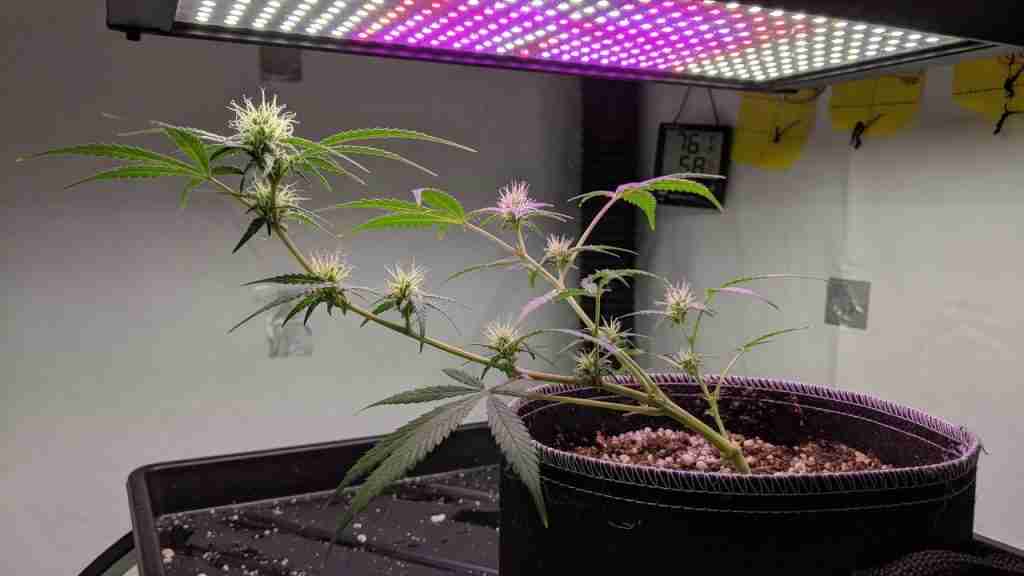
Week one of 12/12 is stretch. The plant is still building stem and leaf. Pistils at the nodes do not mean you dump phosphate. A booster too early can crowd nitrogen and calcium while internodes are still lengthening. Wait until stretch slows and flower sites are clearly stacking, often around week two to three on a photoperiod, later if the plant is still racing. Then a small PK add can make sense if the bloom base is mild and the plant is healthy. If the plant is already clawed, tip-burned, or sitting in high runoff EC, you do not have a PK problem. You have a salt problem.
Outdoor plants follow the same chemistry on a slower clock. You do not start a PK powder the day you flip a tent if the plant is still putting on height in August. Watch the plant, not a week number copied from an indoor chart. Four legal plants in a Canadian yard still die from a hot overlay the same way a tent plant does. Outdoor how-to stays on growing cannabis outdoors if you need site and season. Stay here for the bottle.
Mid flower is the window shops sell. Calyxes bulk. Demand for K stays high. A moderate extra can help a lean recipe. A hot recipe plus PK 13/14 every watering is how you lock magnesium and calcium. High K competes with those cations. Pale older fans with green veins after you “boosted” is often magnesium, not a call for more powder. Magnesium: magnesium for growing cannabis. Symptom catalog: cannabis nutrient deficiency. Flower triage: flowering stage nutrient deficiencies.
Keep nitrogen through the stretch
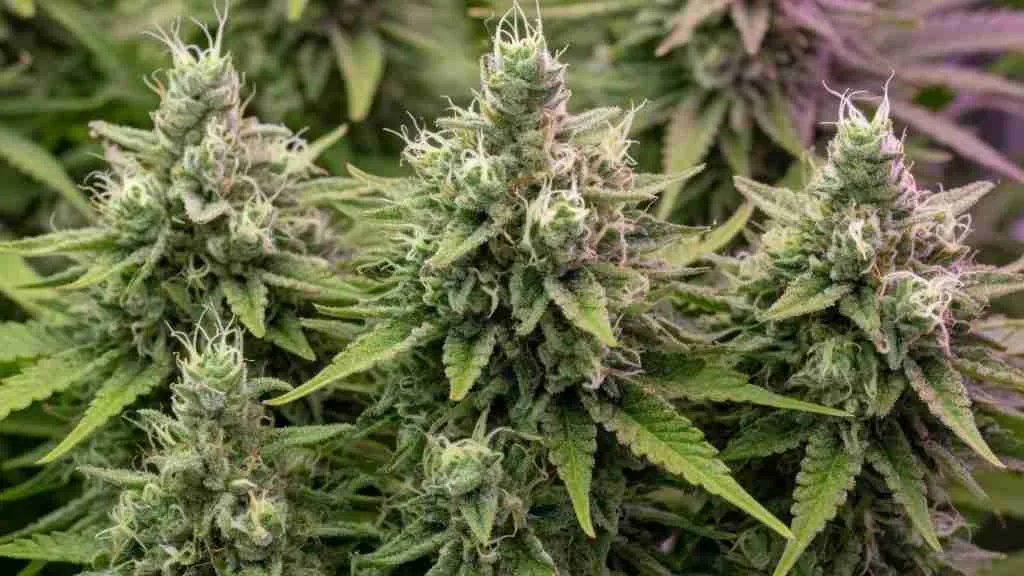
Dense colas in the photo still needed leaf to fill them. A 0-50-30 pouch with zero N does not replace a bloom base. Use the bloom base first. Add PK as a short overlay, not as the meal. Late flower fade on older fans is normal as the plant moves nutrients into the bud. Chasing that fade with more booster is how you salt the pot in week seven. If new growth is still pale and weak, that is a different diagnosis. If old fans are yellowing on a plant that is finishing, leave it. Harvest timing: harvest and cure.
Keep some nitrogen through weeks one to three of flower. The stretch is still building the frame the buds sit on. A bloom base in the 1-3-2 shape still has N. A booster with none is meant to sit on that base, not to replace it. Zero-N finishes exist for the last stretch of ripening on some salt charts. They are not a week-one tool. If you cut N too hard at flip, you get yellow tops and small sites, then you blame the booster for not packing them.
How to Add a Booster Without Stacking Salt

Mix order is the same as any salt grow. Water first. Cal-Mag if the water is empty. Base bloom. Then the booster. Then pH. Then look at EC. A jug that already sits at your usual flower strength does not get a full pouch on top. Cut the base a little or cut the booster a lot. Measure runoff. If runoff EC is climbing week to week, stop adding PK and water with a lighter mix until it comes down. EC by phase: dialing EC by phase. Watering: water cannabis plants. Hardness: water hardness and cannabis.
pH still decides whether those extra ions are even available. Coco and hydro want the mix in the mid-five to low-six range. Soil is a little higher. A PK powder can pull pH down. Check after it dissolves, not before. If you add silica, add it first in a separate step so it does not gel with the rest. Silica is not a bloom booster. Do not treat it as one. If the pen in the runoff cup is already high, the plant is not hungry for another 0-50-30. It is full.
Do not foliar a PK booster onto flowers. Sugar water and phosphate on a cola sit in the canopy and feed rot. Foliar in flower is a different, narrower job: foliar feeding cannabis plants in flowering. PK belongs in the pot if it belongs anywhere. Roots: healthy cannabis roots.
Check the plant, not the calendar. New pistils stacking, calyxes swelling, no claw, no burnt sawtooth edge: you can try a small add for a week and see. Tips burnt the morning after: you already overshot. Back off. A booster is a short tool, often two to four weeks in mid flower, then you return to the bloom base or a lighter finish. Charts that run PK from flip to chop are selling volume.
Soil, Coco, Hydro, and Living Soil

Coco and hydro show a PK mistake in days. The medium does not buffer much. Runoff tells you. Coco also fights calcium and magnesium when K is high, so a booster on RO coco without Cal-Mag is a classic lockout. Recirculating hydro is worse: the same extra P sits in the tank and climbs. Dump and remix if the reservoir EC walks up after you add PK. Coco how-to: growing cannabis in coco coir. Hydro: hydroponic cannabis growers guide. Indoor rooms: indoor cannabis growers guide.
Potting soil with a bloom charge already in the bag may not want a 0-50-30 overlay at all. Read the bag. If you top-dressed a bloom mix, you already added P and K. A liquid booster on top of that is a second dose. Soil mix: organic cannabis soil. Medium choice: best medium to grow cannabis. Pots: environment, media, watering, pot sizes.
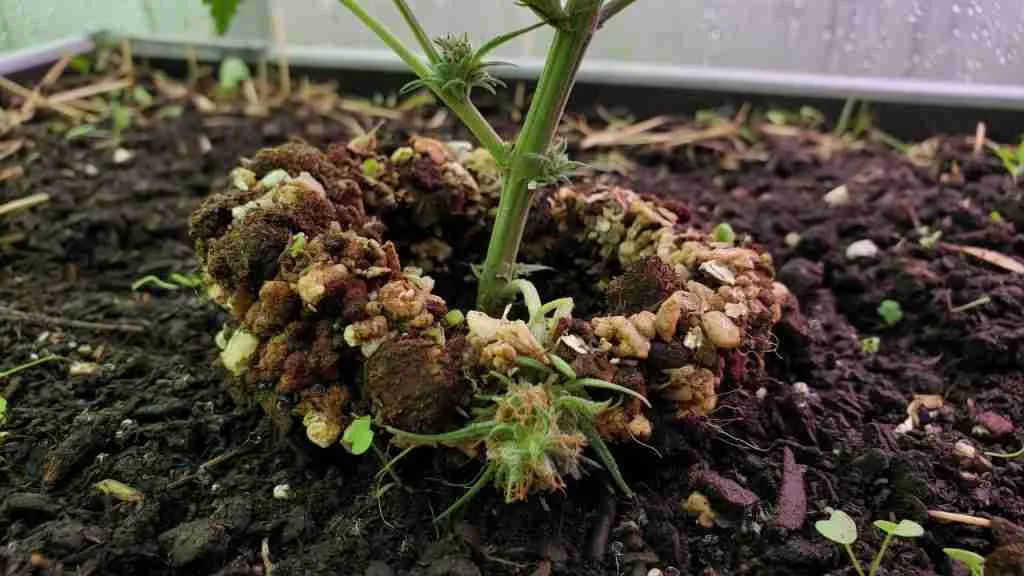
Living soil and no-till already mineralize P and K from meals, compost, and biology. A salt PK spike can stall that biology and still not move yield. If you grow in a living bed, the booster is usually the wrong tool. Top-dress a bloom meal if a test or a leaf actually names P or K. Do not pour monopotassium phosphate on a worm-worked pot because a bottle said density. Living soil: no-till living soil. Amendments: organic growing amendments. Castings: worm castings. Organic bottles: organic marijuana fertilizer. Salt lines: synthetic cannabis fertilizers.
Autos Versus Photoperiods

An autoflower does not wait while you experiment. It is often in flower five weeks from seed. A hot PK add in that window burns a plant that cannot veg its way out. If you use a booster on an auto, wait until flowers are obviously stacking, use a smaller fraction of the label, and watch the first new sugar leaves. Autos: grow autoflowering cannabis. Photoperiods give you a longer stretch to get the base right: photoperiod cannabis seeds. Veg before the flip: cannabis vegetative stage. Seedlings still get almost no feed: cannabis seedling stage.
A short auto in a small pot fills with salt faster than a long photoperiod in a 20 litre fabric bag. The same millilitres per litre is a harsher hit. Cut the dose again. If you only run four plants, losing one auto to a booster week is a quarter of the legal crop. Get the base chart right first. Add PK only if the plant is green, drinking, and stacking, and the runoff is not already climbing.
What Extra PK Will Not Fix
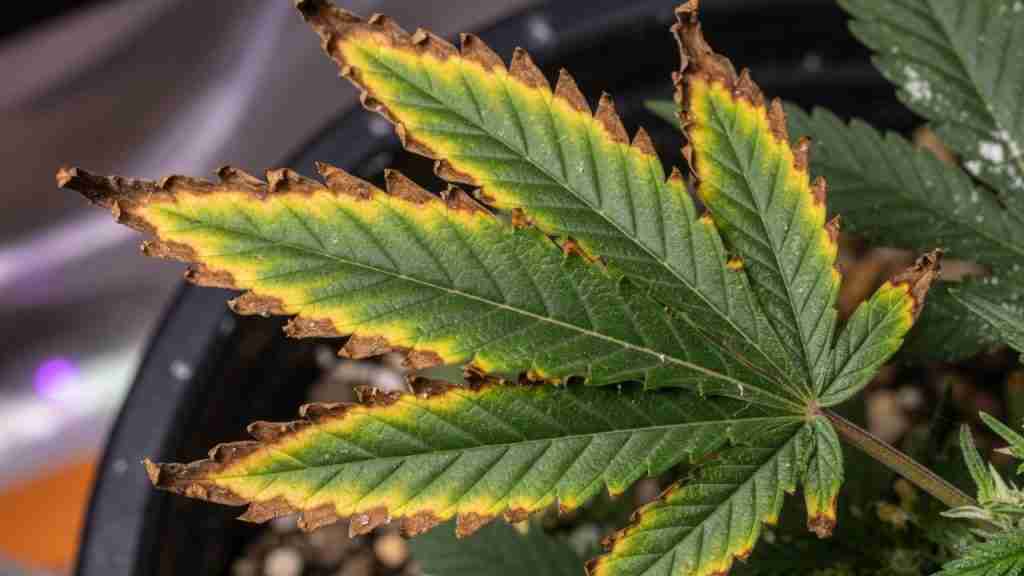
Airy buds are usually light, heat, humidity, genetics, or a plant that stretched and never filled. A PK pouch does not replace photons. It does not cool a tent. It does not turn a lanky sativa into a golf-ball indica. Yield work belongs on increase cannabis yields and growing quality cannabis buds. Tip burn with a yellow halo after a booster week is salt, not a call for more P. Back the EC down. Do not “push through it.”
Purple stems, by themselves, are not a phosphorus deficiency. Cold nights and genetics paint petioles. Slow growth plus dark, dull older leaves can be P, or it can be pH lockout, or it can be a root that stopped. Do not answer every purple stem with 0-50-30. Check pH and runoff first. Edge burn with yellowing between the veins on older fans is the classic K picture, and it is also the picture of salt burn. If you just added a booster, assume salt until the runoff says otherwise.

That 2023 composite is the marketing picture: a jug next to a frosty cola. The cola came from a plant, a light, and a finish. The jug did not grow the trichomes by itself. Terpene bottles and “resin enhancers” stacked on the same table are usually sugars or more K. Smell is genetics, cool late flower, and a clean dry. Boosters do not write a terpene profile. Advanced mixing: advanced nutrient management.
Molasses, Carbs, Banana Peels, and Bone Meal

The old copy on this URL treated banana peel tea, bone meal, and compost tea as homemade bloom boosters. Banana peels hold some potassium. A jar of peels in water is not a measured PK salt. It can slime a pot and feed fungus gnats. Bone meal is slow organic phosphate. It belongs in a soil build months ahead, not as a week-five rescue. Compost tea is biology, not 0-50-30. If you want microbes, say so. If you want milligrams of P, weigh a soluble phosphate.
Molasses is sugar plus a little potassium. In living soil it can feed microbes. In a salt coco program it is extra carbon in the jug and a reason the reservoir clouds. It does not pack a cola. Details: molasses growing cannabis plants. Do not stack molasses on a booster that already lists carbs. Do not foliar molasses in flower. Unsulphured blackstrap is the usual kitchen bottle. A tablespoon per gallon is already a lot of sugar. If the mix smells like a brew, you overdid it.
Flush, Finish, and the Last Two Weeks
Stop the booster before you stop the base. A common pattern is PK in mid flower, then bloom base only, then a lighter mix or a plain-water finish if your medium is coco or hydro and salt has built up. Soil with a remaining charge does not need a dramatic flush to “activate” a booster. Flushing is its own argument: flushing cannabis. Do not run a 0-50-30 into the last week and then drown the pot. You just moved a pile of phosphate into the runoff and stressed the plant at the worst time.
How do you know the overlay did anything? You do not get a magic jump in dry weight from one pouch. You get a plant that kept stacking without clawing, or you get burn. Side-by-sides in the same tent, same light, same base, one plant with PK and one without, are the only honest test in a home room. Four legal plants can do that if two are the same cut. If they are four different packs, you are comparing genetics, not fertilizer. Write what you mixed. The next run is the experiment.
Questions Growers Actually Ask
Are cannabis bloom boosters necessary?
No. A complete bloom base, decent light, and a root zone in range grow weed. A booster is a correction or a small overlay on a lean recipe. If the plant is healthy and runoff is already in range, skip it.
Can I use a bloom booster in veg?
You can, and you should not. Veg wants nitrogen-forward feed. Extra P and K in veg is the wrong ratio and a way to stall a seedling or a young plant. Wait for flower sites.
Organic or synthetic?
Synthetic PK is fast and easy to overdo. Organic P and K are slower and belong in the mix or a top-dress. Neither is magic. Match the medium. Salts in coco. Meals in living soil. Do not run both hot at once.
How often should I add it?
Not every watering from flip to chop. A short mid-flower window, at a fraction of the label, then reassess. If tips burn, stop. If nothing changes in a week and EC is already high, it was not a PK hole. Once or twice a week on a soil pot that still holds a charge is plenty. Coco that you water daily can take a weaker dose more often, still under the label, still watching runoff.
Can I mix it with the rest of the bottles?
Yes, in the jug, after the base, before pH, while you watch total EC. No, on the leaf in late flower. No, on top of a loaded living soil. No, as a replacement for the bloom base. If two boosters list P and K, pick one. Stacking a powder 0-50-30 with a liquid 13/14 is the same ions twice, and the pen will show it before the leaf does.
Will a 0-50-30 make denser buds?
Not by itself. Density is light, environment, genetics, and a plant that was not salt-burned in week five. Extra P past sufficiency has not shown a reliable density jump in the trials that keep getting cited. Treat the pouch as optional insurance on a light recipe, not as a harvest upgrade.
Seed still matters more than the fourth bottle. A loud pack under a decent light beats a quiet pack with a PK spike. Cannabis seeds store.