Cannabis and the Moon: Lunar Planting Guide for Optimal Growth


Hey there! You’re about to take a thrilling journey into the world of lunar planting, where you’ll harness the power of the Moon to help your cannabis plants reach their full potential. Now, before you start rolling your eyes and thinking, “How in the world do the Moon’s phases matter for my cannabis garden?” just hang tight. We’re gonna explore every nook and cranny of this topic, from why moonlight can make a difference to how you can create your own grow schedule—one that lines up with Mother Nature’s favorite satellite.
I can’t wait to show you how simple it can be. So, grab your cannabis gardening gloves, put on your thinking cap, and get ready for a wild lunar ride!
Why the Moon Matters for Cannabis Growth
You might wonder, “Why does the Moon have anything to do with my cannabis plants?” Great question, our fellow cannabis cultivators! The Moon doesn’t just give us something pretty to look at at night. Its gravitational pull affects the oceans’ tides, and by extension, it can also influence the water in the soil—potentially impacting seed germination, nutrient uptake, and overall plant development. Think of it like a little cosmic dance between the Earth, the Moon, and your cannabis seedling babies.
Water Movement in Soil
Water isn’t just in oceans and lakes—it’s in the soil you use for growing. When the Moon’s gravitational pull is stronger during certain phases, it can subtly draw moisture closer to the soil’s surface. You won’t see water magically rising in little streams around your yard, but there might be a slight difference in how your plants absorb water. Some growers swear that seeds germinate faster and roots develop more robustly if they’re planted during the best lunar phases.
The Moon’s Influence on Plant Energy
Now, here’s where things get a little cosmic, so stick with me. Traditional lunar farming principles suggest that when the Moon is waxing (growing bigger in the sky), plants focus their energy upward—encouraging leaf and stem growth. When it’s waning (shrinking), the energy is said to move downward—supporting stronger roots and underground growth. You can use this knowledge to time your cannabis gardening tasks like a pro.
Understanding the Four Main Moon Phases
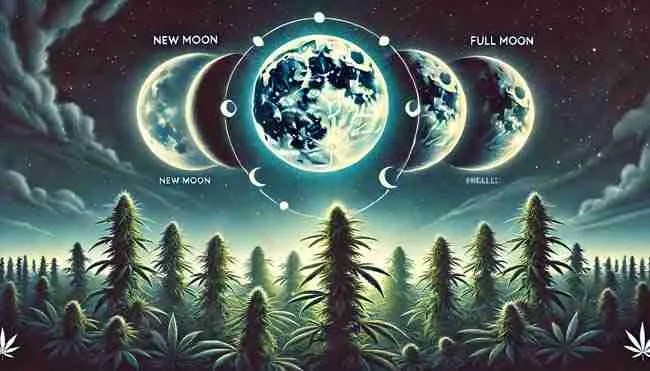
Before you can be a bona fide cannabis-lunar-growing guru, you’ve gotta know your phases. Each phase serves a unique purpose in the plant cycle:
- New Moon
- Waxing Moon (First Quarter)
- Full Moon
- Waning Moon (Last Quarter)
We’ll break it down so you can plan your tasks without looking at the sky in utter confusion.
New Moon
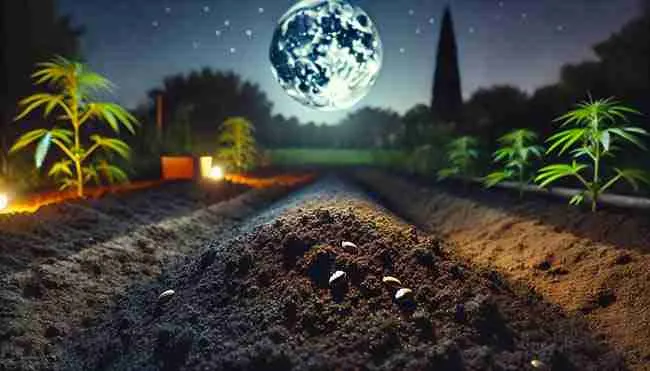
Picture a tiny sliver of moonlight in the sky—like a faint crescent. This is the New Moon phase. It’s often considered a good time for planting seeds that need to develop strong roots because the energy is believed to be building from below. However, some growers prefer to wait until the Moon starts to wax a bit more before planting. It’s a bit of a personal preference, so don’t stress too much if you plant right at the New Moon or just afterward.
Waxing Moon (First Quarter)
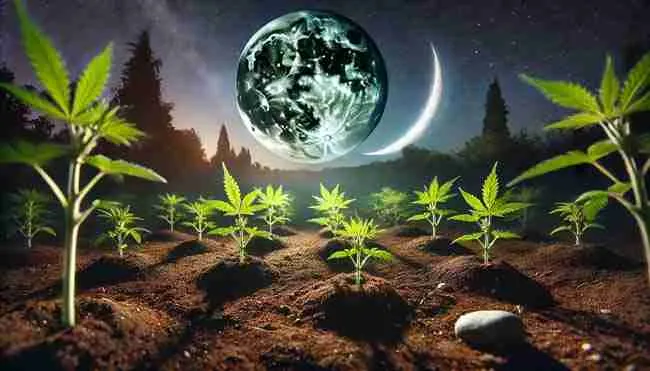
As the Moon moves from a thin crescent to a half or three-quarters visible circle, you’re in the Waxing phase. This is typically considered the prime time to promote leaf growth, stem strength, and overall upward energy. Many folks like to transplant young cannabis seedlings during this phase, believing it gives them a little cosmic push to shoot up toward the sky. You might also consider giving your plants a mild feeding or foliar spray, especially if you’re using organic nutrients.
Full Moon
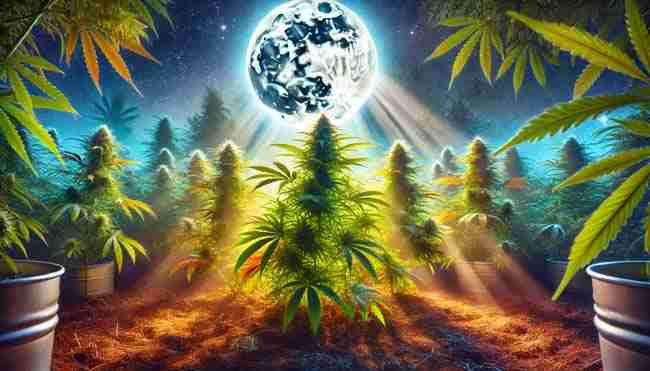
Boom! The Full Moon is like a giant spotlight shining down on your garden. Energetically speaking, it’s often seen as the peak of growth. Many gardening traditions suggest that watering and feeding your cannabis around the Full Moon can be beneficial, as the soil moisture is said to be at its highest level. Although you’ll want to be careful not to overwater, this can be a good moment to observe how your plants are developing and adjust your care routine if needed.
Waning Moon (Last Quarter)
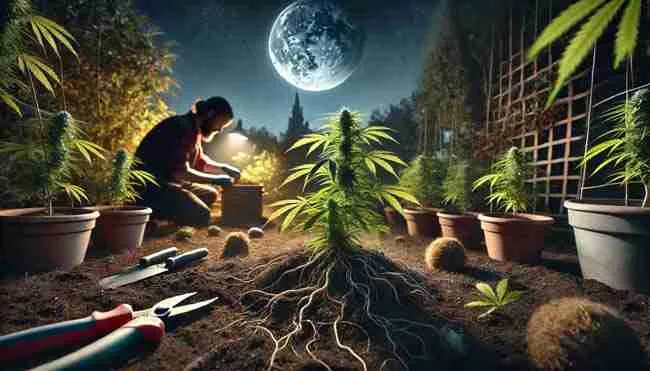
Now the Moon starts to shrink back down. During this phase, the energy is believed to move downward, focusing on roots and below-ground development. Some growers schedule tasks like pruning or training their cannabis plants during the waning phase, hoping to encourage a more robust root system and better resilience. If you’re gonna do any soil amending or do a root-focused feeding, the waning phase might be a perfect time.
What Is the Best Moon Phase for Planting Cannabis?
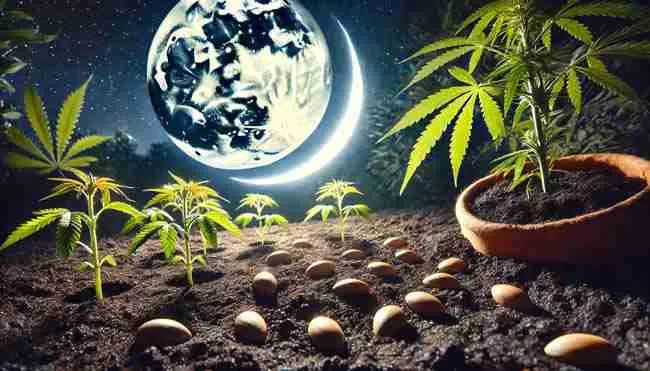
Here’s the million-dollar question: “When the heck should you plant your cannabis?” The short answer is that there’s no single universal rule carved in stone. However, many experienced lunar gardeners suggest sowing seeds or transplanting seedlings during the Waxing Moon. This phase is typically considered beneficial for:
- Seed Germination: Seeds are believed to absorb water more effectively.
- Initial Growth Spurt: Your little cannabis sprouts might get a boost in leaf and stem development.
But hey, don’t you worry if you can’t time your seeds with the Waxing Moon precisely. In some traditions, the last days of the New Moon can also be good for planting. The key is to avoid the days right around the Full Moon if possible, because the gravitational pull can be intense, and some folks feel it can stress the seeds. Still, results vary, so you may want to experiment and see what works best for you.
Is Full Moon the Best Time to Plant Cannabis in the Spring?
Hold your horses. The Full Moon might be a magical sight, but is it really your go-to time for popping cannabis seeds in the ground? “Does the bright moonlight turn seeds into super-plants?” Not necessarily. The Full Moon is often associated with peak moisture levels and the highest energy above ground. Some folks prefer to avoid planting seeds at this time, because they feel the intense gravitational pull may not be as conducive to helping those seeds settle in.
However, that doesn’t mean you can’t benefit from doing other tasks during the Full Moon in spring. You can:
- Fertilize: If your soil needs a little nutrient recharge, watering and feeding can be timed with the Full Moon.
- Monitor Growth: It’s a great time to observe how your young cannabis plants are shaping up, because you’ve got that extra bit of ambient light at night (depending on your location).
You might find that your region’s climate and your personal schedule matter just as much, if not more, than the lunar cycle. Sometimes, you just have to plant when you have the time and the right weather conditions. Life’s messy like that, and that’s totally okay.
Does the Moon Light Help Cannabis Plants Grow?
You might be saying, “Surely moonlight can’t replace the sun or my grow lamps!” And you’d be right. Moonlight is reflected sunlight, but it’s a fraction of the intensity. You’ll never be able to ditch your grow lights or the sun if you’re working outdoors. However, there’s this notion that gentle moonlight can influence plant behavior—especially if you follow older, biodynamic farming practices.
Reasons Moonlight May Offer Subtle Benefits
- Stress Reduction: Some growers notice that cannabis plants exposed to natural cycles, including moonlight, appear less stressed and more robust.
- Flowering Cues: Outdoors, plants measure darkness to initiate flowering. Sometimes the presence of moonlight can slightly affect how your plants perceive night length, though not as dramatically as, say, a streetlight.
Potential Downsides
- Minimal Intensity: Let’s face it, moonlight alone isn’t gonna cut it for photosynthesis.
- Flowering Sensitivity: While it’s rare, in certain strains that are extremely sensitive to light changes, consistent bright moonlight (in specific regions) might cause minor confusion about day-night cycles.
In reality, you shouldn’t rely on moonlight to boost your cannabis growth in any significant way. But it sure can’t hurt to let your plants experience natural conditions when possible.
Does Moonlight Affect Cannabis?
This might sound like the same question as above, but we’re digging a little deeper here. Think about how you feel on a bright, full-moon night—maybe a tad more energetic or restless? Some folks claim that cannabis plants pick up on those subtle shifts, too. Does that mean your plants are howling at the Moon? Probably not—but here’s what it could mean:
- Flowering Cycles: Some photoperiod strains can be extra sensitive to light pollution, so in extremely bright full-moon climates, the plants might flower slightly differently.
- Nutrient Uptake: As mentioned, the gravitational pull could be stronger, meaning water and nutrients might be more accessible.
You should keep in mind that these effects are minor compared to your main growing conditions like temperature, humidity, soil quality, and the biggie—light from the sun or grow lamps. Still, if you’re the type of gardener who loves to fine-tune every detail, paying attention to moon phases might give you an edge.
Best Moon Phase for Harvesting Cannabis
Now that your cannabis plants are tall, luscious, and full of potent buds, you’re probably looking for the perfect time to chop ‘em down. You might ask: “Is there really a special moon phase for harvesting?” Many lunar gardening traditions suggest harvesting during the waning phase or close to the New Moon, when the pull is lower. The idea is that the essential oils, nutrients, and water content might be more concentrated in the roots or lower parts of the plant, potentially giving you a smoother, more flavorful final product.
Potential Benefits of Harvesting During the Waning Moon
- Enhanced Flavor: Some growers claim the buds have a richer aroma and taste if you harvest as the Moon is waning.
- Better Drying Process: With slightly reduced moisture in the plant, the drying period may be more controlled.
Potential Drawbacks
- Timing Constraints: The ideal lunar window might not align with the exact moment your trichomes are at peak ripeness. If your buds are ready, you might not want to wait for the right phase and risk degrading cannabinoids.
- Weather Factors: Outdoor growers especially have to deal with unpredictable conditions like rain or early frost. A perfect lunar date won’t help if your plants freeze overnight.
So, if you can align your harvest with the waning Moon, go for it. But don’t sacrifice perfect trichome development just to match the lunar calendar. Strike a balance that works for your strain and climate.
Pros and Cons of Following a Cannabis Lunar Planting Guide
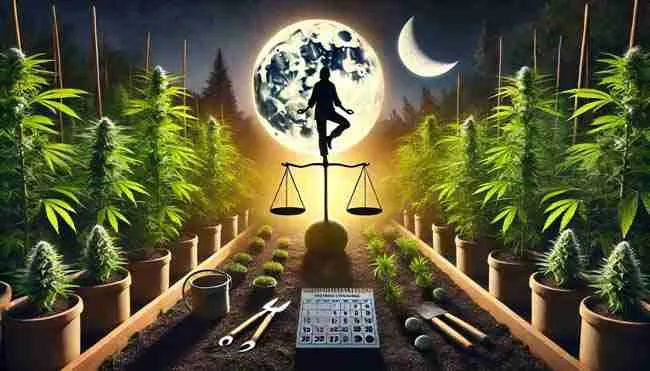
Pros
- Holistic Approach: You’re working in harmony with natural cycles, which can be spiritually rewarding.
- Possible Boost in Growth: Some anecdotal evidence supports improved germination and healthier plants.
- Closer Observation: You’ll naturally pay more attention to your garden’s needs and growth stages.
Cons
- Timing Conflicts: Your schedule or local weather might not always cooperate with the Moon’s phases.
- Mixed Scientific Evidence: While many swear by lunar planting, research is limited. It might be more about tradition and observation than hard science.
- Additional Planning: You’ll need to track lunar phases alongside your usual grow schedule, which can be a bit of a chore.
Step-by-Step Lunar Planting Process

Here’s a quick step-by-step approach to get you started with lunar planting. Remember, it’s okay to adjust as you see fit.
- Check a Lunar Calendar: Mark the New Moon, Waxing, Full Moon, and Waning phases for each month.
- Plan Seed Germination: Aim for late New Moon or early Waxing Moon for planting seeds or transplanting.
- Monitor Growth: Keep an eye on how your cannabis reacts during the Full Moon. Adjust watering and feeding accordingly.
- Prune and Train: Focus on heavy pruning or root development tasks during the Waning Moon.
- Harvest: Try harvesting during the Waning Moon if conditions allow, ensuring your buds are at peak ripeness.
Specifications for a Lunar Cannabis Grow

- Grow Medium: Organic soil often complements lunar gardening practices, as you’re focusing on a natural synergy.
- Lighting: Outdoor grows benefit more from actual moonlight cycles, while indoor grows might replicate day-night cycles.
- Strain Choice: Photoperiod strains will let you observe the lunar effect more clearly. Autoflowers might not align as strictly, but growers can still try.
- Location: If you’re in an area with extreme moonlight (like near the poles in certain seasons), you might see more noticeable effects than someone in a typical climate.
Cannabis Grow Calendar for 2025

Below is a simplified grow calendar for 2025 using the Cannabis Lunar Planting Guide principles. Remember, these dates are approximate, based on typical lunar cycles. You should always check a current lunar calendar for exact times in your time zone.
| Month | Moon Phase Highlights | Recommended Activities |
|---|---|---|
| January | New Moon ~ Jan 1, Full Moon ~ Jan 16, Waning ~ Jan 24 | Plan your grow, gather supplies, test seed germination. |
| February | New Moon ~ Feb 1, Full Moon ~ Feb 15, Waning ~ Feb 22 | Start seeds or clones in early waxing, do light pruning. |
| March | New Moon ~ Mar 2, Full Moon ~ Mar 16, Waning ~ Mar 24 | Transplant seedlings, fertilize around Full Moon. |
| April | New Moon ~ Apr 1, Full Moon ~ Apr 15, Waning ~ Apr 23 | Continue veg growth, feed with organics. |
| May | New Moon ~ May 1, Full Moon ~ May 15, Waning ~ May 22 | Top and train plants, check for pests, prepare to flower. |
| June | New Moon ~ Jun 1, Full Moon ~ Jun 14, Waning ~ Jun 21 | Transition to flowering for outdoor strains. |
| July | New Moon ~ Jul 1, Full Moon ~ Jul 14, Waning ~ Jul 21 | Keep an eye on flowering progress, light defoliation. |
| August | New Moon ~ Aug 1, Full Moon ~ Aug 13, Waning ~ Aug 20 | Heavy feeding if needed, watch bud development closely. |
| September | New Moon ~ Sep 1, Full Moon ~ Sep 12, Waning ~ Sep 19 | Prepare for harvest in late month if trichomes are ready. |
| October | New Moon ~ Oct 1, Full Moon ~ Oct 12, Waning ~ Oct 19 | Main harvest window for many strains, consider waning. |
| November | New Moon ~ Nov 1, Full Moon ~ Nov 11, Waning ~ Nov 19 | Harvest late finishers, begin curing process. |
| December | New Moon ~ Dec 1, Full Moon ~ Dec 11, Waning ~ Dec 19 | Finish curing and plan for next season. |
(Note: Dates are approximate. Always verify actual lunar phases in your region.)
Additional Lunar Gardening Tips

1. Keep a Journal
Write down each time you plant, water, prune, or feed your cannabis plants. Jot down the moon phase, weather conditions, and any observations about plant growth. Over time, you’ll see patterns that can help you refine your approach.
2. Experiment with Different Phases
Try planting half of your seeds during the Waxing Moon and half during the Waning Moon. Compare results. You might find that one phase consistently produces stronger, healthier plants. Or maybe the difference is minimal. Either way, knowledge is power.
3. Use Organic Fertilizers
If you’re following a lunar planting guide, you’re probably interested in natural harmony. Organic fertilizers (like compost teas or worm castings) can synergize well with lunar rhythms. You might notice that these gentle fertilizers align beautifully with your plants’ growth spurts and rest phases.
4. Don’t Get Too Hung Up
Remember that while lunar planting can be a fun and potentially beneficial approach, it’s not the be-all and end-all. Proper lighting, temperature control, ventilation, humidity, pest management, and consistent feeding schedules can be far more impactful in the long run. If timing your planting to the Moon adds stress or confusion, consider simplifying your approach. Gardening should be a joy, not a chore!
Frequently Asked Questions (FAQ)
Q1: Can I use this “Cannabis Lunar Planting Guide” for autoflowering strains?
A1: Absolutely! Although autoflowering strains don’t rely on photoperiod changes to flower, you can still experiment with lunar phases. You might observe slight differences in germination or growth, but the changes usually won’t be as dramatic as with photoperiod strains.
Q2: How do I find accurate Moon phase dates for my location?
A2: You can look up local lunar calendars online, download a moon phase tracking app, or even purchase a printed lunar calendar. Make sure you’re setting your time zone accurately so you’re not off by a day or two.
Q3: Is it okay to prune my cannabis during a Full Moon?
A3: It’s okay, but many lunar gardeners prefer pruning during the Waning Moon. They believe the plant is channeling energy down into its roots at that time. That said, if you need to prune or top your plants for practical reasons, don’t wait weeks just for the right phase my fellow growers.
Q4: What if the weather is terrible during the best lunar phase for planting?
A4: Always prioritize real-world conditions over lunar phases. If a huge storm’s rolling in or your greenhouse is out of commission, wait until it’s safe and feasible to plant. The Moon will keep spinning, and you can try again next cycle.
Q5: Does growing by moonlight mean I don’t need grow lights?
A5: No way! Moonlight is much weaker than sunlight or artificial grow lights. You still need a strong light source to grow healthy cannabis. The Moon is more about subtle gravitational and energy shifts, not about replacing direct light.
Q6: Do I need to change my feeding schedule if I’m following a lunar guide?
A6: Potentially, yes. Some folks like to time nutrient feedings with the Full Moon, believing plants uptake nutrients more efficiently then. Still, you should keep an eye on your plants’ health and feed according to their needs, not just the lunar calendar.
Q7: Can I harvest part of my plant during the waning phase and the rest later?
A7: You sure can! Some growers do staged harvesting—picking the ripest buds first and letting the rest mature. If the lunar phase changes partway through, that’s fine. Cannabis growing often involves improvisation.
Parting Thoughts

Look, life’s already complicated enough, so you might be scratching your head thinking, “Do I really need to worry about the Moon while growing cannabis?” If you’re into exploring every angle—especially the mystical or natural synergy side of things—then sure! Go for it. You might discover that aligning your planting, pruning, and harvesting with lunar phases adds a special spark to your cannabis grow.
On the other hand, if you’re a straight-shootin’ grower who just needs a successful harvest, don’t sweat it if you miss a specific phase by a day or two. The Moon has been around for billions of years. It’ll still be there, shining bright, when you’re ready.
Growing cannabis should be a fun, rewarding, and, dare I say, magical experience. Tying your grow to the Moon’s rhythms might just be the extra cherry on top of your cultivation sundae. So give it a whirl. You’ve got nothing to lose—except maybe missing out on a chance to try something a little out-of-this-world.