Cannabis and Foliar Probiotics: Spraying Microbial Life on Leaves


Once upon a humid July morning, you unzip your grow tent and a sweet, earthy scent floats out. Your plants look happy, but something’s missing—the microscopic cheer squad that can crank their vigor up to eleven. That’s where Cannabis and Foliar Probiotics saunter in, waving petri-dish pom-poms. Get ready to turn every leaf into a bustling apartment block for beneficial microbes that guard, feed, and turbo-charge your green ladies.
Why Spray Microbes? The Leaf as Microbial Apartment Complex
A cannabis leaf isn’t just a flat solar panel. It’s a living city full of tiny stomatal doorways, waxy highways, and sugary vending machines (exudates) that microbes adore. By spraying probiotics, you seed that city with friendly residents who:
- Outsmart and crowd out pathogens—think of them as polite but pushy bouncers.
- Produce enzymes that unlock hidden nutrients right on the leaf surface.
- Nibble on leftover residues, keeping pores clean so photosynthesis hums like a tuned engine.
- Trigger systemic acquired resistance (SAR), nudging your plant’s immune system to stay on its toes.
Meet the Foliar Probiotics All-Star Team
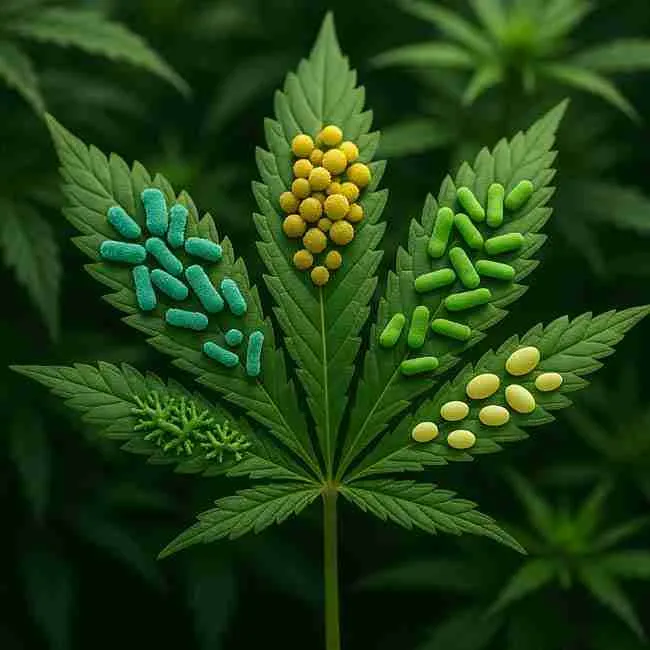
Bacillus Battalion
These rod-shaped juggernauts form hardy spores that survive tank mixes and hot attics. Once on the leaf, they release antibiotics that scare off powdery mildew and botrytis.
Lactobacillus Legion
Yep, the same tangy critters in yogurt. Lactos excrete lactic acid, dropping surface pH just enough to make life miserable for many bad fungi without singeing the plant.
Trichoderma Taskforce
This fuzzy green fungus slips into pathogen roots and leaves alike, outcompetes them for space, and even snacks on them—talk about a cleanup crew with teeth!
Mycorrhizal Spores on Holiday

While usually root partners, a light foliar dose during cloning has shown to reduce transplant shock by colonizing wound sites and delivering growth hormones straight to the action.
Yeast Backup
Certain non-brewing yeasts produce chitinases—enzymes that poke holes in the cell walls of nasty fungi. They’re like tiny locksmiths that only break bad doors.
Picking Your Potion: Homemade vs. Store-Bought Brews
| Option | Cost per liter | Shelf Life | Ease of Use | Contamination Risk |
|---|---|---|---|---|
| DIY Lactobacillus Serum | Very low (kitchen scraps) | 1–2 months refrigerated | Medium (needs straining & pHing) | Medium |
| Compost Tea Extract | Low | 24 hours | Low (brew & spray same day) | High (if aeration is sloppy) |
| Commercial Bacillus Blend | Moderate | 1–2 years | High (pre-measured) | Low |
| Complete Probiotic Packs | High | 1–2 years | Very High (just add water) | Very Low |
Brewing a DIY Lactobacillus Serum in Your Kitchen

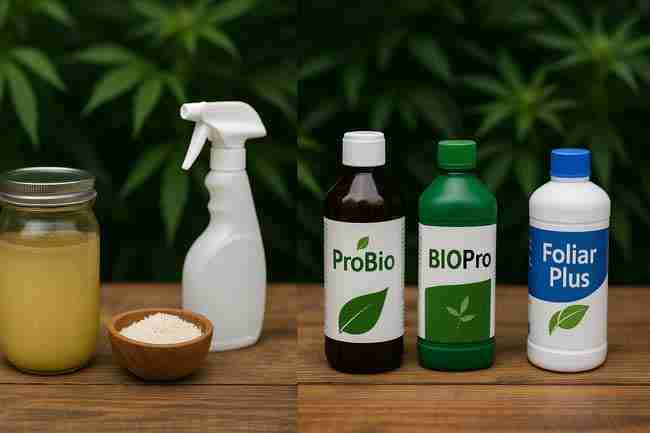
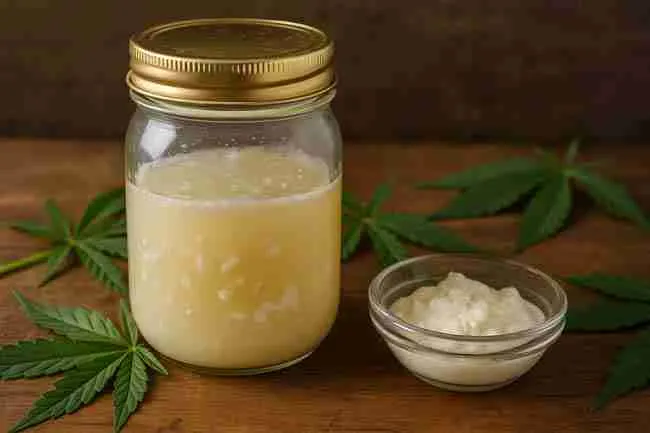
Picture this: you whisk a cup of rice in non-chlorinated water, strain, and let that cloudy liquid sit for 48 hours on a warm shelf. Wild lactobacilli wake up and throw a tiny bubble party. Next, you feed them equal parts milk so they outcompete everything else. After another two days, a yellow whey forms on top—liquid probiotic gold. Filter, dilute 1:500, and voilà—your homemade foliar superhero.
Getting the Mix Right: Recipes, Ratios, and pH

- Standard maintenance spray: 2 mL Lactobacillus serum + 2 mL kelp extract per liter, pH 6.2–6.5.
- Powdery mildew pressure: 1 g Bacillus subtilis wettable powder + 5 mL fulvic acid per liter, pH 6.0.
- Clone boost cocktail: 0.5 g Trichoderma spores + 0.5 mL silica per liter, pH 6.4.
Always add microbes last, after adjusting pH. Chlorine kills them dead; if your tap water smells like a pool, bubble it for 24 hours first.
Spray Day: Timing, Weather, and Equipment

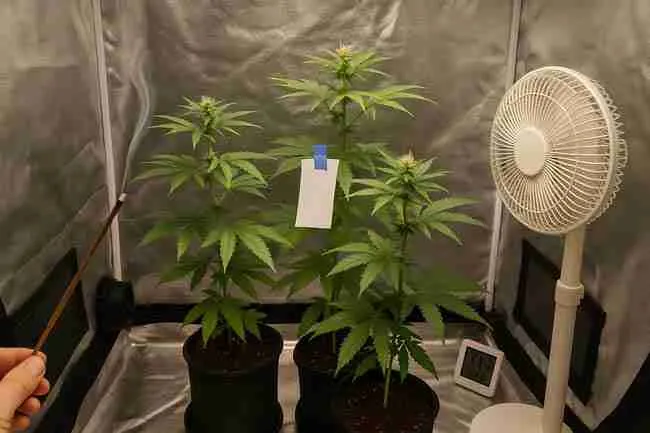
Indoor Rhythms
- Lights off or dimmed—strong LEDs act like a sunburn when droplets magnify the beams.
- Oscillating fans off for ten minutes so mist settles evenly.
- Fine-mist pump sprayer over battery atomizers; the gentler pressure keeps spores intact.
Outdoor Adventures

- Dawn or dusk—low UV, calm air, cooler temps.
- Check weather—heavy rain within 12 hours will wash your work down the gutter.
- Use a backpack sprayer with a conical nozzle for full-body coverage.
Stories From the Grow Tent: Real-World Wins and Oops Moments

Last winter, you might recall Mark across town. Powdery mildew crashed his perpetual harvest party. A desperate midnight brew of lacto serum slowed the outbreak within days. Conversely, Sam overfed his outdoor girls with a yeast-heavy tea at noon; the hot sun scorched the sugar-rich residue, spotting leaves like leopard print. Moral? Spray smart, not hard.
Pros and Cons at a Glance

Pros
- Reduced need for chemical fungicides.
- Faster recovery from leaf wounds and pest bites.
- Enhanced terpene expression—many growers swear aromas get louder.
- Kid-simple ingredients keep costs peanuts.
Cons
- Too-thick brews can clog atomizers.
- Wrong timing may invite sunburn or humidity spikes.
- Shelf life of DIY mixes is short—The Fridge is your new best friend.
- Overlapping microbes and pesticides can neutralize each other; plan staggered schedules.
Troubleshooting Leaf Microbiomes

- Sticky film after spraying? Your dilution is too strong; cut concentration by half.
- White fluff still appears? Rotate species—powdery mildew adapts quickly.
- Tip burn? pH drifted low; aim for 6.2–6.5 once nutrients join the soup.
- Sprayer constantly clogs? Run brew through a paint strainer bag before the tank.
Integrating With Other Foliar Inputs

Silica wants a pH of 7–8 to stay soluble, but that environment annoys lactobacilli. Spray silica on Monday, probiotics on Wednesday. Neem oil and microbes don’t jive; oil smothers spores. Use IPM oils one week, living sprays the next.
Regulatory and Safety Notes

In many regions, foliar biocontrols for cannabis must come from registered formulations with microbe counts listed on the label. Home brews are fine for personal gardens but risky under commercial compliance testing—fail a microbial plate count and you’ll watch profits go poof. Wear a mask while mixing dry spores; inhaling Bacillus isn’t a weekend hobby.
Environmental Benefit: Less Chemical Runoff

Switching from broad-spectrum fungicides to Cannabis and Foliar Probiotics chops your chemical footprint. Friendly microbes degrade leftover sprays, bind heavy metals, and keep runoff streams cleaner. Your plants thrive, and the frogs in the nearby ditch croak a thank-you chorus.
FAQ
How often should I spray Cannabis and Foliar Probiotics?
Every 7–10 days in veg, taper to bi-weekly in flower to avoid excess moisture on buds.
Can I mix probiotics with fertilizers?
Light kelp or fulvic is okay. Strong salts can assassinate microbes—better to spray nutrients separately.
Will foliar probiotics fix nutrient deficiencies?
They help free up trace elements on the leaf but won’t replace a balanced root feed.
Do they stink?
Fresh lacto serum smells like yogurt. If it reeks like rotten eggs, toss it.
Can I store diluted spray?
Nope. Once watered down, micro-populations shift fast. Mix only what you’ll use that day.
Is it safe for autoflowers?
Absolutely—just cut dilution in half for younger autos with delicate leaves.
Will foliar microbes attract bugs?
Not if dilution is correct. Over-sweet brews may lure ants or gnats, so mind your ratios.
Final Thoughts

Foliar microbes turn every cannabis leaf into a living probiotic smoothie bar—tiny bartenders shaking up enzymes, acids, and antibiotics that keep your crop sleek, shiny, and resilient. Dial in the brew, respect the timing, and you’ll watch pests, molds, and dull growth fade like an outdated mixtape. Grab a sprayer, channel your inner mad scientist, and let Cannabis and Foliar Probiotics rock your garden’s microbial nightlife.