


Can I Harvest Cannabis Early If Bud Rot Is Setting In?


Harvest Cannabis Early If Bud Rot
Harvest Cannabis Early If Bud Rot is the decision you make when one sugar leaf dies in the heart of a cola and the tissue under it has gone gray. The rest of the plant can still look proud. The doorway can still smell sweet. Then you part that one cola, and the sweet note is gone.
You found it on a morning after a wet night, or after the tent sat muggy when the lights went out. Pulling the brown leaf free, the stem under it was already soft and gray. That leaf did not die of old age. It died because the inside of the bud was already rotting, and the leaf was the little flag sticking out of the mess.
The gray is a mold. Growers call it bud rot. The fungus has a longer name, Botrytis cinerea, and it likes a thick flower that stays wet. It doesn’t start on the pretty outside. It starts in the crowded middle, where a dead petal or a chewed hole gave it something to eat, and then it walks into the healthy tissue beside that meal. A university note on the same fungus in fruit explains why gray mold can start on a flower and then rot the fruit as it ripens. A cola isn’t a berry, but the habit is the same. Wet, thick, and ripening is the invitation.
You can cut early. You should, once the gray is spreading. You should not throw every green bud away because one cola failed, and you should not leave the bad cola up for another week so the resin can “finish.” The bad cola doesn’t finish. It sheds dust onto the buds under it, and those buds are the ones you were trying to save.
This page is the call: what you cut today, what you leave on the plant, and what you refuse to put in a jar. The longer picture of the spots, and the way you set a room so the next run stays drier, lives on how a wet cola turns gray. The weeks of flower live on the flowering stage. If the plants are outside, the season they are racing lives on the outdoor season. The water that shows up on flowers after dark lives on free water on the flowers. Read those when you want the setup. Stay here for the morning you already found the gray.
Look, the fattest top is the one that goes first, because that’s where the breeze never quite arrives. A white dusty coat on a fan leaf is a different fungus, and that job lives on white dust on a fan leaf. Dust on a leaf can be stripped, and the air can still be fixed. Gray inside a bud can’t be wiped off. If you mix those two problems up, you will either panic at a leaf or trust a cola you should have bagged.

Harvest Marijuana Early If Bud Rot
The cut has an order, and the order matters more than the speech you give yourself while you stand there. Turn the fan off before you touch the bad cola. A fan that was helping the room all week will happily blow a cloud of dust onto every bud underneath if you shake that cola in front of it. Slip a plain bag over the cola first. Bagging the bad cola before the cut, the dust stays in the bag instead of on the buds below. Then you cut. Then you carry the bag out of the tent, or out of the garden, before you do anything else. The fan can come back on after the bag is gone.
Wipe the blades with alcohol before they touch the next plant. A dirty blade is a paintbrush, and you don’t want to paint the next stem with what you just removed. Don’t shake the plant to “see if more falls out.” Don’t set the cola on the tent floor, on the pot, or on the clean tray. Don’t compost it, and don’t kick it under a bench where it can dry and keep shedding. The fungus is perfectly happy eating dead plant trash. The closed bag goes in the household trash and leaves the property.
A kitchen spray won’t rewind a cola that’s already gray inside. Once the mold is in the flower, you’re not treating that flower. You’re removing it. The mixes people stir up for leaves live on a kitchen spray, and they stop at the door of a dense cola. Wetting the flowers now, “just in case,” gives the mold the drink it was waiting for.

What You Keep
A keeper is a bud you break open and still trust. The inside is green, or the color that plant was already turning on purpose, and it smells like the plant rather than a basement. There’s no gray web, no brown mush, and no leaf that slides out with a stained stem. If you have to talk yourself into it, it isn’t a keeper. Set it in the bag with the others and move on.
The resin on a keeper still tells you how finished the flower is, and you read the heads on the little bud body, not the sugar leaf sticking out. Clear heads mean the flower is early. Cloudy heads mean you’re close. A little amber on the bud, not on the leaf, means you were already near the window. The full read lives on how to read the heads on the bud. How you touch a bud you mean to keep, without crushing the frost off it, lives on how you handle a bud you mean to keep.

What You Throw Out
Throw out any bud with gray fuzz, brown mush, or a sugar leaf that pulls free and shows a soft gray stem. Throw out the bud touching that one if you can’t see a clean line of firm green between them. Cutting the brown spot out of the same bud doesn’t save the rest of it. The mold is ahead of the color you can see.
Don’t smoke a gray bud, and don’t cook with it. A rinse doesn’t make it safe, and neither does cutting the ugly piece off and keeping the pretty shoulder. If the inside is gray, that bud is finished. The plant beside it can still give you a harvest. That one bud can’t be saved. The closed bag in the bin is the whole remedy. There’s no second life for it in a jar, a tea, or a tray of brownies.

Harvest Weed Early If Bud Rot
One bad cola isn’t the same problem as a plant that shows you a new brown leaf every morning. If you found a single site, the buds next to it are sound when you break them open, and you can dry the air and keep it moving, take the bad cola and leave the rest. Then you look every day. The clean tops can still finish. If a new site shows up tomorrow, and another the day after, you have lost the argument with the room. Cut the plant and sort it on a clean table, in the light, where you can see the inside of a bud instead of guessing from the doorway.
Outdoors, a wet week on the way changes the math even when you have only found one site. You can’t bargain with rain that’s going to sit in a fat cola for days. If rot is already there and the forecast is a soak, cut. You will lose less by taking the sound branches today than by visiting a gray garden after the storm. Indoors you have a dehumidifier and a fan. Outdoors you have a sky. Don’t pretend those are the same tool.
One sick plant beside a clean plant is a split decision, not a group punishment. Take the sick plant today if the gray is moving. Leave the clean plant, and look at it every day until it comes down for a better reason. The clock you bought still matters here. An autoflower finishes by age, so a rotting auto in the middle of its flower doesn’t have a spare month to “grow out of it.” A photoperiod waits on a long night and then still needs its flower weeks, so one lost cola early in flower can be a wound rather than the end, if the air actually dries. Don’t put both clocks in one tent and hope the fan sorts it out. That choice lives on the clock you bought.
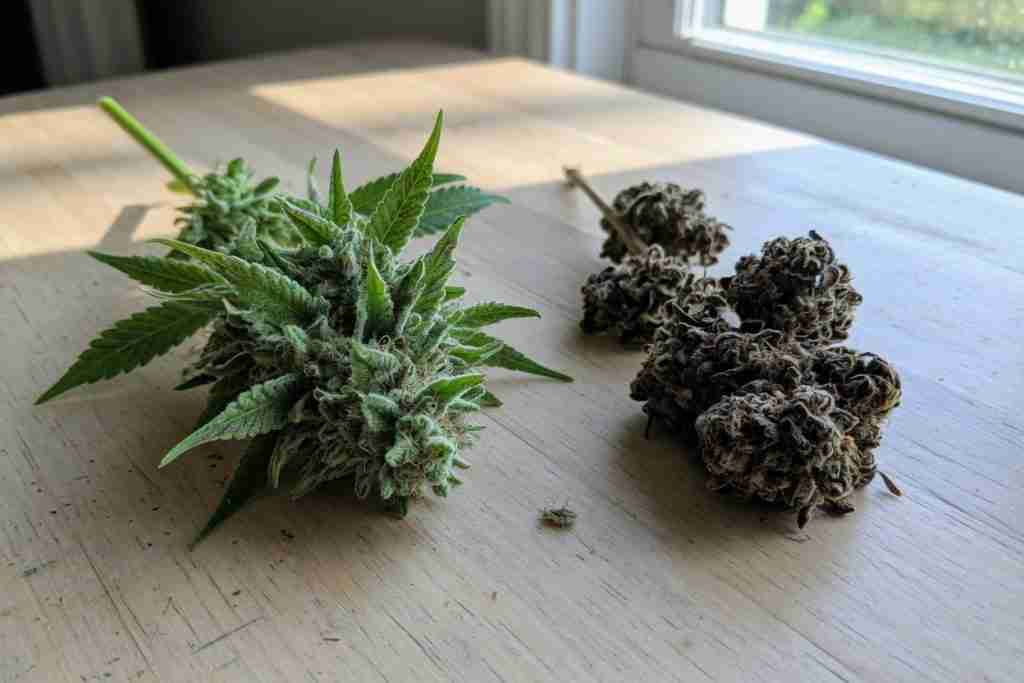
A Clean Bud Beside a Bad One
However, a bud that still looks fine on the outside can already be gray in the core. That’s the rude part. The wrapper can be frosty and green while the middle has turned to mush. So you break a sample. You don’t trust the silhouette. You don’t trust a smell test done from across the room. You open one bud from that branch, in good light, and you look.
Spores ride air, and they ride splashing water. Landing on a bud isn’t the same thing as rotting it. The fungus wants moisture and something dying to eat, which is why a faded petal stuck inside a cola, or a leaf plastered on by last night’s wet, is dangerous out of proportion to its size. A chewed hole is a door. If you see droppings, webbing, or a little tunnel in a bud, that’s the first place you open, even when the outside still looks proud. The caterpillar may be gone. The rot it invited is still there.
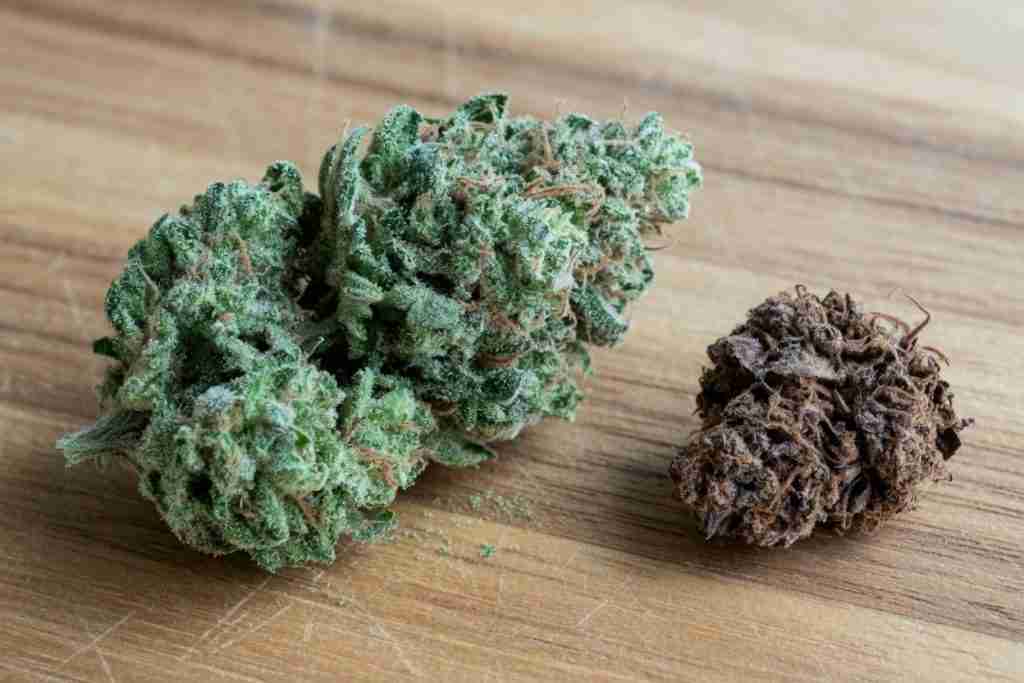
Cut Past the Gray
The brown you can see is smaller than the infection. If you snip at the edge of the discoloration, you leave a stump that’s already rotten, and that stump keeps working after you walk away. Cut back into stem that’s still firm and green. If the whole cola is gone, take the cola at a clean junction. Don’t manicure a rotten flower into a smaller rotten flower and call it saved.
Work from the clean plants toward the dirty one if you’re in a garden with both, or bag the dirty cola and leave the tent before you handle a clean neighbor. Your sleeves and the bag itself are part of the tool. Set the bag down outside. Wash your hands. Then go back.
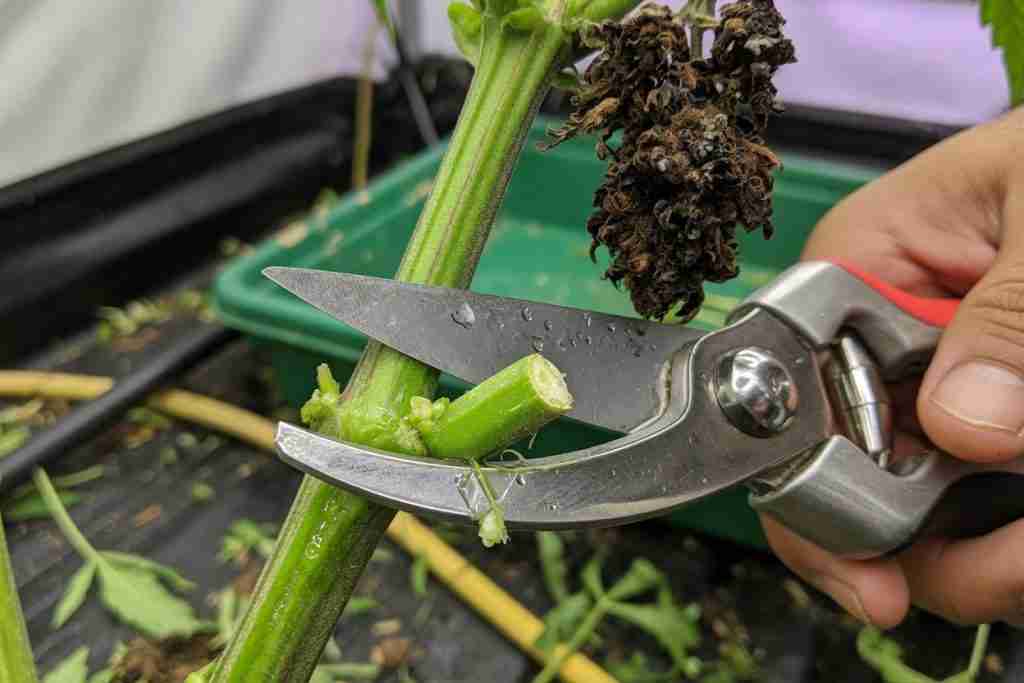
After the Cut
The tent looks wounded after a top comes off, and that’s fine. A gap in the canopy is air. What you do in the next hour decides whether the gap was worth it. Turn the air back on, but don’t aim a hard fan at one remaining cola so it flaps itself to pieces. You want the flowers to dry their outsides after the night, not to windburn. Then you leave the plants alone except for looking. A new bottle, a new training trick, or a heavy watering “to recover them” is how people add a second problem to the first.
Look again the next morning, and the morning after that. One quiet day isn’t a pardon. Bud rot loves a grower who relaxes on day two. Part the same kind of cola that failed, the thickest one, and any cola that had a leaf lying on it. If the inside is still sound, you bought the plants another day. If you find a new flag, you repeat the bag, the cut, and the trip to the bin.
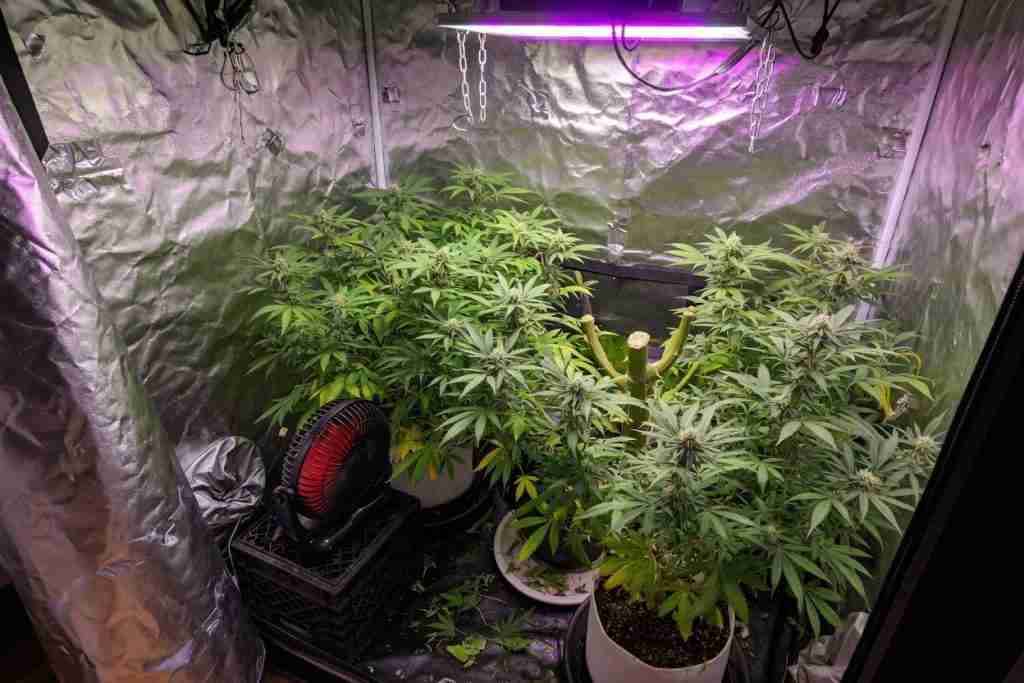
Air Has to Reach the Cola
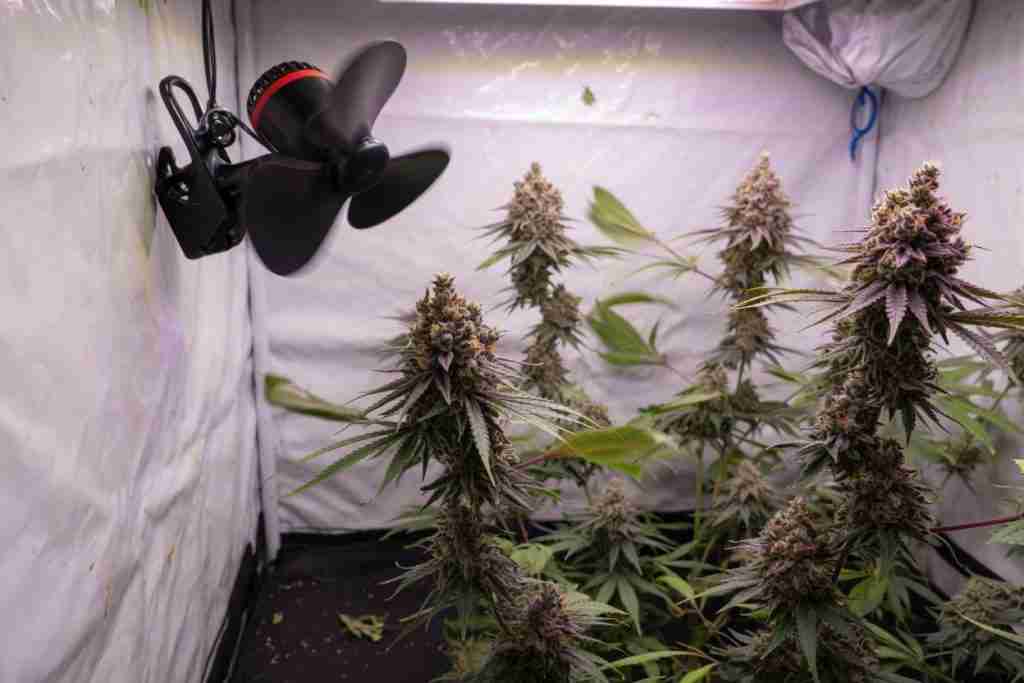
A fan on the wall that never reaches the inside of a bud is furniture. The test is simple. After lights-out, or after a dewy night outside, does the cola dry, or is it still wet at noon? If it’s still wet at noon, the mold has a working day and you have a decoration. Air has to move through the flowers. Leaves that mat into a solid wall hold that night wet the way a sponge holds a spill. You don’t need a lecture on duct sizes to feel this with your hand.
Indoors, the exhaust and the dehumidifier have to agree with each other. A tent that sweats the moment the lamp clicks off is describing the hour the fungus likes. The plan for getting air out of the room, rather than stirring the same wet air, lives on air leaving the room. Outdoors you can’t exhaust the sky, so the matching job is space, an open side of the plant, and the courage to cut before a soak. Either way, stop misting the flowers. A foliar drink in this week isn’t care. It’s the missing ingredient.
Dry the Clean Buds Apart
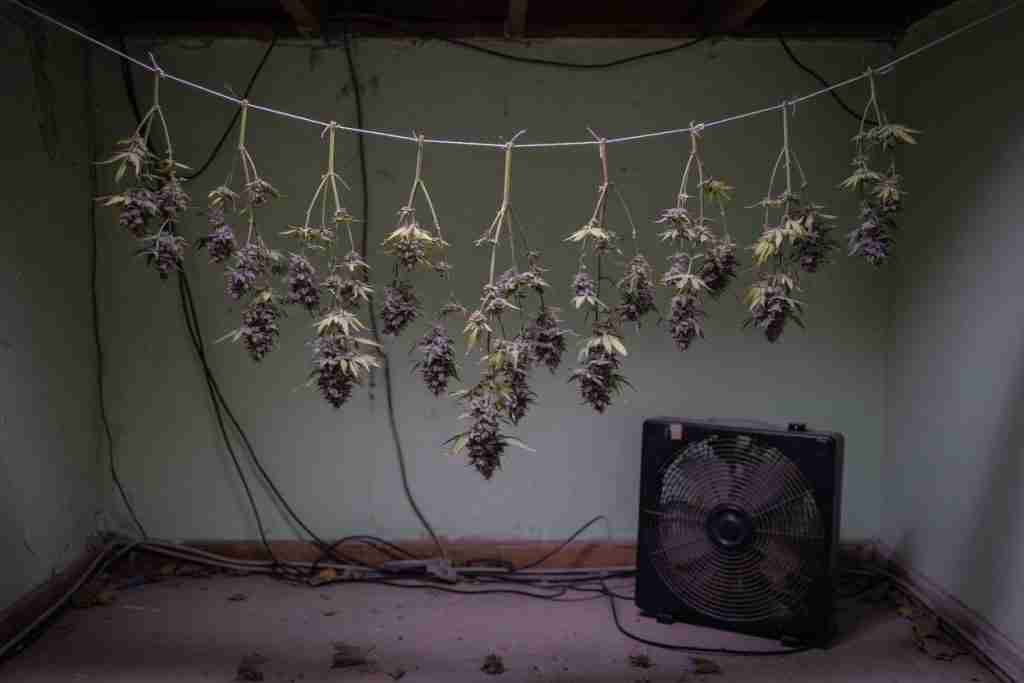
Don’t hang a rotten branch in the same closet “just to see if it dries nice.” It won’t dry nice. It will finish the job, and it will share. The keepers hang or lie with gaps, so no bud is pressed into another bud. A pile on a plate, a heap in a tub, and a sealed box are how a harvest that left the plant clean turns gray on day three. Moving air in the room is good. A fan blasting straight at the flowers is how the outsides crisp while the cores stay damp, and a damp core is food.
Here is the part that catches careful people. The mold can already be inside a bud that looked fine at the cut. Cut flower is dying tissue, and dying tissue is what this fungus eats. A humid, still dry room lets it wake up. That’s why you break one bud open on the second day of drying, and you break another open before any jar comes out of the cupboard. If the inside has gone gray or the smell has gone to basement, that branch joins the bag. You don’t “cut around it” and jar the rest of the same bud.
Which way to hang a clean branch, whole plant versus branches versus a rack, lives on which way to hang a clean branch. When rot is the reason you cut, smaller branches win, because you can see inside them. A whole plant hung in a tight curtain hides the core. The slow dry, the jar, and the burp live on the dry and the jar after the flower is sound. A cool room with a shut lid lives on a slow jar in a cool room. The long hold after the flower is actually dry lives on the long hold after the flower is dry. Don’t jar a bud that’s still soft in the center. A closed jar won’t finish a wet core. It will shelter it.
The Trade You Make
You’re trading a bit of ripeness for a jar that isn’t gray. If the heads on the bud are still clear, and only one cola is bad, and the air can actually dry, take the cola and let the rest continue. Cutting the whole plant while everything is still clear gives you a grassy, thin jar. That’s a real loss. It’s still a smaller loss than a gray jar, so if new sites are showing up every morning you cut anyway. Grassy and clean beats gray and “more finished.”
If the heads are mostly cloudy, you’re close, and taking the plant is a small trade. If amber is already showing on the bud itself, you were near the ordinary window. Cut. Waiting from there, in a week that’s already growing mold, is how people meet rot and an overripe flower in the same cola. The dull, flat end of waiting too long lives on when the heads go dull because you waited. Rot doesn’t pause so you can hit a perfect picture in the loupe.

The specs are short on purpose. You can do them in one morning.
- Tools: a plain bag, clean snips, alcohol for the blades, a tray for keepers, and a bin that leaves the house.
- Keep: the inside is sound, the smell is the plant, and the stem of a test leaf doesn’t come out gray.
- Trash: gray fuzz, brown mush, or any bud you had to argue with.
- Cut: into firm green stem, not along the edge of the brown, and bag it before the dust falls.
- Watch: every day until the plant is down, including the morning you feel sure it’s over.
- Dry: apart, with air in the room, and break one bud open before it goes near a jar.
- Jar: only after the center is dry and still clean. A damp center isn’t “almost.”
A grower in British Columbia and a grower in Michigan can both meet the same gray cola, because a wet flower doesn’t care about the border. The shop ships to both places. Read the rules where you live before you pop a seed. The next pack should be a plant that finishes in the season you actually have, not a plant that needs three extra dry weeks you never get.
Pros and Cons on the Table
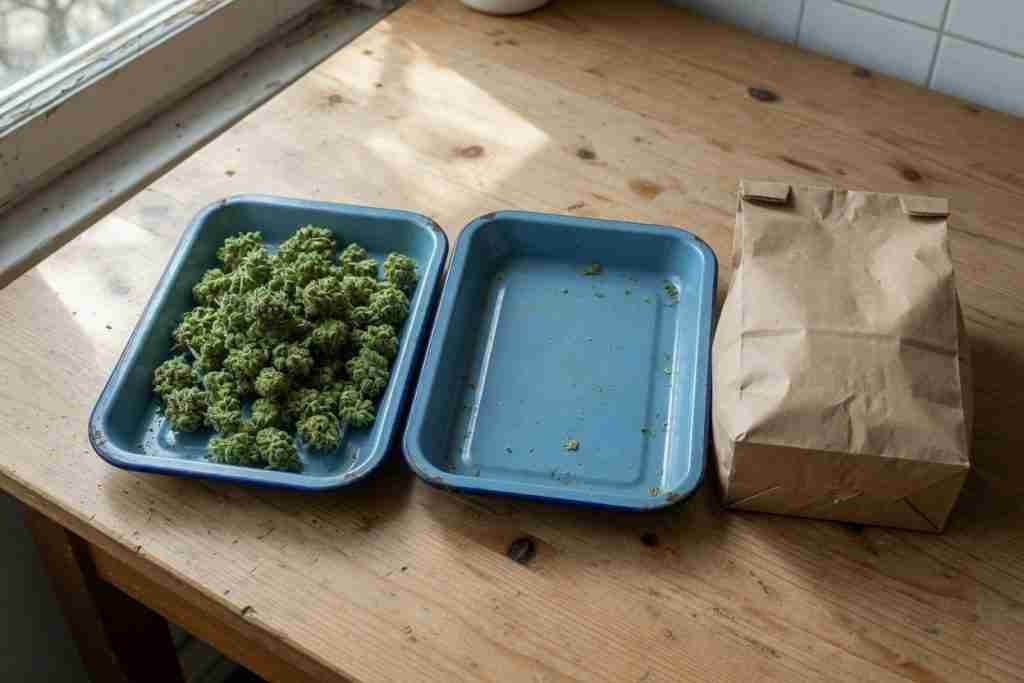
The pros are practical. You save the weight that’s still sound, instead of donating it to the mold over the next rainy week. You stop the dust at the bag, which is the only moment you truly control it. You get a plant out of a wet forecast before the forecast does the cutting for you. The jar you do fill still smells like the plant. And you learn something rude and useful: the cola that failed was the one the air never reached. Next run, that’s the cola you don’t build.
The cons are just as real, so don’t let a forum talk you out of them. The effect and the smell can be unfinished if you cut while the heads are still clear. You lose the rotten portion completely, and you should, because there’s no honest way to keep it. A rushed dry can leave the outsides crisp and the cores damp, and then the mold finishes in the jar what it started on the plant. You spend a day sorting instead of waiting. A plant cut very early is grassy, and no cure turns grassy into ripe. Cure can mellow a dry flower. It can’t invent the weeks you didn’t give a clean plant.
On the next run, give the cola a path for air, flick dead petals out before they become a meal, and don’t let night wet sit until noon. If you grow outside, choose a plant that can finish before your wet weeks, not a plant that needs the calendar to be kind. The envelope and the timing live on how the envelope moves. The notes for home growers on each side of the border live on the Canada hub and the United States hub. None of those pages will part the cola for you on the morning the leaf goes brown. That part is yours.
The brown leaf was the clock. The bag was the decision. The jar only gets what you were willing to break open and still call clean.
