Boosting the Cannabis Plant’s Immune System


A cannabis plant immune system is not a human immune system in a smaller bottle. The plant already has a wall, a first-contact alarm, and two signal paths. What ranking pages sell as a “boost” is usually a probiotic, a kelp shot, or a chitosan mix poured on a plant that is already sitting in still, wet air. That pour does not rewrite genetics. It does not dry a leaf. It does not put oxygen back in a drowned root.
Keep the wall working, then use a tool if the tool matches the job. Dry leaves. Moving air. Calcium that actually arrives in new tissue. Silica deposited in the wall. A root zone that is not anaerobic. A seed that was selected for more than bag appeal. Packs live in the cannabis seeds store. The grow library is the cannabis cultivation blog.
What Plant Immunity Actually Is

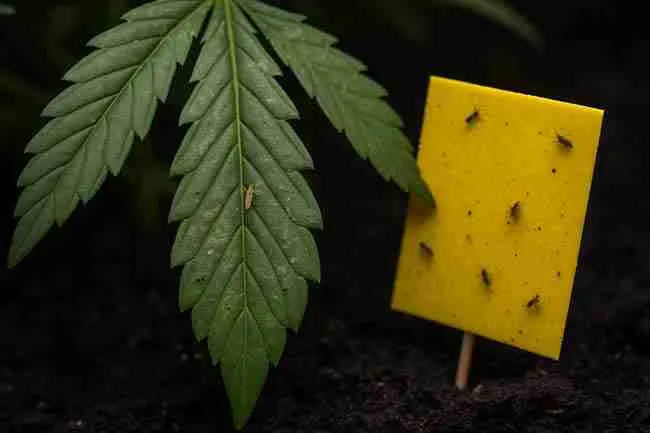
That photo is the baseline. Leaves hold water. Color is even. No film, no dust, no wet crease where two blades sit on each other. Immunity, in a tent, is that tissue staying intact after a spore lands. It is not a glow. It is not a weekly bottle. Papers on cannabis defense talk about pattern-triggered immunity and effector-triggered immunity. In grower language those are two speeds of the same job: notice a threat, then either thicken the wall and shut the door, or recognize a specific attacker and dump a stronger local response.
You will not read PTI on a pH pen. You will see it as a plant that does not collapse the morning after a humid night, and as a neighbor plant that does. Same lamp. Same feed. Different wall, different seed, different leaf wetness. Start there before you shop for an immune tonic.
The wall and first contact
The first armor is the cell wall. Pathogens try to punch through it. Silica and calcium are the minerals that make that punch harder. Pattern-triggered immunity is the plant noticing common microbial fingerprints — bits of fungal wall, bacterial flagella — and answering with a thicker wall, a burst of reactive oxygen, and stomata that close. That answer is cheap for the plant if the tissue is already built. It is expensive if the leaf is thin, the calcium never arrived, and the surface stays wet for hours.
Effector-triggered immunity is the second speed. Some attackers inject proteins to shut the first alarm off. Plants that carry matching resistance genes notice those proteins and fire a stronger, often local, shutdown. Cannabis has at least one documented powdery-mildew R-gene, called PM1, that works against some isolates. Your seed packet will not list it. What you can actually choose is a cultivar that was selected in wet weather, or one that makes airy flowers instead of tight golf balls. That choice is genetics, not a drench.
Two signal paths
Once the alarm fires, the plant uses hormones as radios. Salicylic acid drives a lot of the response to biotrophic attackers that want live tissue, powdery mildew among them. Jasmonic acid and ethylene drive a lot of the response to chewing insects and to necrotrophs that kill tissue and then eat it, Botrytis among them. Those two radios can compete. A spray that yanks both at once is not a smarter spray. It is a confused plant.
That is why this page splits tools by job. Wall minerals go in the tissue. Root colonizers sit on the root and can prime the jasmonate path. A true elicitor, chitosan being the one this site already wrote, sounds a salicylic-style alarm. Beneficial mites eat pests; they do not rewrite hormone balance. Pick one job. Finish it. Then look at the plant again. Stacking a kelp, a B-vitamin, a tea, and a “immune booster” in the same week is how you spend money and still get mildew on week three of flower.
Environment Does the Immune Work

A clip fan that actually ruffles leaves, and a gauge at canopy height, is the immune program you can see. Spores are already in most rooms. They germinate when the leaf stays still and wet. Ranking threads still argue “high humidity causes mildew.” The more useful version is this: a leaf that never dries, in air that never moves, in a tent whose exhaust is a clip fan aimed at the wall. Fix that before you buy a bottle.

That plant is already talking. Lower blades are yellow and crisp. The top is still trying to flower. A probiotic will not reverse that. Neither will a B1 pour. Read the room and the pot. Light mistakes, a wet ring in the saucer, and a dead-air pocket behind the cola are the usual three. The hardware write-up is grow tent for cannabis seeds. The air write-up is ventilation for a cannabis grow. The media and pot-size piece is environment, media, watering, and pot sizes.
Wet leaves and still air
Powdery mildew wants a still leaf with a film of moisture it can sit in. You do not need a laboratory to fight that. Oscillate air so blades move. Exhaust so the tent actually dumps the wet air you made by watering. Space plants so two canopies are not one wet sandwich. A marijuana plant in a still, wet tent will get mildew whether you paid for a probiotic or not. Treatment after the dust shows lives on powdery mildew on cannabis. If you are already at harvest with dust on sugar leaves, triage lives on harvesting cannabis with powdery mildew.
A clip fan is not exhaust. Exhaust is a duct that leaves the room. Intake is a filtered gap or a second fan. If the tent balloons and never relaxes, you are stirring the same wet air. Bud rot is the flower version of the same physics: dense cola, no lane, wet night. That page is cannabis bud rot. Clean the room so you are not re-inoculating next run: cannabis grow room clean.
Night humidity and calcium
Calcium rides the transpiration stream. It does not walk. If night vapor pressure deficit is too low, stomata loaf, the stream slows, and new walls stay weak. That is a mildew leaf waiting to happen. If VPD is too high, stomata slam, the stream stalls, and calcium parks in old leaves while the growing tip crisps. More Cal-Mag in the jug does not fix a night that never dries, and it does not fix a desert day that cooked the stomata shut. The home-grower version of that math is cannabis VPD explained without the math headache.
Watch the new growth, not the bottle. Soft, thin, slightly rubbery new blades after a string of wet nights is a wall problem. Burnt tips after a hot, dry lights-on with a swampy lights-off is a swing problem. Keep nights in the mid-20s C so the leaf can move water without cooking. Indoor setpoints and the outdoor version of the same job live on indoor cannabis growers guide and growing cannabis outdoors.
Overwatering and root hypoxia

That saucer is a root disease. Water sitting against a fabric wall keeps the bottom anaerobic. Pythium and Fusarium like that. The plant above it wilts in wet soil, which is how people water again. Lift the pot. A light pot can wait. A pot that still feels like a brick 36 hours later is not thirsty. The watering page is water cannabis plants. The root page is healthy cannabis roots.
Fungus gnats breed in that wet ring. They are a symptom and a wound-maker. Larvae chew root hairs, then the rotters walk in. Sticky cards and a dry-back beat a weekly drench. Details sit on fungus gnats on cannabis. Trichoderma can help a recovering root once you stop drowning it. It cannot oxygenate a swamp. Do not inoculate a pot that still sits in a puddle and call it immunity.
Genetics Set the Ceiling

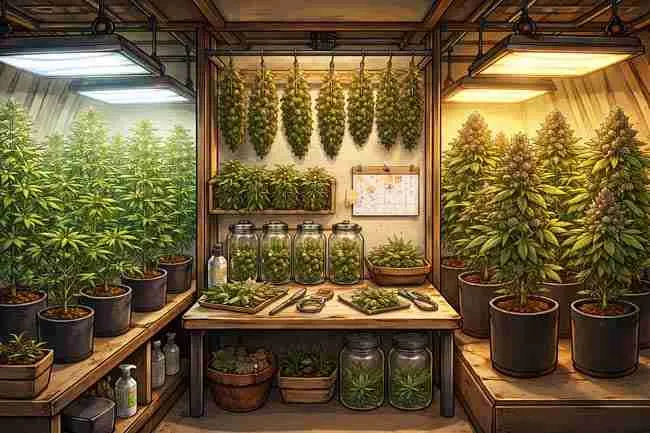
Same greenhouse. Two architectures. One packs tight flowers. One opens. In a wet September the open plant is the immune program you bought with the pack. You cannot foliar-spray a golf-ball cola into an airy one. You pick the seed for the weather you actually have. Wet-summer picks and why airy flowers finish cleaner live on mold-resistant cannabis strains for humid summers. First-pack decisions — height, clock, seed type — live on cannabis strains for new growers.

PM1 showed that cannabis can carry a dominant mildew-resistance gene. Breeders care. Home growers cannot assay it. What you can do is stop buying only for a THC banner, and stop running a dense indoor cut in a coastal hoop house. Landrace and old outdoor lines often carry field resistance because they had to. That is not a species law. It is selection. Keeping that diversity in the market is cannabis biodiversity. Indoor versus outdoor as a decision, not a debate club, is the indoor vs outdoor cannabis cultivation debate.
In Canada the federal cap is four plants per household, not per adult. Quebec still prohibits recreational home growing. Manitoba has been indoor-only since 1 May 2025 for adults 19 and over. A seedling counts. A plant that is dying of root rot still counts. Choose a pack that can finish in the room you are allowed to run. Seed that fits that rule set ships from the buy cannabis seeds in Canada hub.
Cell Walls: Silica and Calcium

Silicon is a beneficial mineral, not an essential one. Cannabis takes it up and parks silica in walls, bast fiber, and some trichomes. A University of Kentucky greenhouse trial on hemp mixed wollastonite, a calcium silicate, into peat. As leaf silicon rose, powdery mildew on the leaf fell. Root-applied silicon did that job better than a leaf spray in the work they cited. Mid-canopy leaves needed more tissue silicon than the tops. That is a wall story, not a yield story, and it is one trial on hemp in peat, not a promise for your flower room.
Do not chase a percent. Do not run a late-flower potassium-silicate foliar and call it a cure. Flower sprays of silicate are weaker on mildew and they spot. Mix silica into water first, stir, then the rest of the feed, pH last. Silica and a calcium bomb in the same cup throw sludge. The sludge does not enter a wall. Rates, mix order, and when to stop live on using silica for marijuana cultivation. Foliar technique, including why a silica foliar is a stress shield and not a fertilizer, lives on foliar feeding cannabis. Stems that actually hold a cola are strengthen cannabis branches and stems.
Root silica beats a late foliar
If you use silicon, use it while the plant is still building tissue. Veg and early stretch. A peat or coco mix that never saw silicate is hungry for it. Living soil with basalt or wollastonite already in the recipe may need none. Hydro and coco show the deficiency first because the bag is empty of plant-available silicon unless you add it. Follow the label on the bottle you bought. This page will not reprint a millilitre chart. The silica page already owns those numbers.
Wollastonite brings calcium with the silicon. That pairing is why the hemp trial looks strong: you feed the wall mineral and the middle-lamella mineral together. A potassium-silicate liquid is a different salt. It can raise pH hard. It can throw extra potassium into a recipe that did not need it. Read the bottle for elemental silicon, not for a brand story about “plant immune support.”
Calcium has to arrive
Calcium pectate glues cells together. Pathogens split that glue. If new leaves are twisted, hooked, or necrotic at the edge while old leaves look fine, suspect calcium movement, not a missing immune vitamin. Hard tap already carries calcium. RO carries almost none. Dumping Cal-Mag on hard water is how you crust a pot. The hardness page is does water hardness affect cannabis crops. Bicarbonates that lock the jug are water hardness and bicarbonates.
pH is the gate. In soil the workable band is about 6.0 to 7.0, sweetest around 6.2 to 6.8. Iron comes in on the low side. Calcium and magnesium come in on the high side. If you run coco numbers in soil you starve one side of that gate. The soil-absorption write-up is optimum soil pH for nutrient absorption. The three-medium table is pH for growing cannabis. A yellow that is hunger, not lockout, is cannabis nutrient deficiency. Magnesium is its own page because people keep calling it an immune issue: magnesium for growing cannabis.
Living Roots: Trichoderma and Bacillus

White roots on the outside of a ball, with a faint web that is not slime, is a living root zone. Brown, sour, and slick is rot. Trichoderma is a genus of fungi that colonizes that zone, parasitizes some root pathogens, and can prime induced systemic resistance. Grower products are usually T. harzianum or a mix. The job is Pythium, Fusarium, and a root that keeps growing after a rough transplant. It is not a powdery-mildew spray. Friend versus foe, and how to tell a white web from a problem, lives on fungi, friend or foe.

Bacillus is the leaf-side cousin people actually mean when they say “beneficial bacteria for mildew.” Bacillus subtilis and B. amyloliquefaciens colonize leaf surfaces, compete, and make compounds that disrupt some fungal membranes. That is a foliar or a preventative film, used in veg, dried before lights on. It is not a root drench for Pythium. Match the organism to the tissue. Product labels that dump both in one bottle and promise “full immune support” are selling a category, not a mechanism.
Trichoderma on roots, Bacillus on leaves
Apply a root inoculant when the root can host it: a fresh mix, a transplant, a seed that is going into living soil. Sterile hydro, a hydrogen-peroxide reservoir, and a copper fungicide will kill the inoculant. Do not coat a seed and then dunk it in a sterilizer. Mycorrhizae are a third actor. They extend the root after phosphorus and water. They are not a mildew tool. How to put them on a root, and what they actually trade, is mycorrhizal fungi in cannabis cultivation. No-till is the long version of keeping that community: no-till living soil.
This page will not give you a spore count, a brew time, or a millilitre-per-litre inoculant recipe. Those belong on a label and on the dedicated fungi pages. If the pot smells sour, dump the water, dry back, and then decide whether an inoculant is even alive in that mix. Compost that actually feeds the soil, rather than a tea you hope is magic, is composting for cannabis nutrients. Organic feed that is food, not a slogan, is organic marijuana fertilizer. Stage nutrition, not an immune calendar, is cannabis nutrition across all stages.
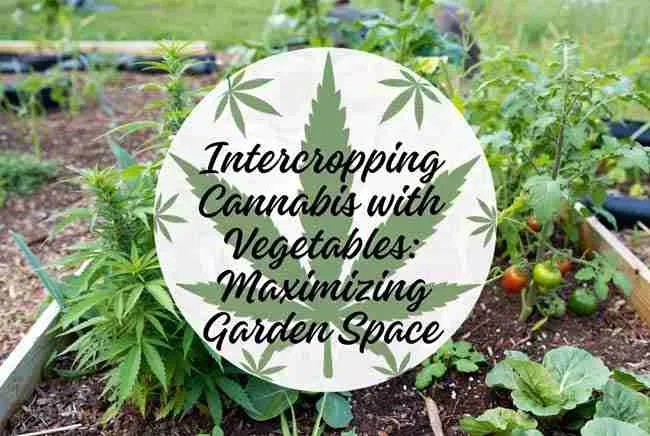
Above-ground allies are insects and neighbors, not a second bottle. Predatory mites and lacewings are beneficial insects in a cannabis garden. Companion plants that change the pest mix outdoors are companion planting for cannabis. Thrips need their own hunt: thrips on cannabis. The program that holds all of that in order is integrated pest management for cannabis, with the pesticide-free version at pesticide-free cannabis cultivation.
Elicitors Without a Recipe

An elicitor is a fragment that looks like an attacker. The plant sounds the alarm and loads defense proteins. Chitosan is the one with cannabis data. Roots that touch colloidal chitosan raise chitinase and pathogenesis-related proteins. That is an alarm, not a feed. It can also slow root growth at the rates labs use, which is why you do not invent a kitchen dilution and pour it on a seedling. Rates, SAR, and the resin conversation already live on chitosan for cannabis. This page will not reprint them.
Grower-speak elicitors are insect frass and shrimp-shell chitin. Same idea: the plant smells fungus-or-insect wall and loads chitinase. Use a finished, labeled product in veg. Do not dump aquarium leftover on a flower. Foliar only when the leaf can dry. Lights off. No wet flowers. A foliar on clustered pistils is how you buy bud rot. If the weed is already dusty with mildew, you are in treatment, not elicitation. Stop spraying “immune support” on a cola and go to the mildew page.
Chitosan is an alarm, not a feed
Seaweed is a side feed. It brings potassium, some hormones, and stress buffering. It does not replace silica in the wall and it does not replace chitosan as an alarm. Kelp rates stay on seaweed cannabis fertilizer. Alfalfa is a nitrogen tea, not a compost tea and not an immune drench: alfalfa for cannabis. A B-vitamin pour does not stop transplant shock and does not vaccinate a cut. Cannabis plants make their own B vitamins. That argument is already written: B vitamins cannabis plants.
Neem is a pest tool with a residue and a smell, not an immune vitamin. Use it from the pest page, not as a weekly “boost”: cannabis pests with neem oil. High-stress training and low-stress bends change architecture. They do not confer mildew immunity. A plant you just supercropped is busy repairing wood. Give it air and a day, not an elicitor stack. LST is low-stress training cannabis. HST is high-stress training. Recovery after veg stress is post-vegetative stress recovery.
Scout First, Then Decide on a Bottle

Flip the leaf. Shine a light through it. Look at the midrib, the crease, the wet ring in the saucer, the stem at soil line. Powder is mildew. Stipple and webbing are mites. Tiny black flies are gnats. A sour swamp smell is root. A plant that is stunted, hollow, and off-color with no pest on the leaf may be hop latent viroid, which you test and cull; you do not spray. That page is hop latent viroid in cannabis.

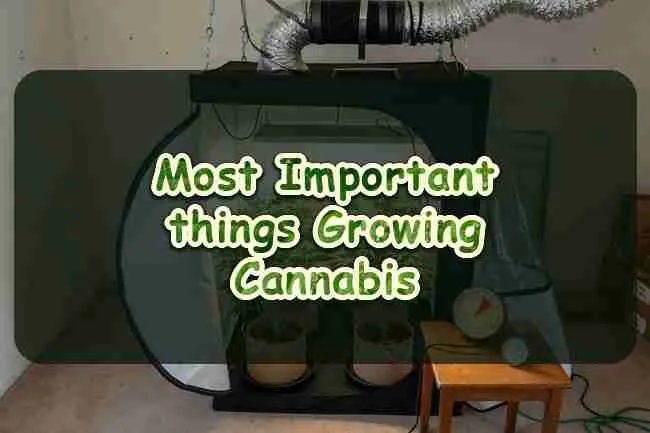
A clean vegetative plant still needs the same scout habit. New growers skip the underside because the top looks fine. Mildew starts where air does not go. Make it a lights-on walk, every day in flower, every couple of days in veg. Seedling, veg, and flower each change the risk: a wet plug in week one, a packed canopy in week four of veg, a dense cola in week six of flower. Stage pages: seedling stage, vegetative stage, flowering stage. The order of the whole run is 10 steps to cannabis cultivation success. Which jobs actually decide the jar is most important things growing cannabis.
When the bottle is noise
Skip the bottle when the saucer still holds water. Skip it when the tent has no exhaust. Skip it when the new growth is calcium-locked because nights never dry. Skip a B1 drench on a transplant. Skip a compost tea you linked to alfalfa by habit. Skip a foliar on stacked flowers. Skip anything that claims to raise THC by boosting immunity. Immunity is whether the plant is still standing. Potency is genetics plus light plus the harvest window.
Use a bottle when the job is named. Silicon in veg on a peat or coco mix that has none. A labeled Bacillus foliar in veg if last run had mildew and the room is still a risk. A labeled Trichoderma at transplant into a mix that can host it. Chitosan from the chitosan page, at that page’s rates, if you are eliciting on purpose. Neem or a true IPM step when you have a pest, not when you are bored. A first-run checklist so you do not skip the fan: new cannabis growers checklist. Light that is cooking the top while the skirt stays wet is a different mistake: growers’ biggest mistakes using cannabis growing lights.
Boosting the cannabis plant immune system, in this room, is that list in order: air, dry leaves, a pot you can lift, a wall mineral, a root that is alive, a seed that fits the weather, then one tool that matches the scout. Do the walk. Then spend the money.